Tammie Rogers
Inspired by Dogs & Nature
Wild Native Persimmons
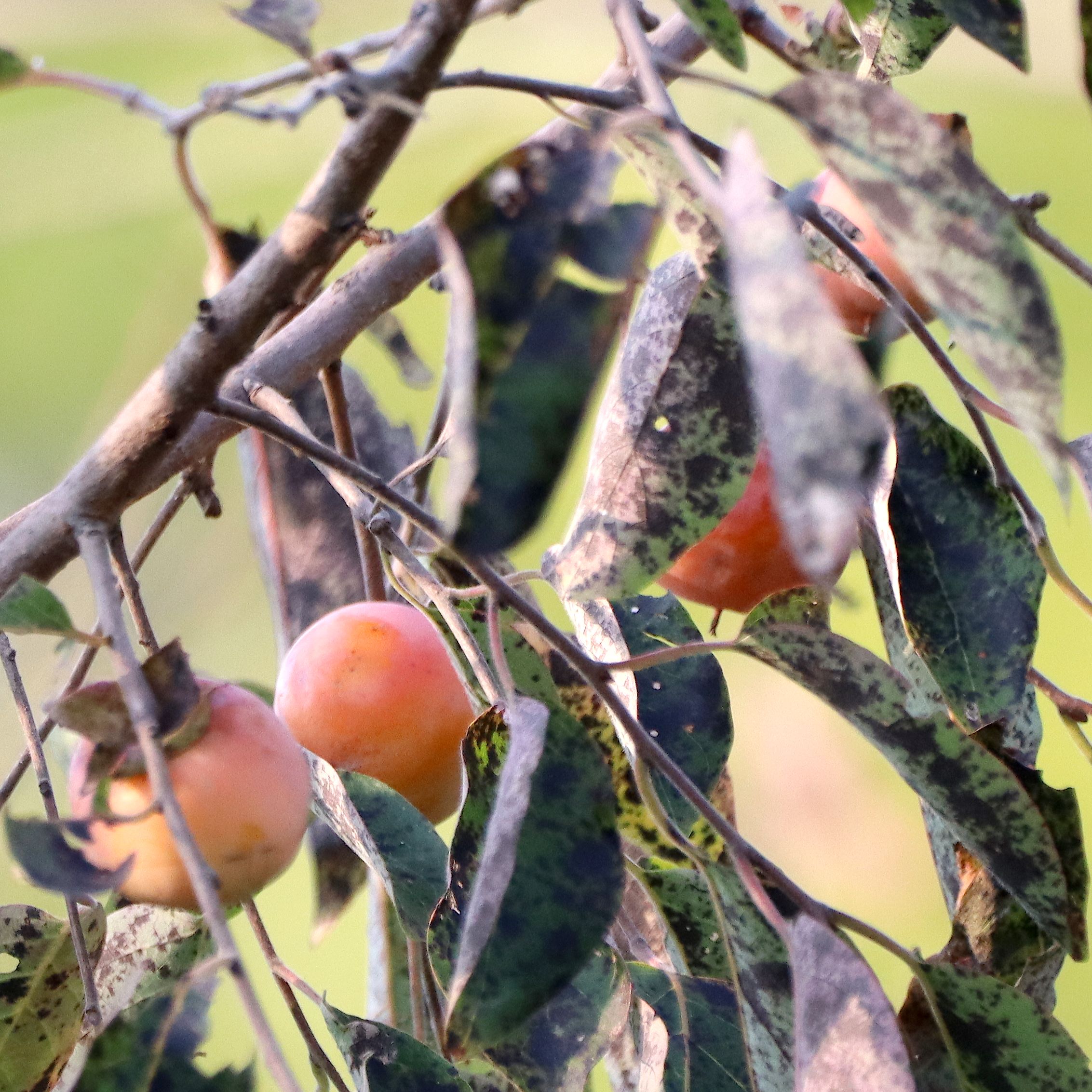
Not far from where I spotted the Northern Mockingbirds in the wild cherry tree, I came upon a young tree at the edge of the pond’s inlet from which large, orange colored fruits were hanging. I have been to that location dozens of times over the years from Spring to Winter and had never seen such large fruit on a tree. I was actually gobsmacked.
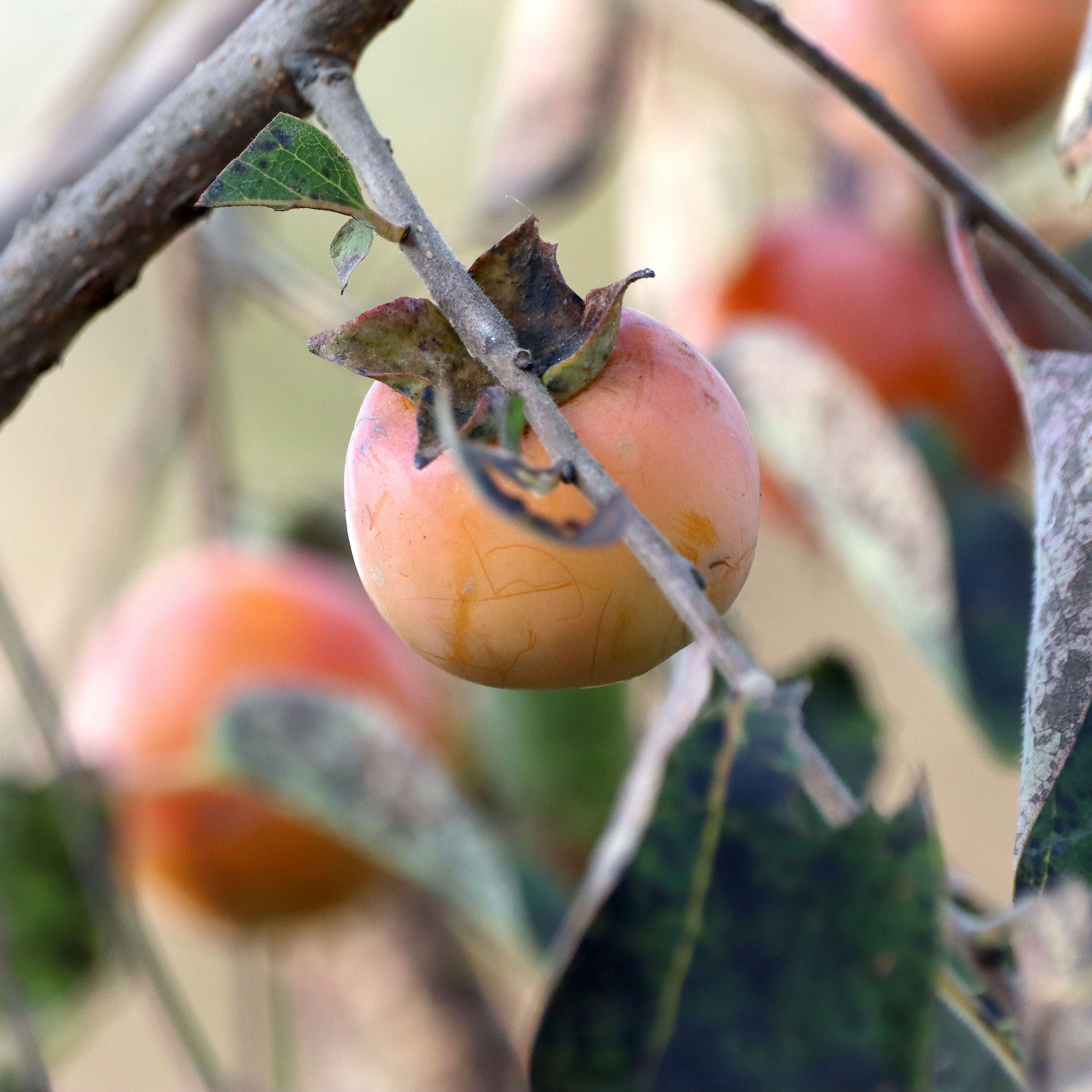
The tree is young and growing quite close to the pond’s edge along side a few bushes of various, unknown-to-me species. Common Yellowthroats, Gray Catbirds and many other bird species taking shelter in those shrubs as they move across the property. Most notably to me, this fruit tree grows very close to “The Branch” where I have filmed many species of birds perch before moving on, across the pond.
The fruits looked similar in color to a peach. I’ve planted a couple of peach trees in our small orchard over the years that where touted as winter-hardy in our zone. But, none has survived. So, the idea that a naturalized peach tree could bear such large fruits seemed unlikely. There are varieties of plums that are orange in color. But, these fruits appeared larger than a plum. I’ve also been unsuccessful planting a couple of plum trees that, again, were labeled as winter-hardy in our zone. I doubted this was some sort of native plum tree.
I noticed that one of the fruits had been perhaps sampled by a bird. The skin had been torn exposing the interior flesh. It looked juicy and I assumed would be edible if not for humans, but very likely for wild creatures.
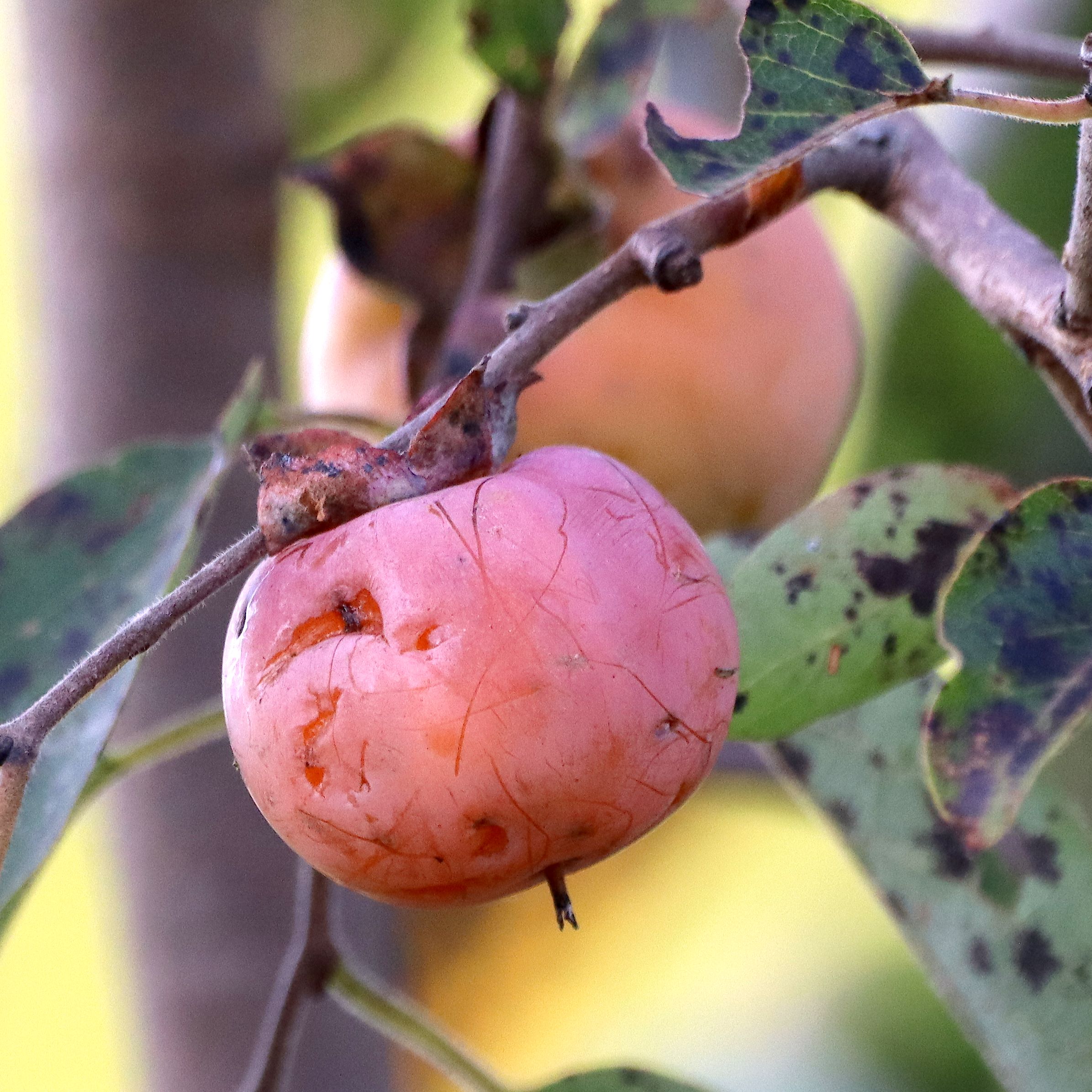
I considered persimmon, which is a fruit I’ve never held in my hands, but I understand are common in the southern United States. Persimmons are used in both sweet and savory food preparations, but are not a common fruit that is shipped to areas outside the South, like other more common fruits.
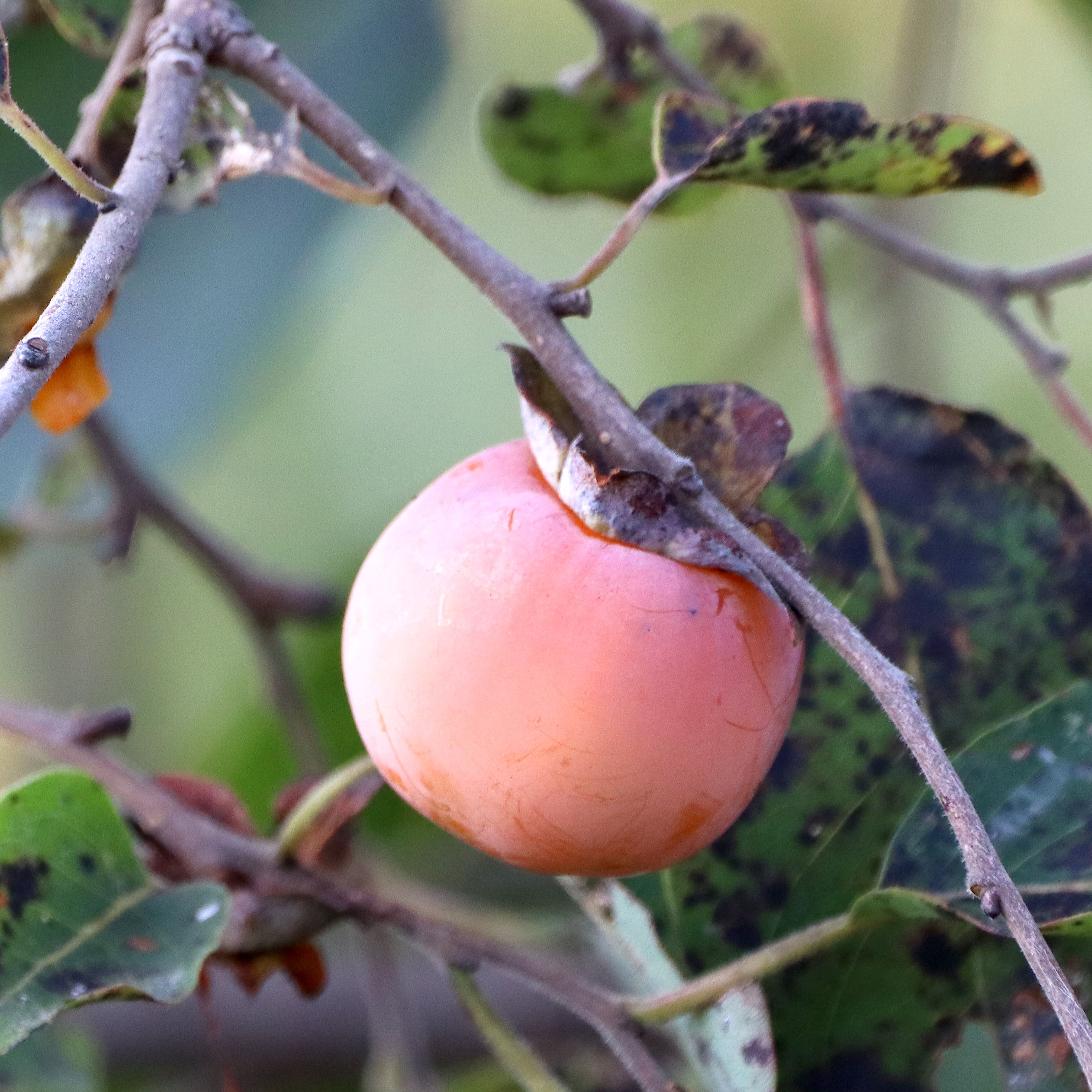
I was able to determine that this was, in fact, a Persimmon tree when I compared reference photos that show the distinctive “leaves” at the top of the fruit where it attaches to the branch. I don’t think they are called “leaves” but are rather part of the original blossom. Regardless, they are a very unique feature of a persimmon fruit.
The first reference that came up in my search (Wikipedia) reported that persimmons are native to China and India. That variety is cultivated, most commonly in California, and sold in some markets, although I’ve never seen a fresh persimmon for sale in the produce section of a shop where I live.
By adding the adjectives “native” and “Illinois” in my search, I learned that there is, in fact a species of Persimmon that is native to the southeastern United States. The northern range moves into southern Illinois, which just barely includes my zip code.
American persimmon (Diospyros virginiana)
- Native to rich river bottomlands of the southern half of the United States, American persimmon (Diospyros virginiana) is hardy to zone 5; Central Illinois is its northernmost natural range. A 35 to 60-foot-tall tree, native (or common) persimmon grows best in ample sunlight with some tolerance for shade, according to Penn State Extension.
- extension.illinois.edu
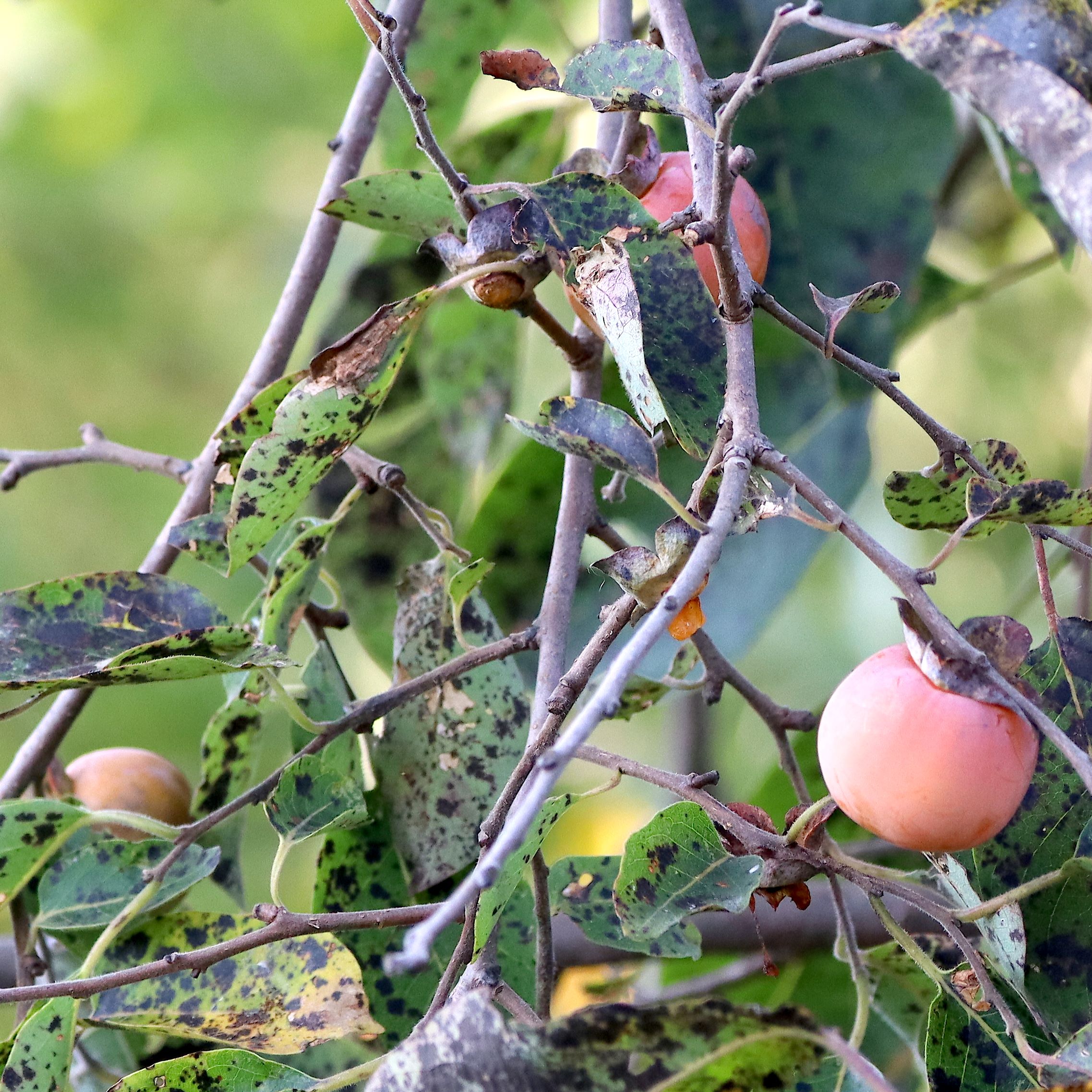
Apparently, the trees first bear fruit when they are ten to fifteen years old, so this bounty has been in the works for longer than I’ve been traveling to it’s location on our farm. The American persimmon tree can grow to over 50 feet tall! This tree is probably no taller than fifteen feet at this time.
I’ve read that the native American persimmon fruit should not be eaten humans until after the first frost, and the fruits that have fallen from the tree are the ones to select. I’m probably going to leave the fruits to the birds and other wildlife that will likely enjoy this new resource that has arrived. Nature is amazing.

