Tammie Rogers
Inspired by Dogs & Nature
Zero Tolerance Policies
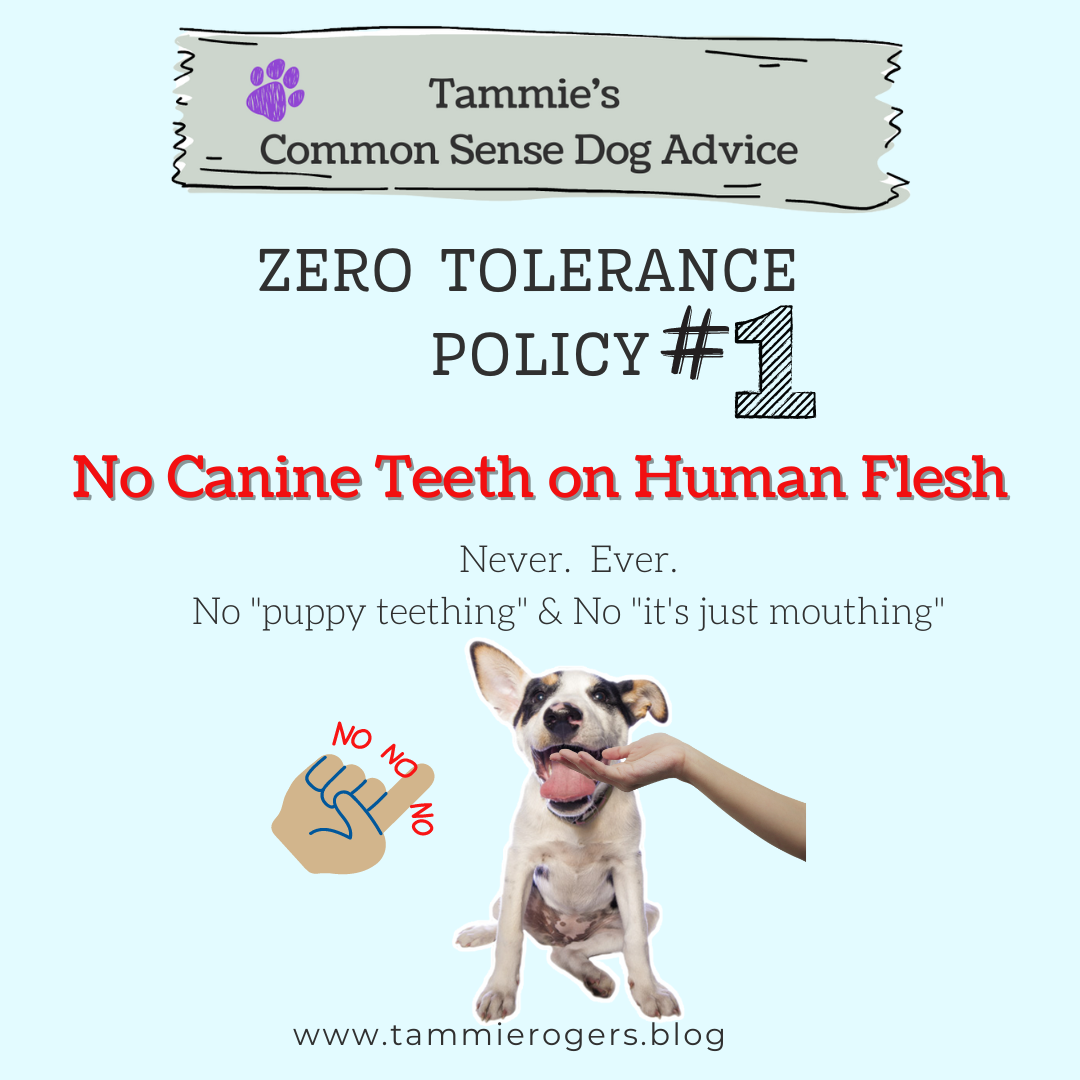
#1
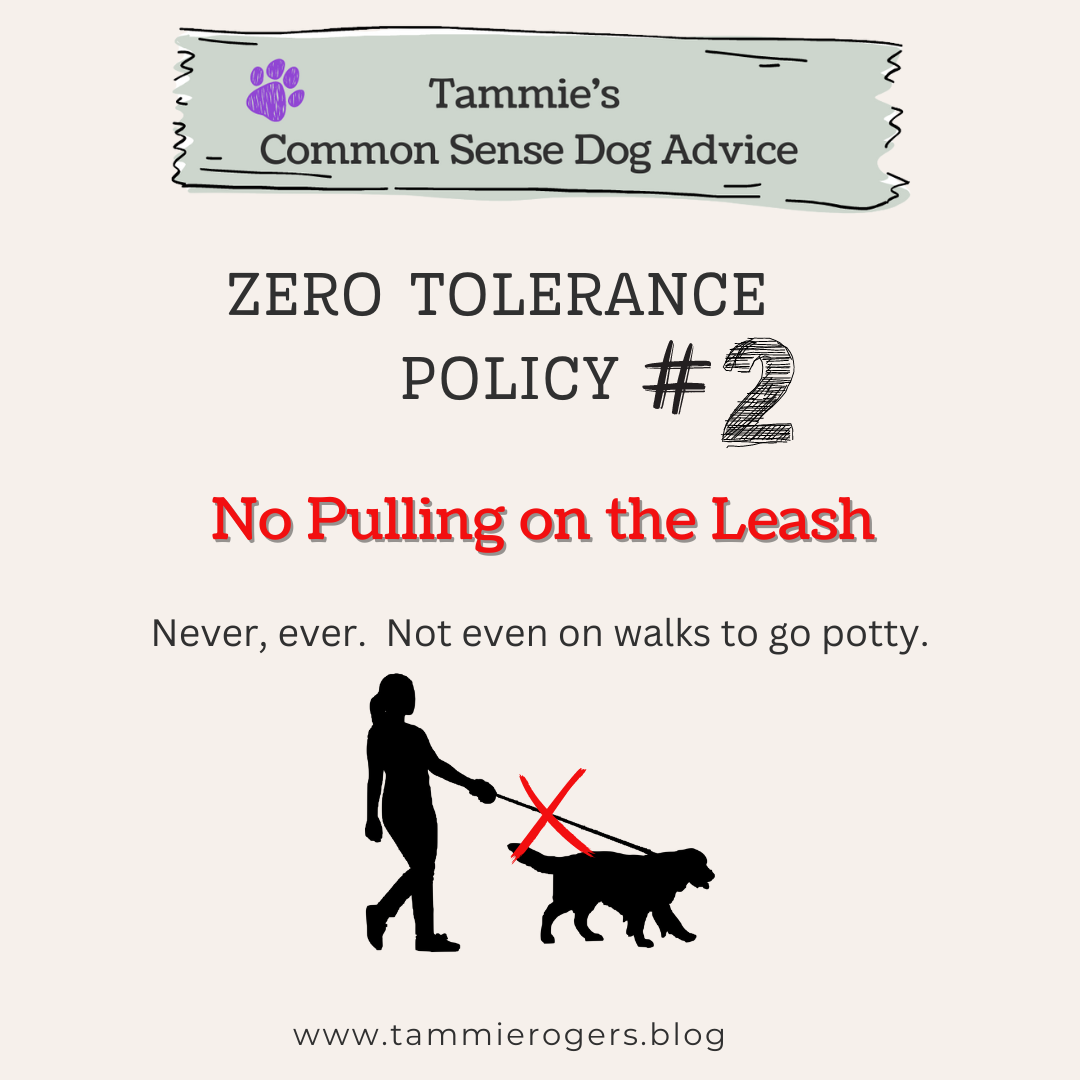
#2
I’m not into imposing my own lifestyle onto others. Regardless of the standards I might set with my own dogs, if you enjoy your dog sleeping in your bed, you are entertained by him barking at squirrels or you find comfort when your dog jumps up on you, then who am I to say that’s “wrong?”
Still, I have two Zero Tolerance Policies. These are the rules that nearly every dog owner should impose and that nearly every dog must obey because the backlash is more than most people will be able to resolve.
Zero Tolerance Policy #1 is easy for folks to understand. If you permit “mouthing” or “nipping” things get blurry for the dog. “Snapping” easily progresses to “biting.” It’s not fair to be disappointed in your dog’s behavior when you never truly communicated your standards.
Zero Tolerance Policy #2 is more challenging to grasp. Why? Because nine out of ten dogs you might see (in person or in the media) is pulling his owner. In my experience, few people realize how critical it is to teach a dog that pulling on the leash is an absolute NO GO.
Dogs that pull are leading (they are in front.) Dogs that lead have humans that follow (the humans are in back.) When the dog perceives her human as a follower, she’s compelled to be in control because she feels leaderless. To most dogs, that is a very frightening situation. As a social species, dog is hardwired to be in tune with individual positions in the social group. Rank order matters. It matters a lot.
Dogs are a subspecies of the Gray Wolf. Except for the changes that occurred when the species was domesticated (which are significant), most of a dog’s behaviors are still generated by its genetic origins. This would include the sense of peril a dog may experience when she feels she is a member of a leaderless pack.
I did a search for the term, “leash reactivity.” The top answer: “Leash reactivity refers to dogs who are over-aroused by the sight, smell, or sound of other dogs or people when they are on leash.” I completely disagree. In fact the first word that came to my mind was, “hogwash!”
My experience tells me that “leash reactivity” is a manifestation of the fear that a dog experiences when he feels he must become the one “in charge.” He doesn’t want to be in charge. He doesn’t actually know how to be in charge. Domestication removed the capacity for lower ranking individuals to assume the leadership when the existing leader dies or is ousted [that’s a topic for another day.] Still, the dog is compelled to assume the role of assessing and addressing all his ‘perceived’ threats while being tethered (as in ‘can’t escape’) to his human. He doesn’t know if the strange dog that’s pulling it’s owner directly towards him is friend or foe. Without the sense of security that his own person knows anything – since he’s way back there over his shoulder – the dog develops a bite-first-ask-questions-later state of mind. He’s not over-aroused. He’s afraid for his life. That fear is exacerbated by the fact that he also has to worry about your life since you are not stepping up and playing the leadership role.
We can resolve all this poor dog’s angst by employing Zero Tolerance Policy #2.

