Tammie Rogers
Inspired by Dogs & Nature
What? A Skink.
There’s a massive tree at the southeast corner of our property that has seen better days. My 80 year old neighbor, Willard, who drives around our “neighborhood” in his fancy, air-conditioned ATV – and who stops by to chat when he sees me out with my camera – called the old tree “unhappy.” I think he also alluded to the fact that when (not if) it falls, it will be a big mess and will likely block our road. I replied to him, “That tree is an amazing woodpecker habitat.”
I posted about that tree back in 2023: Sleepy Tree Man There’s a hole just above the “nose” of Sleepy Tree Man which, at least the day I took the photos for that post, a Red-headed woodpecker seemed to be using, or at least exploring.
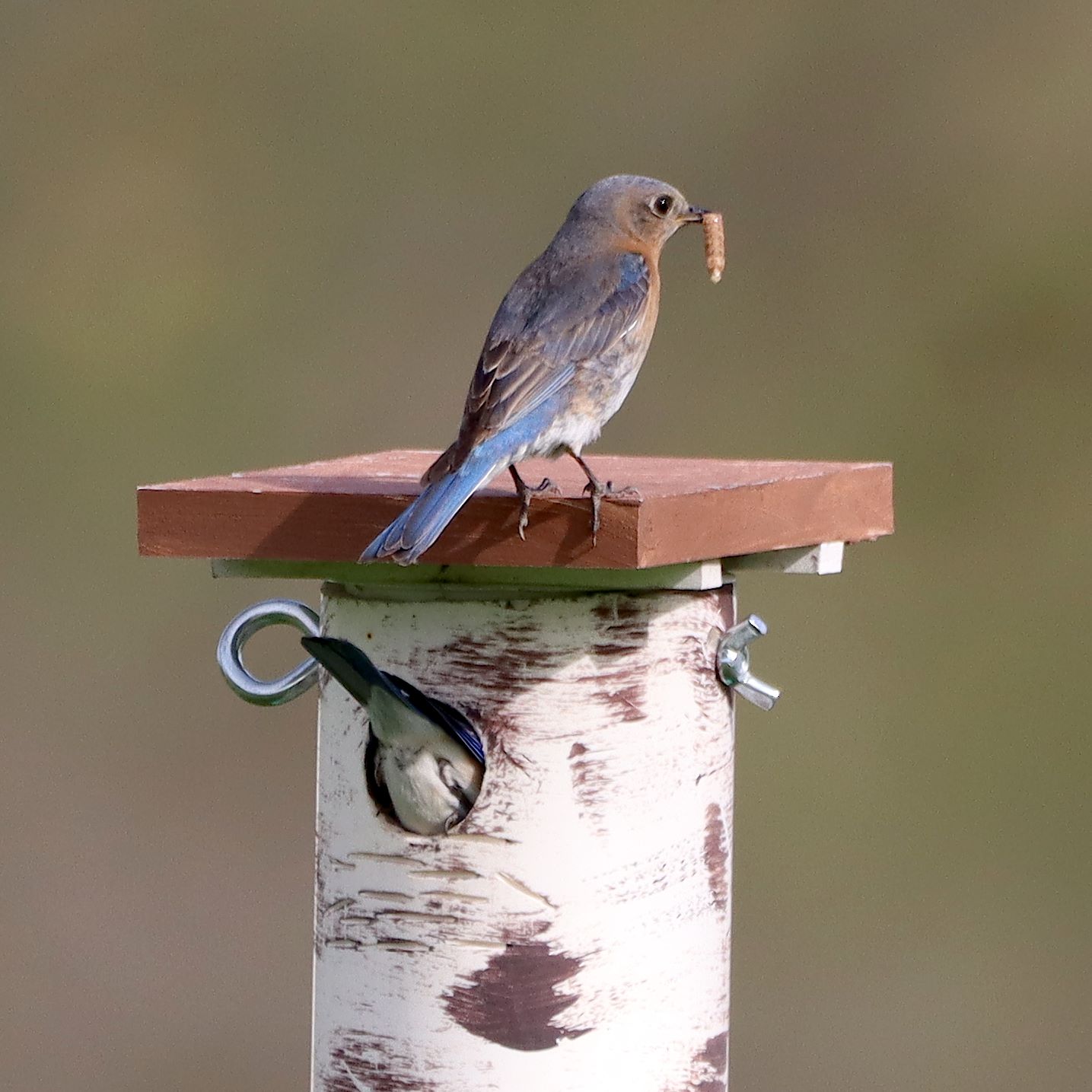
A week or so ago, I was near the old tree watching the Bluebird couple feeding their chicks in Nest Box R.
That tree is massive in girth as well as height. I’d say that the hole above the nose is at least 25 feet up, and I was about 70 feet from the base of the tree. If I remembered my geometry from high school, I suppose I could tell you what distance from my location and that hole. Suffice to say, it was farther than my old eyes could muster any sort of focus on a small animal.
I didn’t see any movement or truly any reason to aim my camera towards that hole, but I did. I’m a creature of curiosity, I suppose. “What might be living in that space?” I questioned.
Once back in my office, as I was scrolling through the photos of the day, I nearly passed by the block of images of that tree. Surely, there wasn’t anything up there. But, I was wrong.
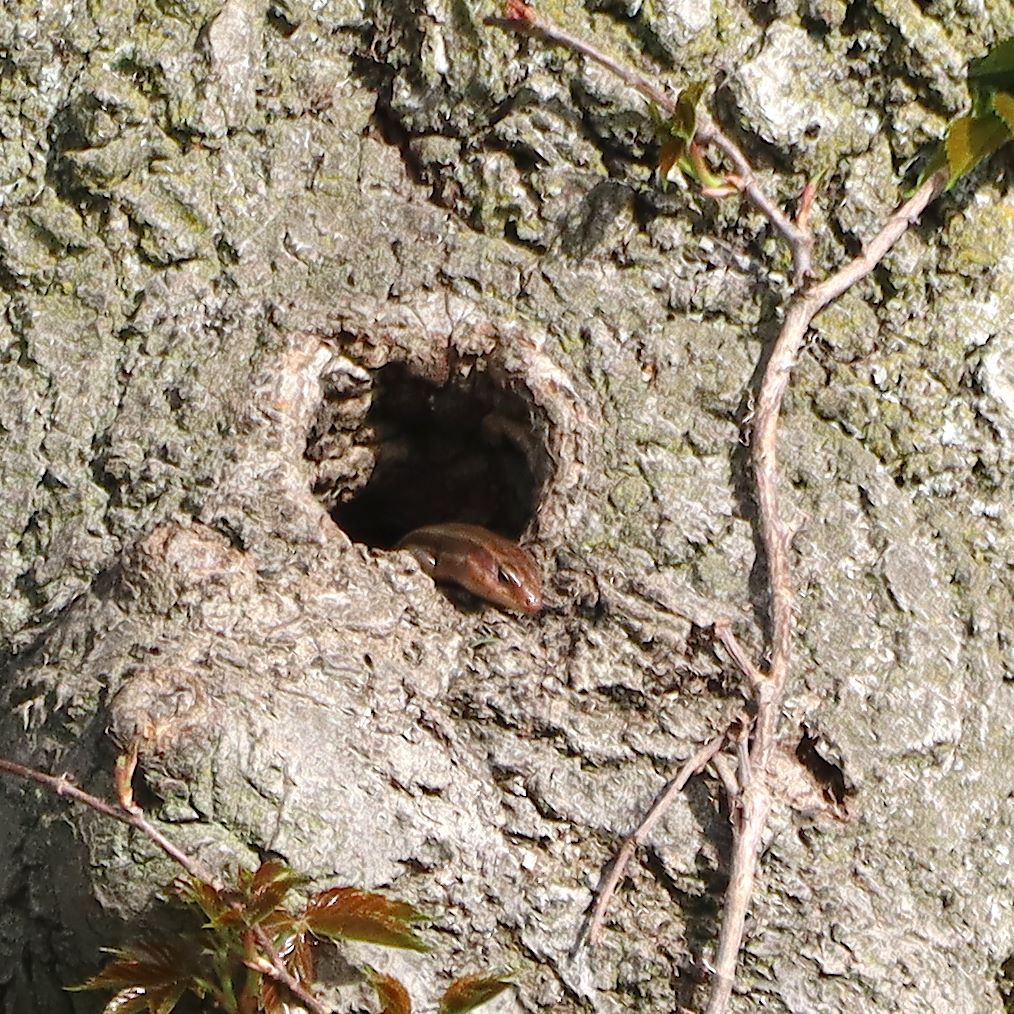
Excitedly, I told Robert that a snake was in the hole, and that I suspected it was there to consume the eggs of whatever birds had chosen the hole for their nest. I had a little pang of sadness for a woodpecker couple that may have lost their opportunity to raise a brood this season.
Still, as I looked more closely at that photo, I wondered whether I was correct. “Do you think that’s a snake?” I asked my husband. “Do snakes have nostrils like that?” I questioned. “It just doesn’t look exactly like a snake,” I continued.
Life happens, and I got busy and I both failed to upload a post about the strange creature and I also didn’t do any further research on whether it might be something other than a snake.
Then, four days later, I was back out with my camera, sitting at bird box R, waiting to see evidence that the Bluebirds were still doing well, feeding their brood. Again, while waiting for the birds to show up, I pointed my camera towards the old tree. Surely, a snake that had already consumed all the eggs in a nest cavity wouldn’t still be there. But, it’s not like the old days when every shutter release was a costly operation and required days of anticipation while the roll of film was processed. I could click that shutter as often as I wanted, and so i did.
This time, the sun was better illuminating the tree. As I focused on the hole, I saw something in the view finder.
“What?”
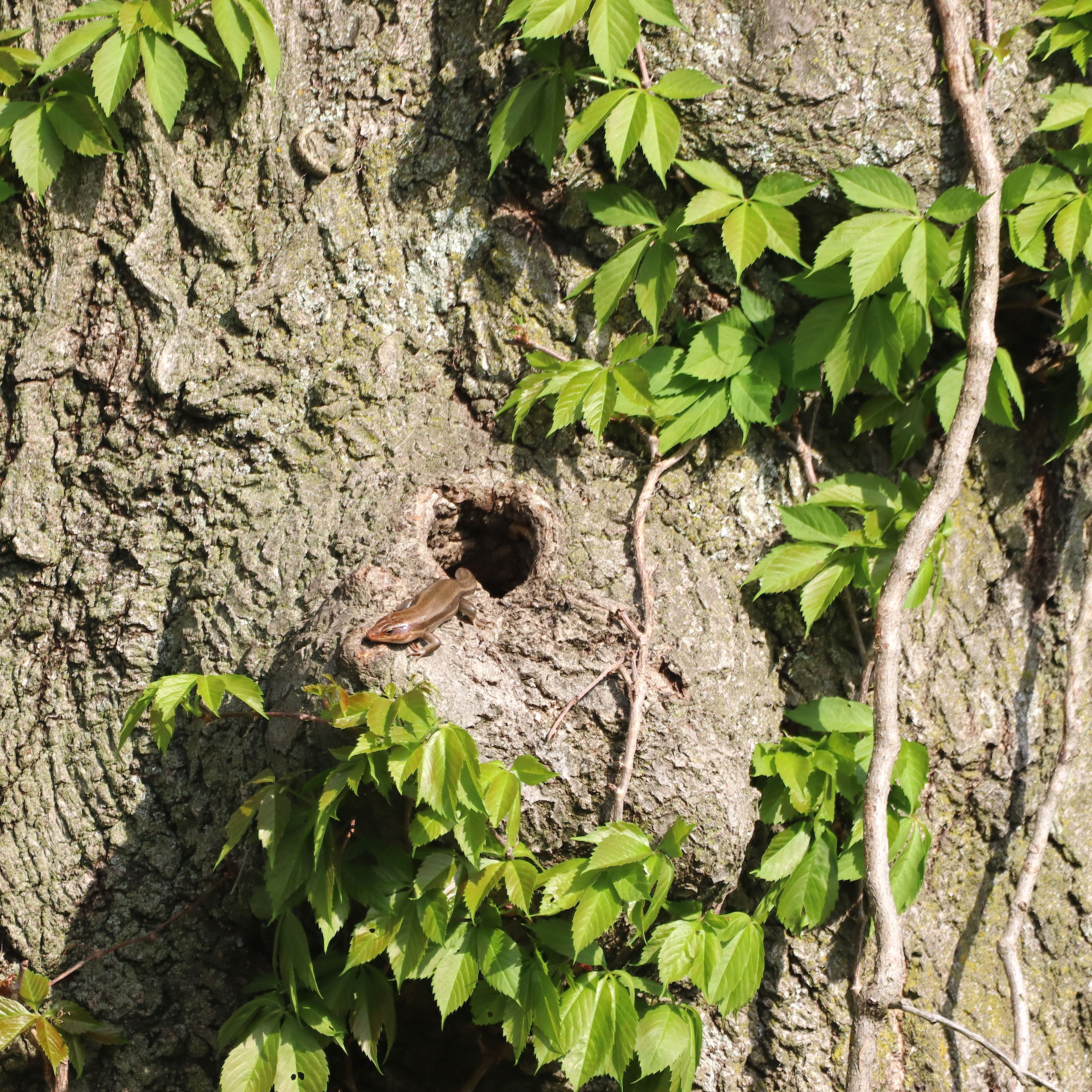
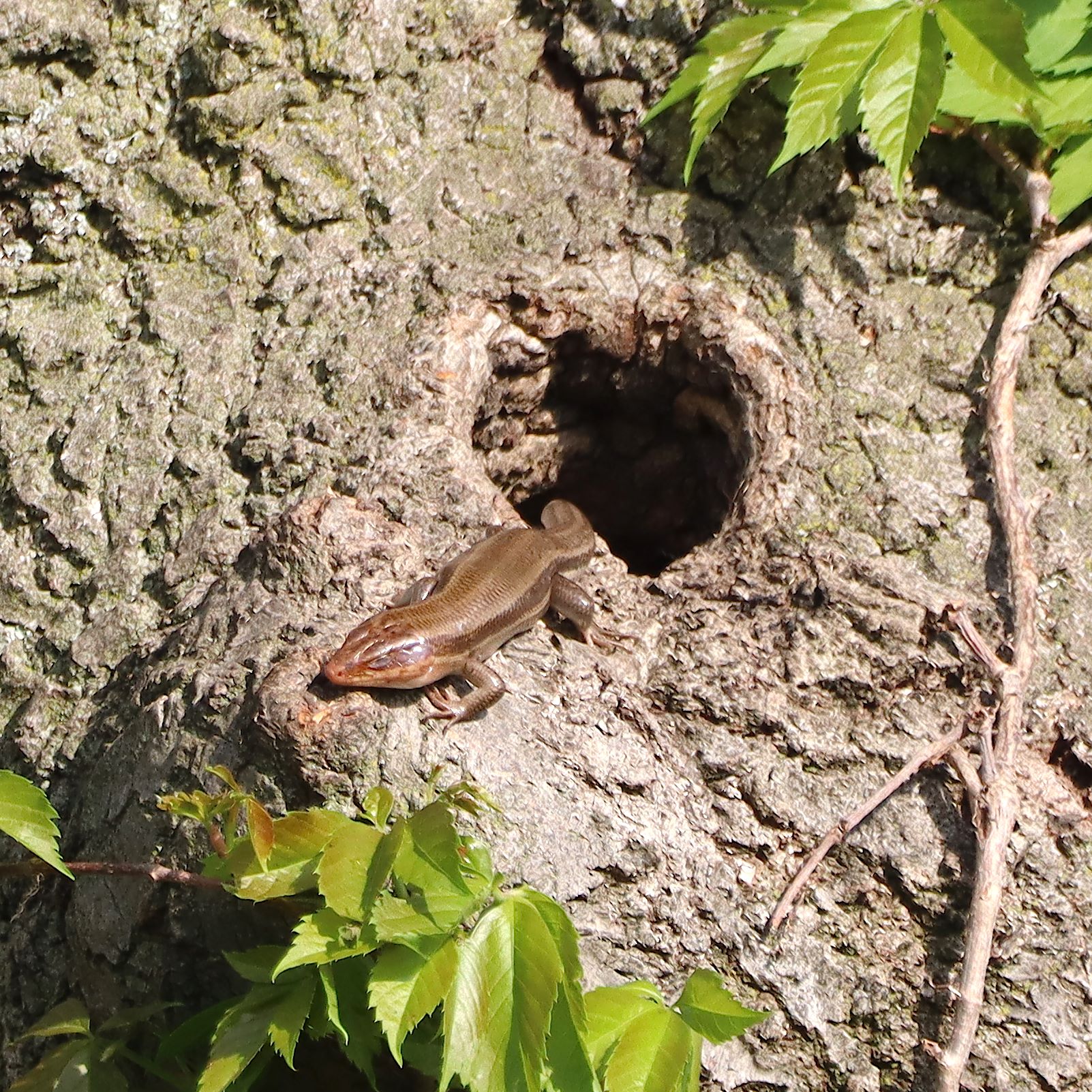
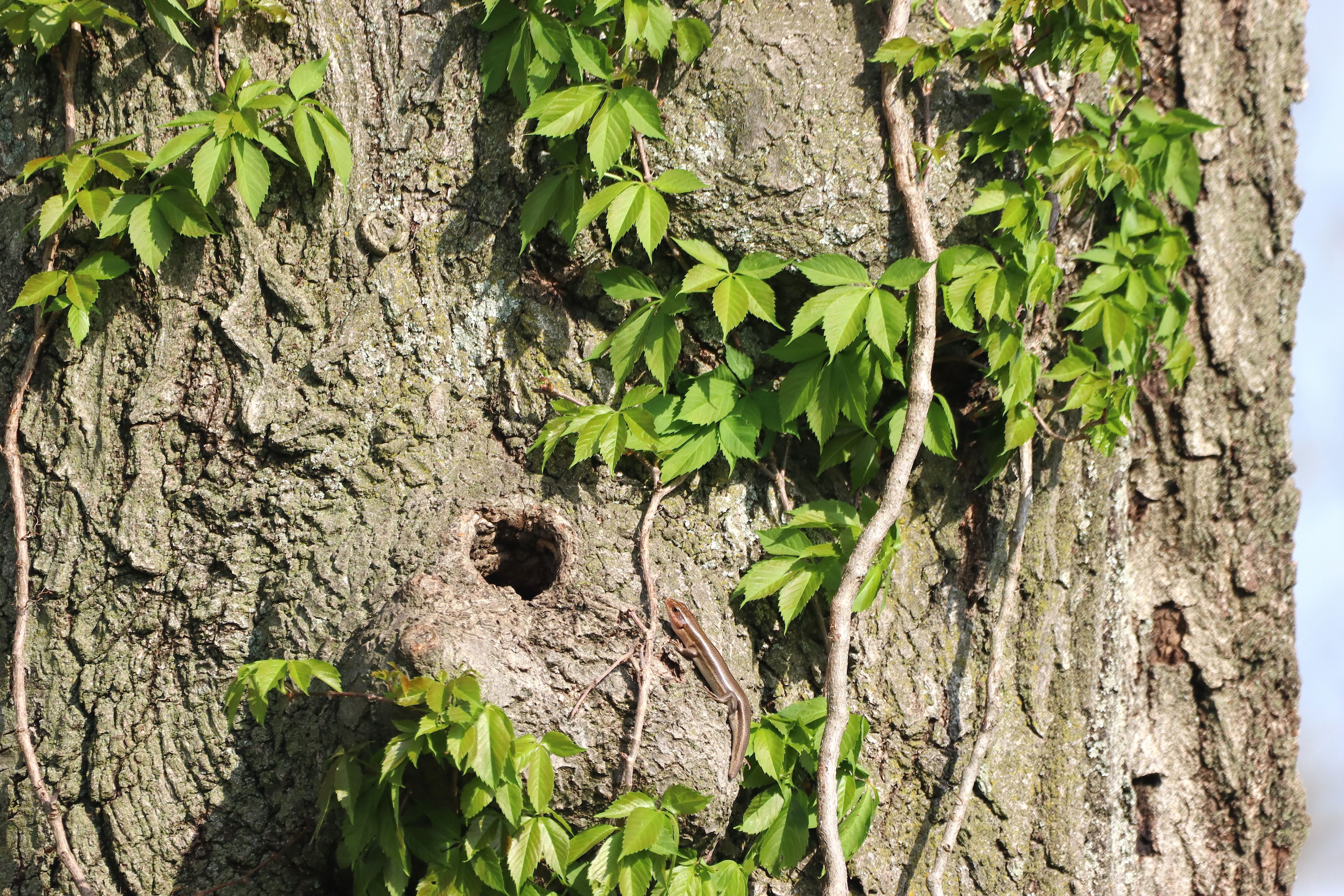
Note in the photo above that the sides of the tree are not within its limits. That’s a big tree. And, that, was a very little, brown lizard – of sorts.
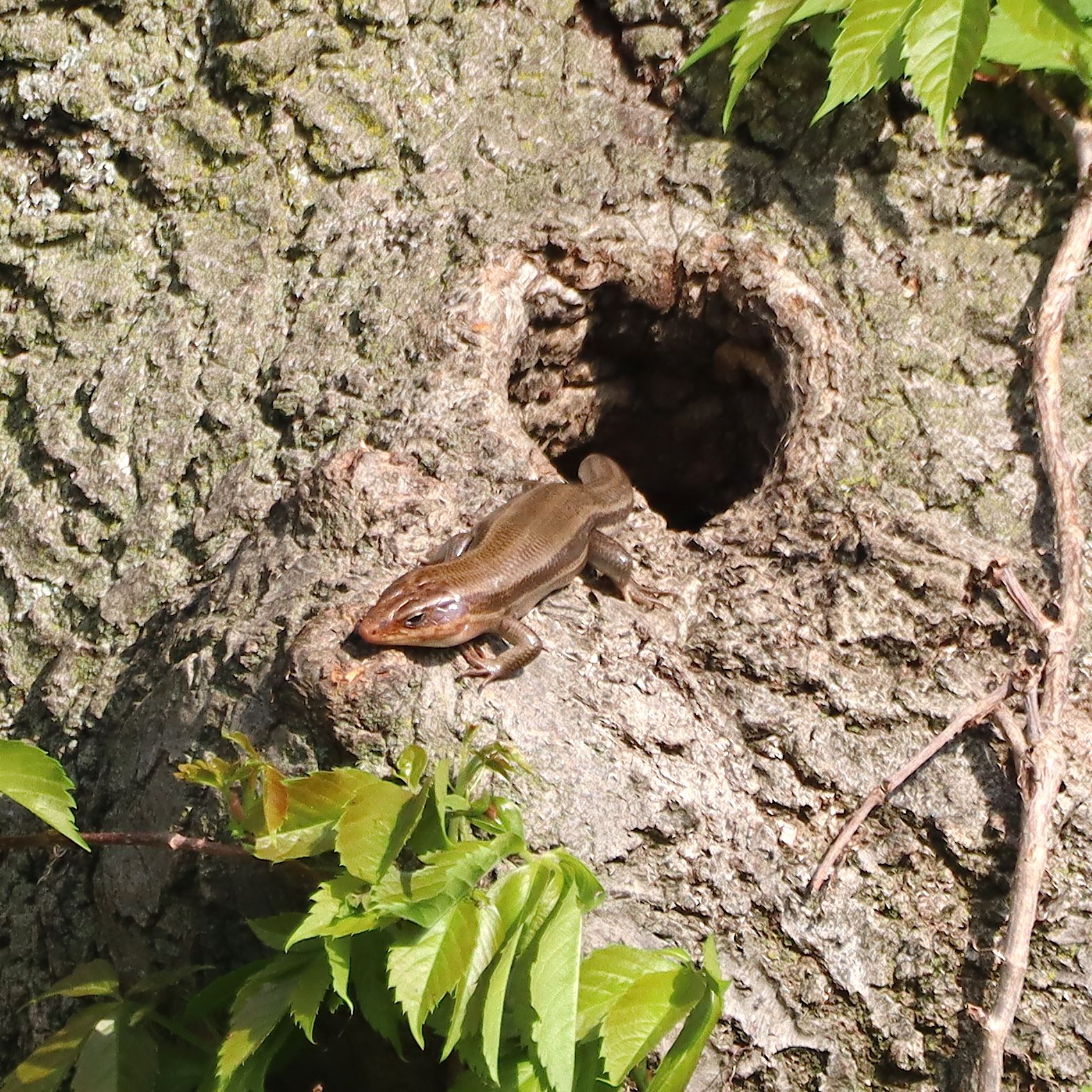
And, it was blinking, or closing its eyes, and I caught that in a photo.
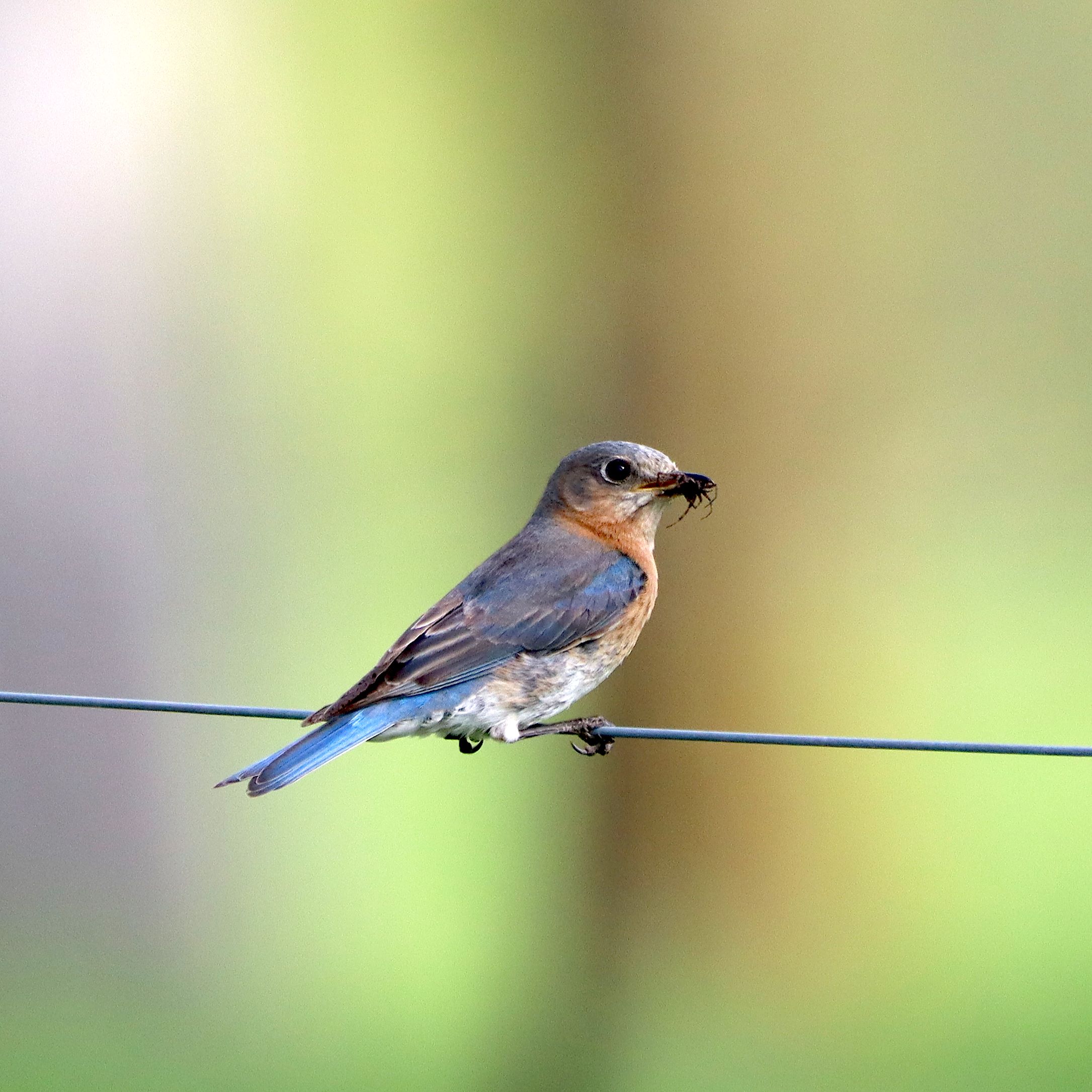
I caught movement across the street from the bird house and spotted the female on a wire fence, and took a few photos of her.
When I turned back to the tree, the lizard was gone. No, wait! It had moved locations.
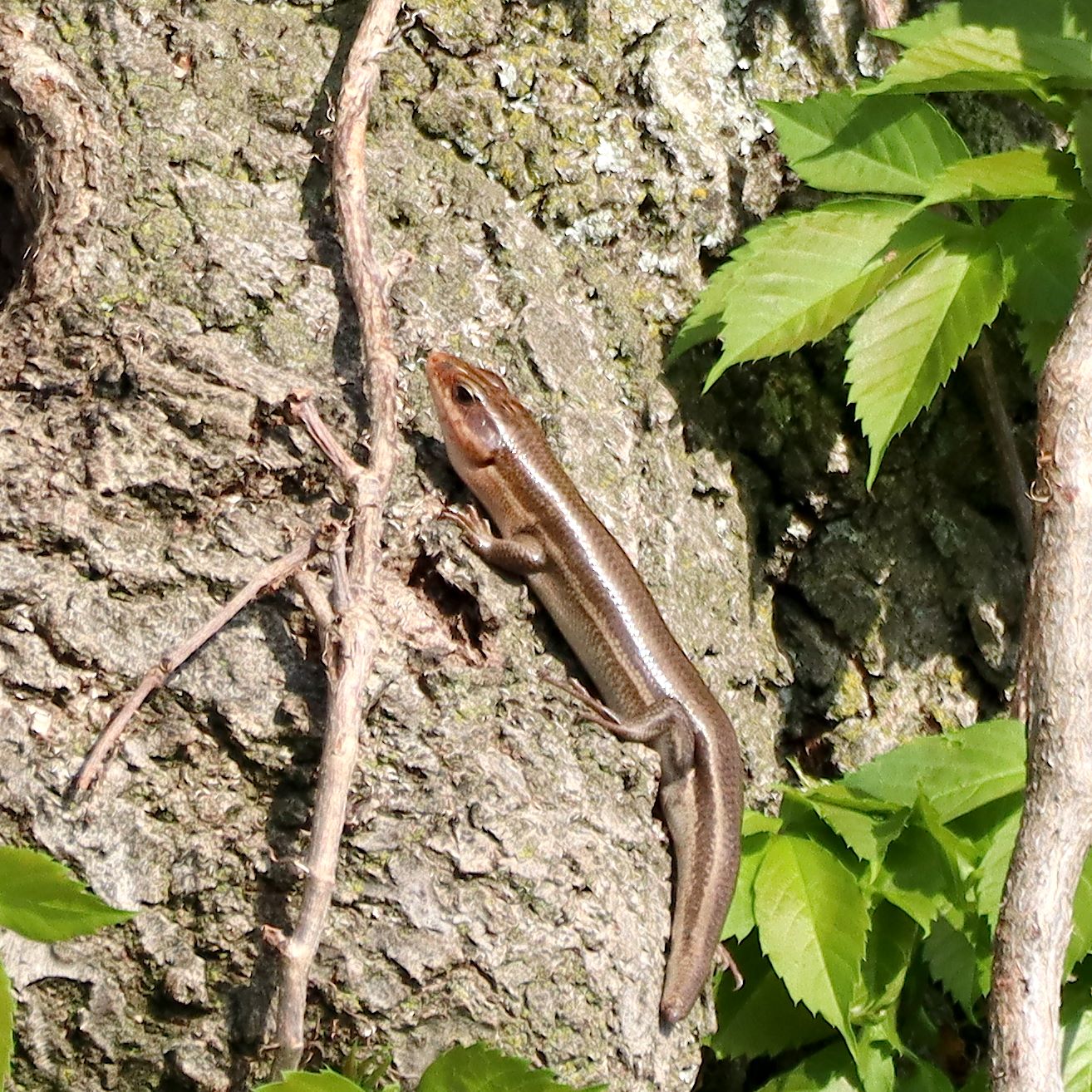
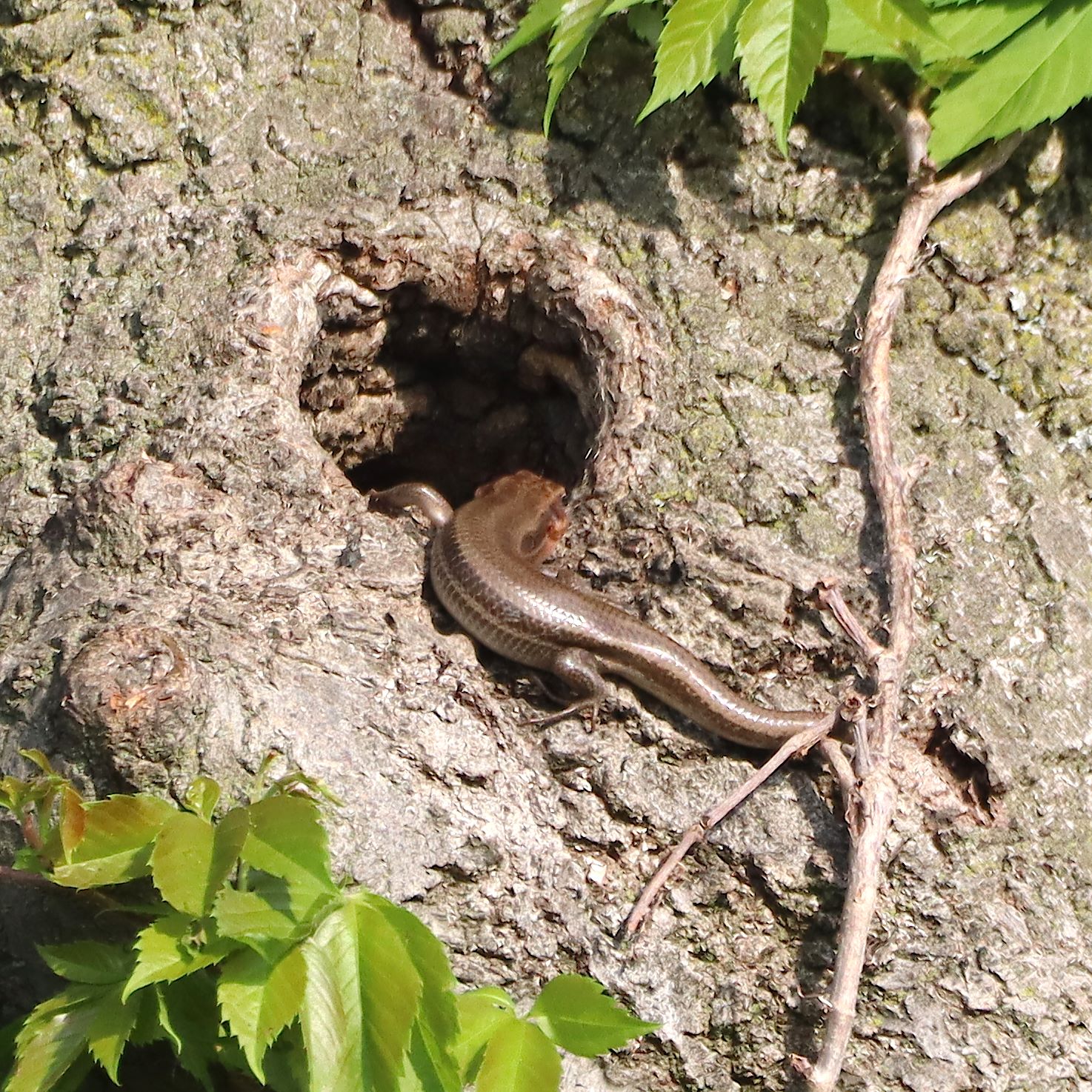
I have a degree in Biology. In 1982, I spent my last semester of college in Monte Verde, Costa Rica doing field research. Then, I spent 20 years in academia, a clinical setting and mostly in corporate America as a professional scientist. But, herpetology (the study of amphibians and reptiles) was never part of my life. However, I was fairly certain that what I observed as a skink.
A quick bit of research told me that there are just three skink species in Illinois all of which appear to have a northern range just about where we live. That should mean I could definitely tell which of the three species is the one in our tree. However, the identification photos on different reference pages appear quite different from each other in color – but, not head shape or natural behavior. For those reasons, I’m guessing that this is a Broad-headed skink. This is based on the fact that the other two species have a very slender head and mostly because of this text, “Broad-headed skinks are one of the few skink species at home among trees. They will often climb trees for cover and protection from predators.”
I just never know what I might find when I go out and about or farm-gone-wild. Nature is filled with surprises. If you haven’t been out in a wilder place of late, take a moment to plan a trip, if only to a local park. Nature grounds us.

