Tammie Rogers
Inspired by Dogs & Nature
Long Stick – Small Hole
A couple of years ago, I filmed a Chickadee exploring a hole in an old gate post that was created when the latch hardware was removed or fell from the post. I was very excited to think that the Chickadee might claim the cavity for its nest. But, after that first day, I never saw it on the post, again.
A few days ago, from quite a distance, I saw a small bird hop-climbing up the post before disappeared into the hole. By the time I got close enough to identify it, I only briefly saw that it was wren. I wasn’t sure if it was a House Wren or a Carolina Wren. They both carry themselves in that very typical wren stance. A couple days earlier, I had heard the song of a House Wren for the first time of the Season. They migrate south for the winter. Carolina Wrens stick around here all winter. Both species nest in cavities.
The exempt fence post sits about 10 feet from one of our PVC bird houses (labeled “J.”) The day that I saw the wren on the post, I also saw a pair of Tree Swallows fly in, chattering to each other, and very briefly land on box J. One bird landed on the house and peered in the hole. A moment later, he and his mate flew off.
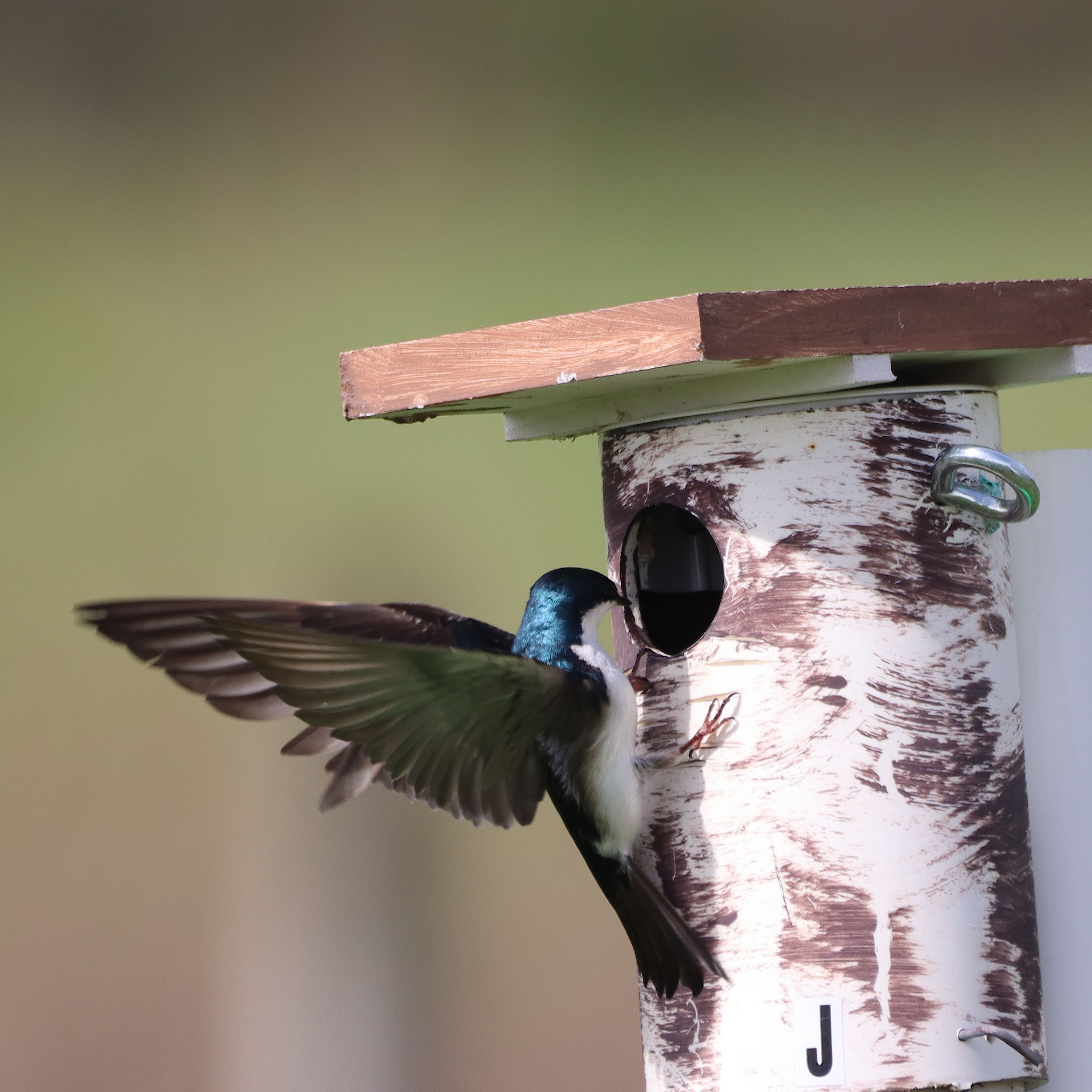
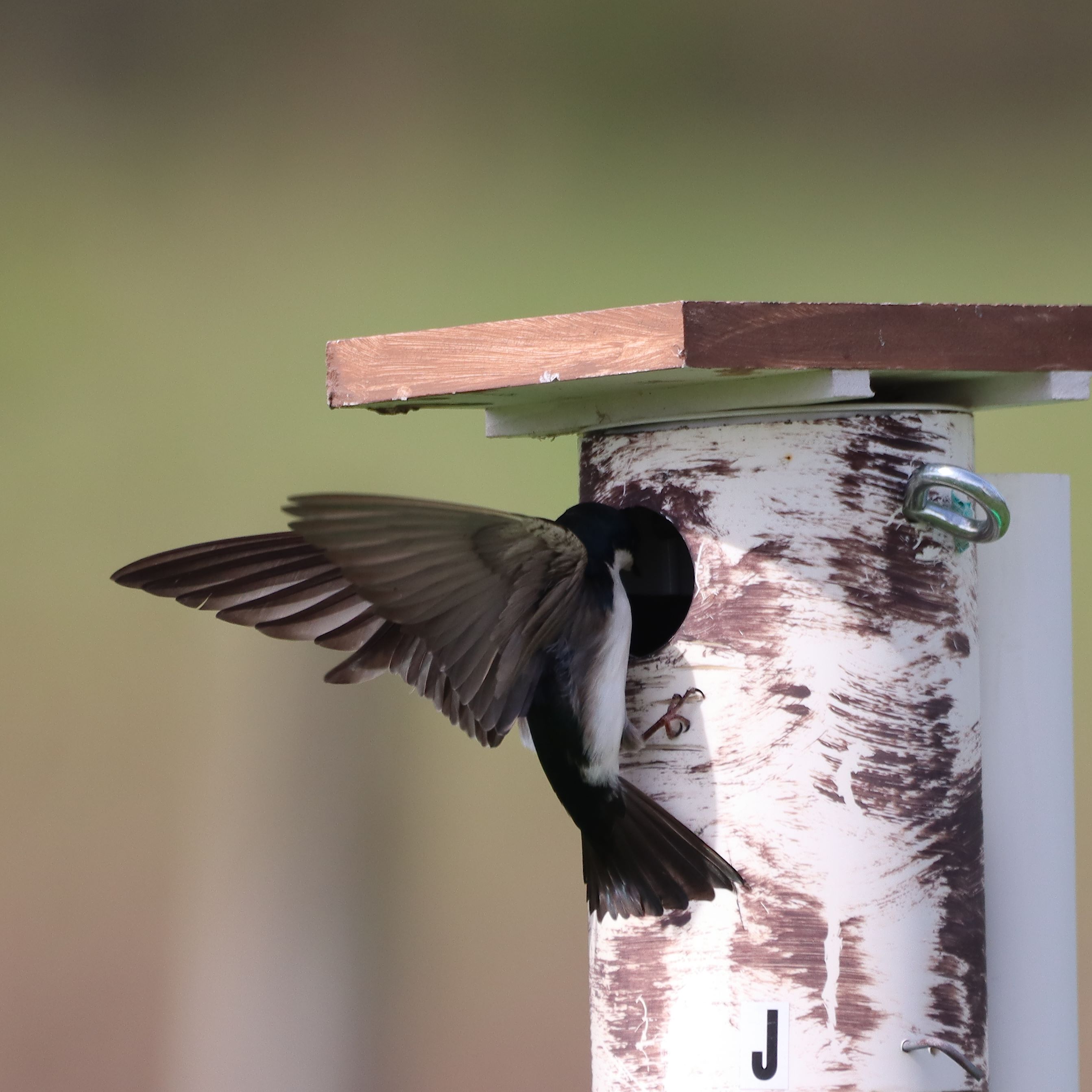
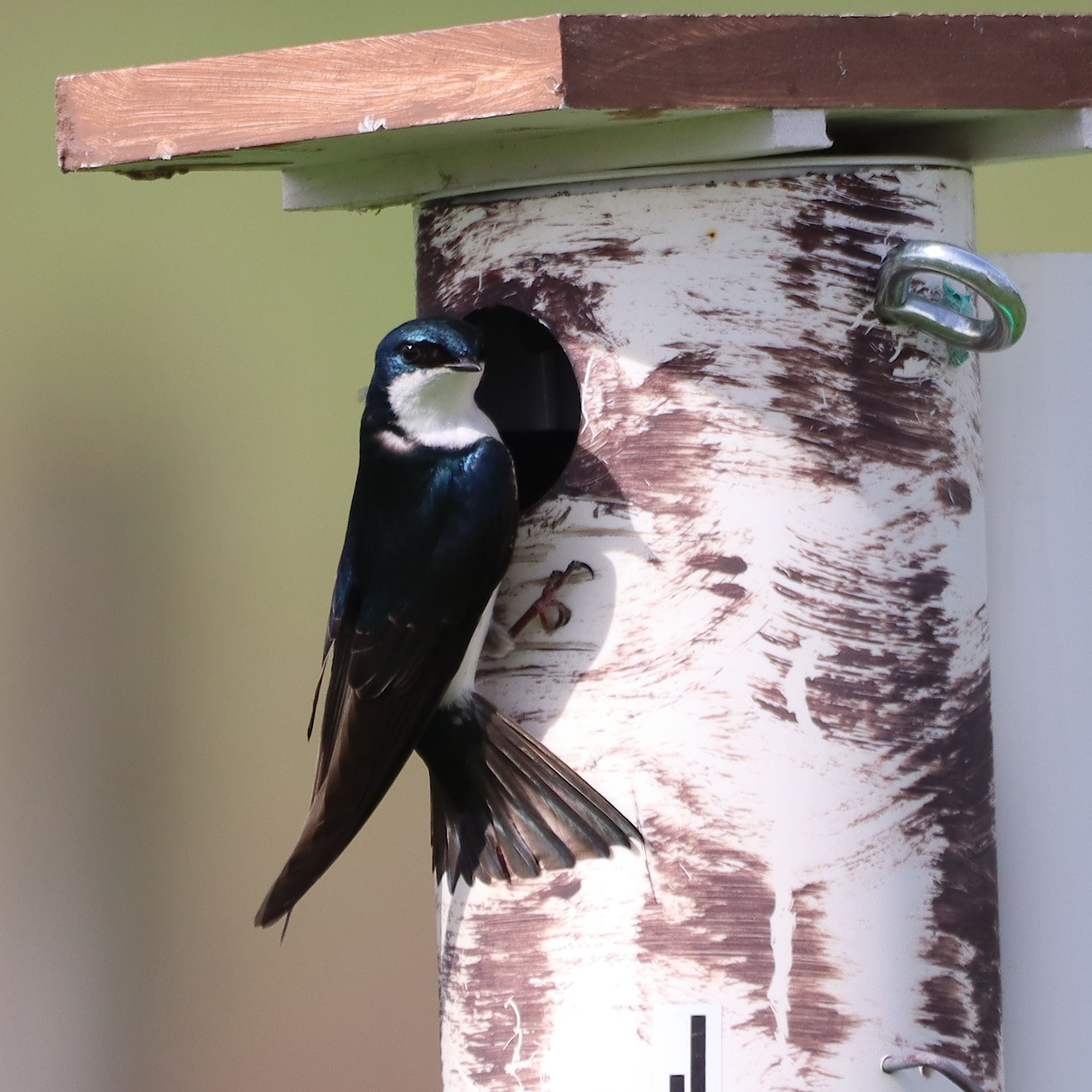
I suspect that the Swallows were in the early stages of checking out options for nest building. Still, I was curious enough to open box J before I left the area. What I saw inside the birdhouse was a nest that didn’t appear to be made by Tree Swallows or Blue Birds (the most common species that occupy our PVC boxes.) House Wrens are also common tenants of our PVC houses. Last year, I filmed Chickadees feeding chicks in a PVC box, as well.
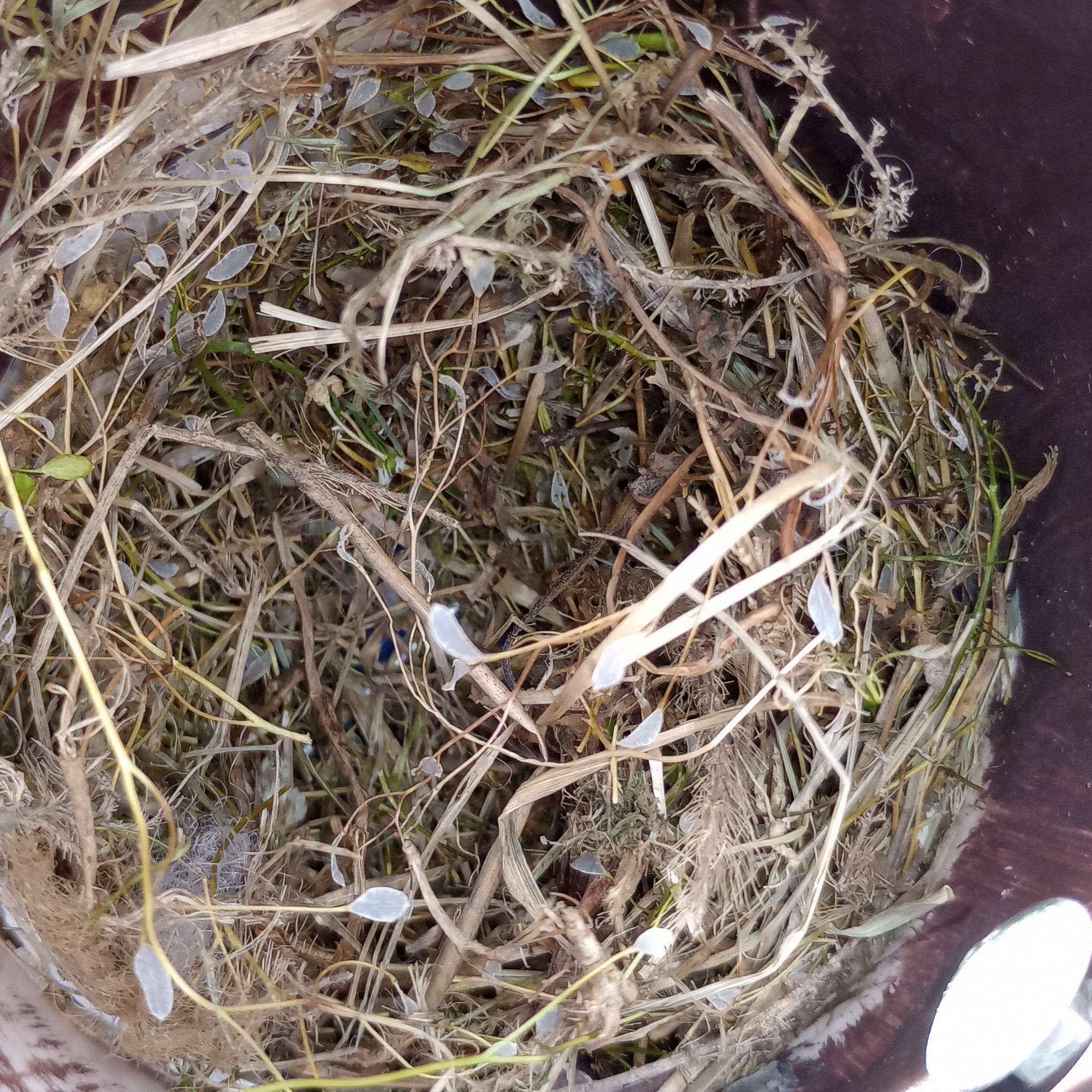
I suspect this nest belongs to a Black-capped or Carolina Chickadee couple. We live on the dividing line between the two species, which are very difficult to tell apart from their outwards, physical appearances. However, The Merlin Bird ID app has routinely identified both Black-capped and Carolina chickadees by their vocalizations (which is the most definitive way to determine the species.) Just two days ago (the day after I filmed this nest), Merlin identified both species on the same day.
There’s also a chance that the nest belongs to a Carolina Wren. Both the Chickadees and the Carolina Wrens add green plant material to their nests which they build inside of cavities. I’ve not yet seen a Carolina Wren use one of our nest boxes. Curiously, a couple years ago, Carolina Wrens built a nest in a deep cavity they located in the cracked dashboard of my golf cart that I park outside my office patio door. Once they fledged their chicks, we fixed that hole! Last year, Carolina Wrens built a nest in a metal can “nest” that is hanging on the patio support post which, interestingly, is located just next to where I park the golf cart. I suspect it was the same pair as the one that used the golf cart the year prior.
The nest in Box J doesn’t have any eggs (yet) but, unfortunately, based on my research, Chickadee and Carolina wren eggs are both white with brown flecks. They look nearly identical. By the nest (and possible eggs) alone, I am not going to be able to identify who has set up a nursery in Box J.
I digress! This is suppose to be a post about the wren that I saw on the old fence post, next to Box J. When I camped out near that post two days ago, I didn’t have to wait too long before I observed the following.
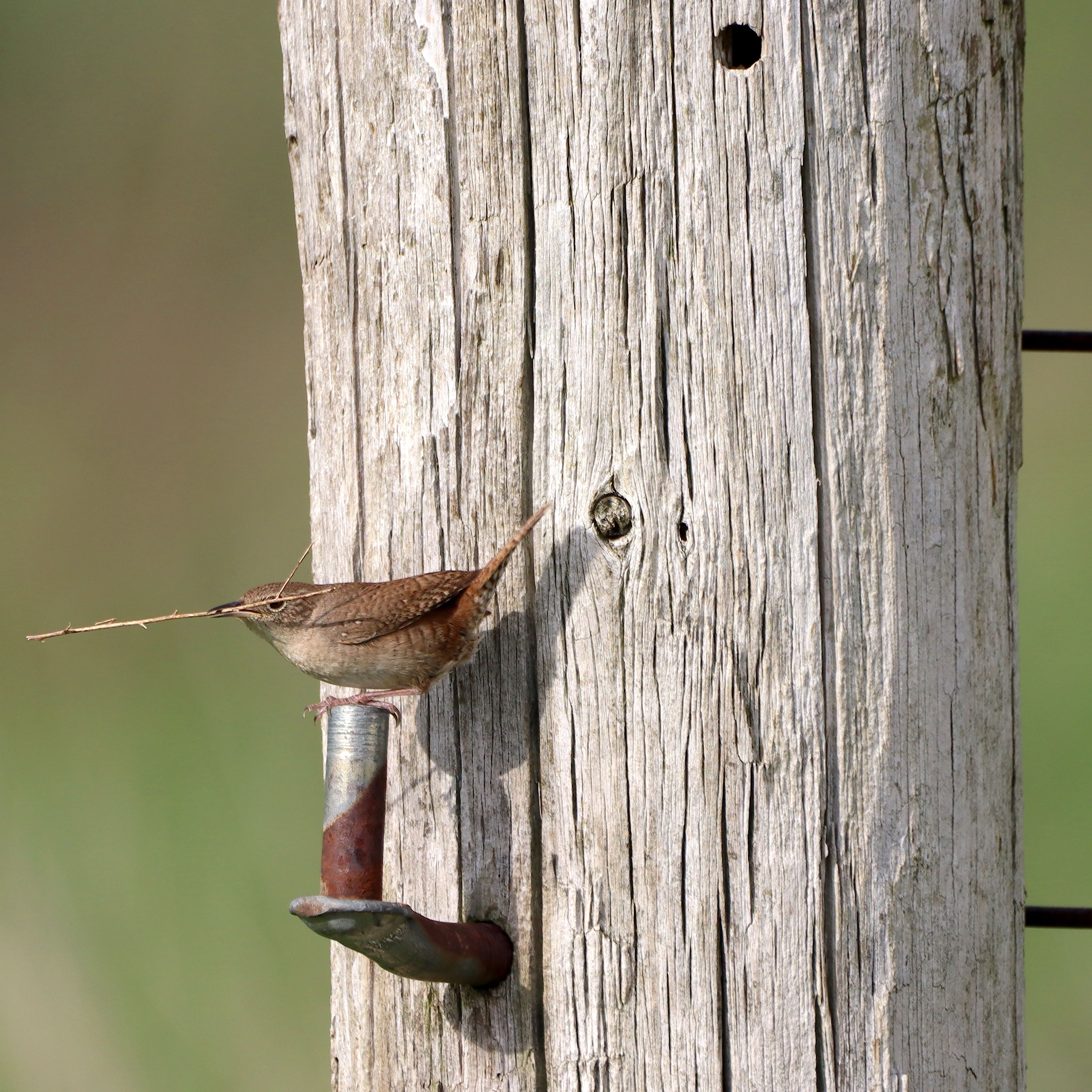
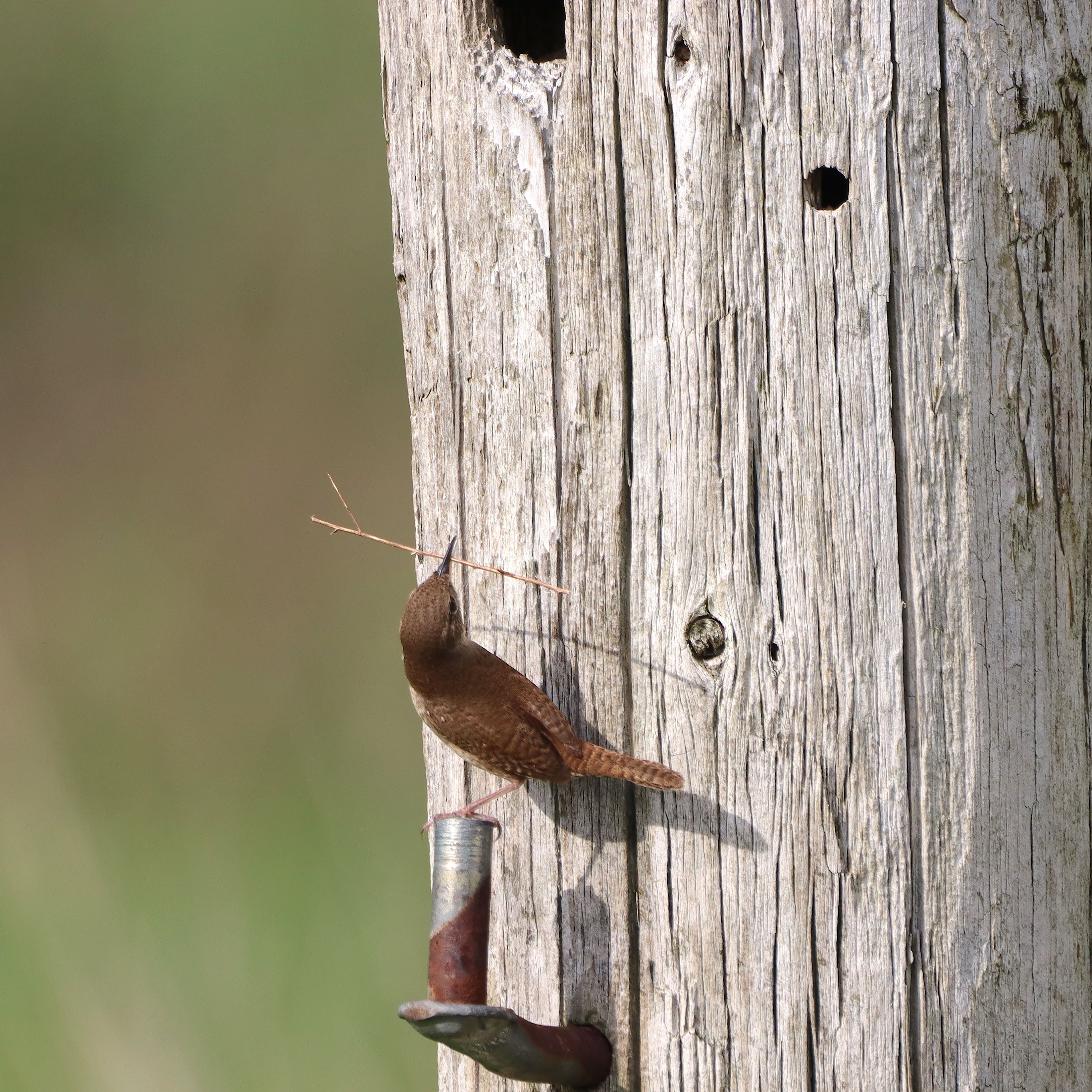
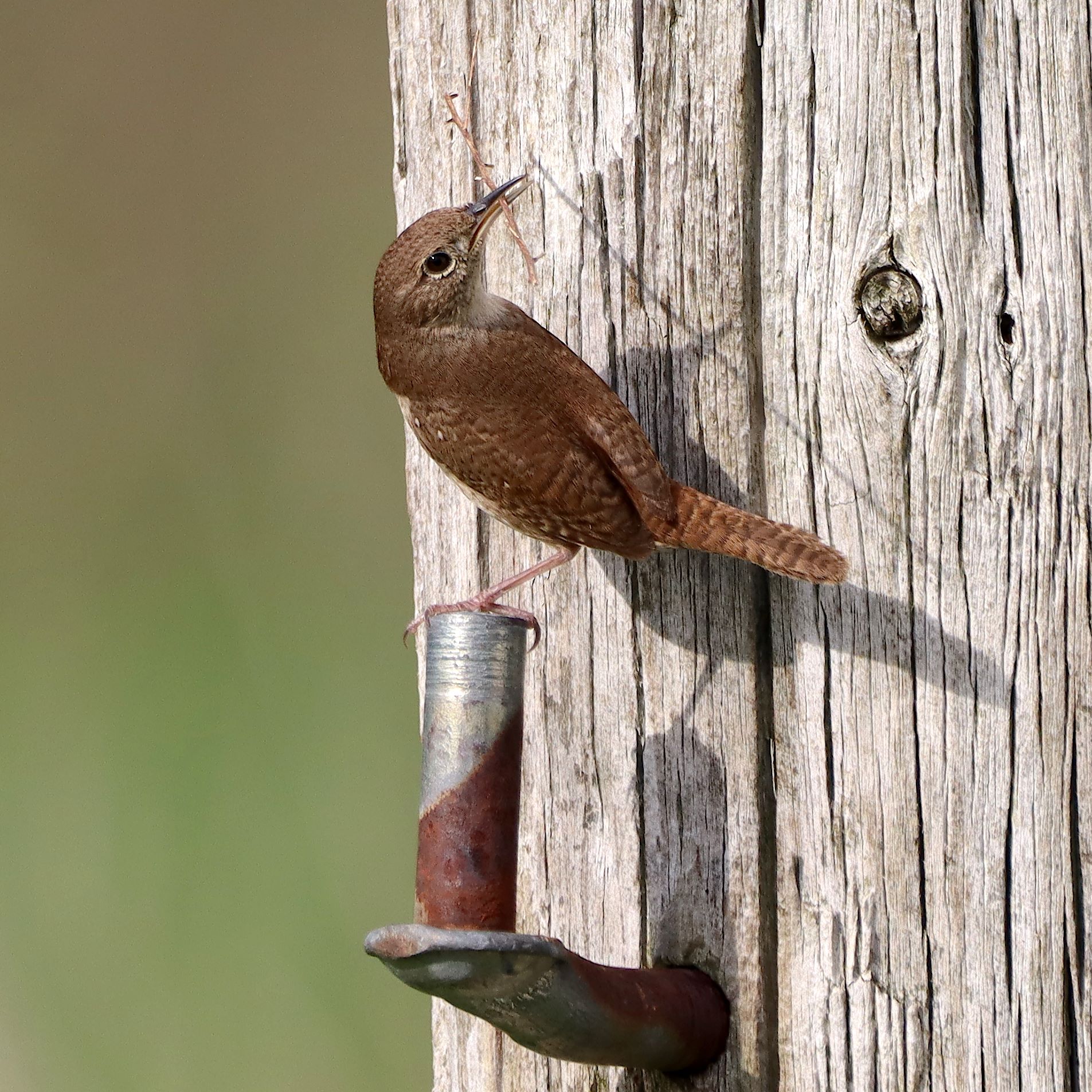
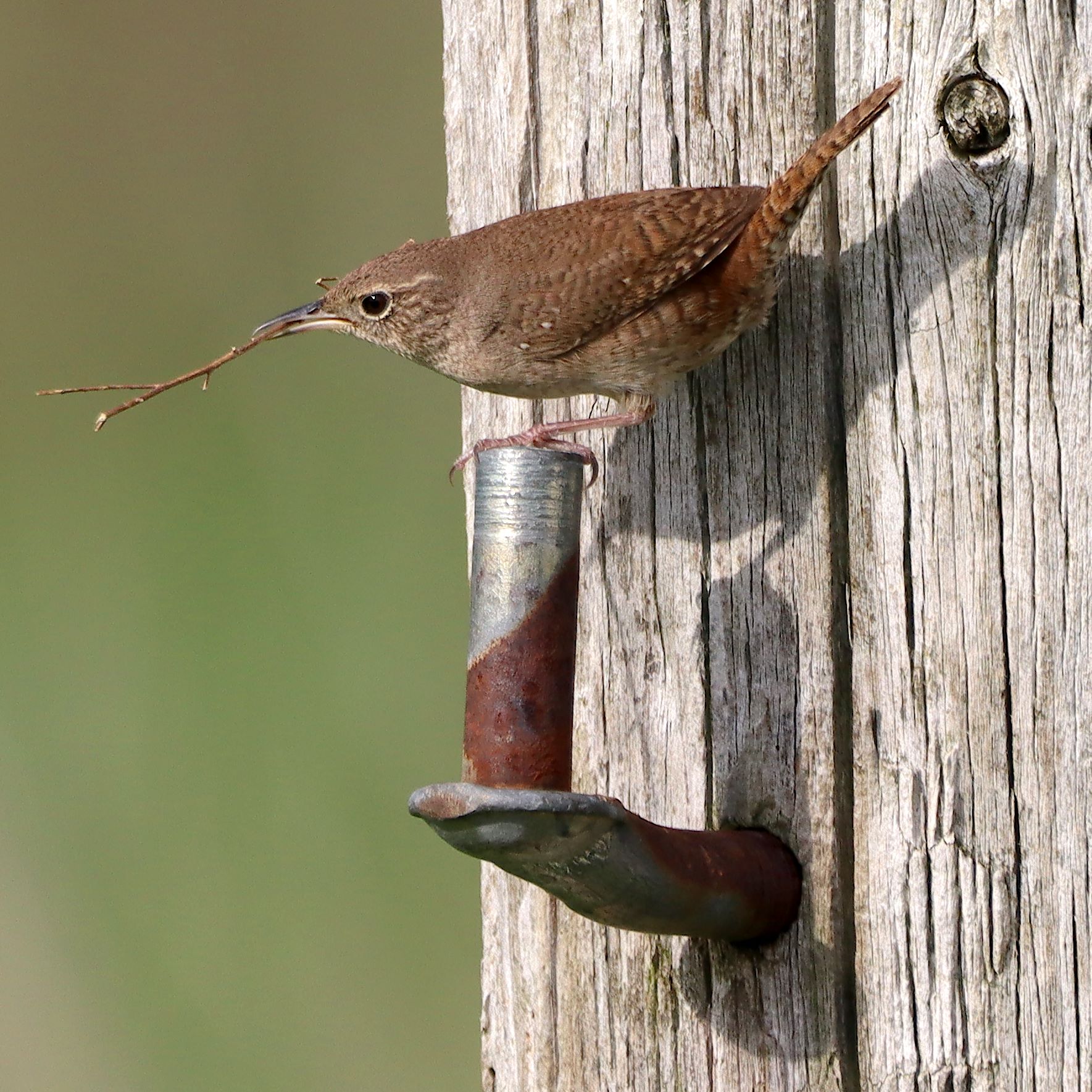
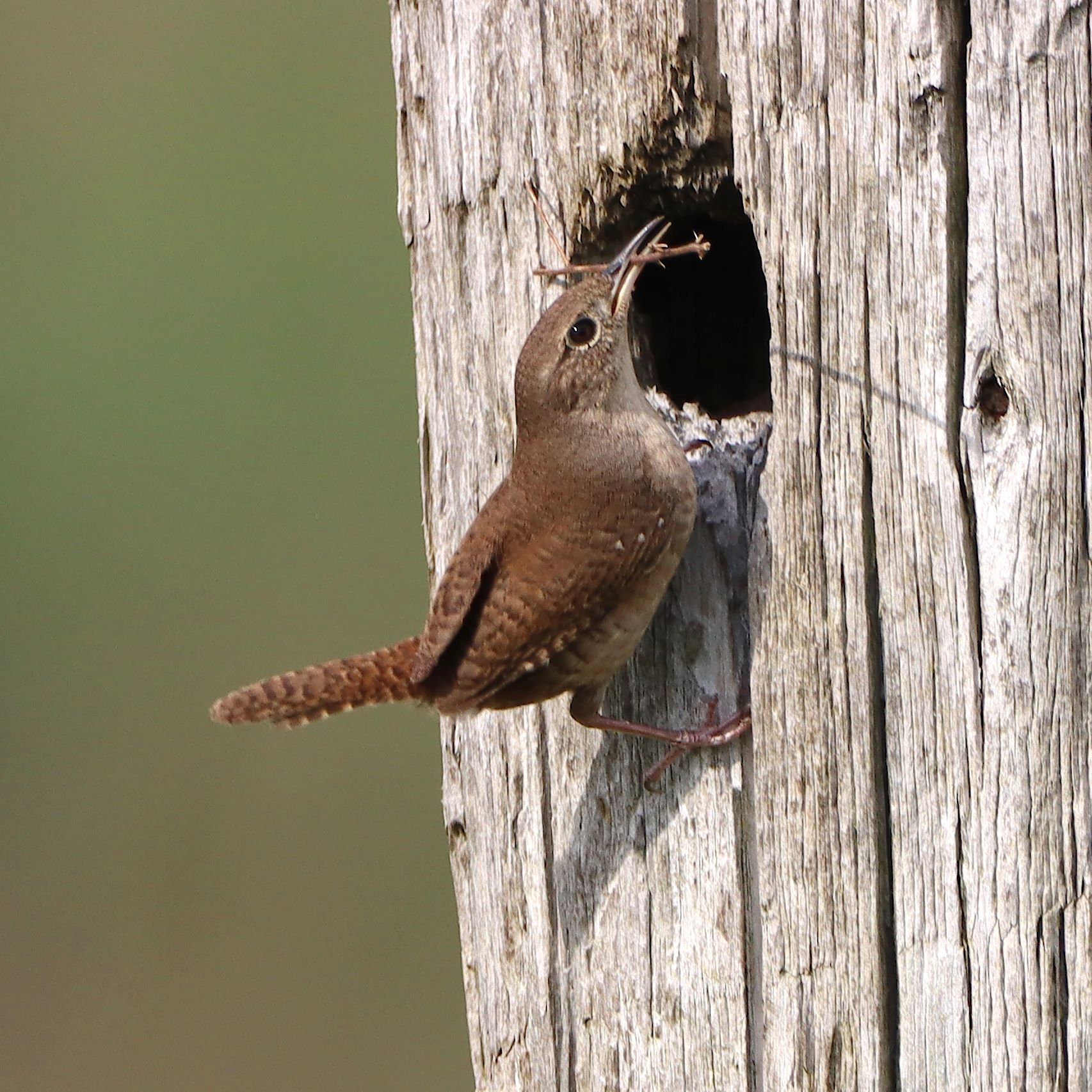
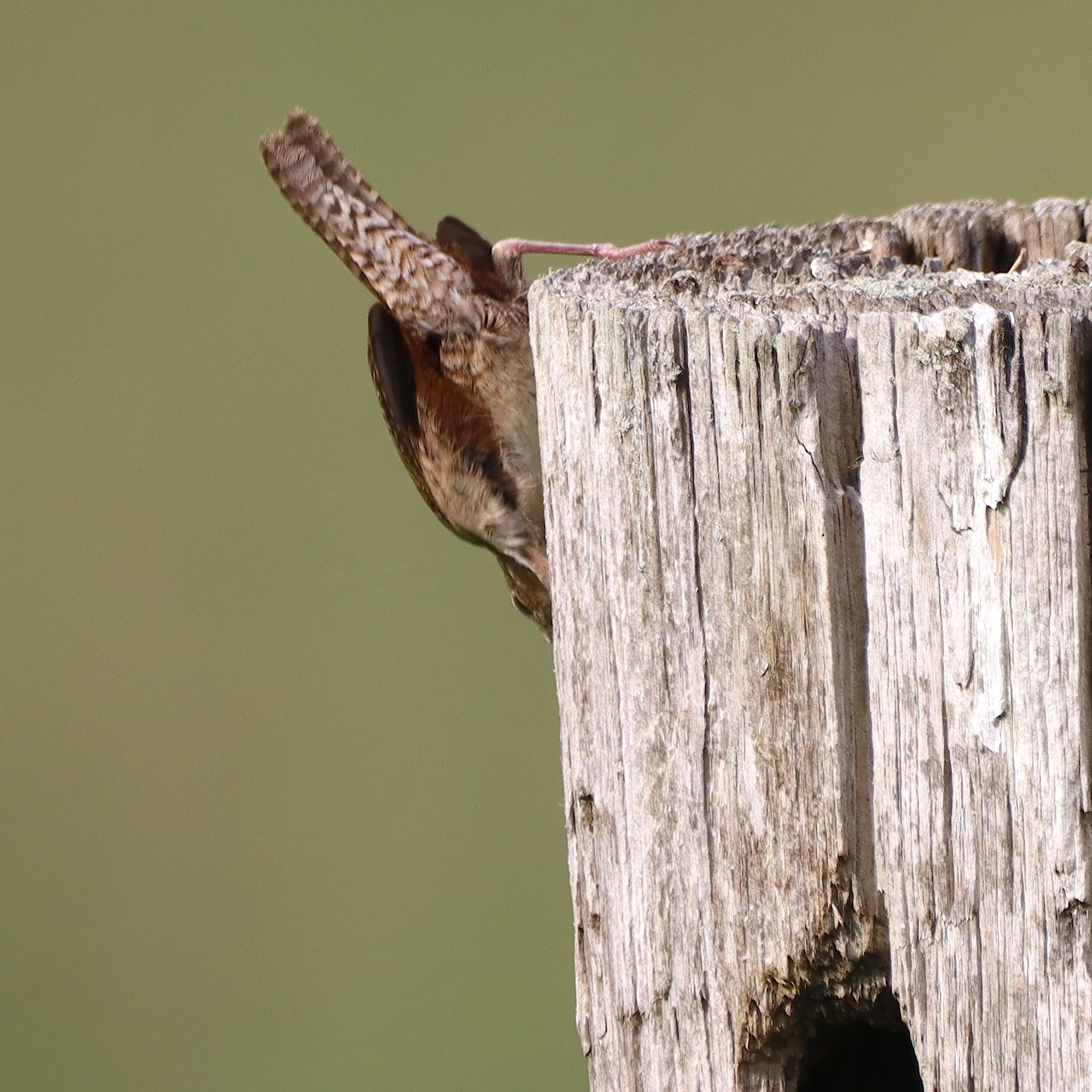
I have dogs. I have observed dogs for years. The first thing that I thought when this little bird with the big stick showed up at the hole, was, “so how’s that bird going to get that long twig into that small hole?” Dogs tend to be terrible at negotiating a big stick through a small opening.
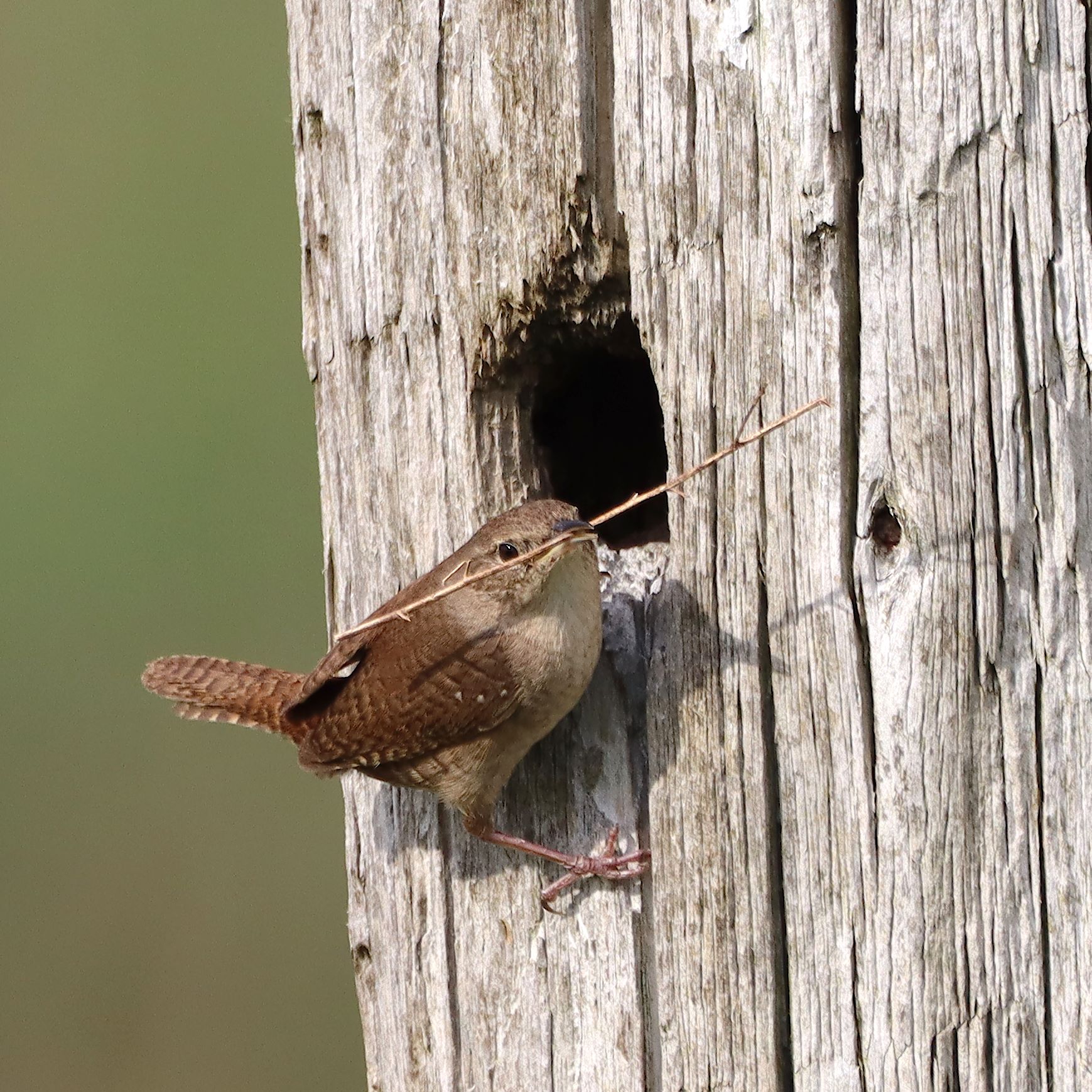
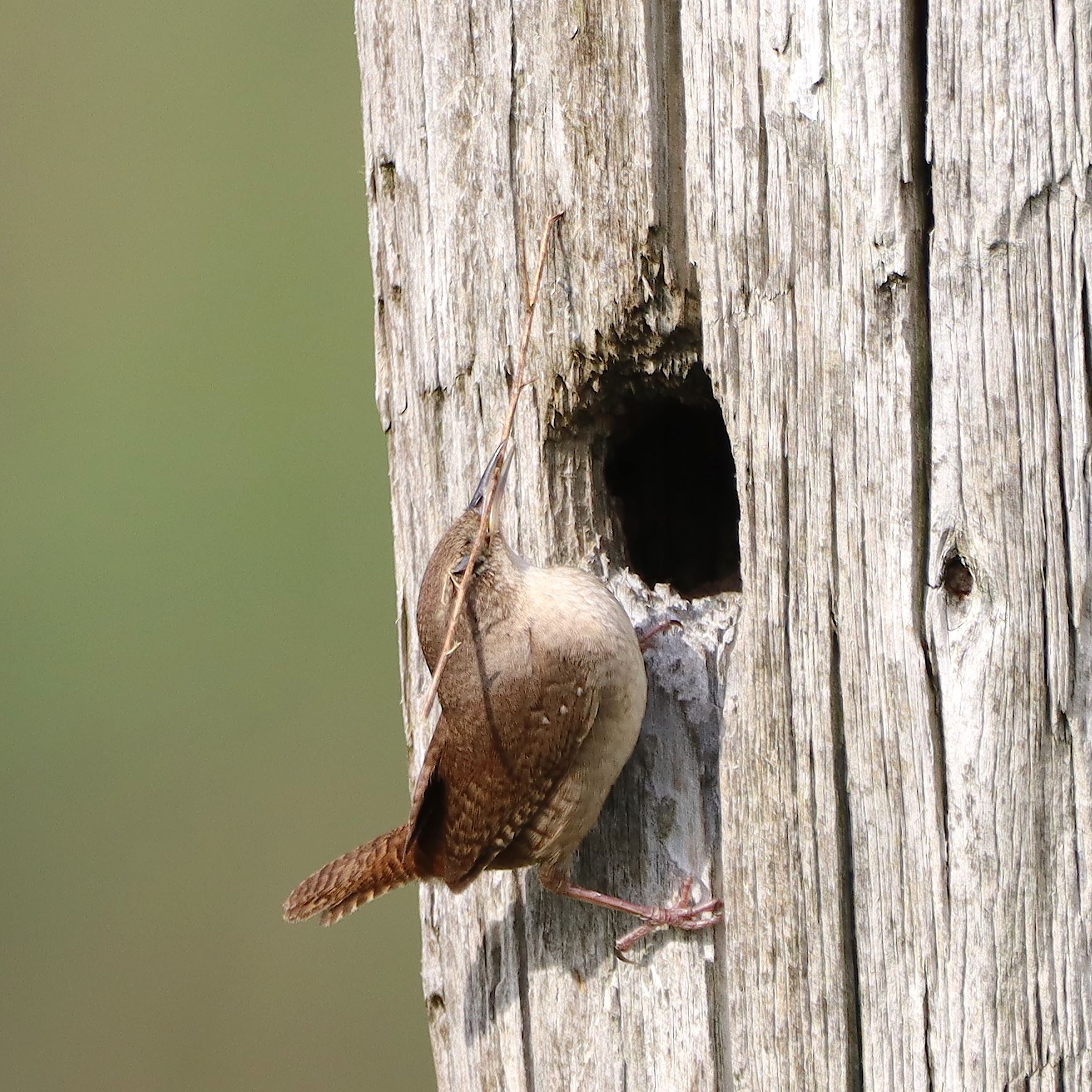
Oh. That looks so dangerous! That little bird could really damage its eye if it’s not exceedingly careful!
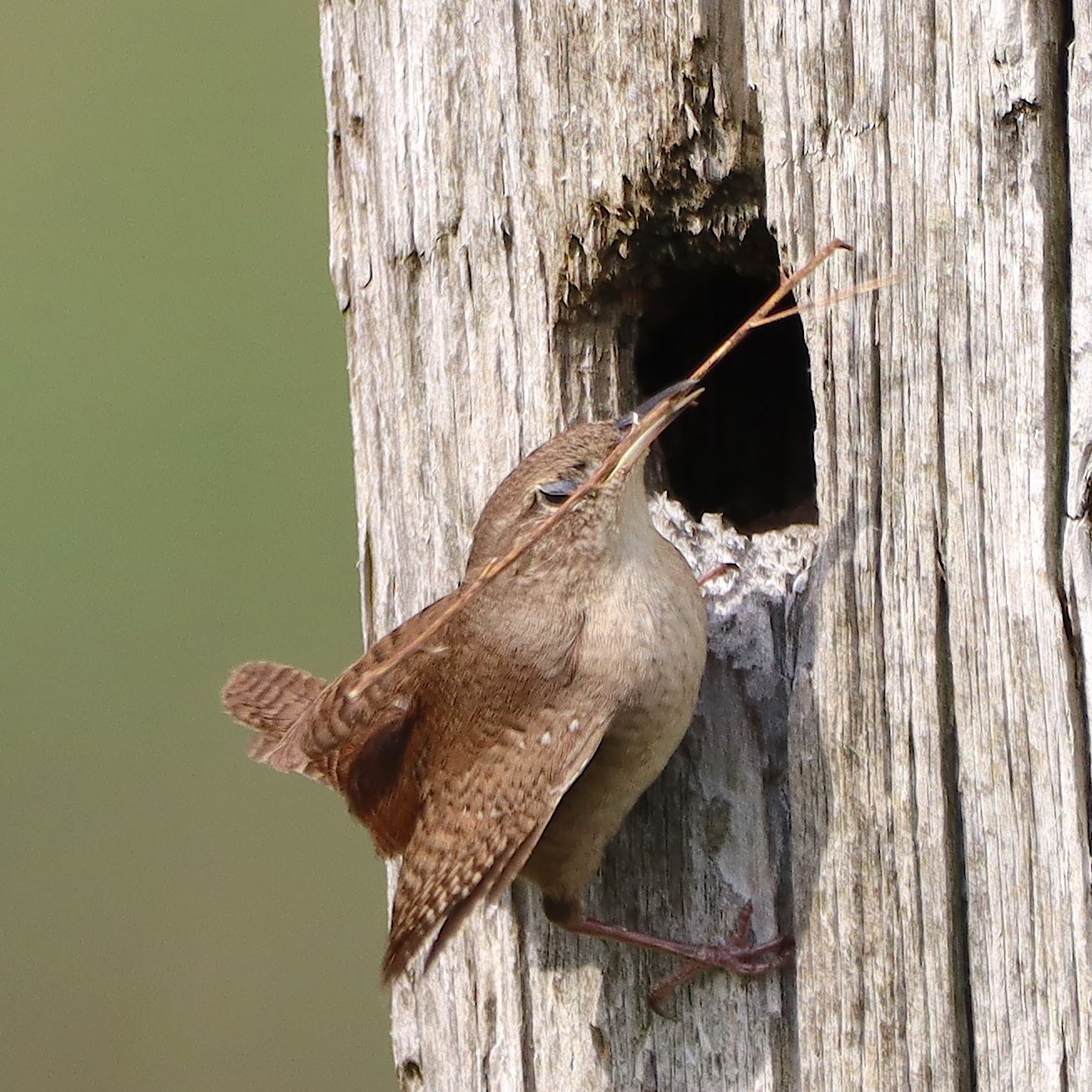
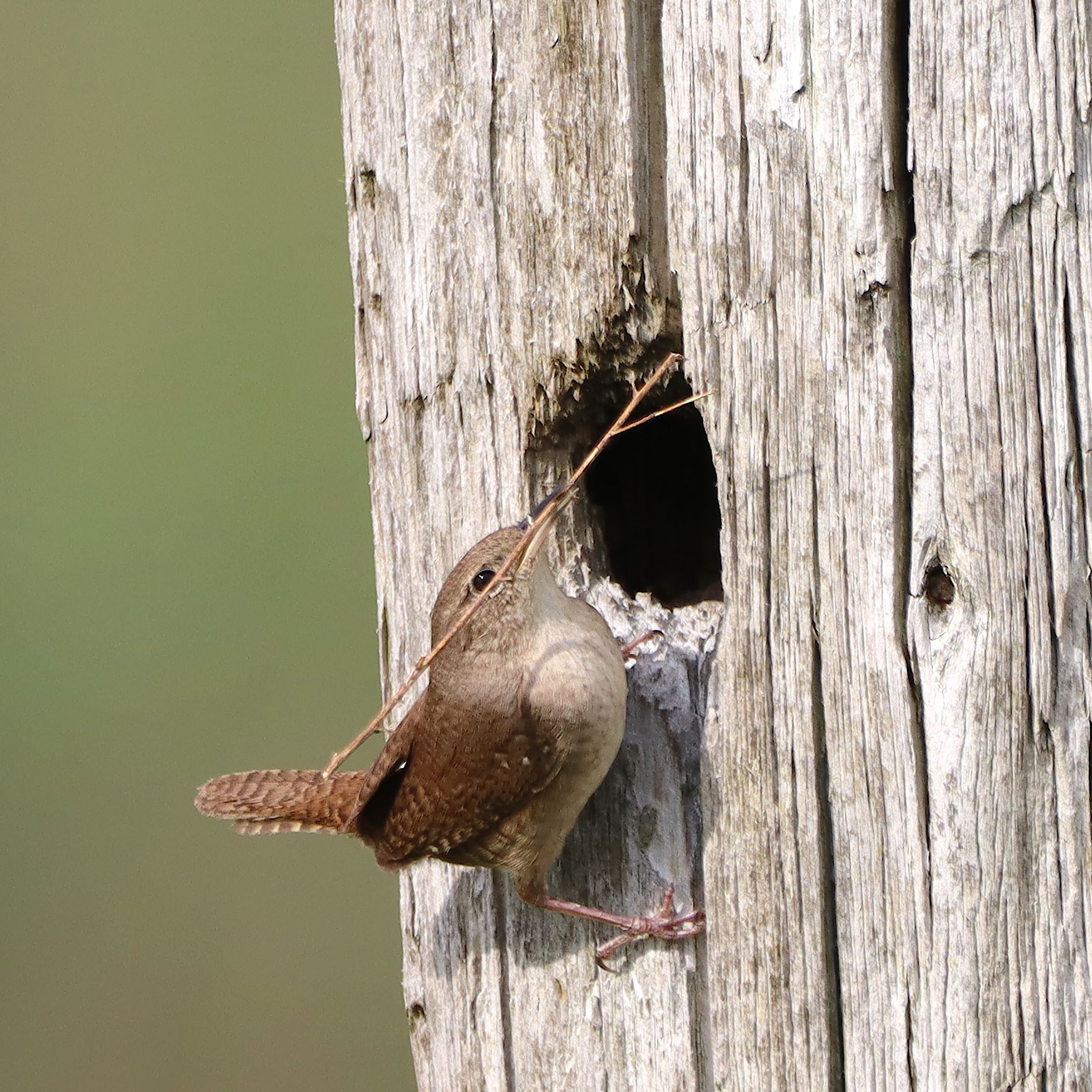
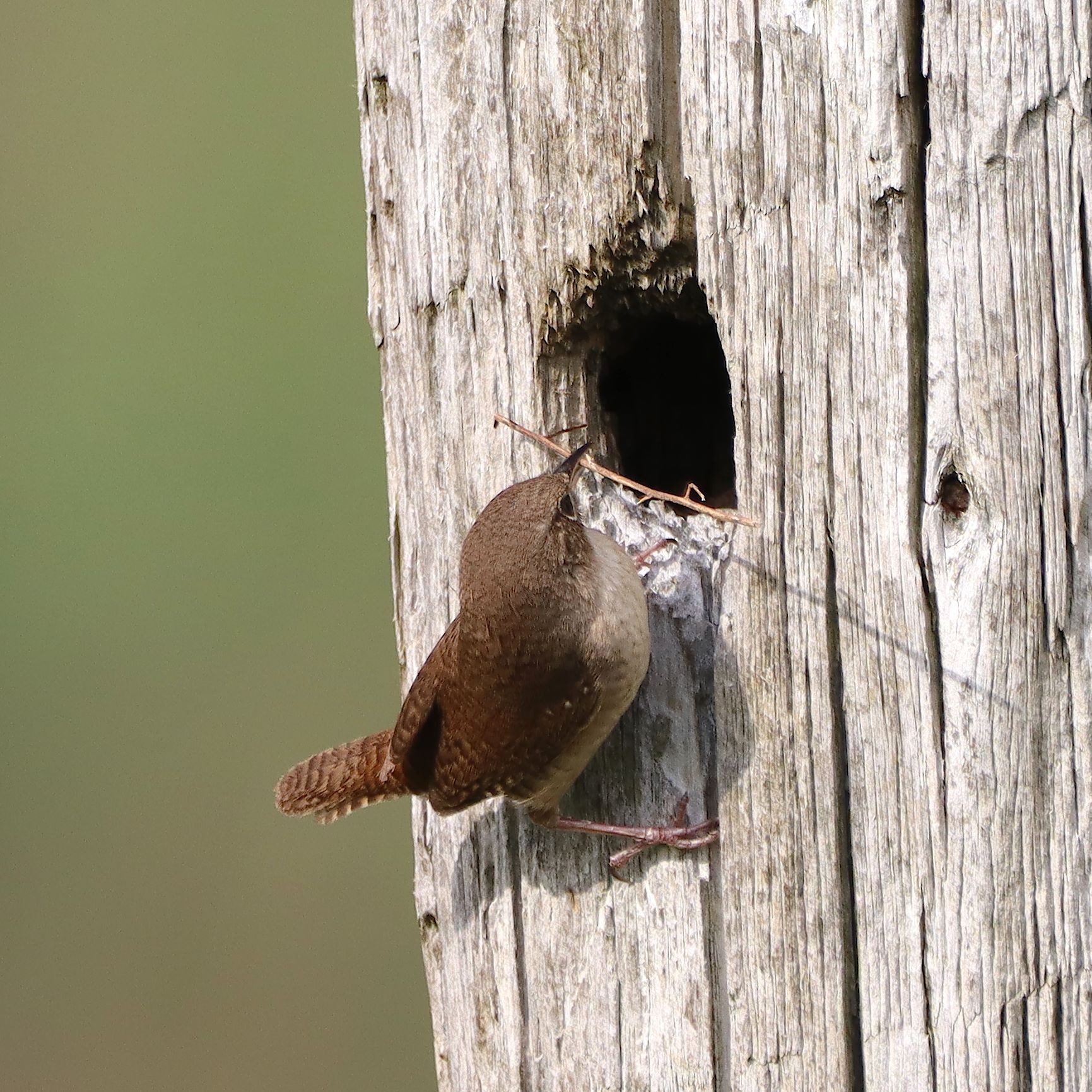
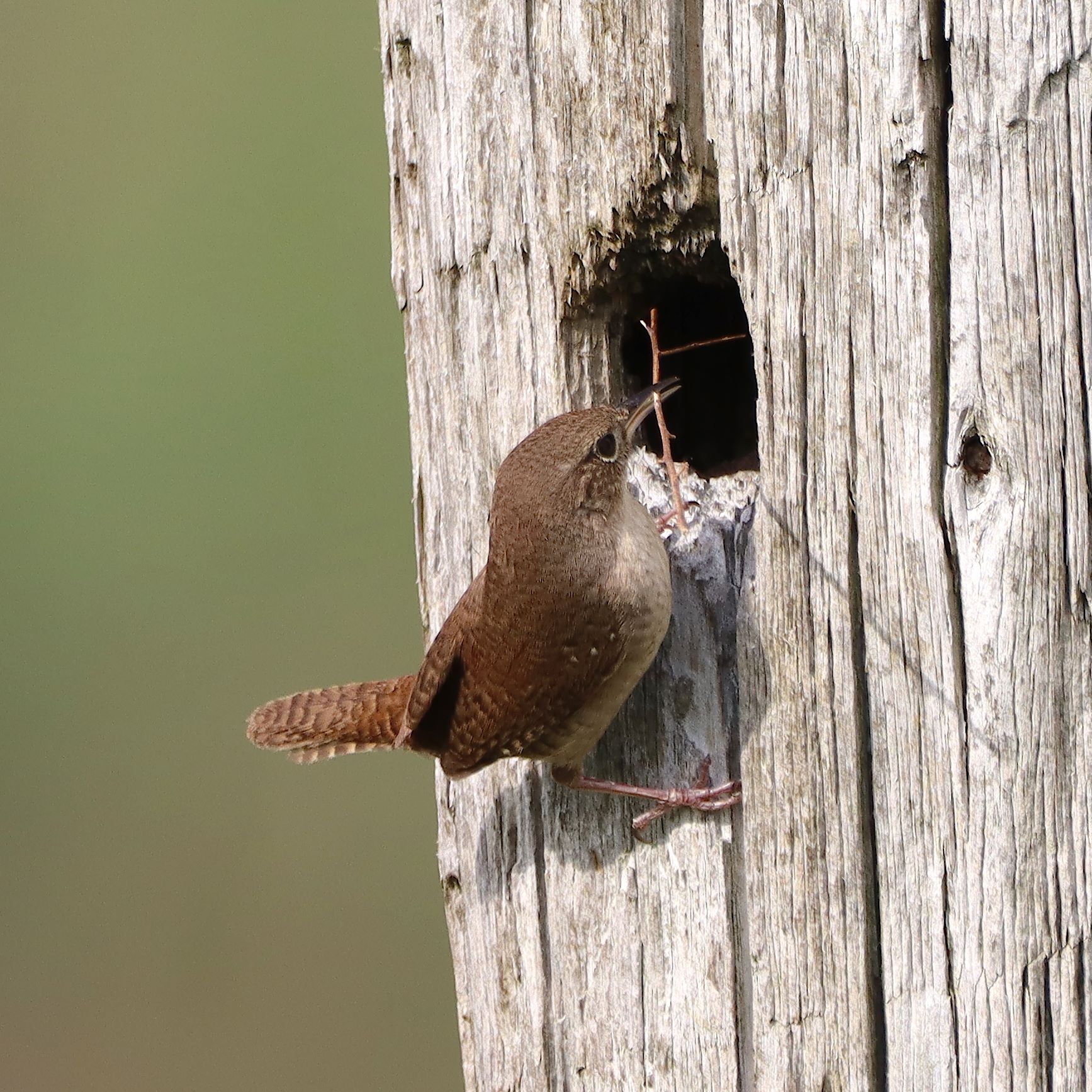
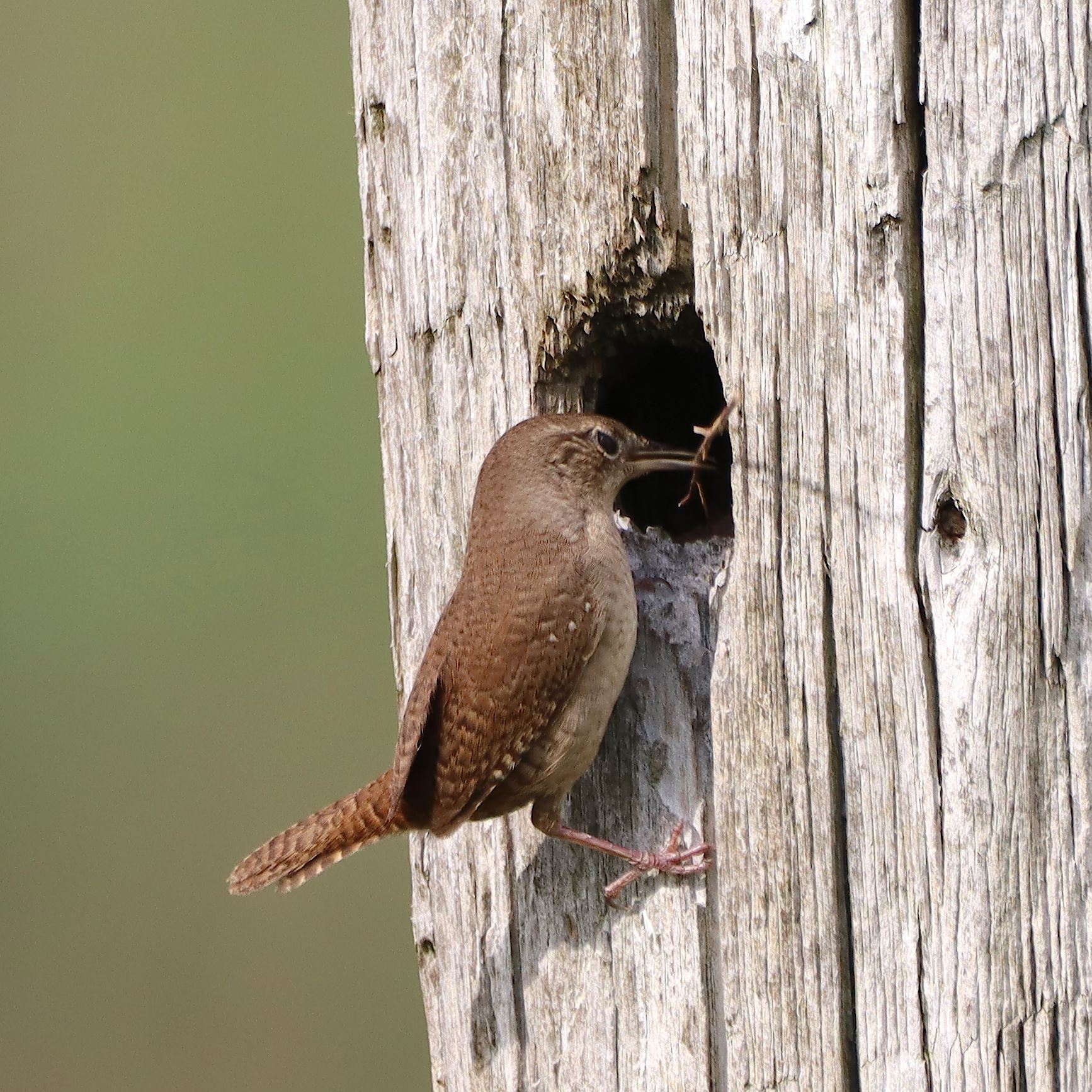
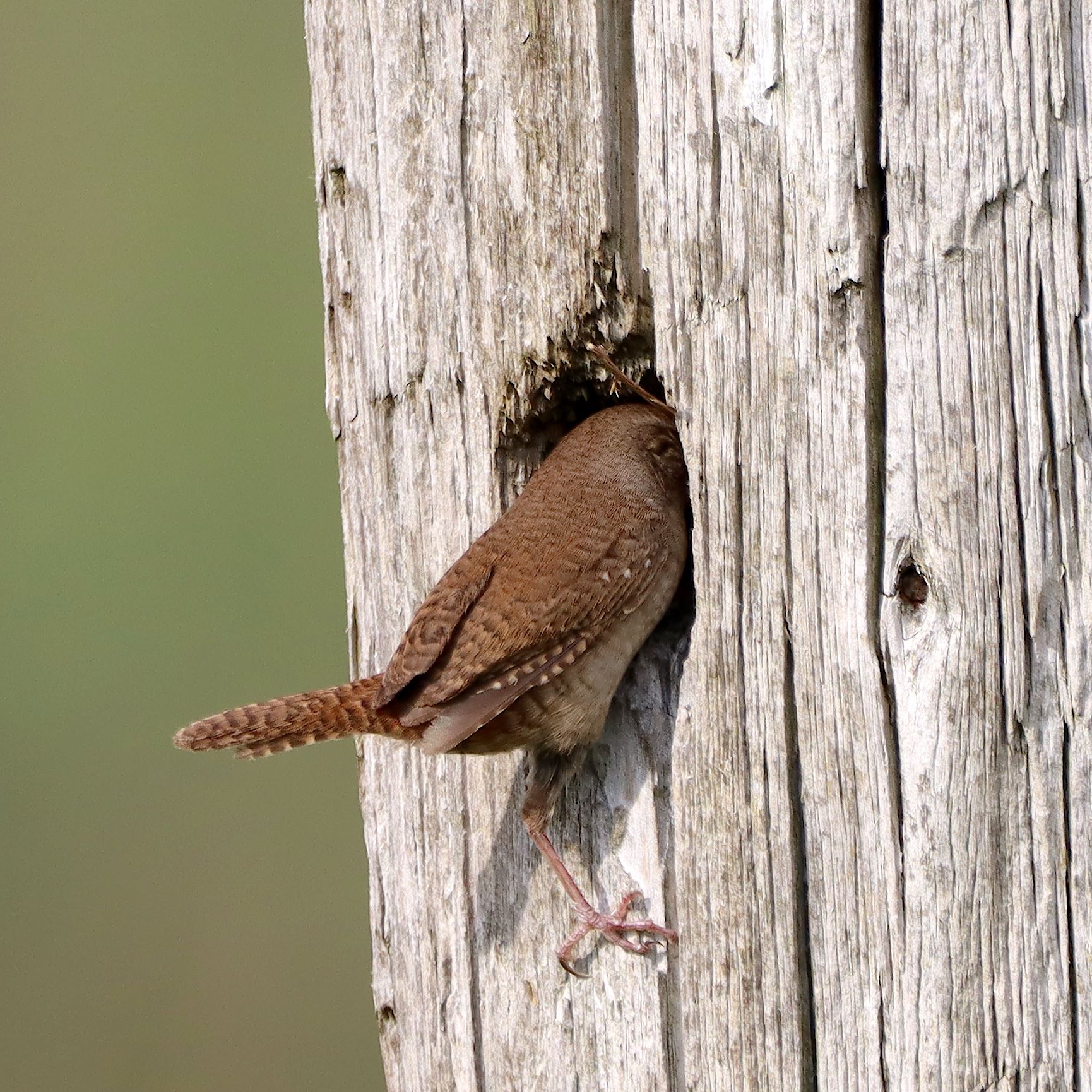
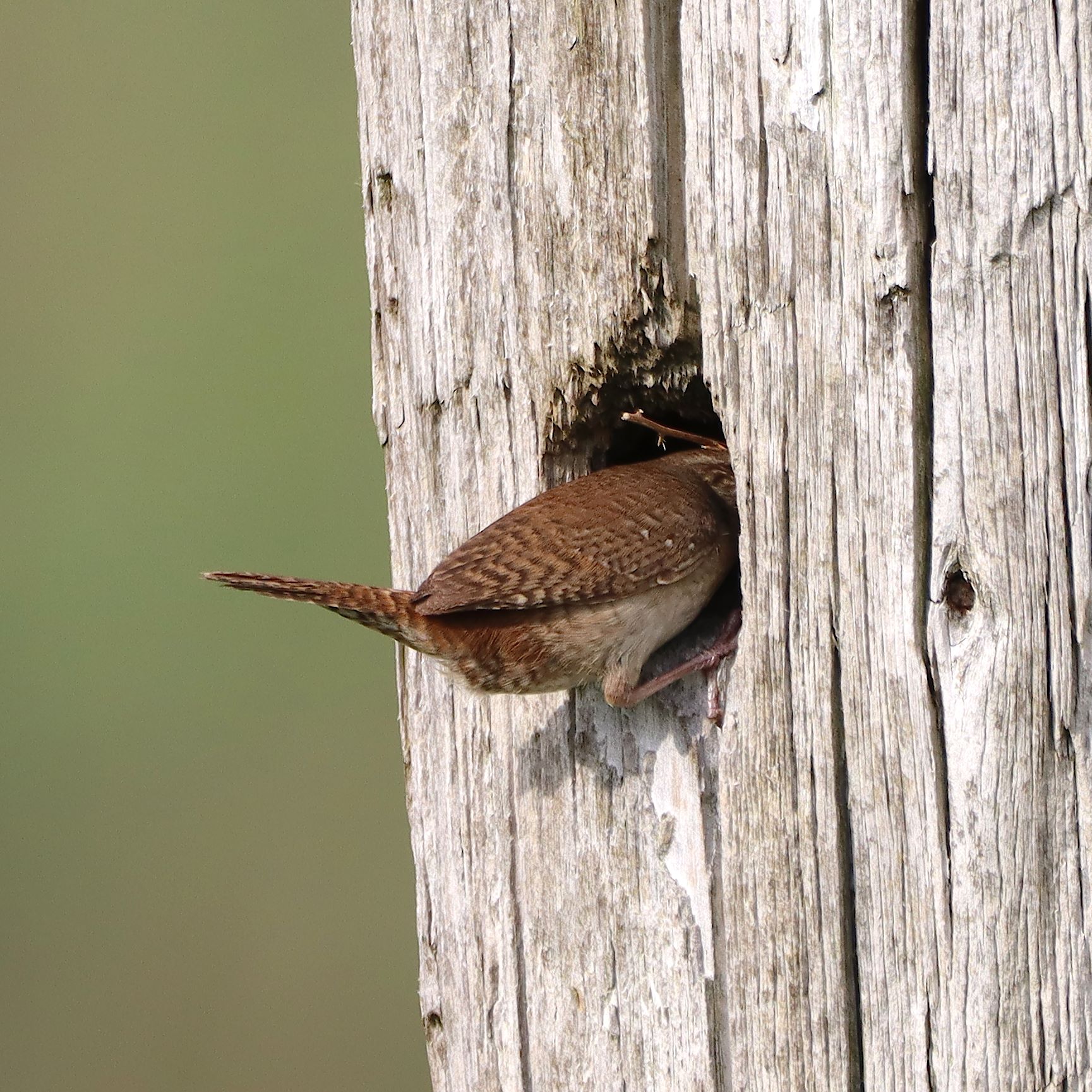
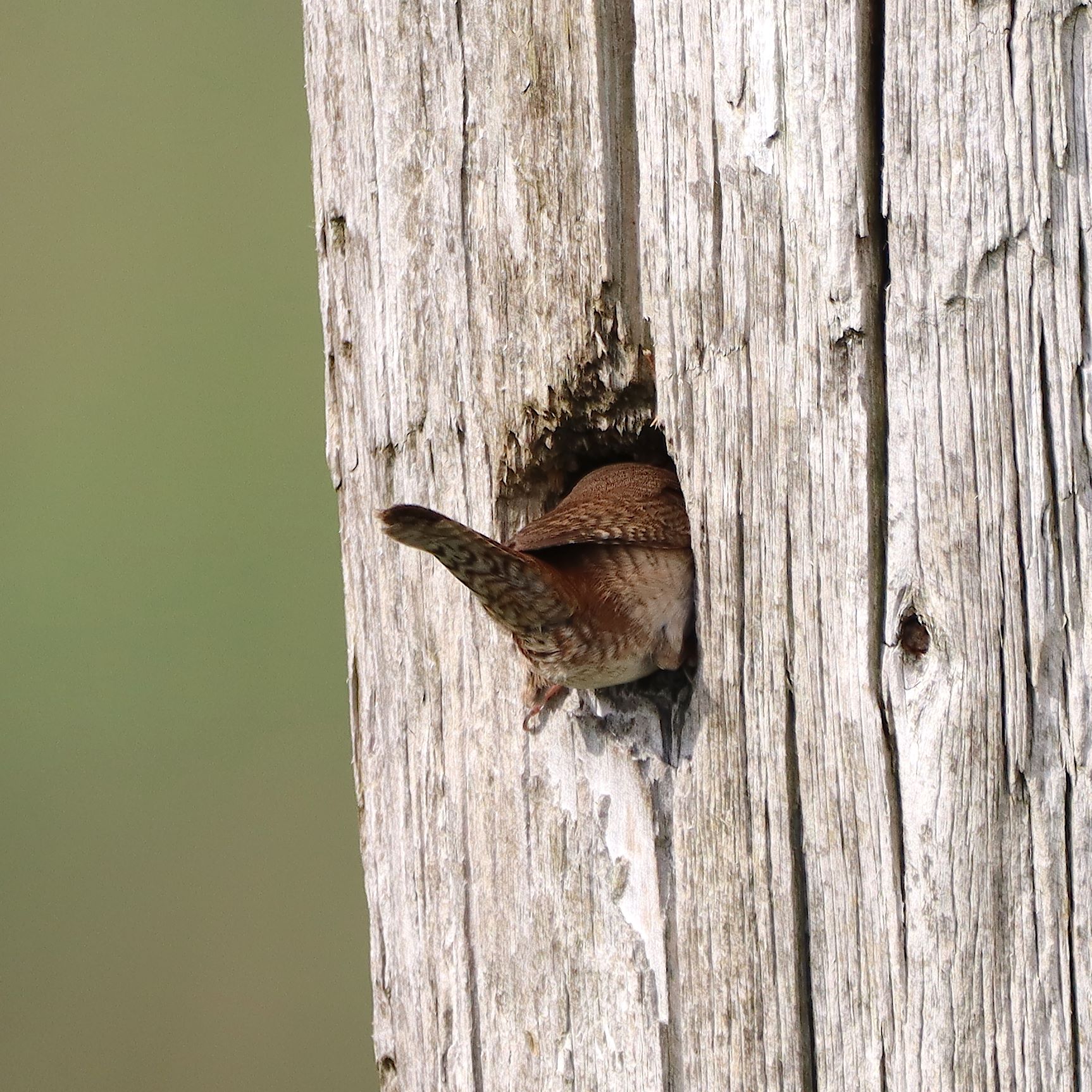
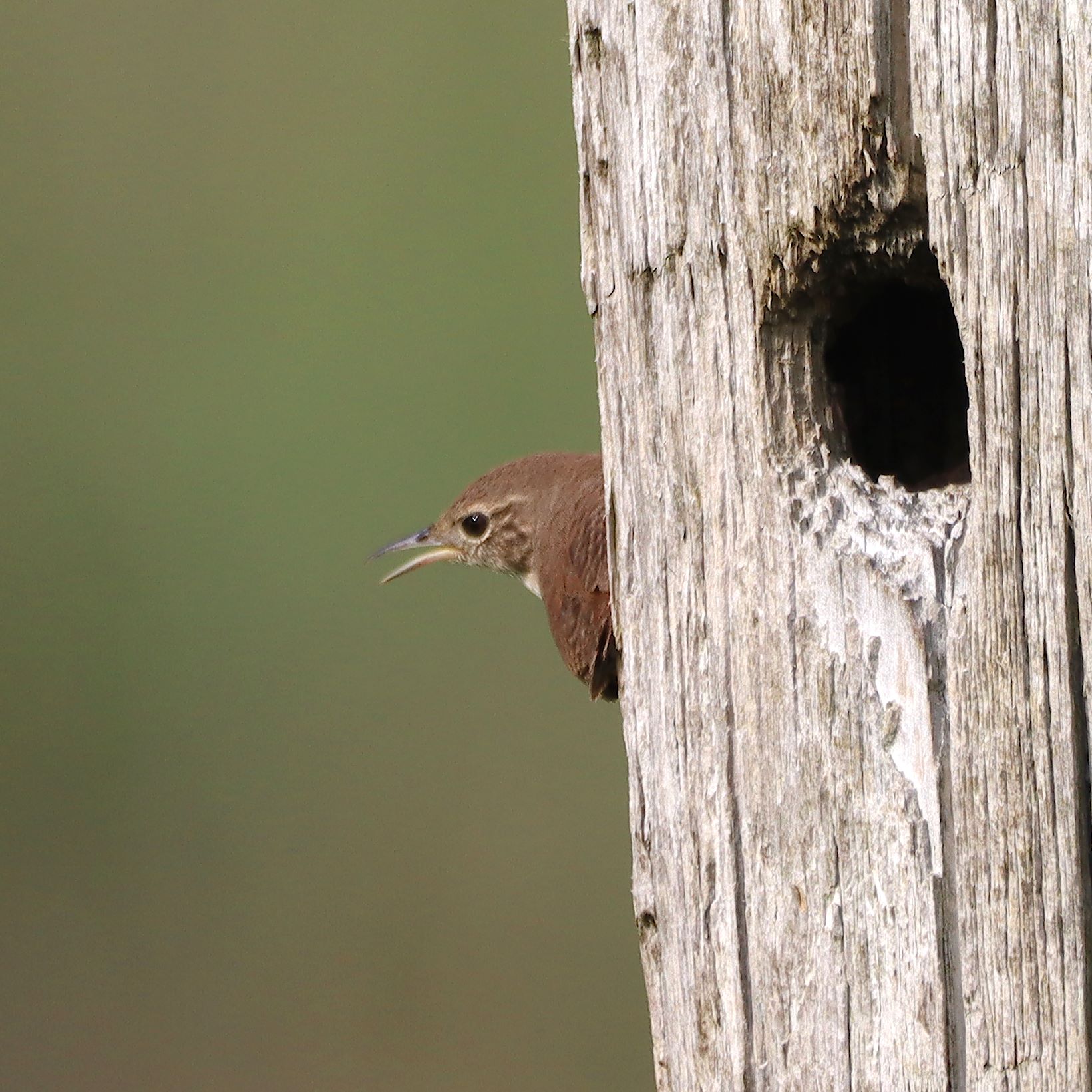
Those photos capture just a few seconds of activity. I was sure that the little bird had been successful getting that long twig into the nest. It pulled its head back and took a look around. These birds are always surveilling their environment. But, maybe it was contemplating its job, instead. Apparently, it wasn’t satisfied with how that twig fit into its perfect idea of future resting place for their precious eggs.
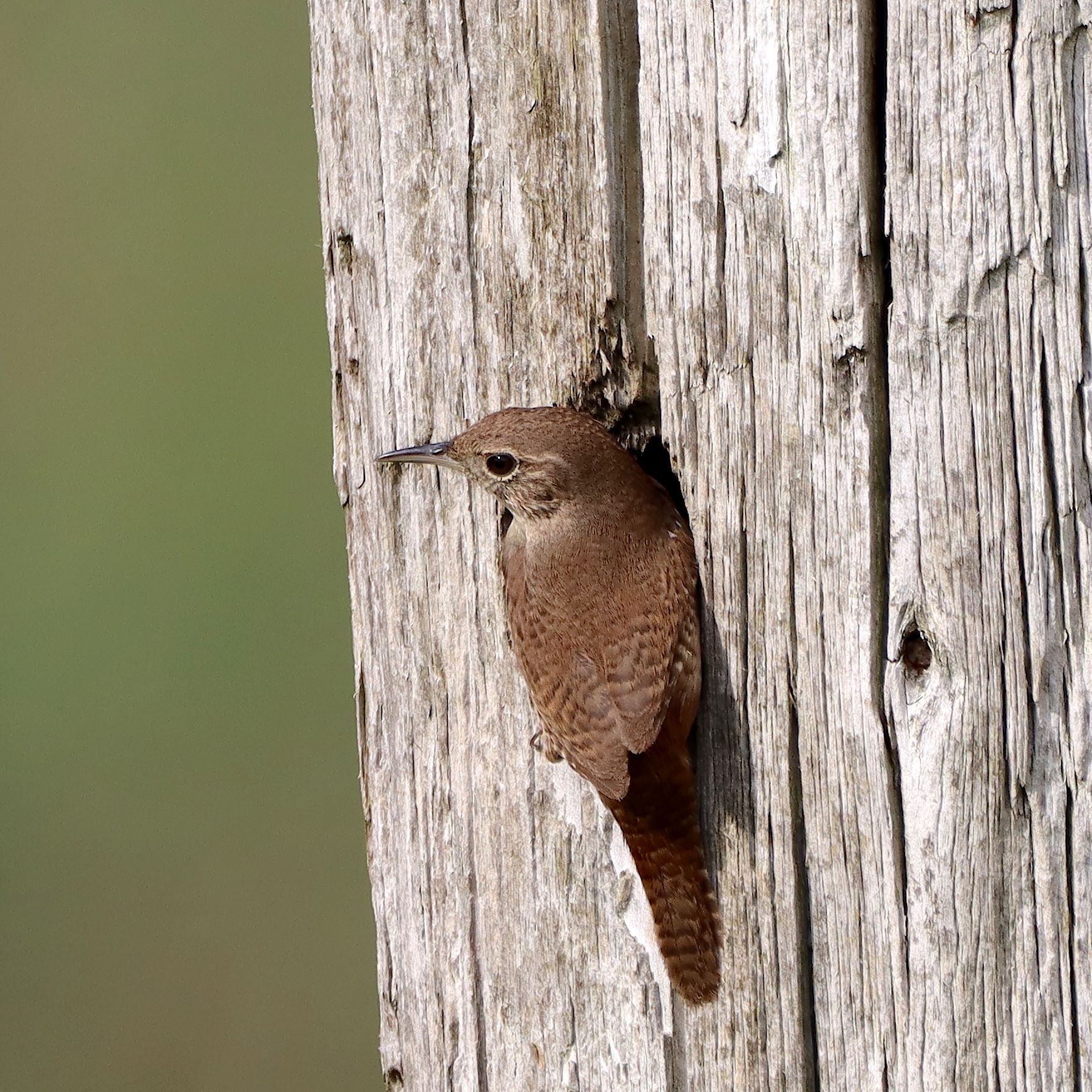
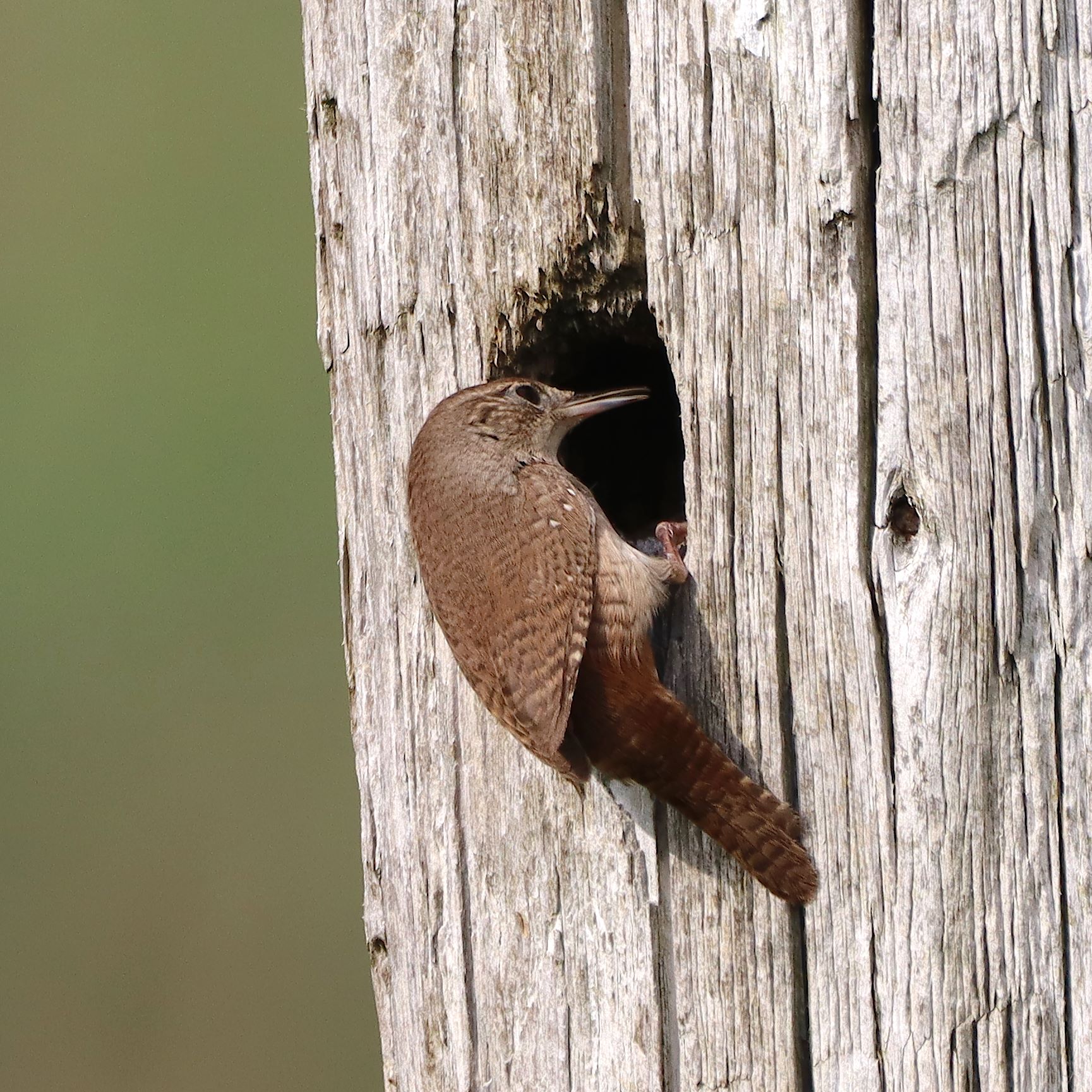
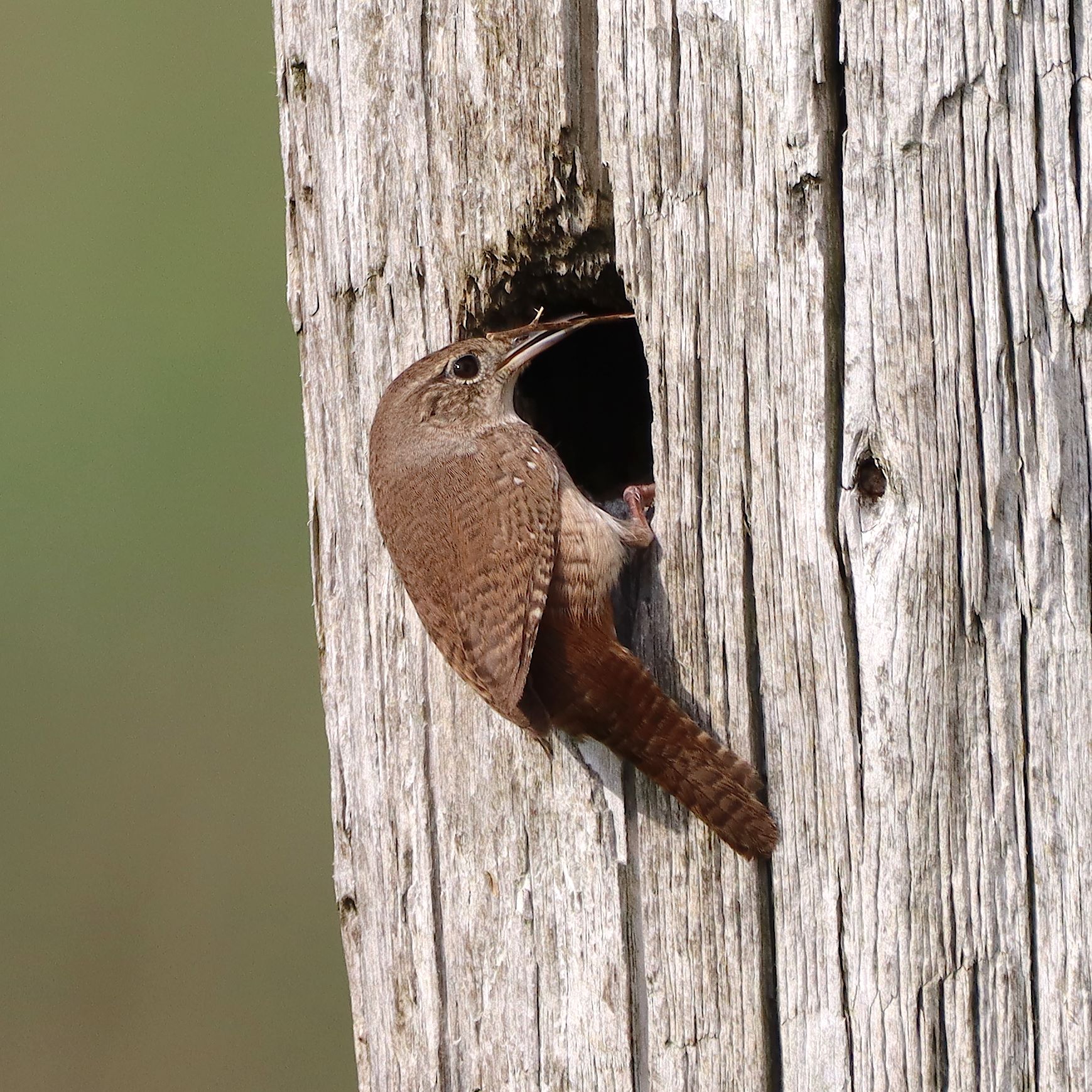
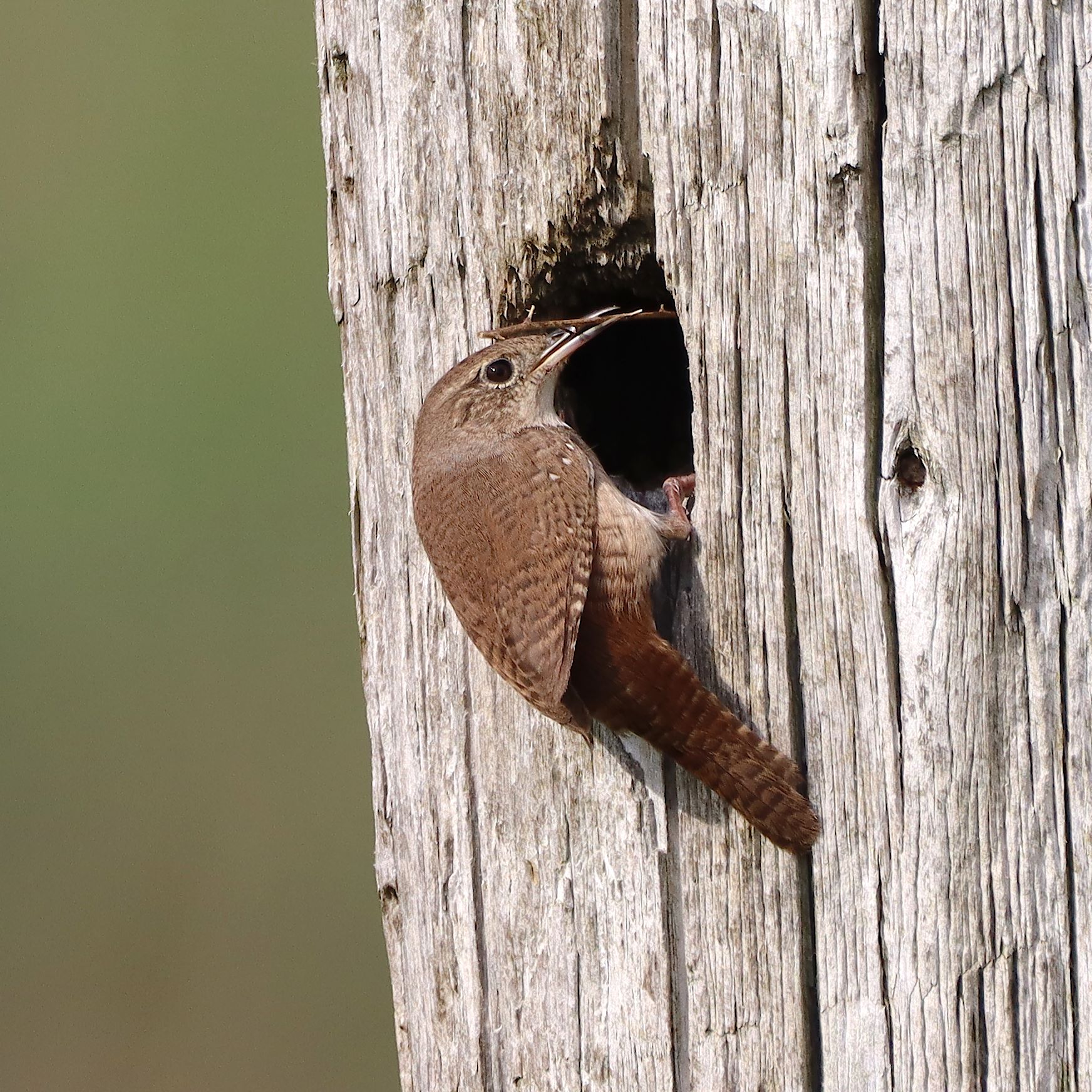
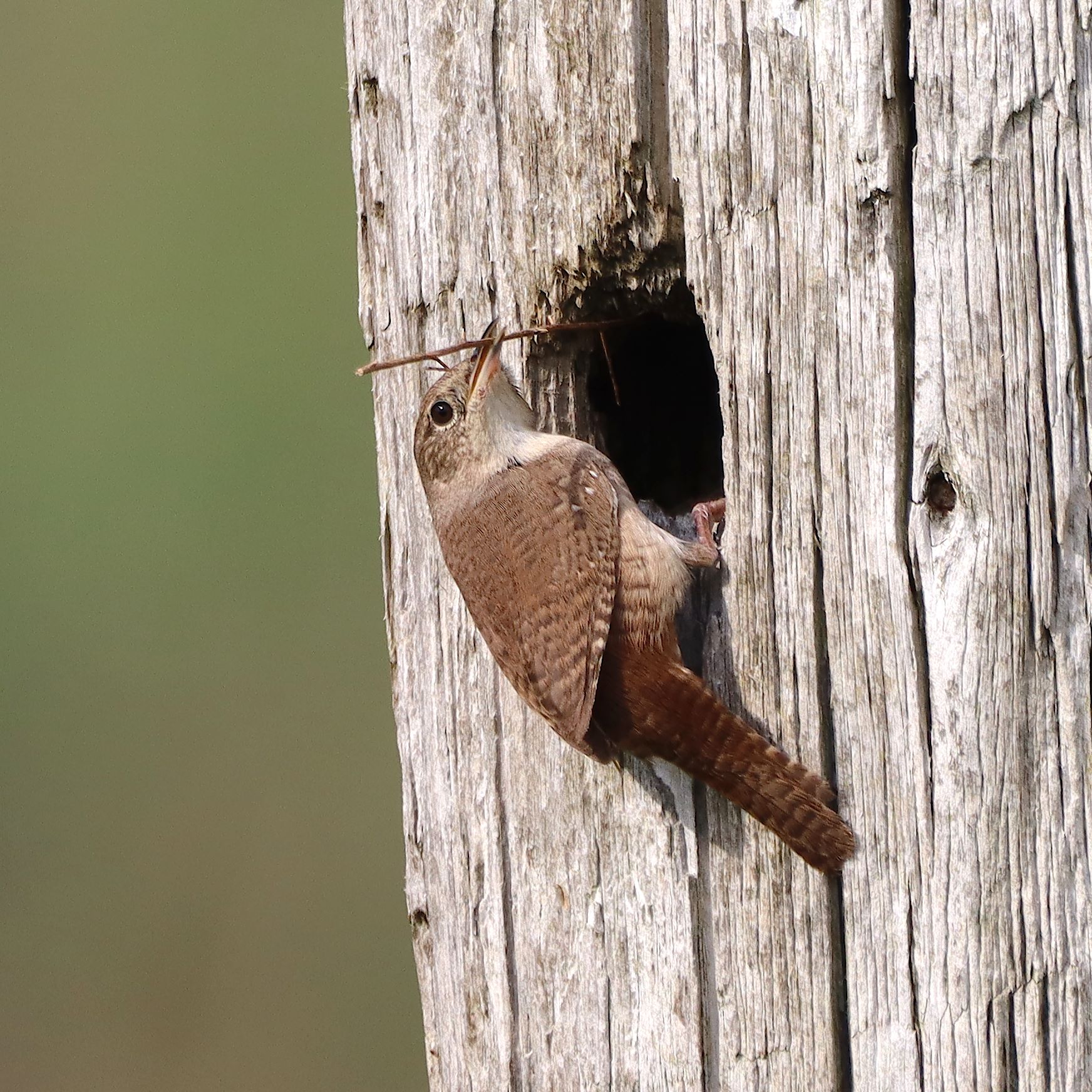
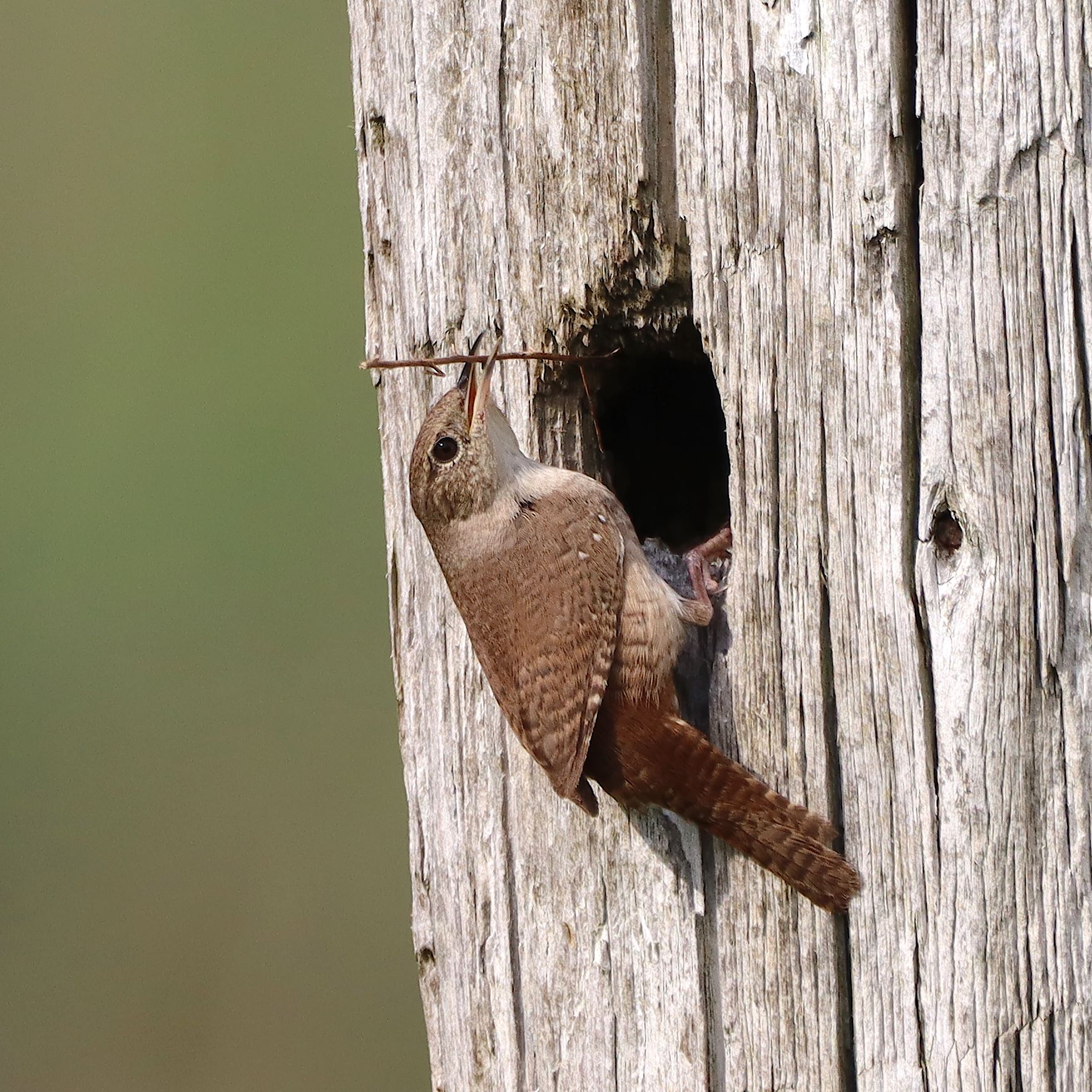
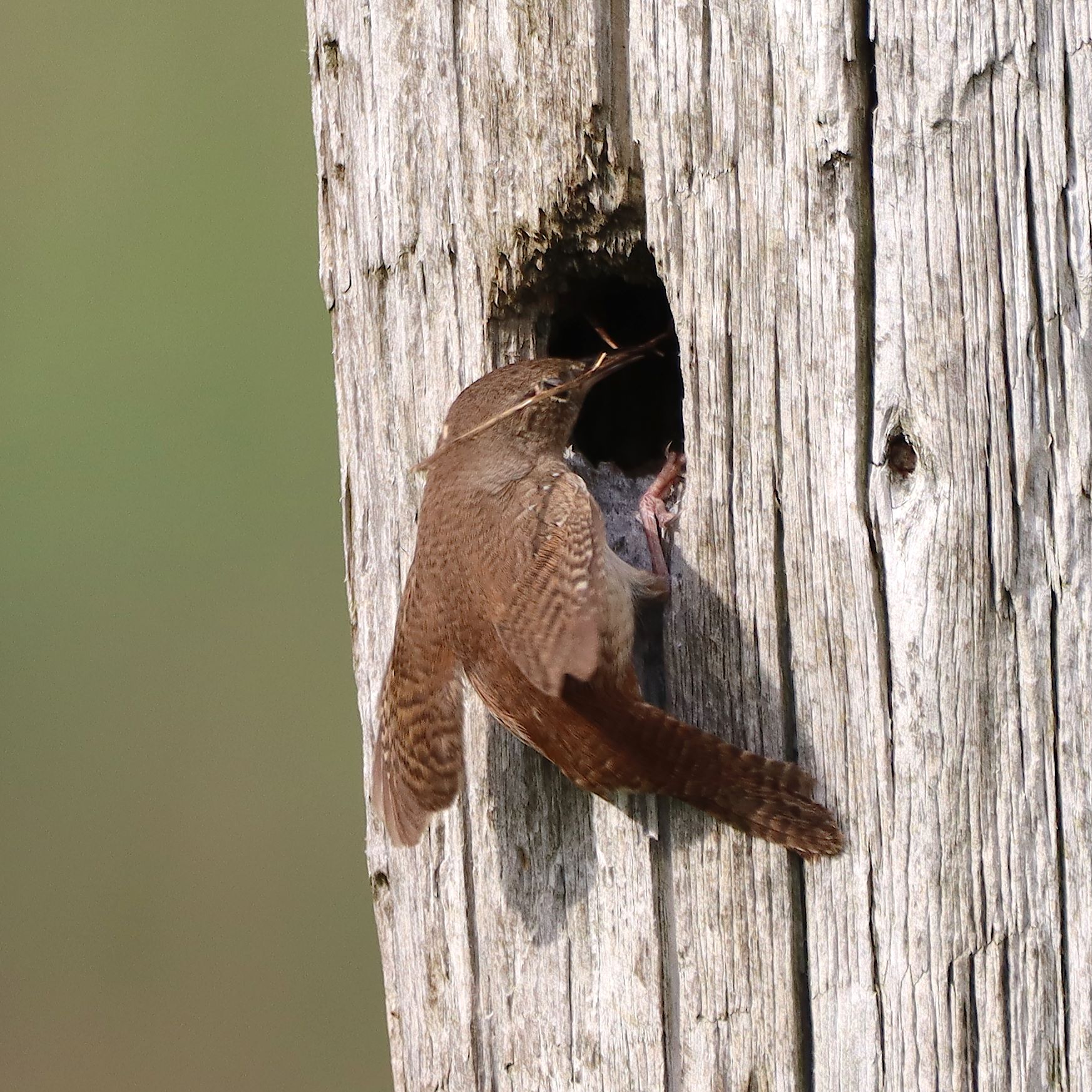
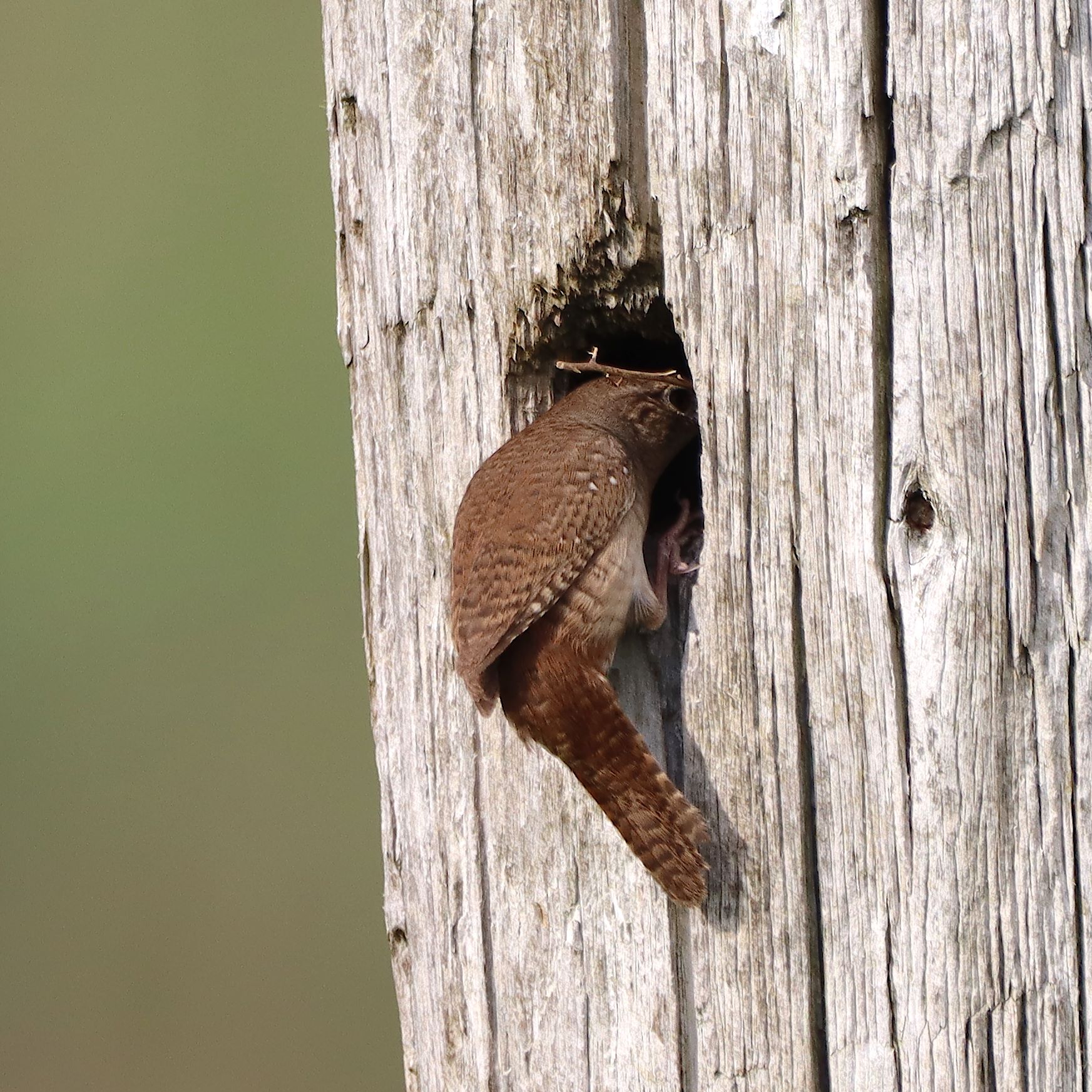
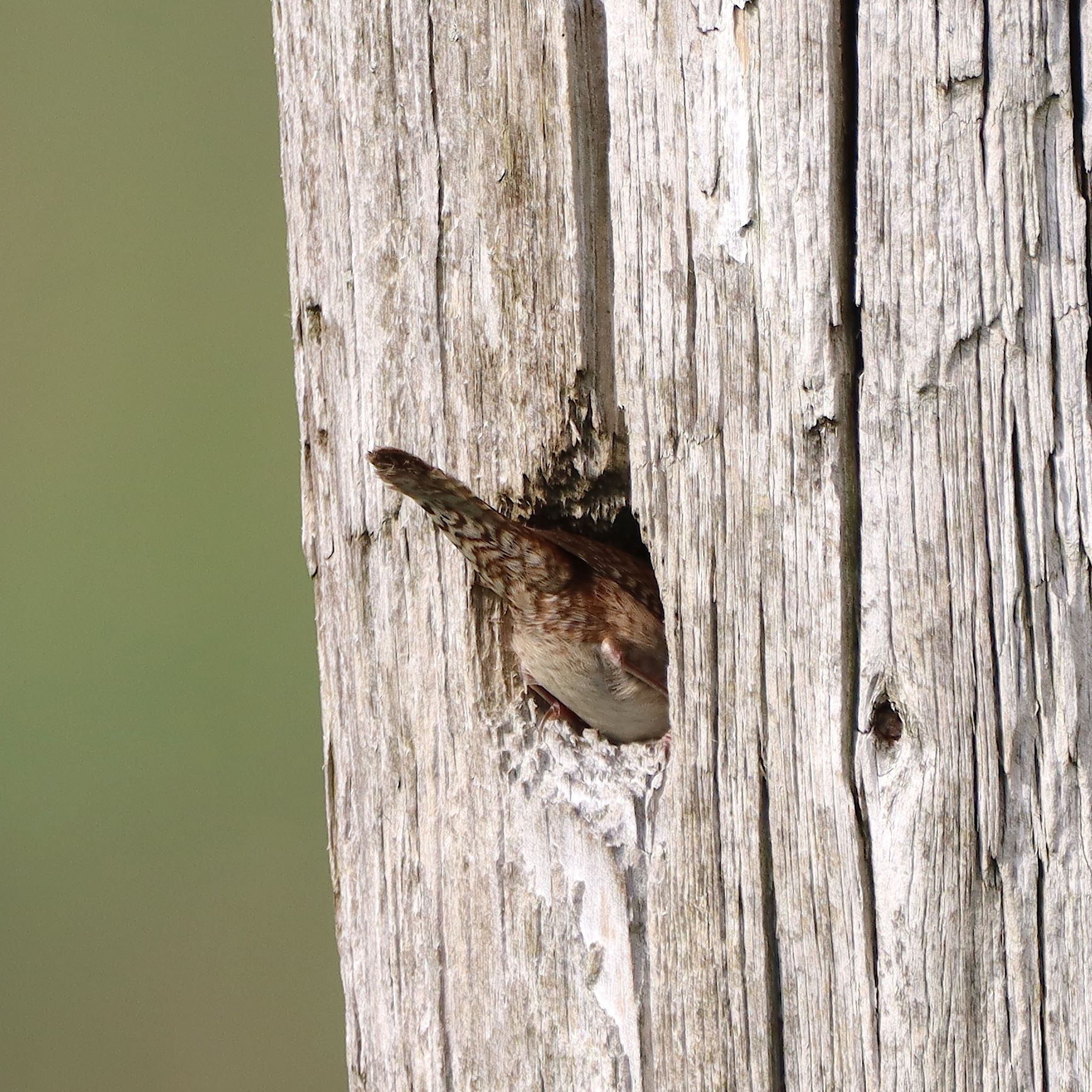
The House Wren’s nest can be comprised of dozens of twigs of various sizes. All pose a risk of injury to the bird as it attempts to negotiate its movement through a small opening – one that is far more narrow that the stick is long.
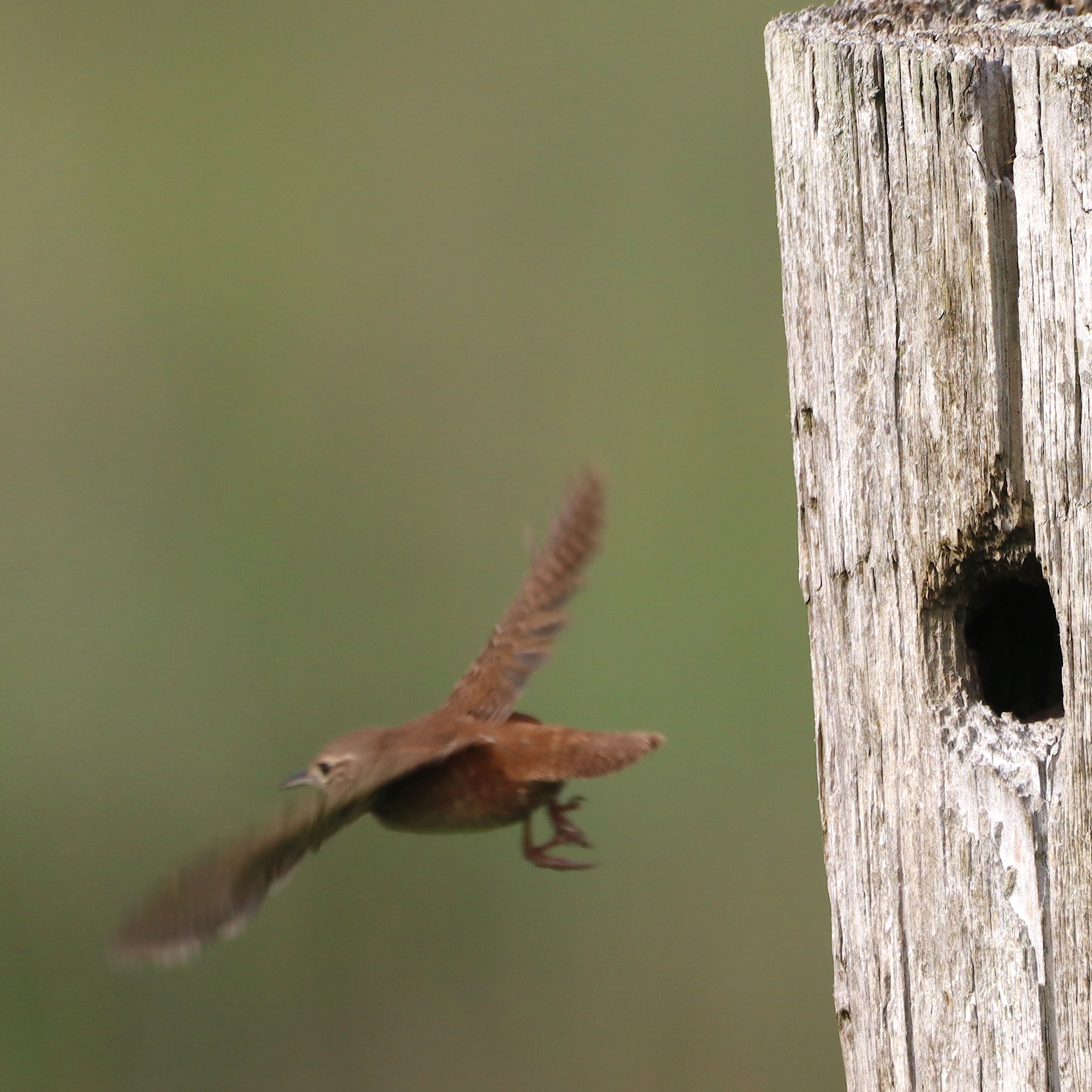
Hopefully, attempt number two brought satisfaction with that single placement. The wren flitted to the top of the post and looked around.
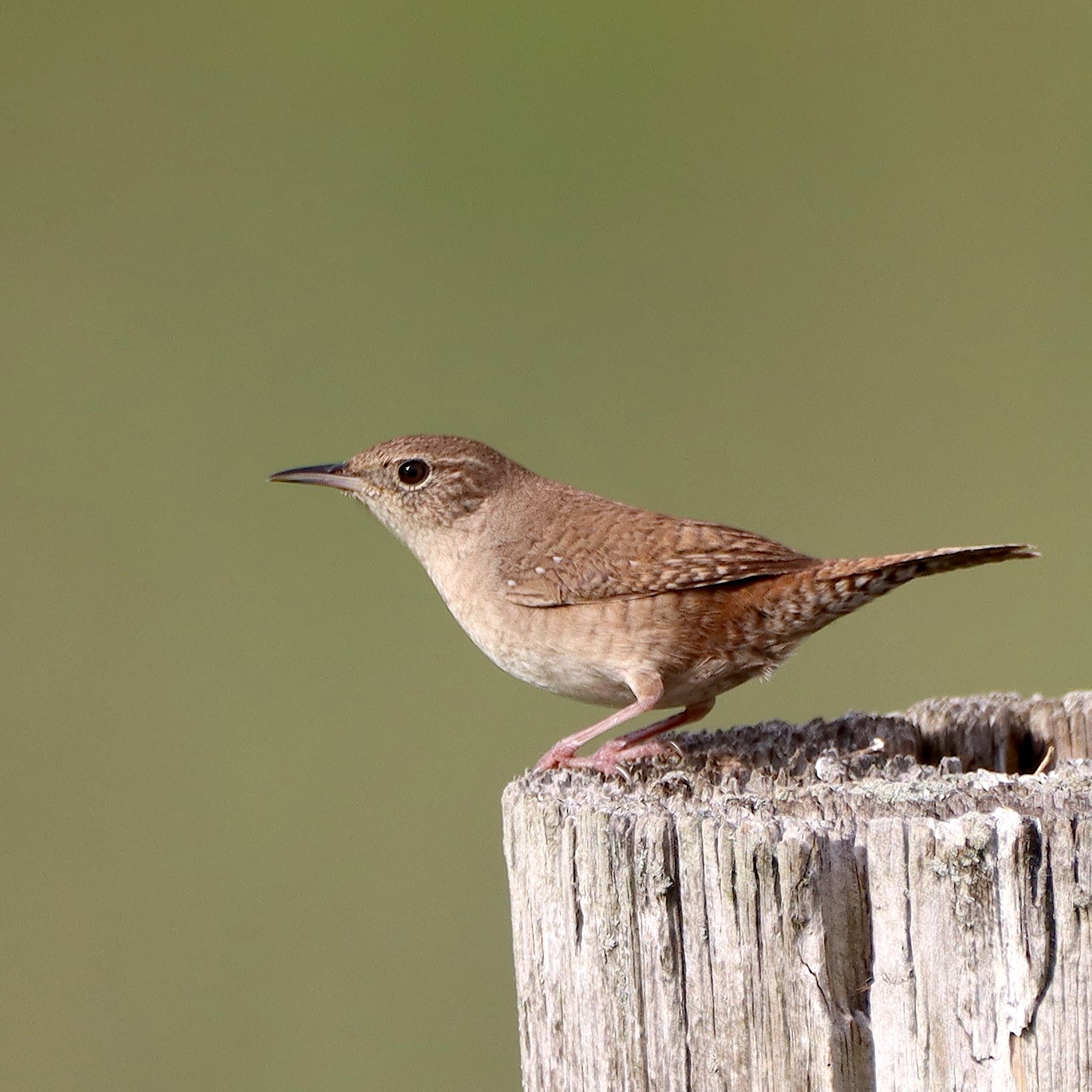
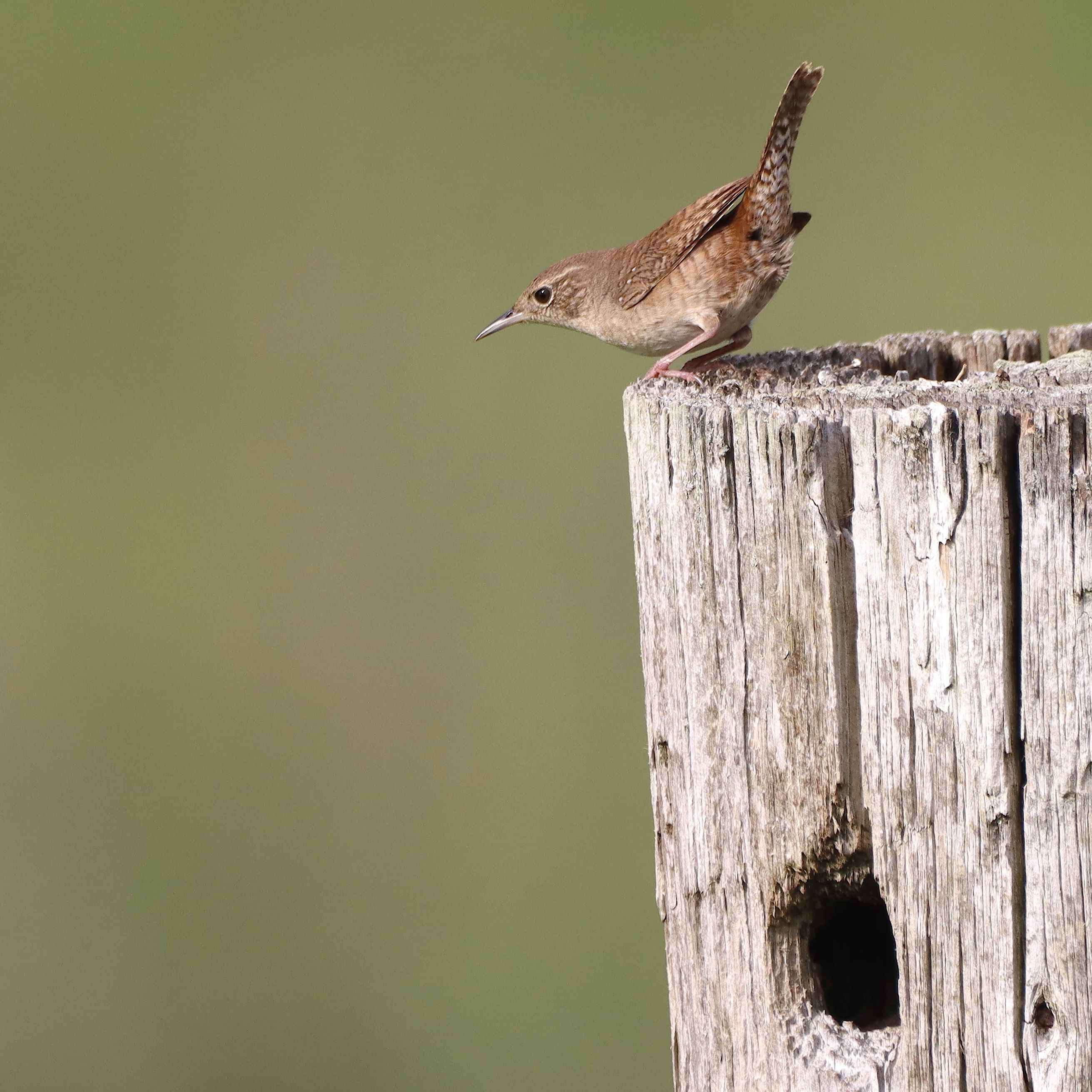
It scampered down the post, and took flight – a move that was likely more intentional than random. I suspect that taking off from the top of the post might draw more attention to a potential threat (to self or nest) than blending in with the post and flying closer to the ground.