Tammie Rogers
Inspired by Dogs & Nature
Neighbors Raising Broods
Everything I’ve ever read about Eastern Bluebirds is that they are quite territorial and that they will only set up house at a distance of at least 300 feet from another breeding pair.
I’ve always thought that the range of any species is dependent upon the environment, especially how many resources are available. The more resources in an area, the closer that breeding pairs of a species will tolerate each other.
Around seven years ago, when we moved into our current house, I hung one “Bluebird” house on the fence outside of my office patio. A lovely pair of Eastern Bluebirds moved in and reared a couple of broods that season, while I filmed them from the patio. That was back before I had two total shoulder replacement surgeries, and I was in constant pain and truly couldn’t leave my house. That Bluebird couple brought a lot of joy to me that year!
Since that time, we’ve installed nearly 40 bird houses that Eastern Bluebirds, Tree Swallows, House Wrens and even Black-capped (or Carolina) Chickadees have used to rear their chicks. Bluebirds and Tree Swallows tolerate each other and will take occupancy of houses that are as close at 30 feet to each other. But, true to the references I read, Bluebirds usually selected houses that were at least 300 feet apart from another Bluebird pair. That is, until this year.
We’ve experienced a very cold, exceedingly rainy, soggy, unpleasant Spring that has prevented me from wanting to go out to check out what’s going on with the wildlife. Fortunately, this week we had two decent days in the 70’s with partly sunny skies. I took the opportunity to go out and check on our “tenants.”
On the Eastern boundary of our property we have four houses. Box R is at the southeast corner. Box S is about 250 feet to the north. Box T is about 250 feet farther to the north. Box U is about 400 feet further north and about 400 feet from the northeast corner of the property. For the past few years, a Bluebird couple has raised at least two, but sometimes 3 broods in box R. I can’t say it’s been the same couple each year, but I suspect it is. Those same years, Tree Swallows have used Box S to raise their broods. Box T has either been used by House Wrens or Tree Swallows. Both Bluebirds and Tree Swallows have used the north-most box, U, sometimes swapping between the two species in the same season.
BOX R
Last week I had the chance to ride around the property with a camera, just to get a sense of what was happening. I noticed Bluebirds on and around Box R. I was hopeful that they would set up home and lay their lovely, light blue eggs. What Joy! A couple of days ago, I took the time to sit quietly and watch for more information. Had the couple finished making their nest? Was the female possibly setting on eggs? That would be amazing. What I saw was the two birds, male and female…. bring food to the house. What? They had chicks that they were feeding!
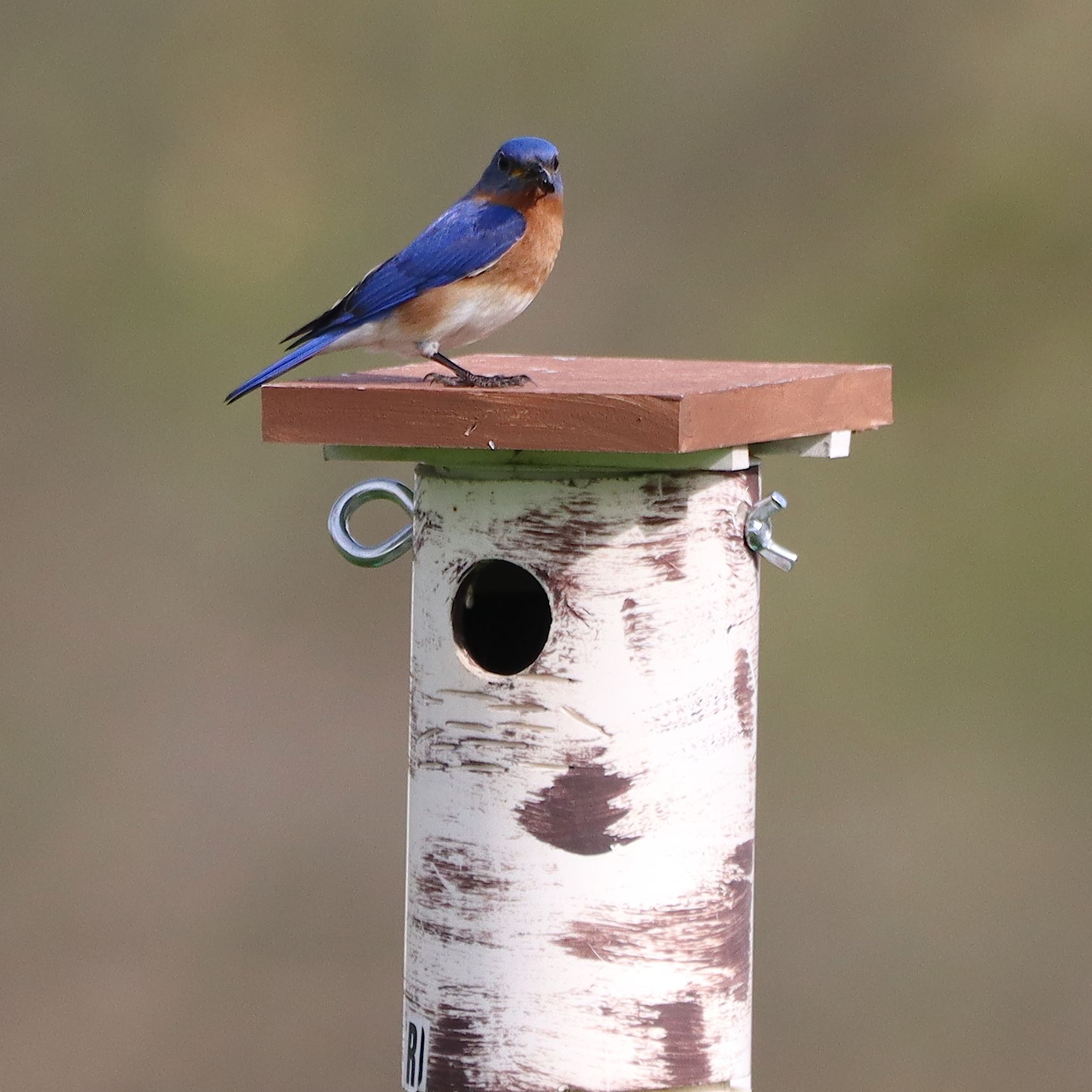
Male Bluebird on Box “R” with a morsel of food in his beak
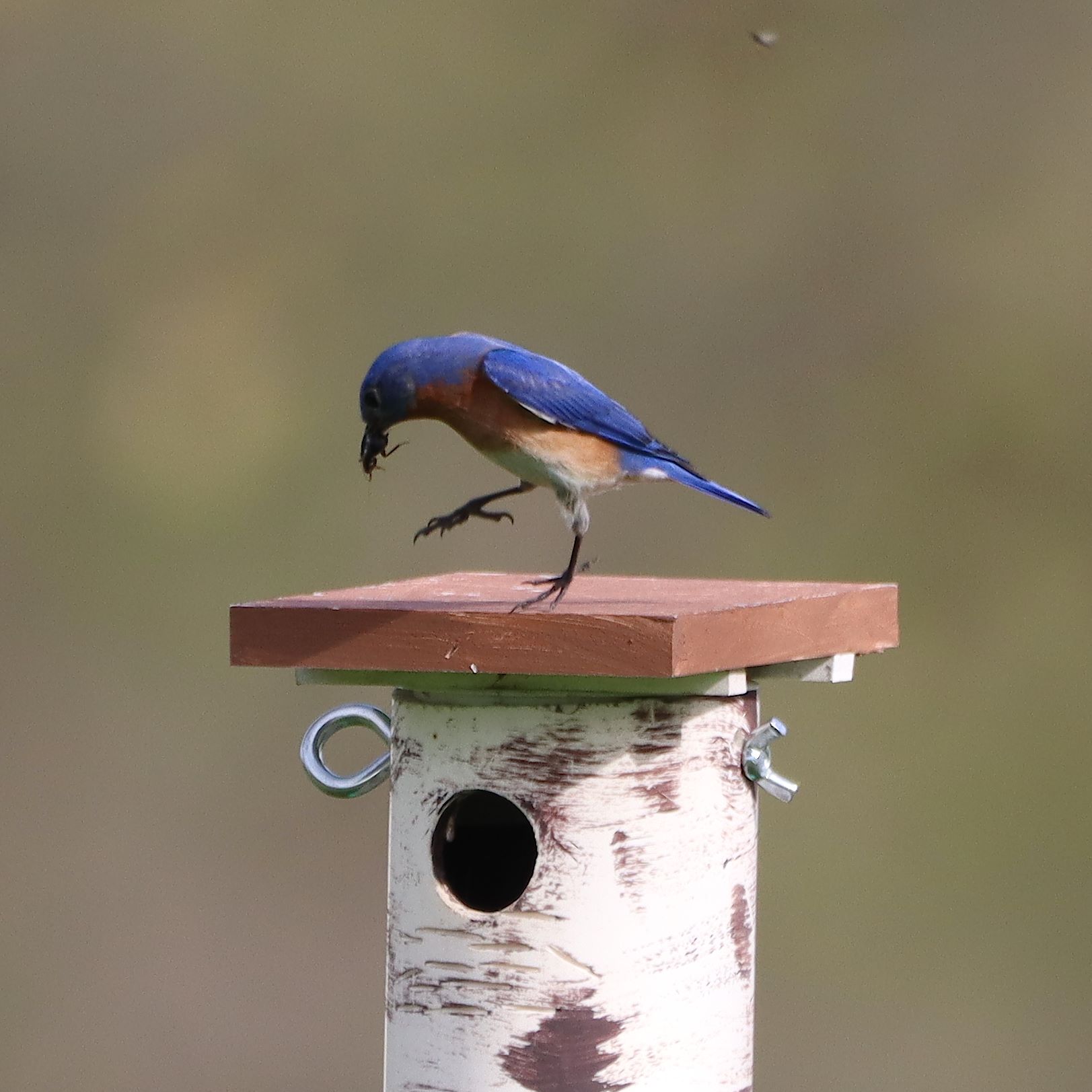
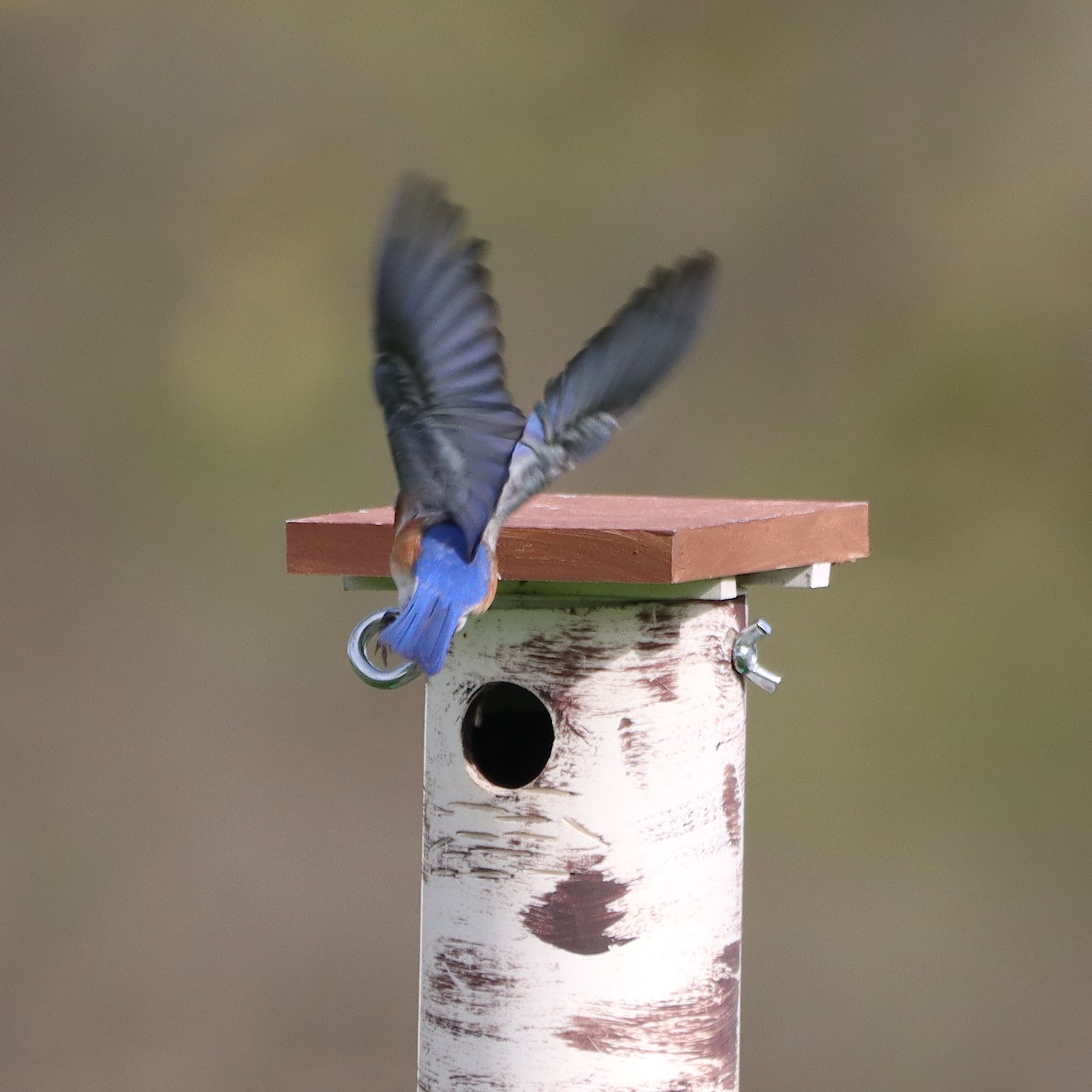
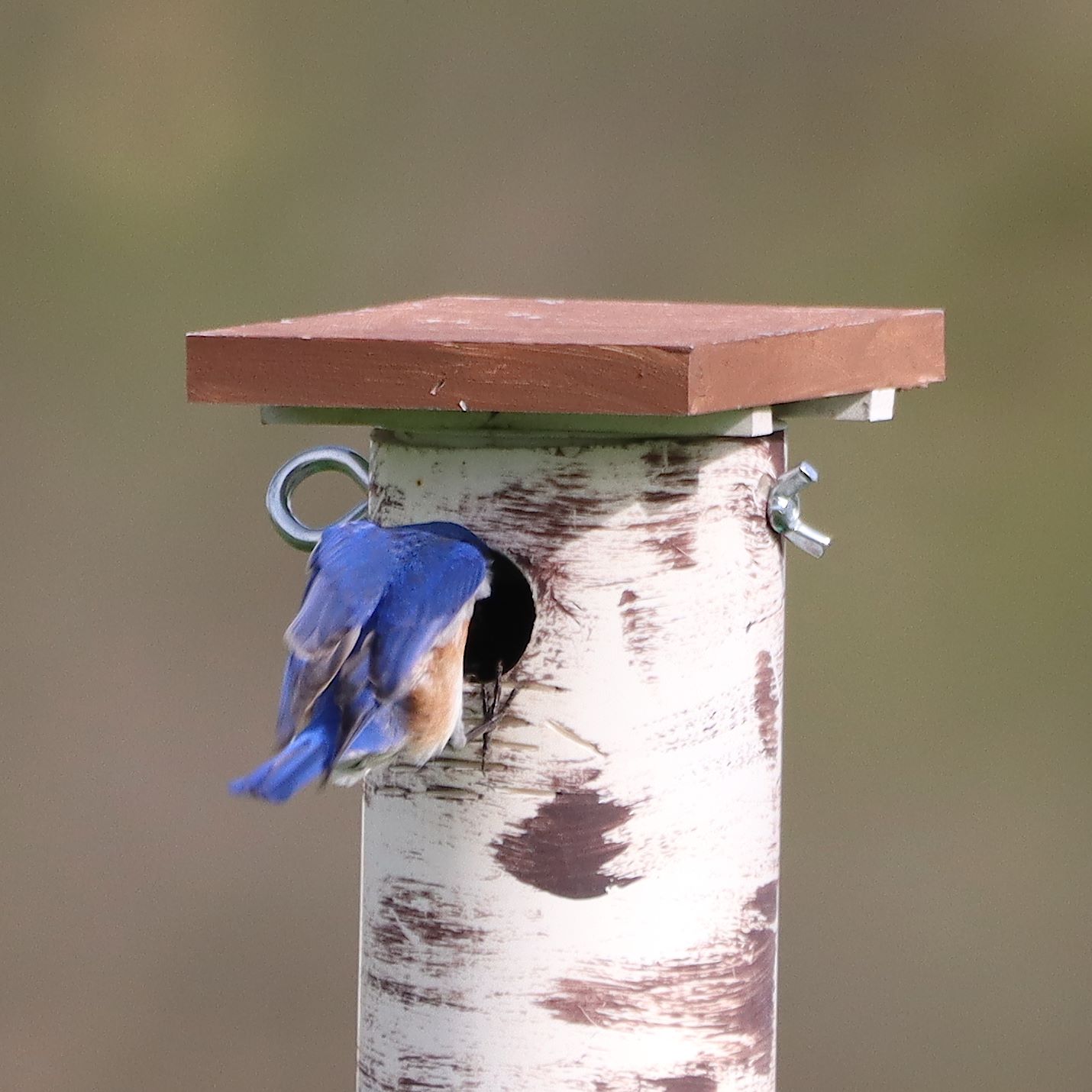
His mate arrived with a worm, while the male was inside feeding chicks
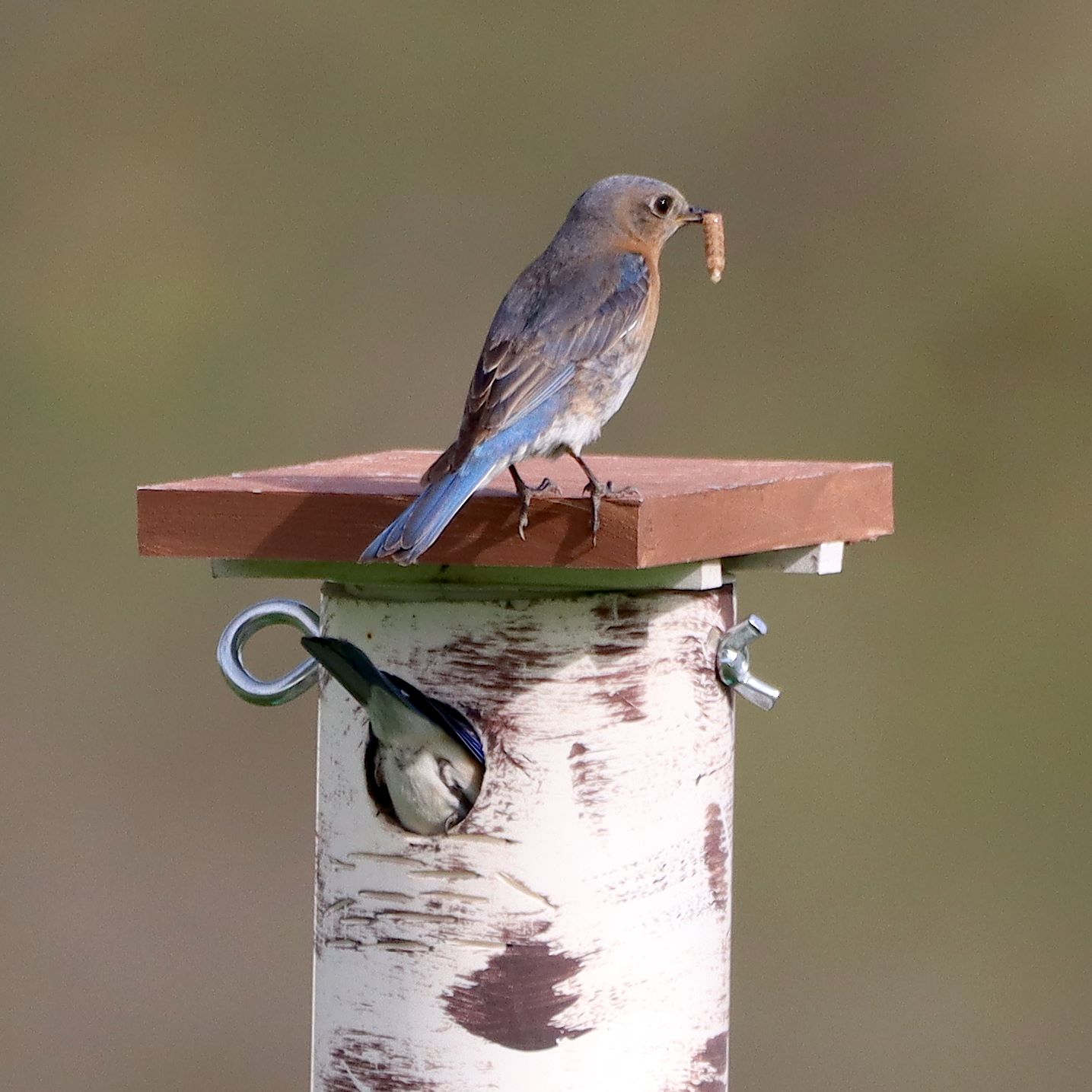
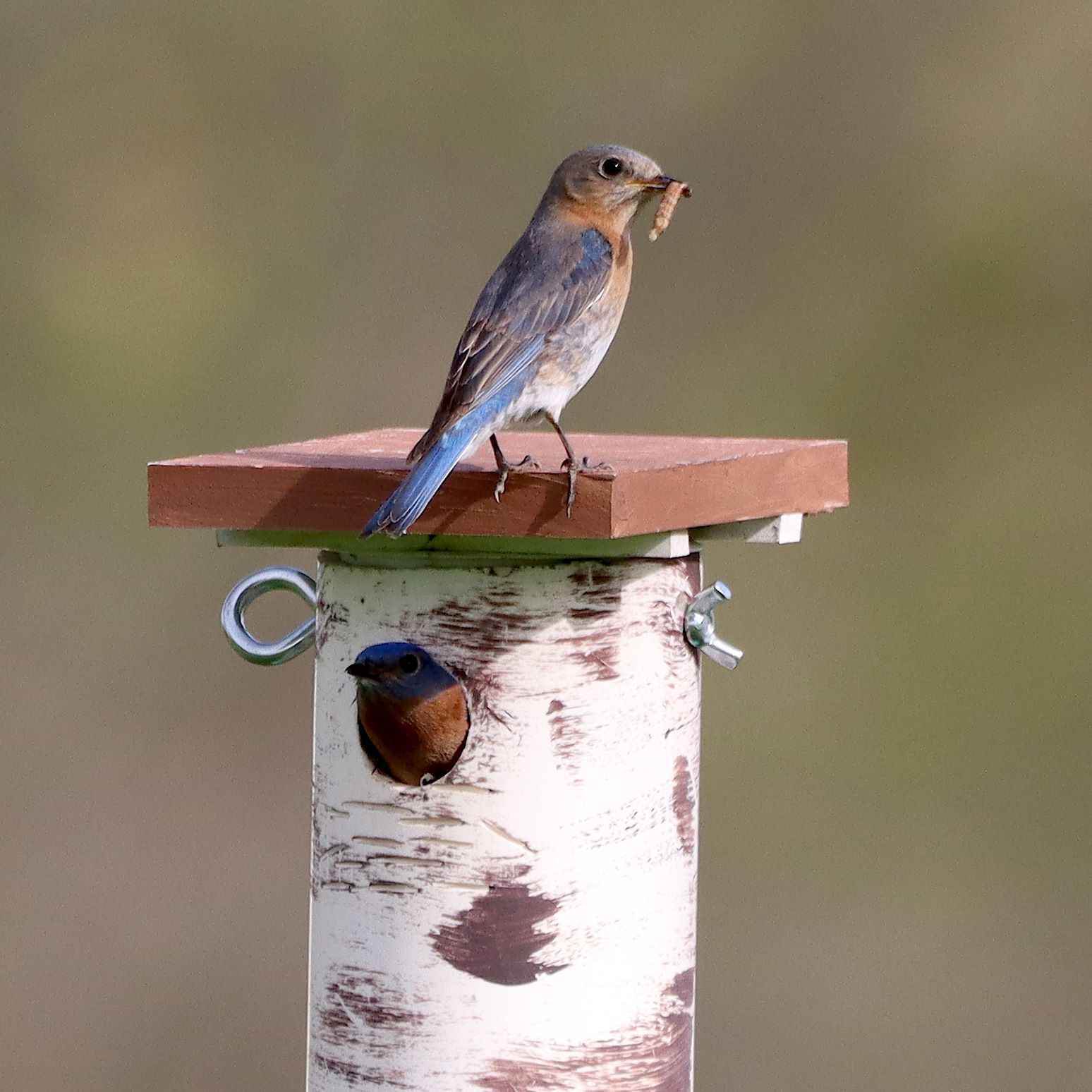
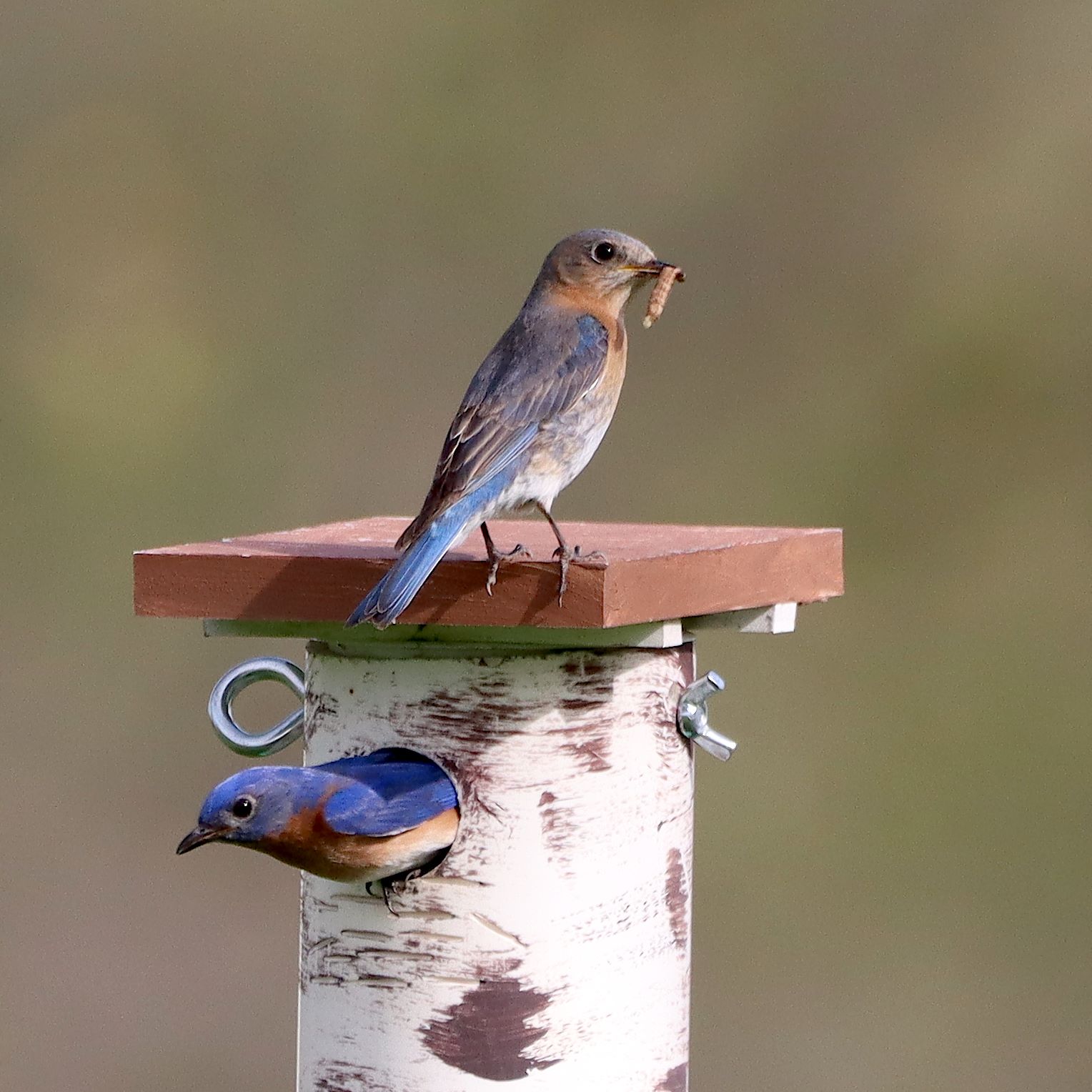
The male flies off to get more grub!
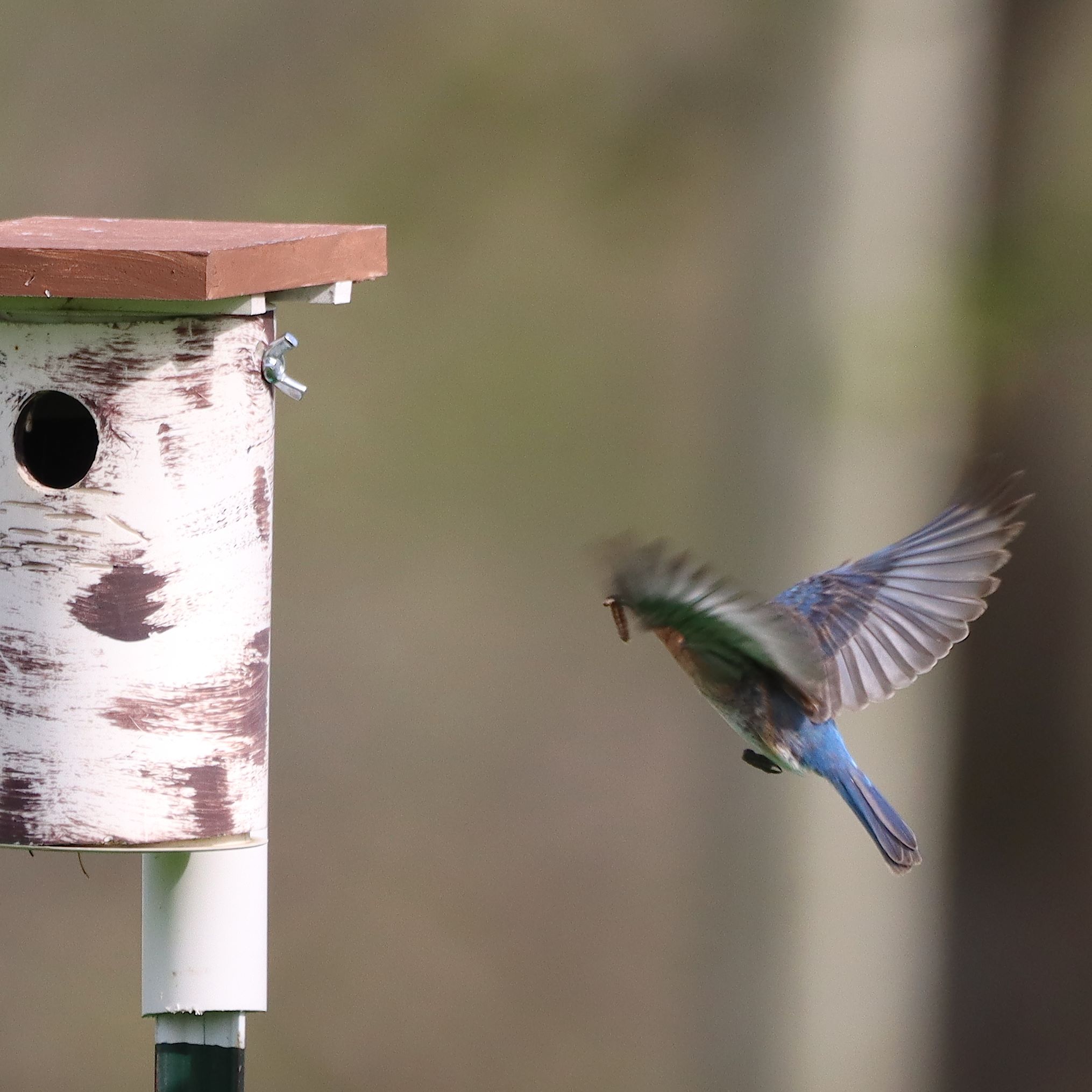
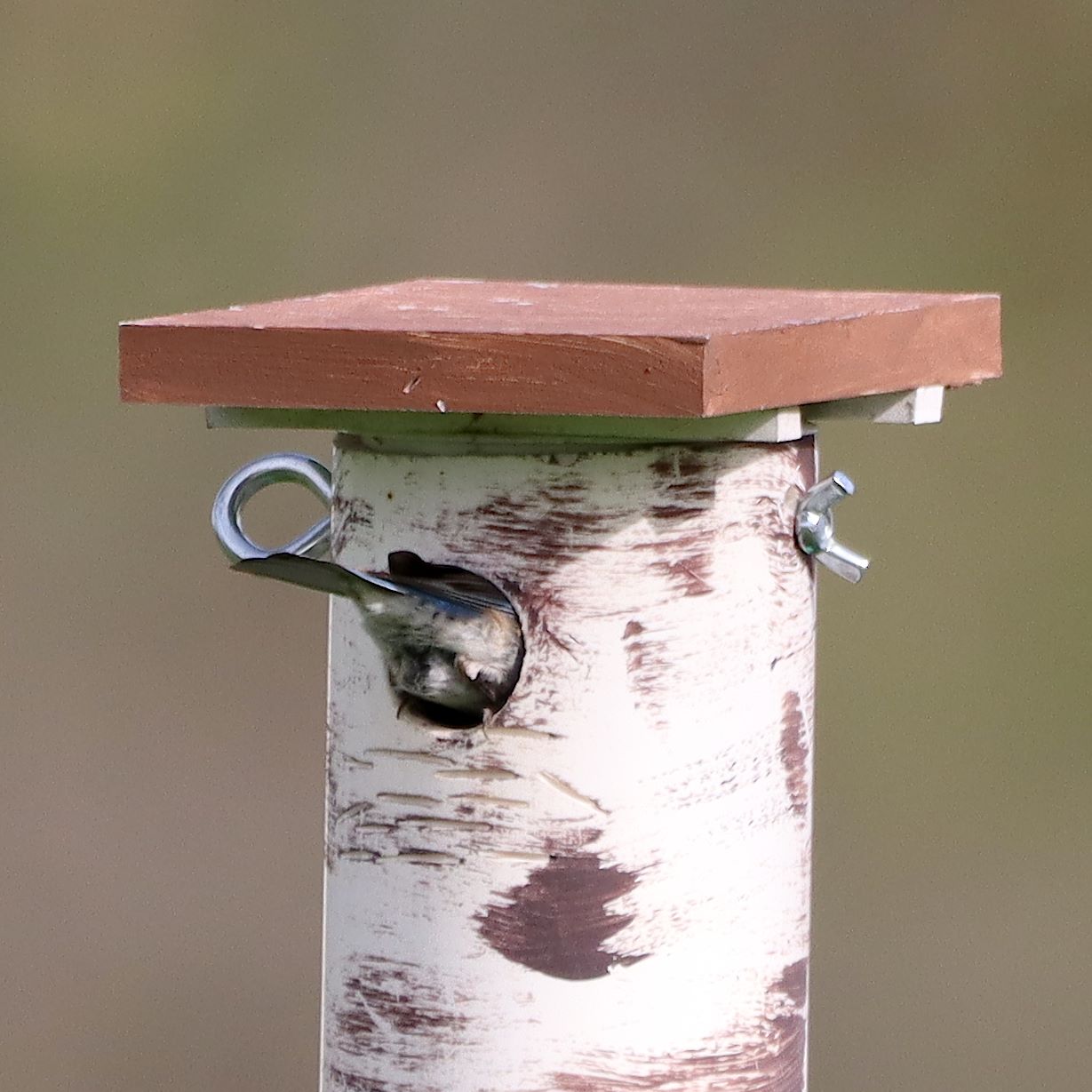
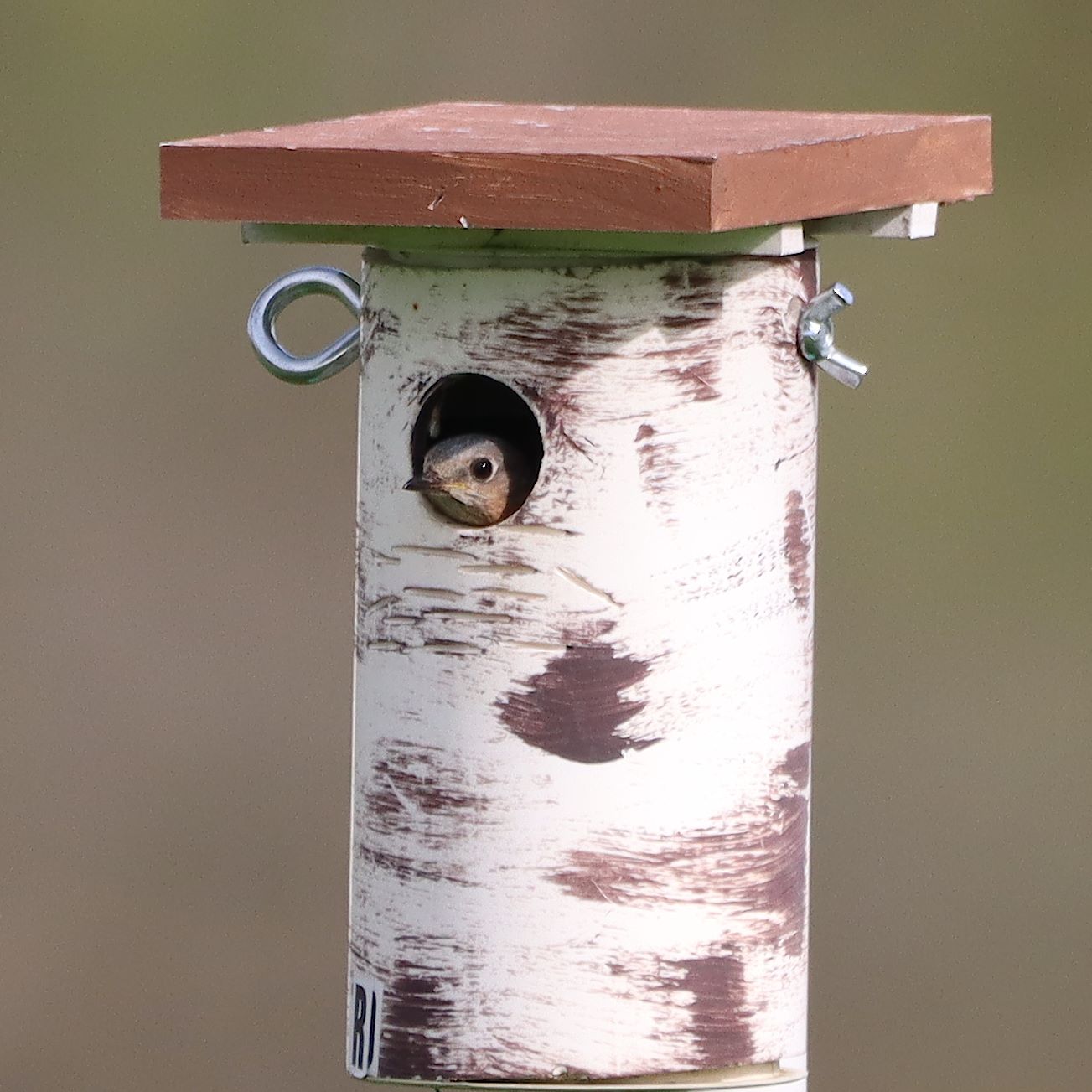
The female delivered the worm and then took a moment to stay in the nest – while peering out
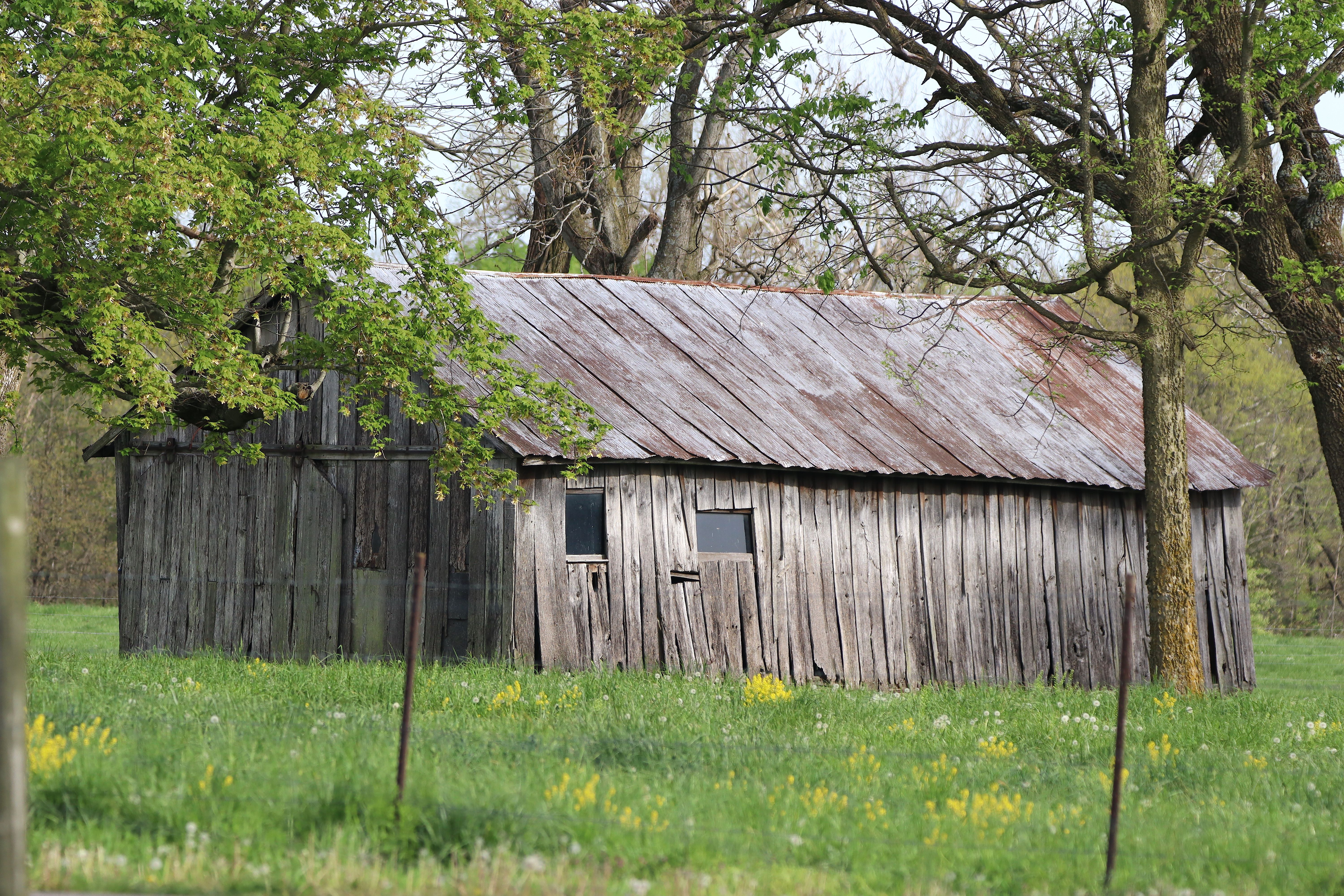
While waiting for more Bluebird activity, I took the opportunity to take a photo of my neighbor’s old, wooden shed that I can see when I’m at Box R. I love that old building. It has so much character.
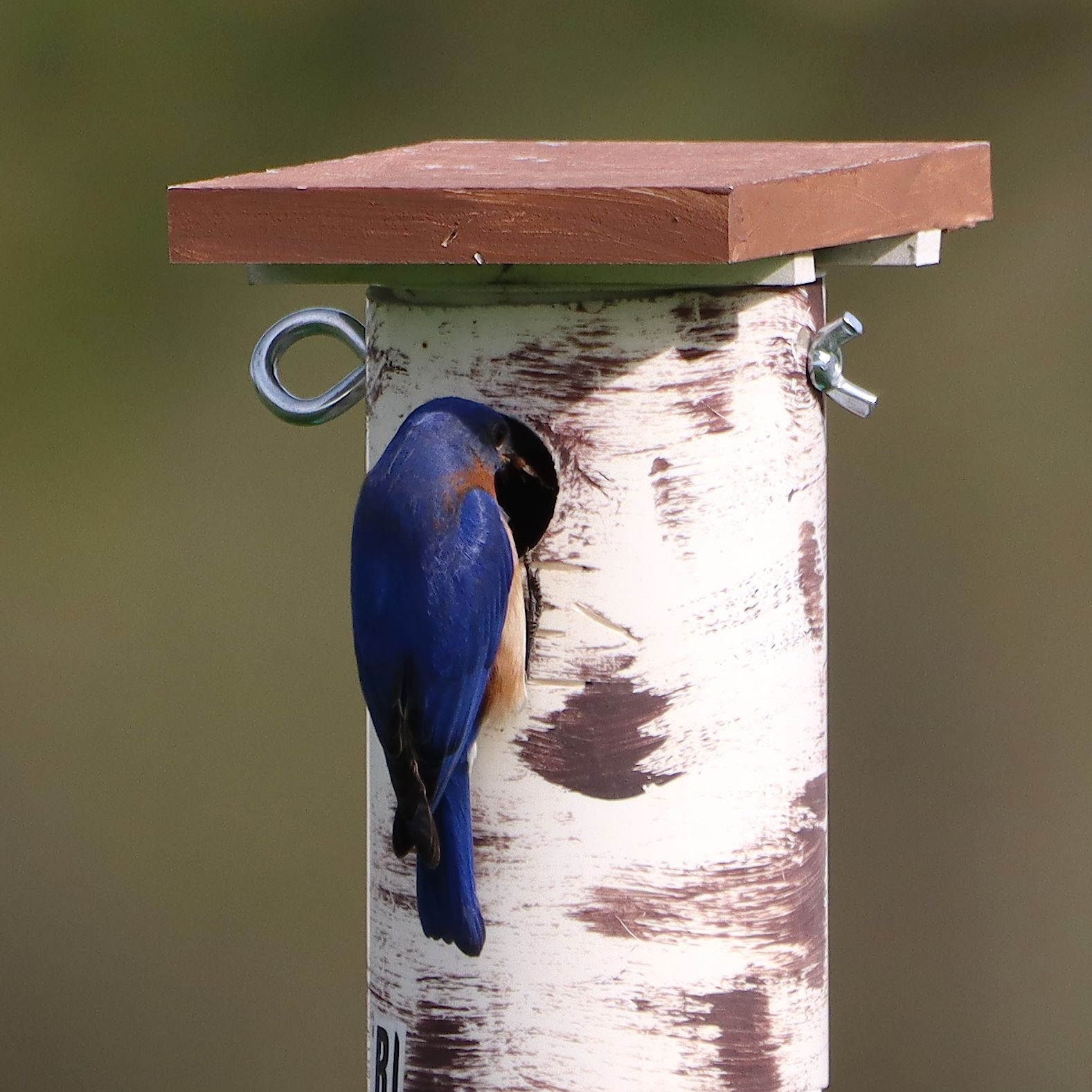
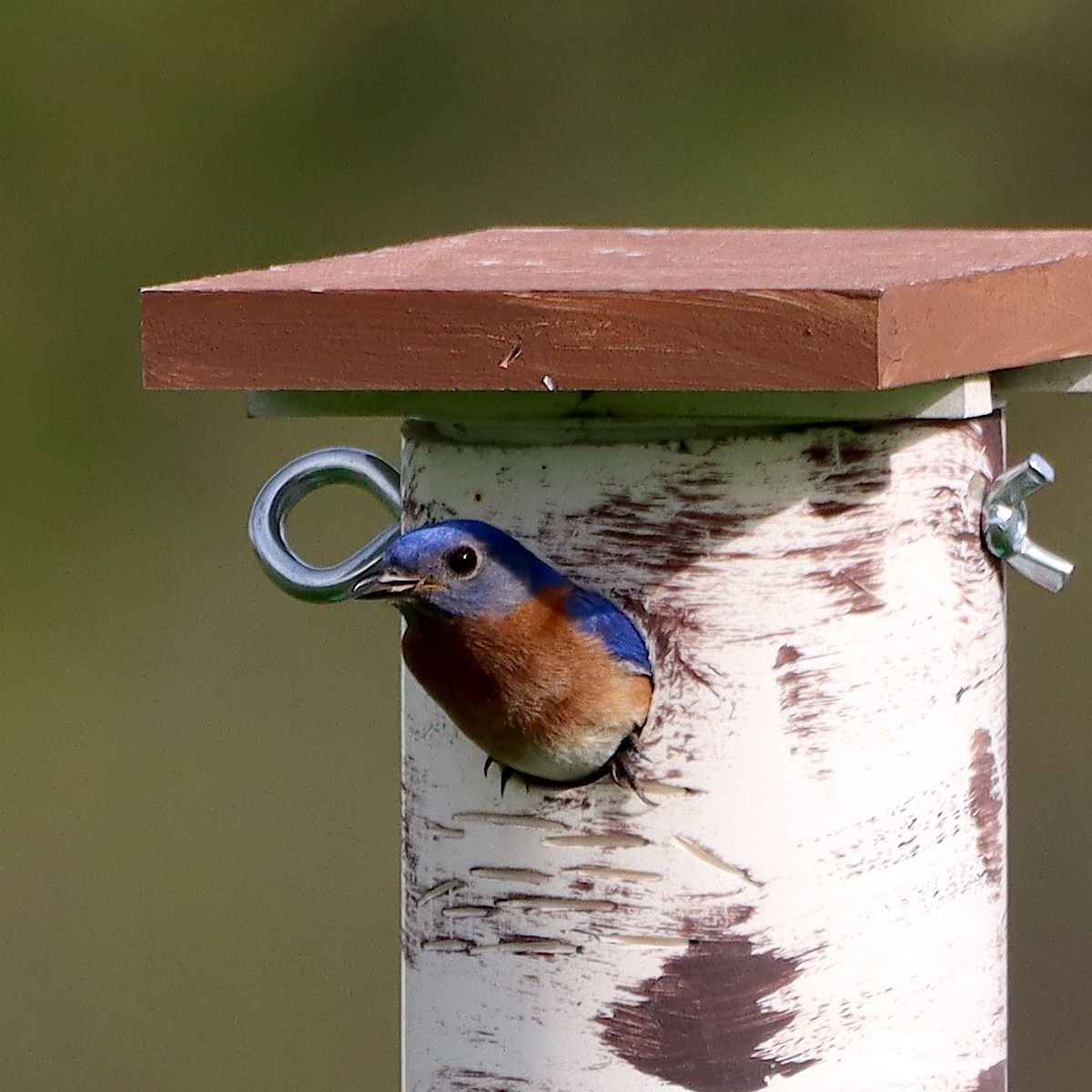
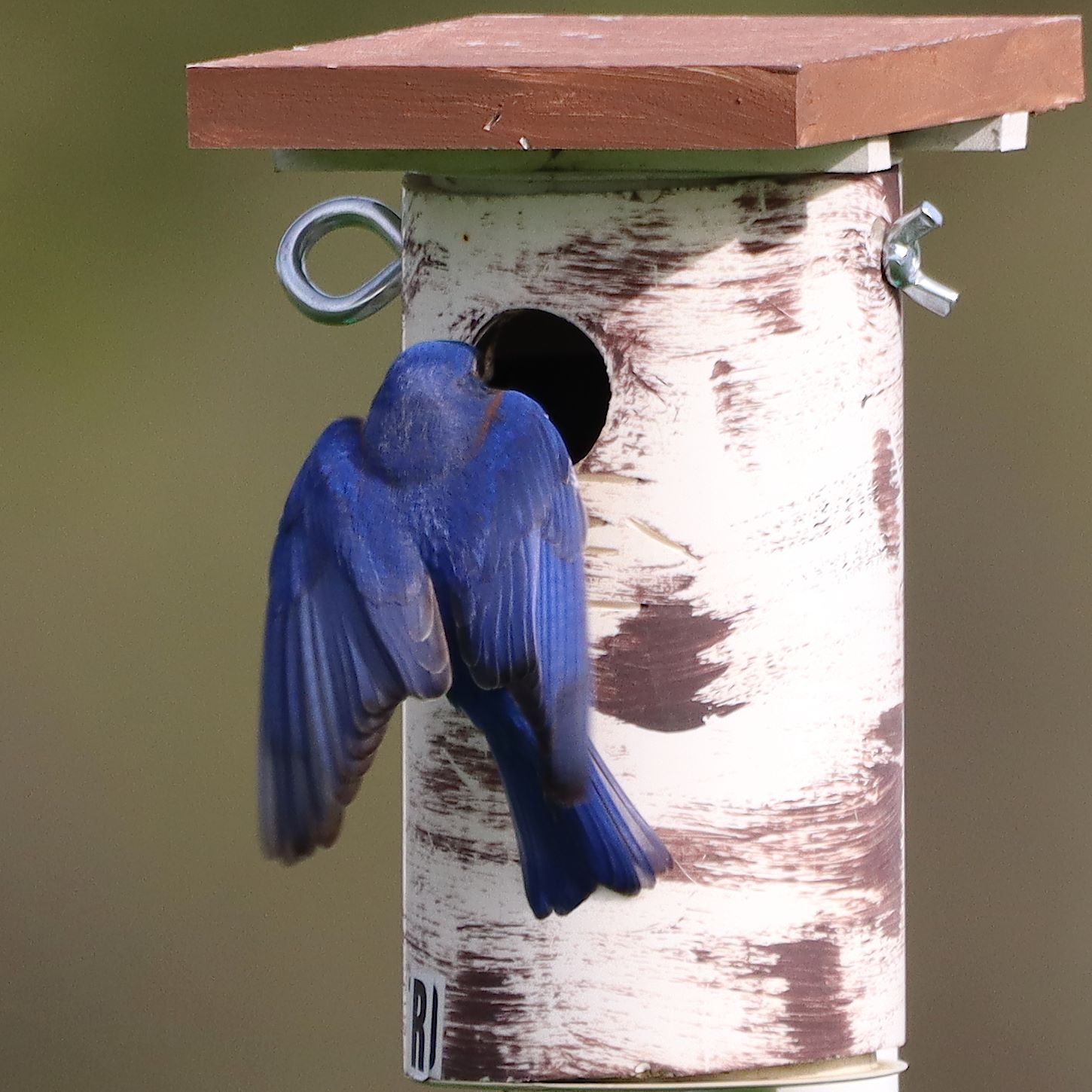
I watched “Dad” come and go with a few snacks, before I traveled off, up the east fence line.
BOX S
I took a position about 50 feet from Box S and waited. I had a memory of seeing Tree Swallows on that house the previous week, but if I don’t write it down, I can make mistakes about these things. After some time, I decided to drive up closer. I thought that, perhaps, if a female was setting on eggs, she’d hear my approach and fly off. So, as I drove in the golf cart I keep my eyes on the house. Nothing. If a female flew off, I’d have my information and wouldn’t bother her further. But, since I didn’t see a bird fly out, I drove up the the box to give it a little knock. If there’s a nest, it usually sound denser than if there’s nothing inside. It sounded dense. So, I stuck my fingers into the hole, probing downwards. If there’s a well established nest, I might feel the dry grass or, in the case of Tree Swallows, I might even feel feathers, since they often like to add them to their nest.
Oh. Oh my! My fingers felt warm flesh. I wasn’t expecting that. What! Hatchlings already?
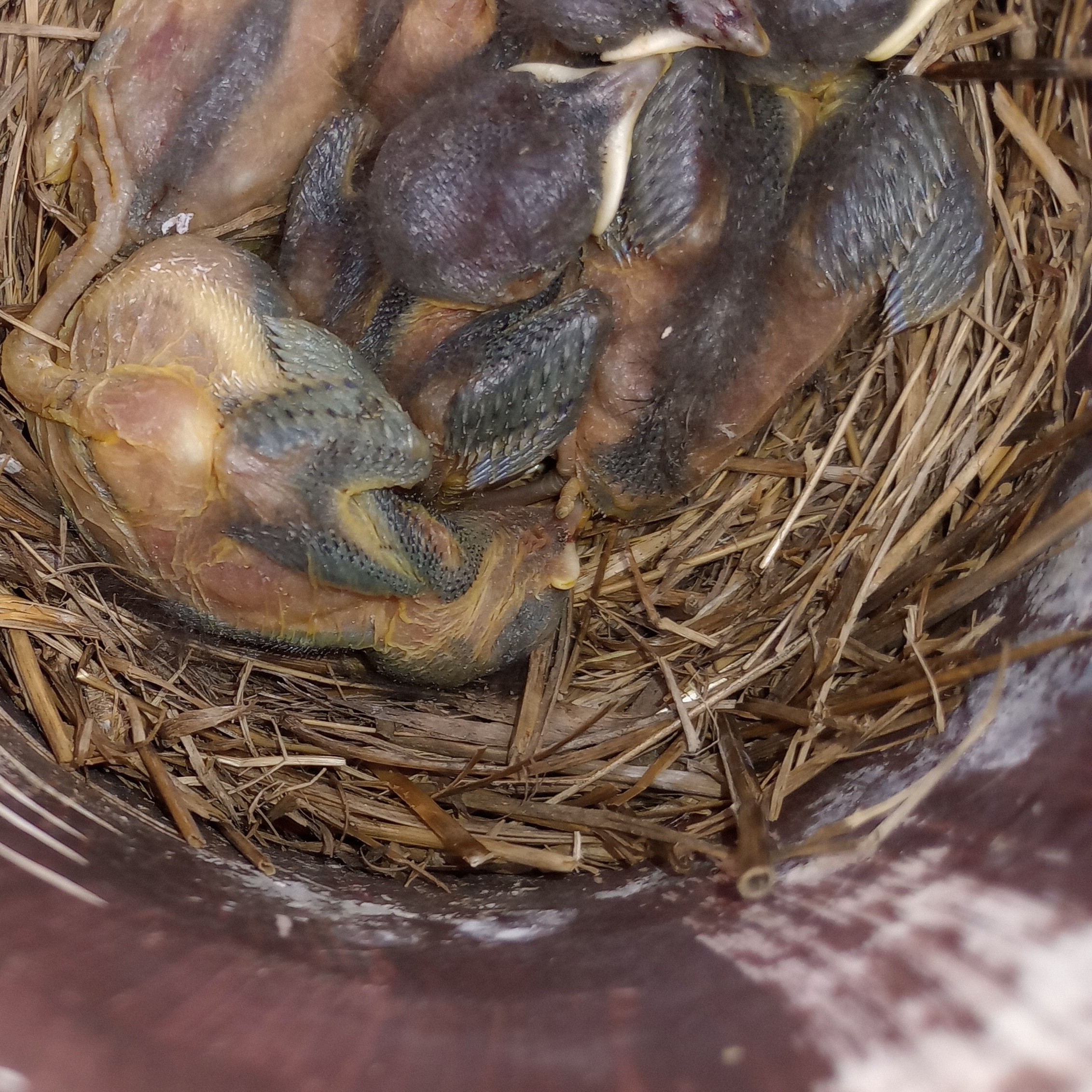
The PVC bird houses that my husband and I make for our native birds are designed to open from the top, so that the chicks are not disturbed, nor can they accidentally fall out of a front swinging door. I removed the top, positioned my camera and snapped the photo above.
The nest looked like it belonged to Bluebirds, but it could have been Tree Swallows. I drove off a distance, faced the nest box, and waited.
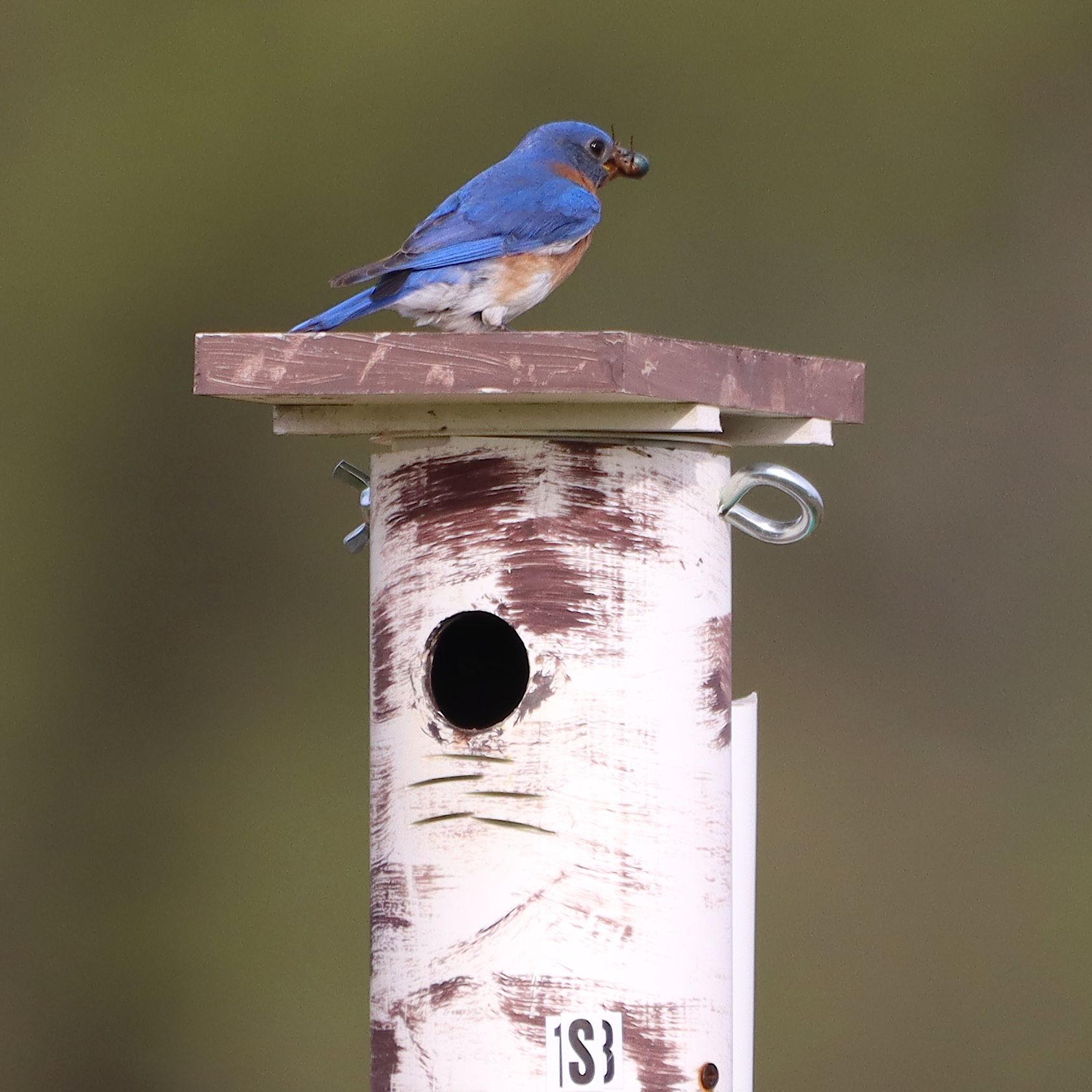
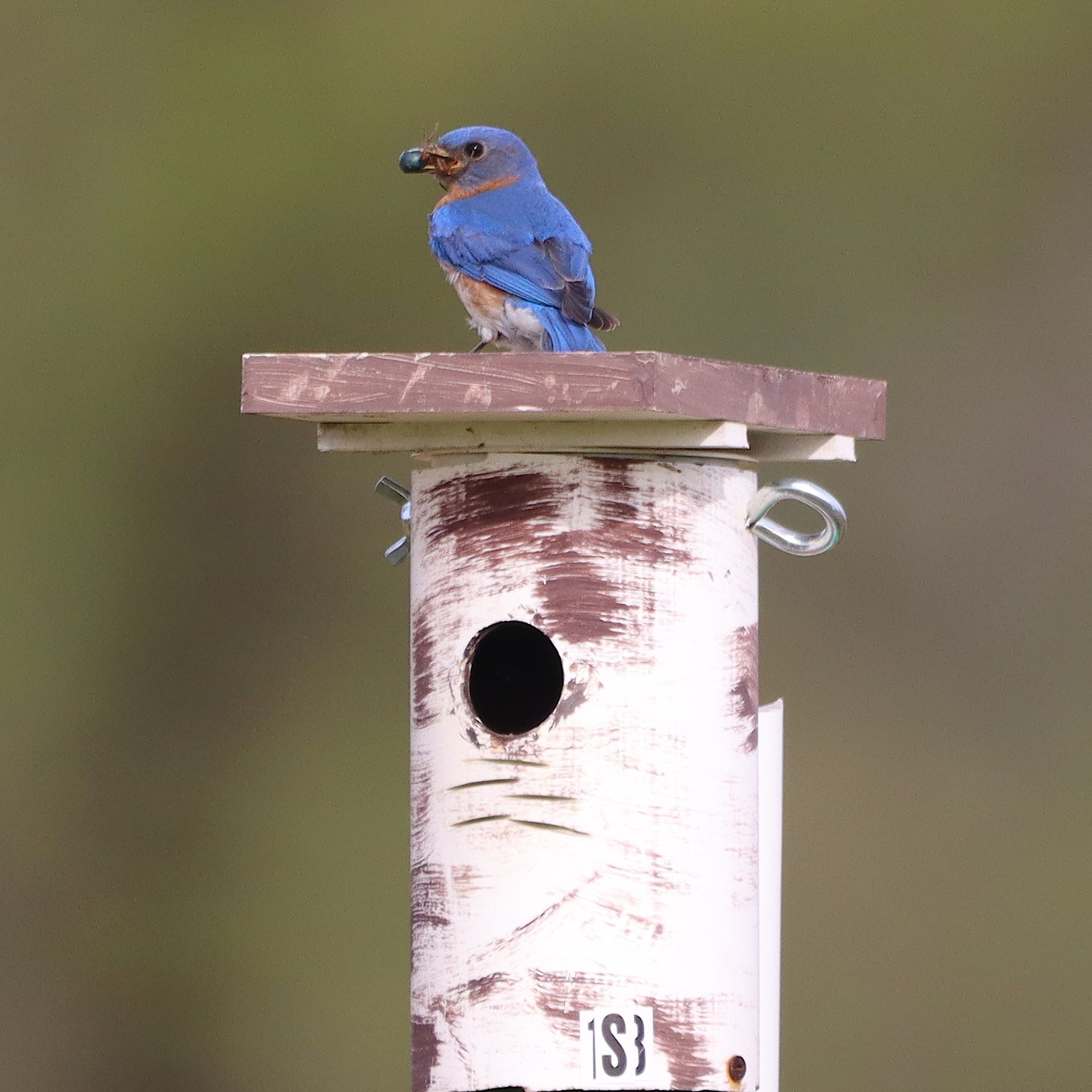
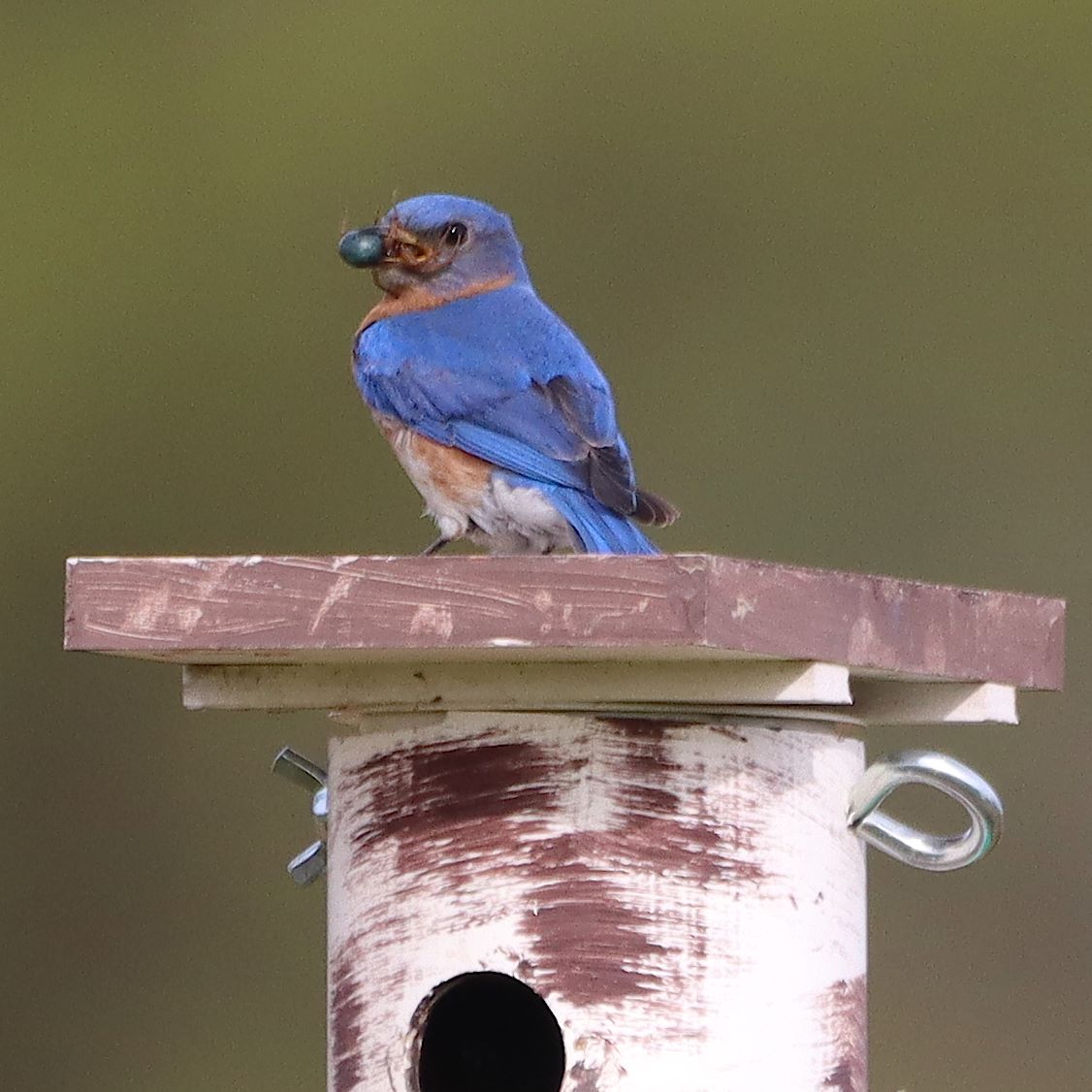
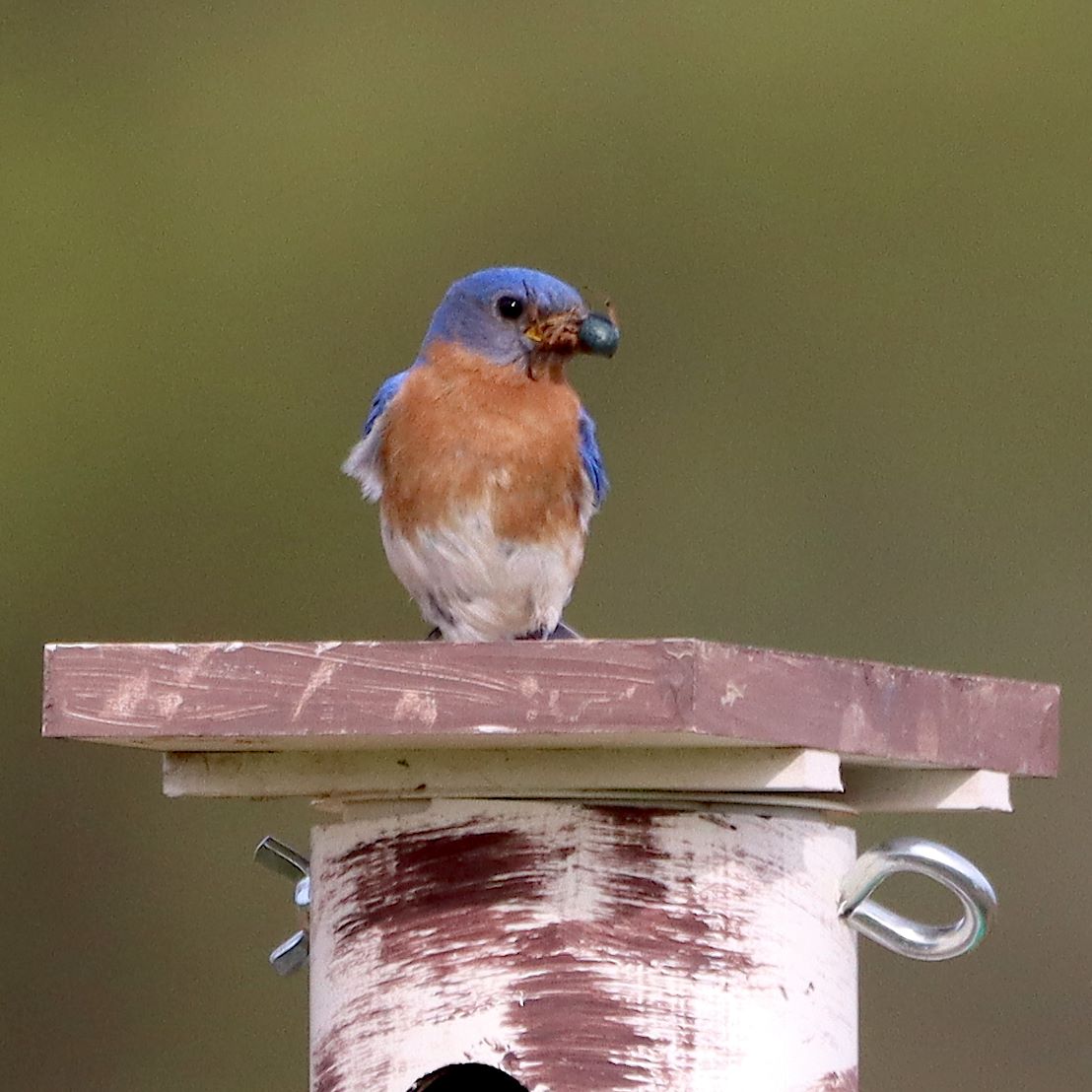
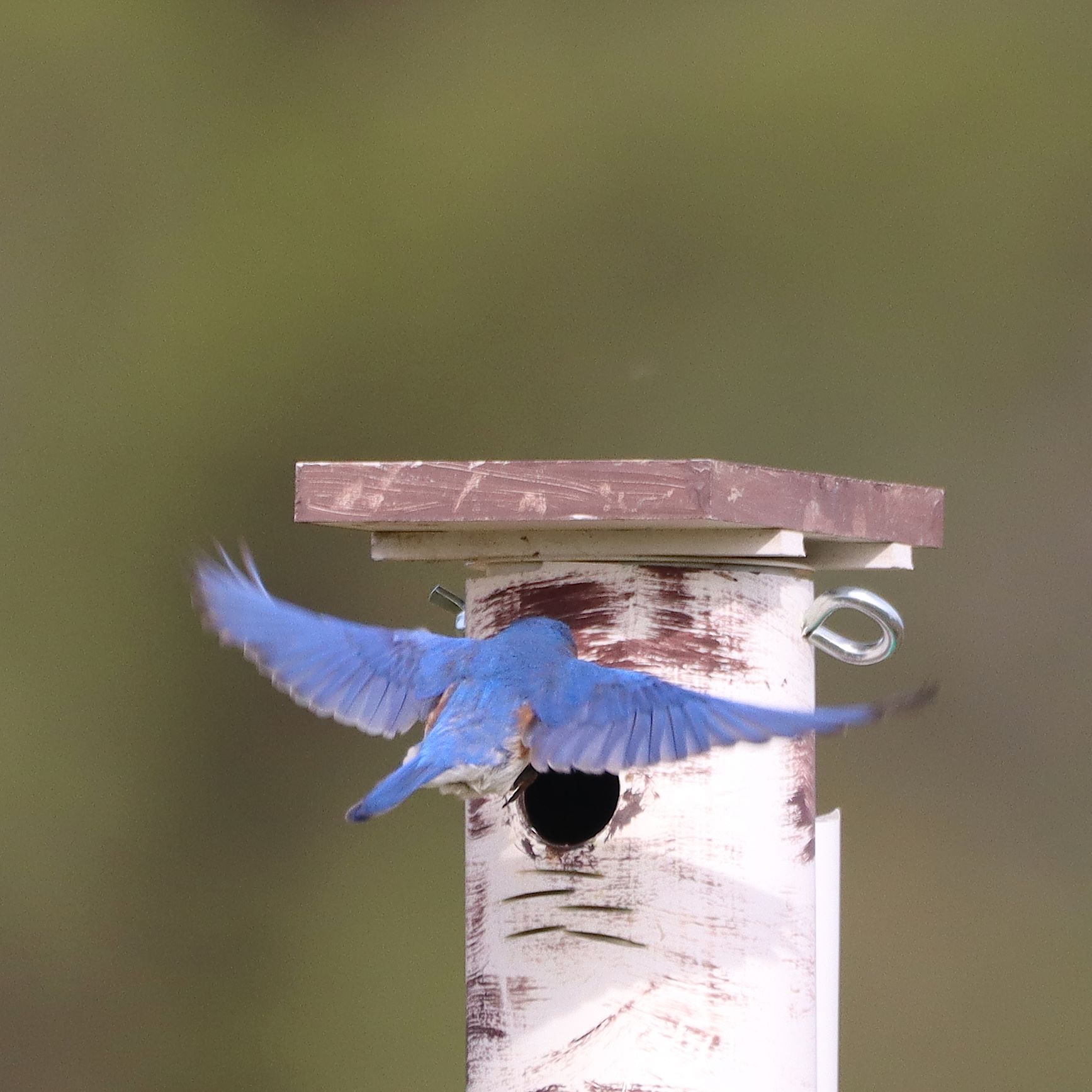
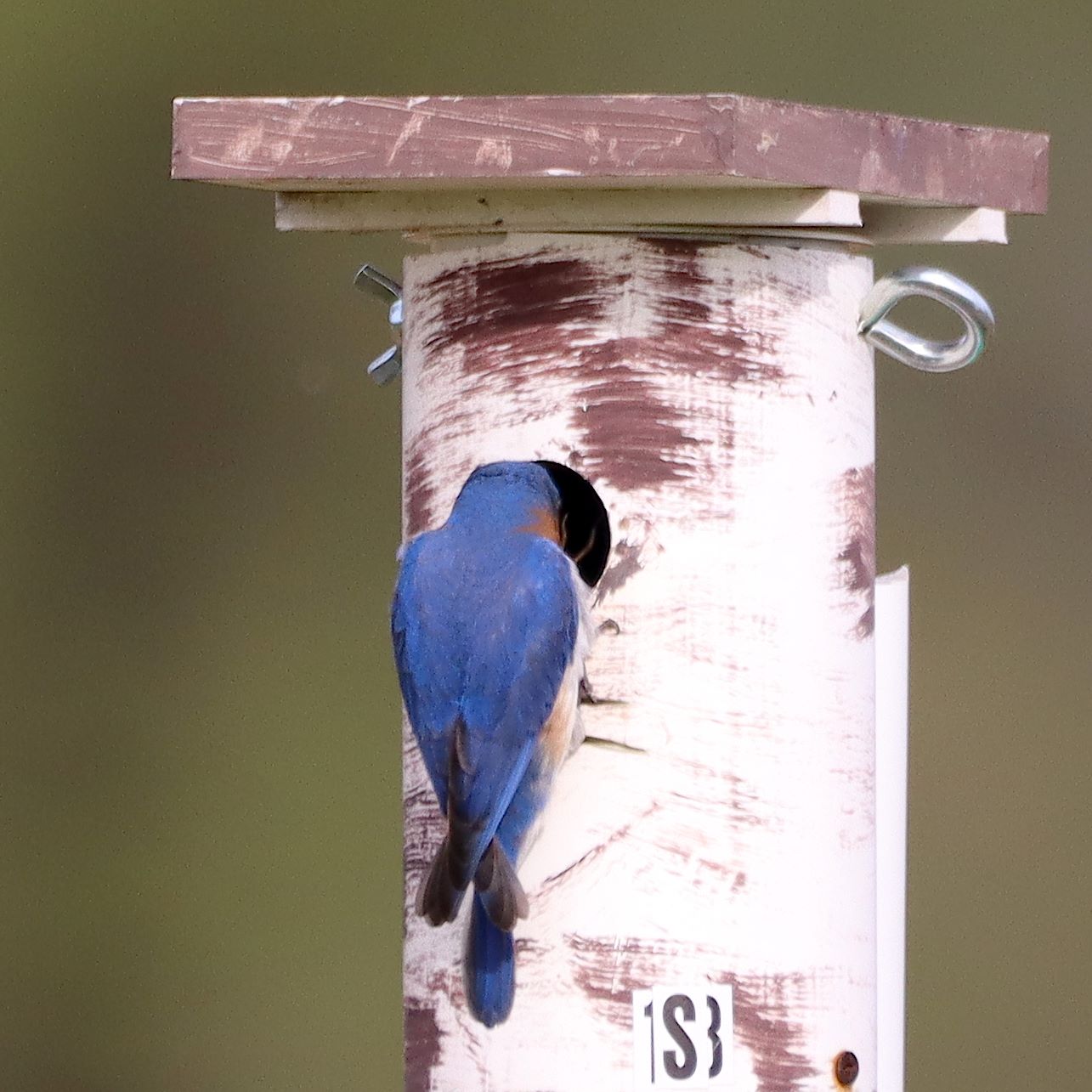
I didn’t have to wait too long before “Dad” Showed up with a very big spider – or as I refer to is as “Arachnid Crudo”from a Bluebird’s perspective.
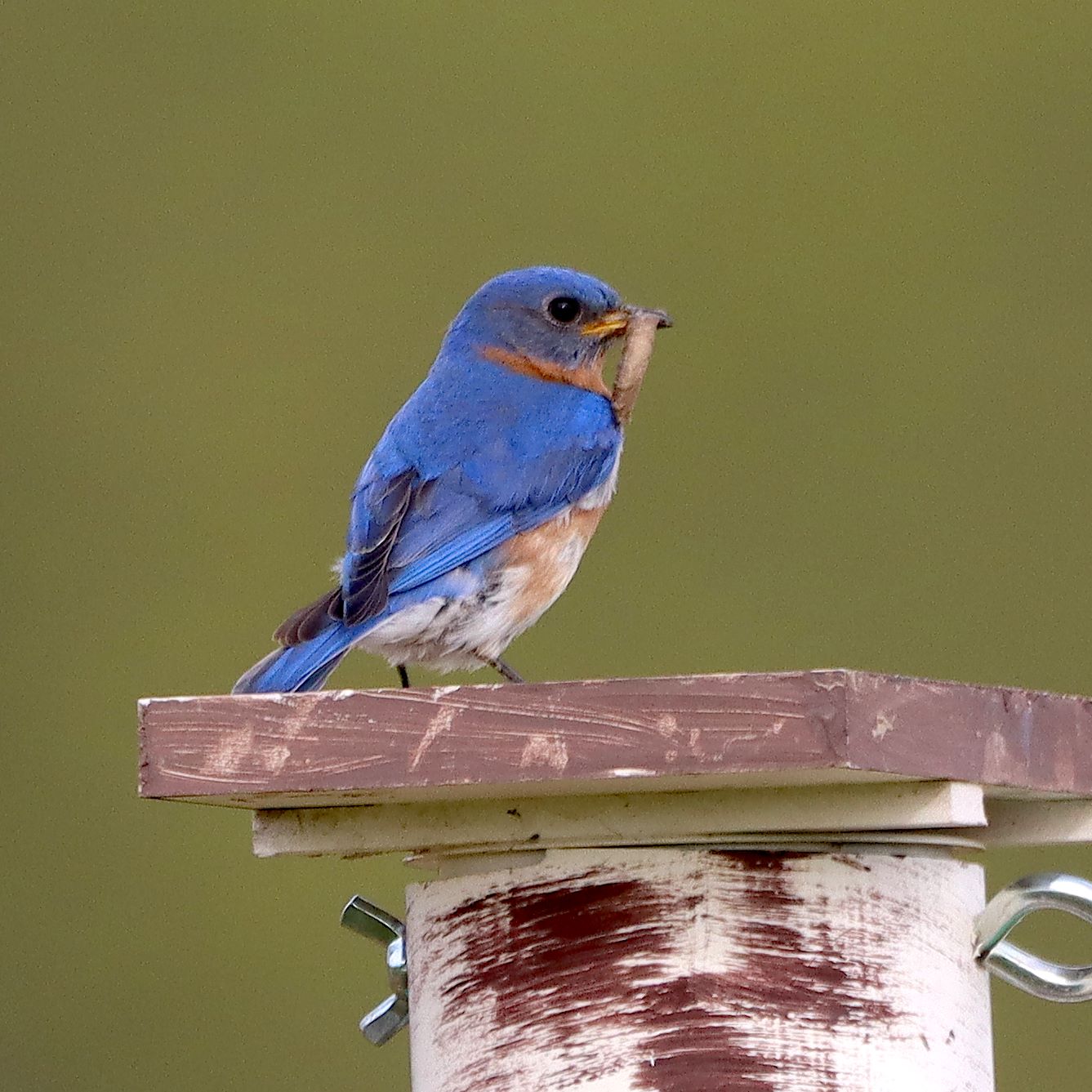
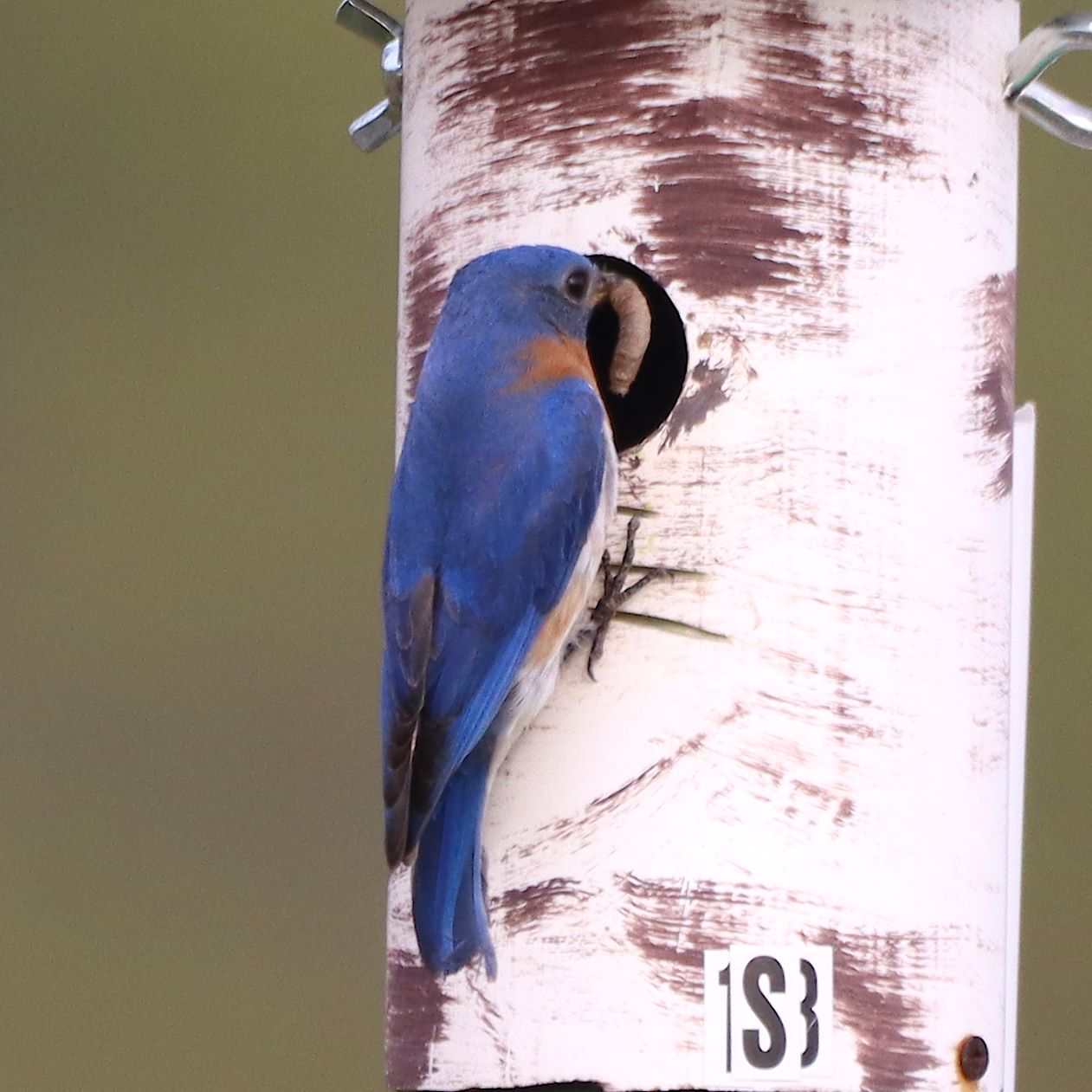
A bit later he came back with a large worm. Those babies eat a lot and he takes his job very seriously!
Two Eastern Bluebird couples, that had access to a couple dozen other options to set up shop, found it completely tolerable to be closer neighbors than the literature has nearly set in stone. It makes me happy; not to debunk the literature, but rather that we are able to offer these amazing birds the resources and security that they can feel less stressed about competition with others of their own species and more focused on raising their young without that stress.
I look forward to more good weather (it poured rain last night and today, again!) so that I can get out and capture these lovely birds!

