Tammie Rogers
Inspired by Dogs & Nature
The Branch
Jutting out to the west of our pond there is a small inlet where cattails grow and late summer weather often shrinks the water to a measly soggy puddle. At the corner where that inlet joins the larger pond, there’s a tree. It’s one of many volunteer shrubs and saplings that have sprouted up around the place, especially after we sold our sheep that once grazed right up to the water’s edge; a behavior which limited the chance for anything more than grasses to thrive.
I believe this sprout of a tree is a Red Mulberry. Its leaves look quite similar to a much larger tree that stands about ten feet to the south and which is impossible to misidentify as it produces hundreds of fruits every summer which are consumed by many birds, and I suspect a few mammals, too. The young tree is still quite wiry. Even the most gentle of breezes cause its limbs to sway – that is all but one unique branch.
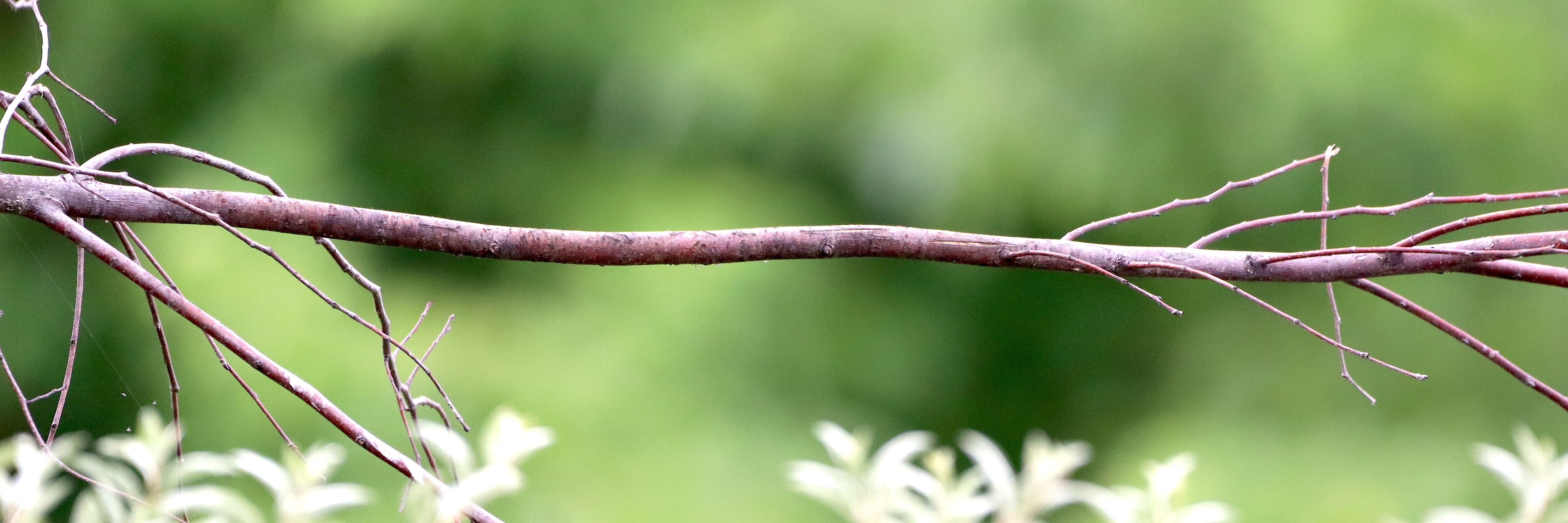
“The Branch,” as I have begun to refer to it, sits at a near perfect horizontal plane and bears the scar of having been broken from the main trunk of the small Mulberry tree. It supports many smaller stems that, along with the main branch are dry and leafless. While it appears dead, in its own way The Branch supports life – in fact, it hosts many lives.
The Branch is a place where birds like to perch. Remaining still and quietly observing it, I get the sense that it is a sort of avian resting spot and provides various reasons a bird may want to sit for a spell. As someone whose hobby revolves around observing wild birds, The Branch is an enchanting place.
The spindly Mulberry sprout sits at the juncture not only of the inlet and the larger pond, but also at the intersection of two paths that Robert routinely mows which offer me access to the space. One path travels North-South along the West side of the pond. The other mowed lane travels East-West along the north side of the inlet. I use the openings which Robert cuts in the otherwise shrubby thickets to travel with my golf cart around the pond.
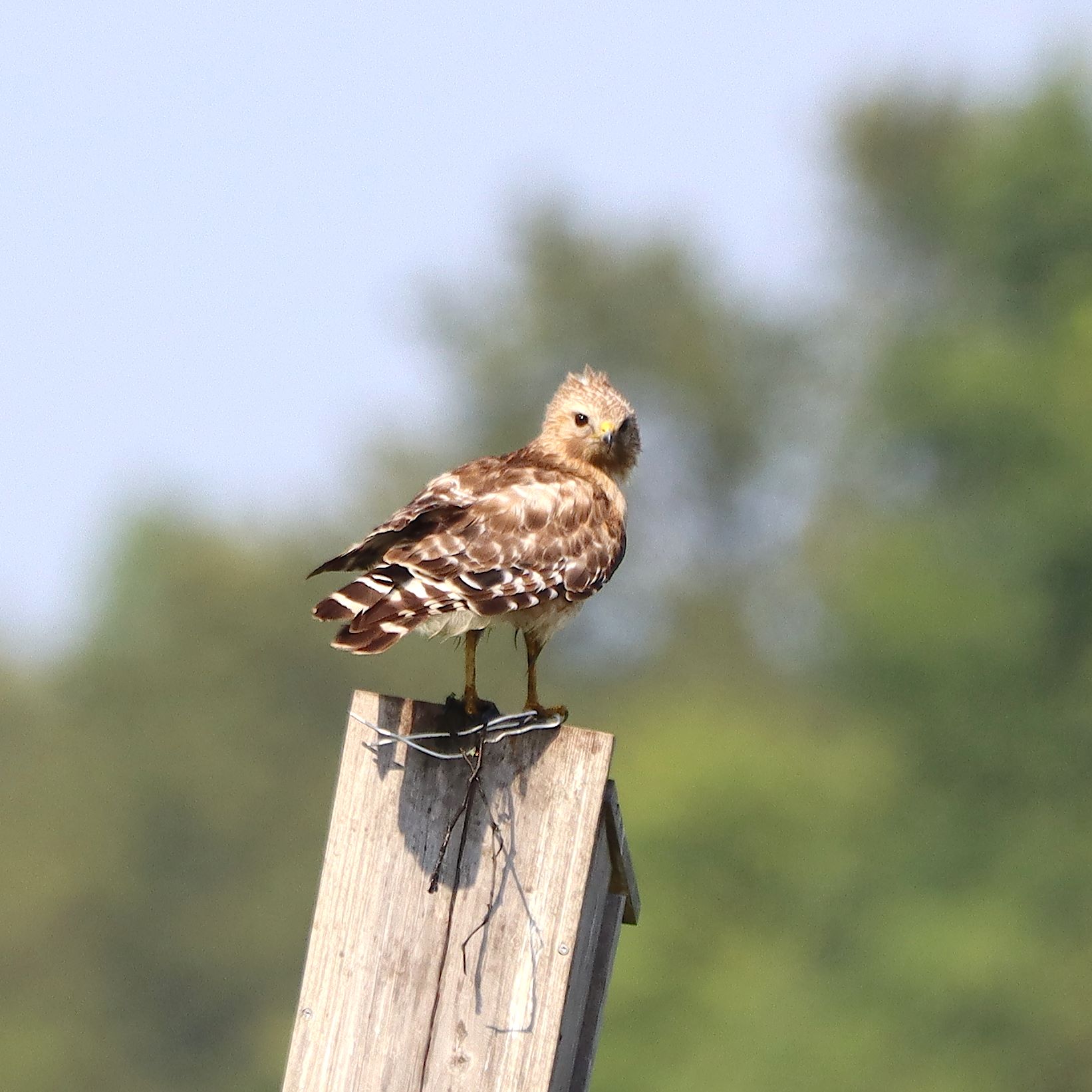
Curiously (or not), the wild birds use the cleared paths as thoroughfares through which they fly from one location to another. En route, and before making the decision to either continue over the pond or to dodge into the undergrowth of the thicket, many birds choose to rest for a spell. The Branch seems to be the perfect roost for repose or review of the surroundings. After all, it’s not uncommon for a Red-shouldered hawk to sit atop the duck box on the other side of the pond that may be looking for its next snack.
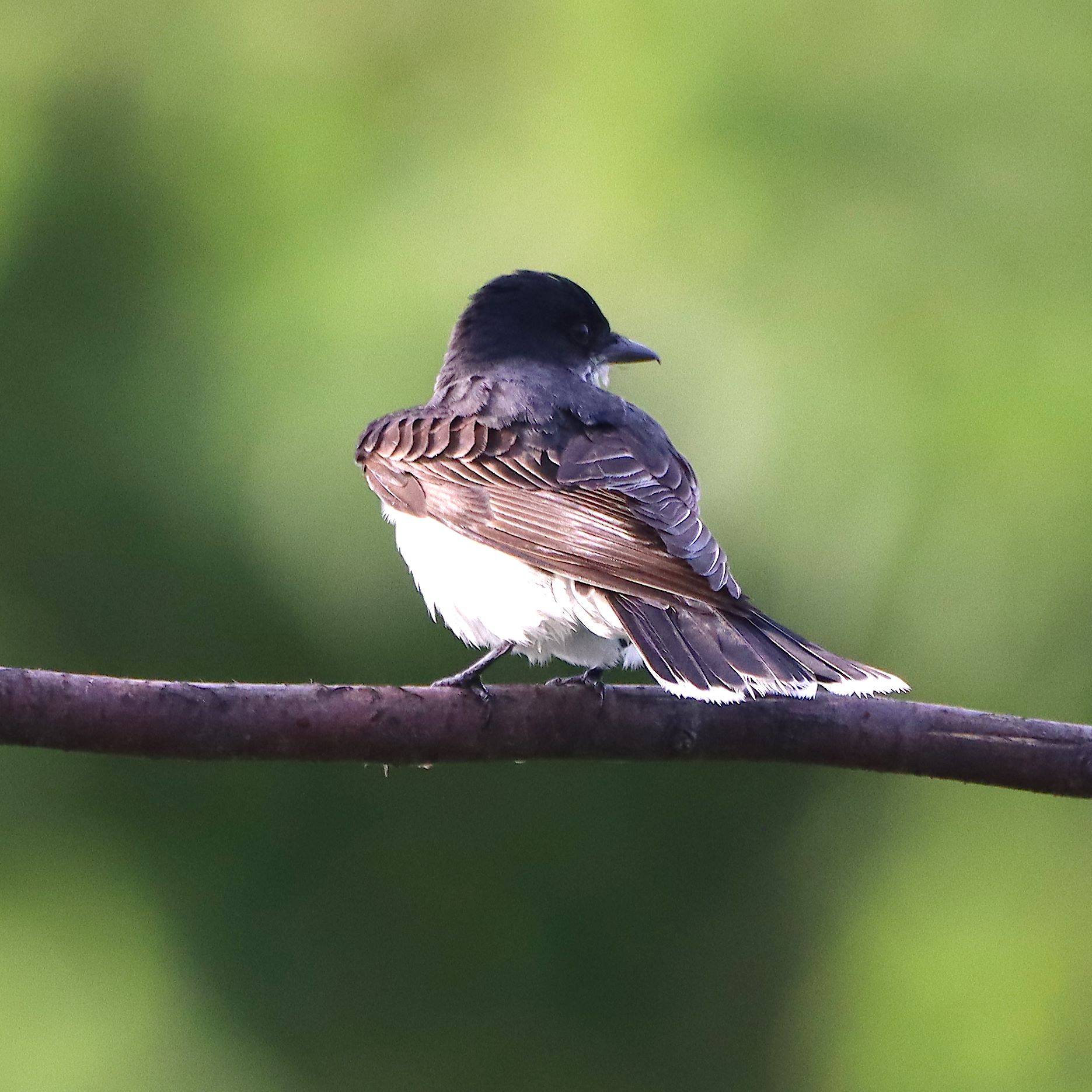
The first bird that I observed on The Branch was an Eastern Kingbird that was preening after a cooling bath. He remained for quite a while as he rubbed his beak across the bare branch, fluffed his plumes and shook off to spray the remaining droplets of water from his feathers.
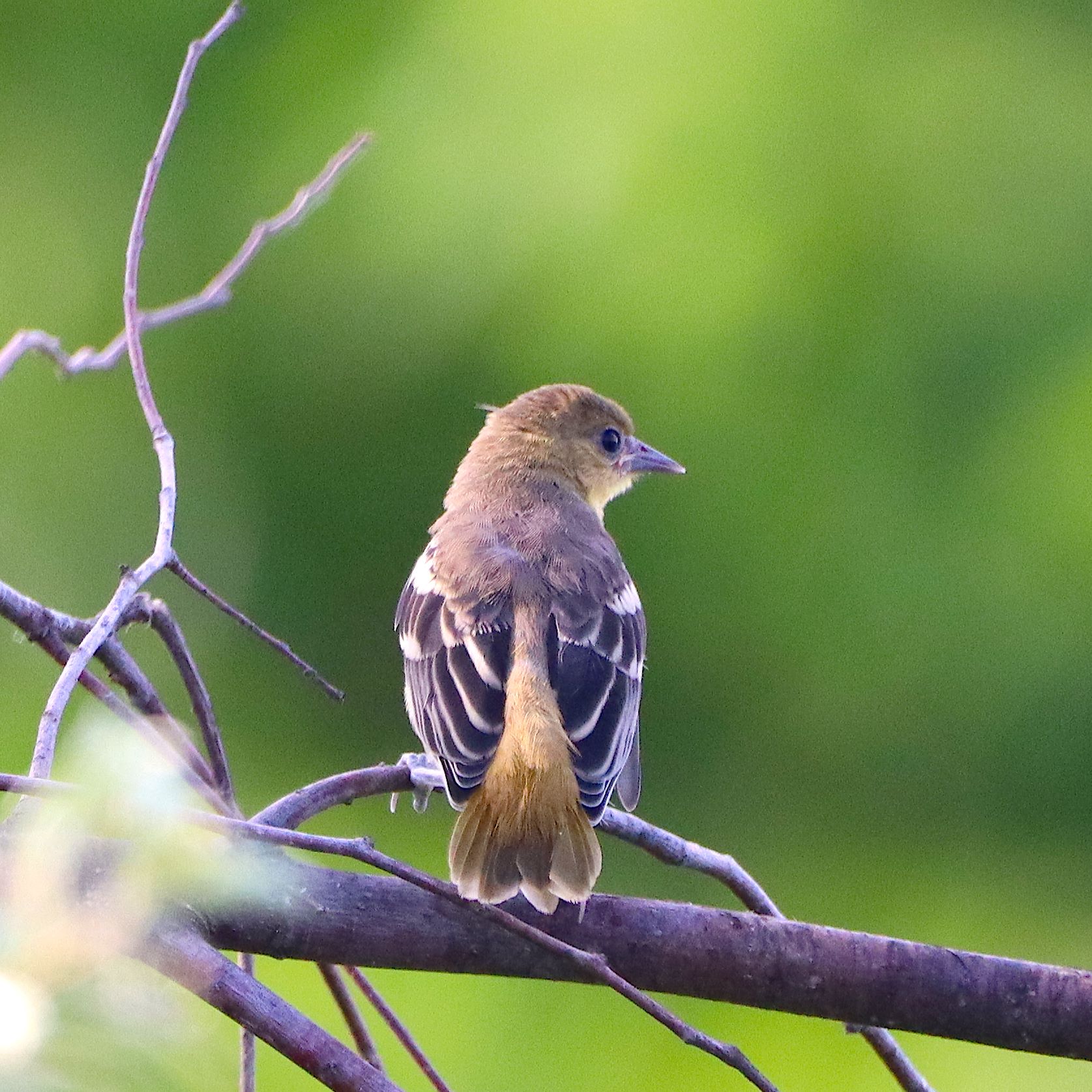
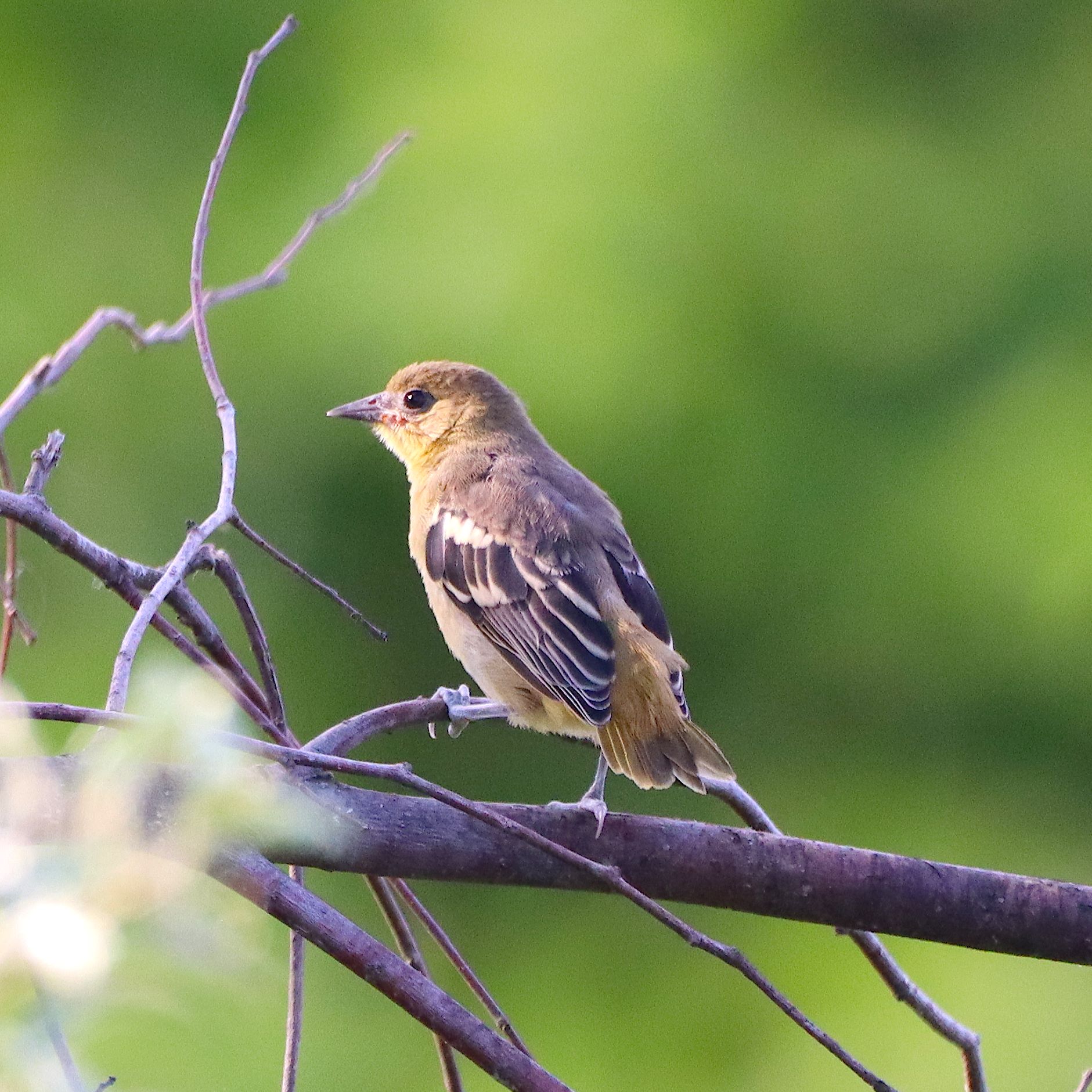
Not long after the Kingbird few off, a lovely, female Orchard Oriole landed lightly on The Branch. It appeared she was using the location to “look both ways” before continuing her flight across the inlet and into the small, mature wood lot that is dominated by the massive Osage Orange trees.
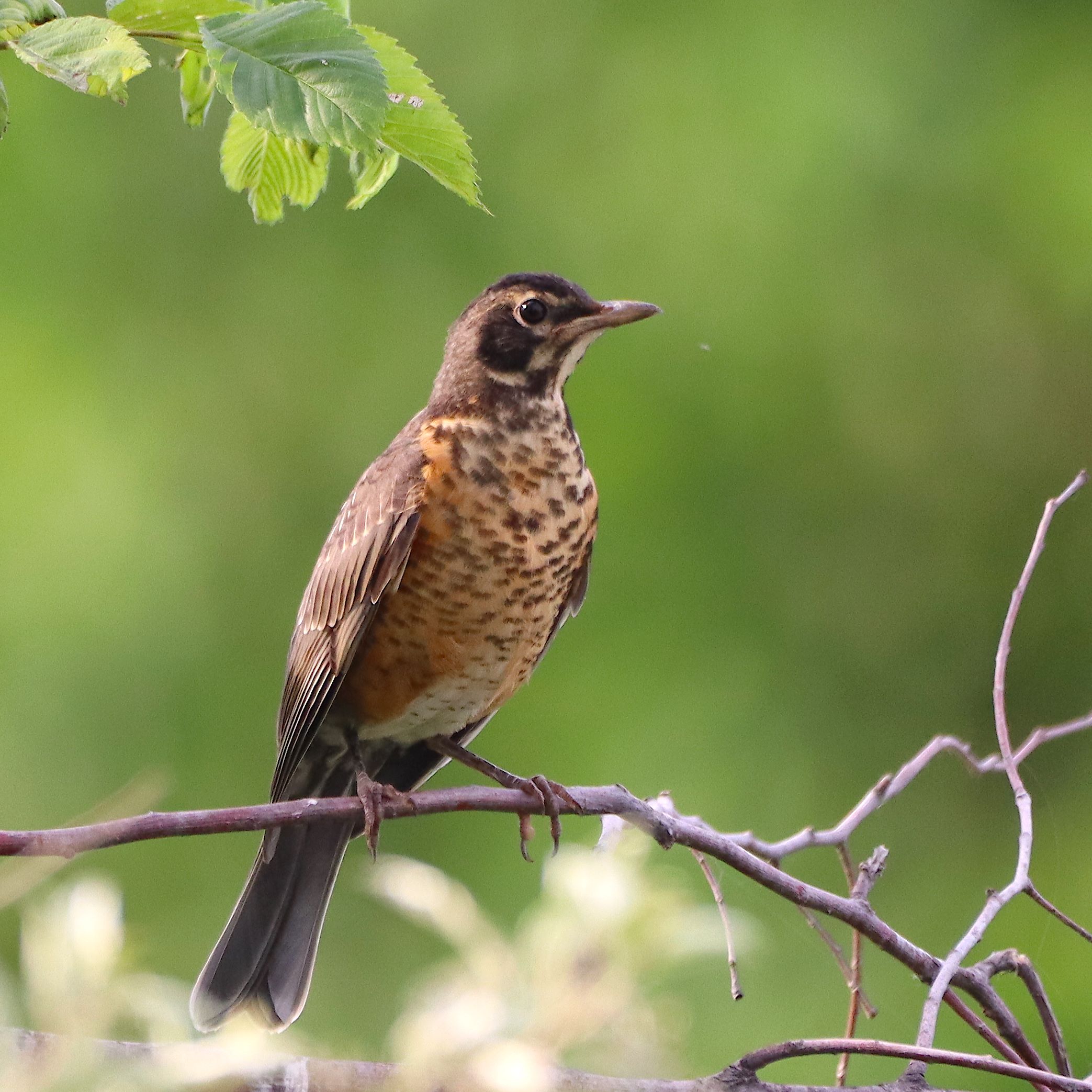
A juvenile American Robin landed just after the Orchard Oriole flitted off across the inlet. It seemed that he may be using the branch’s bounce to hone his ability to balance while perching.
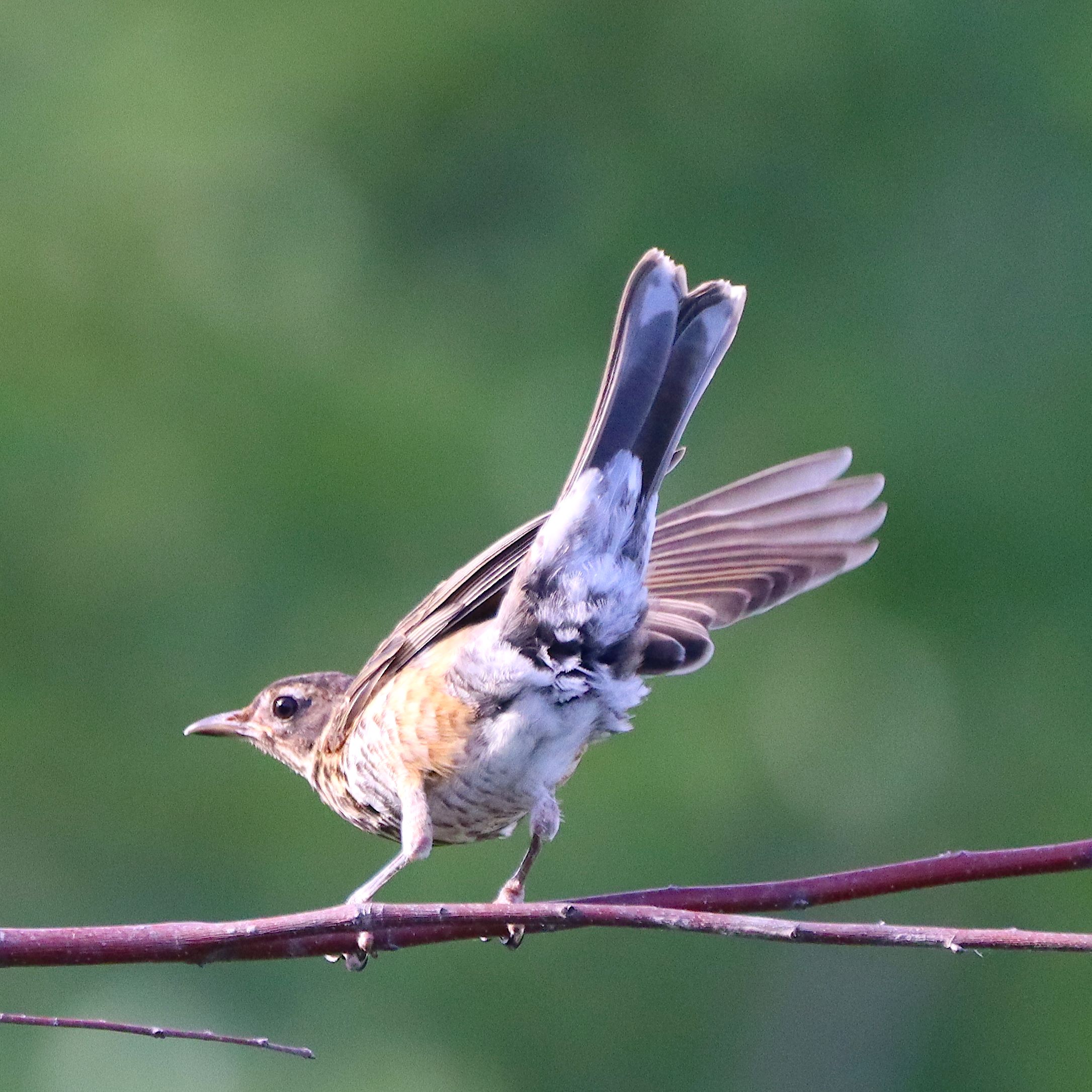
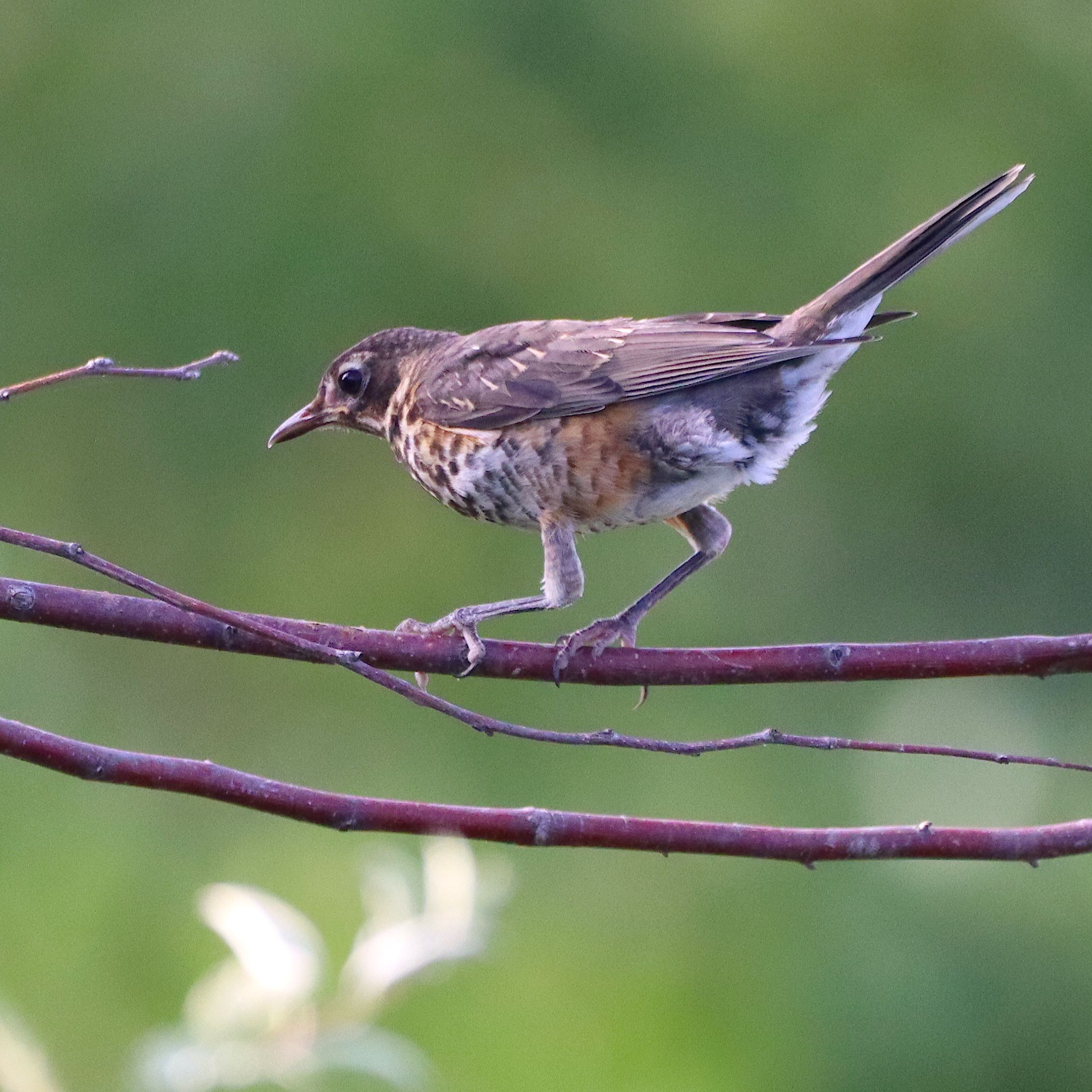
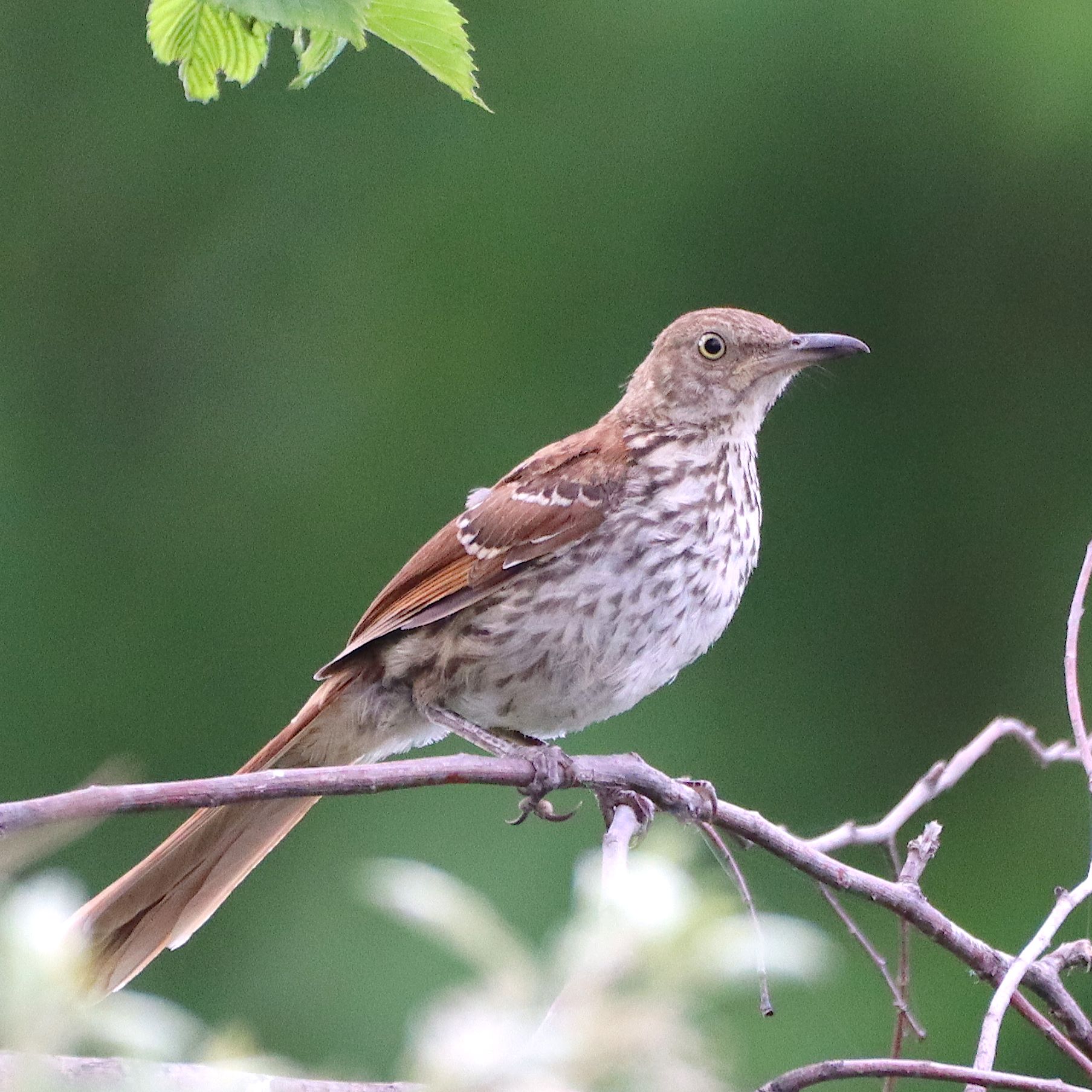
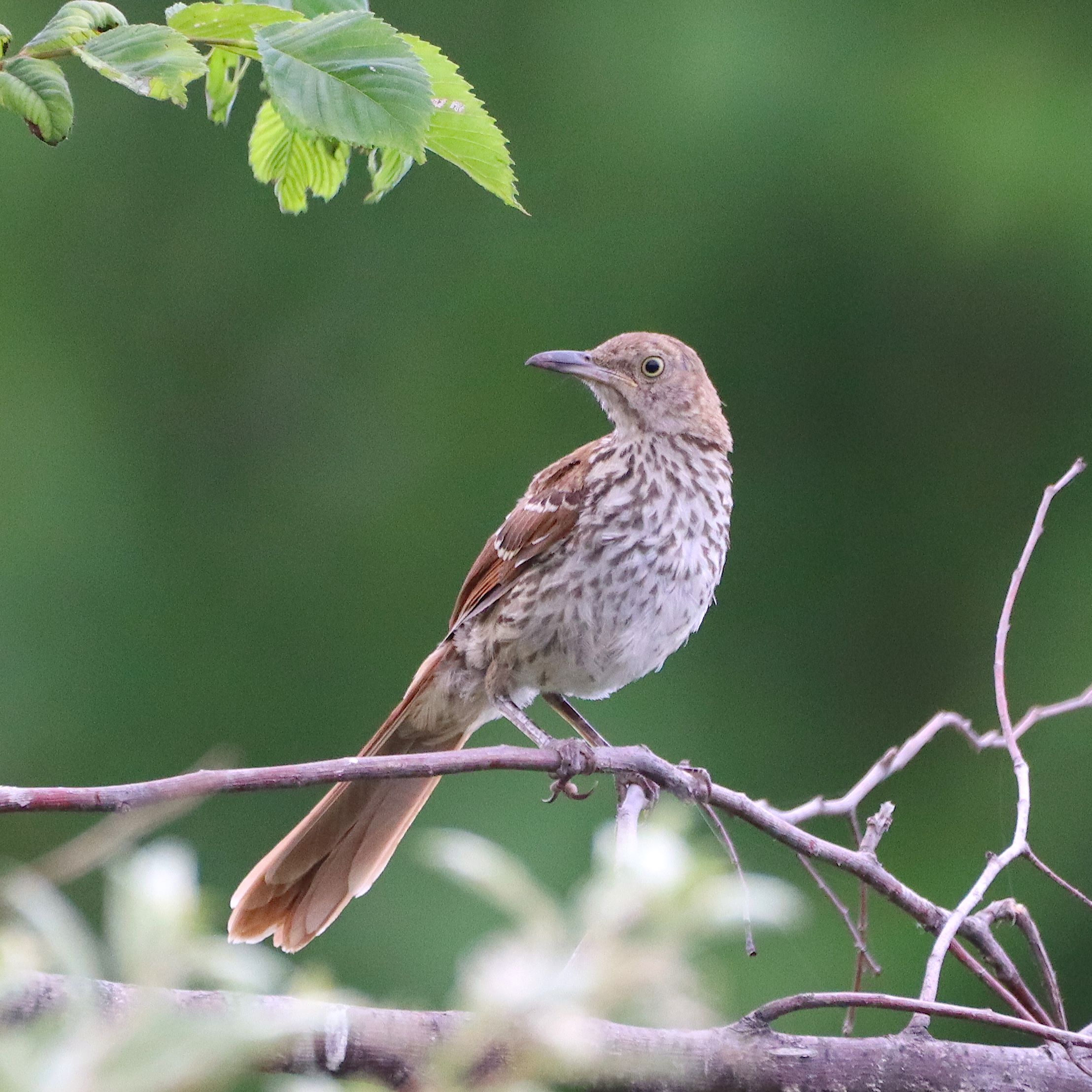
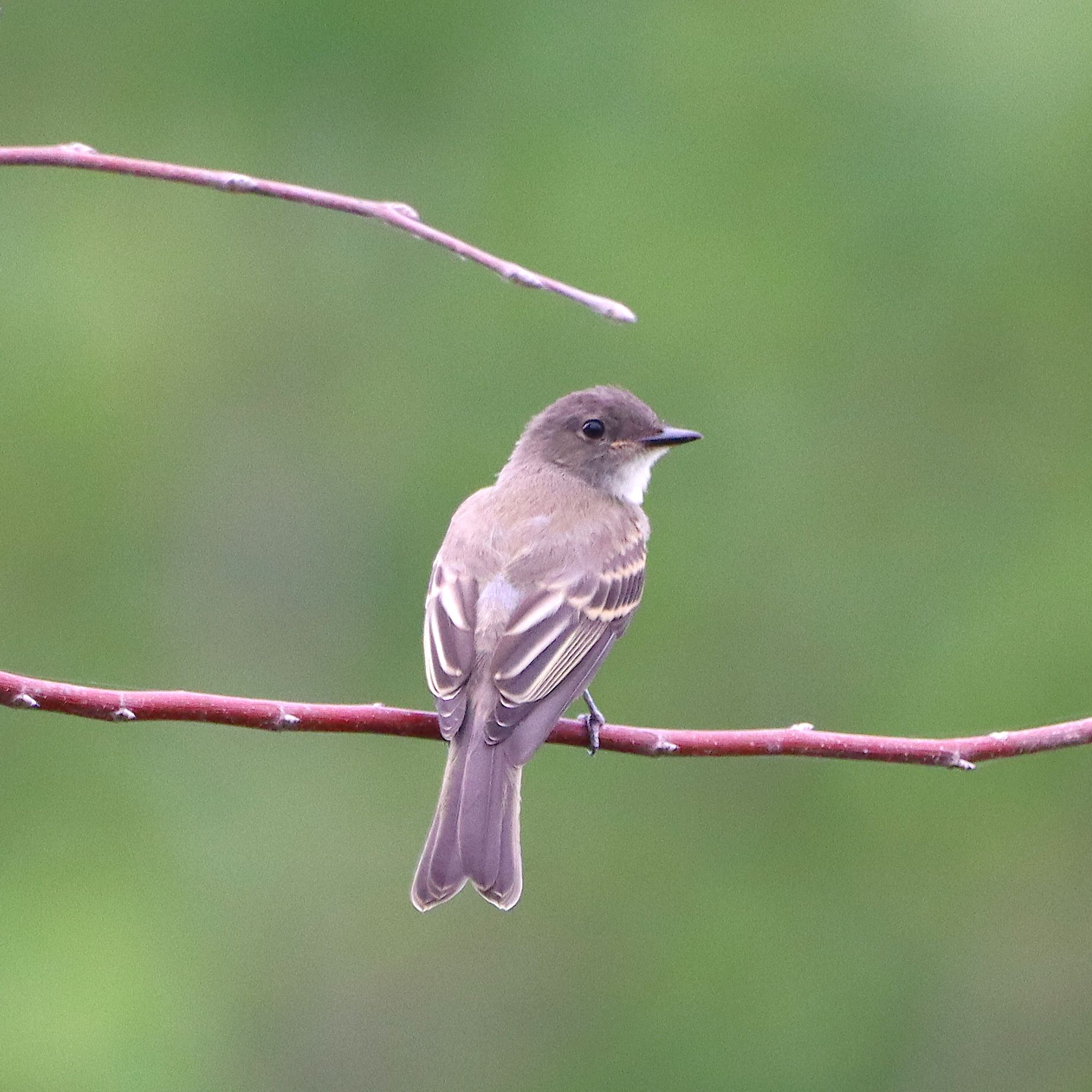
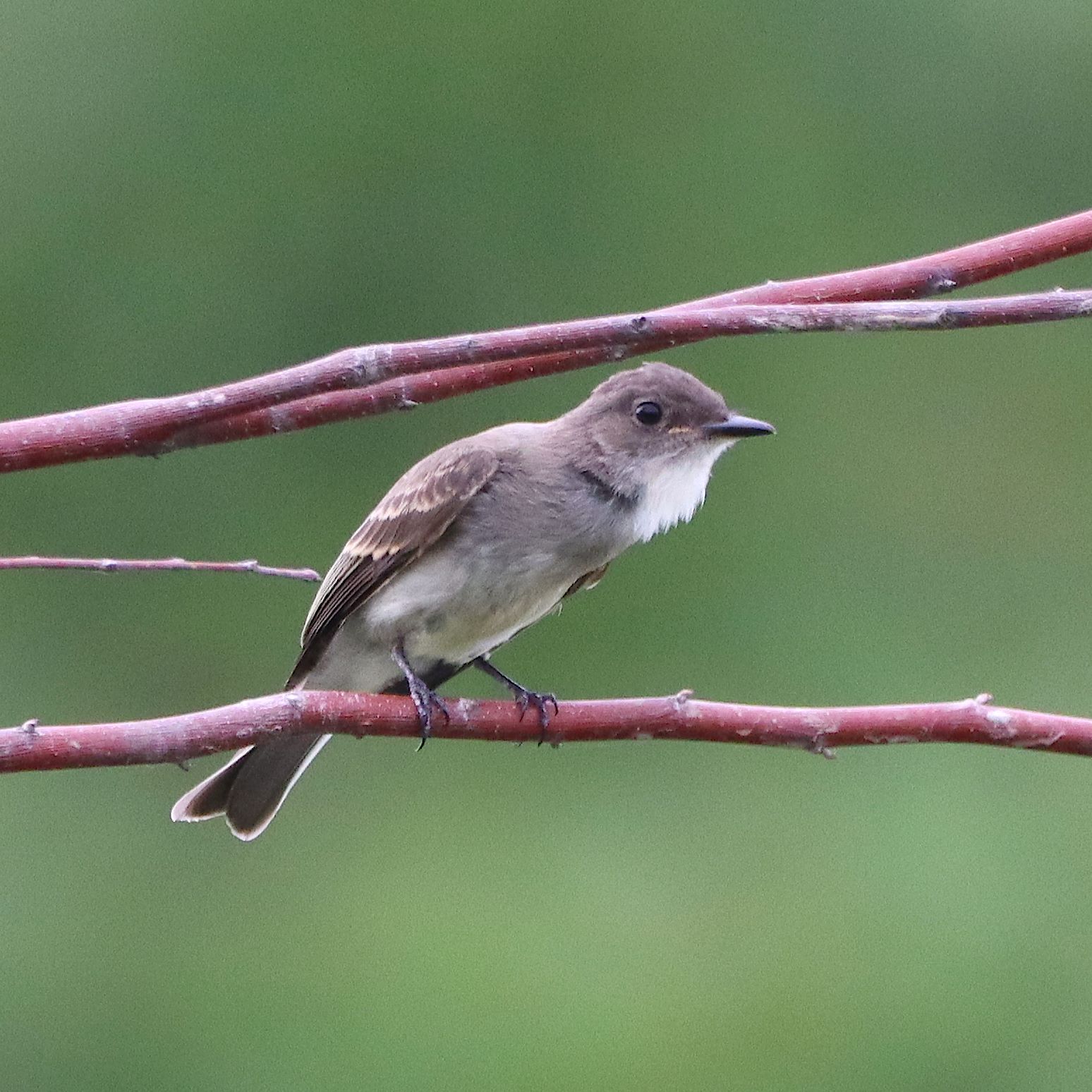
Over the next ninety minutes, several other charming characters stopped by The Branch, and I took a quick photo or a series of images of each one.
BROWN THRASHER
EASTERN PHOEBE
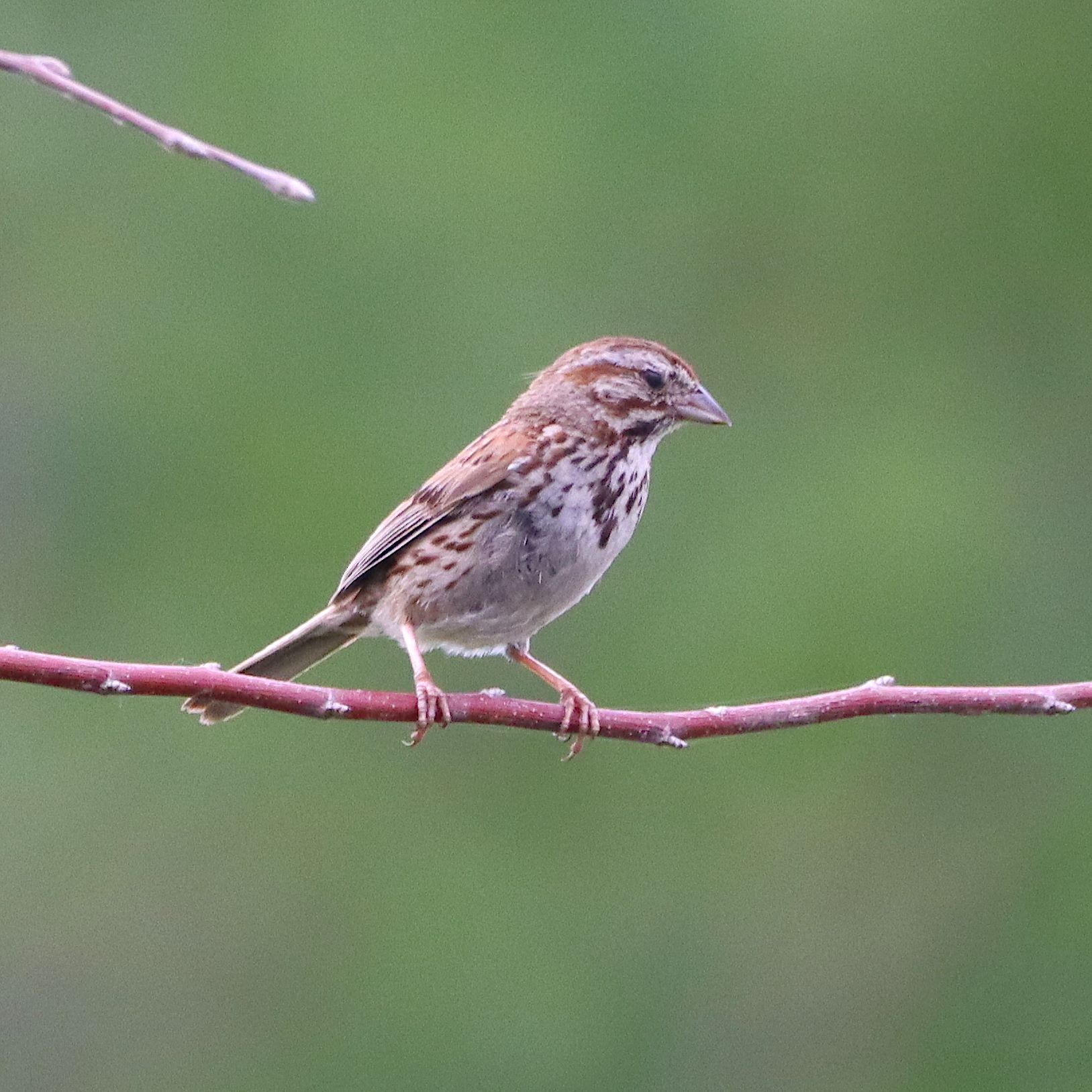
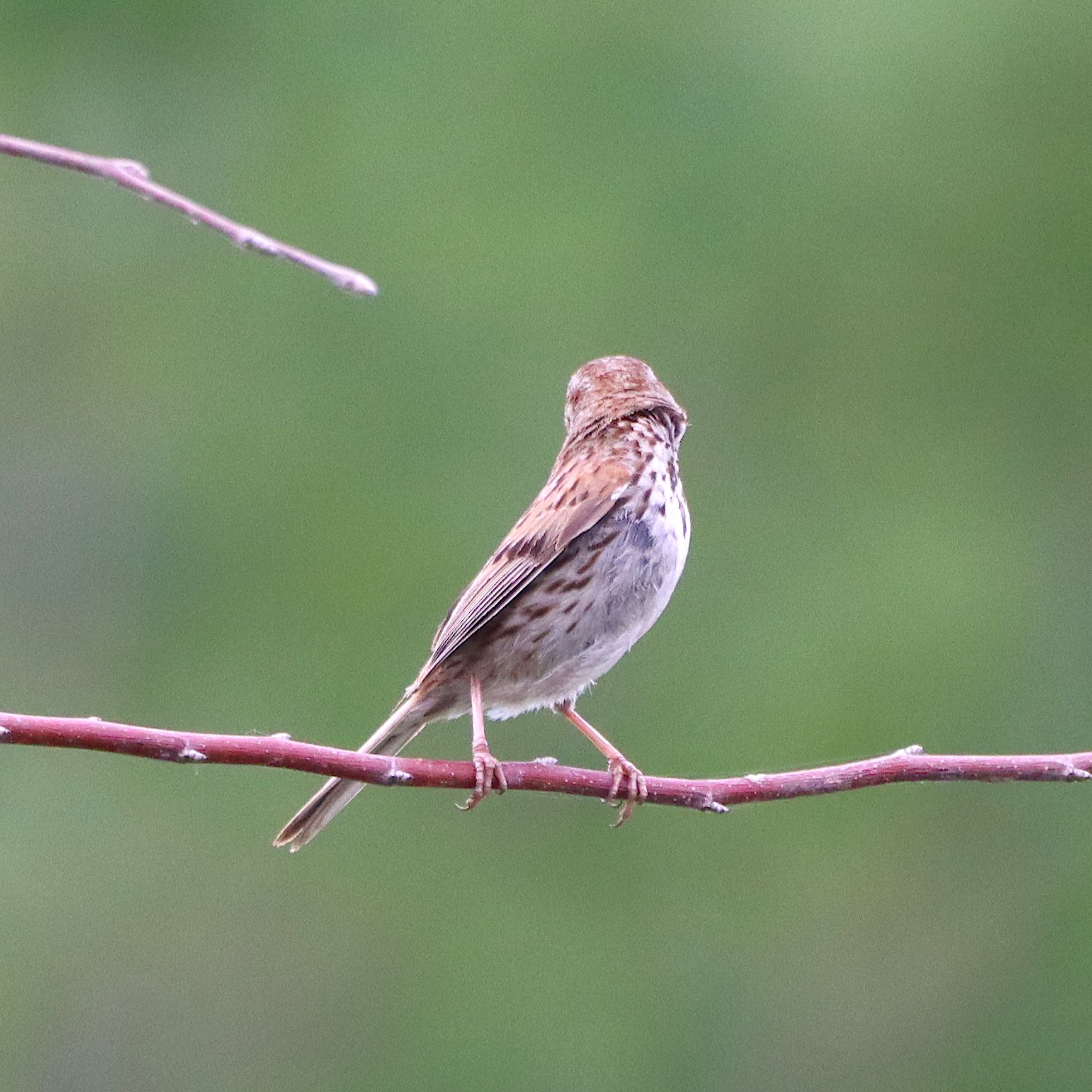
SONG SPARROW
This bird first landed at the top of the young Mulberry tree to belt out a few verses of his characteristic song, then he dropped down to The Branch to have a look-see from a different perspective.
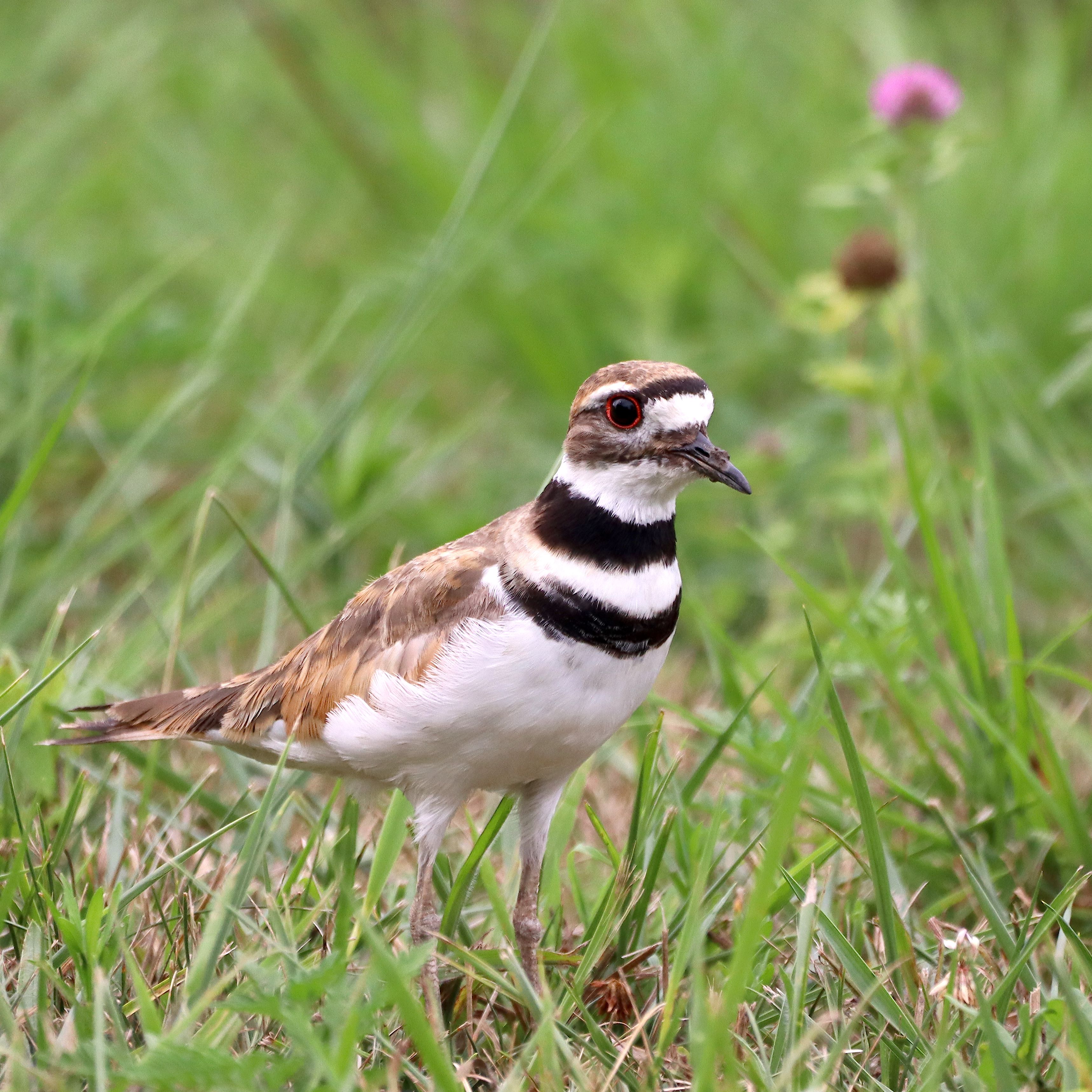
KILLDEER
While this bird didn’t actually perch on The Branch (it’s not that sort of bird), it made a rare visit to the mowed path at the base of the tree. It was one of those moment that I’ve had before where a bird comes to vogue for a photo op!
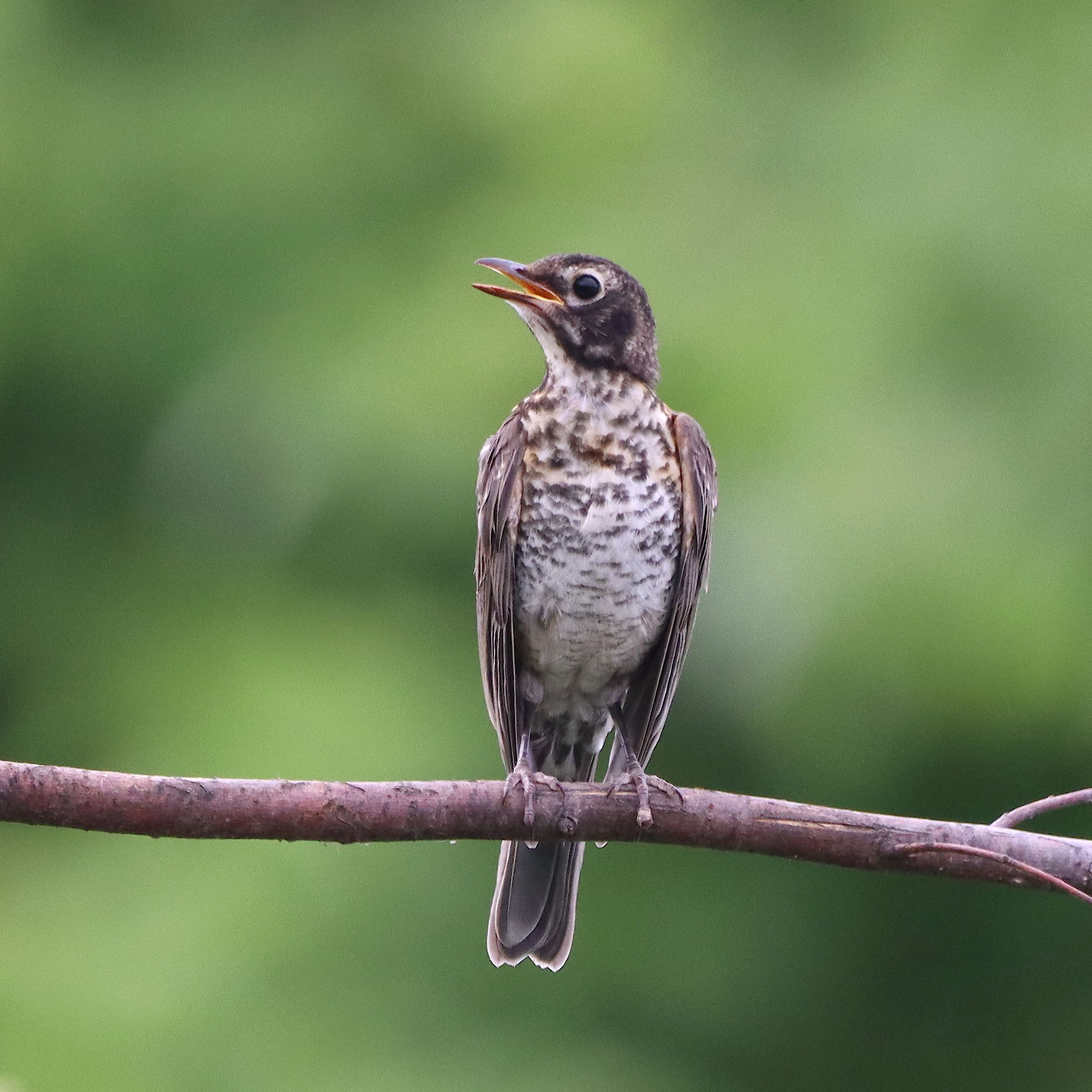
AMERICAN ROBIN (Juvenile #2)
I’m going to make a decent guess that the most prevalent wild bird on our property is the American Robin. The mowed lawns around our home as well as the mowed paths that traverse the entire property provide exceptional hunting for these common, but nonetheless lovely birds. I suspect a nest of chicks recently fledged in this area as I believe I saw at least four distinct individuals. I am left wondering if these cuties grew up in the same nest.
AMERICAN ROBIN (Juvenile) #3
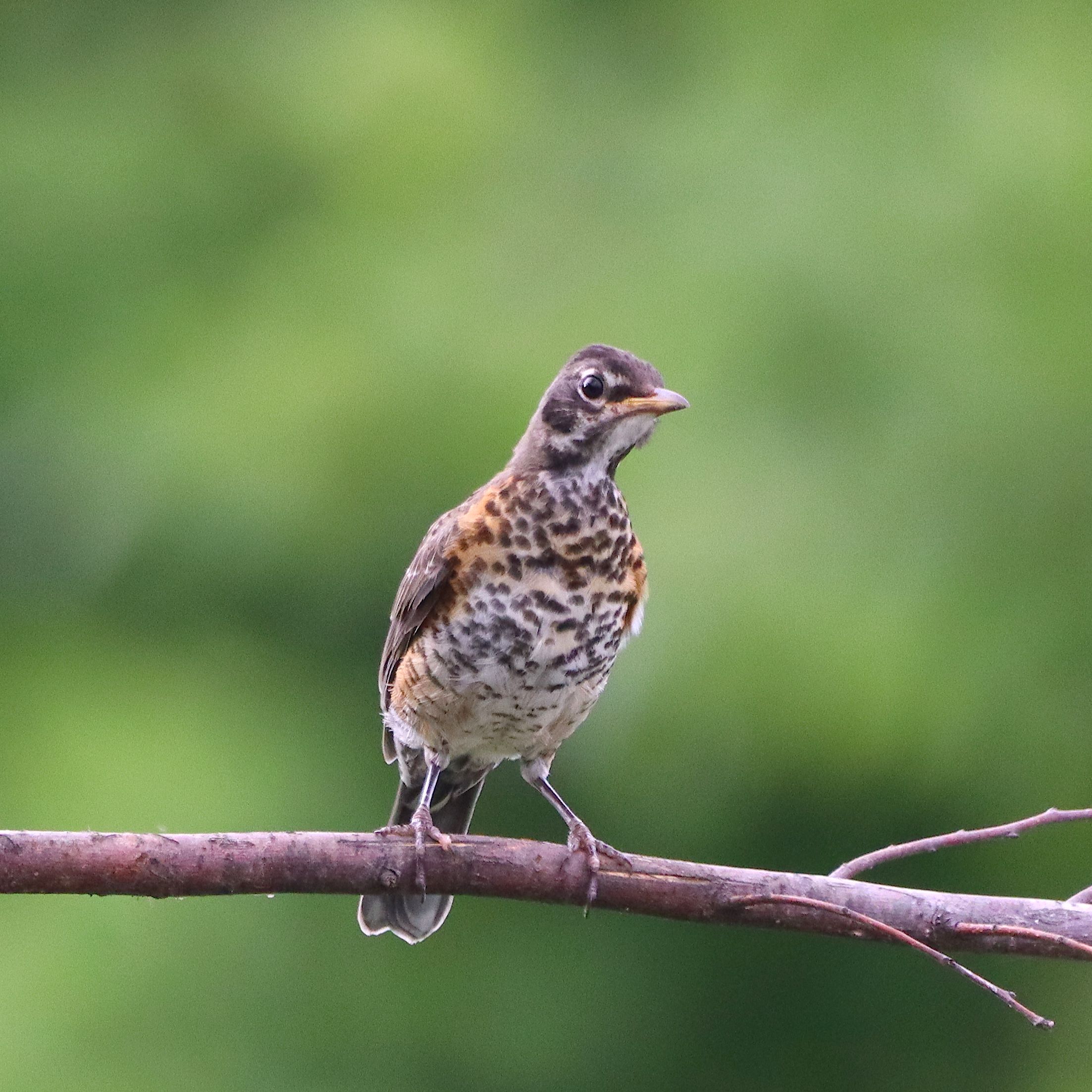
AMERICAN ROBIN (Juvenile) #4
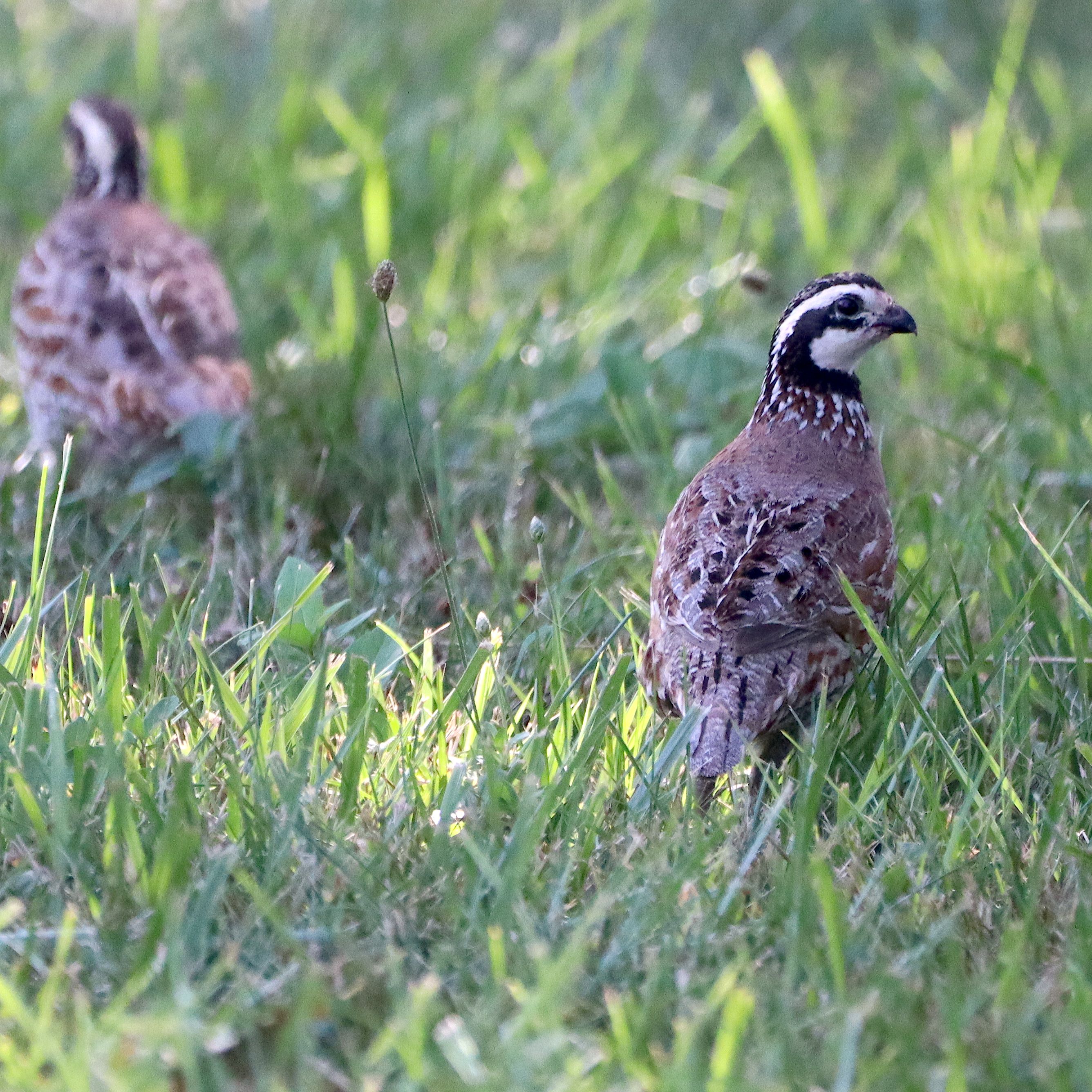
NORTHERN BOBWHITE
Again, since it is a ground dwelling bird like the Killdeer, I can’t include the Northern Bobwhite as a species that perched on The Branch. However, it did make an appearance while I was settled in the area with my lens aimed towards The Branch. I almost always see these birds as a couple, and they remind me of an old, human pair toddling (or should I say waddling) around their neighborhood as if they have explored every nook and cranny for a hundred years. I can almost here the male say, “Honey, did you know the maple tree fell down?” and without turning her head she replies, “Norm, that thing has been down for months. Don’t you ever pay attention when we walk down this path?”
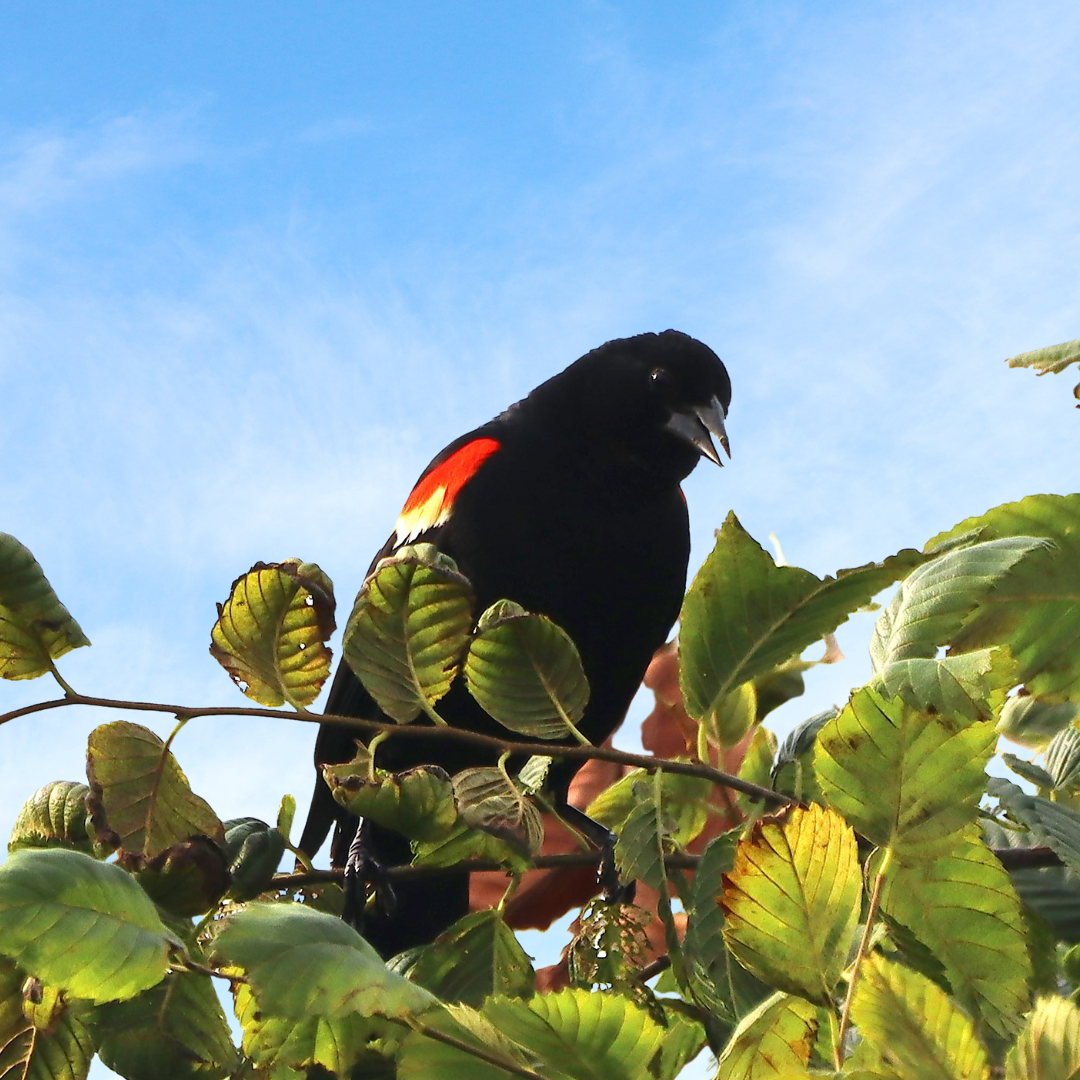
RED-WINGED BLACKBIRD
OK. So, he is perched at the top of the little Mulberry tree from which The Branch hangs, but it’s still part of that zone of high bird activity that I find so inviting.
We have a very busy work week, but I hope to get back out to gaze at the activity that The Branch brings to the west side of the pond perhaps early next week. I can’t wait to see who might show up.


Great photos of beauty of nature
Thank you so much.
Monumental!
Thank you.