Tammie Rogers
Inspired by Dogs & Nature
Natural Nest Cavity?
An Eastern Bluebird couple fledged their chicks from our bird box “R” that is located about 40 feet from a very large, old tree at the Southeast corner of our property. That tree stands about 65 feet tall and is it’s own ecosystem that supports red-headed, red-bellied and Downy woodpeckers (perhaps even Hairy woodpeckers as I have recorded their vocalizations in that location.) Many other species use it for nesting, penthouse perching or hunting insects.
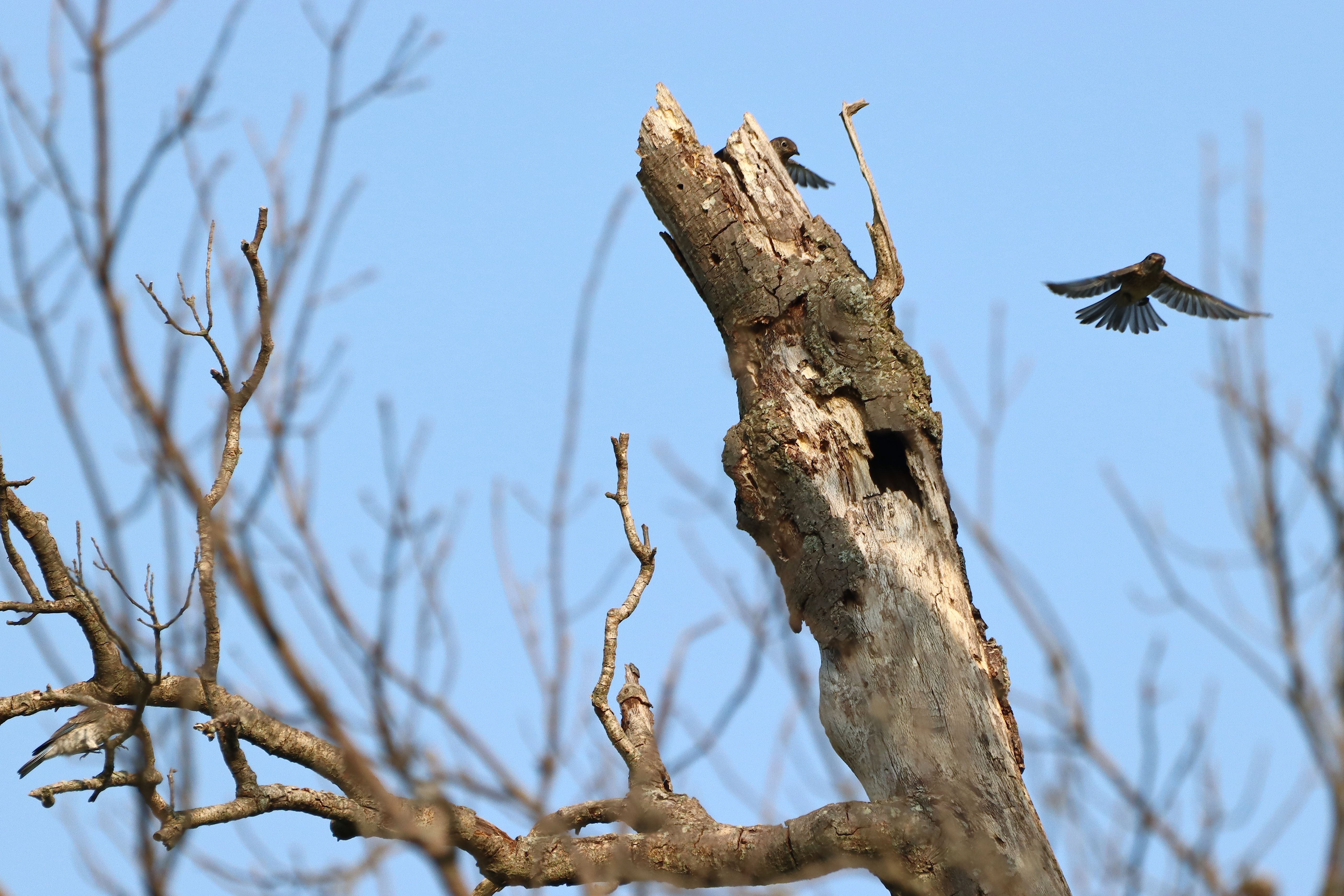
Yesterday, I saw some activity at the very top of the tree so I pointed my lens skywards which wasn’t easy from the seat of a golf cart. Still, it was worth the effort as, when I downloaded the photos I discovered that there were at least three Bluebird youngsters, that I suspect are the chicks that fledge from box R. Look to the bottom, left corner of the above photo where there’s a third bird.
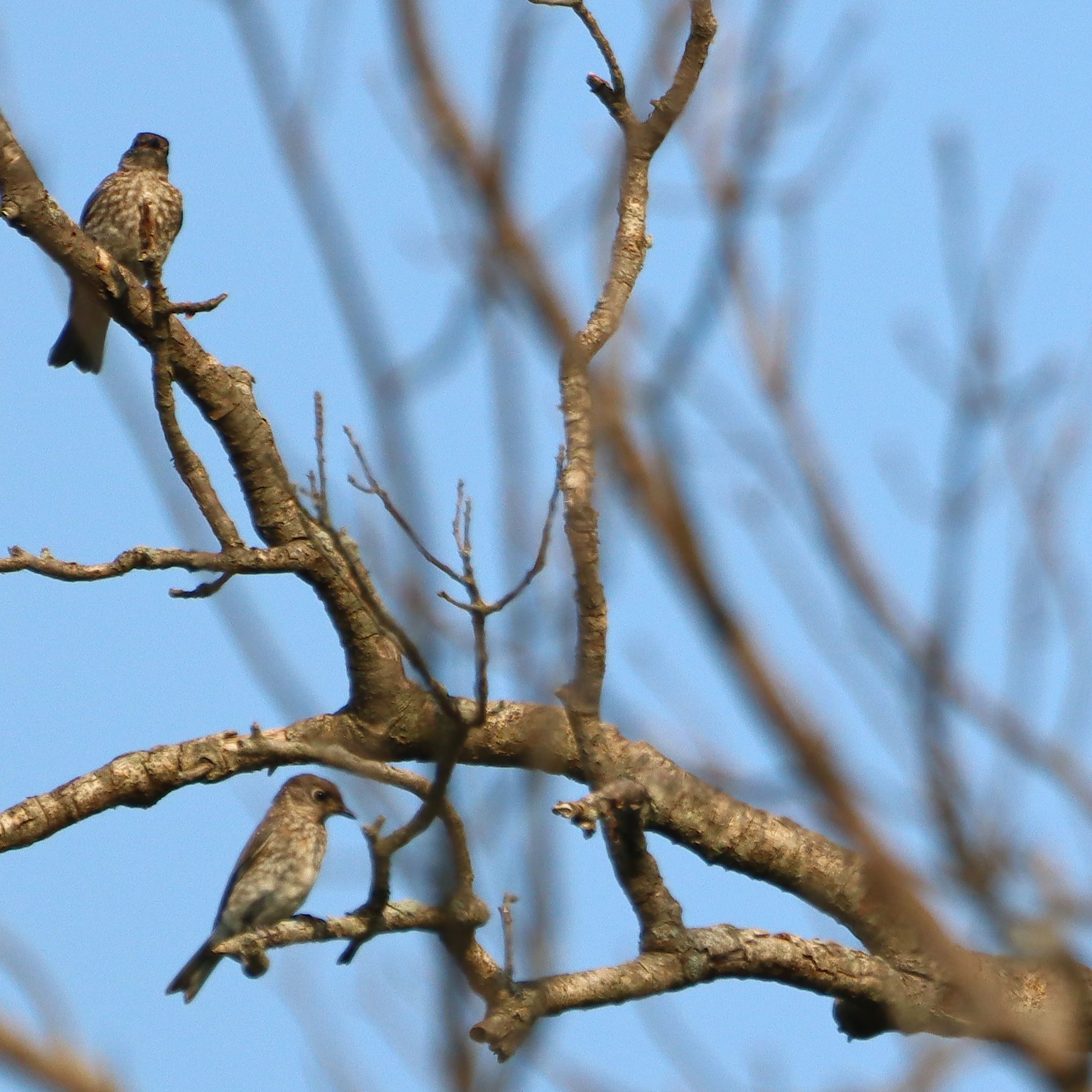
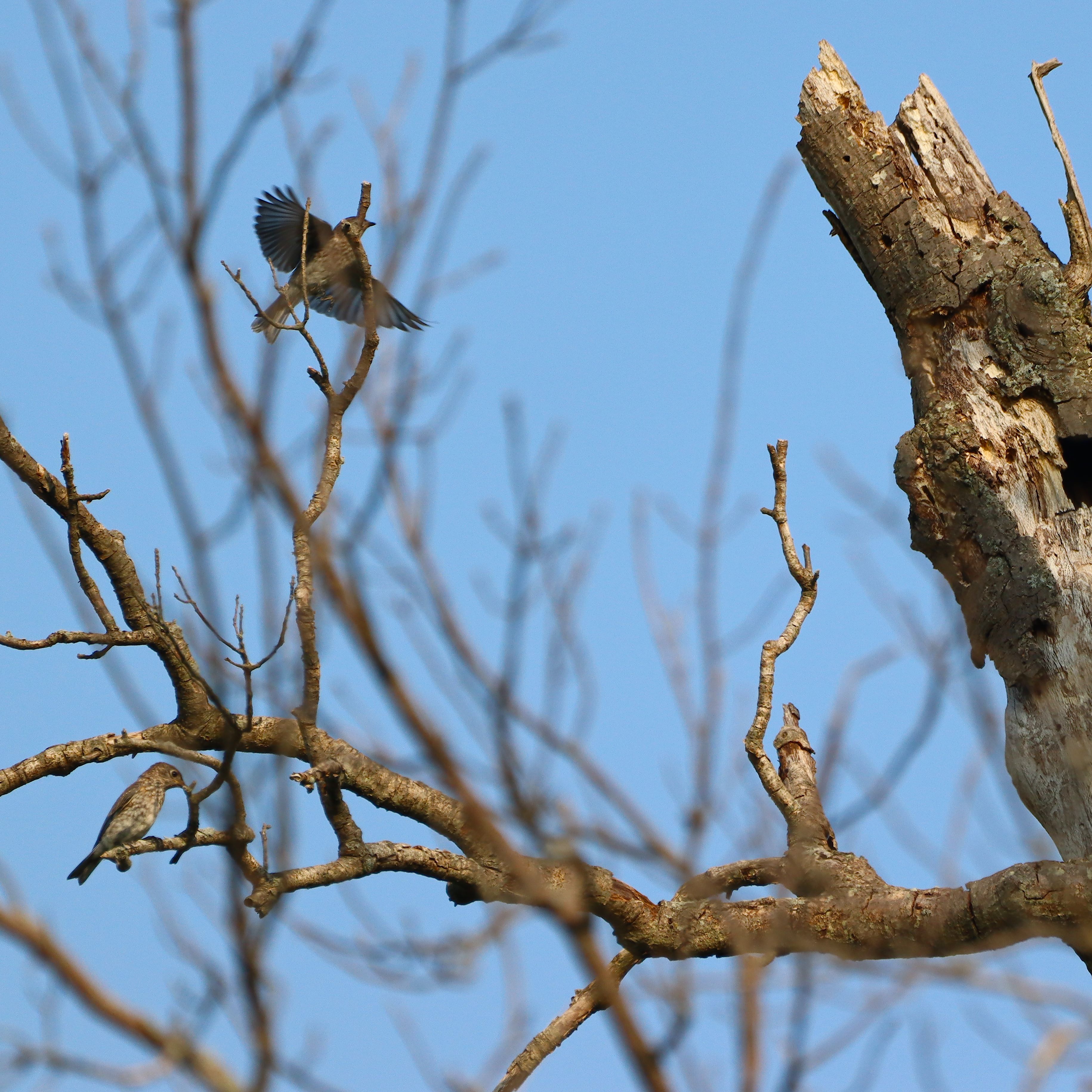
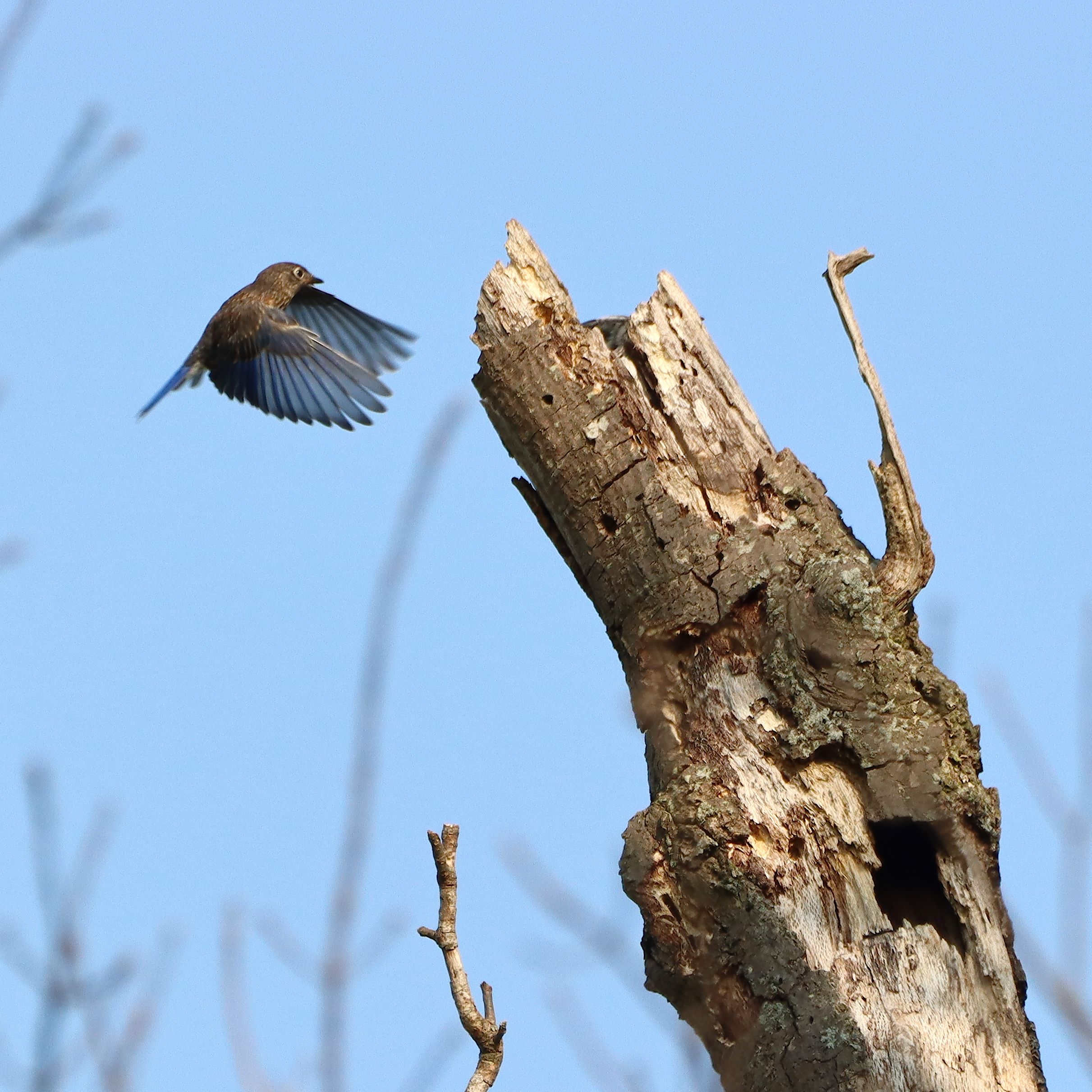
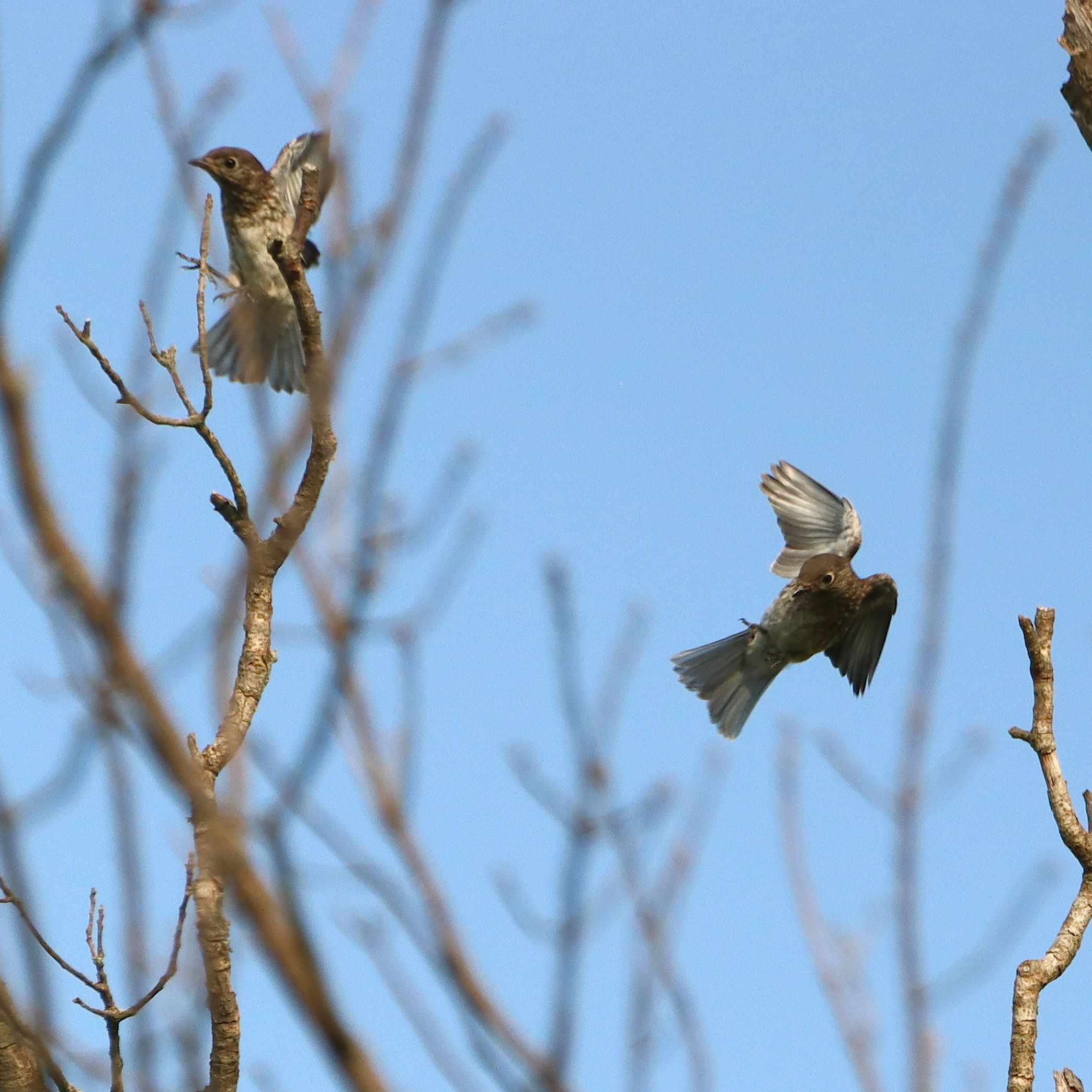
When I reviewed the images, I noticed that the juveniles were not just moving about at the top of the tree, but they were also entering a natural cavity.
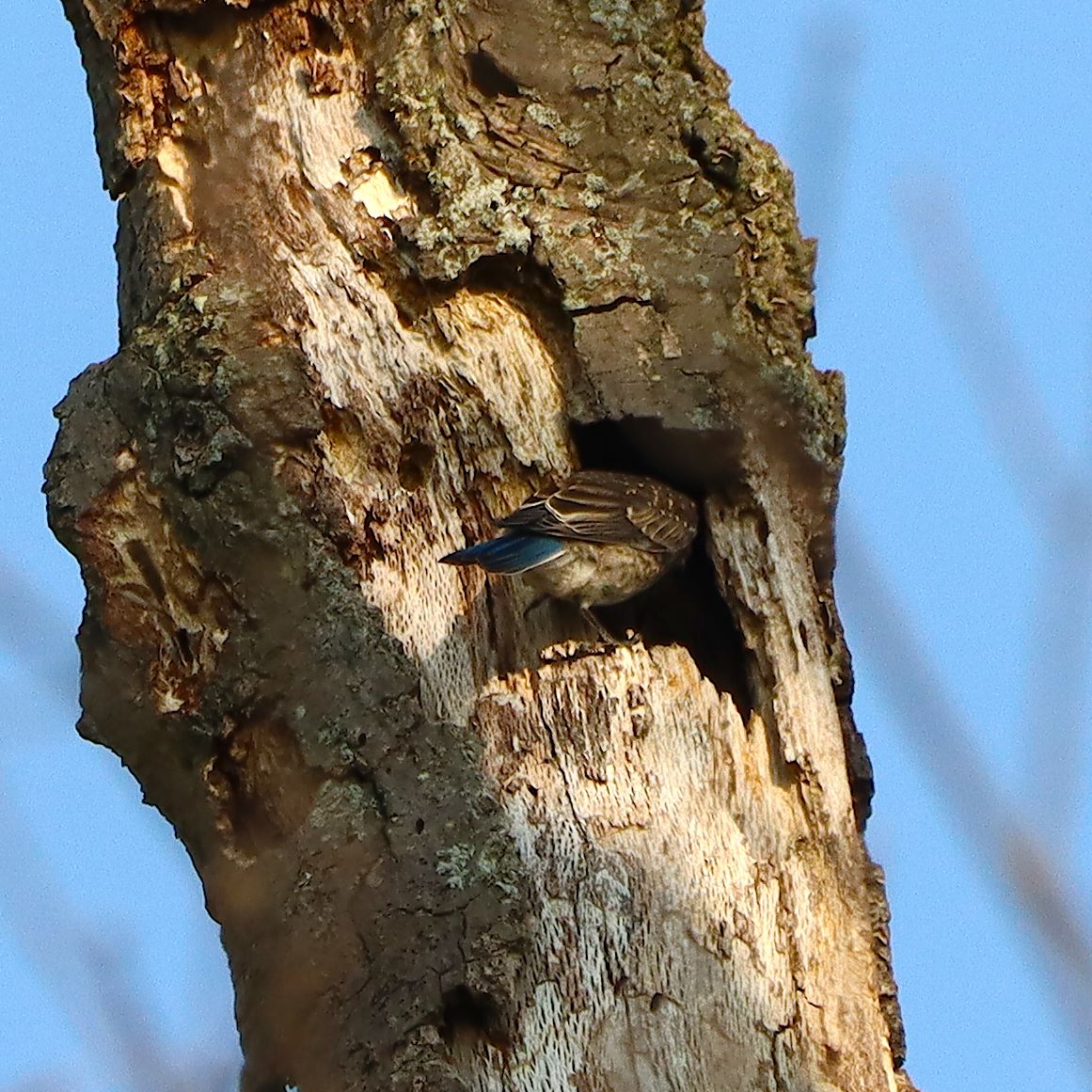
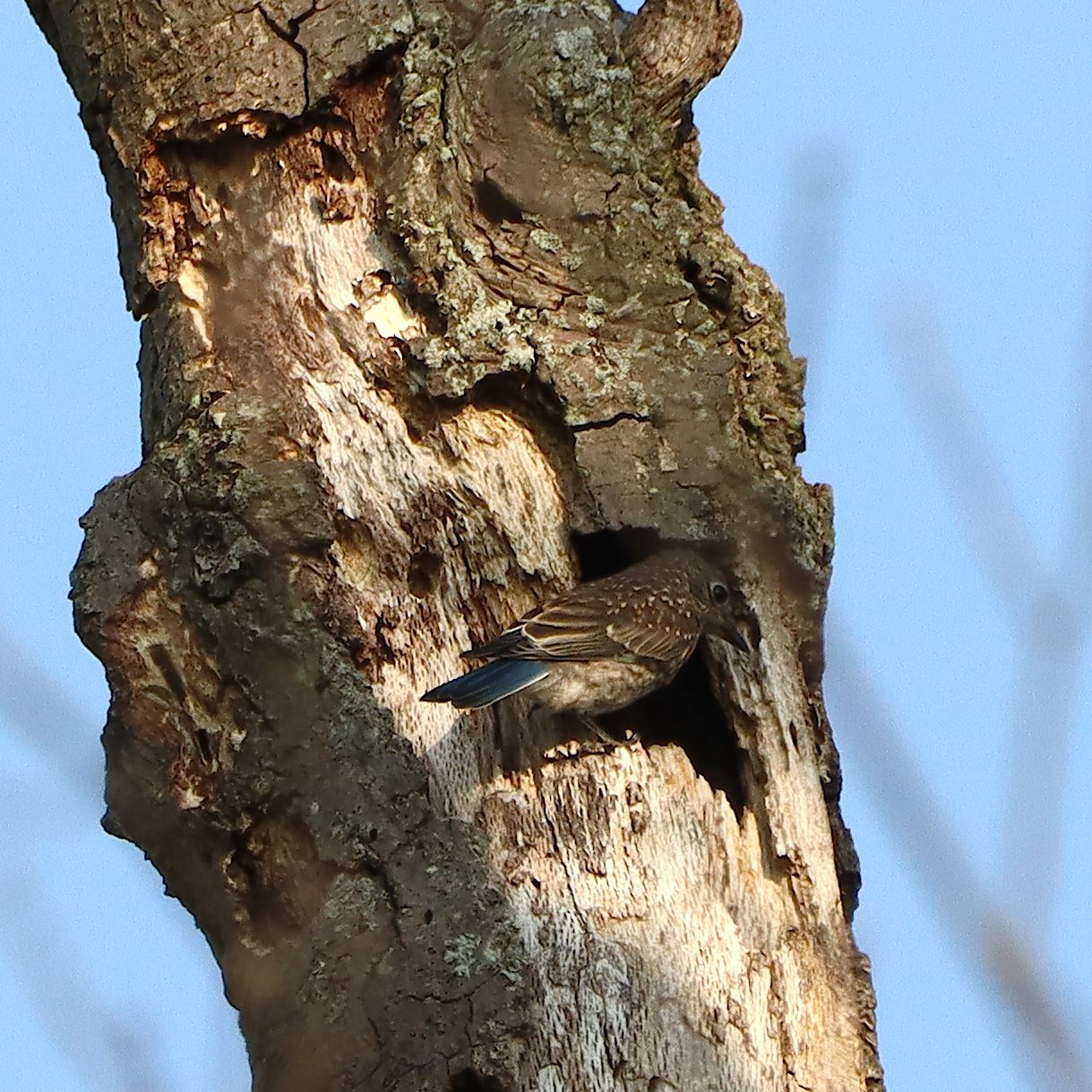
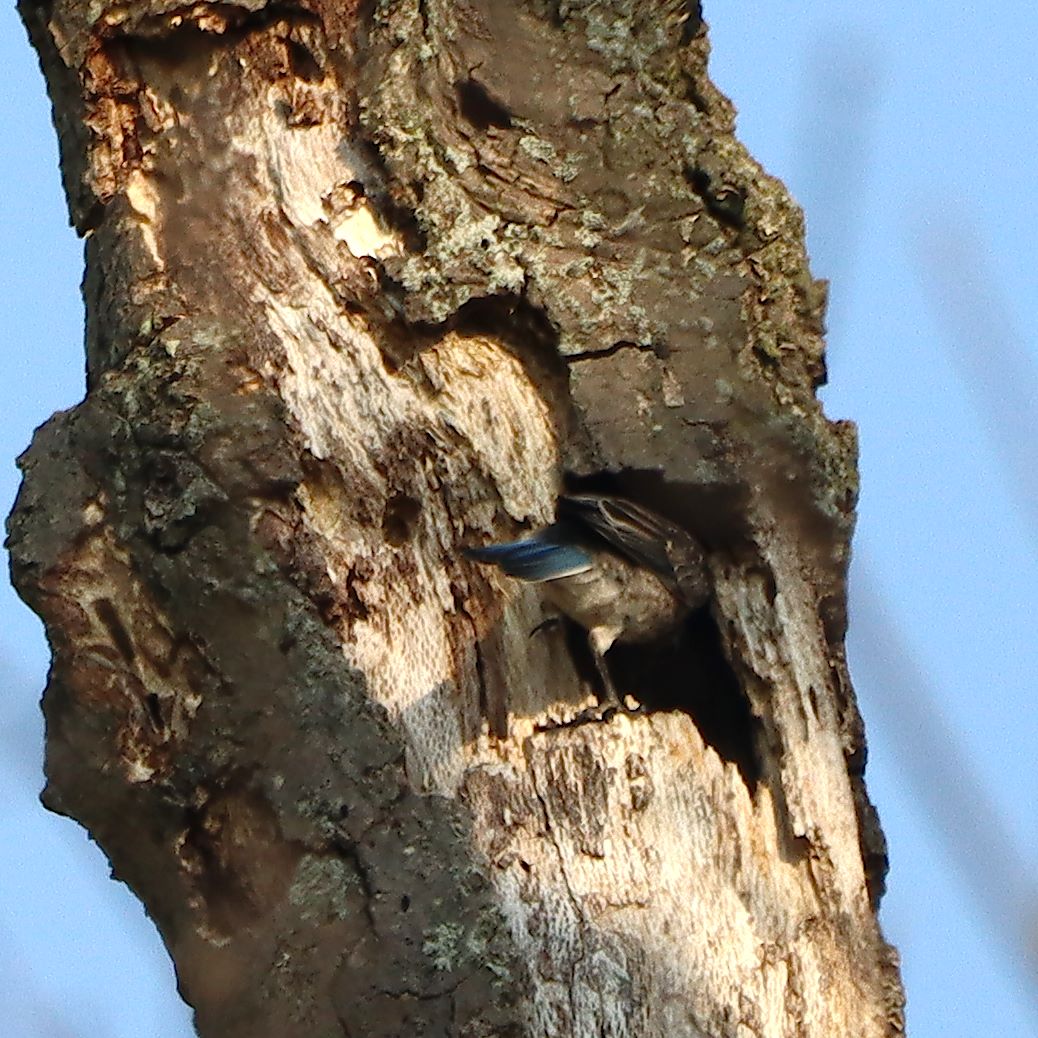
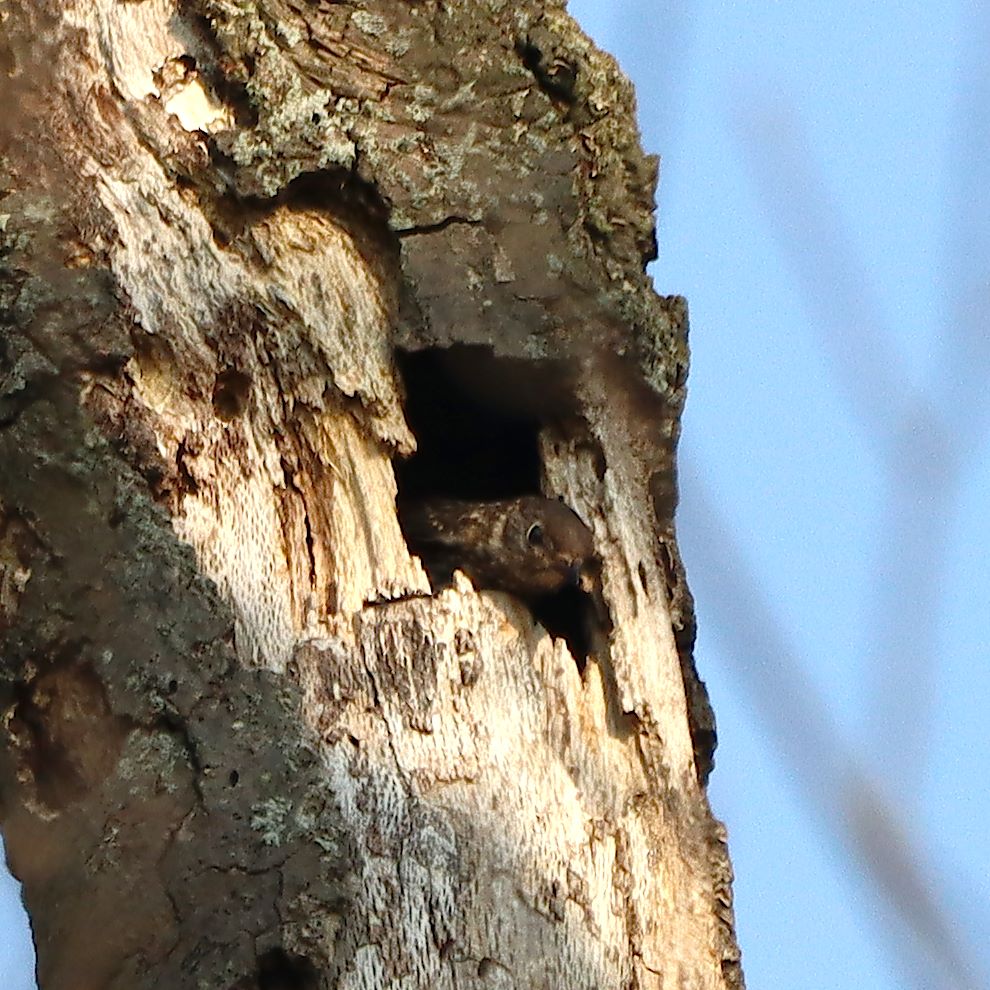
At first I thought I had located my first ever natural cavity used by Bluebirds. But, the more I thought about it, the less convinced I became. There’s a pair (who are likely the parents of these juveniles) that used the box which is just about 40 horizontal feet from the tree. While it is 65 feet upwards – that’s still not the “published” 300ish foot territory for the species. I think that’s too close for two pairs to be nesting so close together. Not to mention, the adults have a new clutch of eggs in nest box R right now, which I would think would create a stronger drive to uphold the territory. It may also offer them the chance to continue to assist their chicks as they become fully independent.
FYI: I understand if you are viewing on a small device you may not even see the bird entering the cavity due to the amazing camouflage it has. That’s amazing to me.

