Tammie Rogers
Inspired by Dogs & Nature
A Bounty of Bobolinks
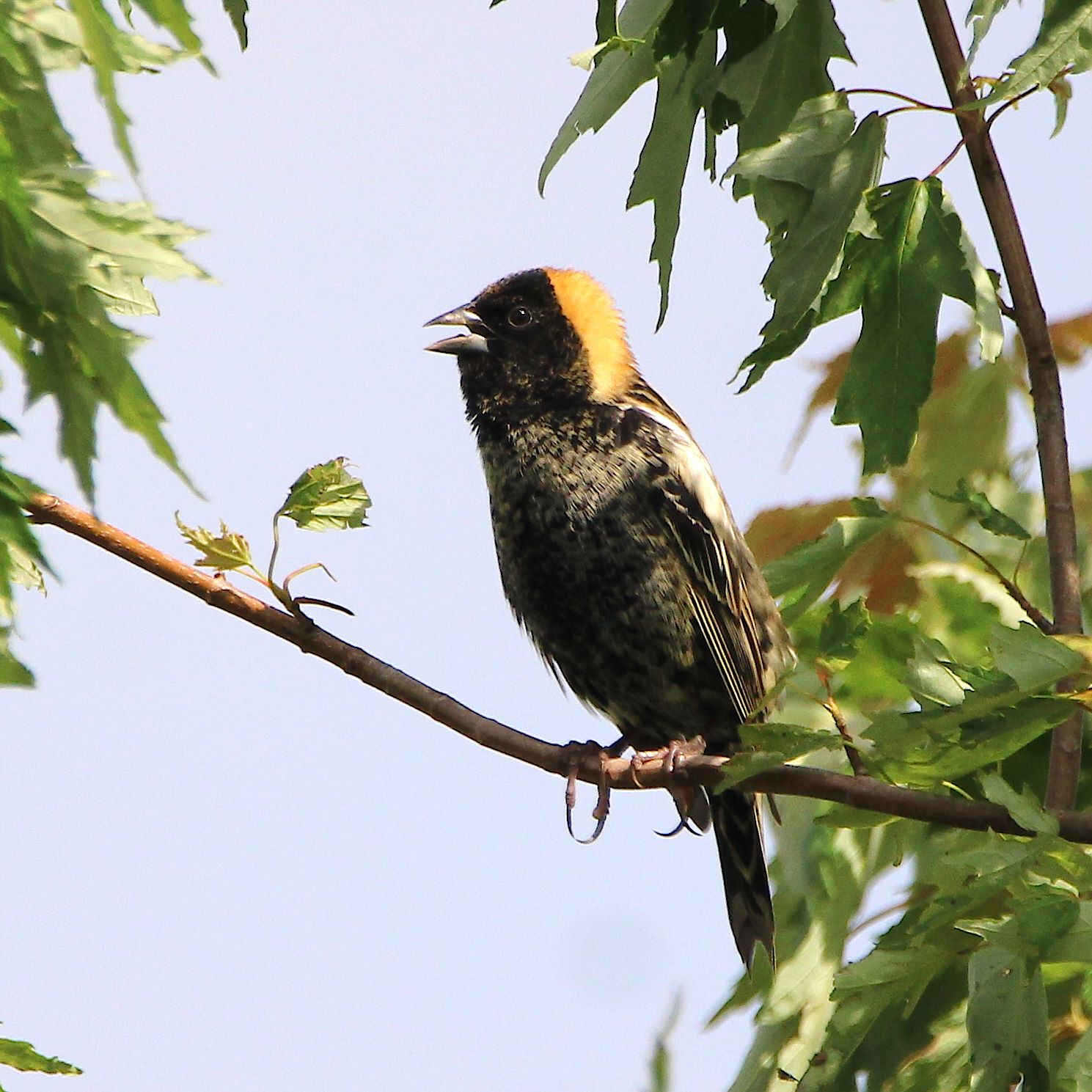
Up until about five days ago, I had only seen three, individual Bobolinks – over the period of three years. My only photo of this species was a sketchy picture in which the bird was obscured by the leaves of a tree. But that all changed recently.
I truly don’t want to admit it, but the past several days have been so filled with sightings that, as I scanned the tree tops for birds, I found myself saying, “oh, just another Bobolink.”
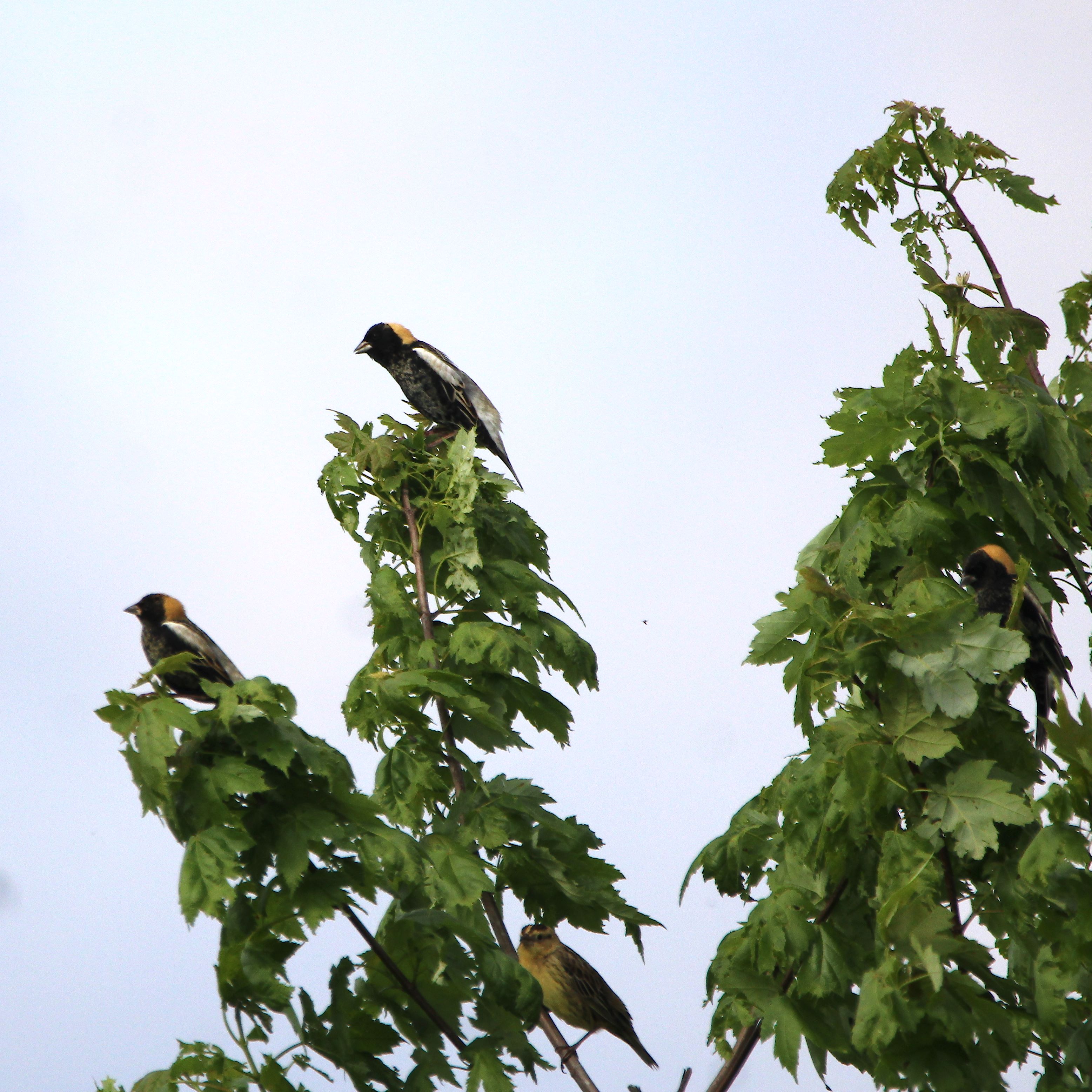
This is a species that is related to blackbirds. The males have an impressive patch of bright yellow on the back of their head and a white back, which is quite unique. They are still common in rural areas where large, somewhat overgrown fields provide them places to feed. However, their overall numbers have been declining for many years. Their name means “rice eater” because, apparently, they do, especially during their exceedingly long migration route.
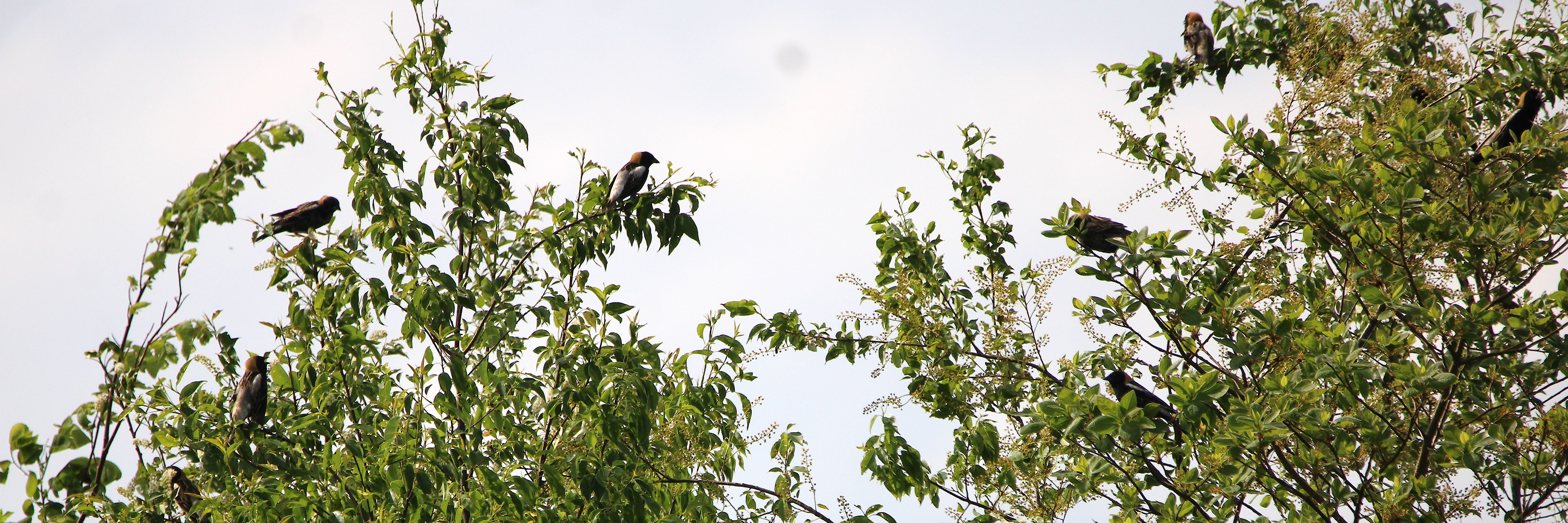
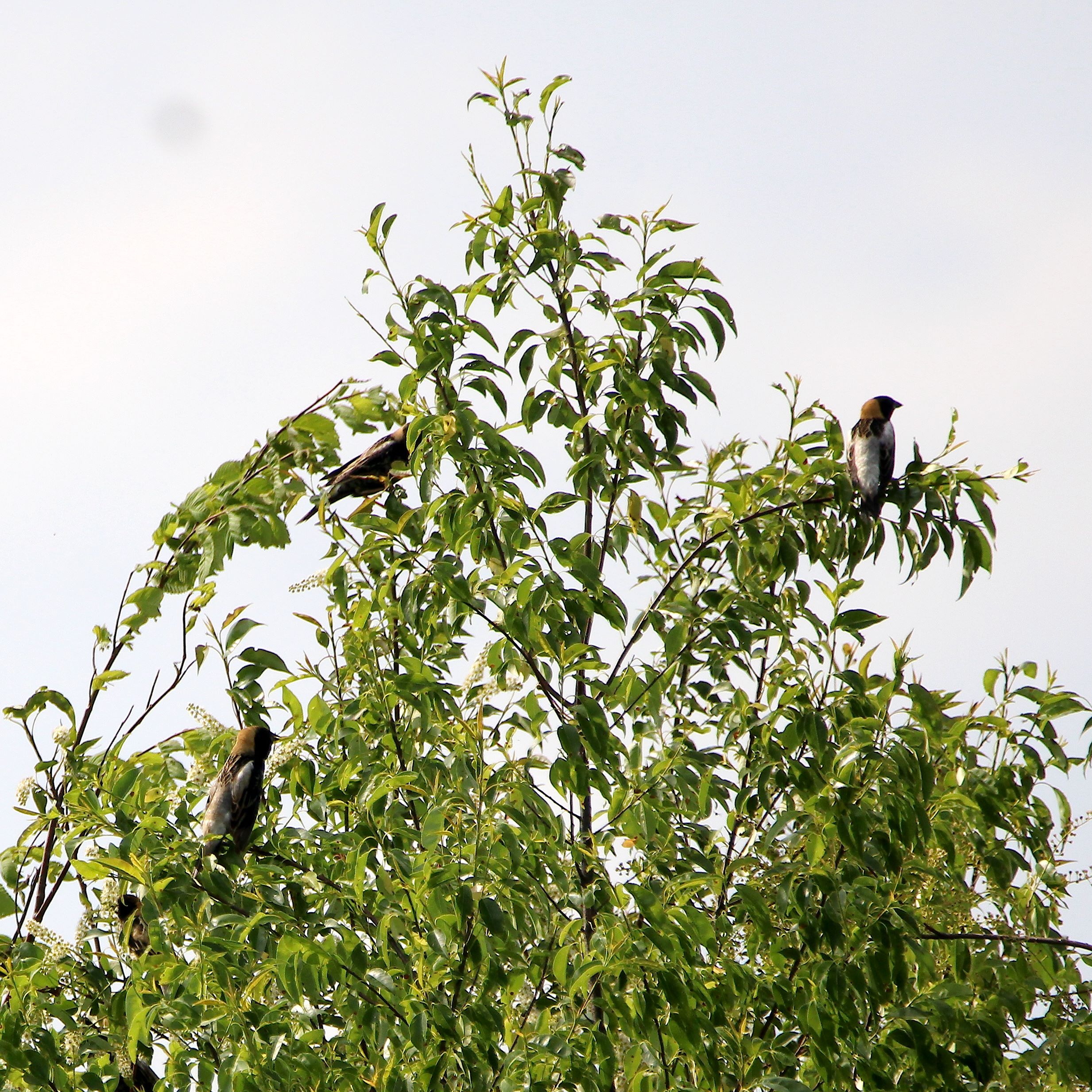
The first Bobolink I encountered this year was by sound, rather than sight. The males have a very melodic, distinctive song that has a few squawks that sound like they are coming from the robot in a SiFi film. i think I read somewhere that they have a “metallic” quality to their song. Here’s a video I took a few days ago.
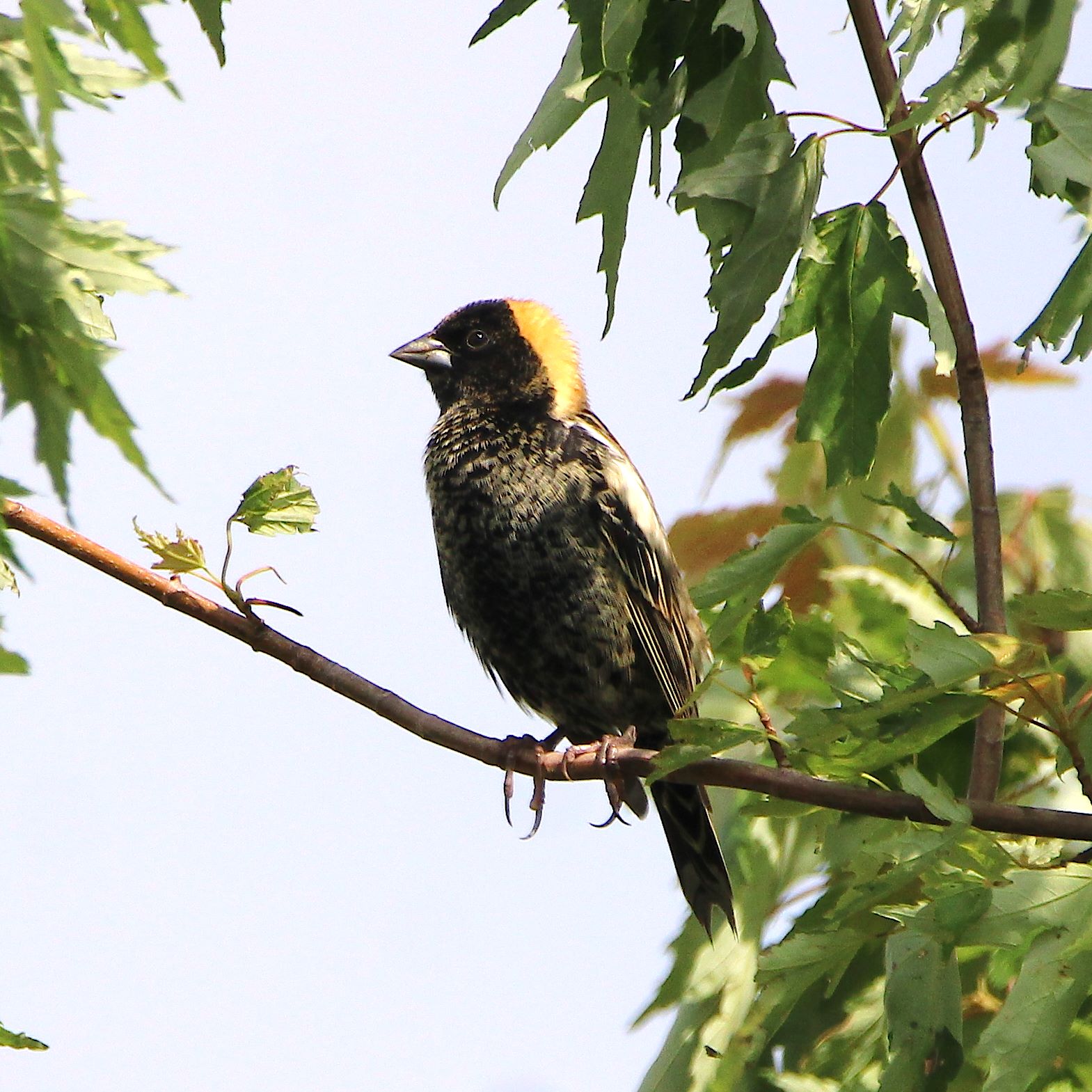
Recently, as I have been driving my golf cart across the fields, dozens of Bobolinks have flown up from the ground where they were hidden in the new growth of Spring grass. At first, seeing a flash of yellow taking flight made me think the birds were Meadowlarks, which also have patches of bright yellow. But, the splash of white on the birds’ back quickly told me these were not Meadowlarks, and their flight pattern is not similar to the Meadowlarks.
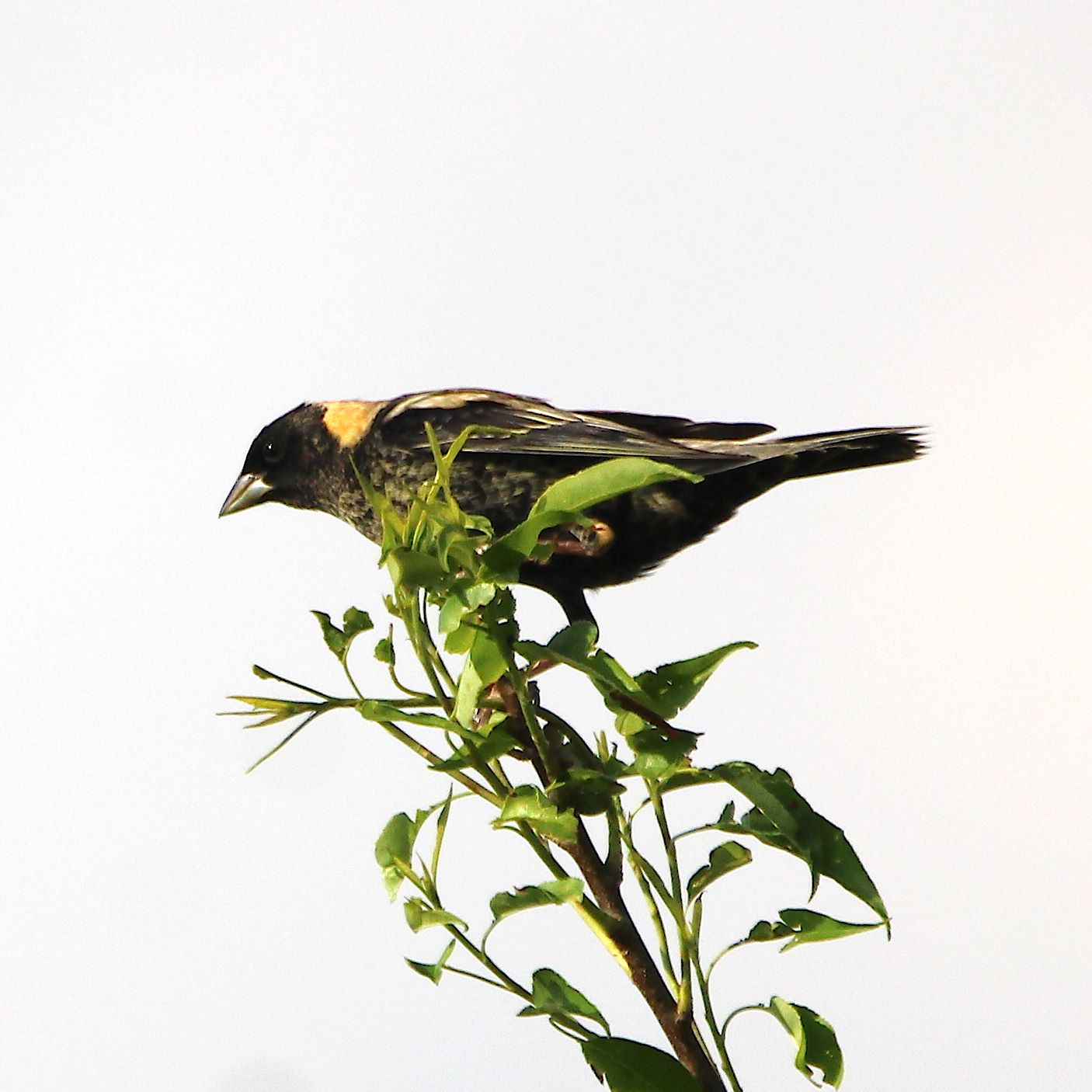
By the third day of “hosting” this huge Bobolink party across our entire farm, I was become accustomed to the, at times, very loud chatter of these birds, as they flocked in the trees. Nearly every time I engaged my Merlin bird ID app, Bobolink was one of species it identified.
AllAboutBirds.org shows the very southern tip of their breeding range is under 50 miles from where we live. However, I suspect all these birds will travel north of us to breed this season. Still, I will keep an eye out for these lovely birds in the next months. Perhaps a few of them will decide it’s worth sticking around rather than flying further north for the summer. Perhaps, they will return during the Fall migration.