Tammie Rogers
Inspired by Dogs & Nature
Raptors
Having spent the summer filming and learning more about the lovely song bird species that use our home world to raise their broods, I began to question what might be next in my avian adventure as the trees shed their leaves and temperatures drop below freezing. In mid-summer I saw an American Kestrel from so very far away, atop a large, round bale of hay.
Several times in the past month, I have noticed a Kestrel sitting on a wire along the road to the south of our property. It’s nearly always in the same location. Unfortunately, it’s most often as we are driving by, not when I have a camera. Yesterday, that changed when I spotted the characteristic silhouette of the Kestrel in flight as I entered the yard near our Training Building. I stopped my movement and he chose to land in the top of a now barren tree. It was still quite a distance away, but I consider these photos good enough to share.
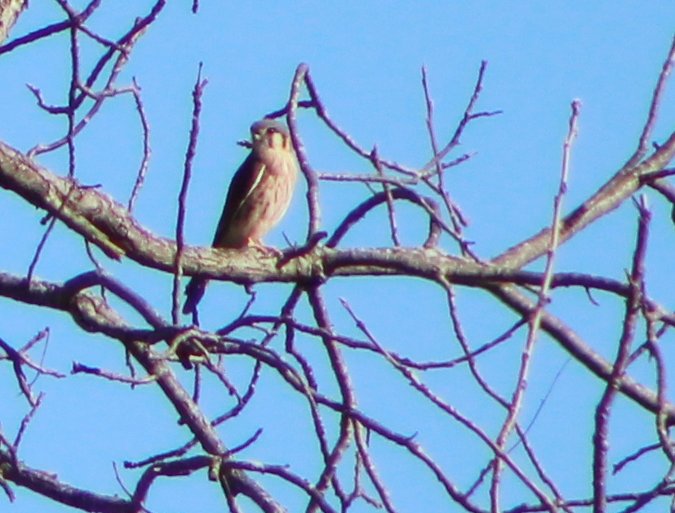
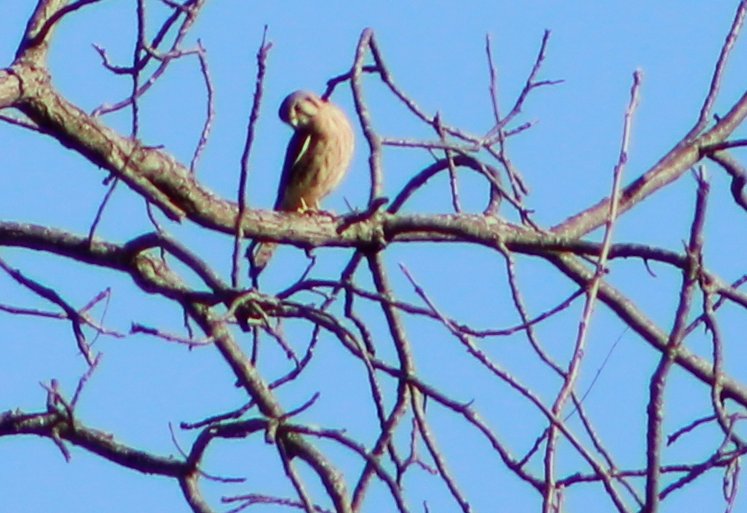
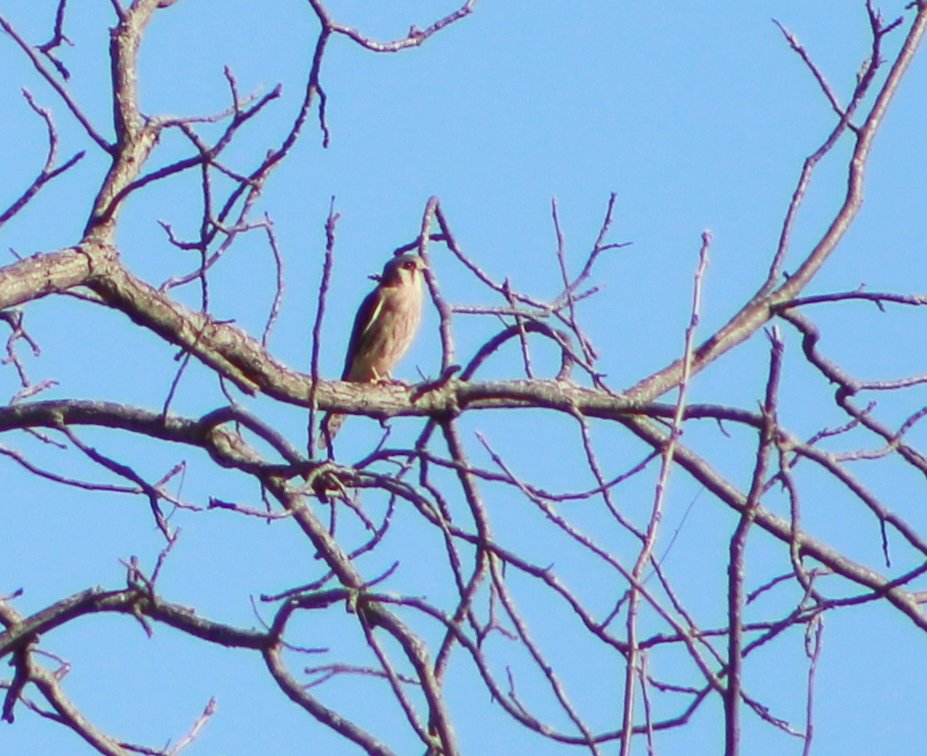
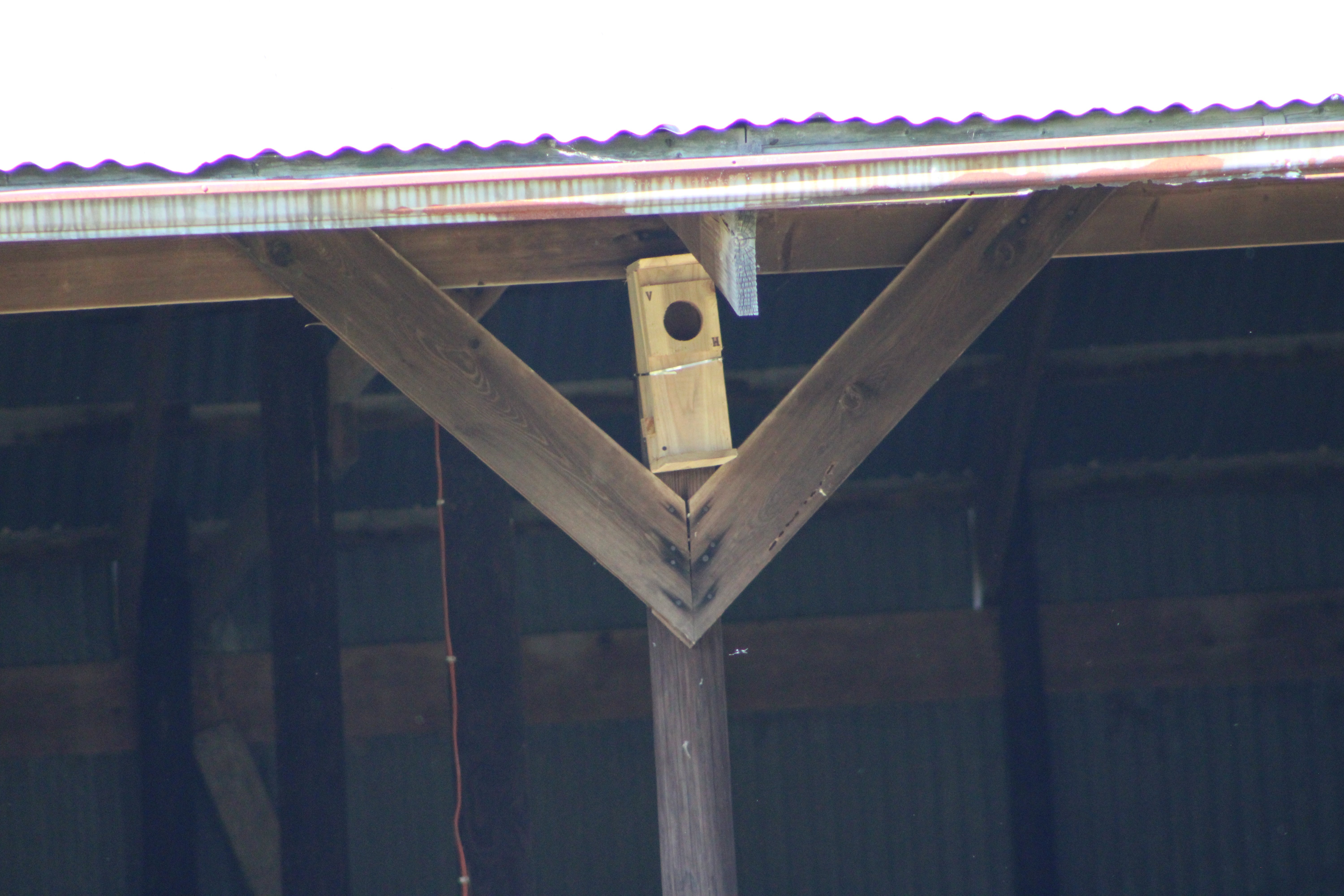
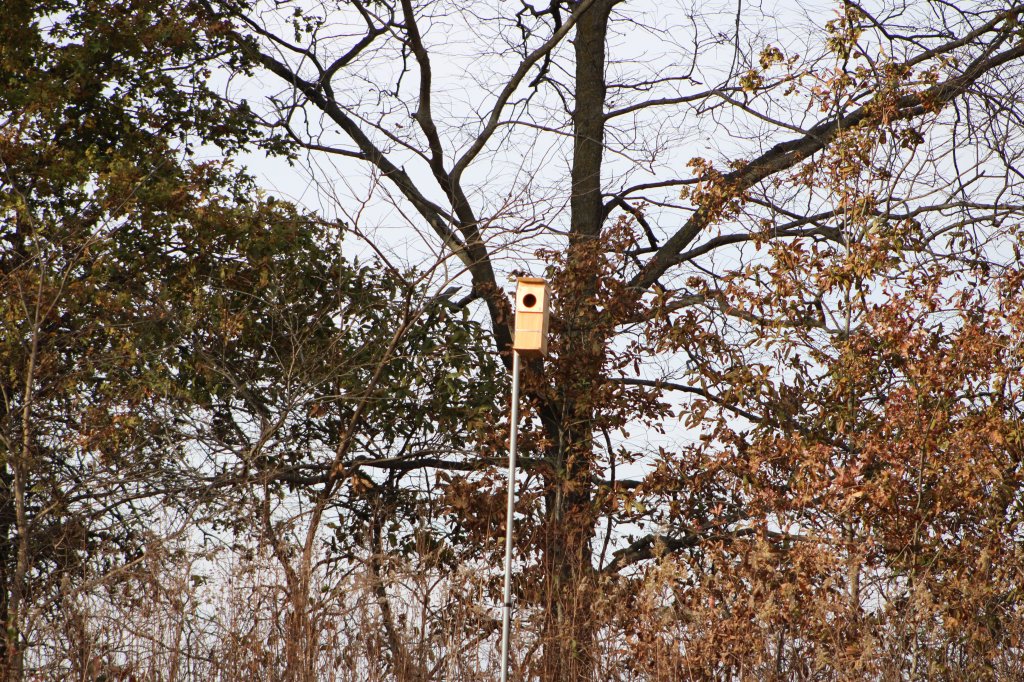
In preparation of their early breeding season – and to accomplish the task during fair weather, I ordered two Owl boxes from a disabled military veteran – now craftsman. He sells his goods at Etsy.com He builds the boxes as a way to help mitigate his PTSD. In September, we put one of those boxes up under the overhang of our old barn and the other at the north end of the pond meadow at the top of a tall pole.
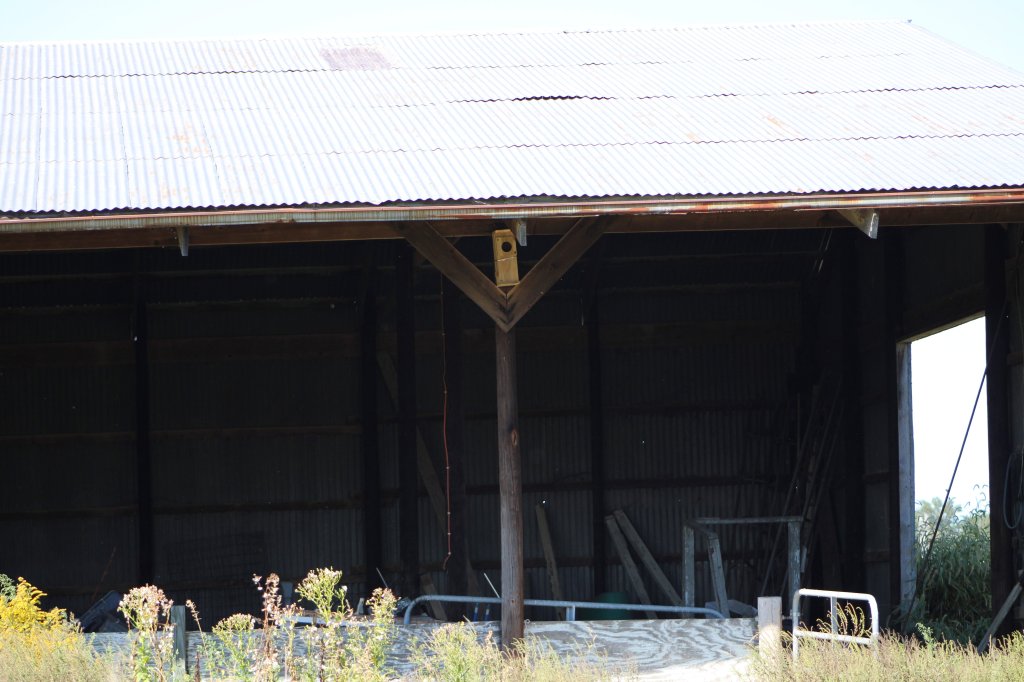
Owl box under the overhang of the old barn. 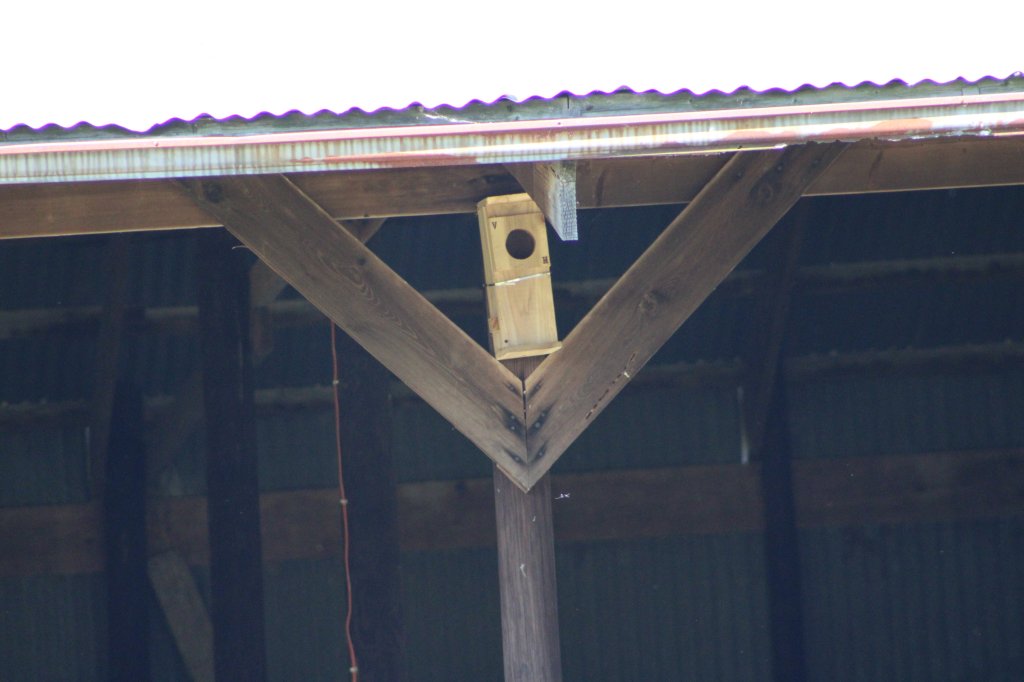
Owl box at the old barn. 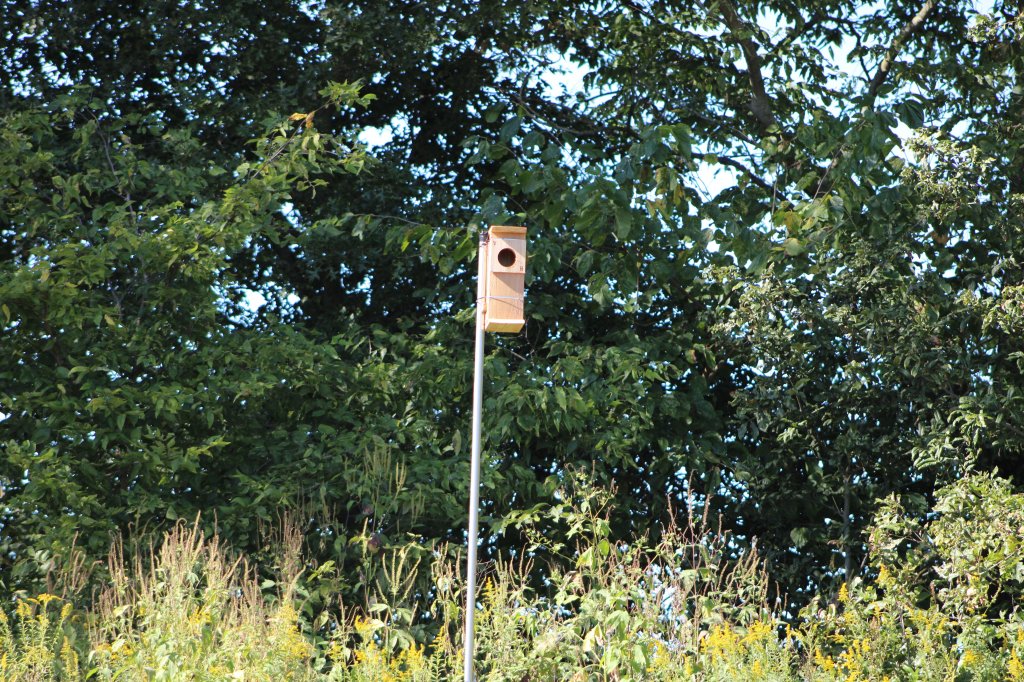
Owl box at the north end of the Pond Meadow.
I’m hoping to entice owls, of course. They are so brilliant. When I lived in Wisconsin, there was a lovely Barn Owl that lived in my century old barn. He flew in and out through the weathered wooden frame opening which once held a glass window. During lambing season, when it was outrageously cold, as I waited on a ewe in labor, the Barn Owl would sit in his nook across the old milking parlor in observation of my activity. Eventually, he would fly off through the window to hunt for his dinner.
I have read that Kestrels will use owl boxes, as well. I would love to provide a place for the Kestrels to raise chicks in the spring. Yesterday, we purchased a bit of lumber and other supplies and I plan to make a box specific to Kestrels! I will post about that project as it comes to fruition.
We also moved the Wood Duck box from a fairly hidden location that was difficult to make predator proof, to an open area on the east side of the pond. I have read that Kestrels might prefer such a location and I think that, while the duck box seems a bit large, it might still attract an owl or Kestrel, that prefers to hunt over the open grassland.
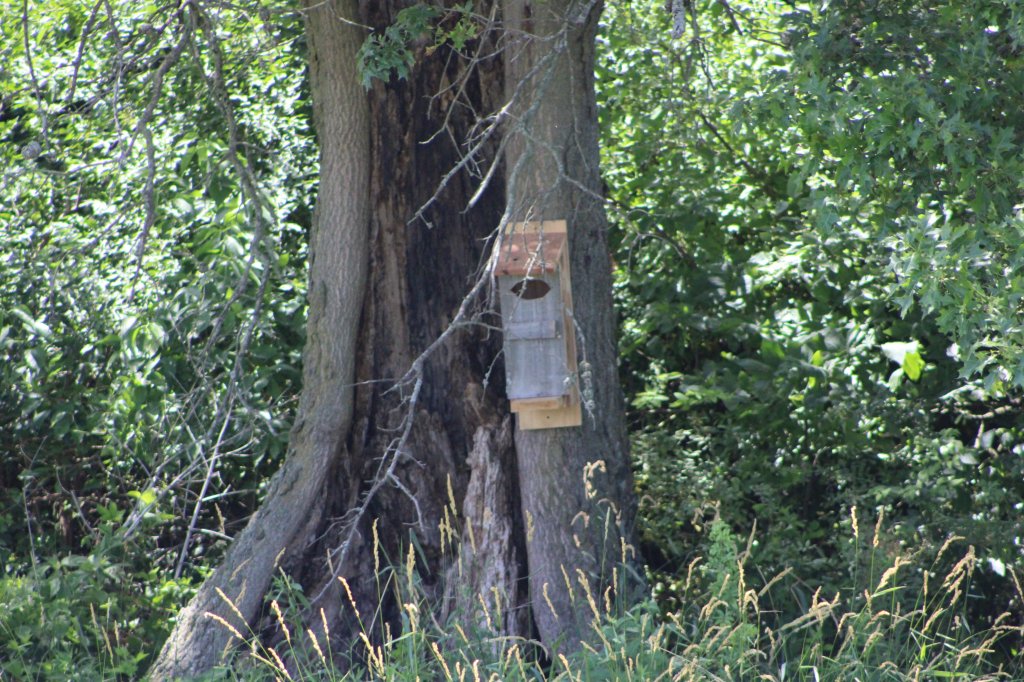
Initial location of the Wood Duck box. 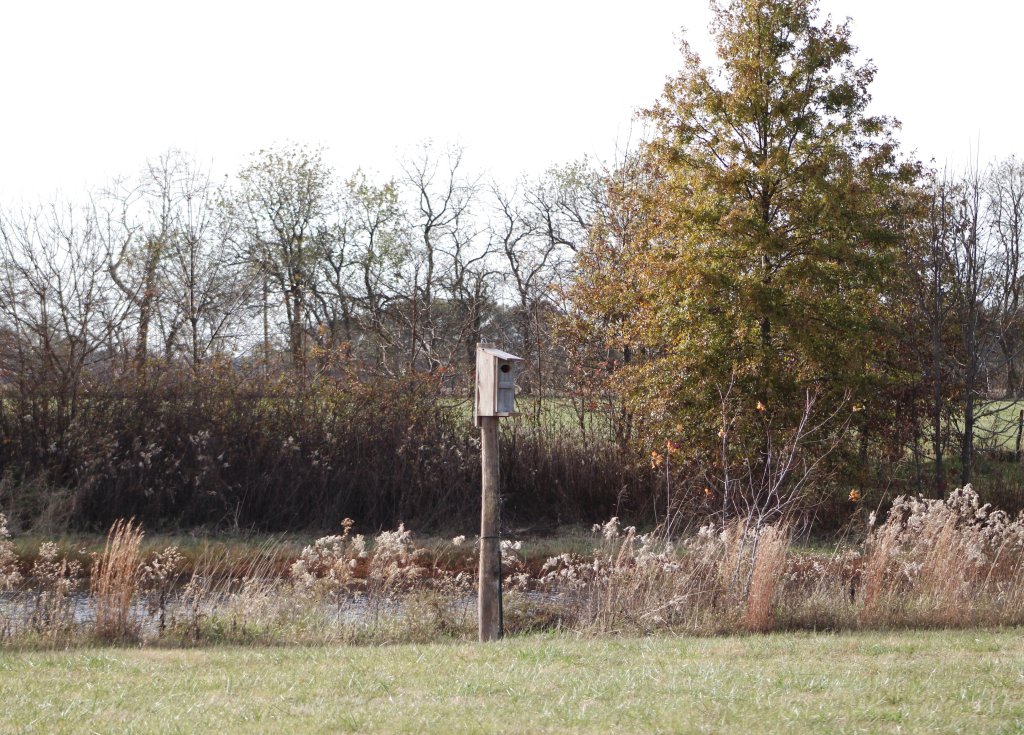
New location of the Wood Duck box.
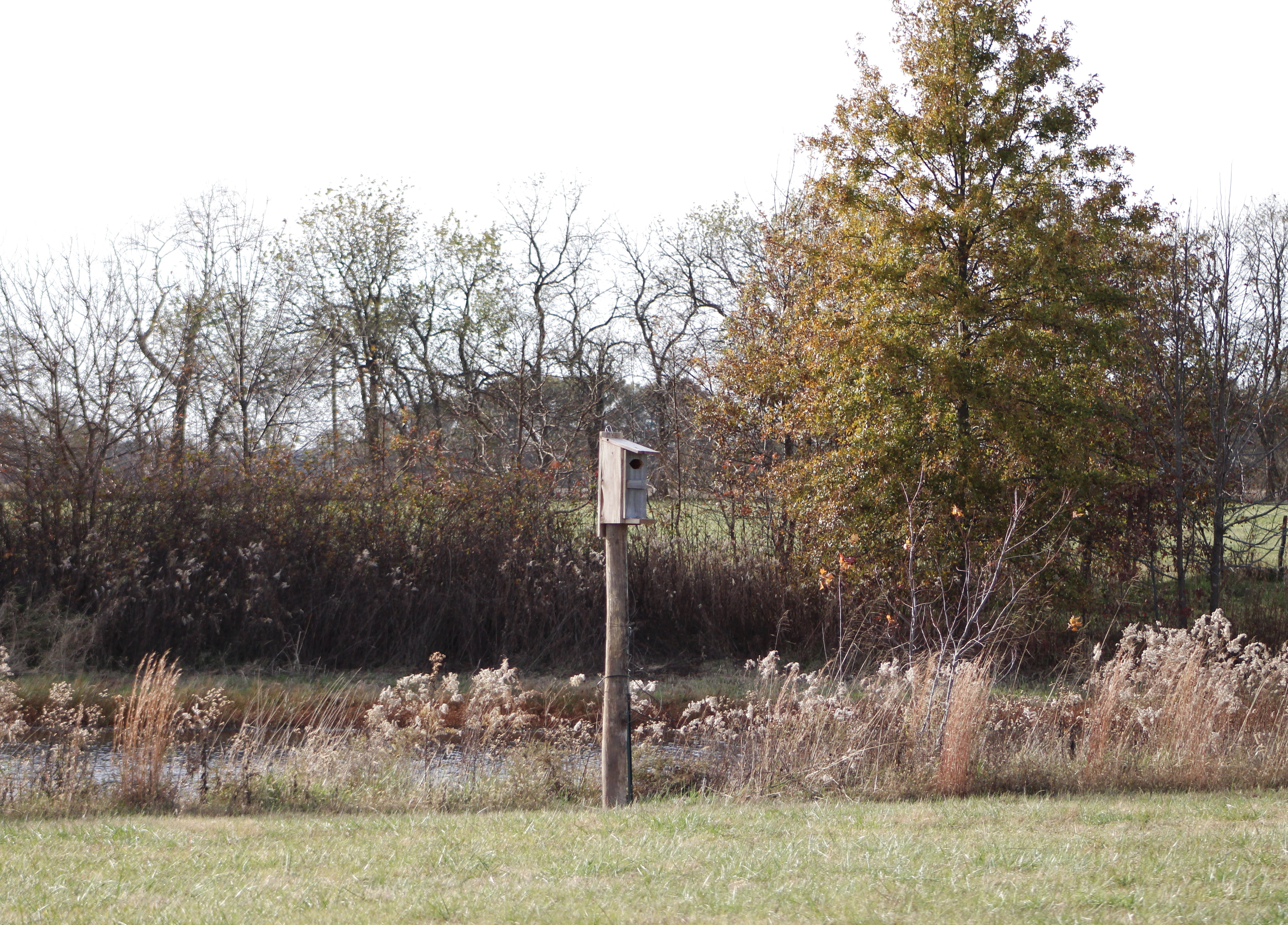
The new location could accommodate a baffle against predators, if necessary. And, more importantly it’s much higher off the ground.
On a side-trajectory, I was attempting to film Blue Jays in the dense trees at the north end of the pond, when I noticed a small, brown bird land on the owl box. Dang, if it wasn’t a House Sparrow. During the summer breeding season, I spend quite a bit of effort to detract them from monopolizing the Bluebird and Tree Swallow nest boxes. We have several “Bluebird” boxes up around the perimeter fence of my office yard where the House Sparrows are thrilled to build their nests (and which are far too close together to attract more than one Bluebird pair.) Then, once the sparrows have completed the nest, we simply remove it. Seemingly undeterred, they begin building a new nest, again and again and again. Each time we simply remove the nests which slows the population growth, at some small level, of this highly invasive species that completes with and usually wins over our native species like the Bluebirds.
I guess I shouldn’t be surprised that a House Sparrow simply couldn’t resist checking out the Owl box – even though it’s quite a distance from our house or other structures, and clearly bigger than their typical abode.
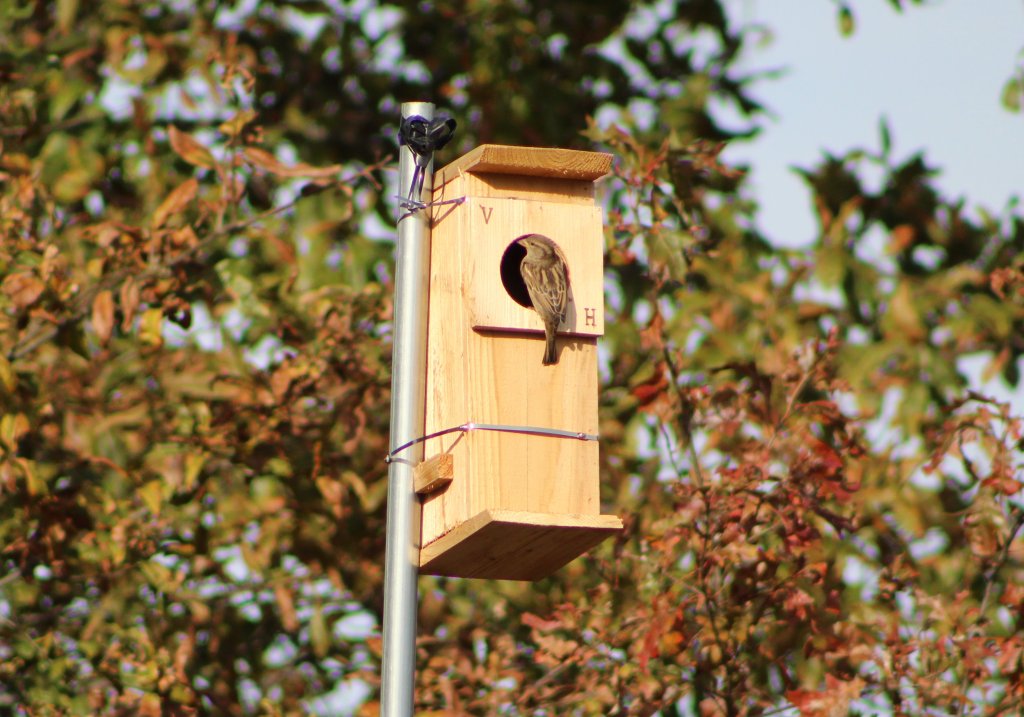
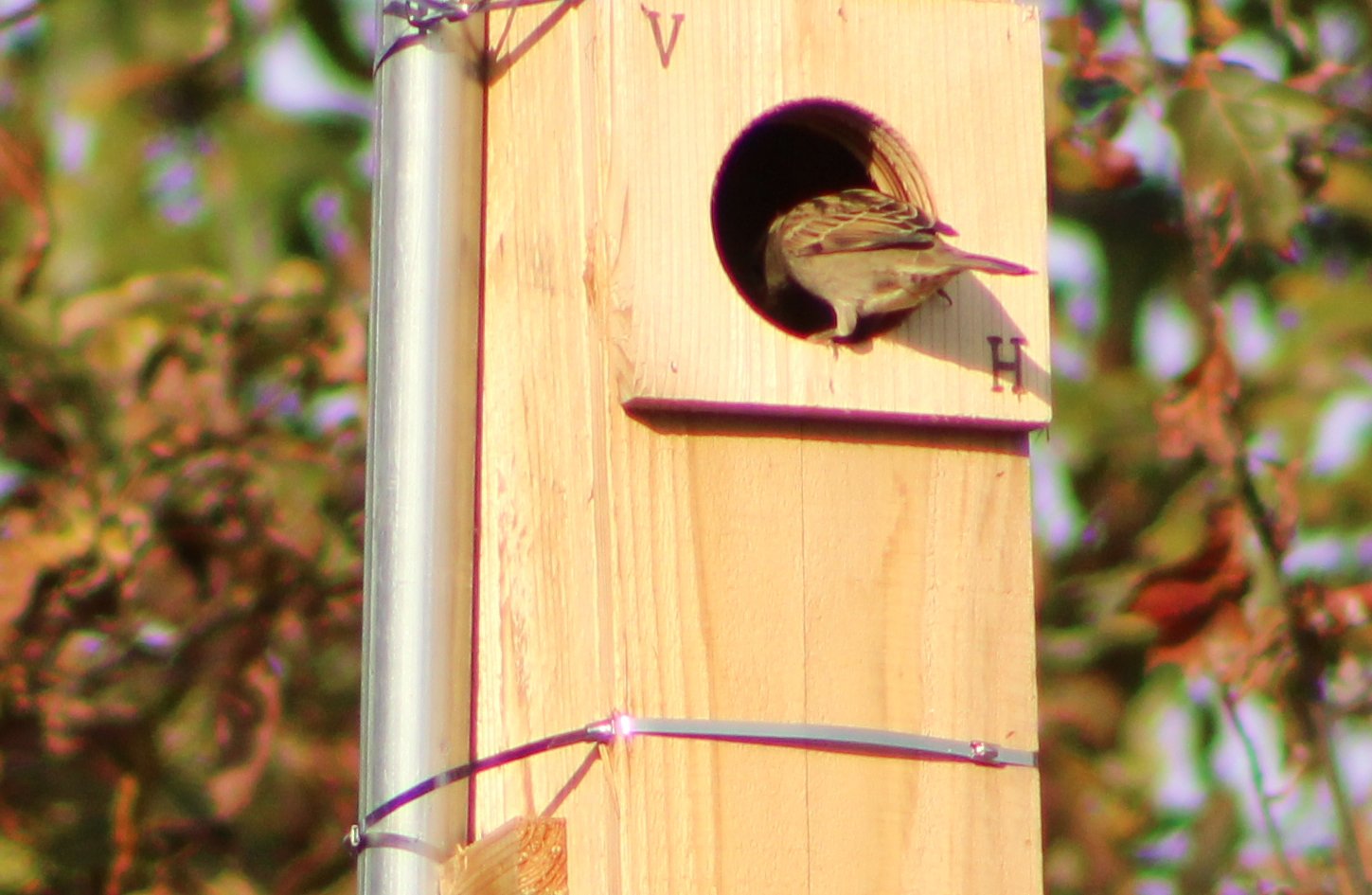
I hope that was a mere act of curiosity, rather than a newly hatched plan to take over the box, come spring. I believe that owls and Kestrels will assume ownership of the box earlier in the season than when the House Sparrows begin to breed. Let’s hope that the birds of prey move in and offer an educational and entertaining experience as they raise a brood of new baby raptors.

