Tammie Rogers
Inspired by Dogs & Nature
What A Schnoz!
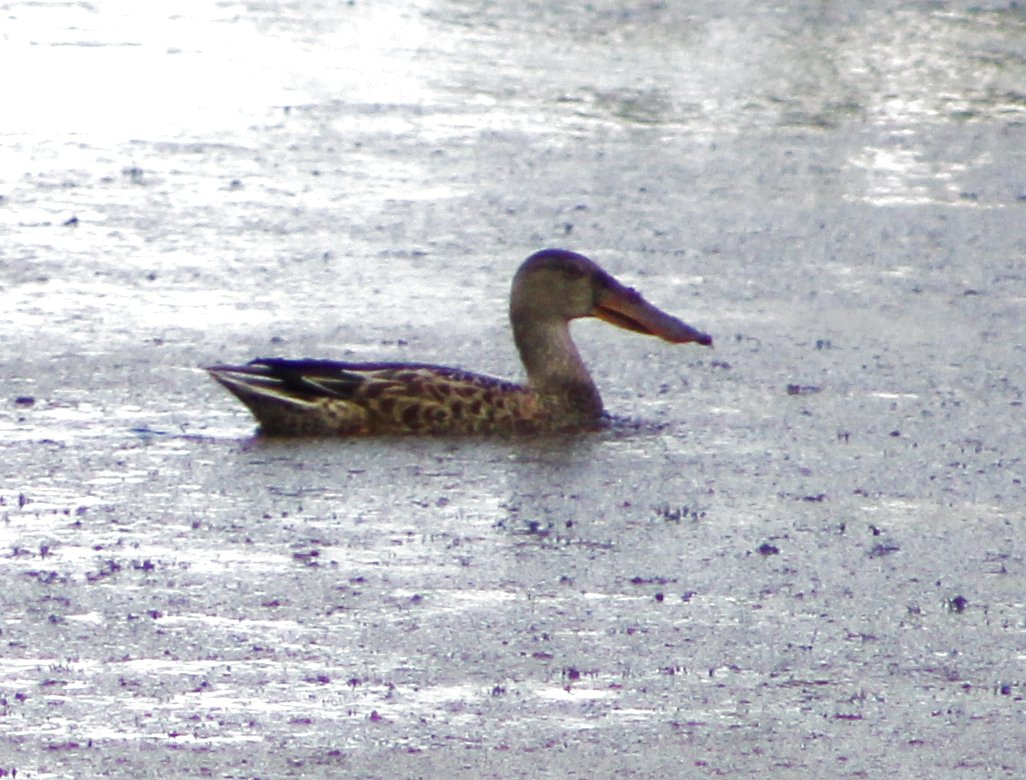
I was surprised and happy to see ducks moving across our pond yesterday. I quickly pulled out my camera to capture a few images (albeit with back-lighting from the late afternoon sun.) I wasn’t expecting what I saw. As they lifted their heads out of the water, my first thought was, what the heck is that?
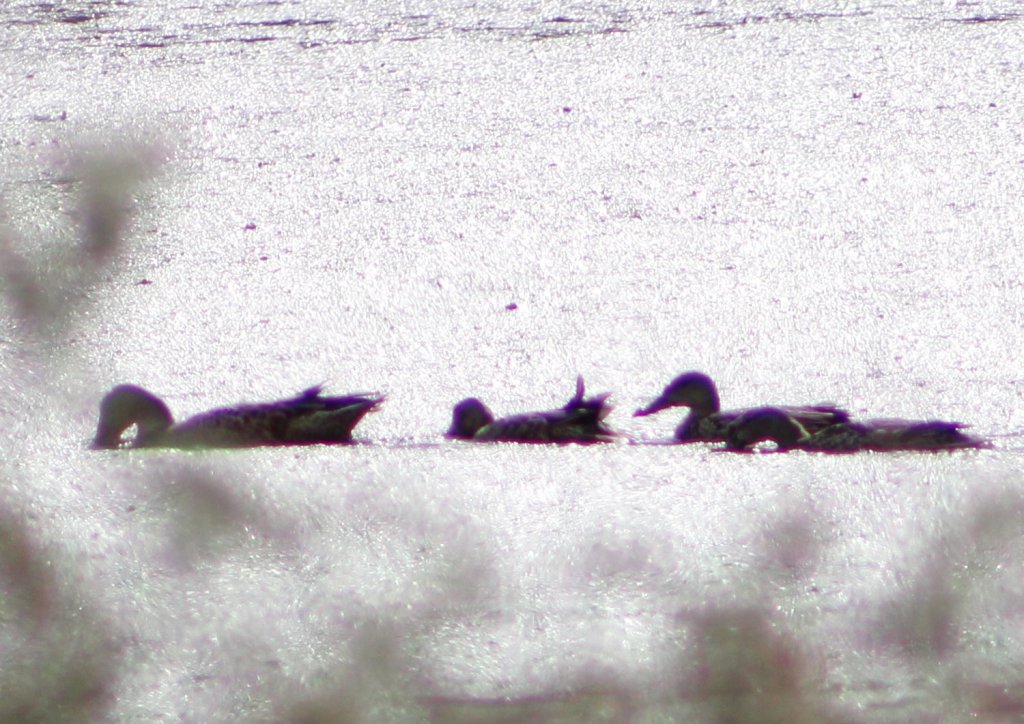
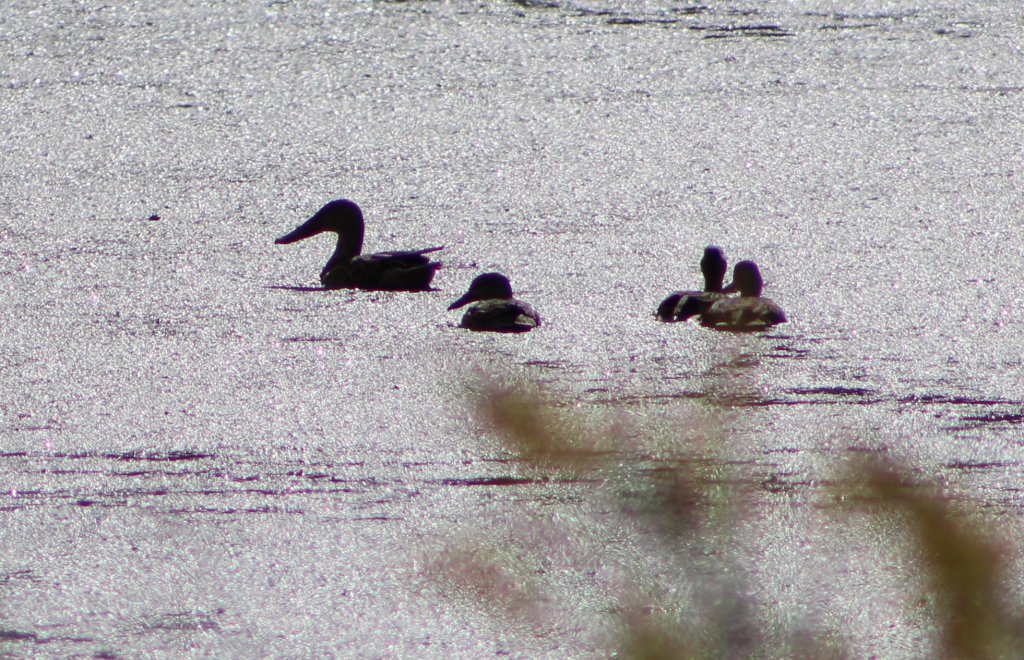
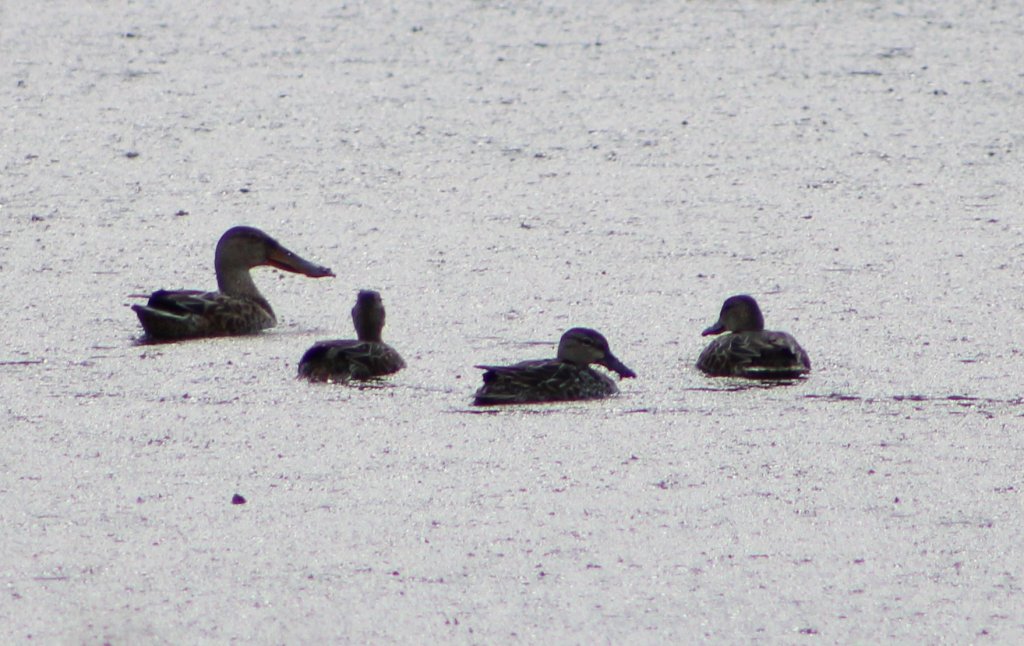
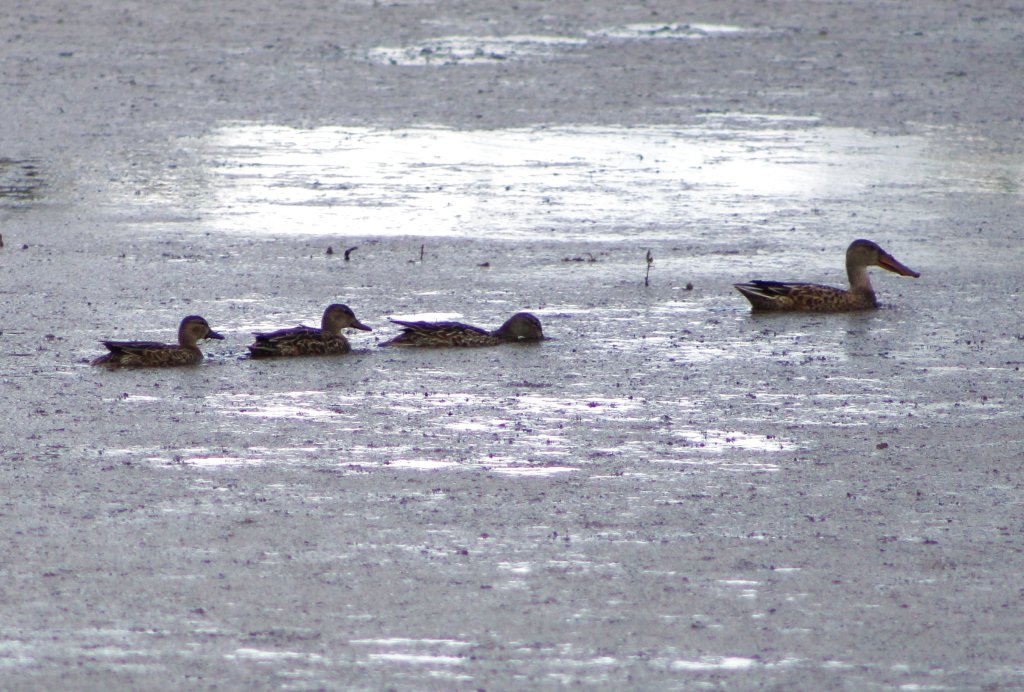
The foursome seemed unaffected by my presence, although I couldn’t get very close as they were milling about in the middle of the pond. I wasn’t sure if I was seeing an adult “whateva'” and three baby “whateva’s” or two species intermingling. My first impression was that it was a mama and her babies – even though it makes no sense at this time of year. Their behavior suggested that they were a close, family unit, but their size was quite different, and that schnoz on the larger one was outrageous! I was able to relocate to a different side of the pond without affecting them. There the sun wasn’t as intense and I was able to take photos that showed their markings.
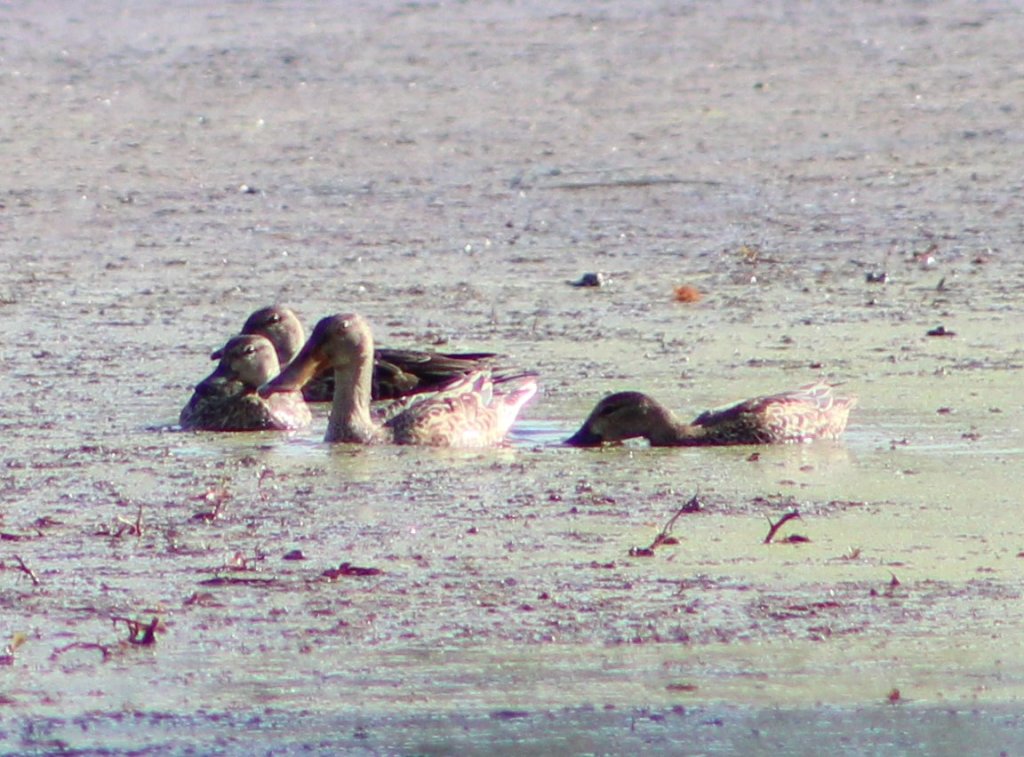
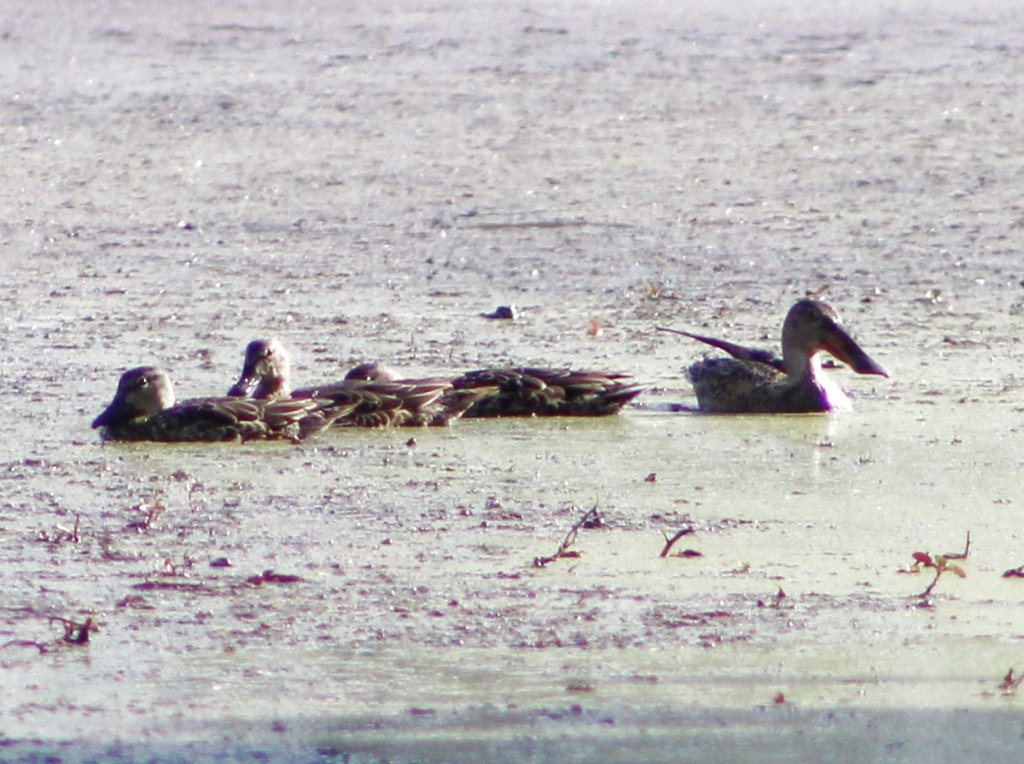
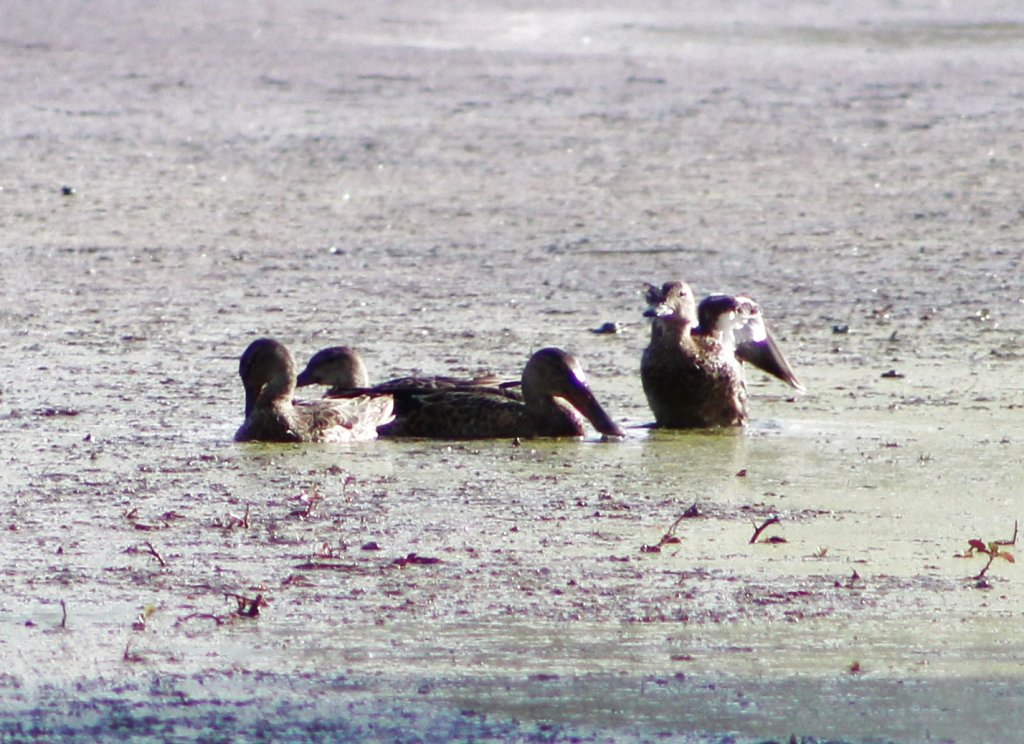
Once back in the office, I quickly learned that the bird with the big bill was called a Northern Shoveler. The other three remained a mystery. They had nearly the same markings on their bodies as the Shoveler, and their bills were clearly longer than what a Mallard duck sports, but nothing close to the size of the Shoveler. I struggled with the notion that, even if these birds were hatched earlier this year, that their bills wouldn’t be substantially closer to the adult’s size and shape than they were. I figured they might be a different species, but then why were they migrating with a lone Shoveler? Is that common? I didn’t know.
I am not very familiar with duck species…OK, truth, I know almost nothing about wild duck species. I am a bit versed on the domestic varieties as, back in the day I raised them to use in sheepdog training. Yes, there’s a duck class in many of the herding venues. But, I digress. I couldn’t identify the smaller birds by their appearance. As it turns out, many female duck species don the same drab markings.
I sent out a request for assistance to the Illinois Birders group and immediately learned that the Northern Shoveler (at least I got that one right) was accompanied by three Blue Wing Teal. Awesome. I have never seen one. I love when I chronicle filming a new species on our property. It brightens my day, and it causes me to do a little research which I would have never done if Blue Wing Teal hadn’t become a significant search topic in my life.
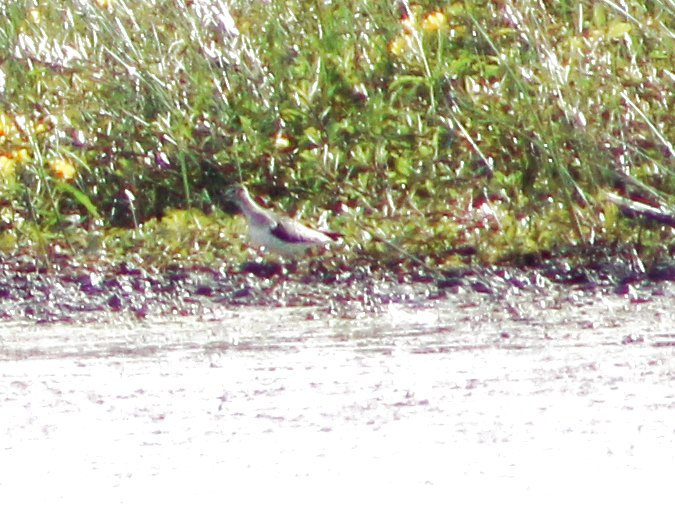
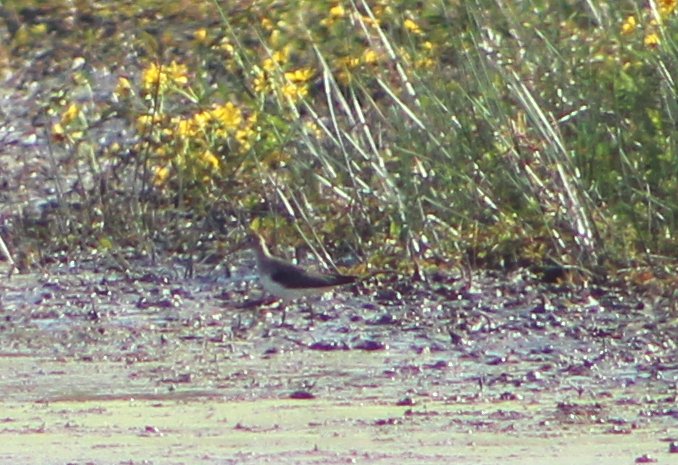
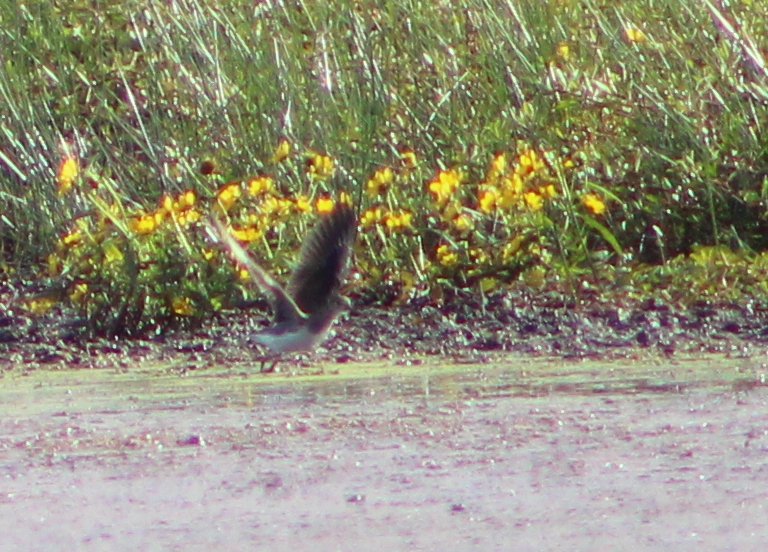
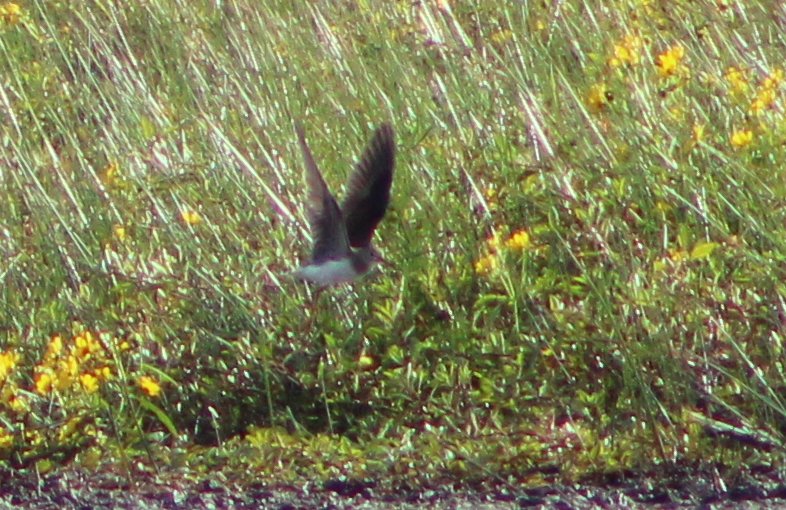
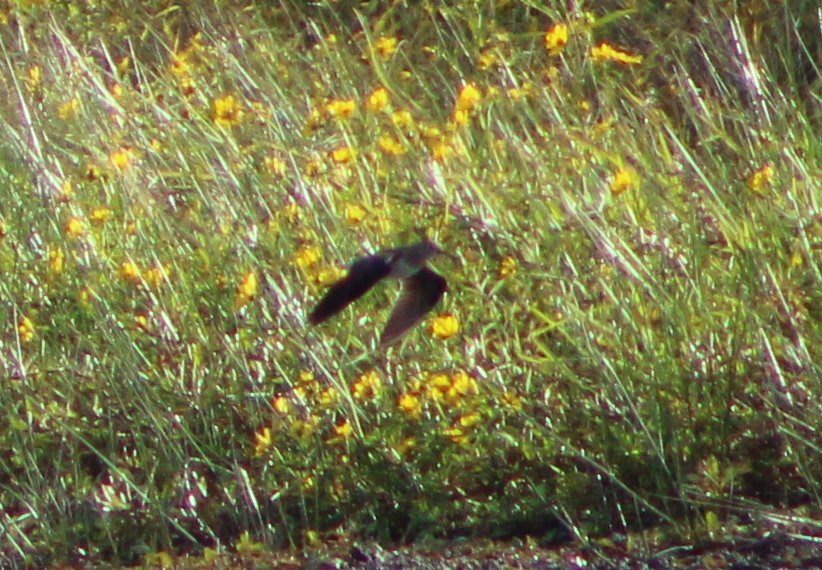
By chance, I was sitting in one of my new favorite spots on the property. Just a few days ago, Robert cut down the tall weeds on the north end of the pond which provided me access to that location and offered a decent view of the pond. So, I was able to film the ducks from that somewhat secluded location. I aimed my camera to the far shore, just to record a more panoramic shot, with the ducks in the foreground. It was then that I saw a very small bit of bird-movement. I quickly refocused on the spot, hoping I would be accurate in the location. I held the camera still and snapped off a half dozen shots as the bird flew off. Oh Happy Day. I love when I actually have the shutter clicking when a bird flies. As it went over my head, I noticed the very white belly area and dark wings. I was excited to see if any of the images were sufficiently in focus to actually discern what species it was.
It turned out to be a shorebird; long legs, long bill, wading behavior. But, as I scrolled down the photos of the possible birds that might be migrating through, I didn’t see any with a solid, gray back and white belly. Of course, the photos in a guide are going to be high resolution with plenty of detail. The experts came to the rescue and informed me it was a Solitary Sandpiper. How apropos. It was, after all, all alone. I would speculate that the bird was about 400 feet away when I took the photos. The lack of speckled markings on the back threw which initially me, were simply a resolution issue. Thank goodness for the folks in the know.
October first was a good day, as I recorded three additional species that have stopped by for a visit and to use our “facilities” as they travel to their winter homes. I have recently updated the page on this BLOG that shows all the species I’ve filmed – including these new birds. You can view it HERE.

