Tammie Rogers
Inspired by Dogs & Nature
So Many Bluebirds
Apparently, our little Farm-Gone-Wild is well adapted for Eastern Bluebirds. Sure, we have almost 40 bird houses / nest boxes available to this special birds, but they still need to have what they need to not just survive but to thrive. We have a lot of open spaces, which Bluebirds prefer for their nest sites. But, we also have stands of mature trees where I often see these lovely gems of the bird world hunting for the food they feed their chicks. Robert mows paths around the property so that I can negotiate the areas in a golf cart. Short grassy patches are great hunting grounds for these thrushes that hunt on the ground quite often.
Bluebirds are territorial. The references states that they require at least 100 yards (300 feet) between nest sites. I don’t want to refute the experts, but we currently have Bluebirds nesting in houses that are closer to each other than that distance. I suggest that is because there are plenty of resources available to the birds and they do not feel competition pressures for food.
Here I present photos of a few of the pairs that are feeding chicks at this time.
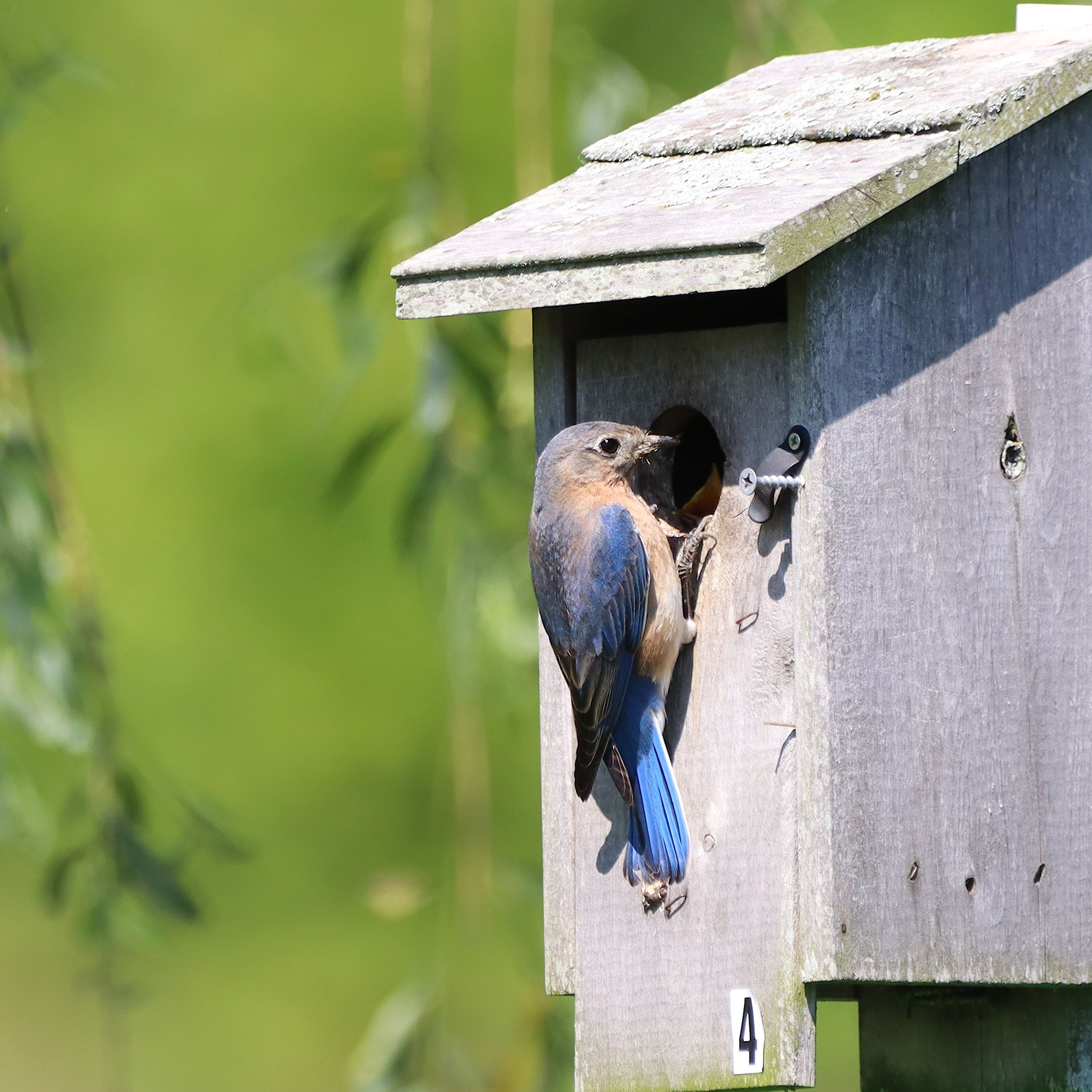
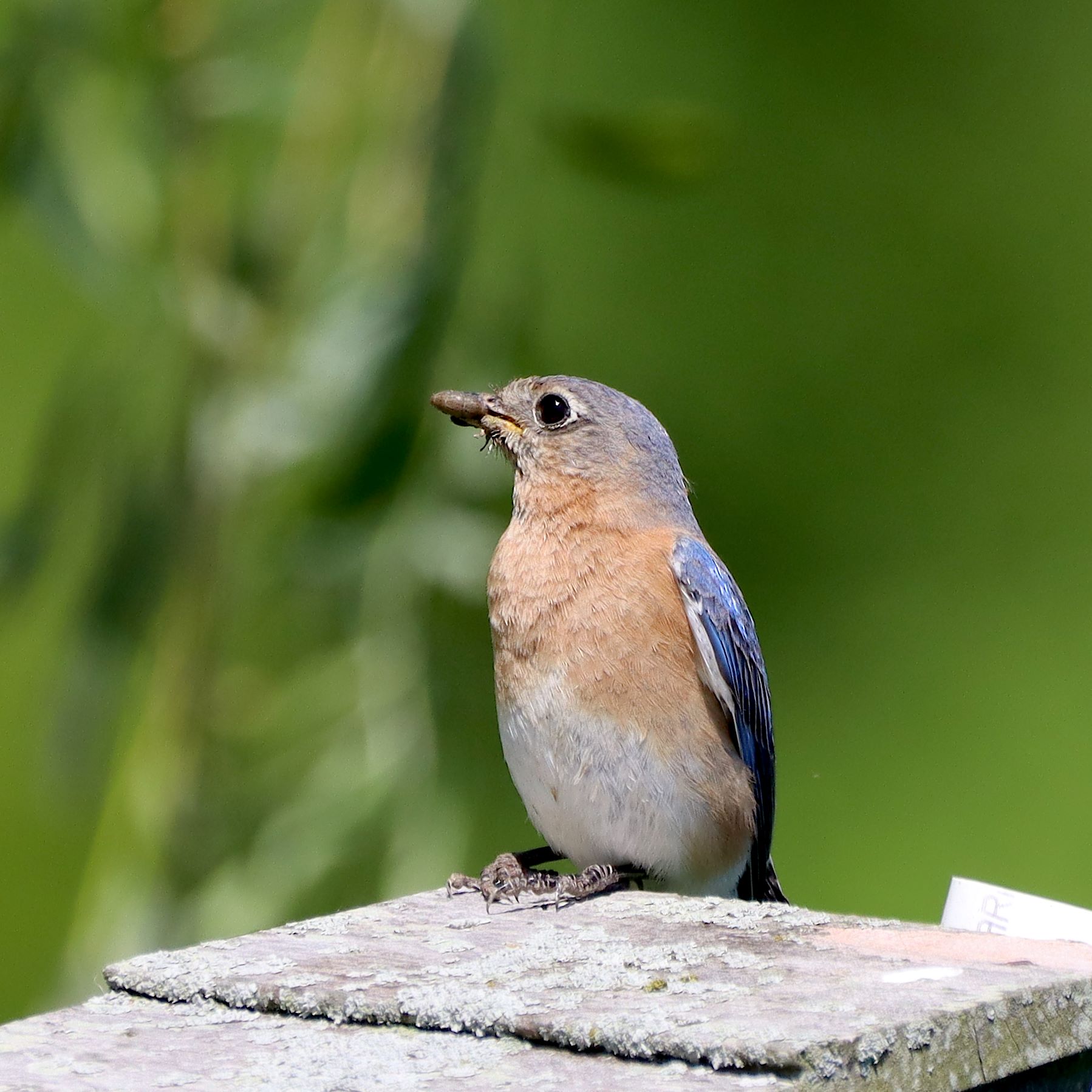
House #4 (Front Yard)
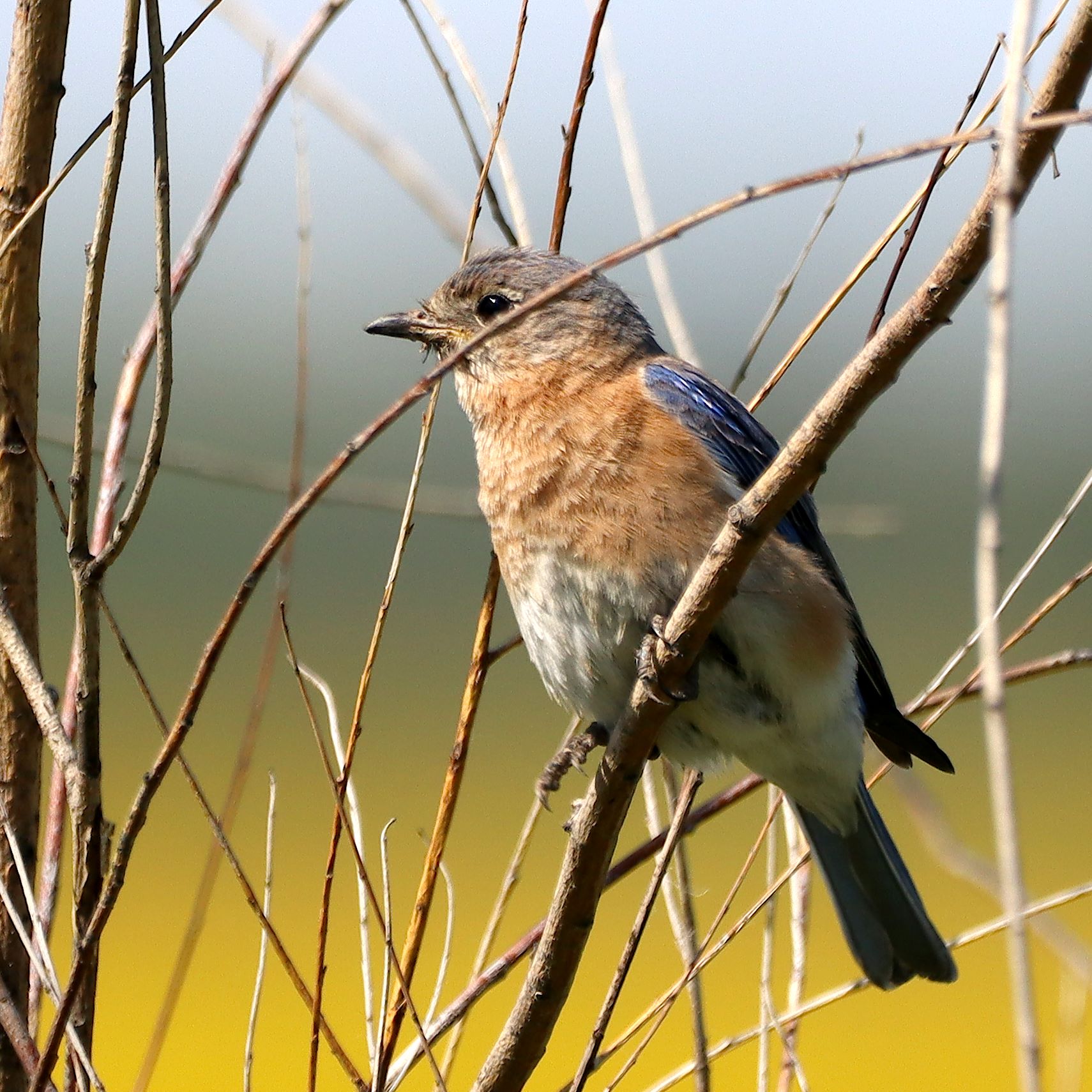
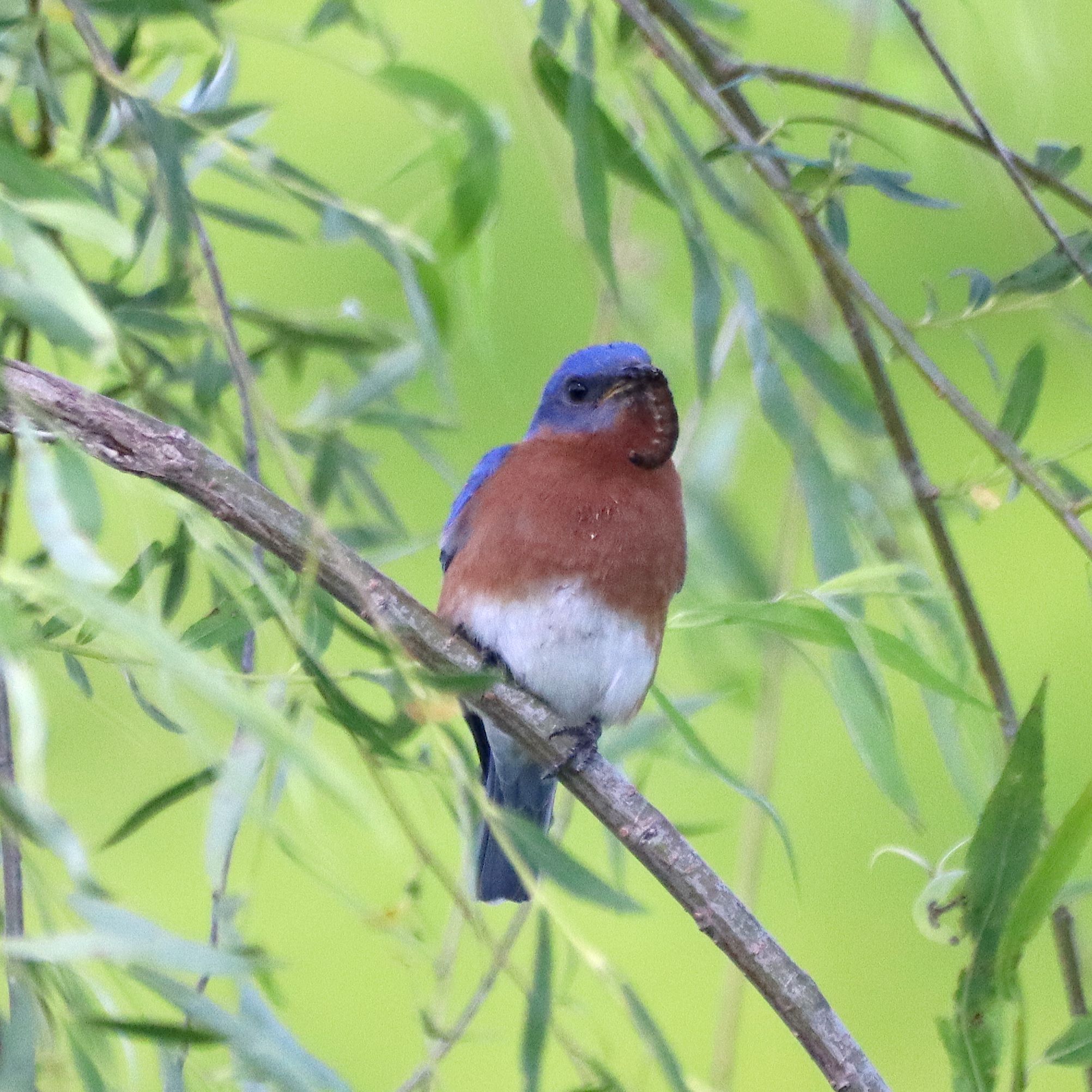
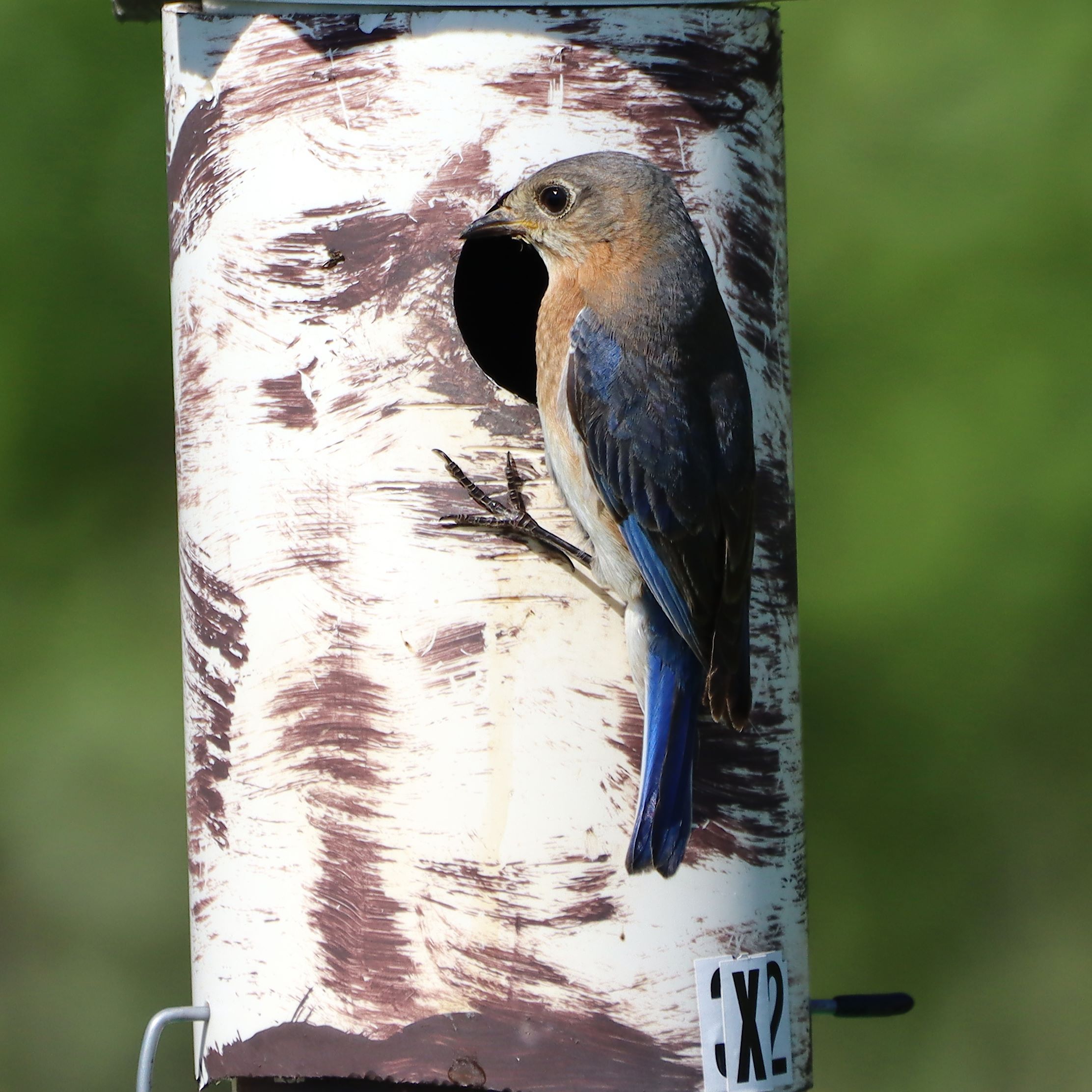
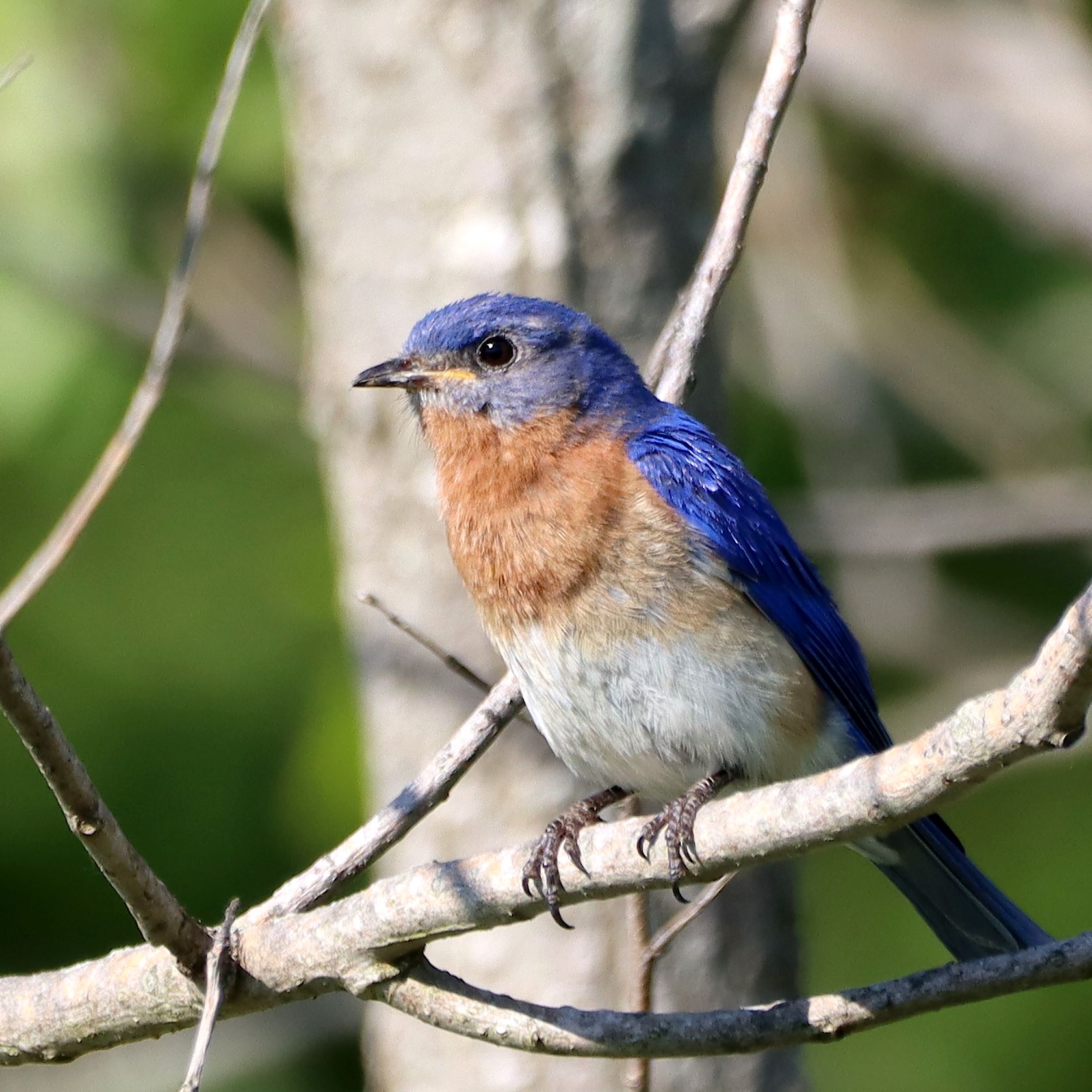
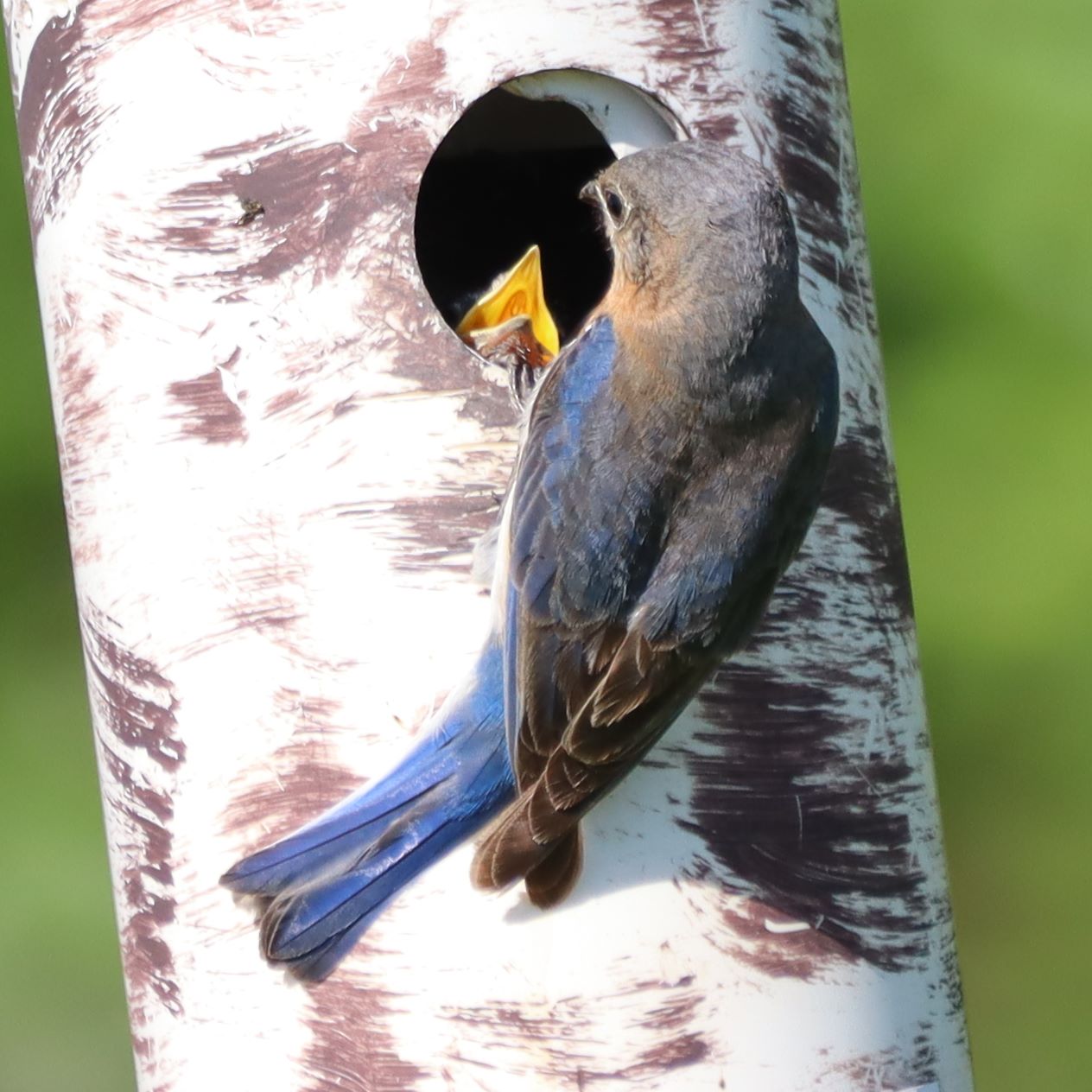
This house is just about 20 feet from our front porch, which is the West-central part of our property. It’s in an open area with a young Weeping Willow within about 10 feet of the nest box. There’s a large (over an acre ) mowed yard all around, with a few other young trees. There’s a single row of mature trees about 150 feet to the south, that run along the road that fronts the property. This pair tolerates human activity quite well. Look closely and you’ll see the open beak of a begging chick inside the entry hole. The female is in the first photos. There’s a poorer quality image that I caught of the male as he sat waiting to deliver the grub in the shade of the Willow tree.
House X
I actually chose the location for this house to attract House Wrens so that they did not feel compelled to take over a house with Bluebird or Tree Swallow pairs. House Wren tend to prefer to nest near scrubby, brushy areas. This house faces a large (5+ acre) open hay field, but it backs up to a stand of mature and new volunteer, younger trees. Last year, the first year this house was in this position, a pair of House Wrens fledged chicks from it. I was somewhat surprised that this pair of Bluebirds chose this option over several others that are in significantly more open areas in that northwest quadrant of the property.
This location is less than 300 feet from House #4 (above.) The fence around our backyard provides a perching spot from which to hunt in the mowed grass both inside the yard and outside it. I’ve seen both pairs (#4 and #X) using that fence which is located between these two locations.
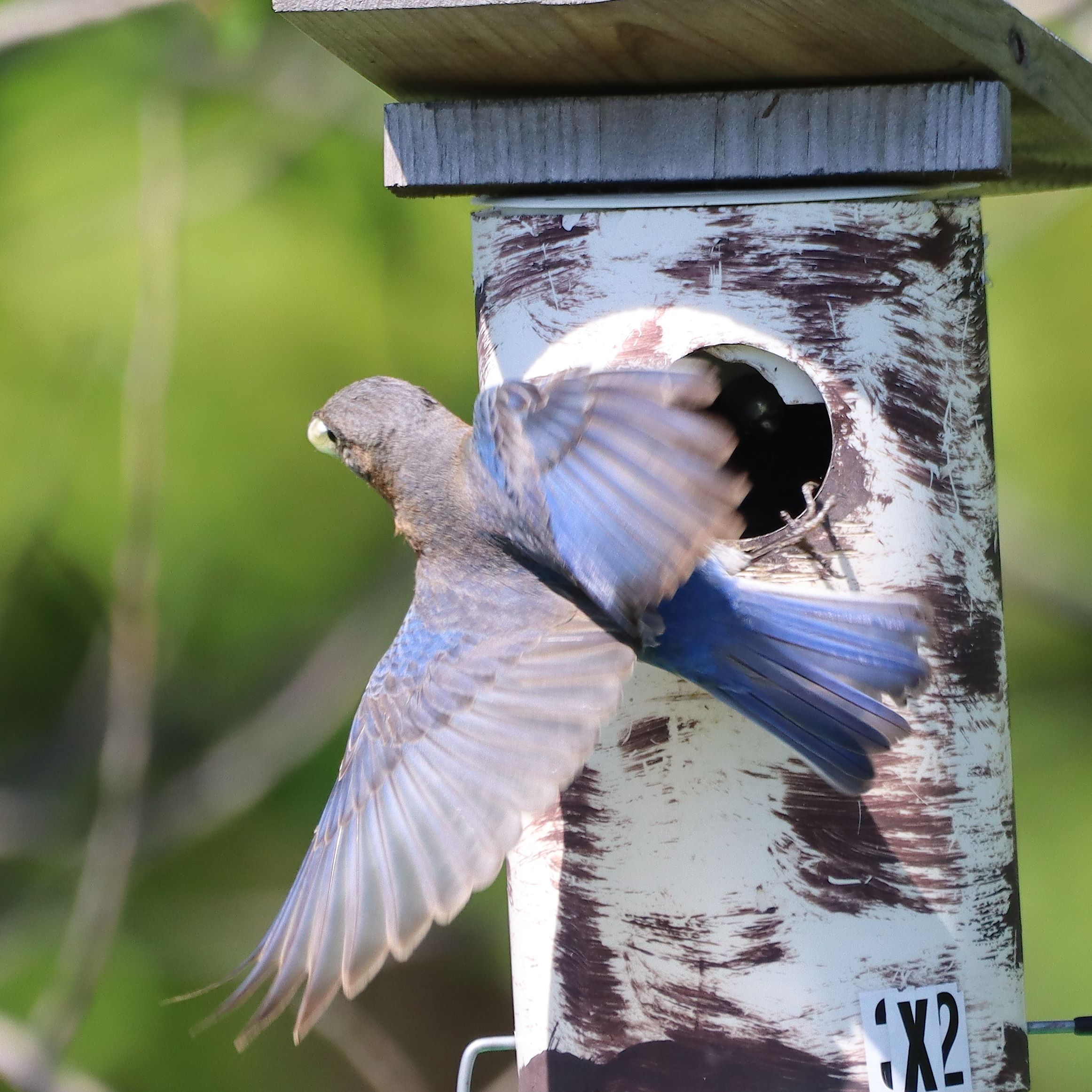
You’ll see in the final photo that the female is removing a poop sack on her departure, after offering a meal. The second photo is of the male perched in one of the nearby trees.
House L
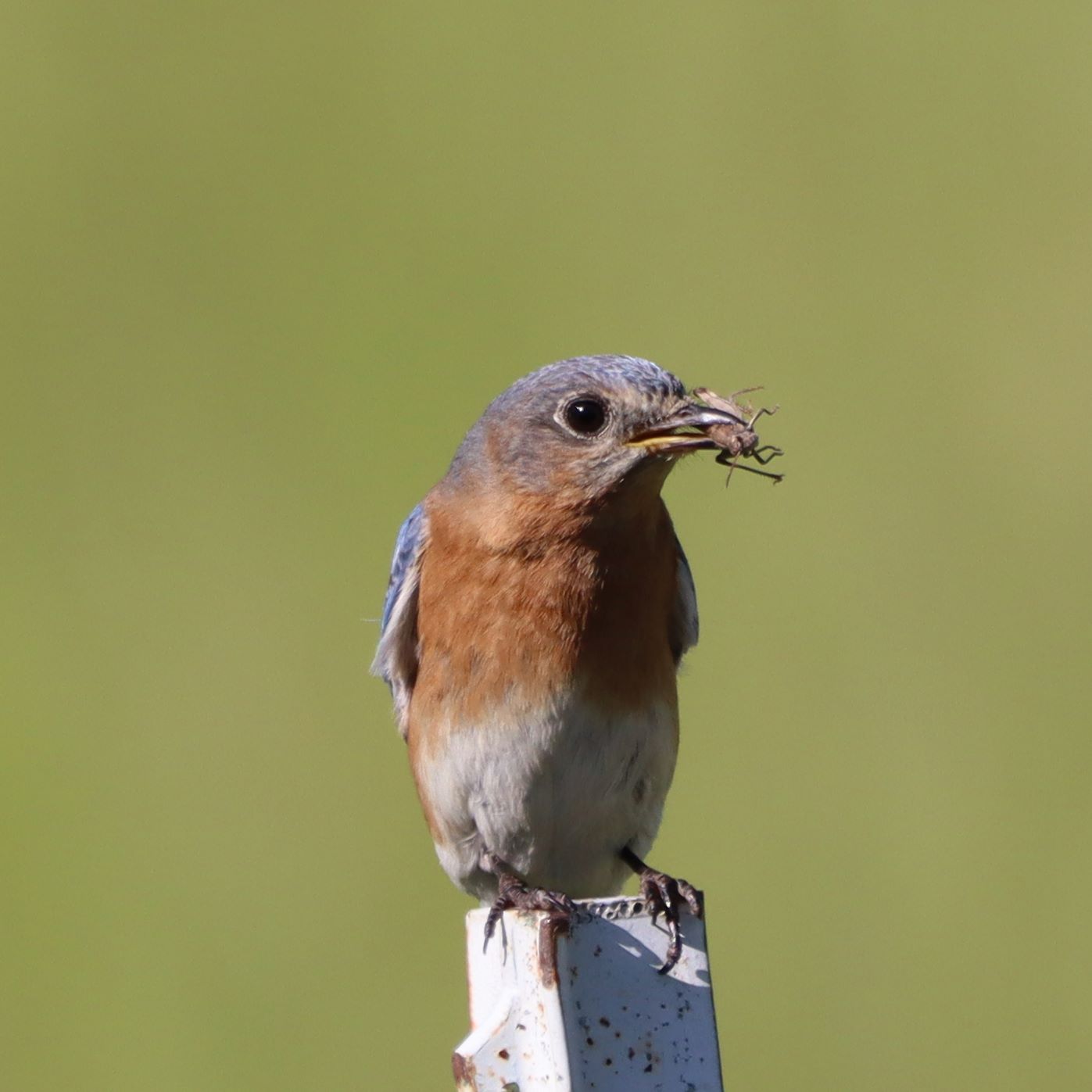
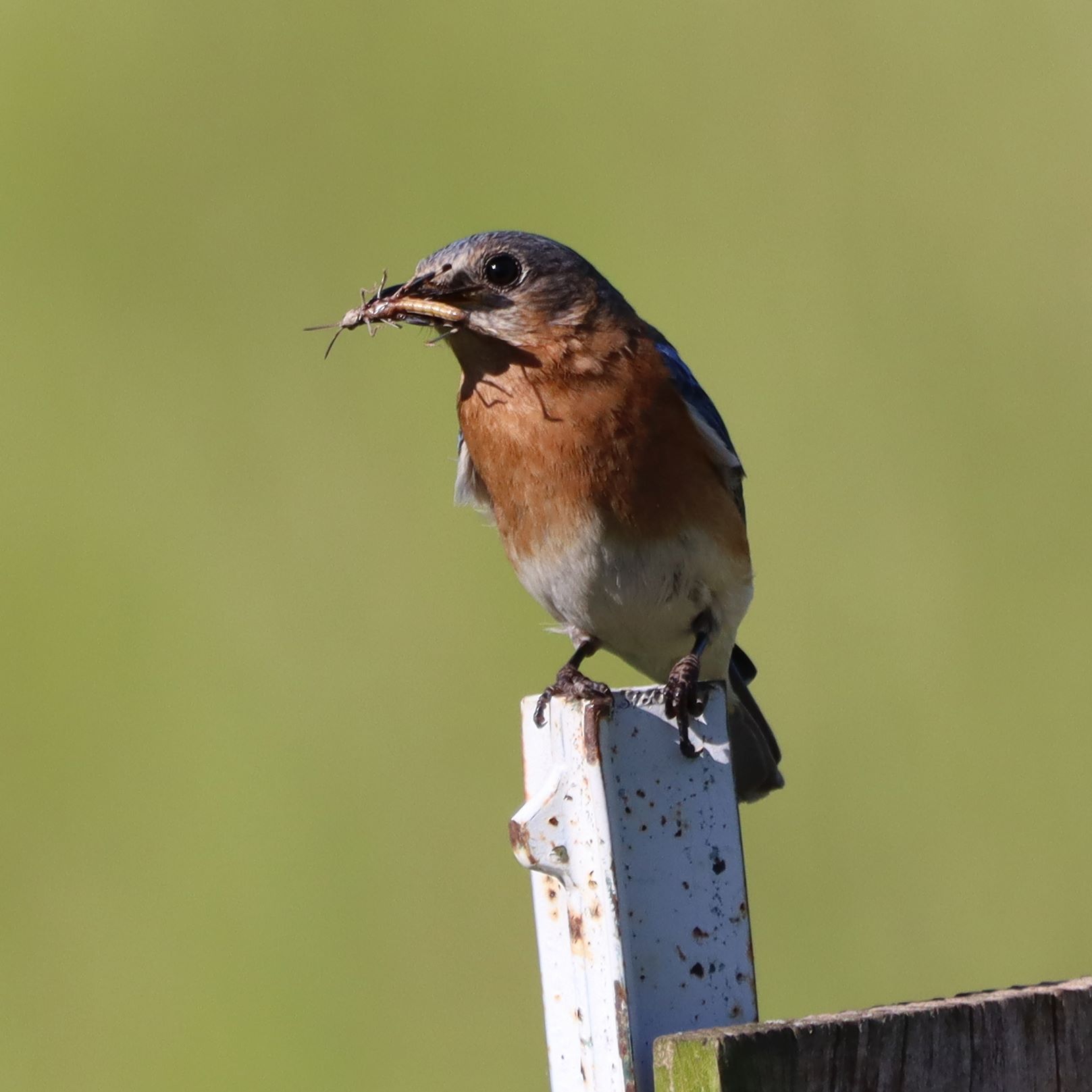
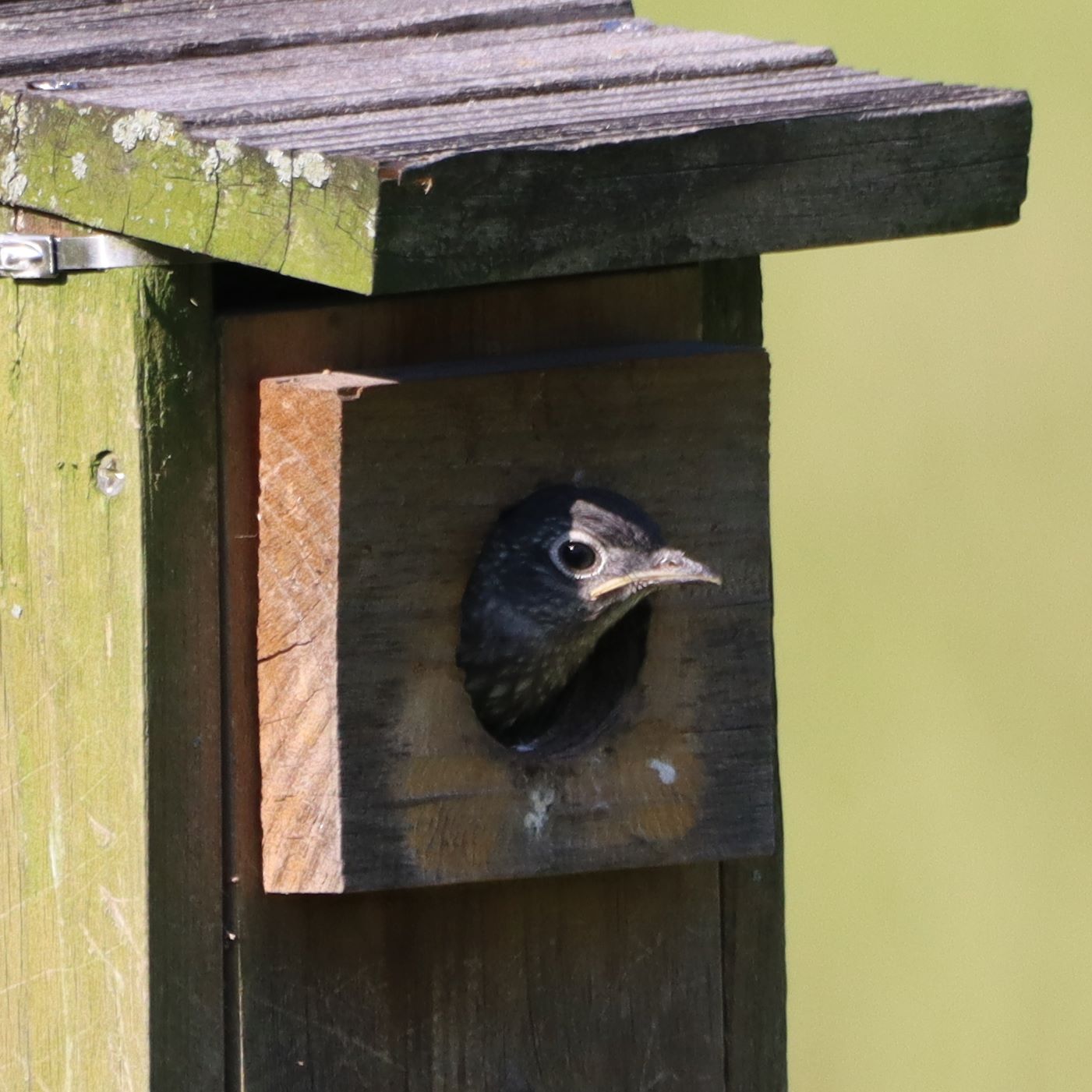
This is a strange situation. This is a wooden box that, like most of the wooden boxes we’ve used, is not in good condition. The constantly failing wooden boxes is the reason that we designed, and now use many more of the PVC houses. This box had slid down the post over the winter and was only about two feet off the ground in Spring when the Bluebirds were returning. I assumed that it was not going to be an option and because it sits in a very low area where Spring rains creates a little stream and a very mushy zone around it, we did not take the time to slough into the area to remove it.
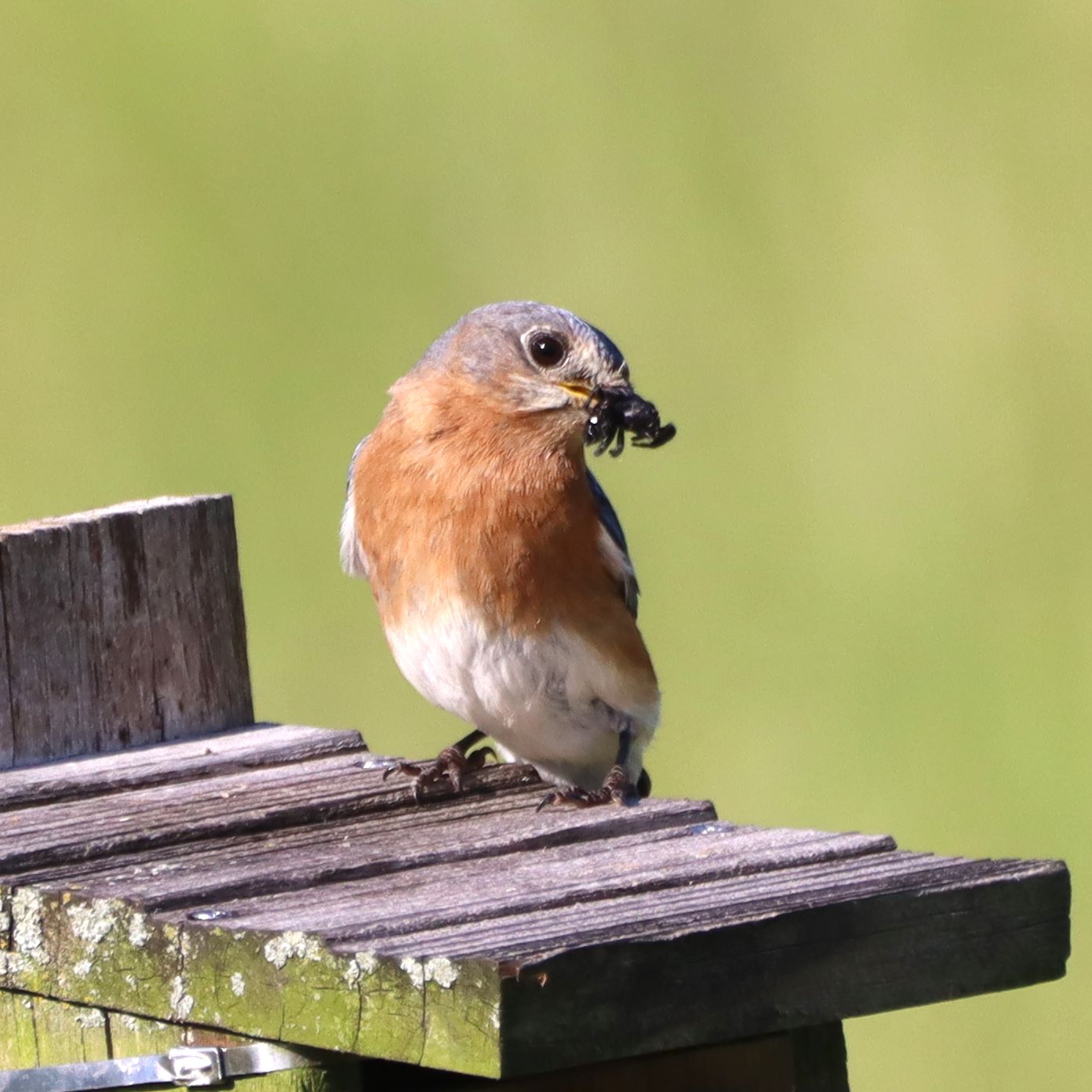
Then, one day when I went out, I saw a male Bluebird sitting atop the post on which the box was still connected. I figured it was just using the post as a hunting spot. A few days later, I noticed a female perched on top of the very low sitting box. I couldn’t get the golf cart close enough to inspect, so Robert helped evaluate the situation. OMG. There was a nest with five eggs. Robert slide the house back up the pole and secured it in a safer location around five feet off the ground. Apparently, the birds adjusted to the improvement. Take a look at how big that baby chick is in the last photo. I shot photos of this pair on May 11 and 12, 2024. I am assuming that they’ve fledged by now (5/15/24.) It’s been raining these past few days and I have not been out to check on them since then.
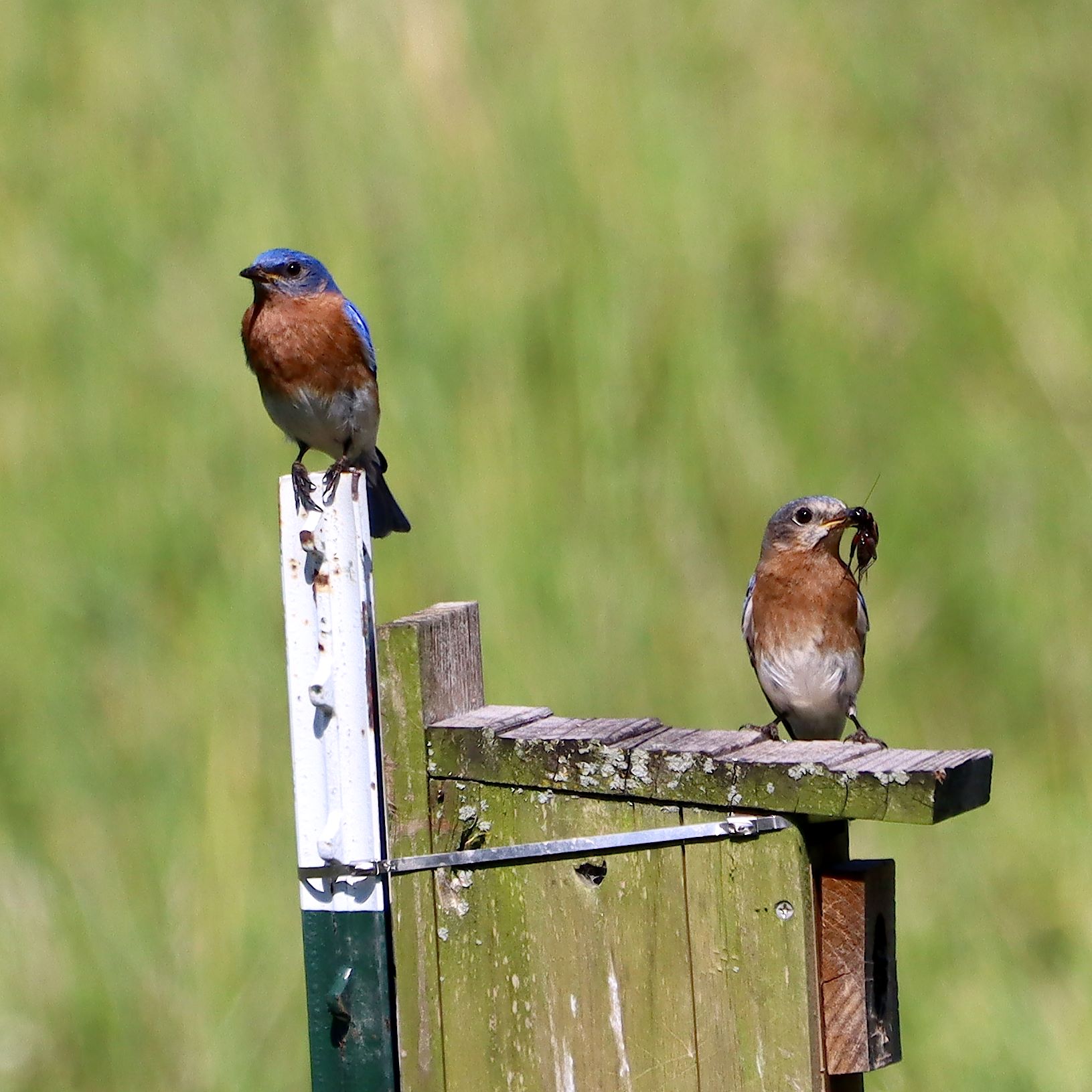
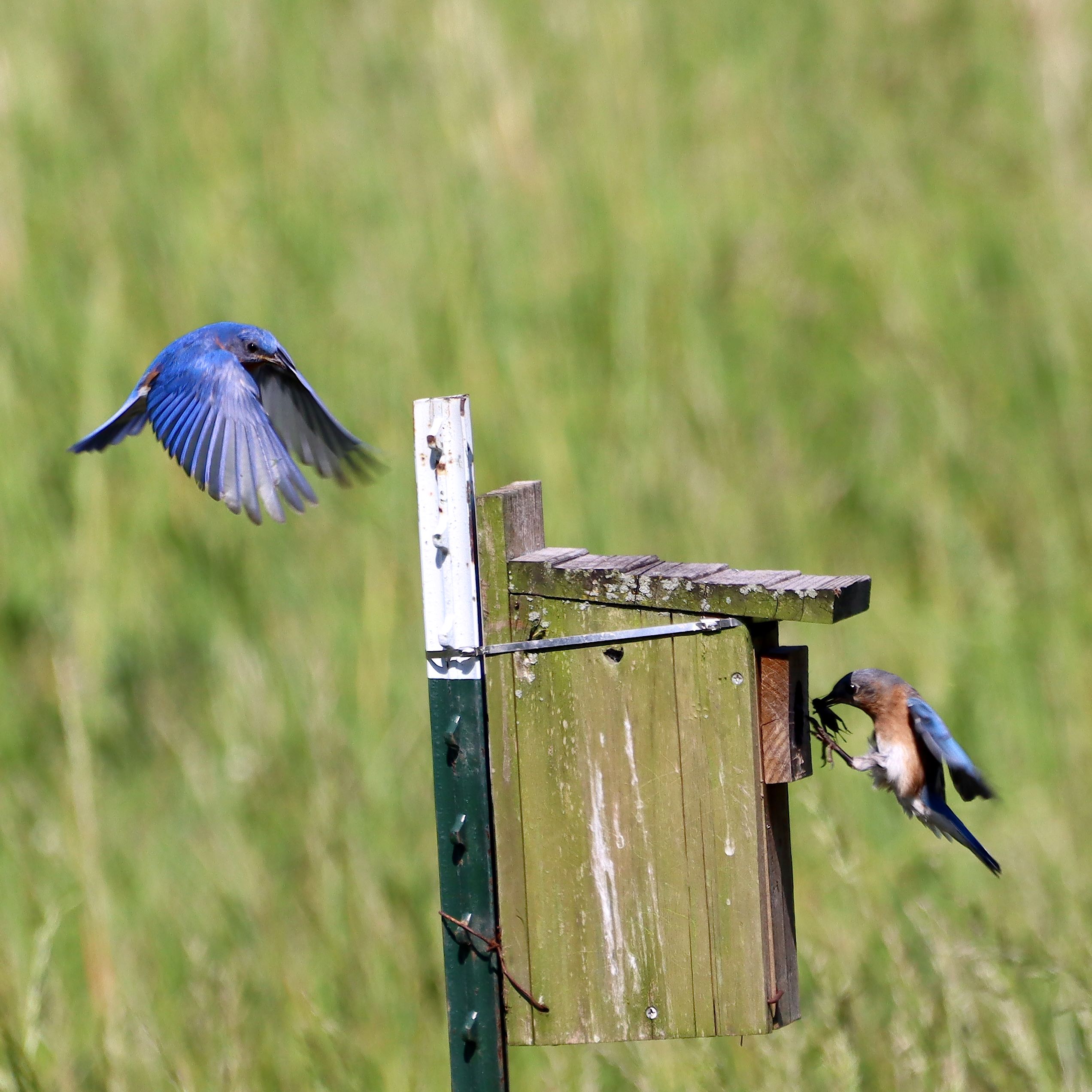
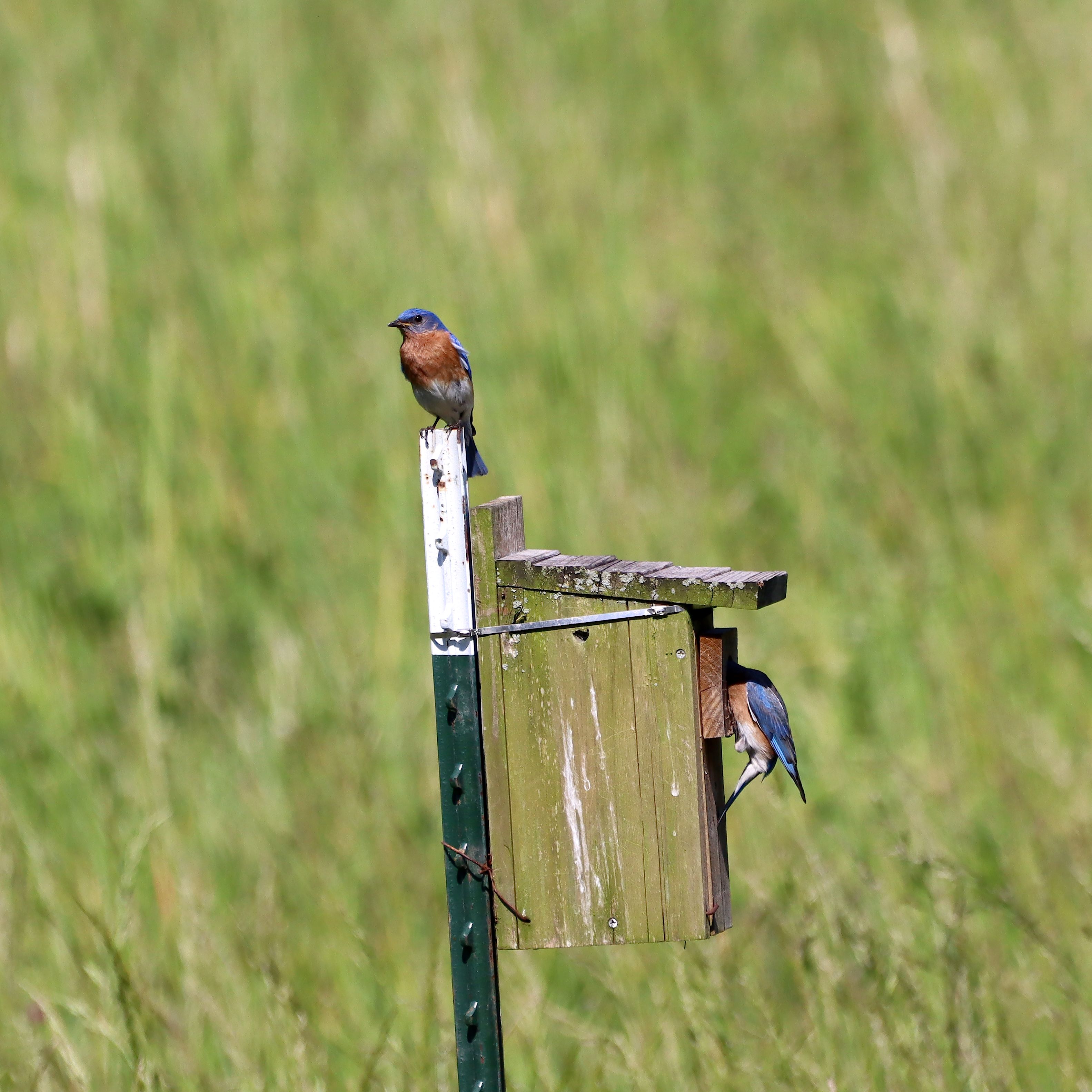
This house is situated in an open area, without a nearby perching spot, so they tend to fly in and go directly to the entry hole, or they use the post. When I first entered the area (north of the pond), the male took a position on the post while his mate delivered food to the chicks. This pair is not accustomed to human activity like the two previous pairs are, that live near the house. When I saw the male show up to “guard” I thought that the chicks had just hatched. This guarding is more likely to occur at that time, in my own, personal experience. As the chick get bigger, the birds seem far less concerned about my presence. I filmed these birds from a farther distance to disturb them less.
House R
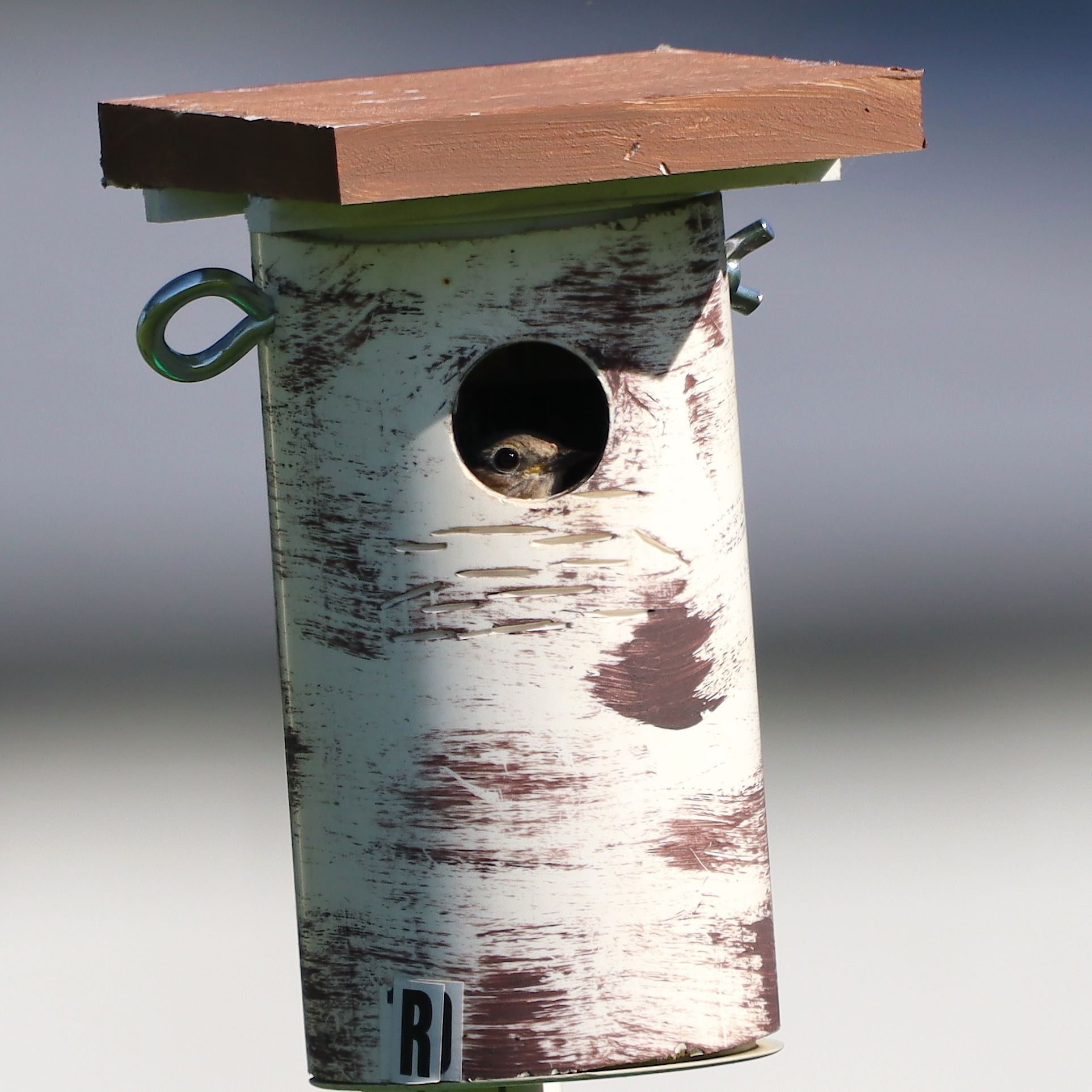
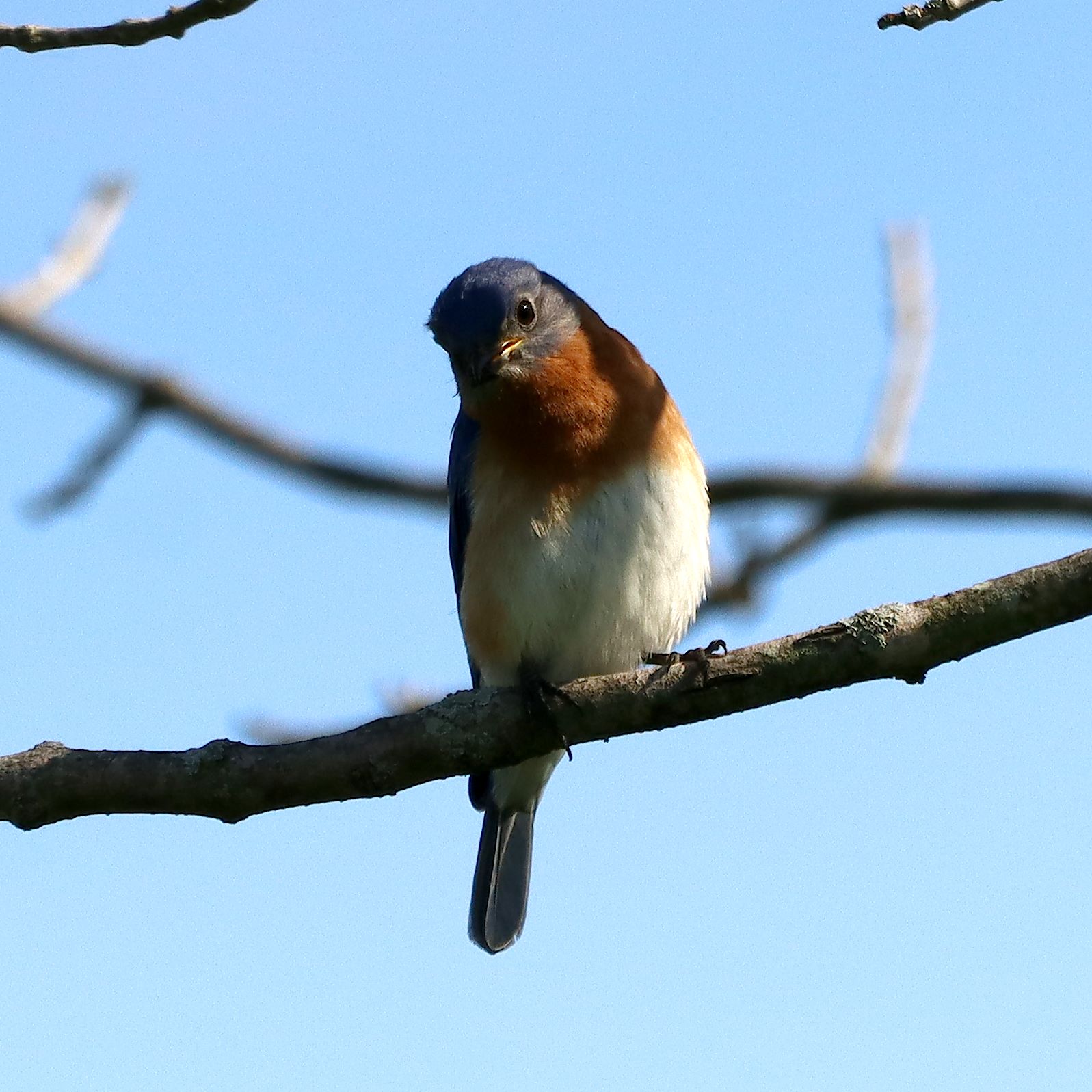
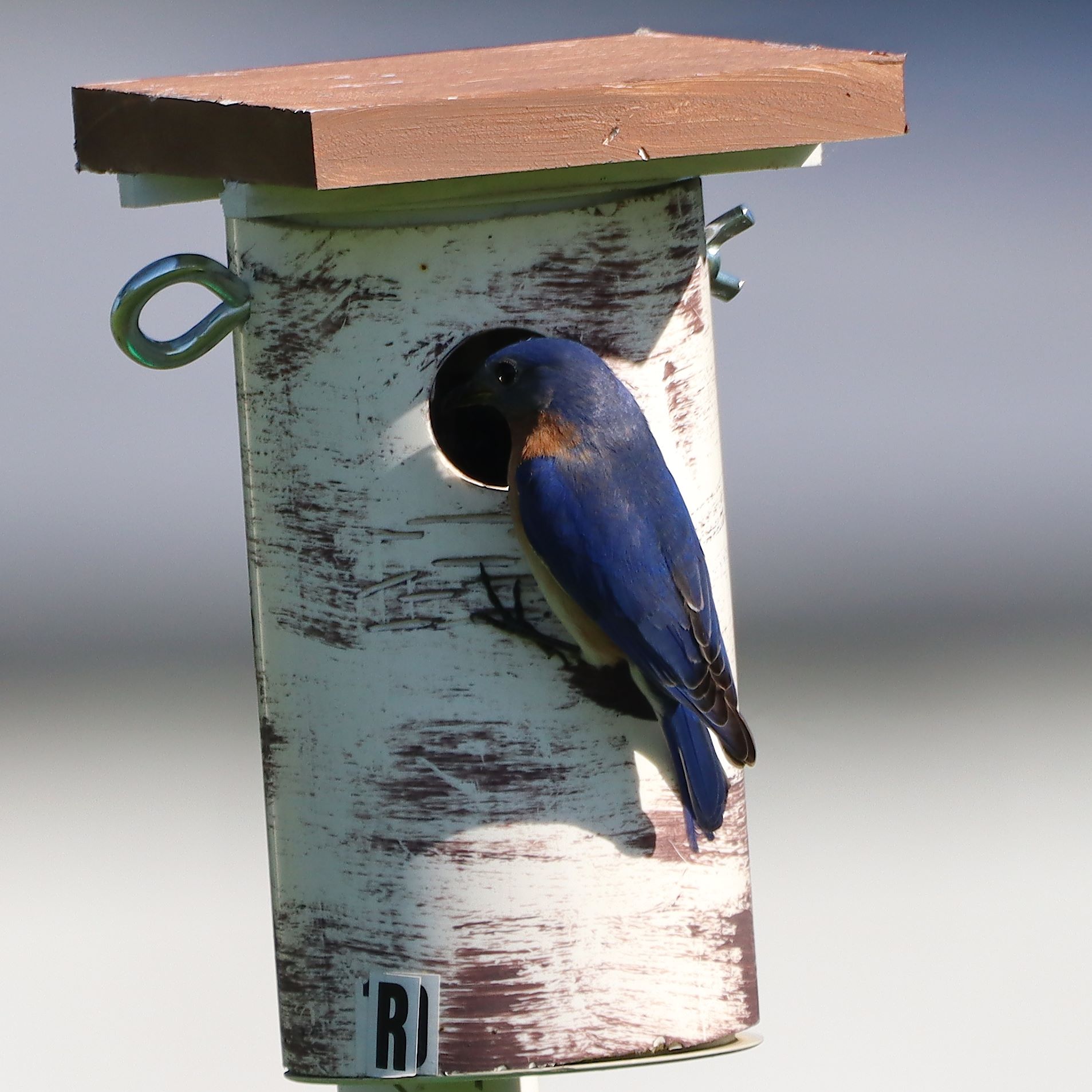
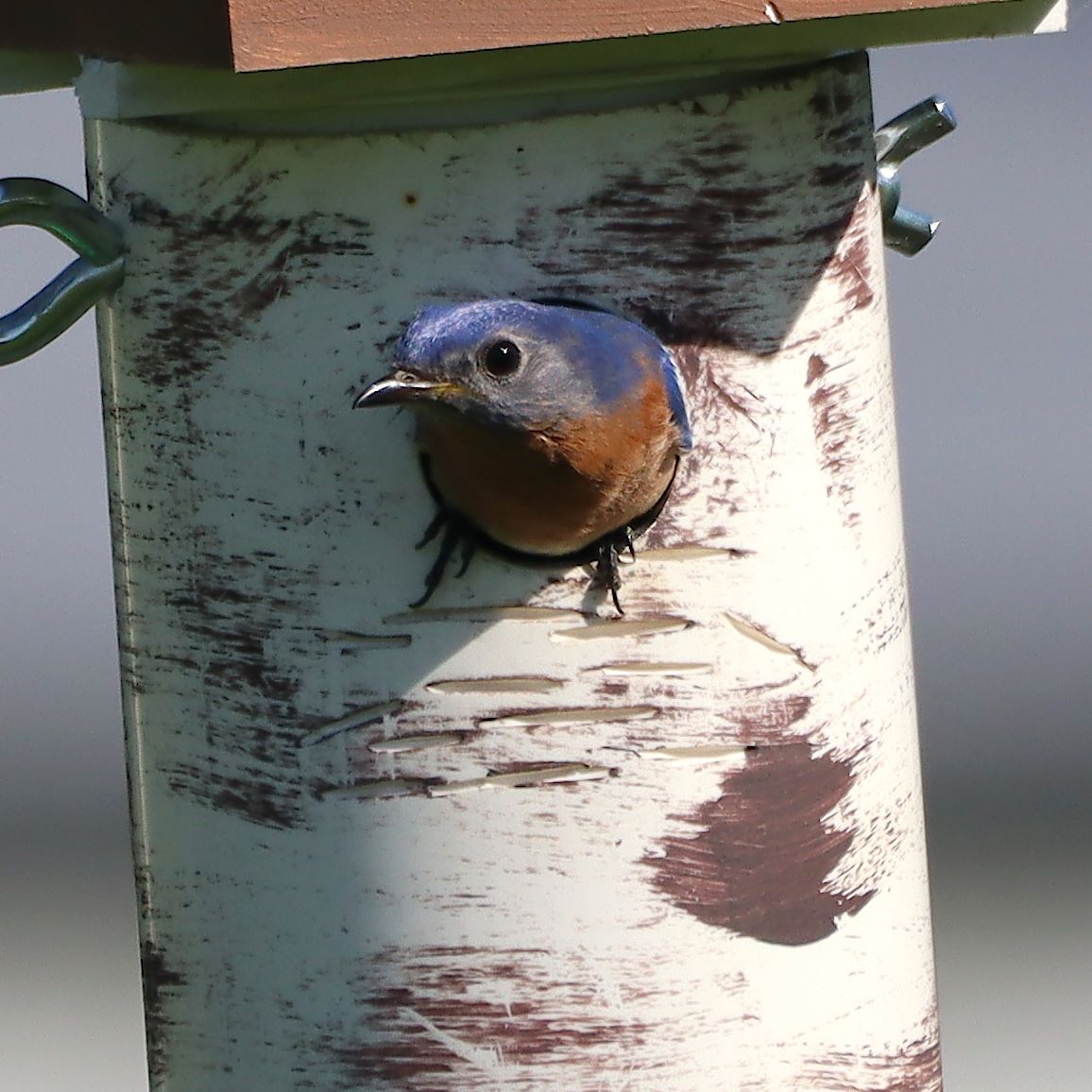
This house is at the far Southeast corner of the property, over 1000 feet from our house and where the first house shown in this post is located. I call this area “Flycatcher corner” because there are fences on our side of the street as well as across the street, on our neighbor’s property, which run along the rural road. Flycatchers like to perch above the ground while they hunt. They observe, spot and then flit down to nab their next meal. While Bluebirds are in the Thrush family, they also hunt from elevation quite often. Sometimes, when I’m sitting patiently waiting to film the Bluebirds that use this house, I am offered the opportunity to film Eastern Phoebes, Eastern Wood Pewees and less common Flycatchers like the Willow and Least. Mockingbirds also often hunt from elevation, and I’ve been privy to them while waiting in that location, as well.
Last year a pair of Bluebirds used this same house for two broods. I’m speculating that this may be that same pair.
There are several other houses in which Bluebirds are nesting which I have not had the time to film. I’m hoping this cool, overcast weather will break and I’ll be able to capture those amazing Bluebirds. When I do, I’ll be sure to share them here!

