Tammie Rogers
Inspired by Dogs & Nature
One Lone Cattail
Yesterday, which happened to be my birthday, was the first time in two weeks that I was able to go out and about the property with my camera to check out what’s happening here, now that Spring has finally truly arrived. So much had changed in those 14 days, including the number of bird species that I heard or observed.
I ran the Merlin Bird ID app several times in various places and was excited to record 22 species that have now returned for the breeding season or are migrating through.
- American Robin
- Red-winged Blackbird
- Purple Martin
- Barn Swallow
- House Wren
- Common Yellowthroat
- Gray Catbird
- Brown Thrasher
- Bobolink
- Orchard Oriole
- Chipping Sparrow
- Tree Swallow
- Eastern Bluebird
- Swanson’s Thrush
- Northern Mockingbird
- Eastern Kingbird
- Red-breasted Nuthatch
- Hermit Thrush
- Rose-breasted Grosbeak
- Solitary Sandpiper
- Indigo Bunting
- American Pipit (wow)
- Marsh Wren (even more wow)
Along with those new arrivals, I also recorded these 20 species that are year round residents:
- Northern Cardinal
- Carolina Wren
- Red-headed Woodpecker
- Red-bellied Woodpecker
- Northern Flicker
- Eastern Meadowlark
- Western Meadowlark
- Song Sparrow
- House Finch
- Mourning Dove
- Field Sparrow
- American Crow
- Fish Crow
- Common Grackle
- Northern Bobwhite
- Blue Jay
- Brown-headed Cowbird
- American Goldfinch
- Tufted Titmouse
- Black-capped Chickadee
Merlin app identified (or I observed) all those species just on May 1, 2024!
With so much activity, as I moved into each new area of our farm, I would stop and settle for a while to see what I might see or hear. It can take up to 30 minutes or more for the activity which my presence might have scared off, to return. It was a beautiful day, and I was feeling patient.
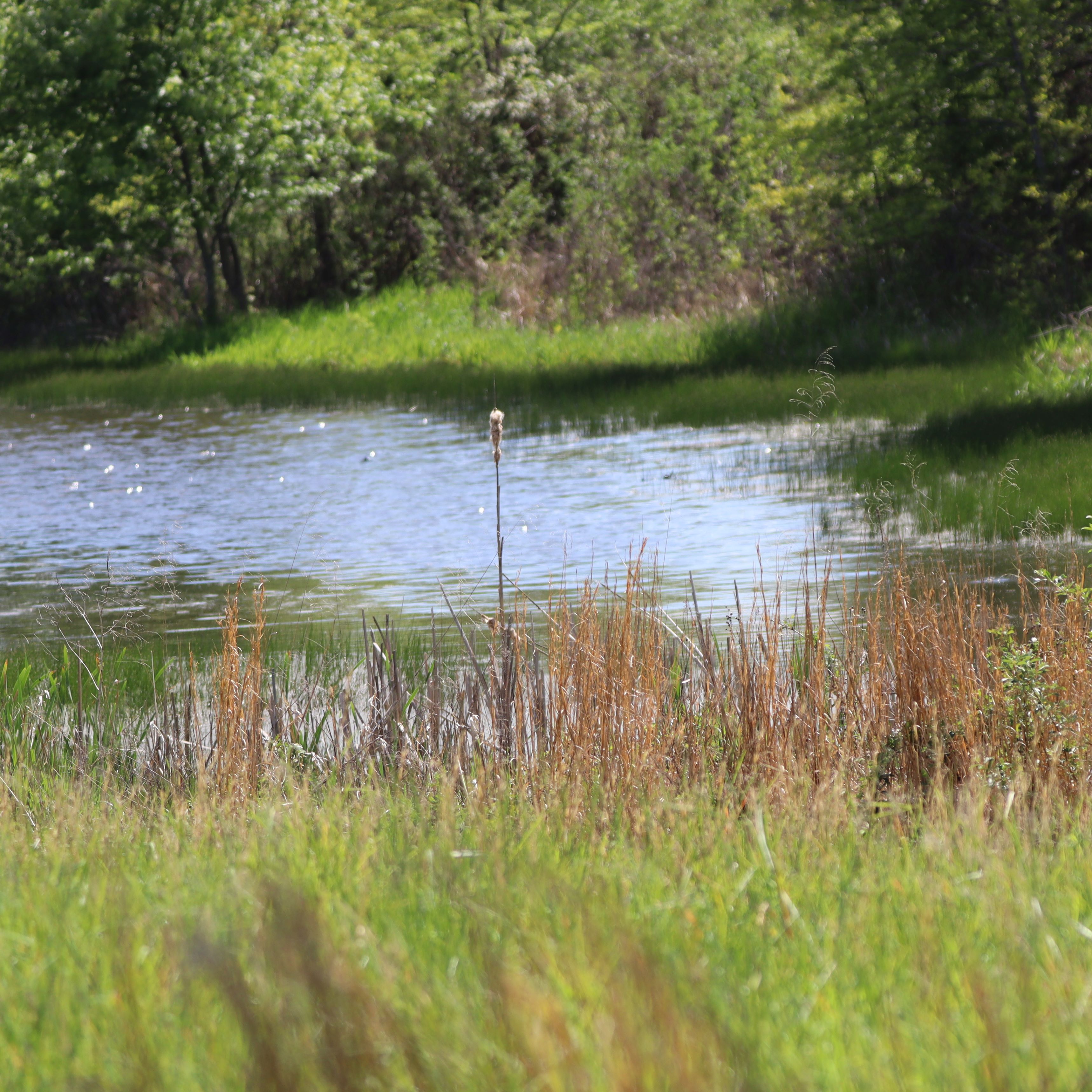
When I entered the northern pond area, I saw a bird land on a single cattail.
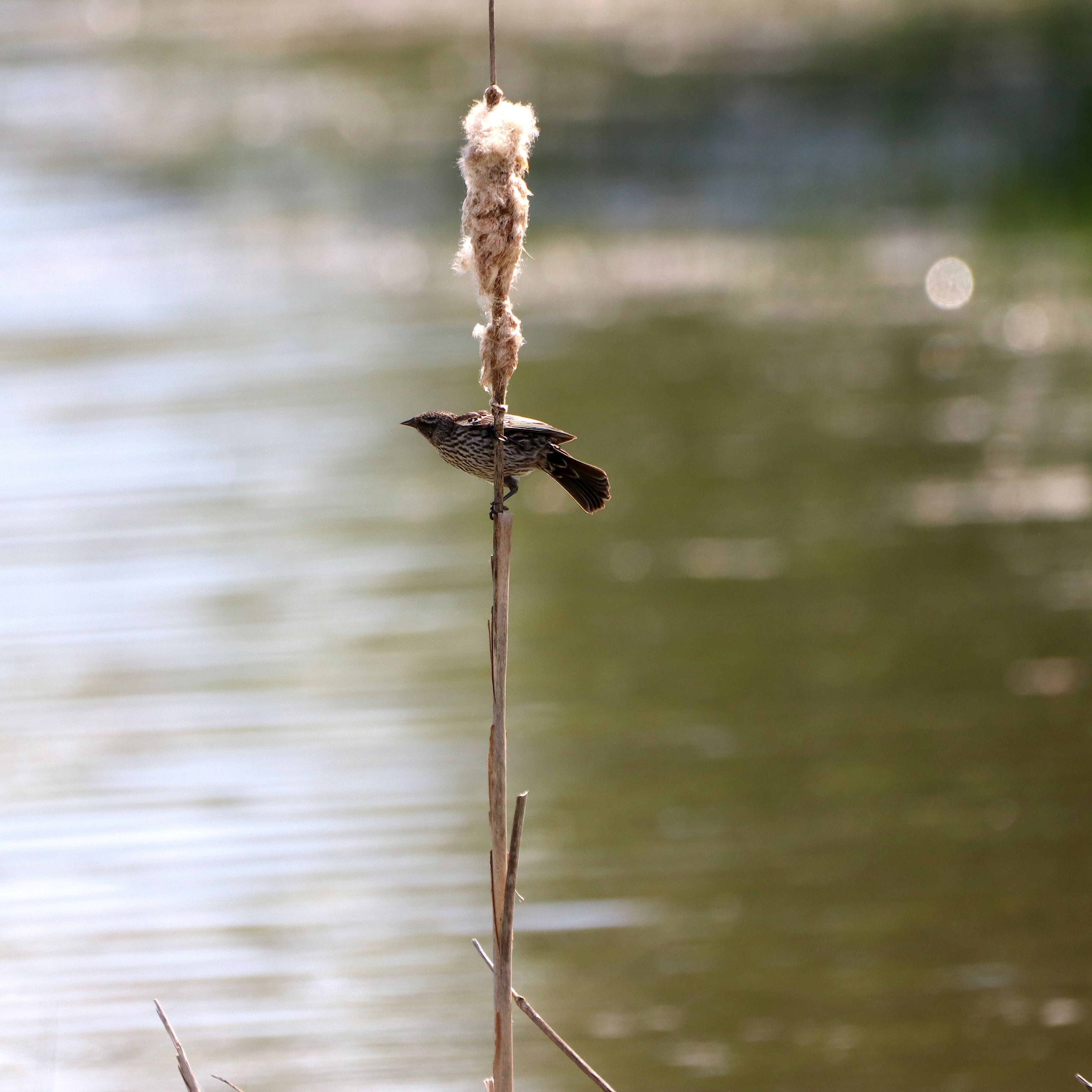
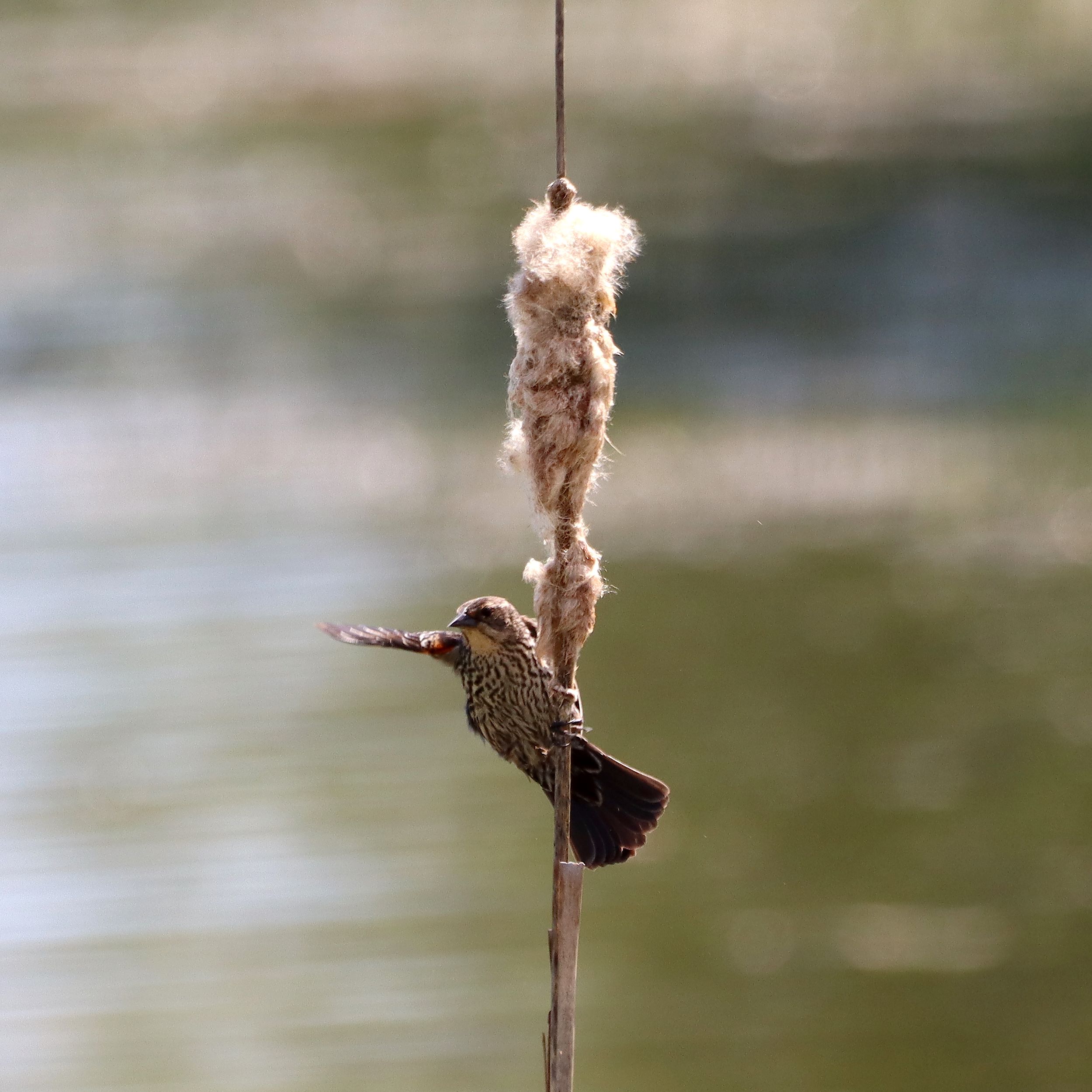
I only captured a couple of shots before it flew off. I recognized it as a female Red-winged blackbird. They are quite attracted to the cattails. They nest on the ground, often quite close to the water’s edge.
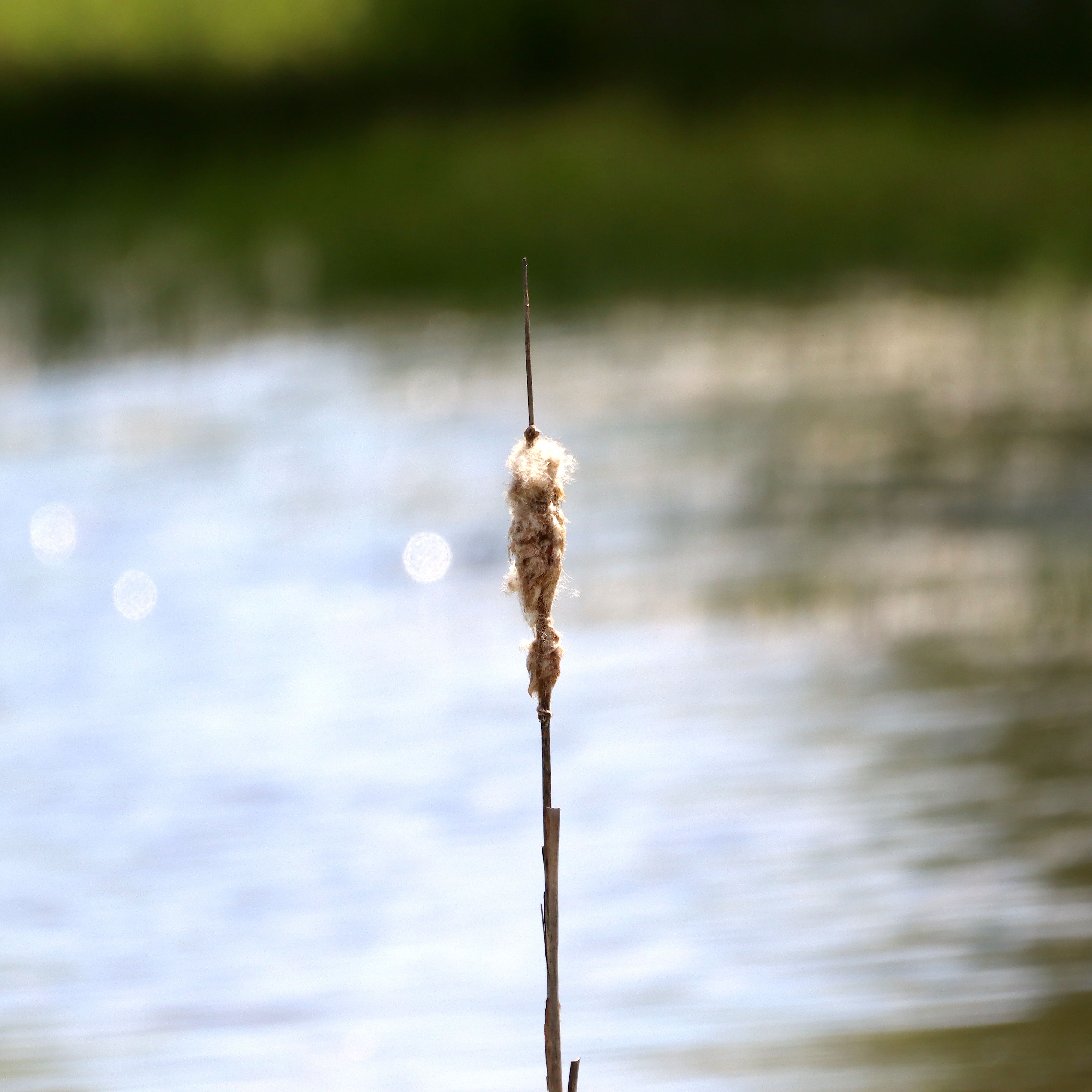
I readied myself to catch the bird’s return, but rather found myself settling back in the seat of the golf cart waiting patiently for the next surprise subject to film.
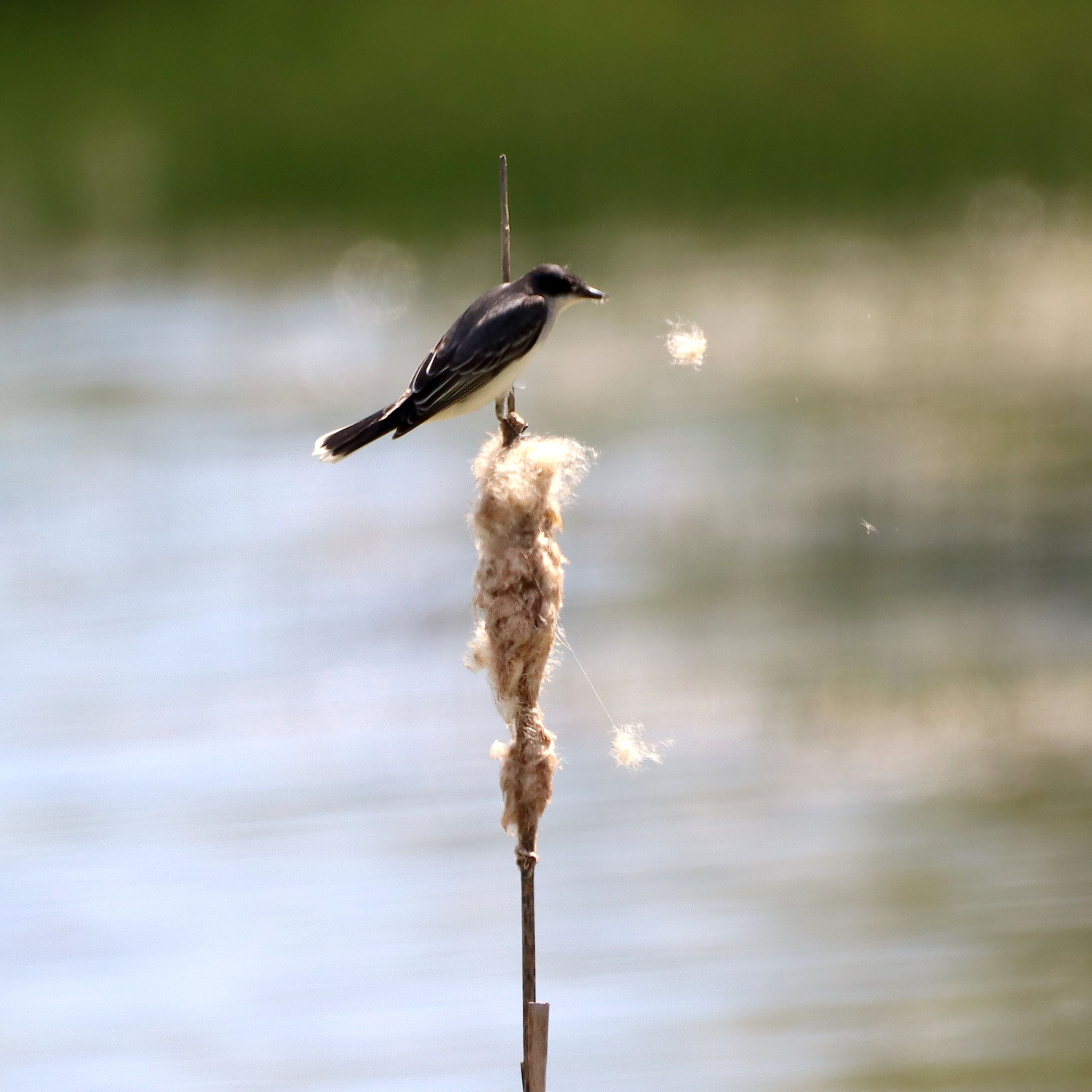
Then it arrived. An Eastern Kingbird! I hadn’t seen or heard one yet this year. This is one of my favorite species. The photos are not great, but I’m still enamored with the composition. A few years ago I watched a Kingbird land on a cattail and pluck the soft downy ‘fluff’ (seed dispersal strategy of this plant) that remains in wait of a wind gust sufficient to send the seeds in the breeze. I believe that the bird was gathering soft nesting material into which the pair’s eggs would be laid. I was so disappointed that the whole episode transpired before I could aim and shoot and capture that image. But, yesterday, I was given the opportunity, again. I consider it a birthday present, of sorts.
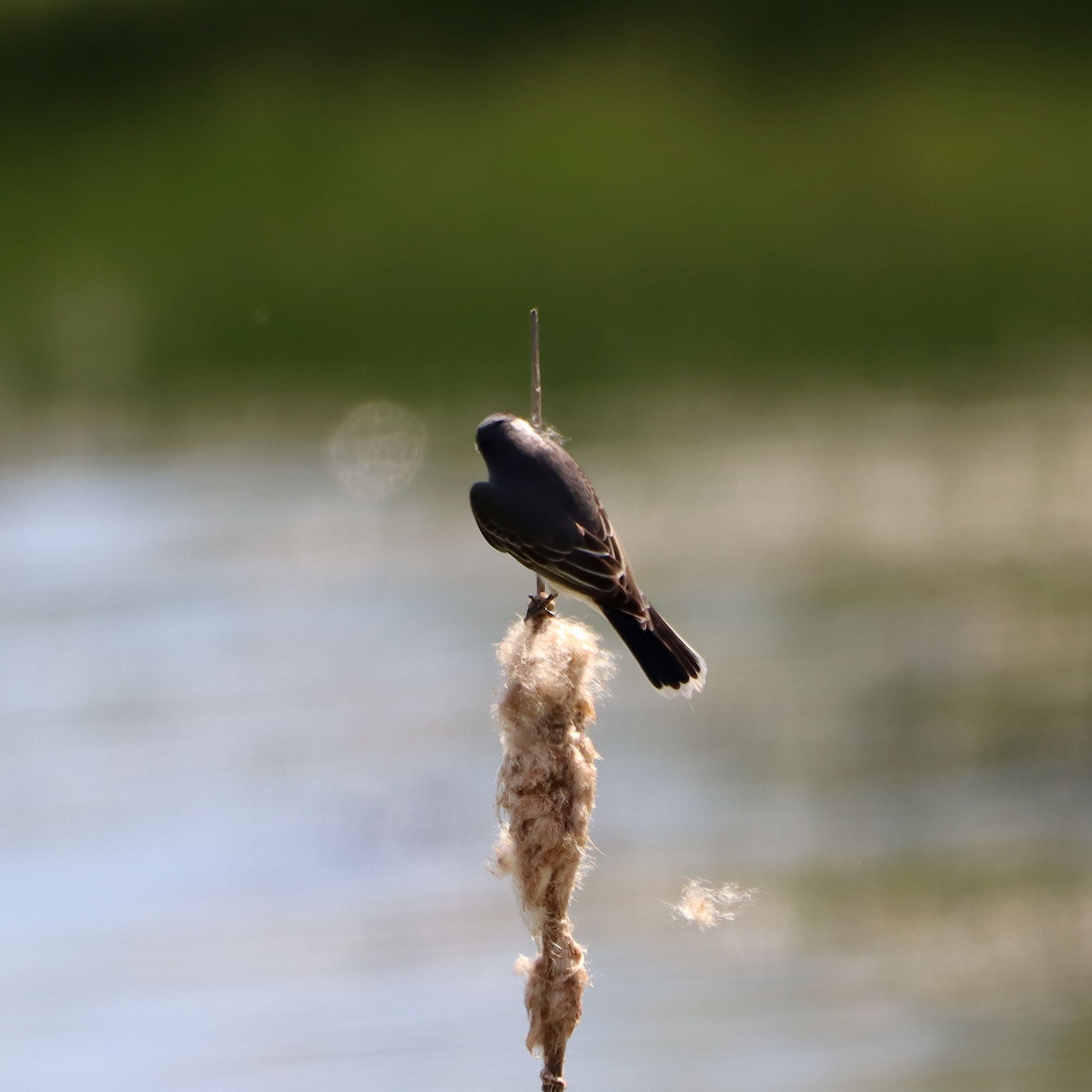
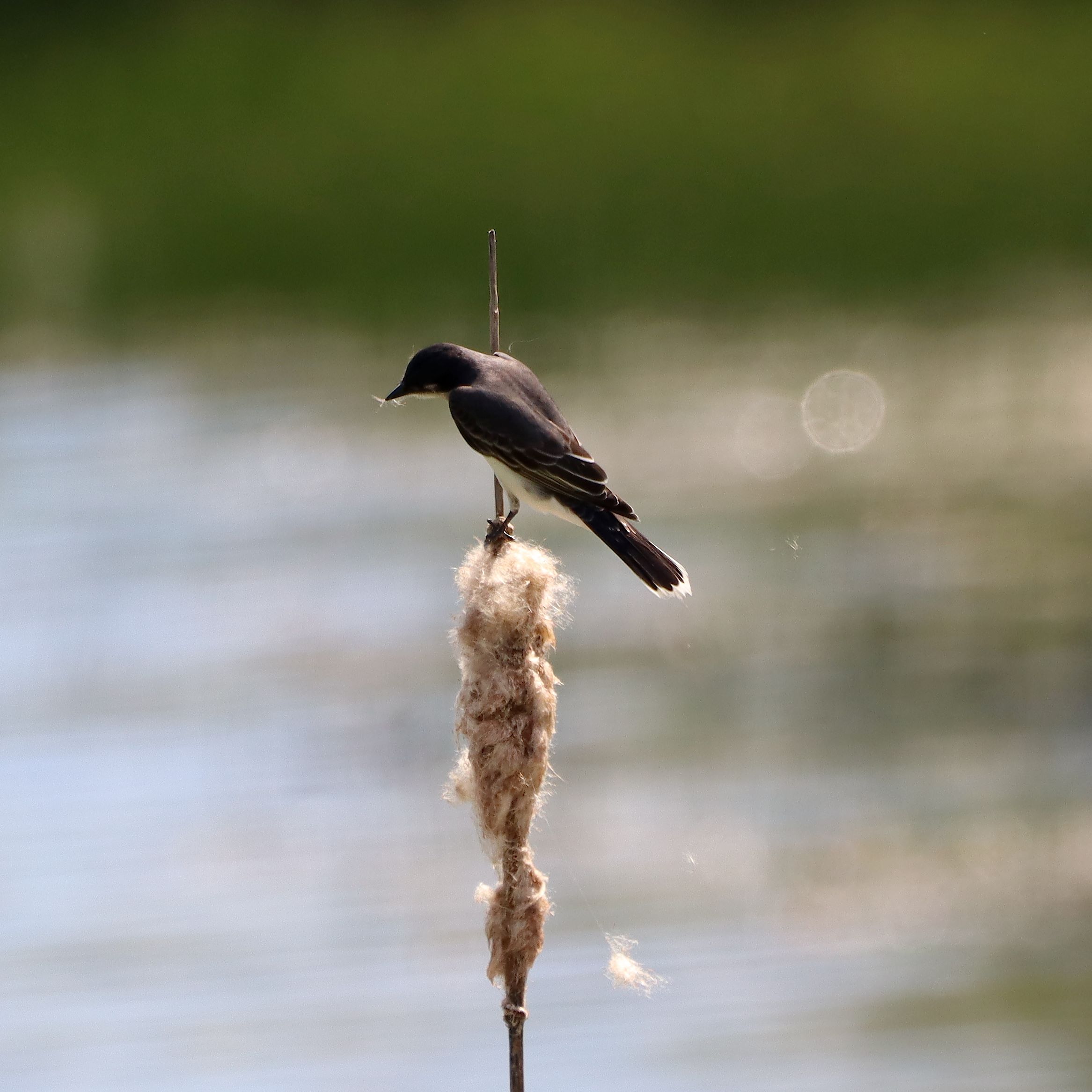
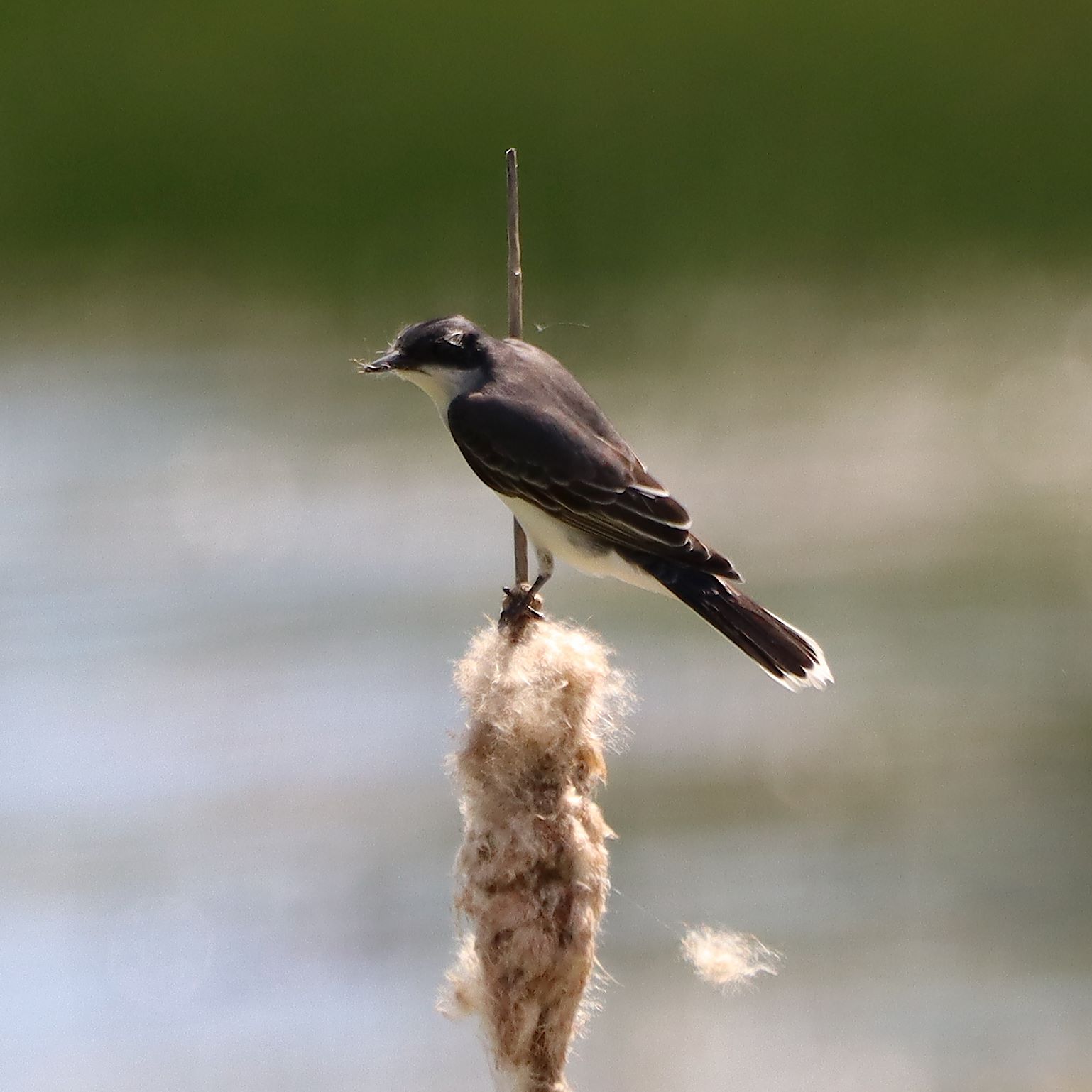
And while the extreme backlighting (coupled with my very amateur photographer status) detracted from getting a great image of the bird, it added the element necessary to catch the cattail ‘fluff’ as it took flight in the wind. I’m content.

