Tammie Rogers
Inspired by Dogs & Nature
Winter Residents
After a few weeks, I finally had the time to get out and about on our property to see what’s going on! Due to other business constraints, I felt sad that I missed the tail end of the Fall migration during which time there was the opportunity to see some unique species stopping by. But, I was very happy to get outside in my special place.
I was excited to film four species of Sparrows – all which landed exceedingly close to where I sat waiting for their arrival, west of the pond.
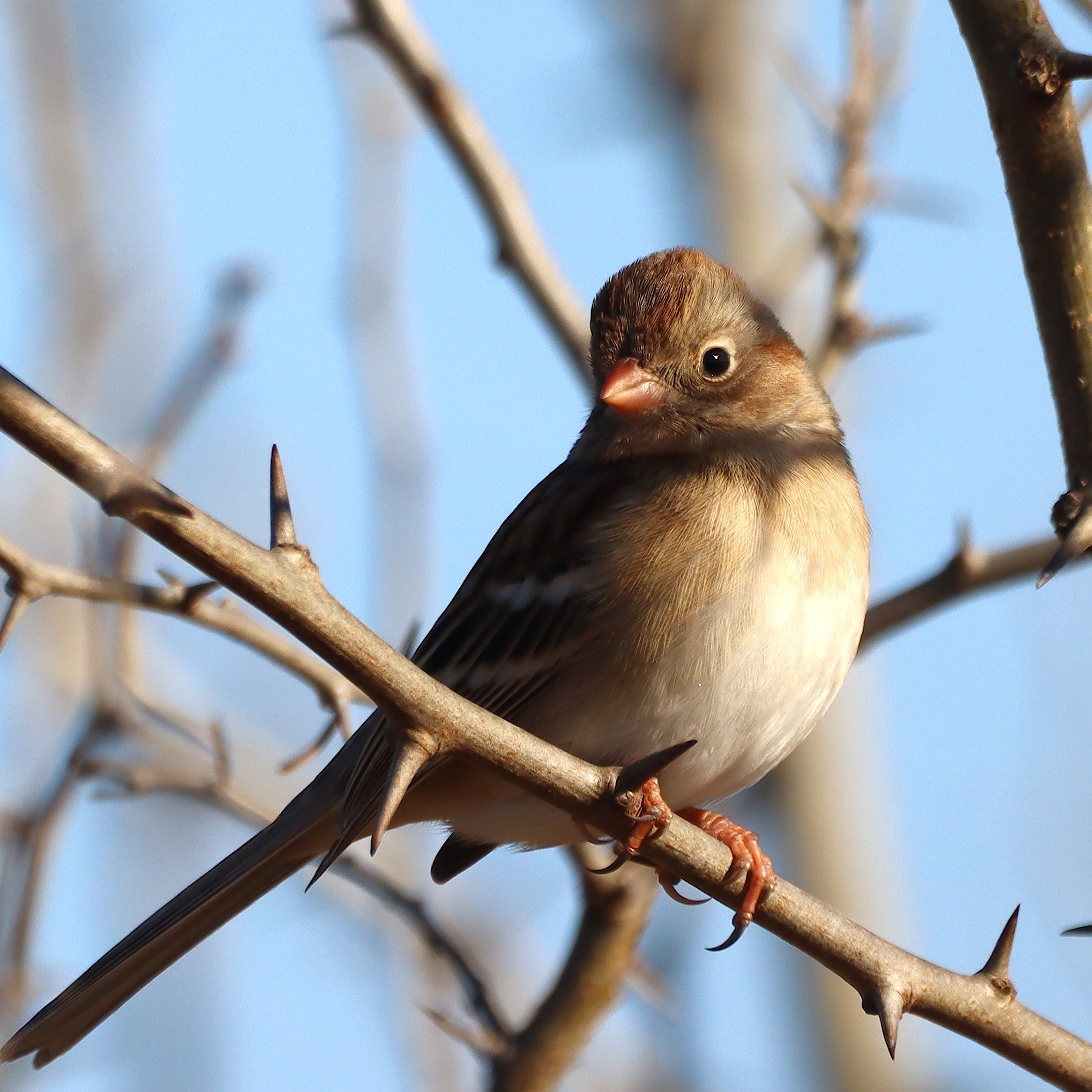
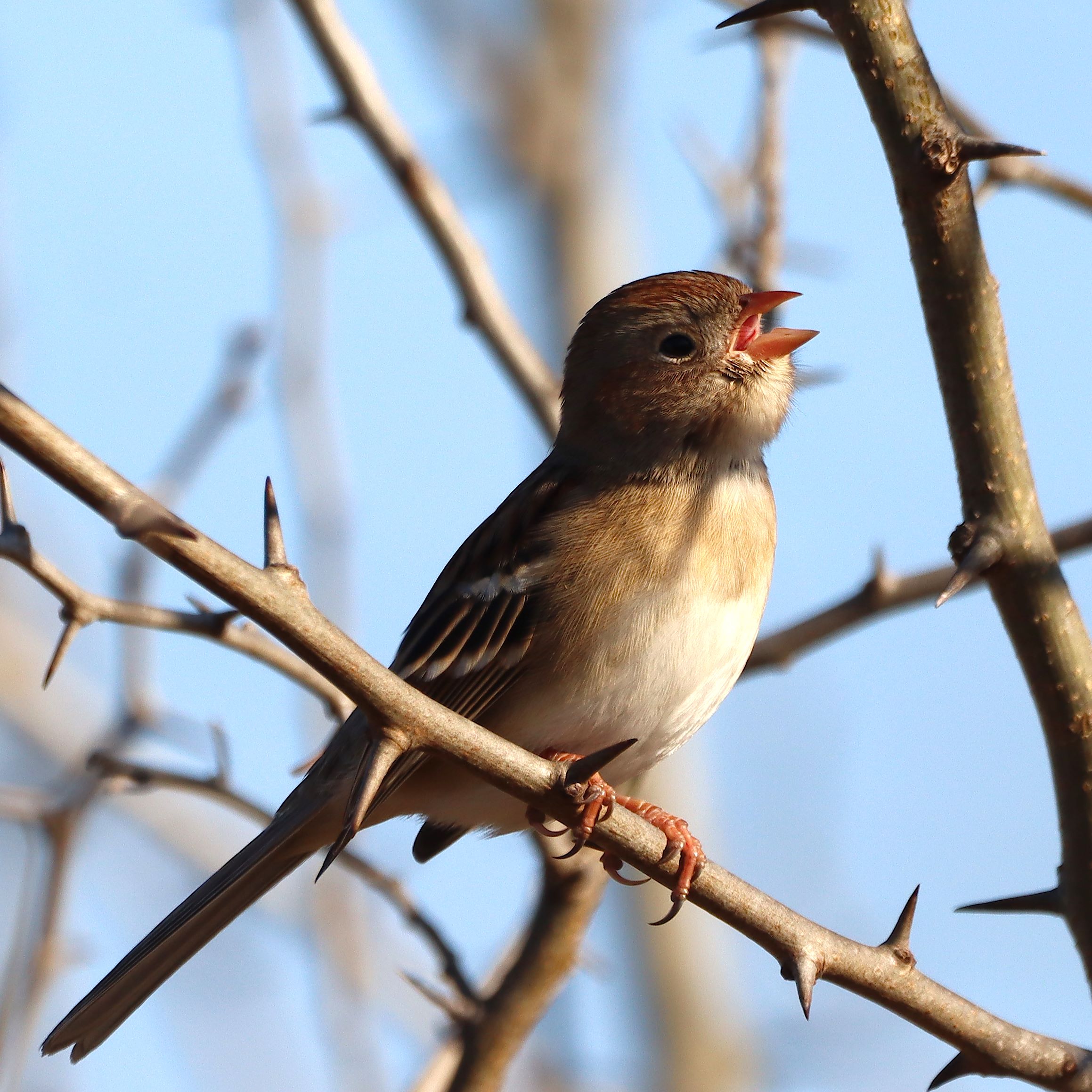
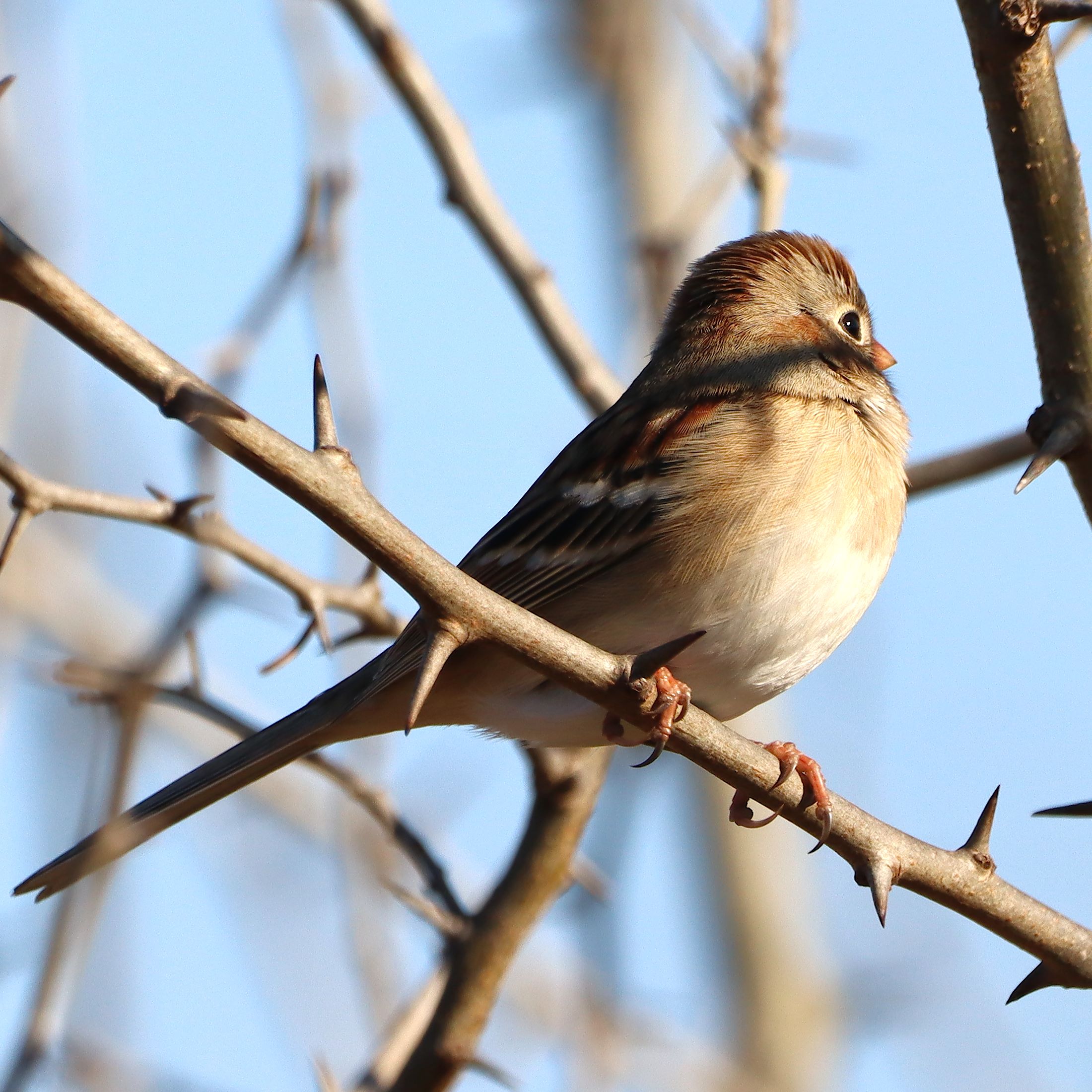
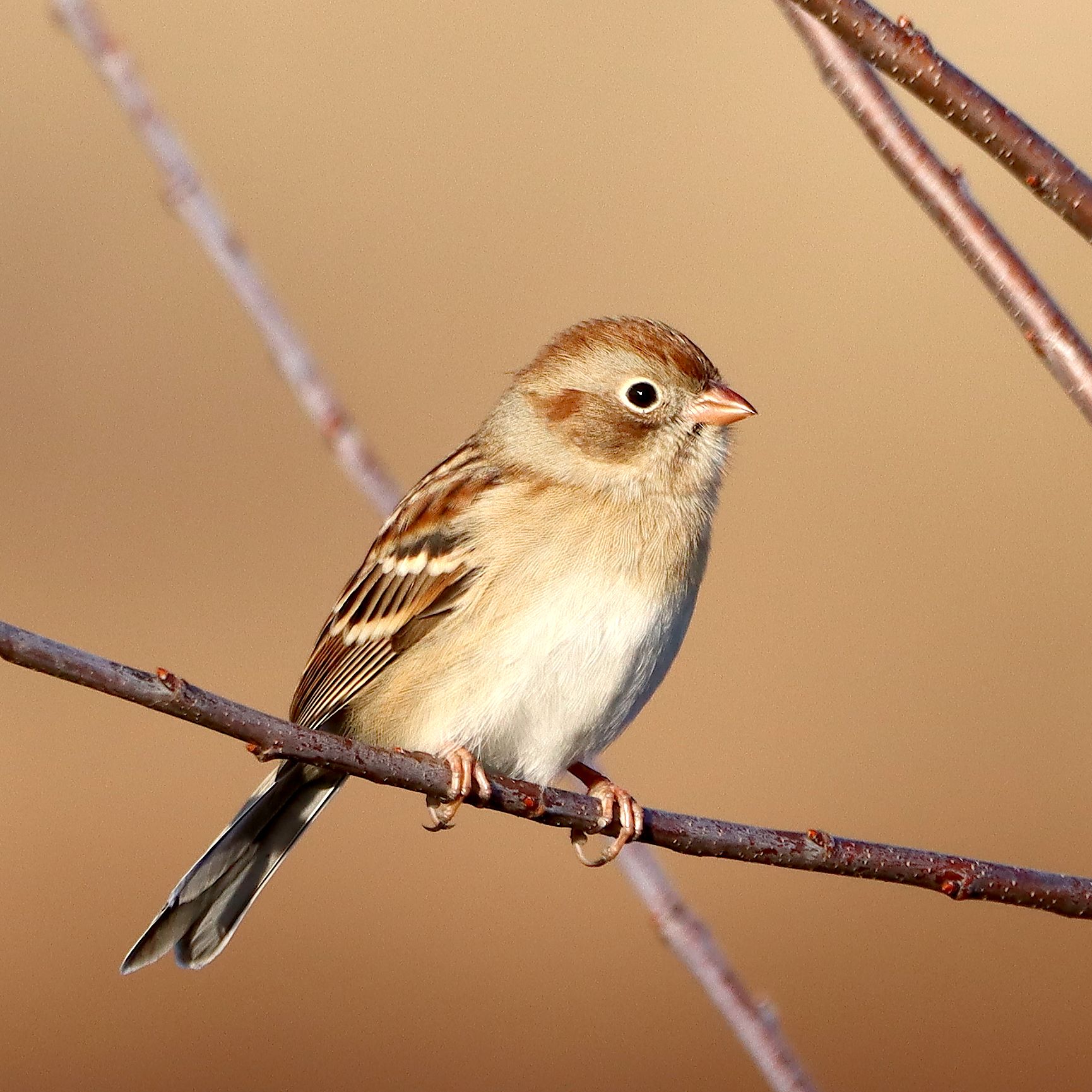
Field Sparrow: I think this is probably the cutest Sparrow species that I see here. It’s soft, muted colors, the “pink” beak and the sweet looking face (with rounded head) all support an endearing appearance, to me. This is a species that is included in the list of “Common Birds in Steep Decline,” for species that are still too numerous or widely distributed to warrant Watch-List status but have been experiencing troubling long-term declines. Though still common, Field Sparrows have declined sharply in the last half-century, partly because of the expansion of suburbs, where Field Sparrows will not nest. Fortunately, our farm-gone-wild property offers very desirable habitat for these little sparrows. They breed here in the summer and bundle up in their down coats during winter.
.
.
.
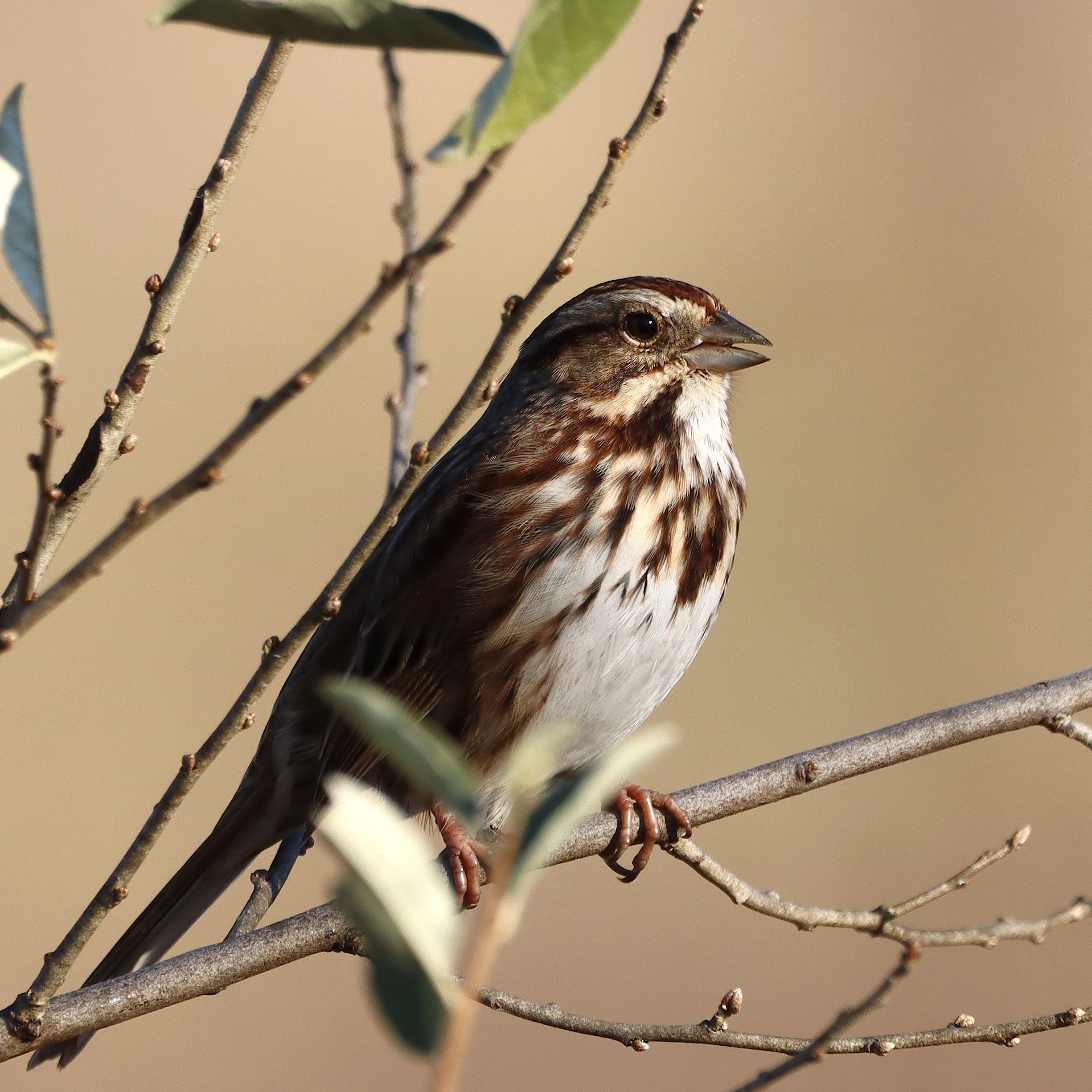
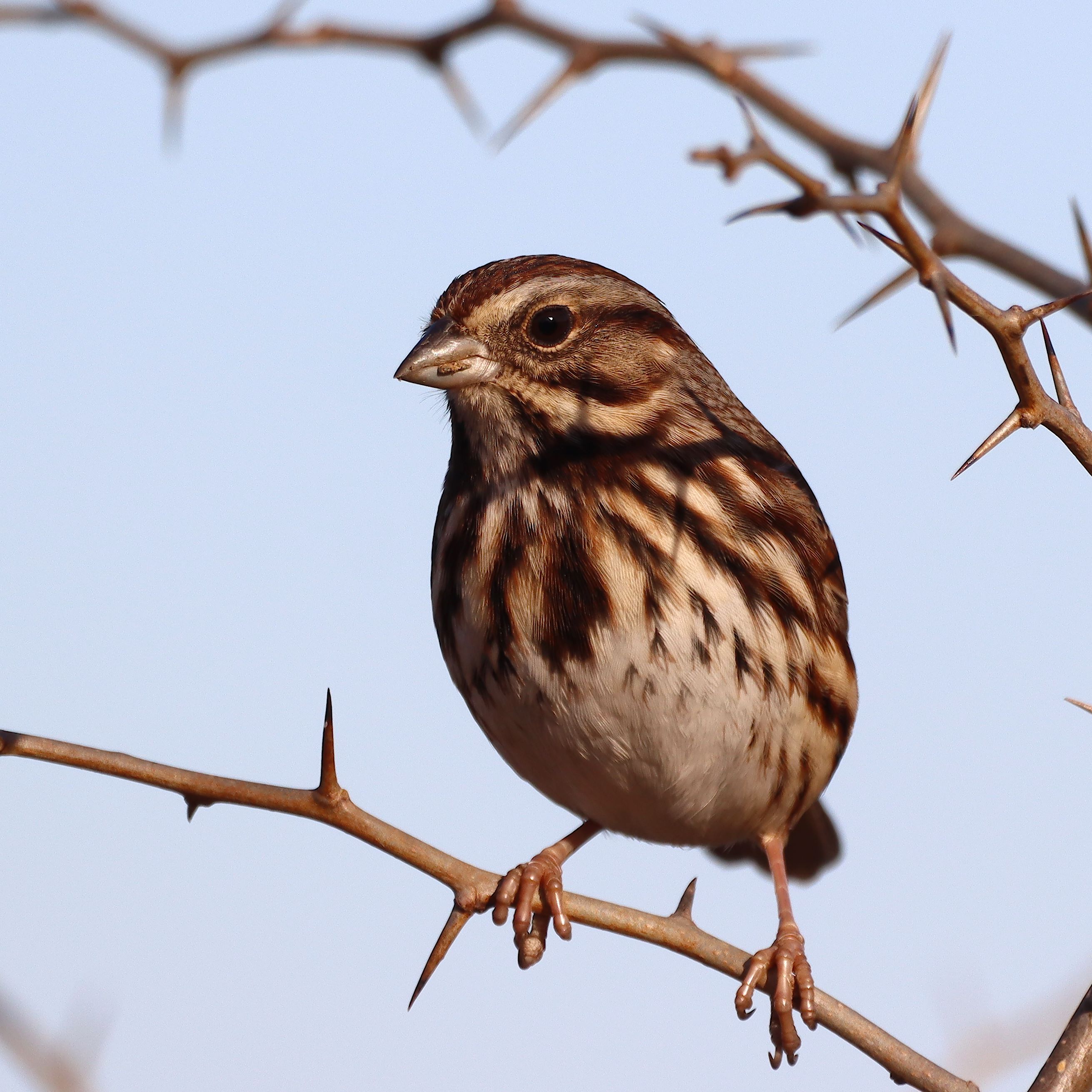
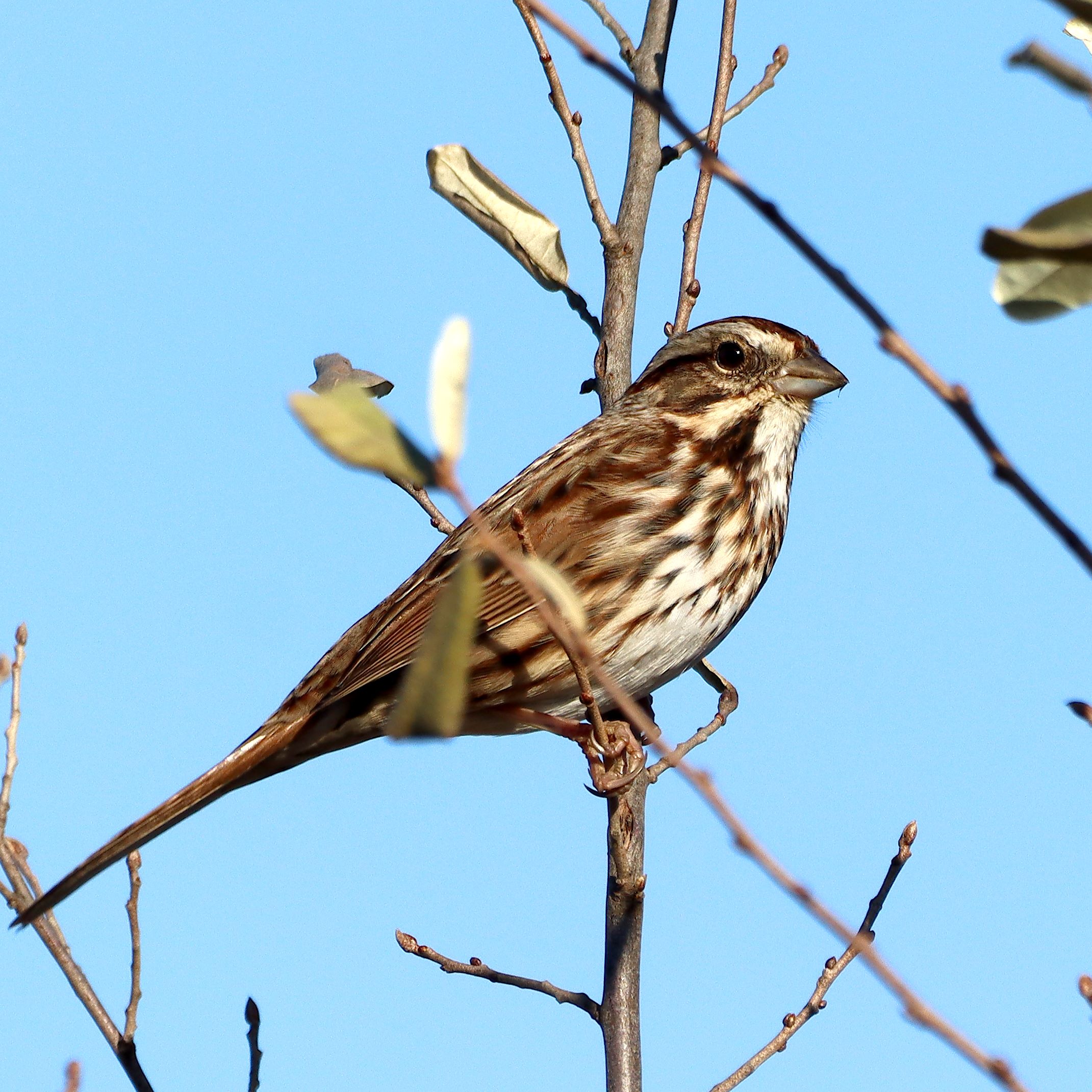
Song Sparrow: This is another species that is a year-round resident. In the guide descriptions, there is usually information about the color variations which exists in this species in various parts of the country. Song Sparrows populate most of North America, breeding in Canada, wintering into Mexico and existing as year-round residents in parts of the continent including my home State of Illinois. I’m fairly certain that I filmed at least three different individuals that are represented in the following photos.
.
.
.
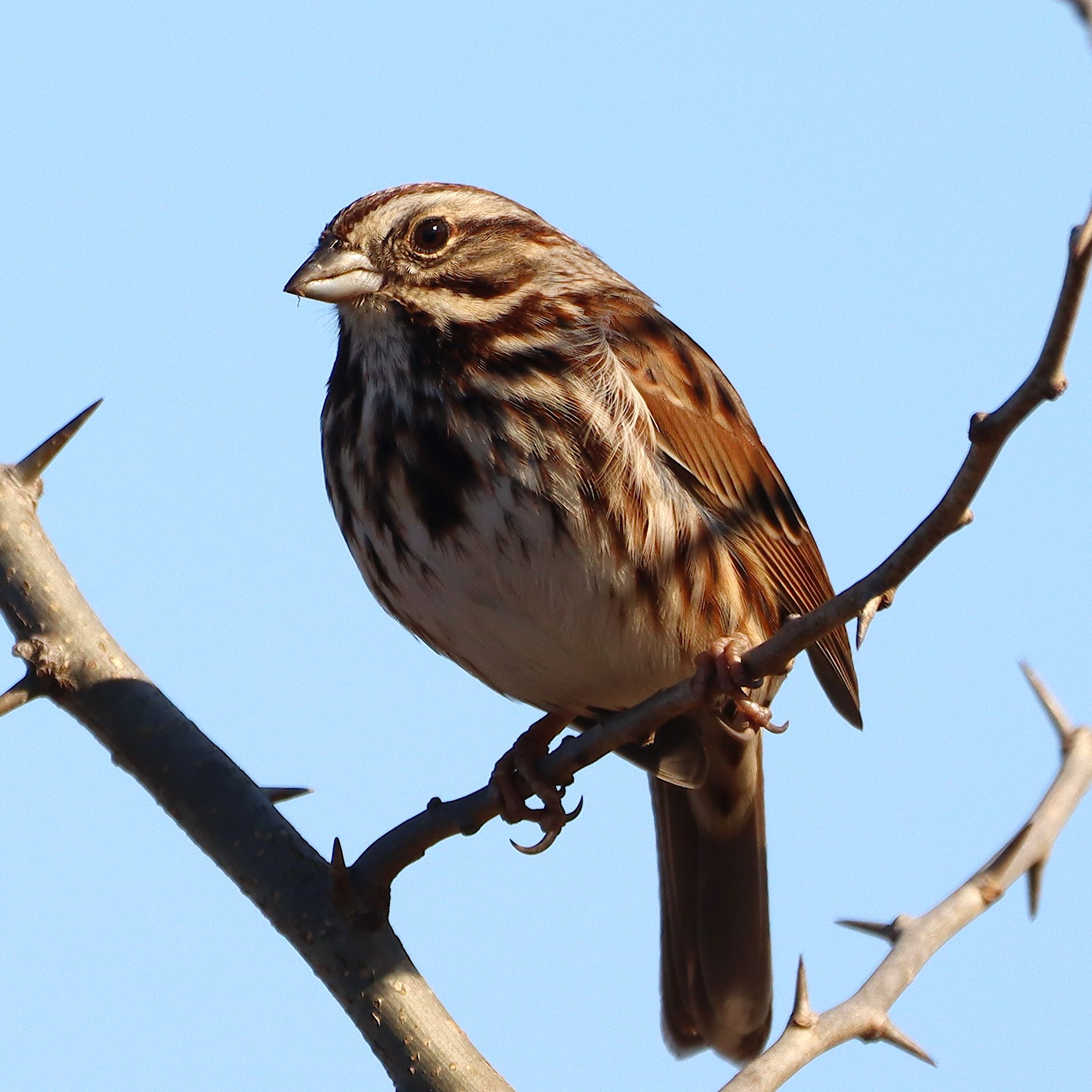
I don’t often hear the Song sparrow singing in winter, but I did catch this individual doing just that (12/7/23.) It’s a softer song than I usually hear during the breeding season.
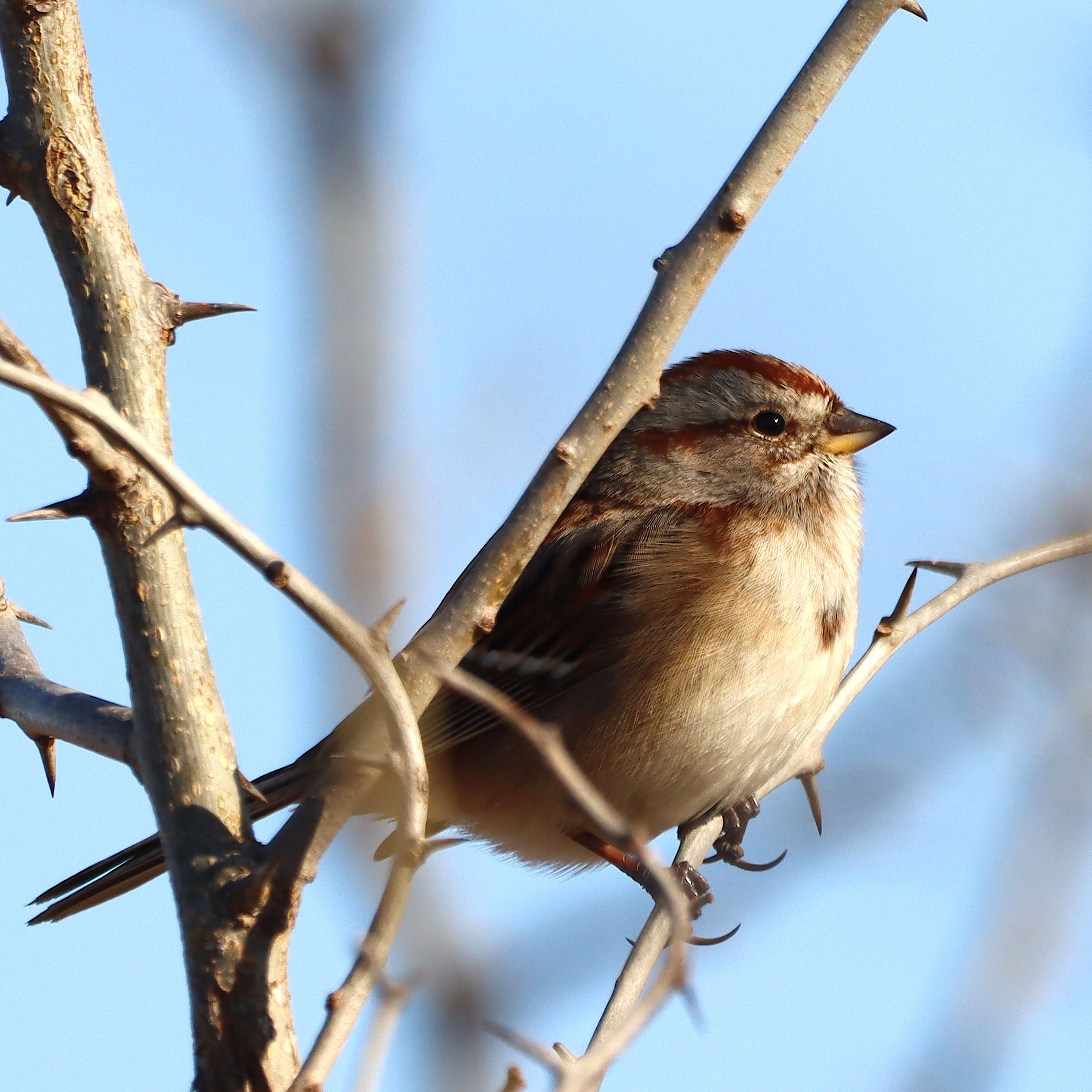
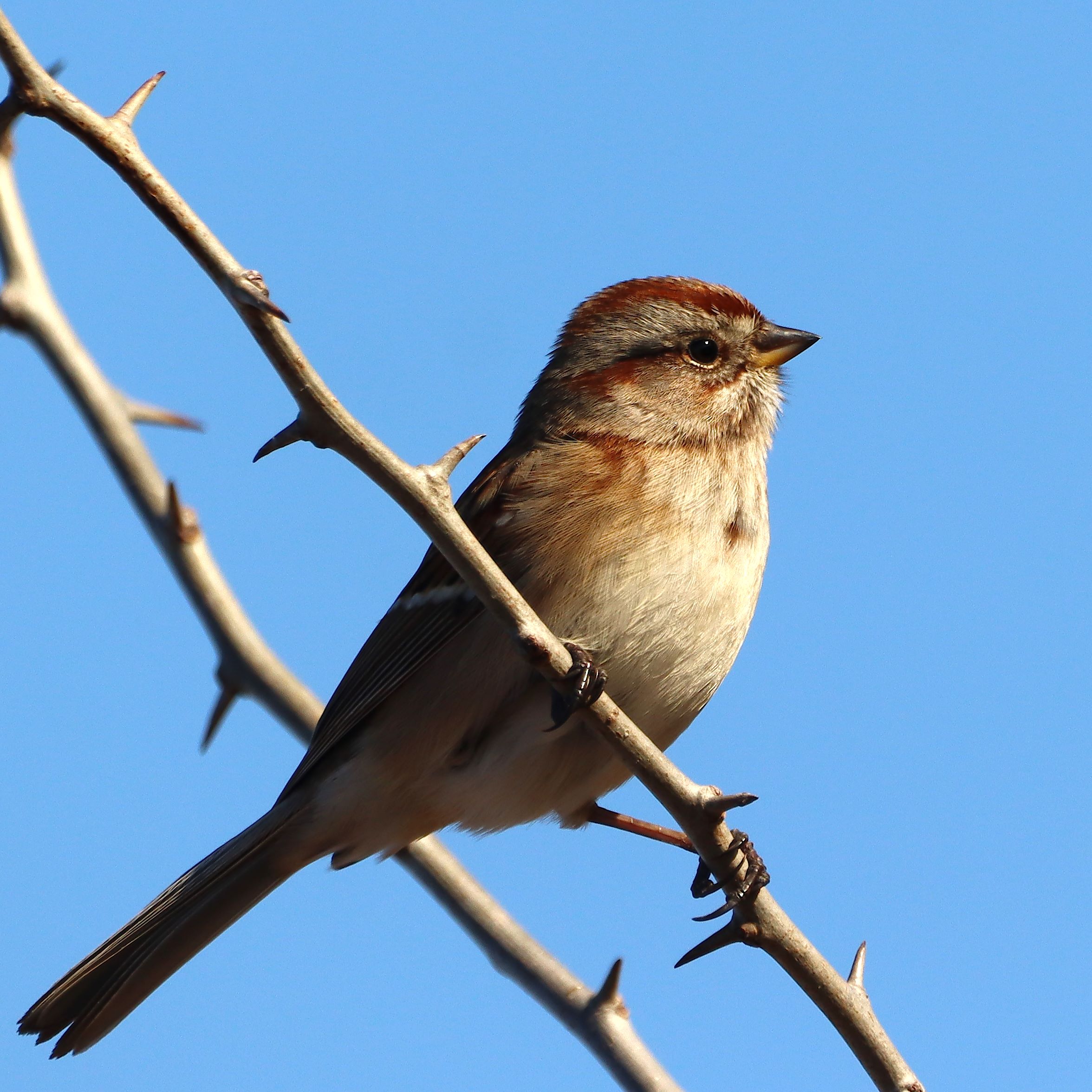
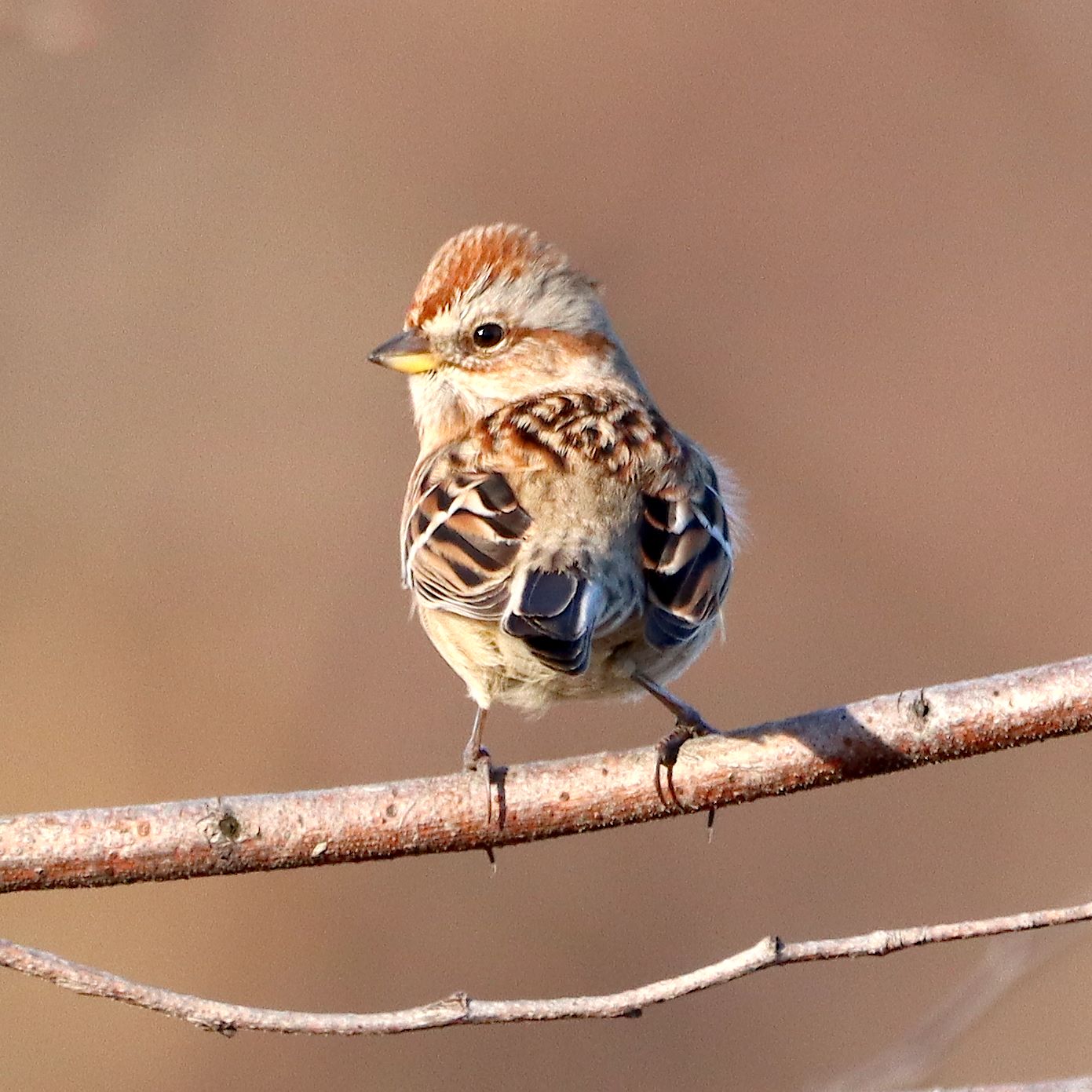
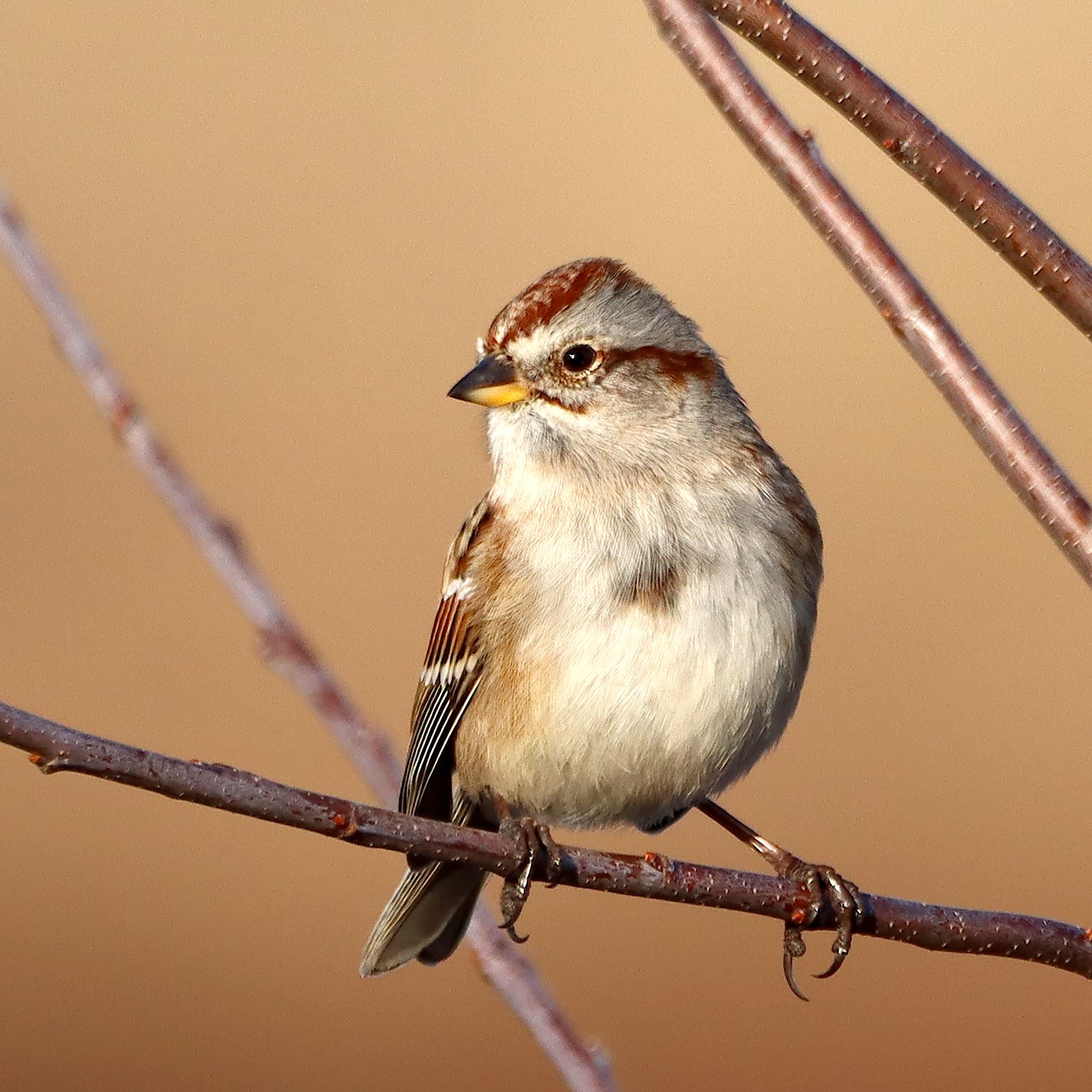
American Tree Sparrow: These little cuties spend the summer in the far northern Tundra, then come south to winter in about the top 2/3 of the United States. Here at our place, they form small flocks (of maybe a dozen birds), mainly foraging for food off the ground. I differentiate them from the Field Sparrows based on the color of their beaks and the distinctive spot on their otherwise clear chest.
.
.
.
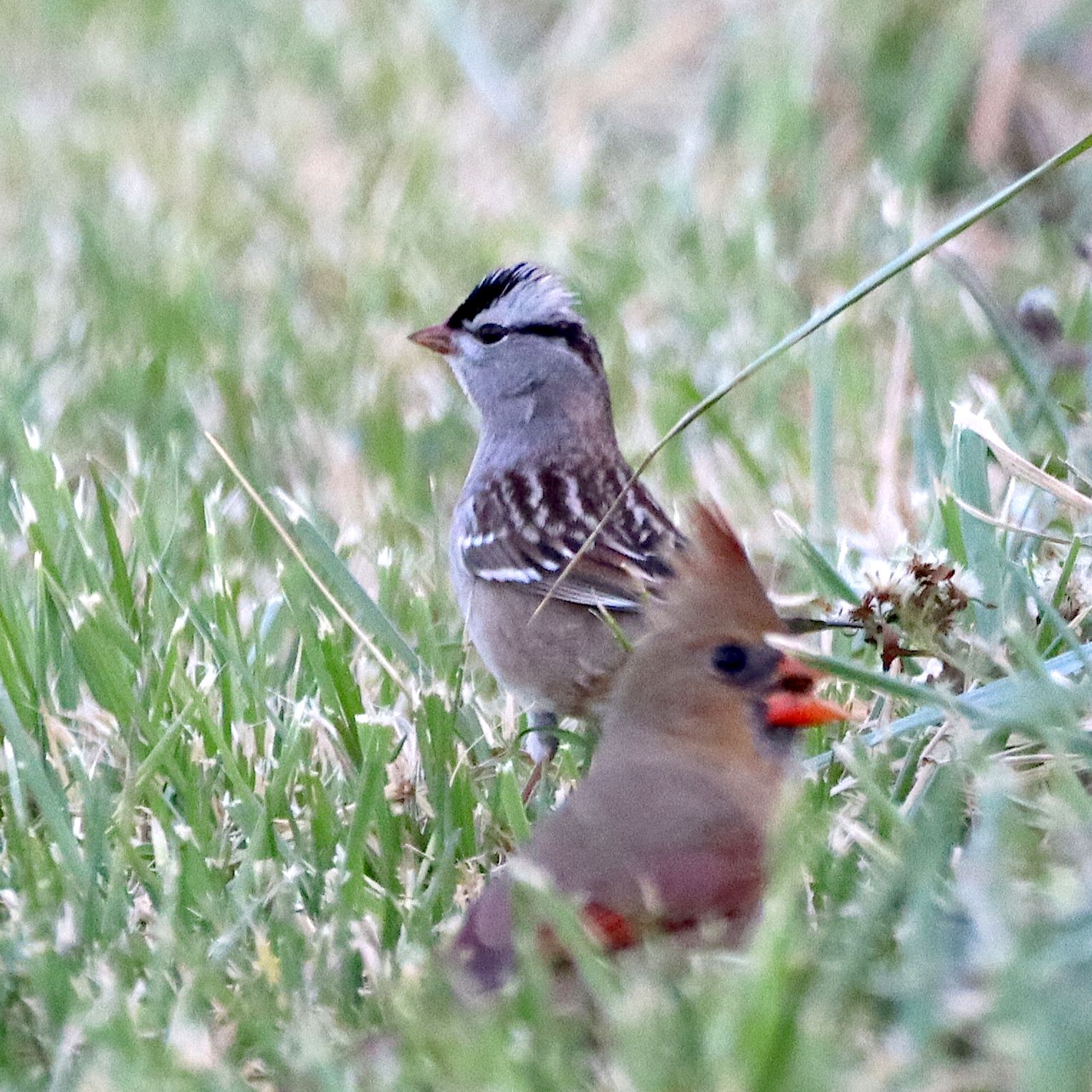
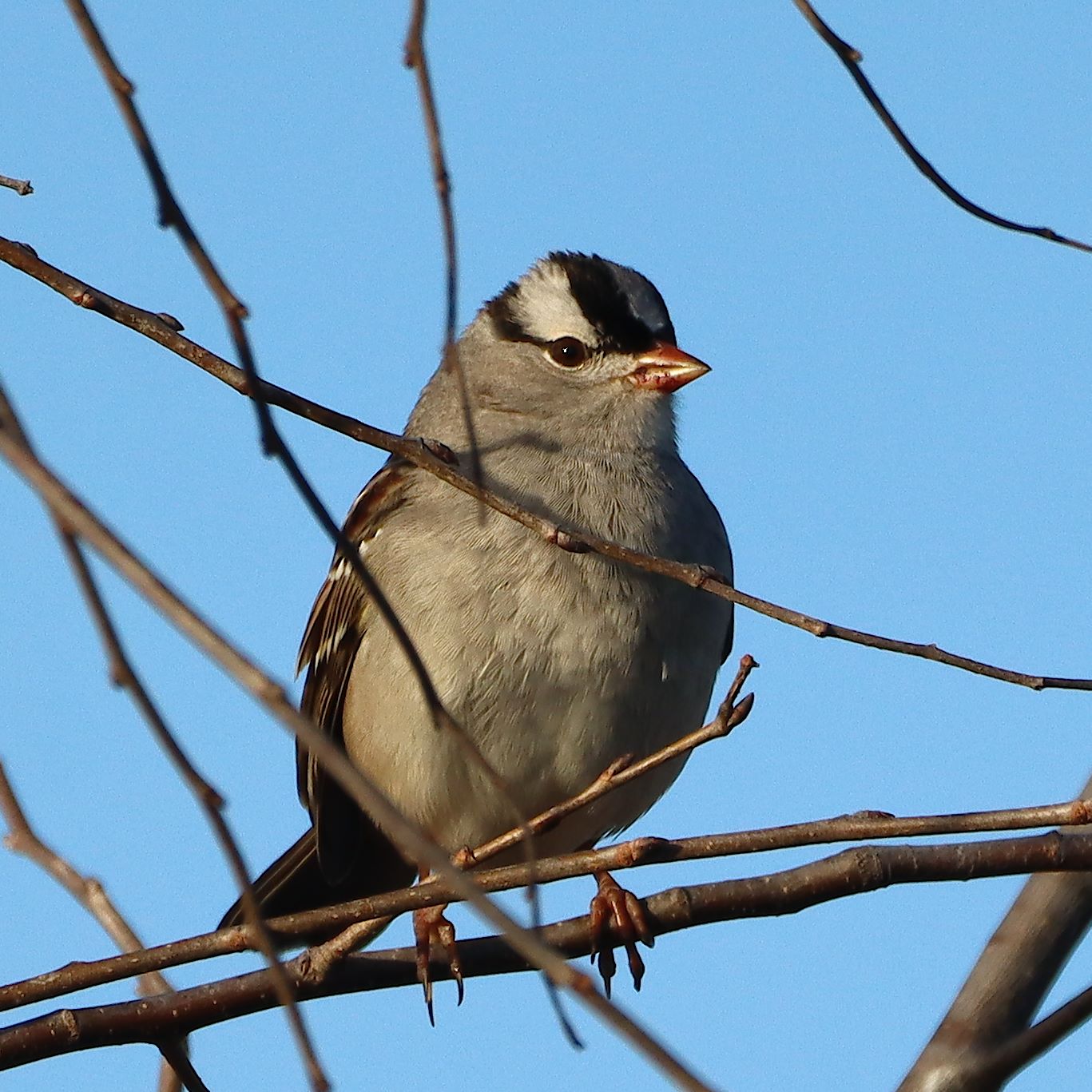
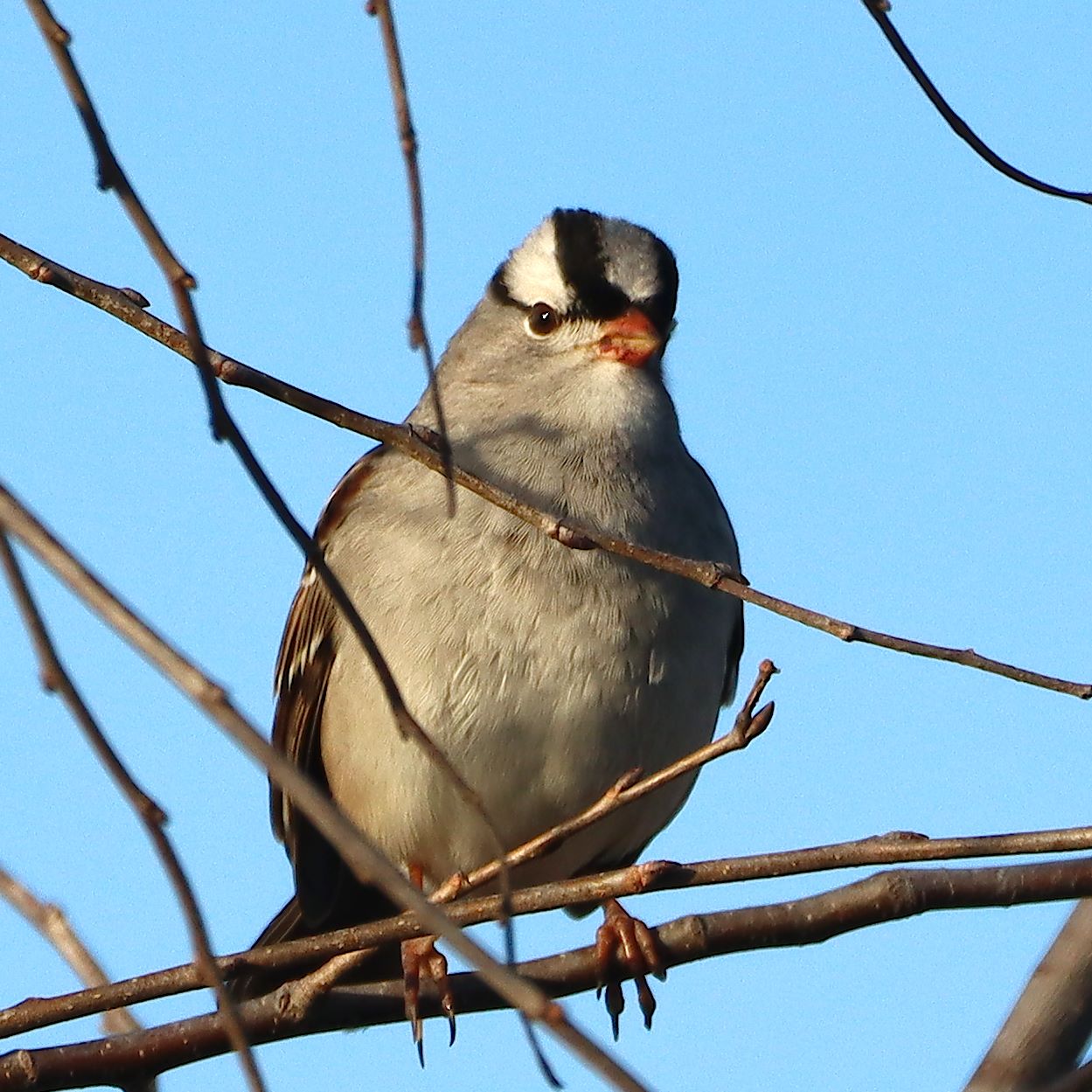
White-crowned Sparrow: This species is sometimes referred to as the bird that dons a bicycle helmet atop its head – based on the black strips that run along the “crown” of it’s white head. We typically have many of these little birds, the juveniles of which can be quite confusing to identify because the have brown, rather than black strips on their heads and can be confused with the American Tree Sparrows. They breed mostly in far northern Canada and Alaska, and spend their winters mostly in the southern 2/3s of the United States. These birds come easily to feeders, which we usually only offer in the very cold of winter. When I was out yesterday, I only spotted two individuals; one in a tree by the pond and another foraging on the ground alongside a pair of Northern Cardinals.
.
.