Tammie Rogers
Inspired by Dogs & Nature
What a Bird Needs
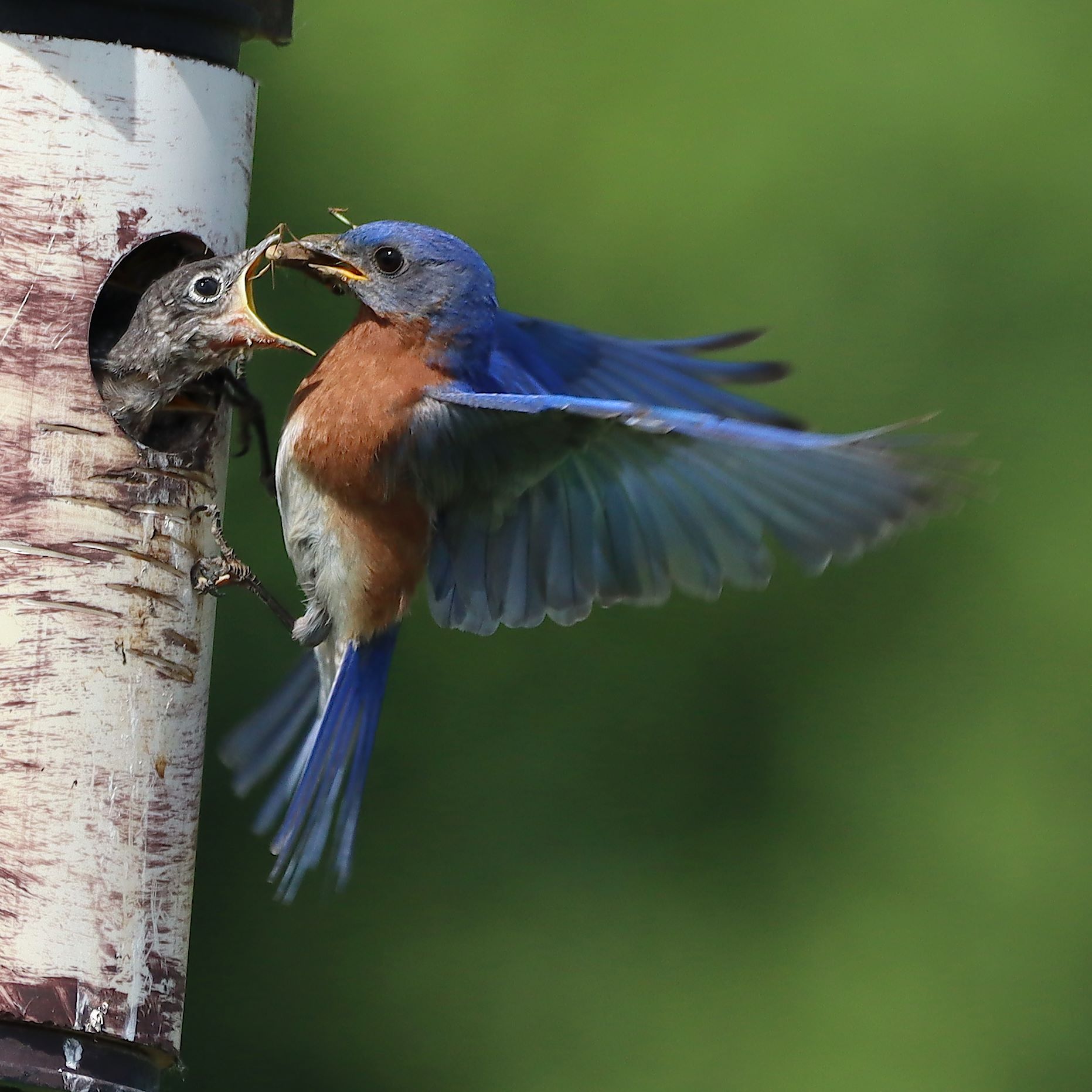
Full Transparency: After experiencing a handful of similar queries and criticisms regarding the size of our FarmGoneWild Bluebird houses, another comment landed in my Etsy Shop inbox from someone simply called Joe. I began drafting a response which was, most likely, far more information that this person expected. He surely wasn’t aware that this was a situation that had become a bit of a trigger for me.
I was ¾ the way done creating my dissertation when I considered that Joe had contacted me via the Etsy message system which limits the numbers of characters allowed per communication. Dang. I really wanted Joe to hear my comprehensive rationale for producing our PVC bird houses.
I thought about simply sending the seriously abbreviated version of my response. However, I felt I might come off a bit glib if I were to merely reply:
“Well, I don’t happen to think that humans know more about what a breeding pair requires than the birds do.”
Tammie Rogers
However, if you are busy or disinterested in this topic, you can probably stop reading now. That simple response sums up my position. Conversely, if you want to know why I developed this opinion, please read on.
One more bit of housework before I continue to the meat of this topic; I do recognize that Joe may be another gender, but for the sake of simplicity, I’m going to assume Joe is a guy and use said pronouns.
Here’s the question that Joe posted to my Etsy messages, in its entirety:
“from what i read a blue bird house must be 4″x4″ inside??? pvc only comes 3.5 and 5.5..”
Joe
It’s not exactly a question, albeit it contains three question marks. Still, I believe I can read between the lines. Joe wants to know why we chose to create a Bluebird house that doesn’t meet the standards that he may have seen posted on the internet regarding the appropriate size for an Eastern Bluebird nest box.
Before I go on, I would like to respond to the size specifications that Joe sites in his note. The Sch40 cellular core 4” PVC we use for our bird houses has an “Actual Interior Diameter” of 4.026 inches based on the data posted at the vendor website. We also produce, but have not yet posted for sale at Etsy, a 6 inch diameter box which has an “Actual Interior Diameter” of 6.065 inches. Still it should be noted that, as a cylinder shaped nest “box”, our PVC bird houses do not have the same interior floor space as a 4 x 4 inch square box.
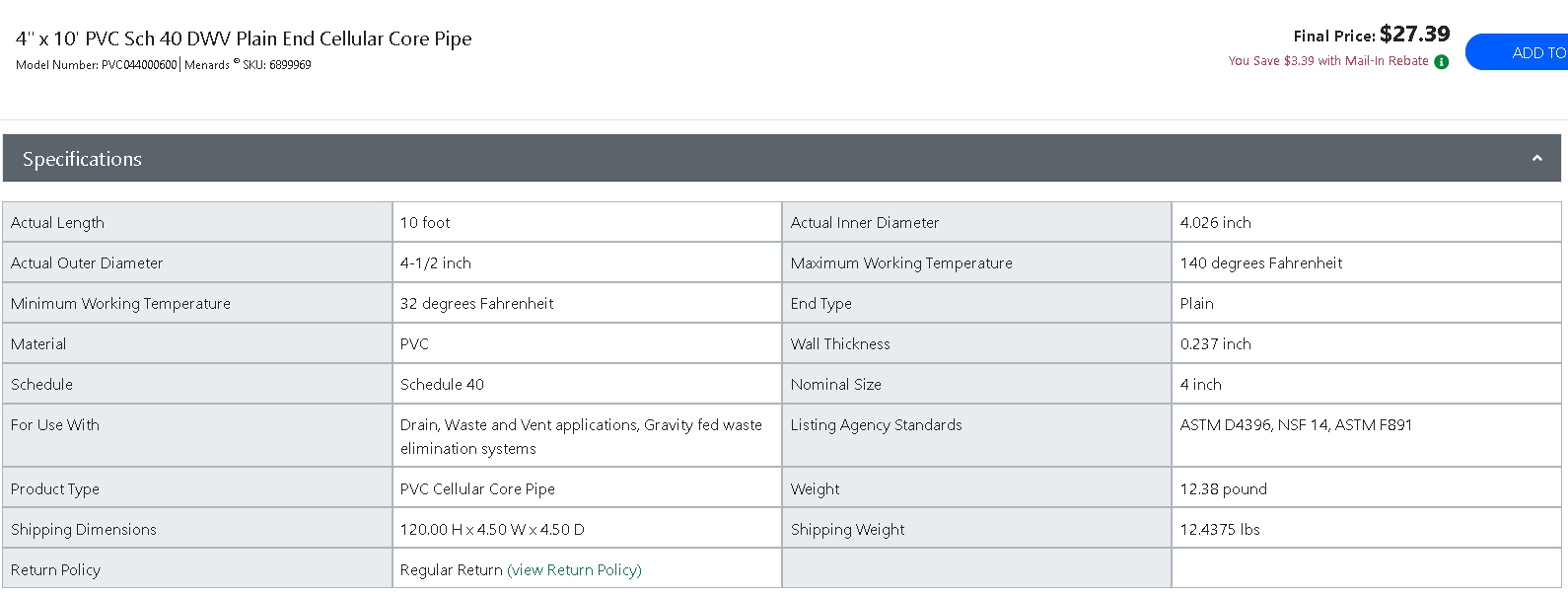

As a professional biologist/ scientist who worked in Academia and more so Corporate America for 20 years, I fully understand utilizing data to make decisions about how to address the average / normal population of a study. I presume that the recommended 4 x 4 inch bird house dimensions, about which Joe refers, are a result of field studies rather than just somebody’s thoughts on the subject. Perhaps the references were sited on the pages where Joe saw the information about bird house dimensions.
I also assume (merely out of common sense and logic) that the square shape specified at the site(s) that Joe mentions, doesn’t represent the shape of natural cavities which Bluebirds use when they do not select a man-made option. I speculate that the square design was a “modification” of the natural cavity dimensions that were taken in field studies, so that humans could use lumber to fabricate the artificial nest boxes.
As someone who spends time in nature observing the flora and fauna that surrounds me, I am quite certain that what may be posted as a recommended bird house size, can’t fully represent the nest site selections made by the entire population of a species, or even a large section of that population. To retain the tranquillity of my hobby, I don’t routinely focus on specifics or “collect data” about the birds I observe at our farm. However, in 1982 I spent seven months conducting a scientific field study in Monte Verde, Costa Rica studying the nest site displacement of Hoffman’s Woodpeckers by Emerald Toucanets. That was a long time ago. Still, I recall noting a variety across the nest heights, tree species selections and entry hole locations of the Woodpeckers in my study area. It was a little study as part of a college program, but it told me that birds can’t be overly picky about the locations they select to raise their young.
Before Bluebirds were offered nest boxes made by humans, they relied on whatever and wherever an exempt woodpecker hole (or similar cavity) might be. Nature doesn’t typically offer perfect locations for reproduction. Variation within a species helps the population survive constantly changing conditions in the environment. That’s why you may have read that the direction an entry hole faces may be less important to Bluebirds than other factors like variables which affect the safety of the parent birds or their chicks.
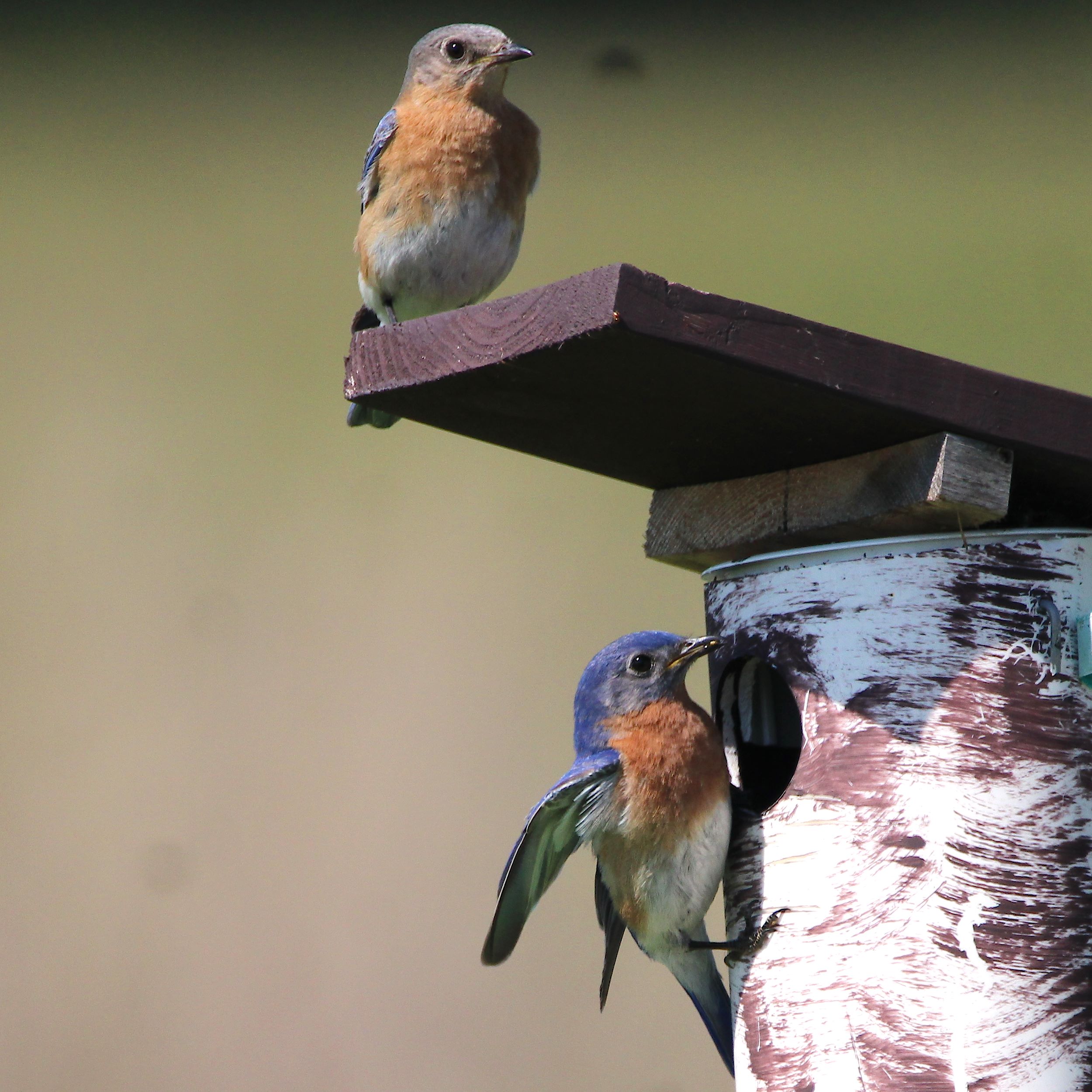
The photos I am sharing in this post were taken in the past few years and include the prototype 4 inch PVC boxes I designed which became the springboard for the bird houses we create and sell at our Etsy shop.
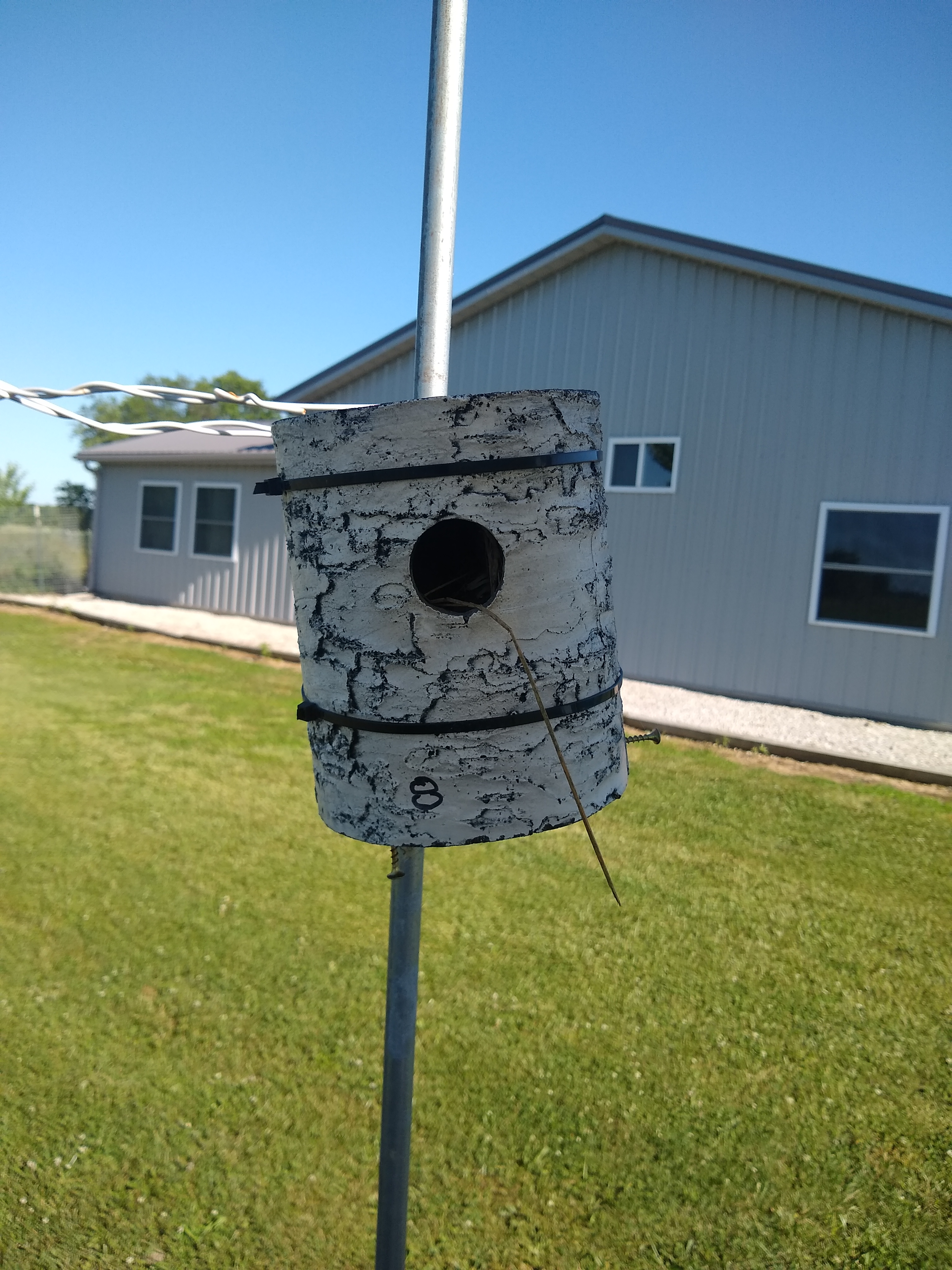
For the past several years, on our 50 rural acres in south-central Illinois, my husband and I have offered the wild birds a variety of nesting box options. In the beginning, when we first moved into our new house, we purchased a couple of inexpensive bird houses from our local farm store. One, a cylindrical shaped option, didn’t come close to the recommendations found at bird specific websites. It was not made of wood, but rather was fabricated from some sort of hardened foam. It was shallow in depth compared to the minimum recommendation of 6” hole-to-floor length. It had no method of opening for observation throughout the breeding season. It even lacked any sort of ventilation other than the entry hole. The very first Bluebird couple that assumed residency at our new house chose that “out of recommendations,” cylindrical farm store model. Then, they used it again to fledge a second brood. In the same general area we had hung several other more traditional wooden models. Over the next few years, Bluebirds routinely chose the cylindrical Farm-store model as well as the square wooden boxes.
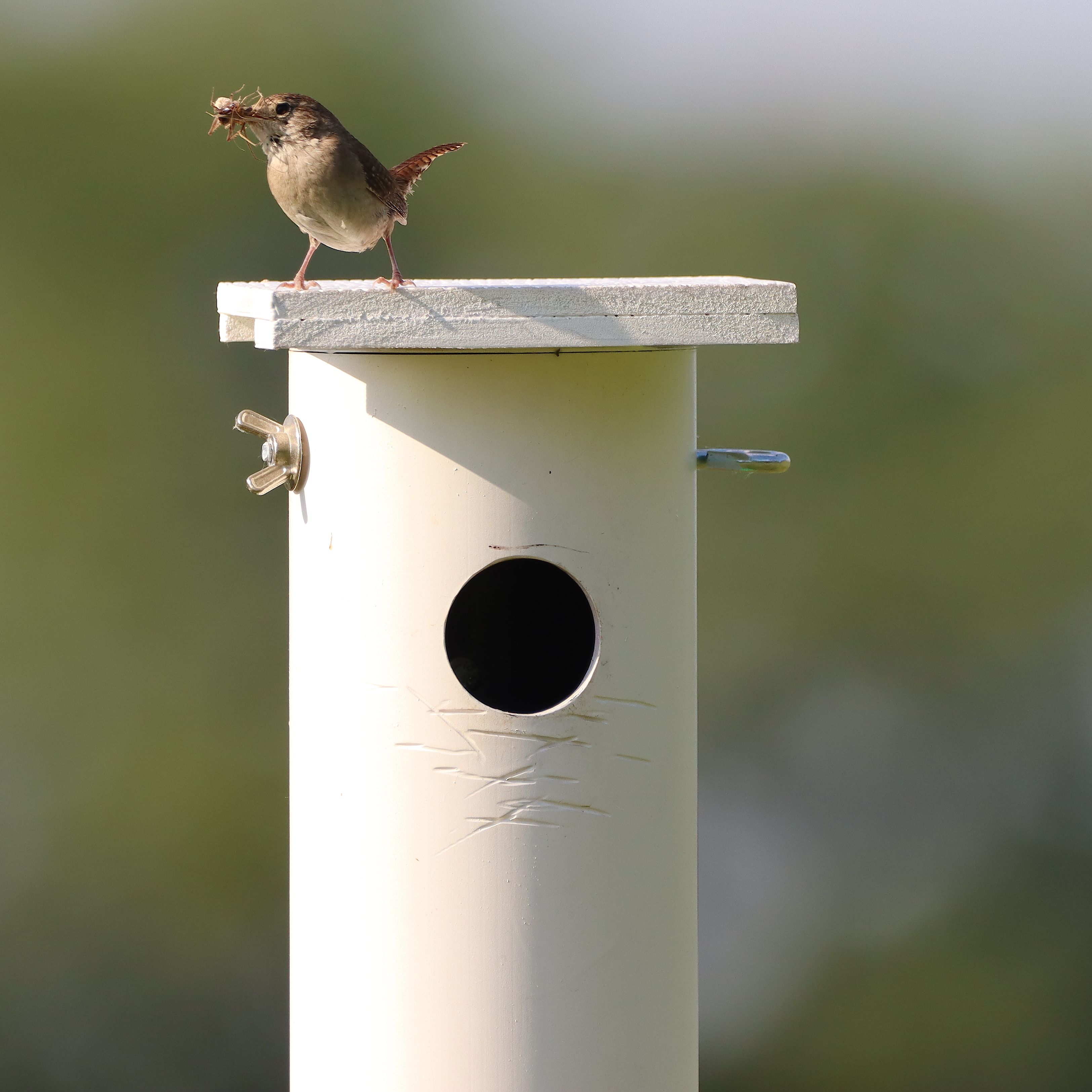
Here’s a photo of one of the cylindrical Farm-store bird houses. House Wrens also seemed to covet this design which is the species that used the box when we put it close to the house.
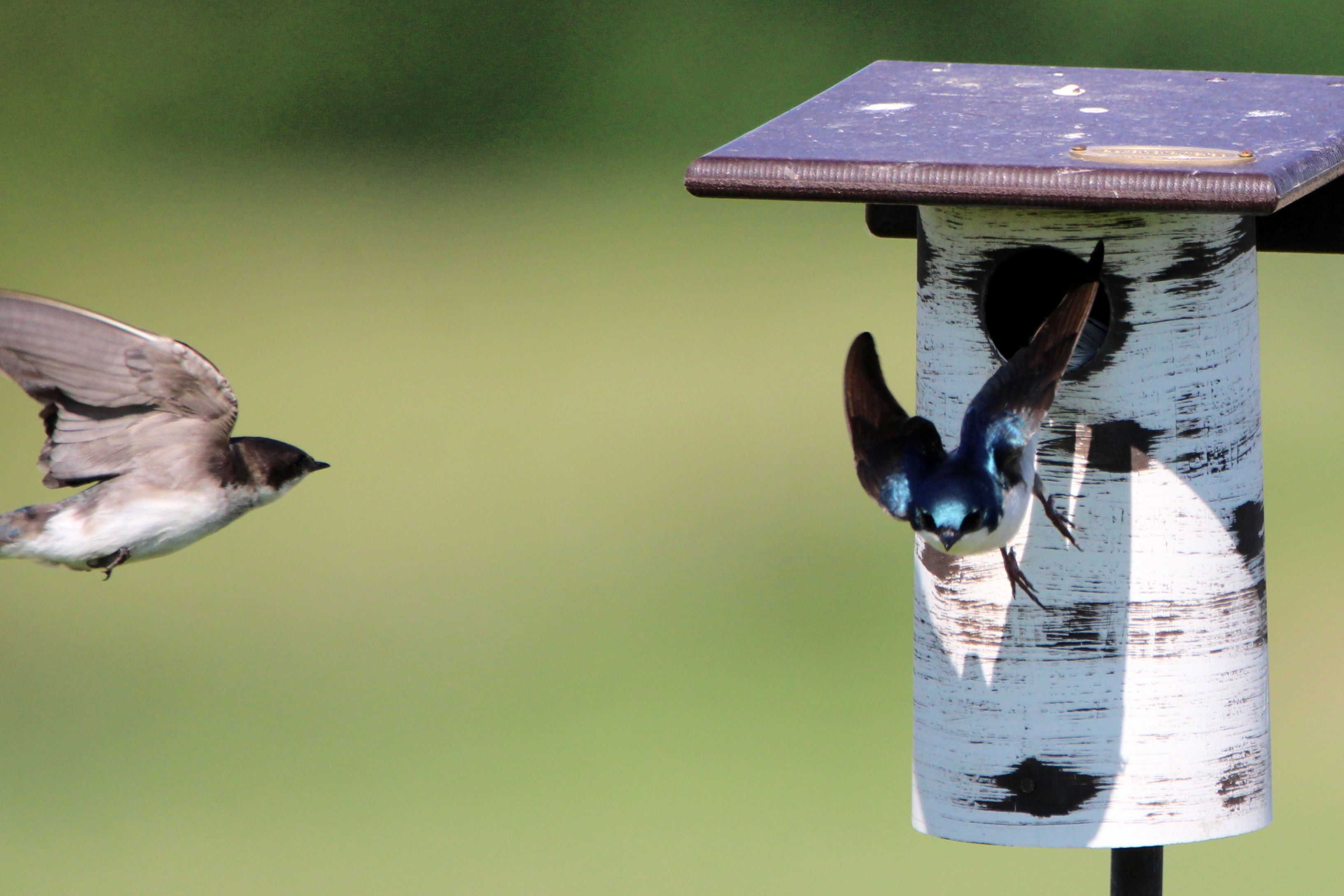
As my passion to offer nest sites for our local birds grew, I did more research. The information nudged me to purchase more expensive “appropriate” nest boxes. I also acquired a Gilbertson, PVC box. By that time, we had nearly 30 nest boxes spread around our property. As an amateur photographer, I spent several hours every week observing and filming the native birds. Of course, the species that used nest boxes became favorite subjects because they were easy to locate! My basic knowledge of Bluebirds grew as I spent more and more time filming them.
Here is a Tree Swallow using the Gilbertson model.
By the third year of this hobby / responsibility, I found that we had to replace many of the original (as in only two or three year old) wooden, “appropriately sized” boxes. Hinges were failing. Wood was cracking. Doors were falling open exposing the nest, eggs and chicks. Still, the Gilbertson PVC box, which Bluebirds and Tree Swallows used routinely to successfully fledge their broods, was in near new condition.
I considered purchasing additional Gilbertson boxes, however they were expensive and the design made it challenging for me to open due to a medical condition that affects my hands. I also wondered if the thin walls provided sufficient insulation from both cold and hot conditions which exist in our area as the season progresses. Mostly, I did not appreciate that the top of the Gilbertson house was permanently secured to the pole.
I decided to make my own, solid wall PVC houses with better ventilation, strong walls for insulation, tops that attached to the box (rather than the pole) that are secure but also easy to open for observation, and that could be attached and removed from the pole in seconds. I wasn’t surprised (well, maybe a little) that within just a couple days of mounting the first few PVC boxes, the birds moved in. Bluebirds and Tree Swallows immediately began building nests and then successfully fledged their broods in the first few PVC boxes we offered. Then, they used the same or a different PVC box for their second (and sometimes third) broods.
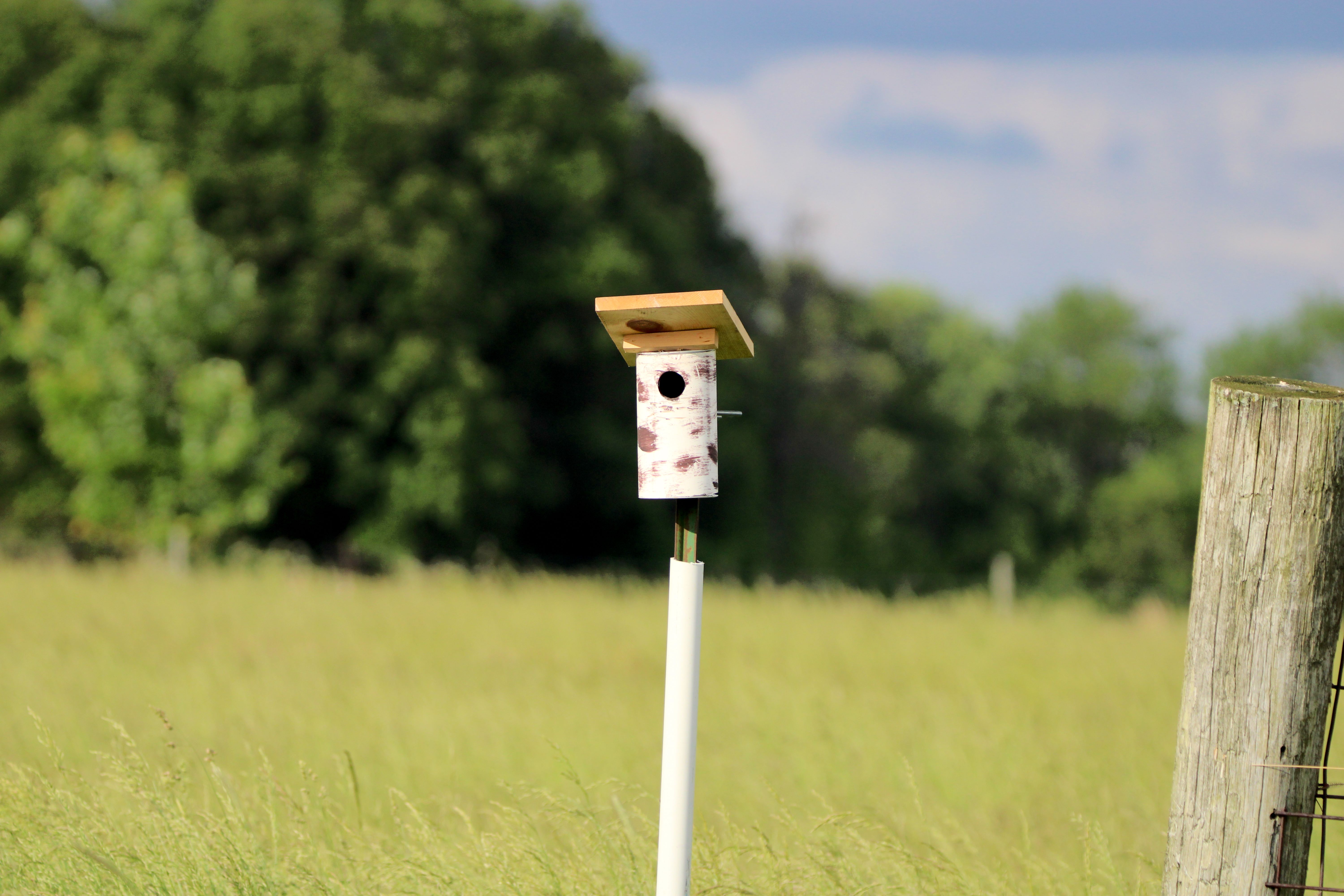
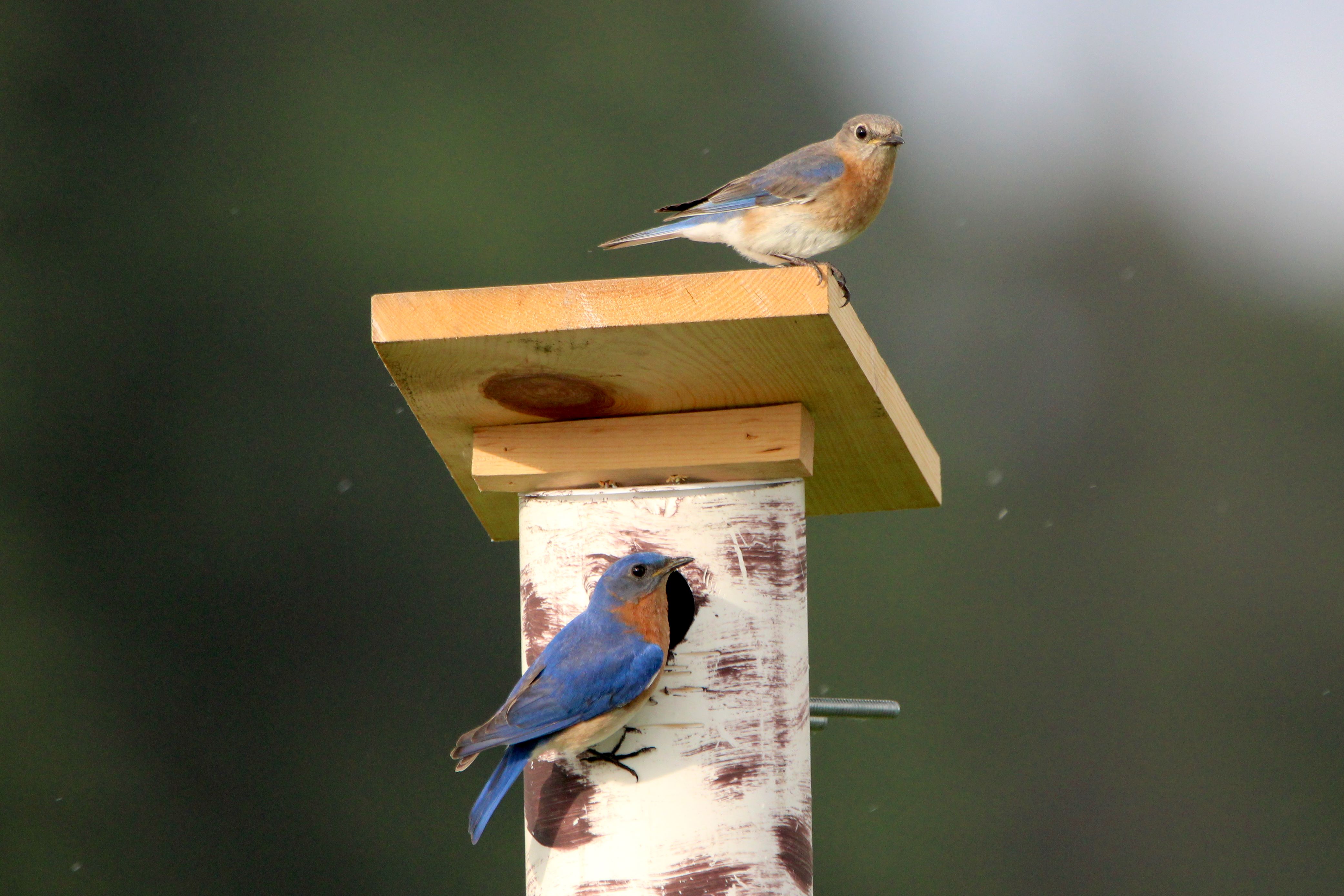
When I posted photos to a couple of social media bird groups of Bluebirds feeding their chicks in our PVC boxes, I did receive comments very similar to Joe’s. They were direct proclamations that 4 inch diameter PVC doesn’t offer the right dimensions for Bluebirds. The Bluebird nest box “gods” had spoken. My data said otherwise.
Next photo: a Tree Swallow using our prototype PVC boxes – removing a poop sack from the chicks which fledged not long after those photos were taken.
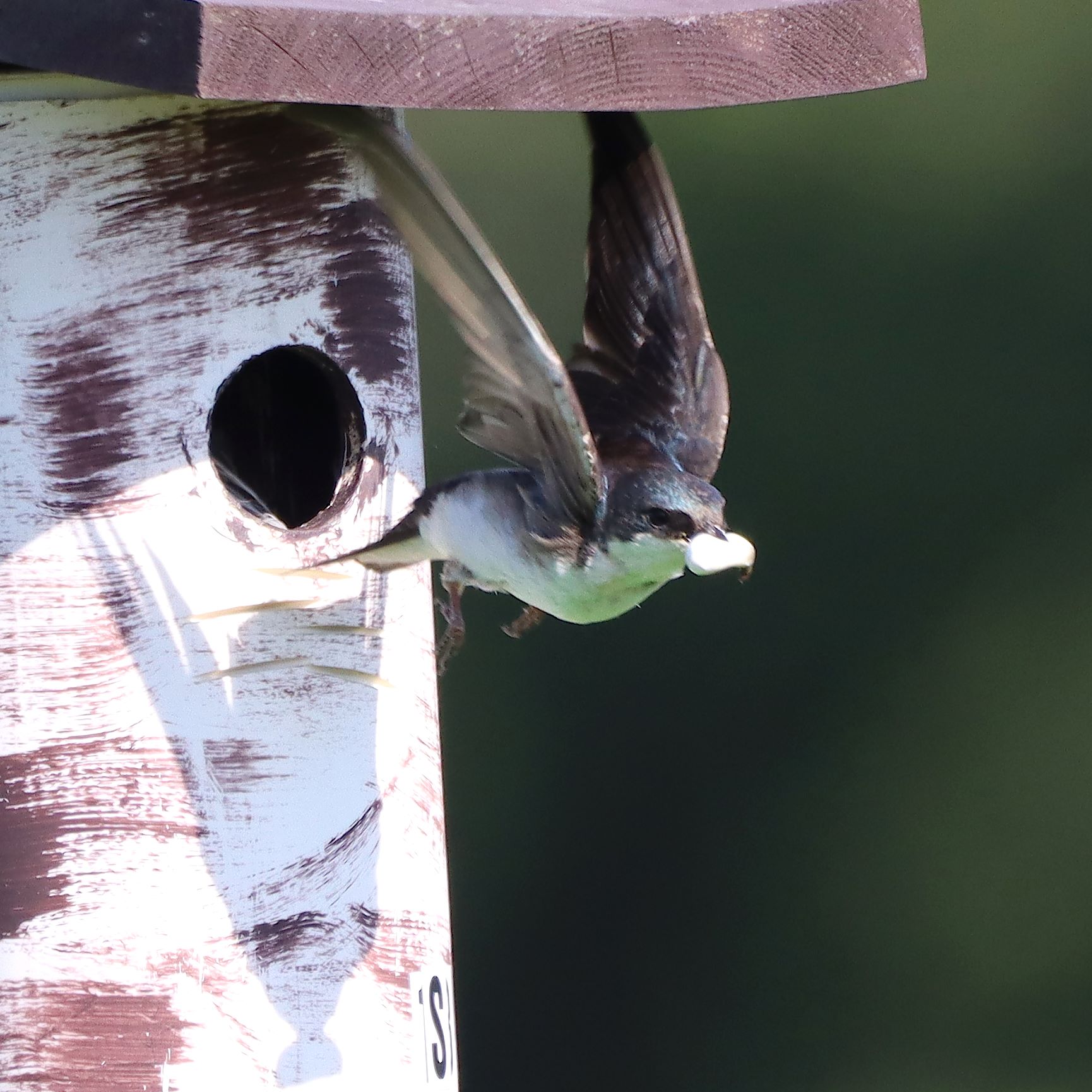
I’m not a Bluebird. I’m not a Tree Swallow. I’m not a House Wren. At least at our property, all those species tend to prefer our PVC models to the “appropriately sized,” square, wooden models that are described on birder sites as the optimal nest box for those species. In my opinion, any human that believes s/he is better at choosing an appropriate nest site than the birds themselves, needs to take a moment and contemplate that position.
I speculate that anyone who has ever directly observed a Bluebird couple from nest site selection to fledging can comprehend how important the selection of the nest site is to those birds. Watching a couple in that early stage is a remarkable adventure. I interpret what I’ve observed like this; the birds spend time in and on and near their perspective nesting site for a few days to accrue information about the benefits and consequences of their choice. Concurrently, they may also be doing the same with one or more other housing options. Sometimes, I am sure they will choose a specific bird house because of how often I see them visiting the location and doing what I call “practice” sessions. Then, the activity drops to nothing and I know they have moved onto another option. Sometimes, they have even begun building a nest in the house and still abort the option. I have thought that, before they select a house, they wait for days when the winds are strong, or come from directions other than the most prevailing direction. Perhaps, they are evaluating whether they will be able to get food to the chicks when it may become difficult to reach the house.
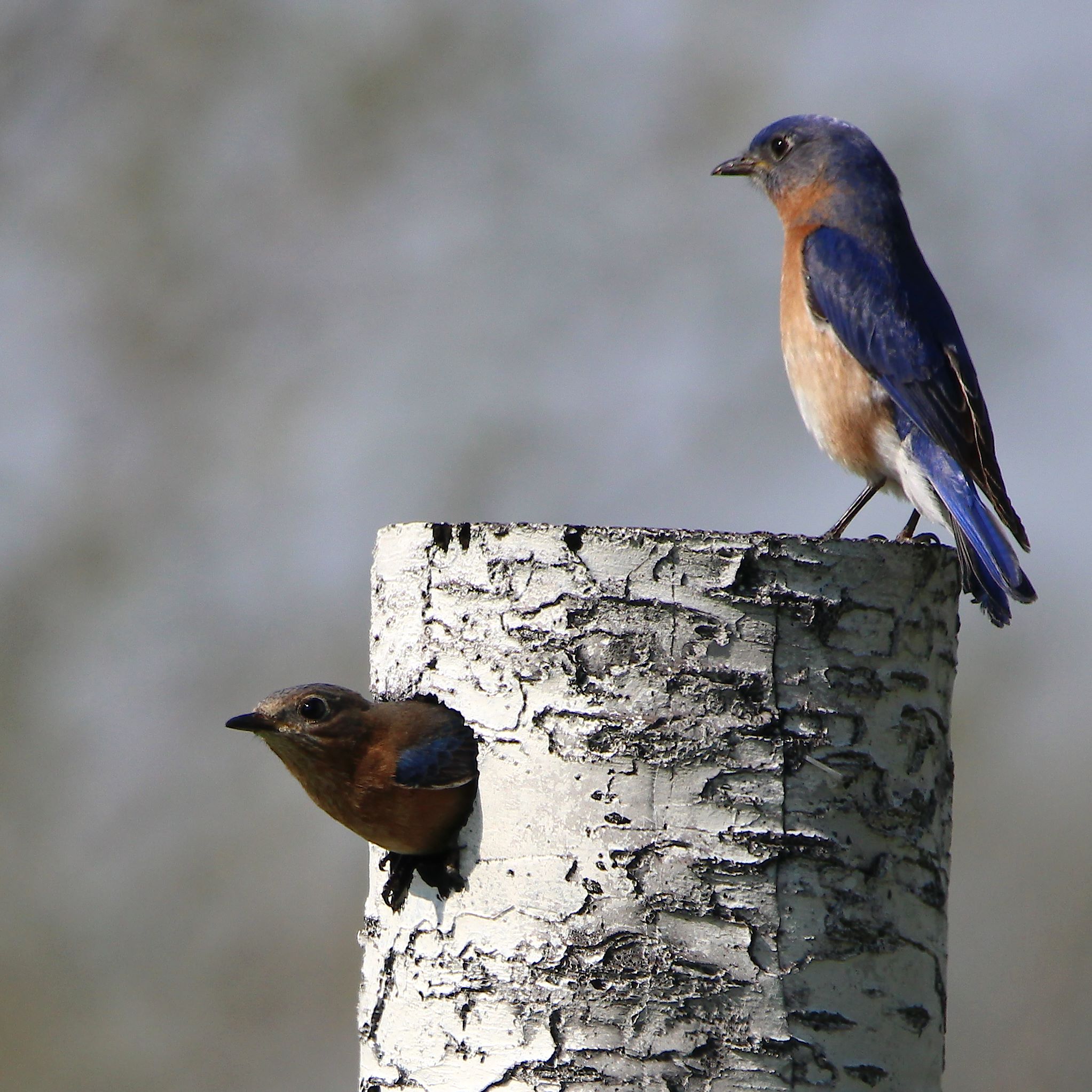
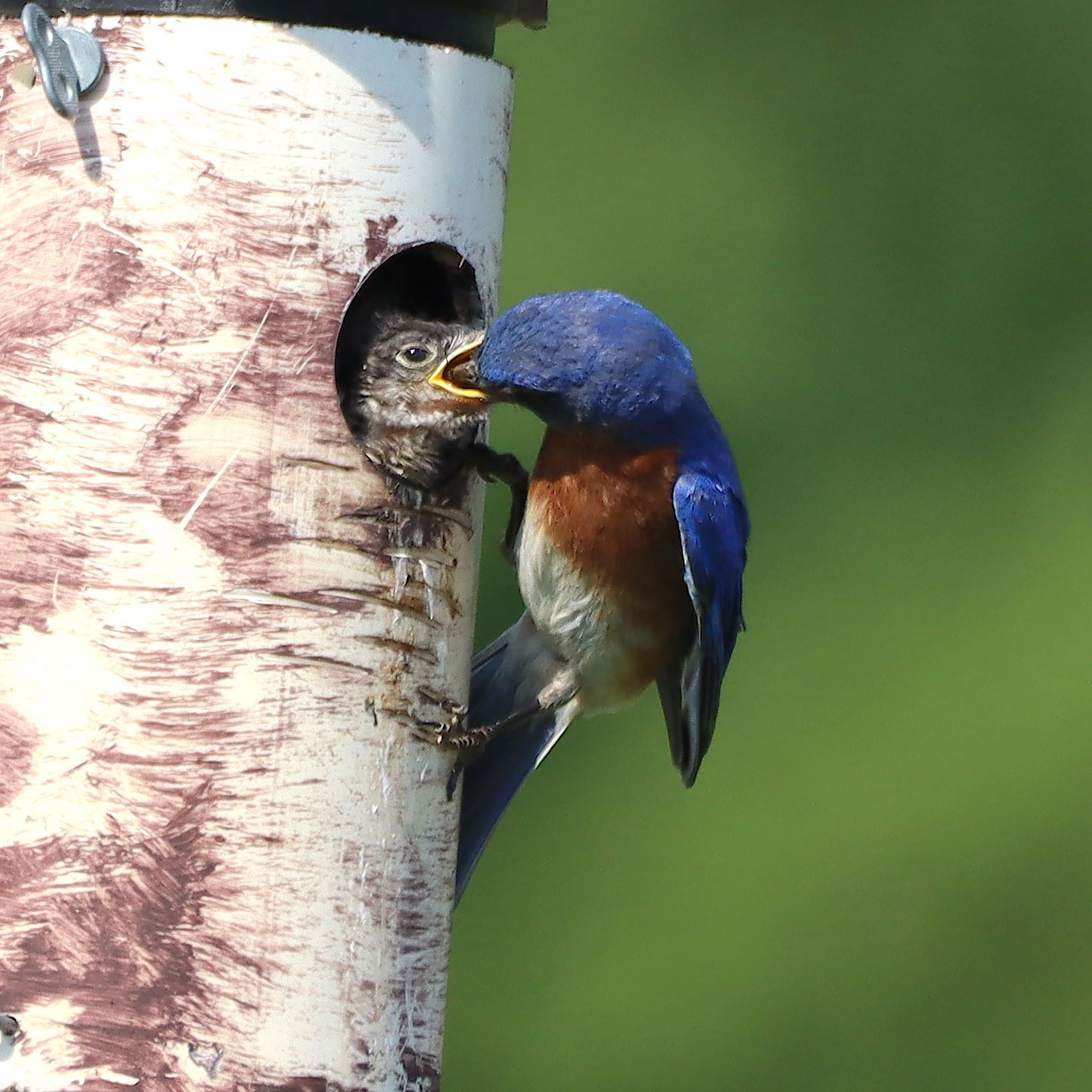
This next pair shown spent several days visiting this PVC house that sits where I can observe it out my office window. I was thrill that they might move in and raise their chicks there. But, then they just disappeared. I suspect they were threatened by the House Sparrows that we struggle to control up by the house. Happily, a month or so later they moved into another PVC box that is on the other side of the house, in the front yard. I was able to film them feeding their chicks in that location (2nd photo.)
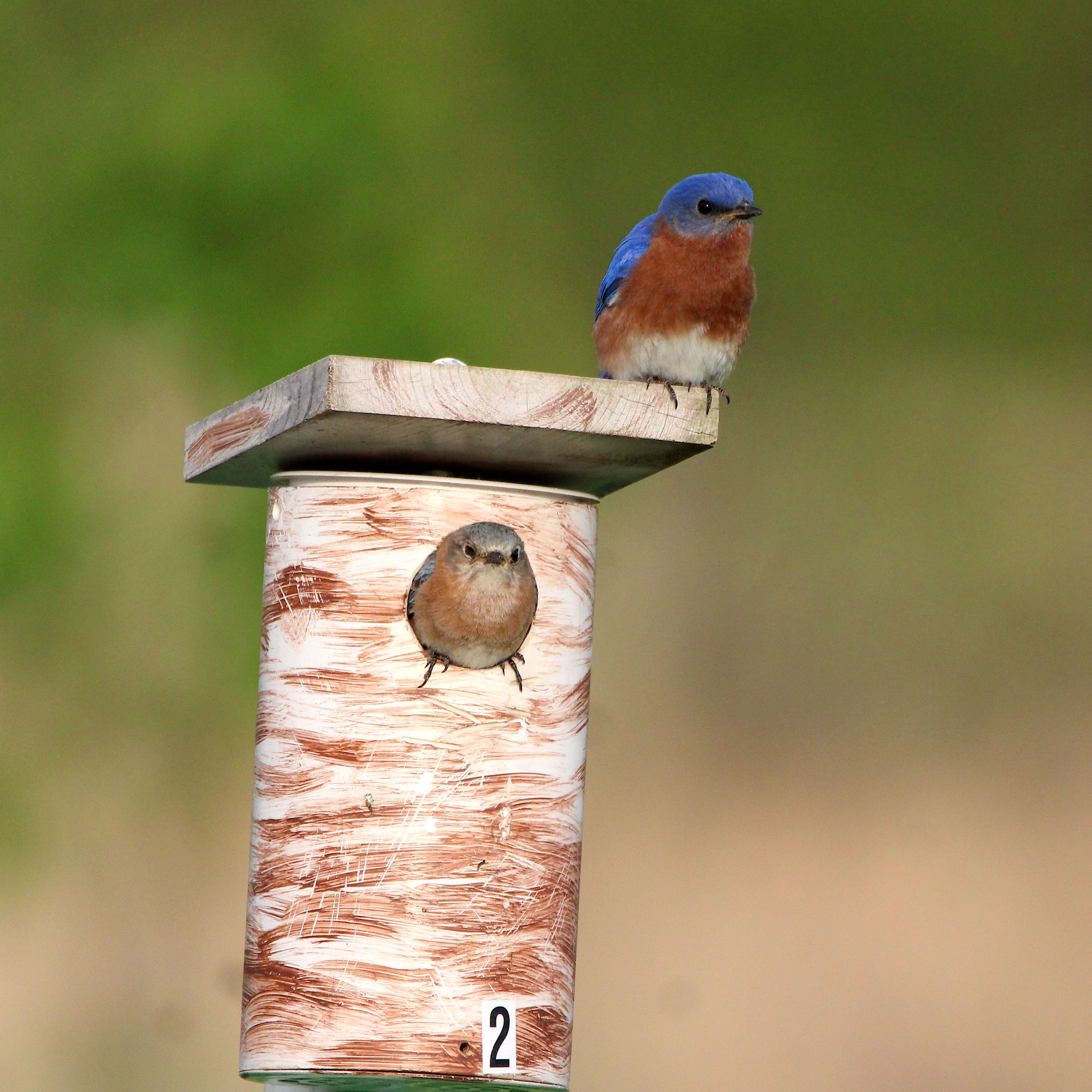
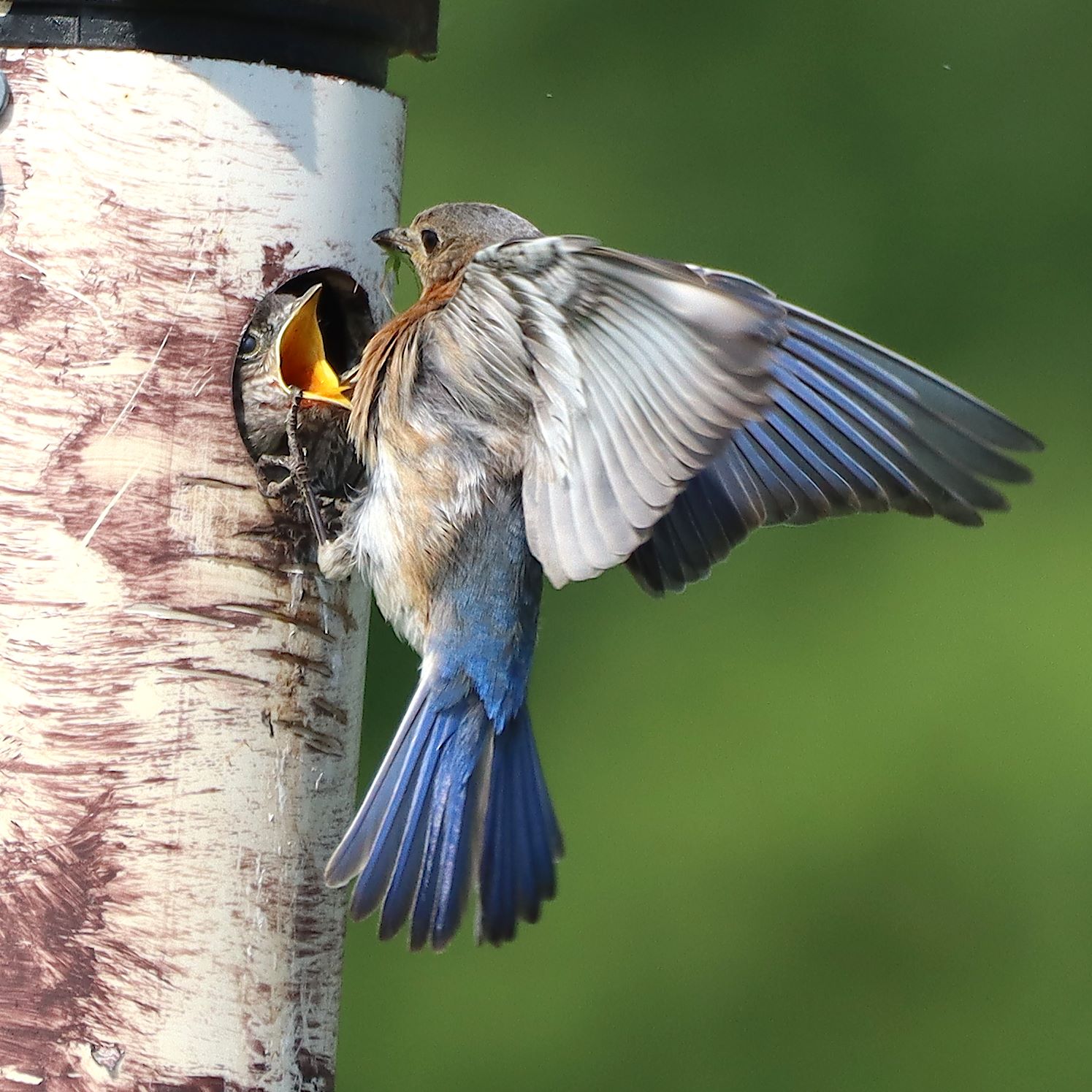
Bluebirds have a relatively short lifespan. They have limited opportunities to achieve their genetic immortality through the successful production of offspring that reach reproduction age. By the end of a breeding season they appear absolutely exhausted, disheveled and depleted. They put all their strength into raising their chicks. Their initial selection of a nest cavity is crucial. They don’t take it lightly – at least not from my personal, human perspective.
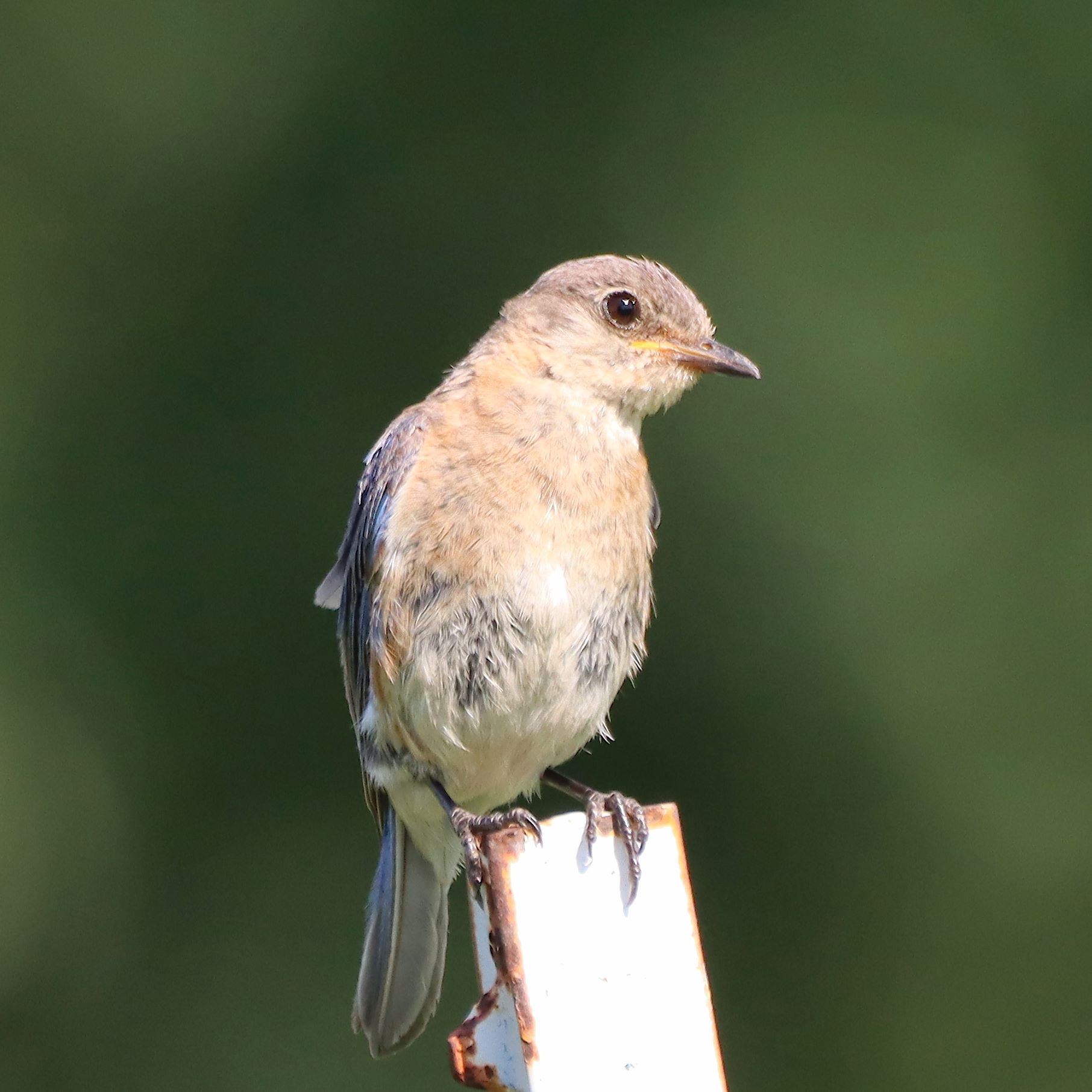
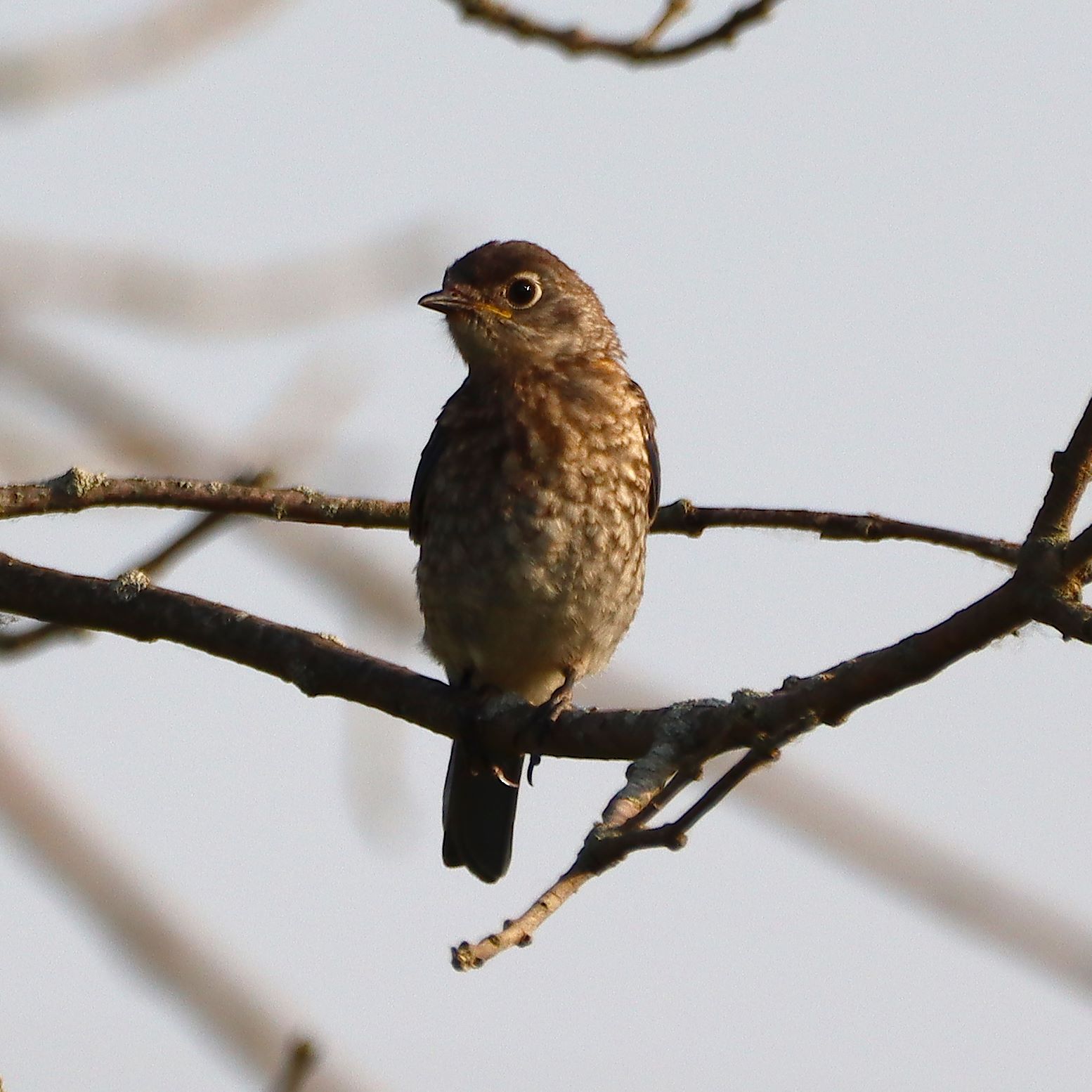
This female Bluebird looks a bit worn out in this photo taken at then end of August 2023.
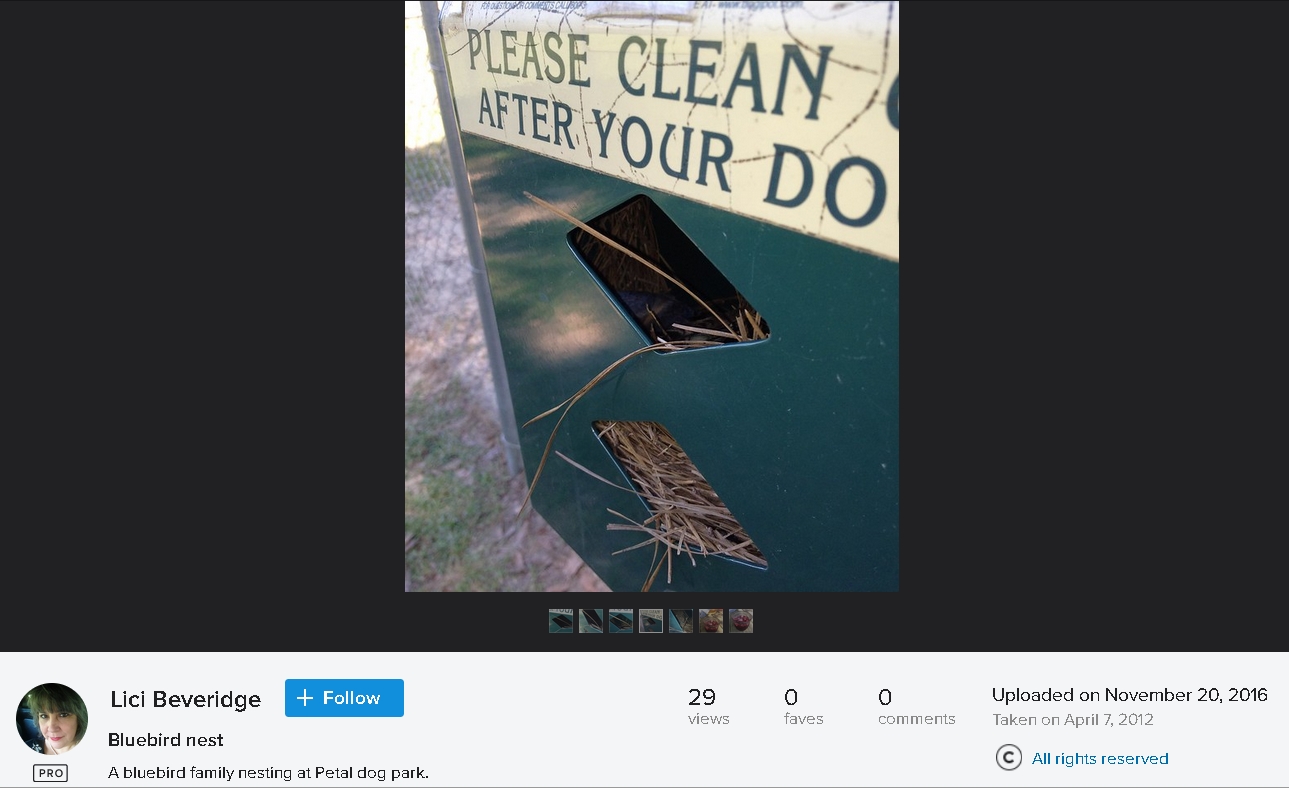
I have seen the photos and read the story of a Bluebird couple that chose a poop-bag dispenser at a Dog Park as their nest site. What I recall reading was that the folks who routinely took their dogs to the park simply waited for the birds to fledge their chicks before filling the dispenser, again! The material, dimensions and specifications of that dispenser were most likely quite different than the “advertised’ size and shape of an “appropriate” Bluebird nest box (with an entry hole size quite a bit larger and an added “entry” below that.) Still, that couple chose that location and (from what I recall reading) they successfully fledged chicks.
Photo credit on bottom of photo1 for both pictures:
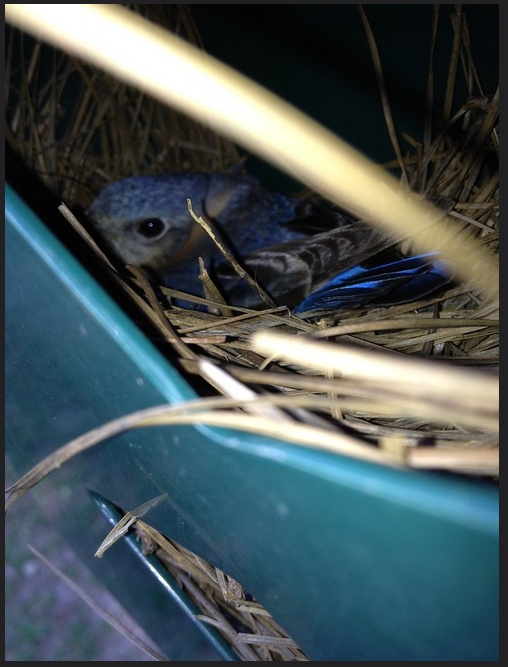
Of course, there was a chance it was a bad decision.
I’m not saying that every choice a bird couple makes is optimal. However, it’s clear that birds within a species choose a variety of nesting sites. I ask; who am I to say I know better that the birds about where they should raise their brood or what shape that nest site should be?
A couple of years ago, my heart broke when the door of one of the wooden boxes we offered was lying open and the nest was hanging out of the opening. It may have been strong winds or a predator, but I suspected the root cause was a failed latch that allowed the wind or predator to pull open the door. The Pennington model (and others like it), top-down opening door was designed to stay secure under the tension of a metal tab. The metal tab slowly gave way and the tension didn’t hold shut the door.
This is an example:
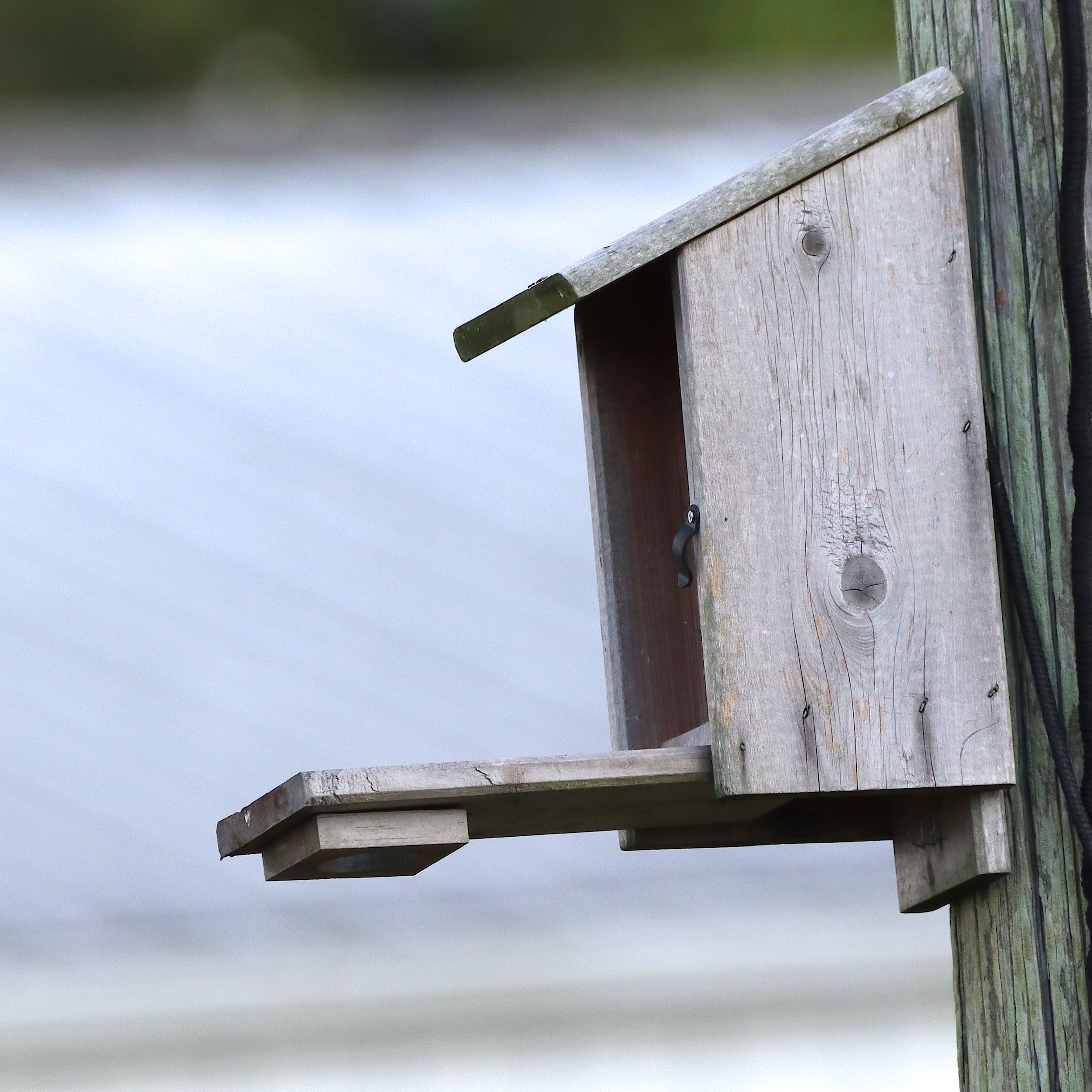
The day prior I had filmed the parents feeding their chicks and the next day there was nothing left but a tousled nest. I feel a deep responsibility to the native birds when I offer a nest box option. I initially truly loved that model because of the top-down opening door which I felt reduced the chance for chicks or eggs to fall out, like might with bottom entry models. But, the latching system they used with that door failed and a nest full of chicks perished. When we designed our FarmGoneWild houses, I made certain that there were no latches to fail and no doors to flop open.
Here’s a photo of the lovely Bluebird eggs nestled securely at the bottom of the 4″ PVC FGW house. To observe the contents, the top is removed but all the contents remain safe, and are also probably less exposed to a temperature shift during observations. I just lay my cell phone over the top and click.
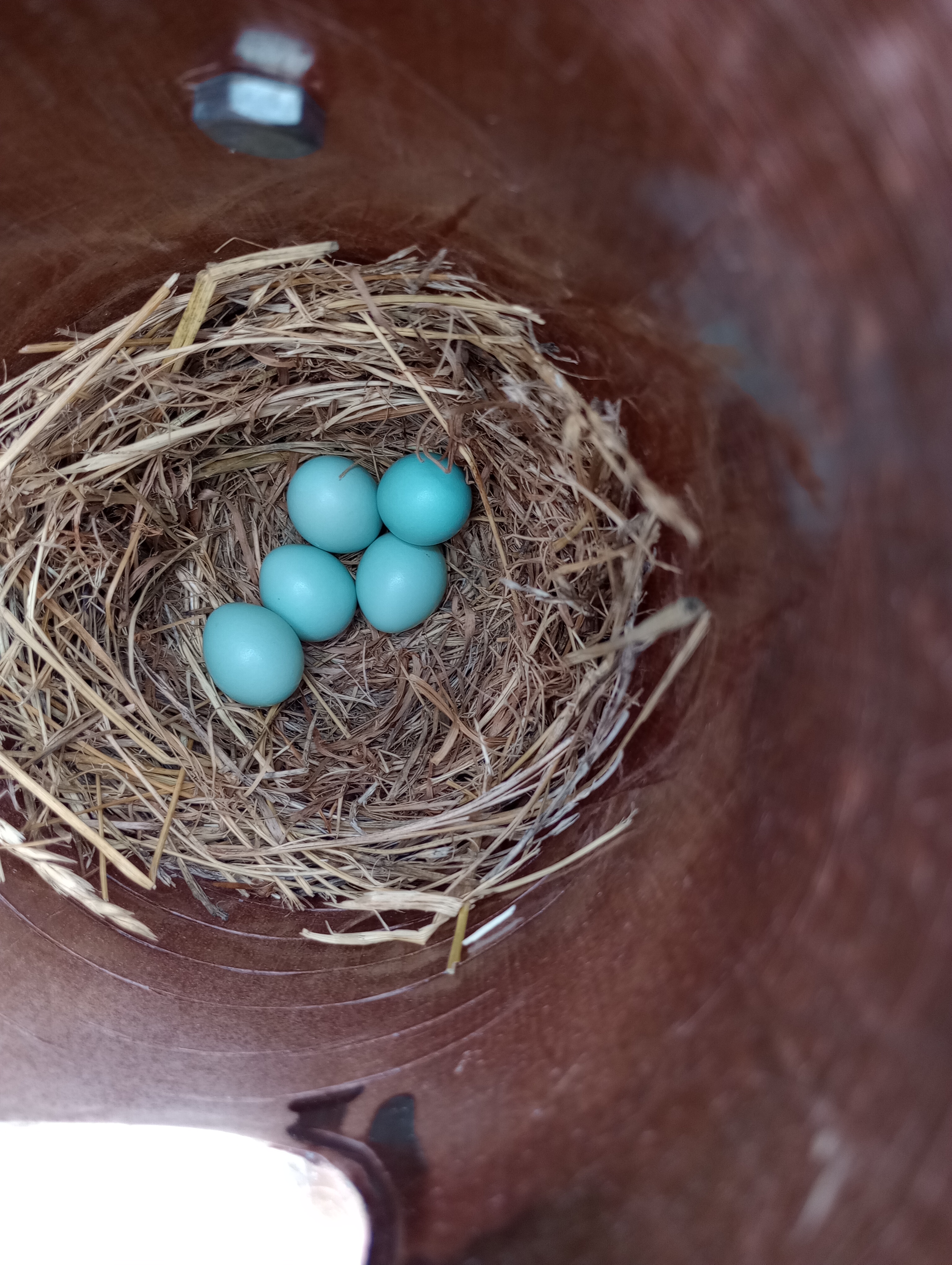
I believe birds have the right and the responsibility to select an appropriate location for their reproduction. Still, if we humans are going to offer options, then they need to be safe and secure. I will reiterate; I do not think any human is better at selecting a suitable nesting site for a Bluebird couple than that couple itself. I also doubt that any natural cavity will fully meet the standards posted on a birder site regarding nest box dimensions.
Published bird house dimension specifications should be considered guidelines, not gospel.
Tammie Rogers
The dimensions of a bird house are only one way to define its quality. In my opinion the manufacture of a wooden bird house should not fail after just a couple of years. I feel that way about a pair of athletic shoes, too, but I’m usually sorely disappointed. It’s a buyer beware world out there, and that includes the purchase of a bird house. For that reason, I’m happy that Joe sent an inquire / comment to me. I am happy to share all the information one might request about our bird houses. I reserve the right to update our processes if /when we learn more about the bird house design we currently use. We do not assume we have created the perfect birdhouse. As an example; our first PVC houses (which were for our personal use) had wooden tops. It only took one season for me to learn that it would be prudent to build the next models with PVC tops. We also changed the way we attached the top to the body of the box to make it both secure and easy to open for observations. When we discover possible improvements, we’ll try them out and then implement as we feel would be prudent.
Observing fledglings makes my heart sing.
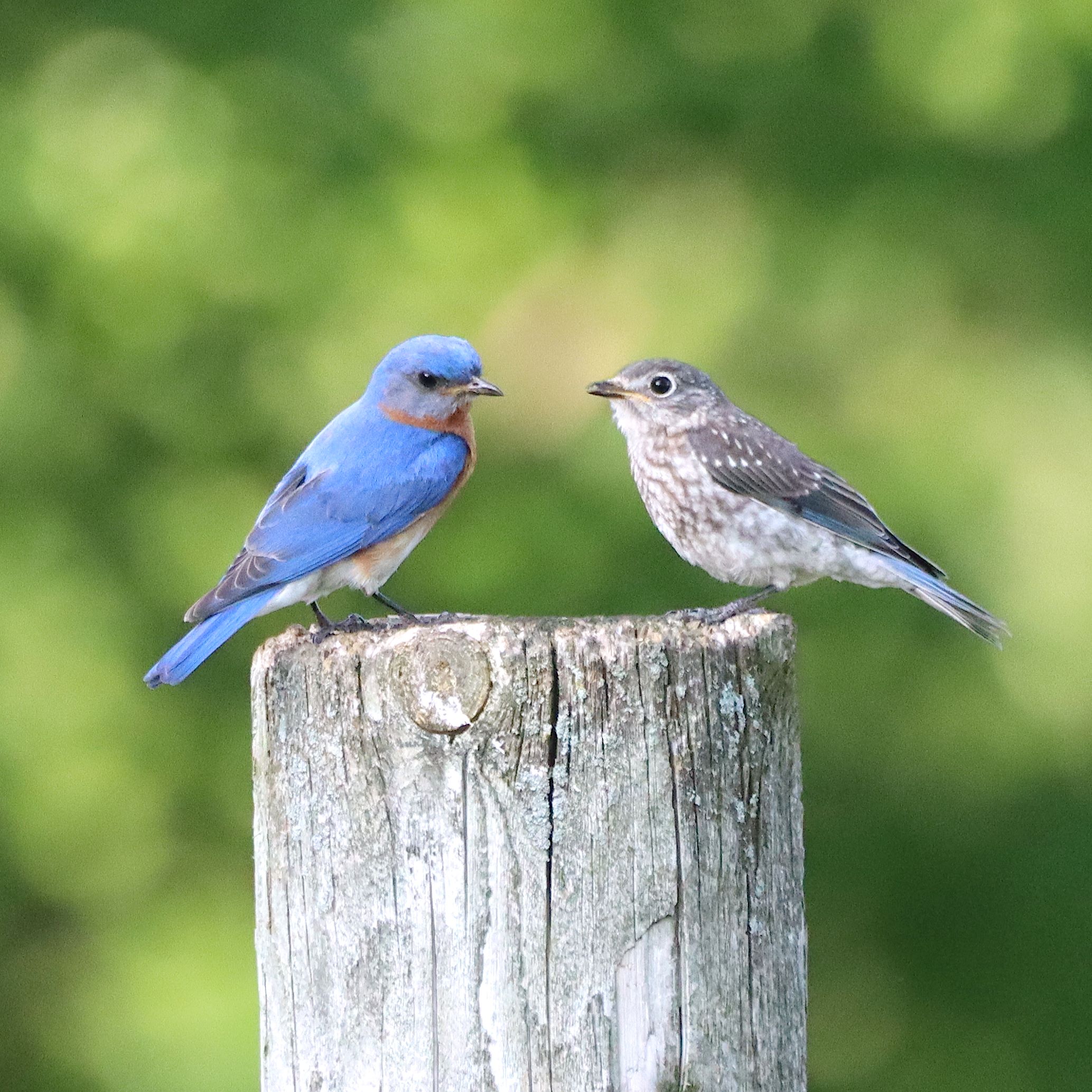
We did not begin to offer the PVC model Bluebird house for sale until we had provided similar design prototypes to the birds on our property for a couple of years. When I observed and recorded through my photography, Bluebirds, Tree Swallows and House Wren successfully fledging chicks from the boxes (even as they were hung along with wooden “approved size” models as well), my husband and I decided to make them available to others.
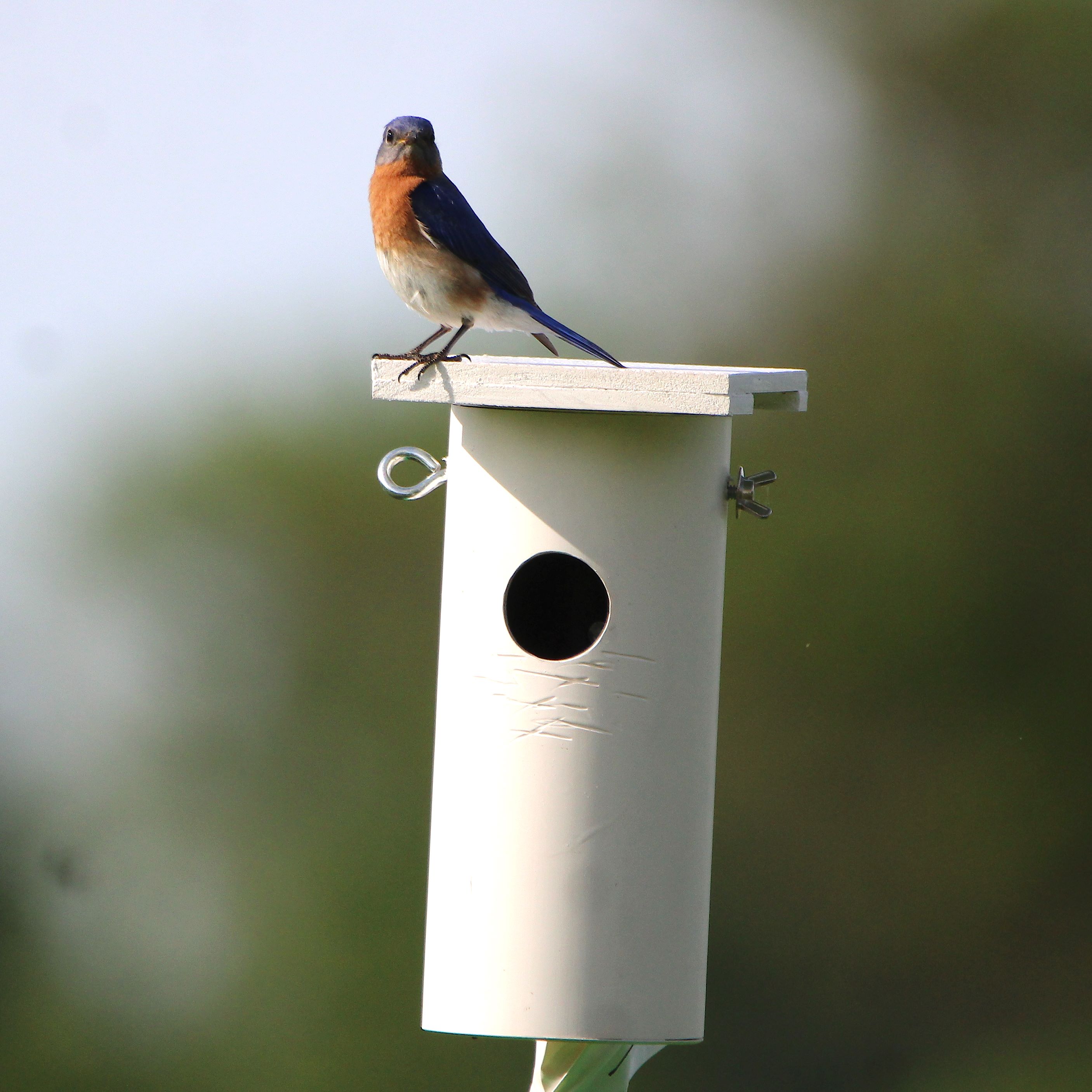
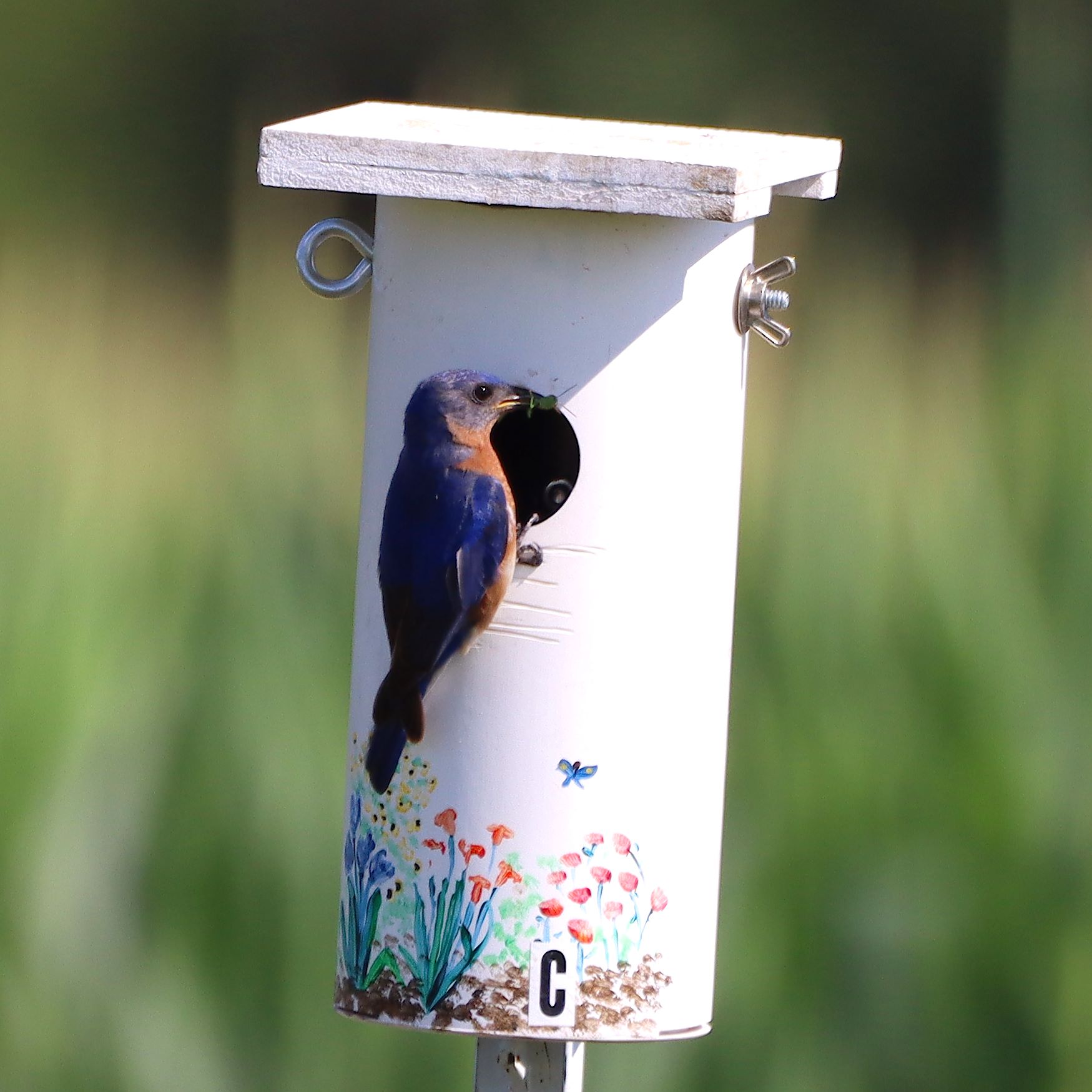
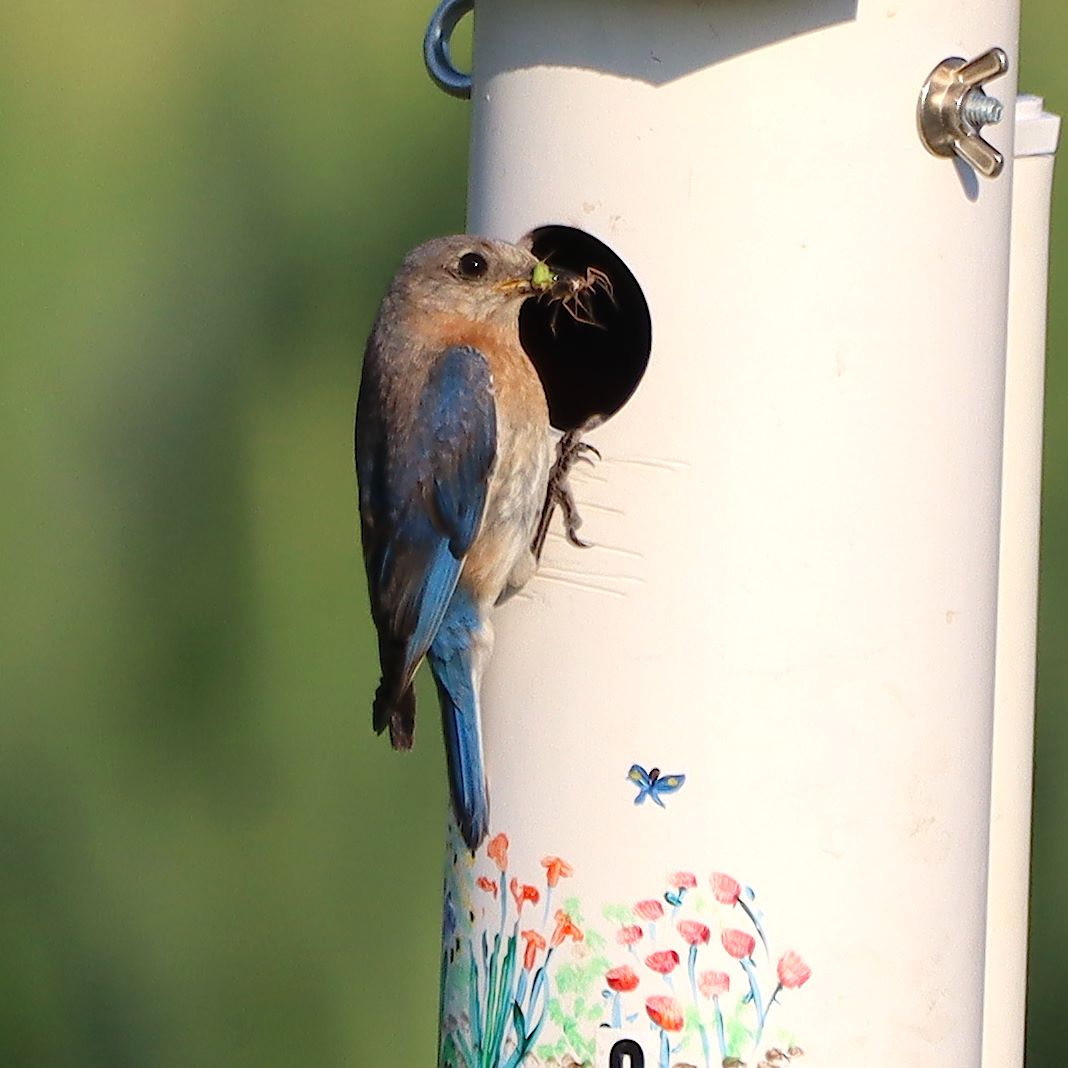
We offer our FarmGoneWild bird houses to folks who want a nearly indestructible, weatherproof, well-ventilated, long-lasting, secure bird house. Observations take place by removing the roof while the nest, eggs or chicks remain undisturbed and safe at the bottom of the cavity. The roof is secured with a bolt and easy to remove wing nut that keeps the top on regardless of how hard the wind blows. We also have not experienced any mouse nests in our boxes during winter months (which was a constant problem for us with wood models.) The PVC is probably too smooth for the mice to climb to the entry hole. Our ventilation is not accessible to a mouse as it is provided through a PVC pipe drain cap with a grid that prevents small animals from passage. We do, however etch deep grooves under the entry hole for birds to use as solid footing, and the interior is etched for chicks to use to reach the exit.
The next three images represent the current model available at our Etsy FarmGoneWild shop.
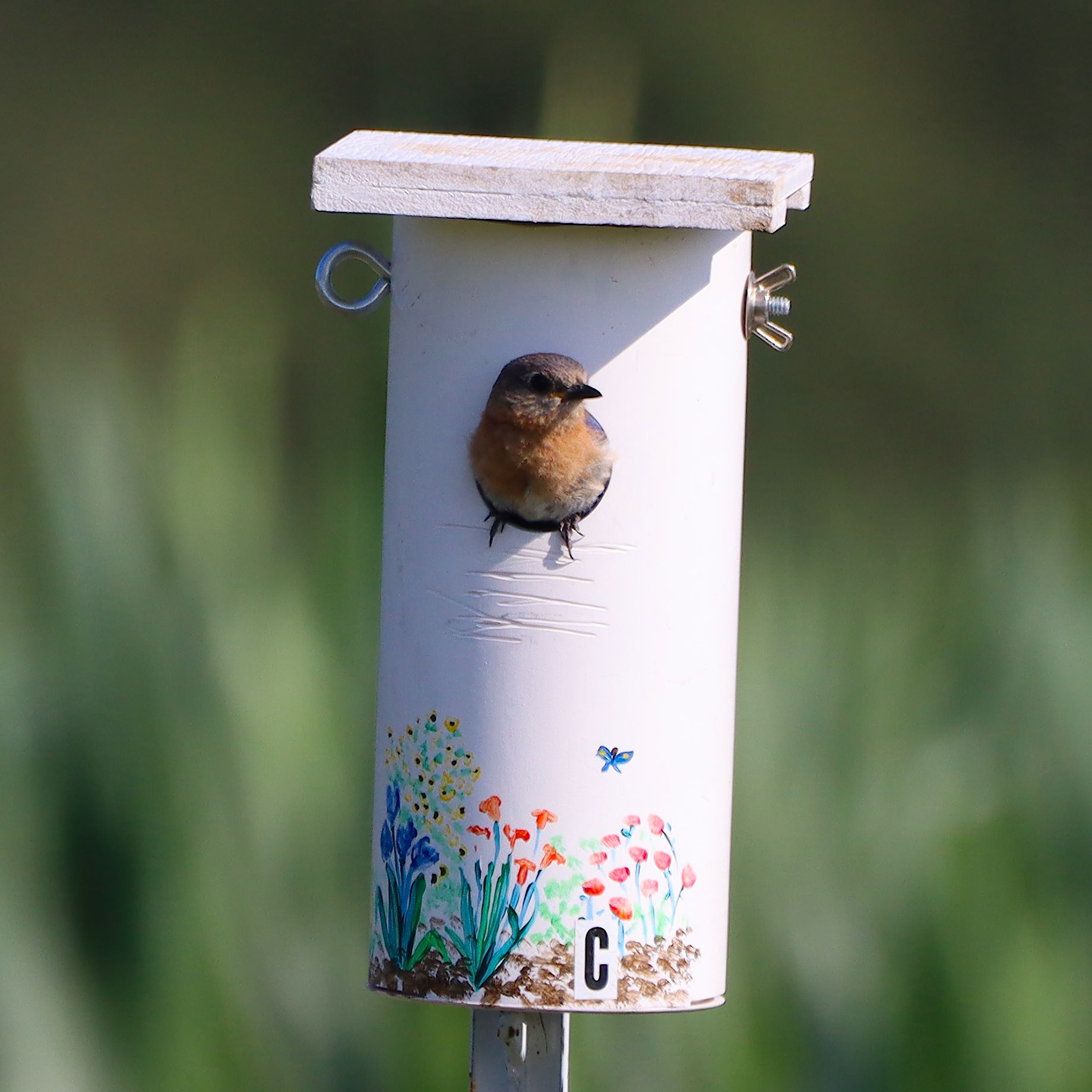
One final note: Last winter we created a 6 inch diameter PVC house and erected it in February 2023. I hoped it would attract a pair of Great Crested Flycatchers that I’ve observed in a large, mature oak tree on our property. I wanted to be able to film them raising their chicks. We mounted the 6 inch model at the top of an 18 foot pole (not the height typically suggested for Bluebirds) and placed it within two feet of the branches of the tree (also not considered the standard “recommendation” for a Bluebird house location.) A Bluebird couple moved into that box before the Flycatchers arrived for the season. They reused the box for two additional broods this past summer, successfully fledging chicks. Photos below are from 5/16/23, 6/9/23 and 6/27/23.
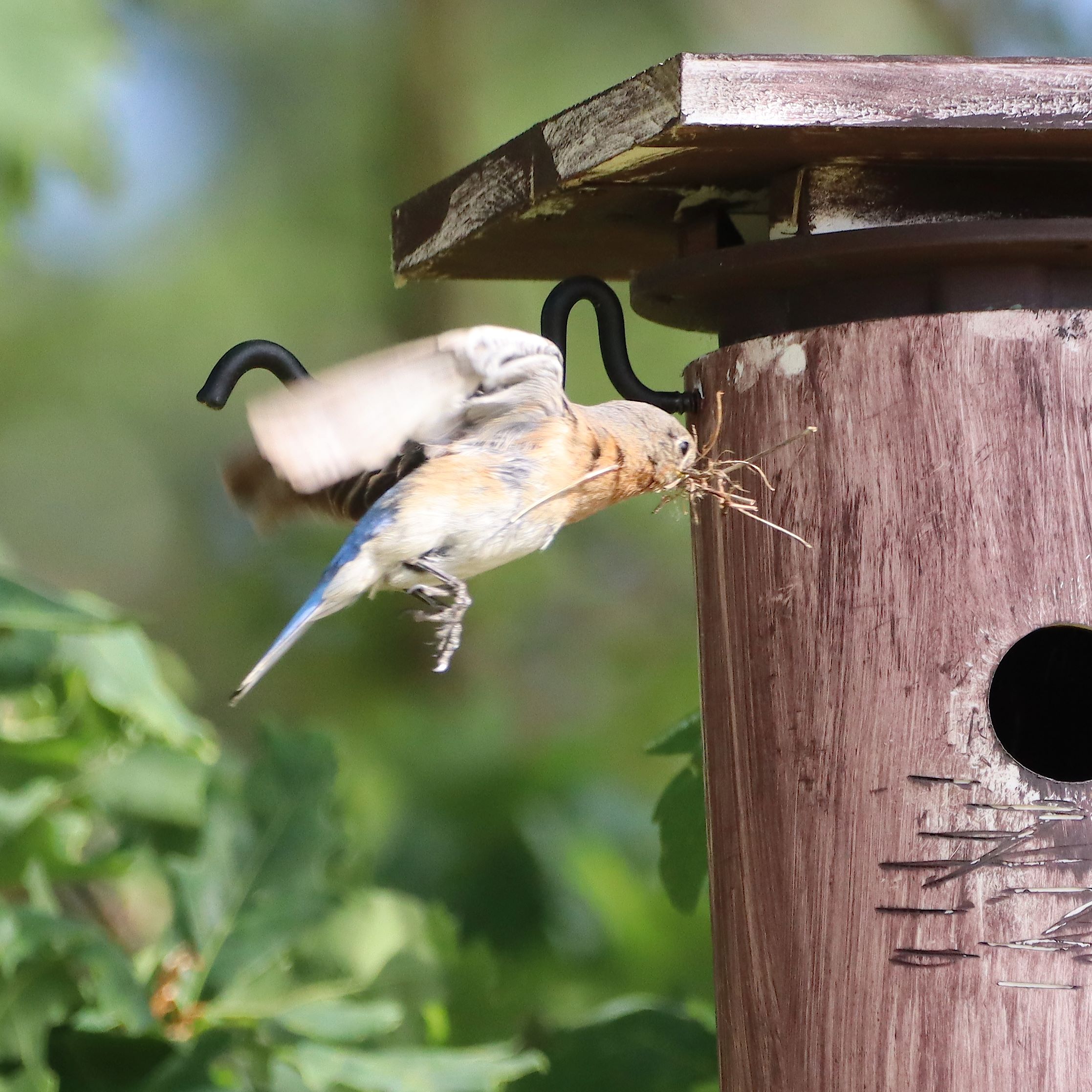
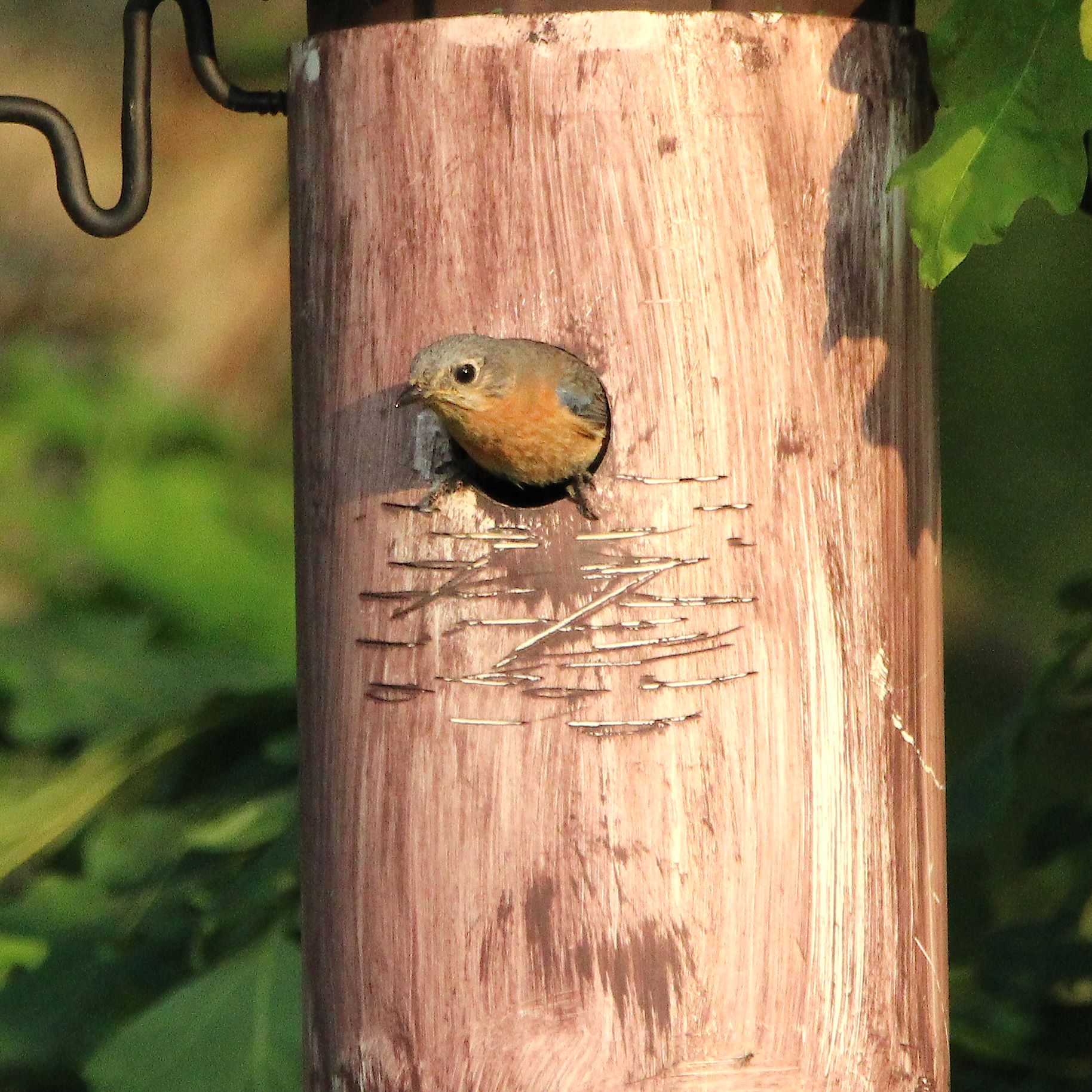
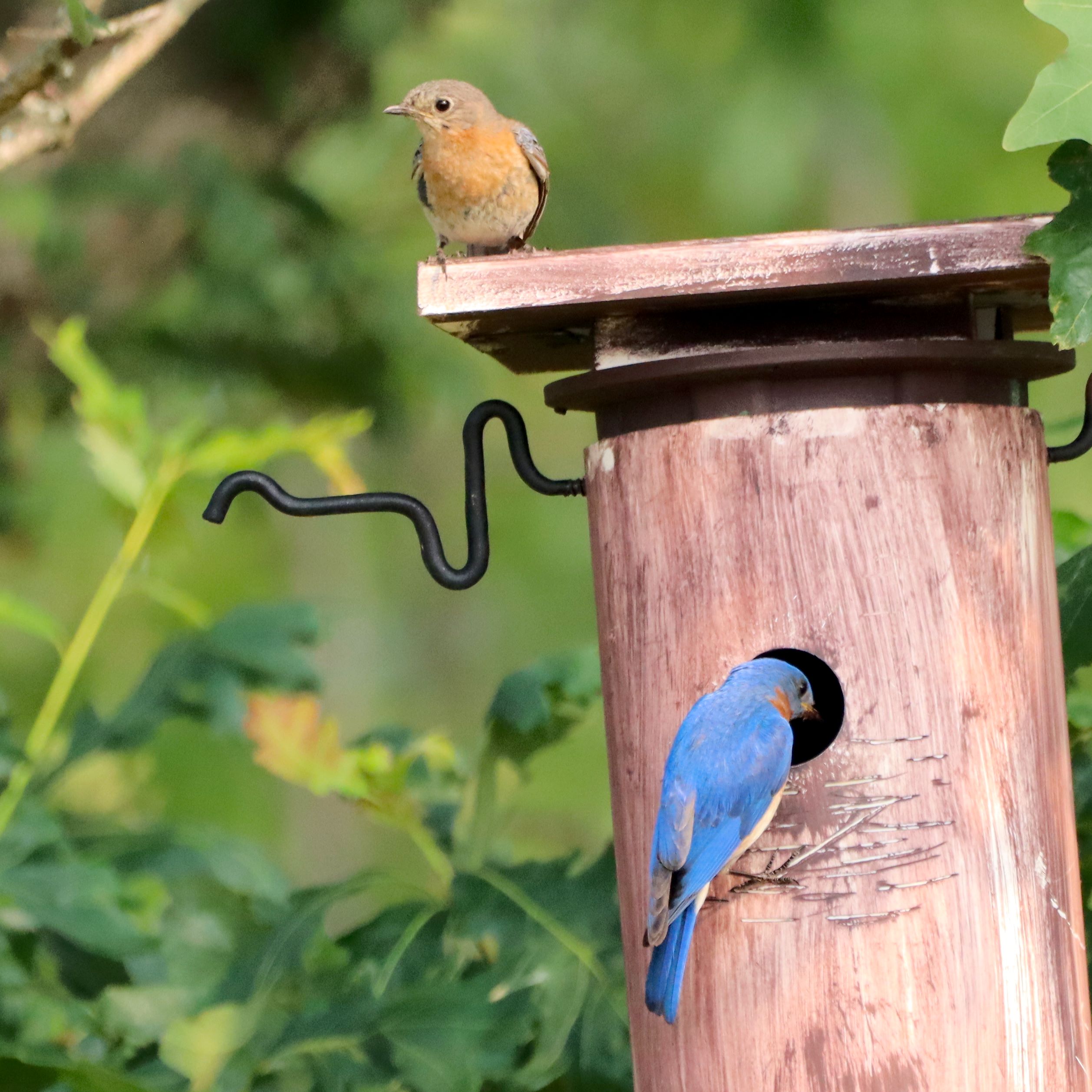
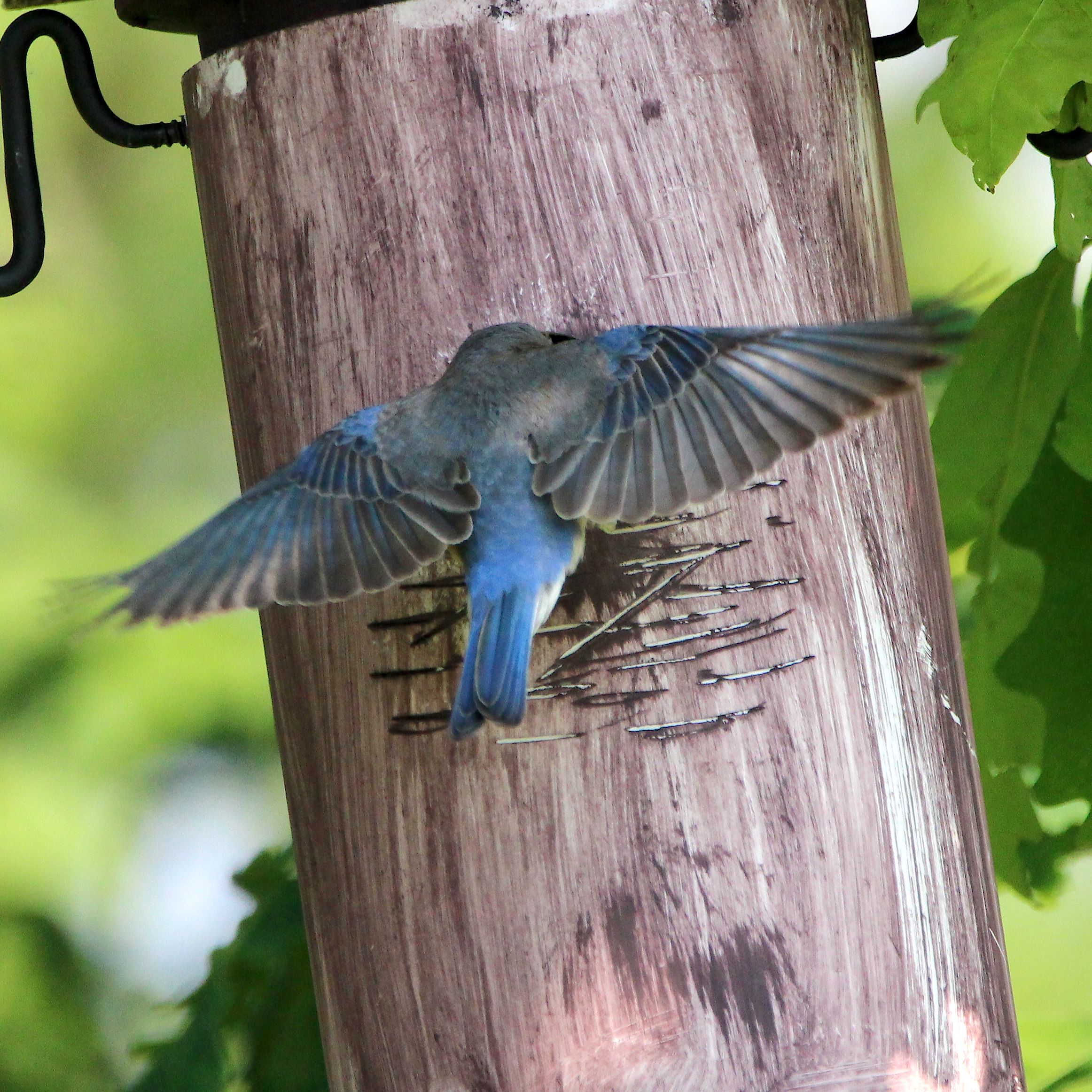
That very limited information suggests that offering 6 inch PVC houses might be a great option. Of course, it’s exceedingly more expensive than 4 inch PVC. That wouldn’t deter me for my personal use. However, I’m not sure if folks would pay for it – especially since we have to include “free shipping” on each purchase, which isn’t free it’s just part of the listed cost for the product. The 6 inch diameter house would weigh quite a bit more than the current model. Perhaps, we will offer the 6” option in the near future.
Fledglings are the symbol of success.
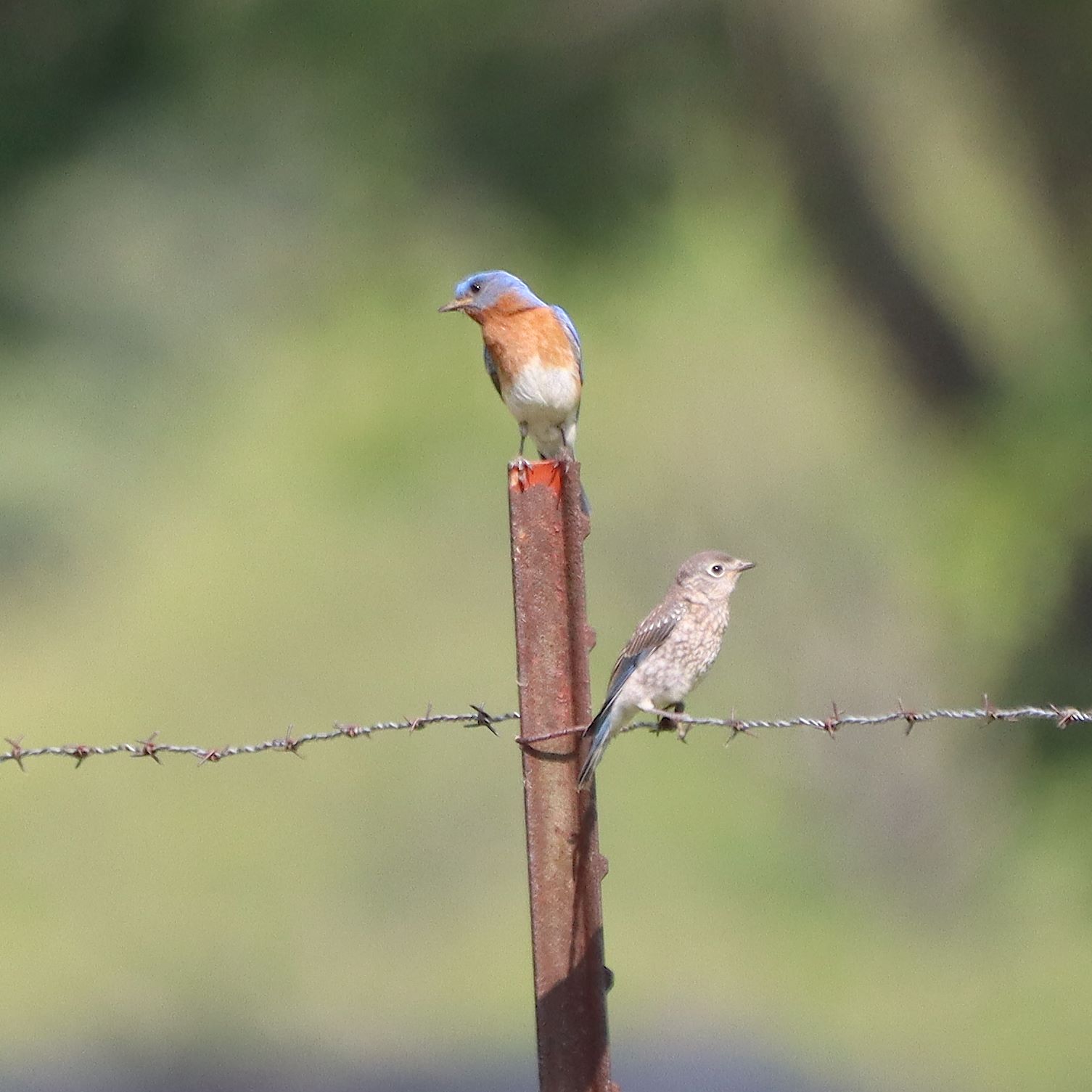
I hope that I have answered what I believe were Joe’s questions. The internet is filled with “specifications” and recommendations and helpful hints and hacks.
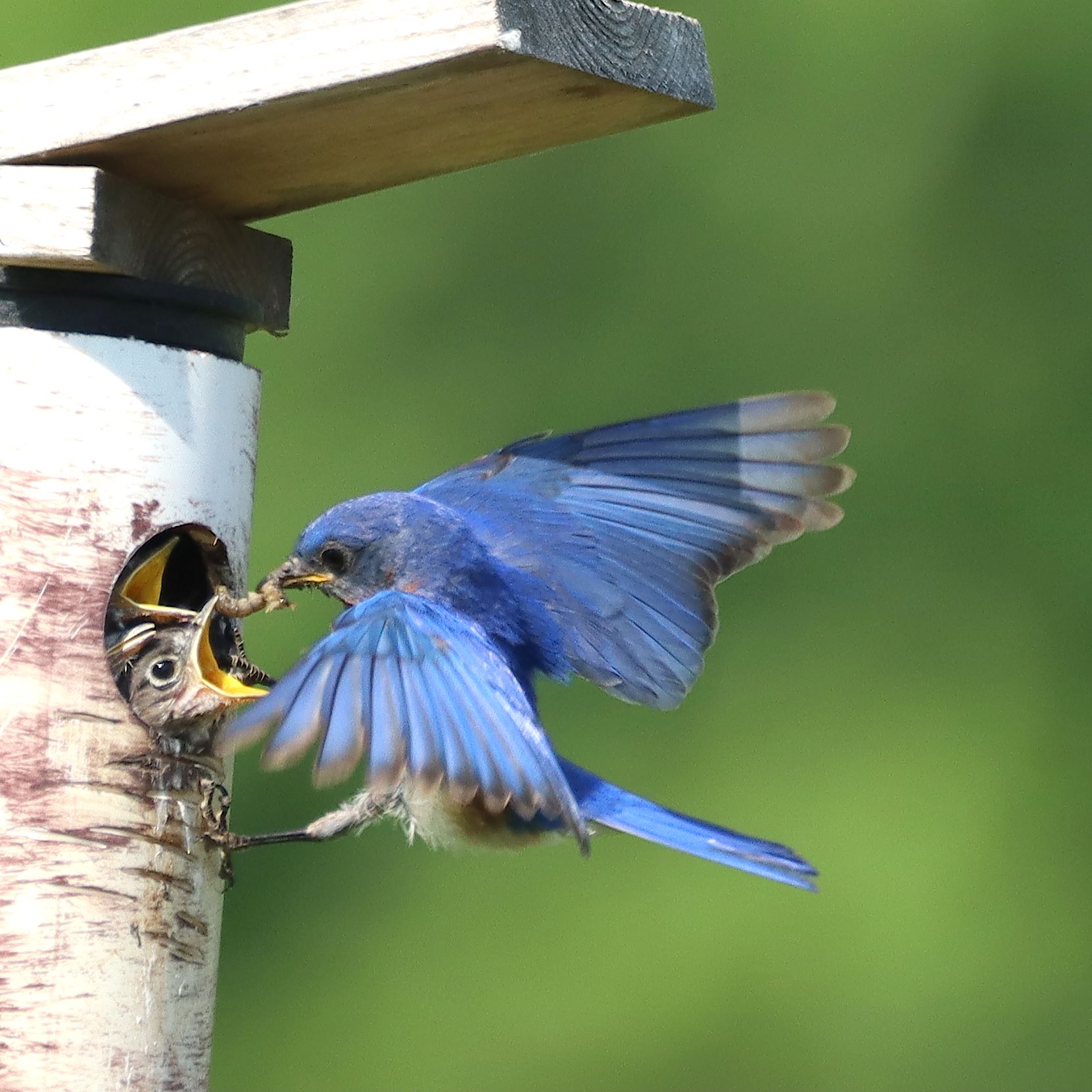
The natural world has been around far longer than the World Wide Web. It is my humble suggestion that we choose to respect the oft mysterious but exceedingly vital force nature has over her flora and fauna. Nature is more potent than any systems we humans may put into operation. I trust that strength and influence is intended to keep our world balanced. In our efforts to make up for human development which may negatively affect native birds, let’s not make assumptions that we will ever know better than Mother Nature.
Stepping off my soap box, now.
https://www.etsy.com/shop/FarmGoneWild


nice,good informative article
Thank you.
I used Gilbertson boxes and the Peterson boxes on a bluebird trail in a public park in Minnesota and found either one worked for the bluebirds, tree swallows, chickadees, sparrows and wrens. Your design is very similar to the Gilbertson boxes and they look beautiful. I preferred the Gilbertson boxes because curious people couldn’t figure out how to open them. I do think the 6″ diameter boxes might be better for the tree swallows but providing any sort of box that is protected from predation and is easy to maintain will help the cavity nesters and they really do make the final decision including decaying fence posts and mailboxes left open. They don’t have a lot of choice anymore and so I think it is great to provide any sort of decent nestbox.
Thank you for sharing your information.