Tammie Rogers
Inspired by Dogs & Nature
Hummer Hoedown!
It’s always a highly anticipated event; the season’s return of Ruby-throated Hummingbirds. It begins as a trickle, with just one or two birds showing up to the feeders that we hang a week or two before the published date for likely arrival. We don’t want the famished birds to go hungry after their lengthy trip from southern Mexico and Central America. A bird that uses our feeders may be merely making a stop for nutrition before possibly traveling an additional 2,000 miles to it’s summer breeding grounds at the Canadian border.
Since observing the first few individuals a couple of weeks ago, the number of birds that are buzzing about has increased significantly. As I was filling the feeders on Thursday, I counted eight birds in the same view (without turning my head to include the hummers that I could hear at a feeder behind me.) Surely, all the hummingbirds that are coming to our feeders don’t represent all the birds that may be in our area and use our feeders. I can’t say how many of the individuals I witnessed have committed to staying here for their breeding season, but it’s so thrilling to stand among all these tiny acrobats as they feed but more so, as they interact with each other.
I hadn’t actually planned to film the hummers as I was on my way to get in the golf cart to travel further on the property. But, I simply couldn’t resist. As multiple birds approach a feeder, they often interact. I can’t say whether it’s a greeting like, “Hey! Suzie! I haven’t seen you forever! How was your migration?” or if it’s more of an adversarial interaction like, “Dude! Didn’t you see I was in line to get my meal? How rude!” or perhaps even, “Hi darling. You are a real looker! Wanna meet up later?” Regardless, it is a bit of a dance that transpires – only it’s accomplished completely on wing-beat.
The bird in the back is a male (red throat), while the bird in the foreground is a female. Maybe they were mates last year and want to give it a go, again? Who’s to say.
In the first image, you can spot three birds.
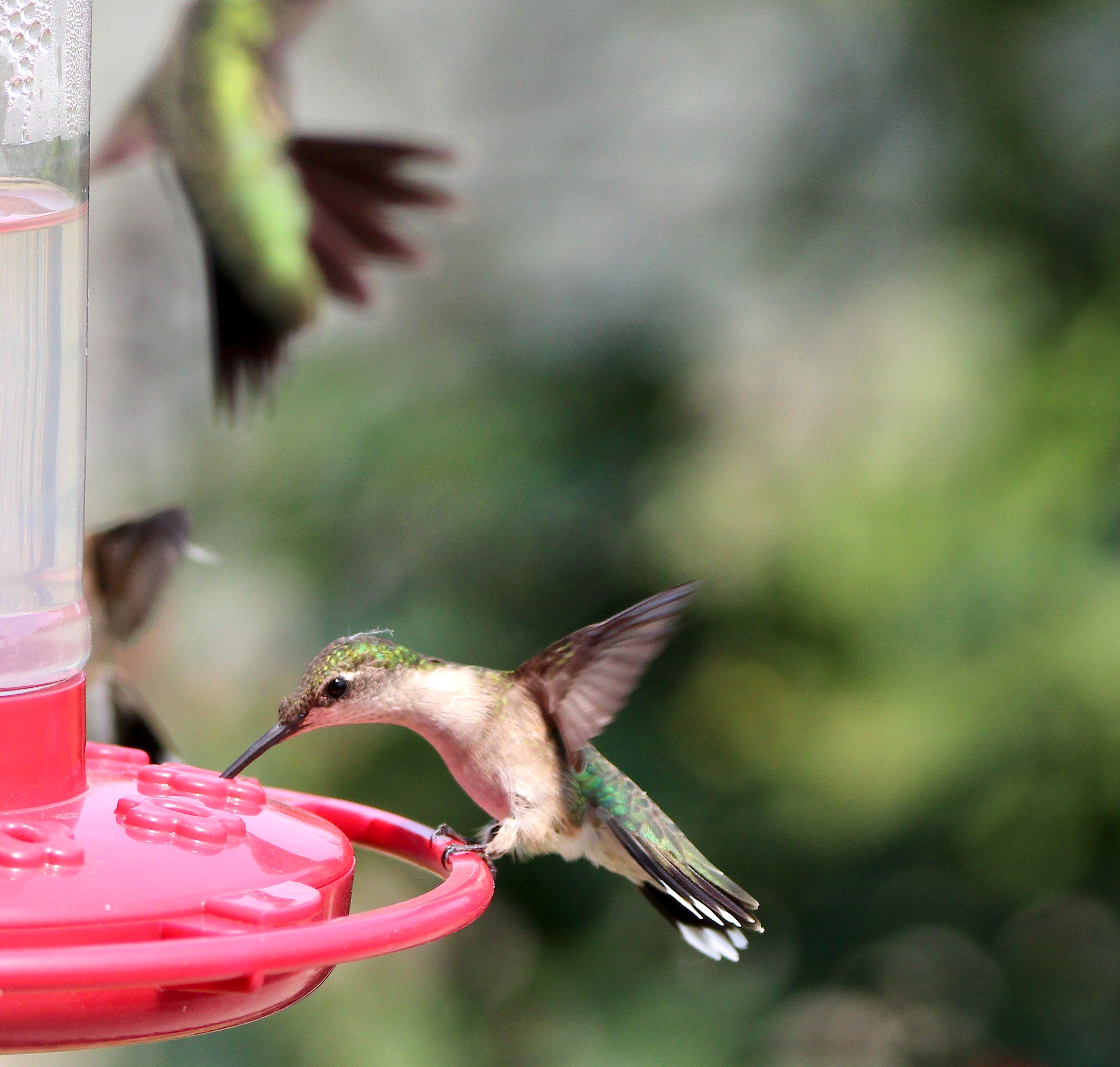
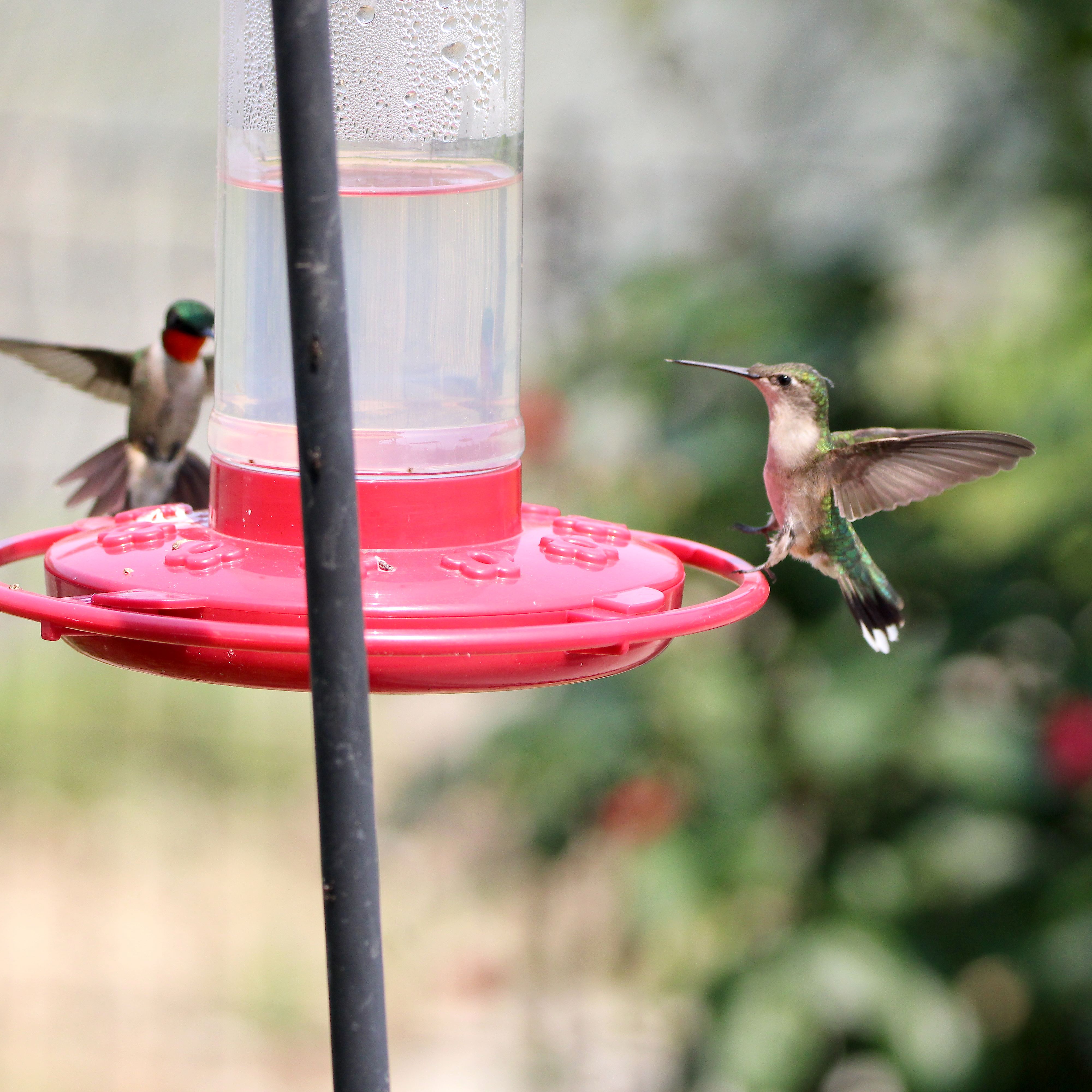
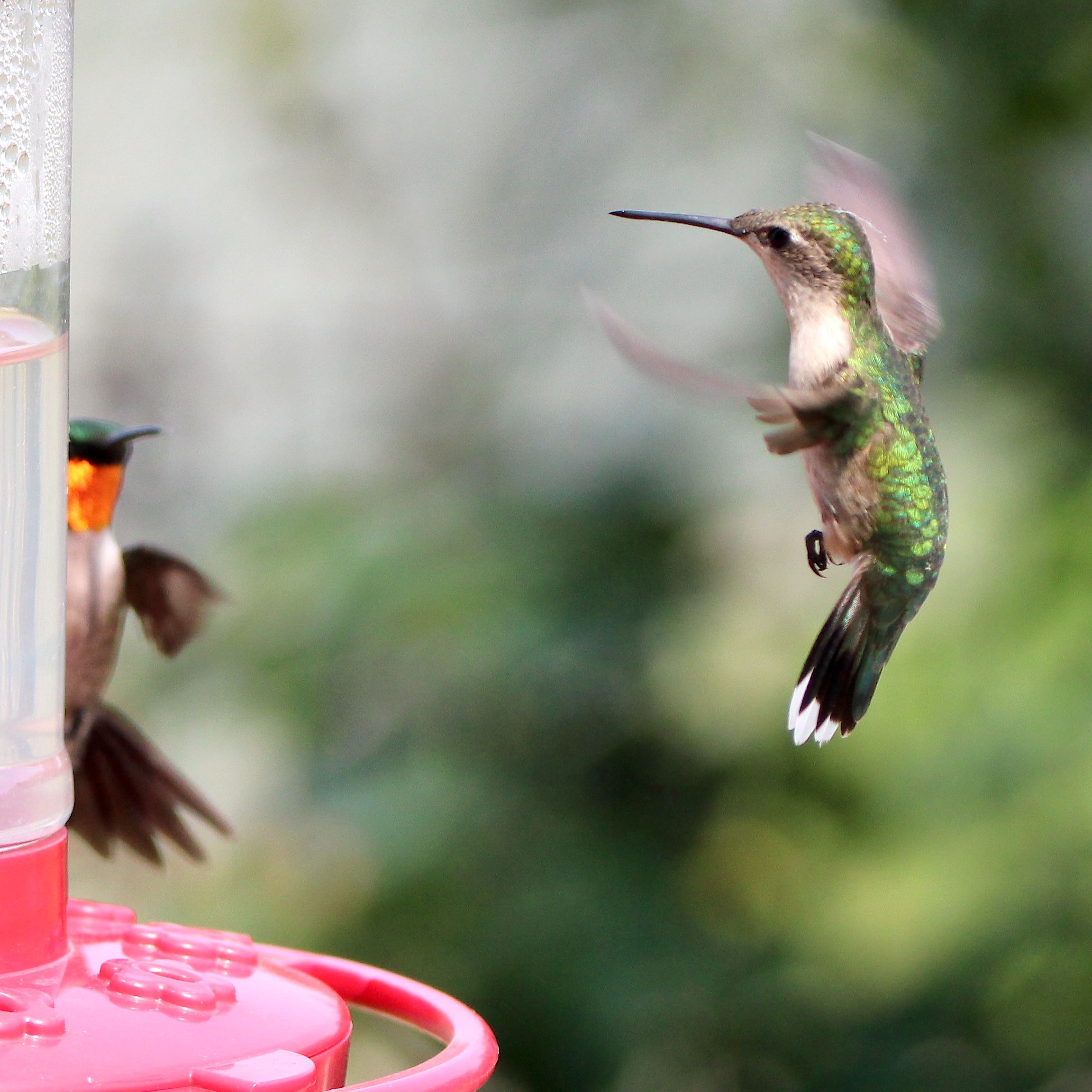
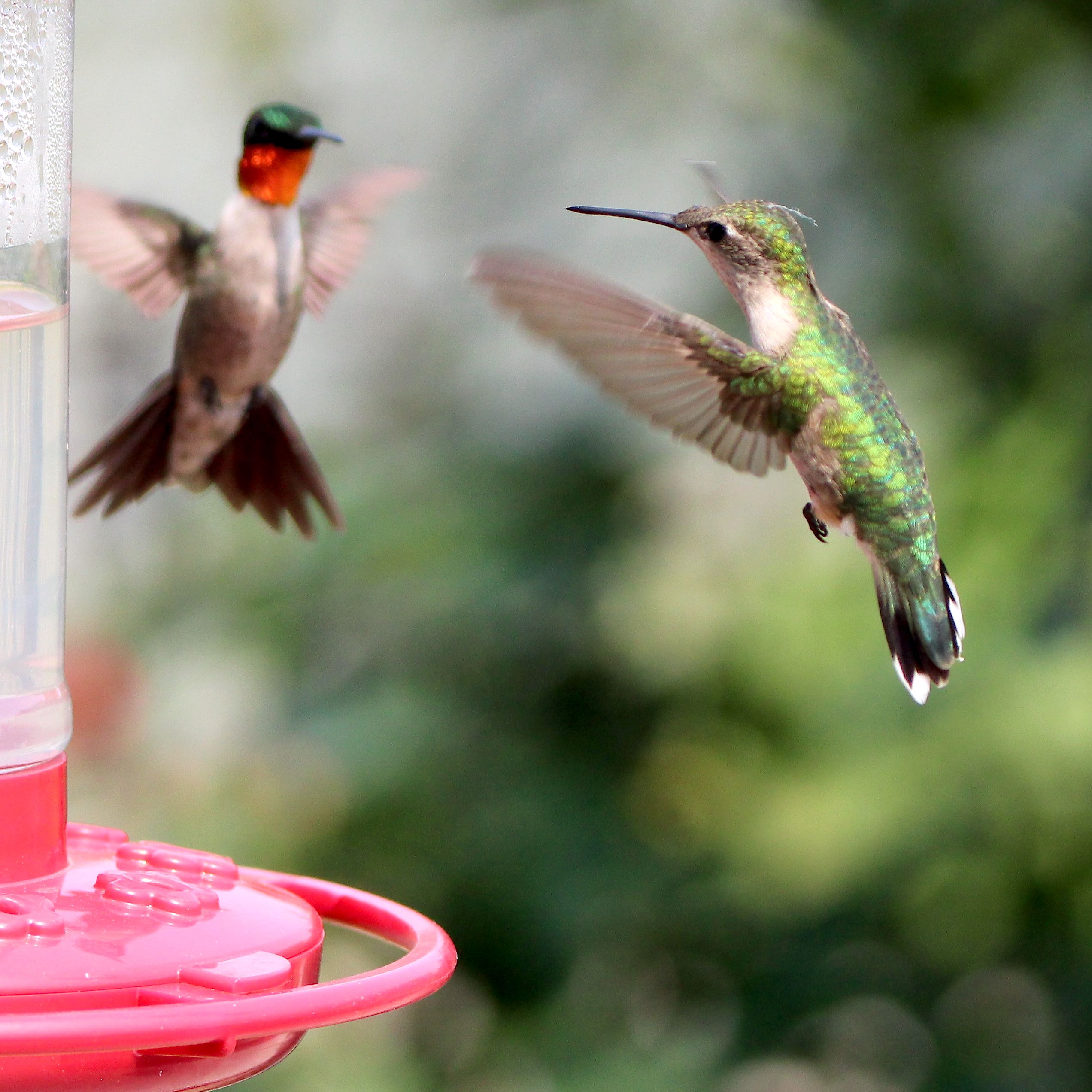
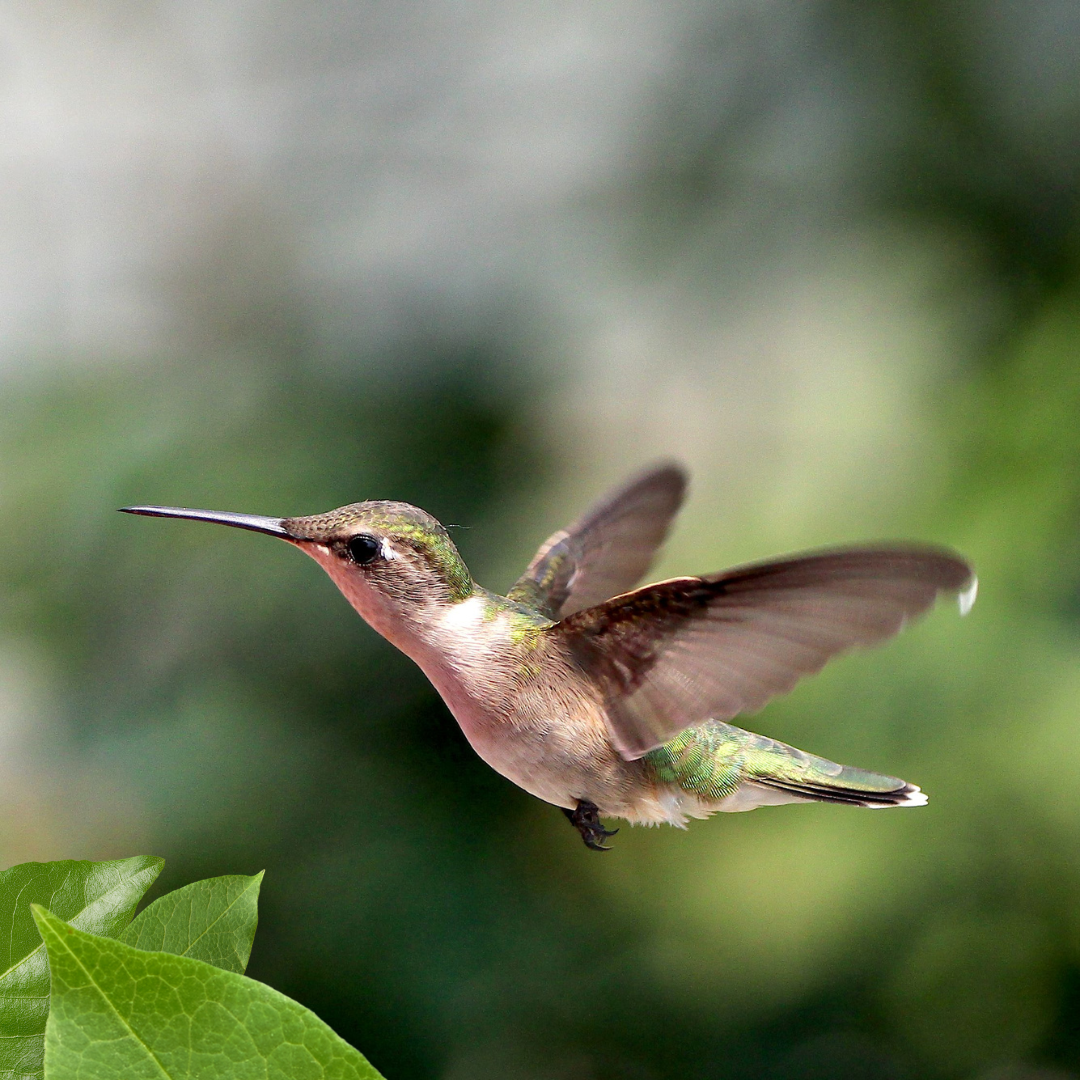
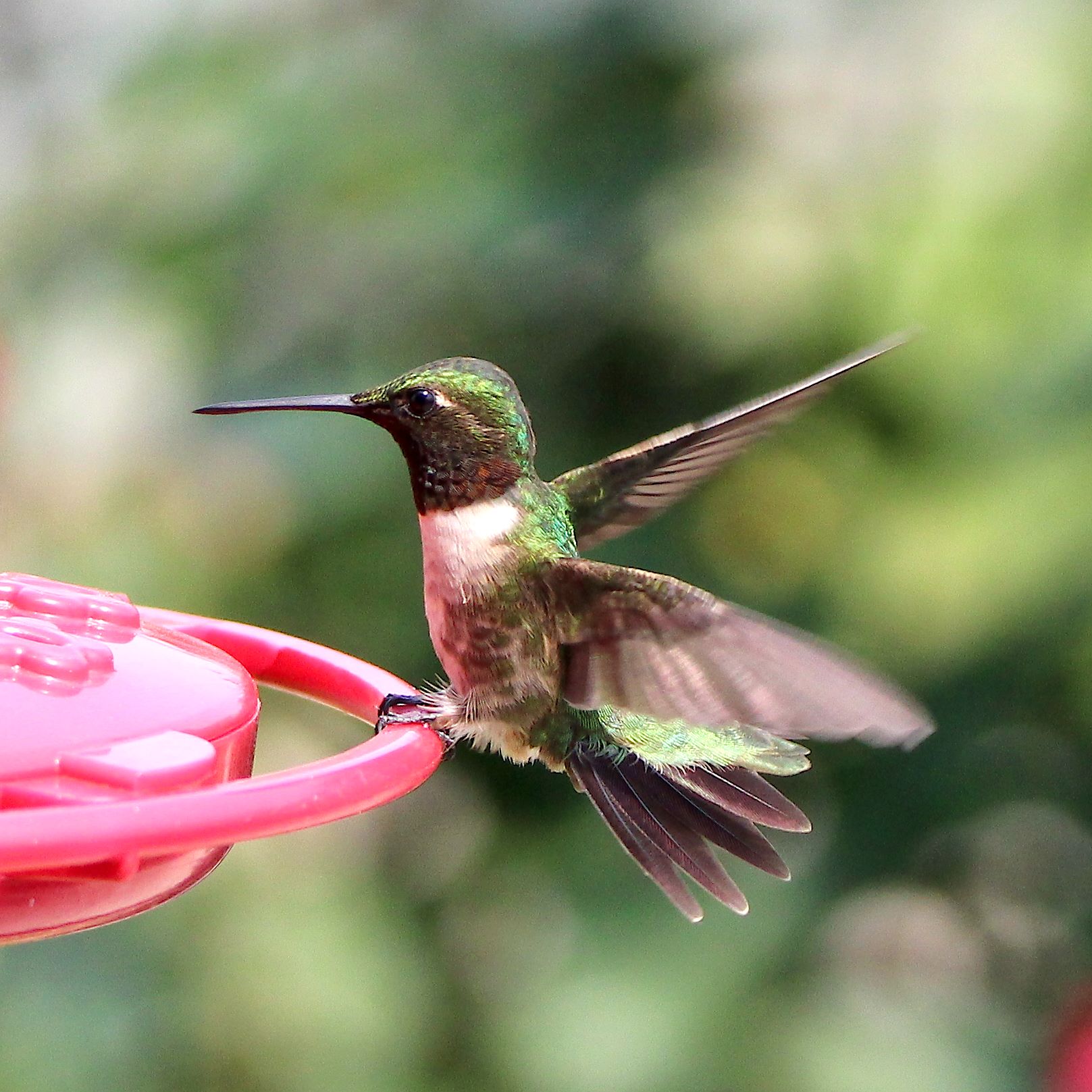
Here are some additional photos of these beauties. First, is a male. The remaining are a female.
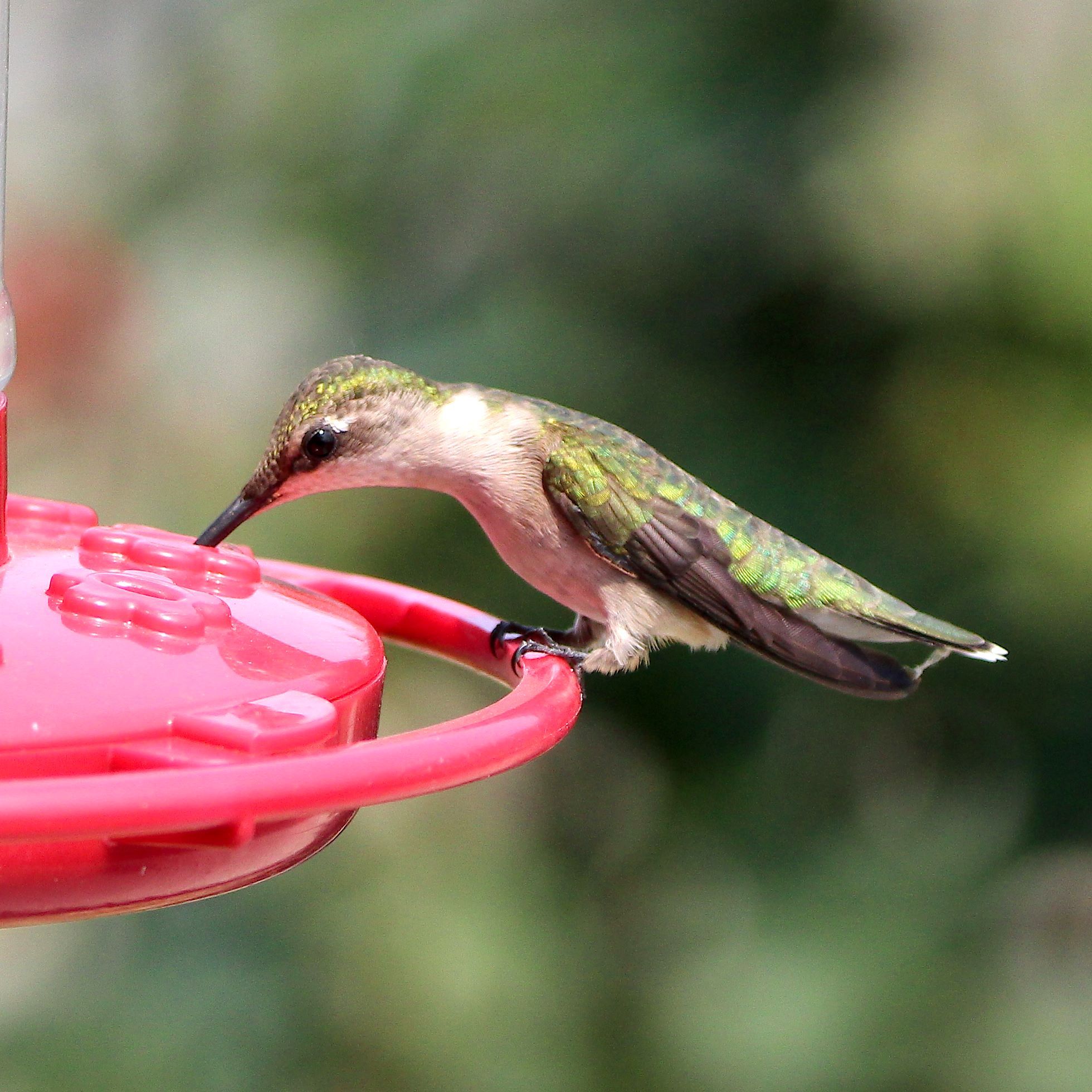
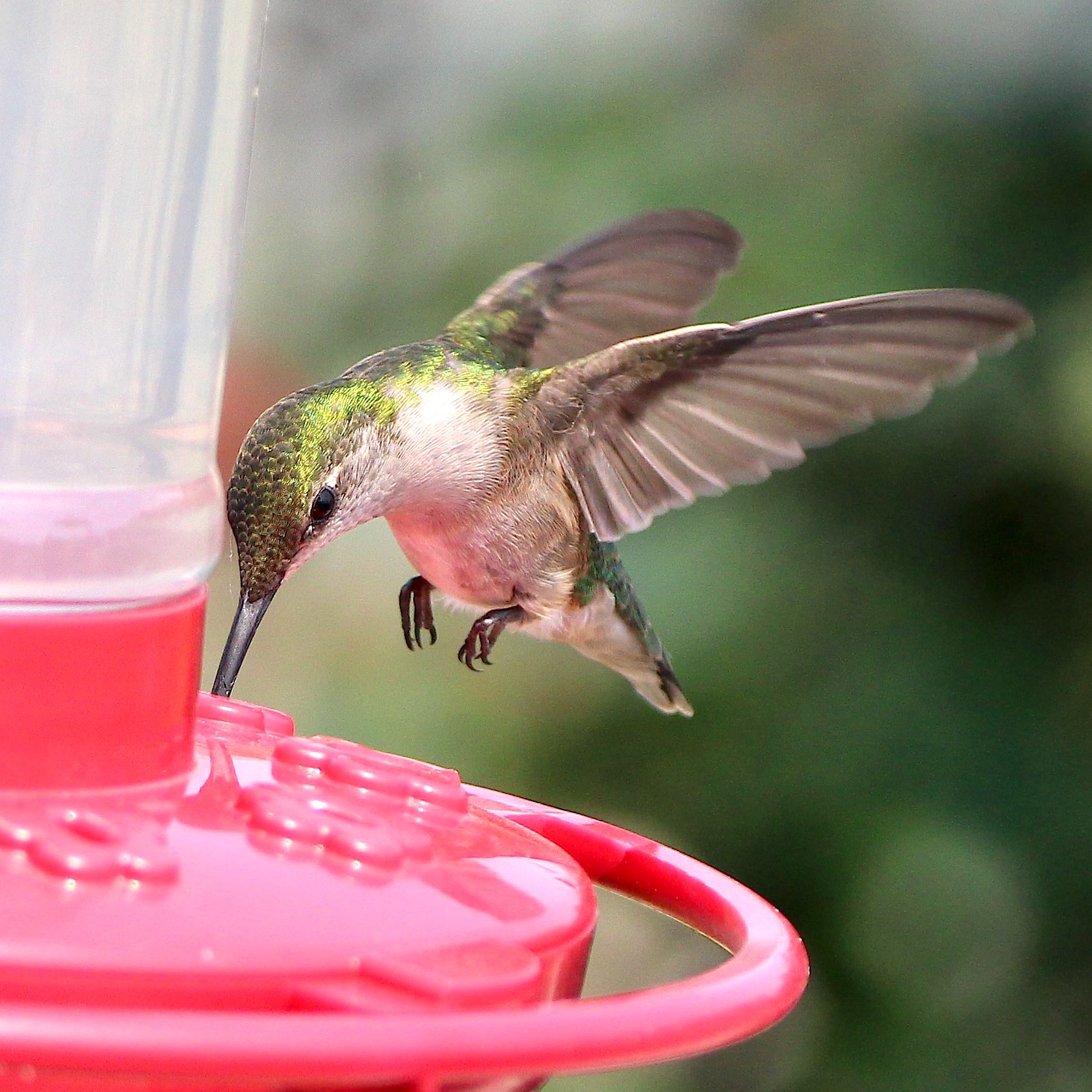
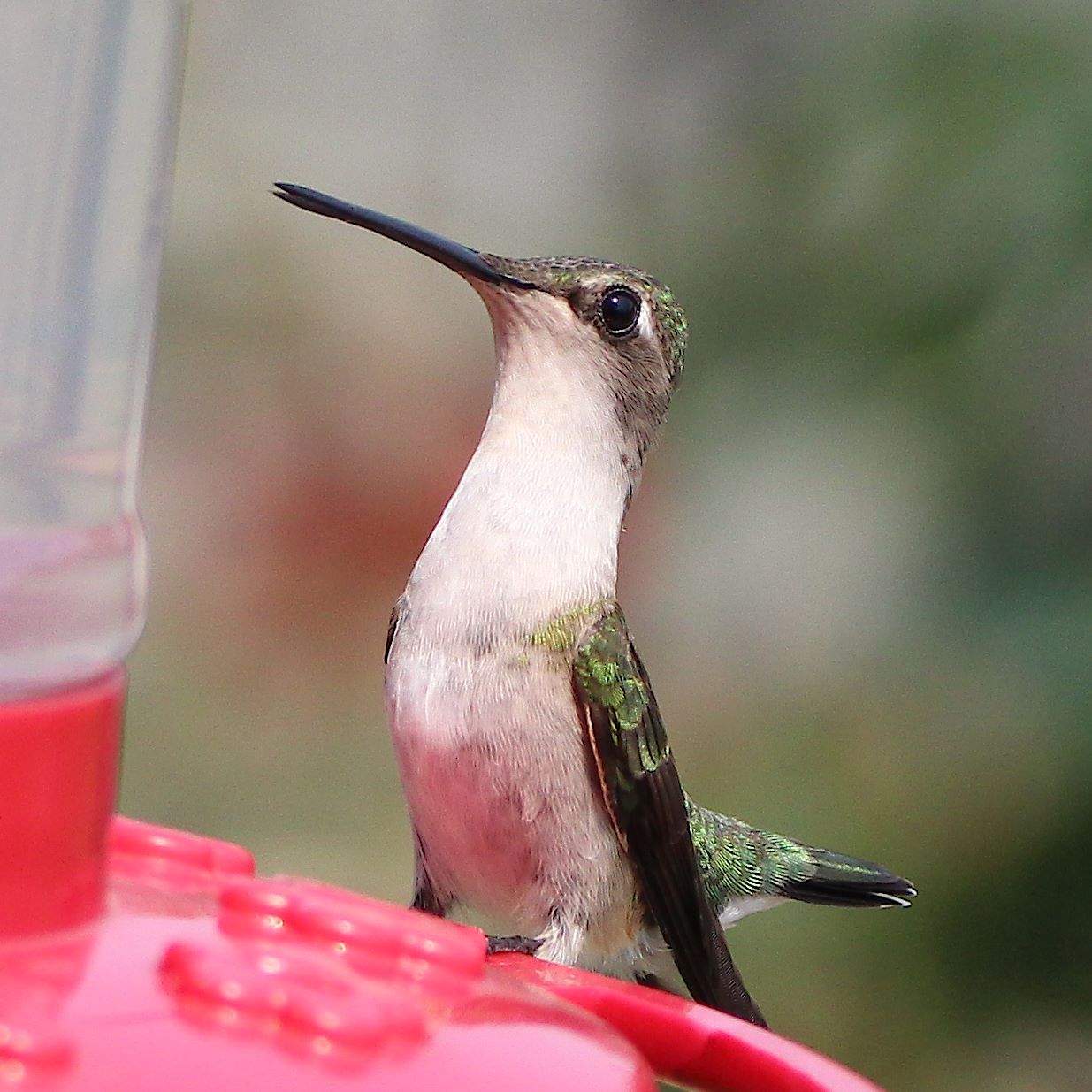
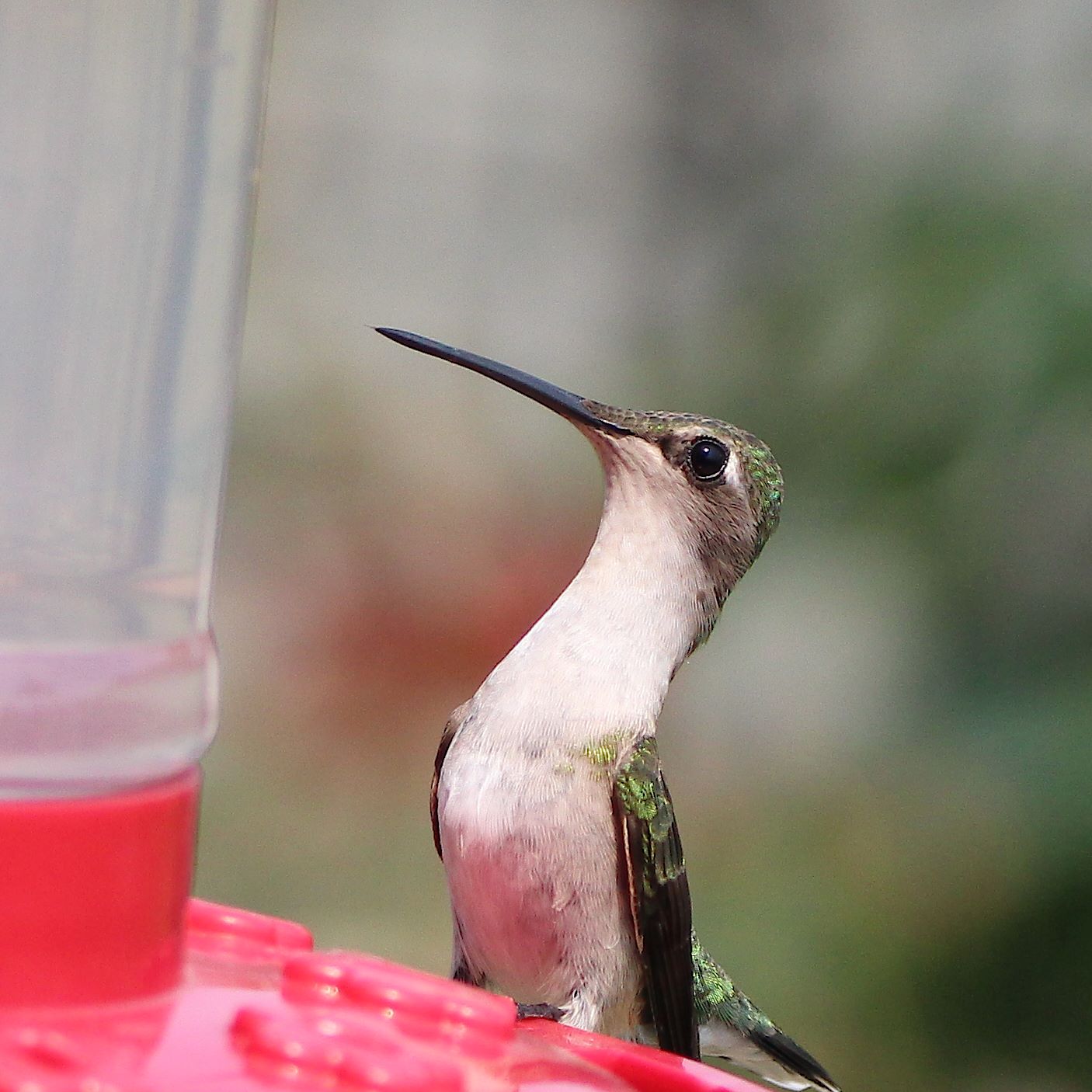
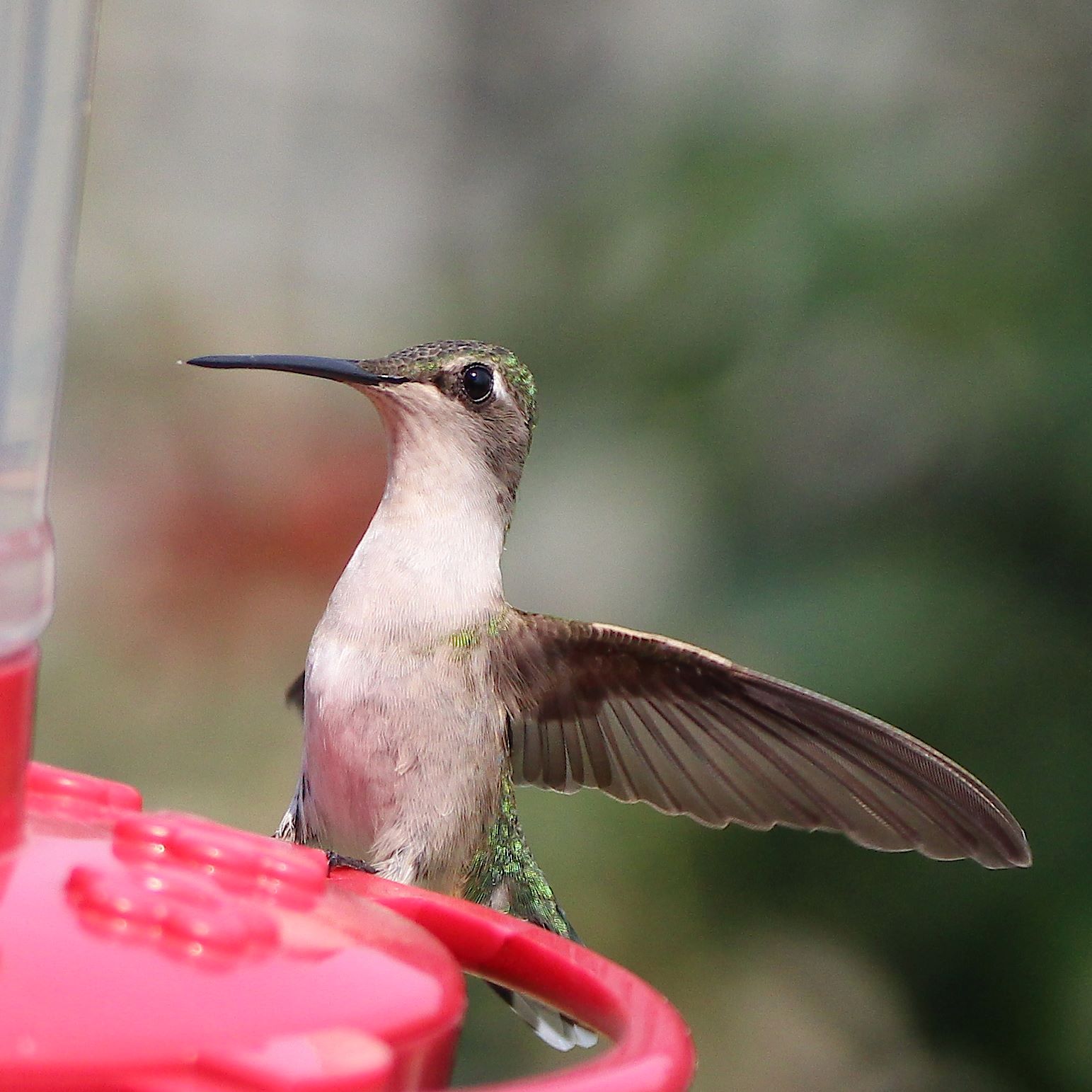
If you look closely at the following images, you will see that while it seems like the same individual, these are actually two different females. The first has quite a bit of pollen on her beak and appears lighter in shade. The lightness could be simply the artifact of a wispy cloud slightly shrouding the sun. However, the second bird also has some green feathers at her shoulder area, and has no pollen on her beak. Since I took these photos within the same 5 minutes, I’m going to assume that bird #2 didn’t completely clean her beak between visits to the feeder.
BIRD #1
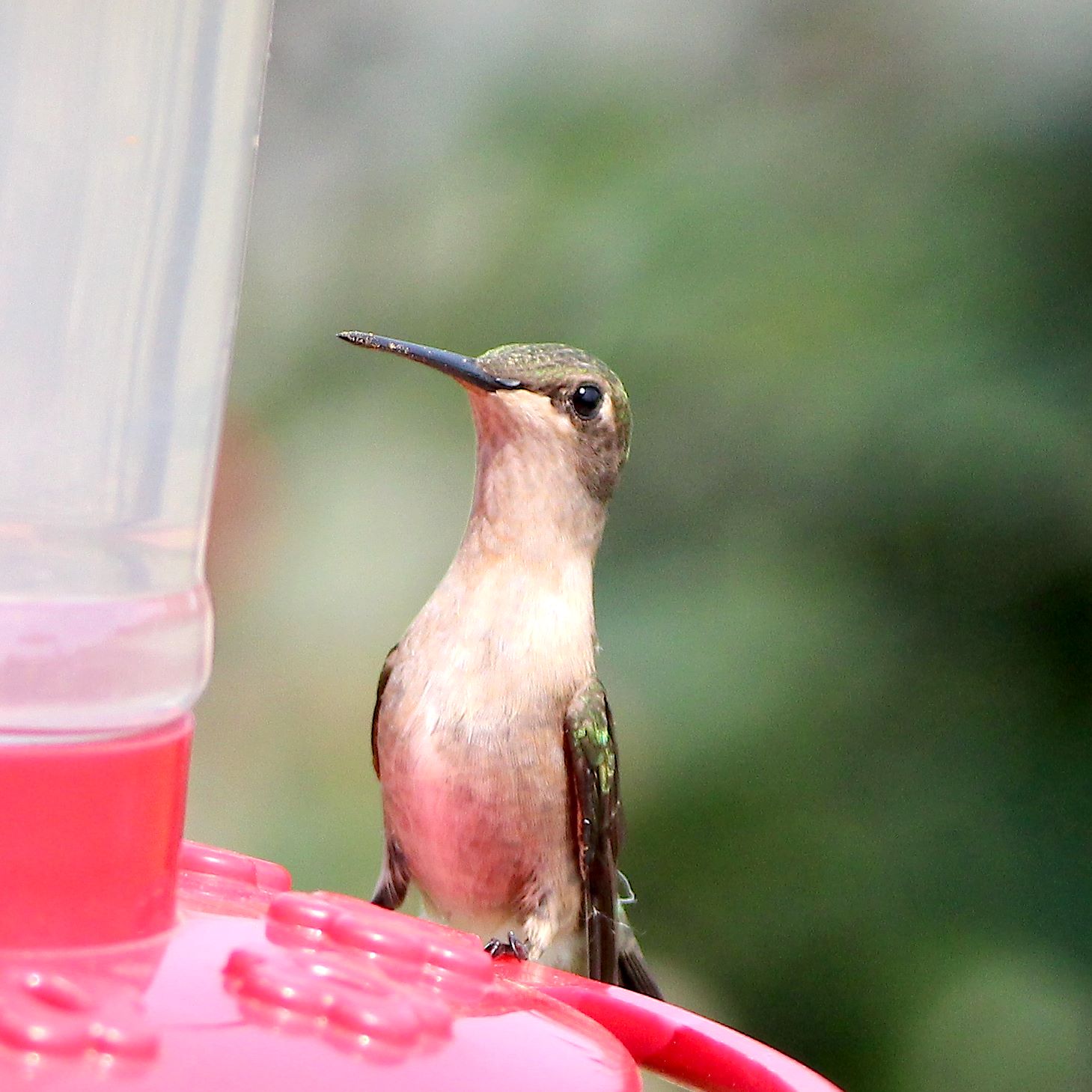
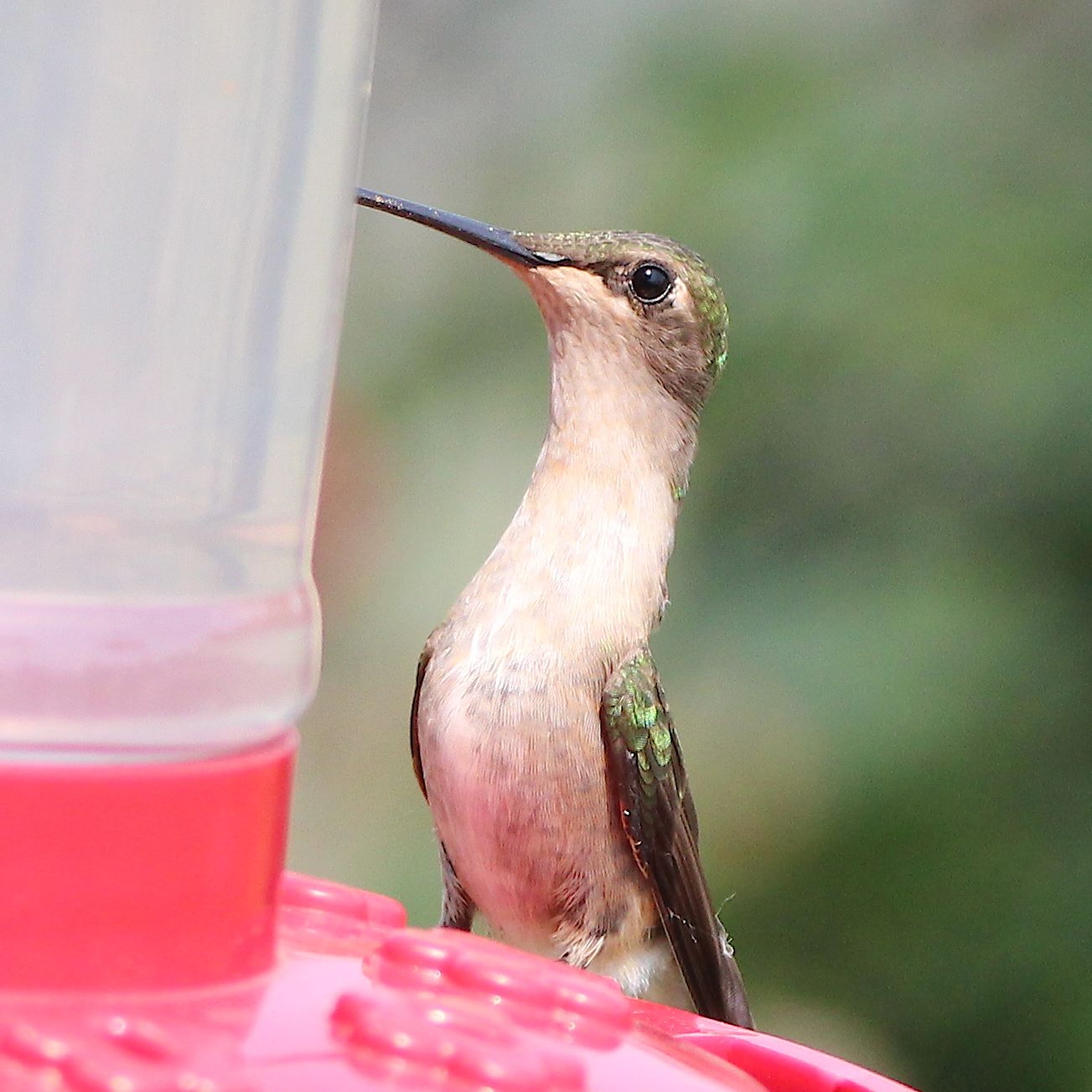
BIRD #2