Tammie Rogers
Inspired by Dogs & Nature
Take the Plunge
We are very fortunate to have erected a Purple Martin house and have these special birds show up only days later to raise their chicks. That was four years ago. Each year since then, we added additional housing for the growing flock.
When I post images of our Purple Martins in social media, it’s quite common that someone comments how much he’s tried to get PMs to inhabit his housing and yet never sees a single bird. There are several critical factors that this species seeks to establish their colony. They are attracted to human activity, but they need a lot of uninterrupted air space for soaring. At PurpleMartin.org it state, “Location, location, location! One of the most important steps in attracting Purple Martins is choosing the right location for your martin housing. Martins prefer housing that is placed in open areas with clear flyways. Choose the center of the largest open spot available, about 30-120 feet from human housing and at least 40-60 feet from trees.” Not everyone has that sort of space, which is probably why they struggle attracting this species.
What I have learned from my observations, is that these lovely swallows also covet access to a large, open water space. Our farm pond, which is about 3 acres in total surface area, serves the birds in our colony well.
A couple of days ago I was sitting near our pond hoping to capture something interesting when I realized that the Purple Martins, as well as the Barn Swallows and Tree Swallows were spending quite a bit of time dropping down to the pond’s surface to skim for water. Many birds were dedicating quite a bit of time to the task. What I soon realized was that the birds were using the same small area to access the water. It was located in the center of the larger end of the pond where the light breeze was affecting the water and causing rippling on the surface. I’m not sure if that rougher surface perhaps helped them evaluate where to land upon the water, but that is how it appeared to me.
I had little hope that I’d get a decent shot. After all, those birds are tiny, fast and dynamic in their flight patterns. My long lens was stretched to its limit at 600 mm which left it with a very small focal length. More than likely, when I downloaded the SD card to my computer, I would be viewing dozens of shots that would leave anyone scratching her head, asking “what is that blob there in the middle of the frame?”
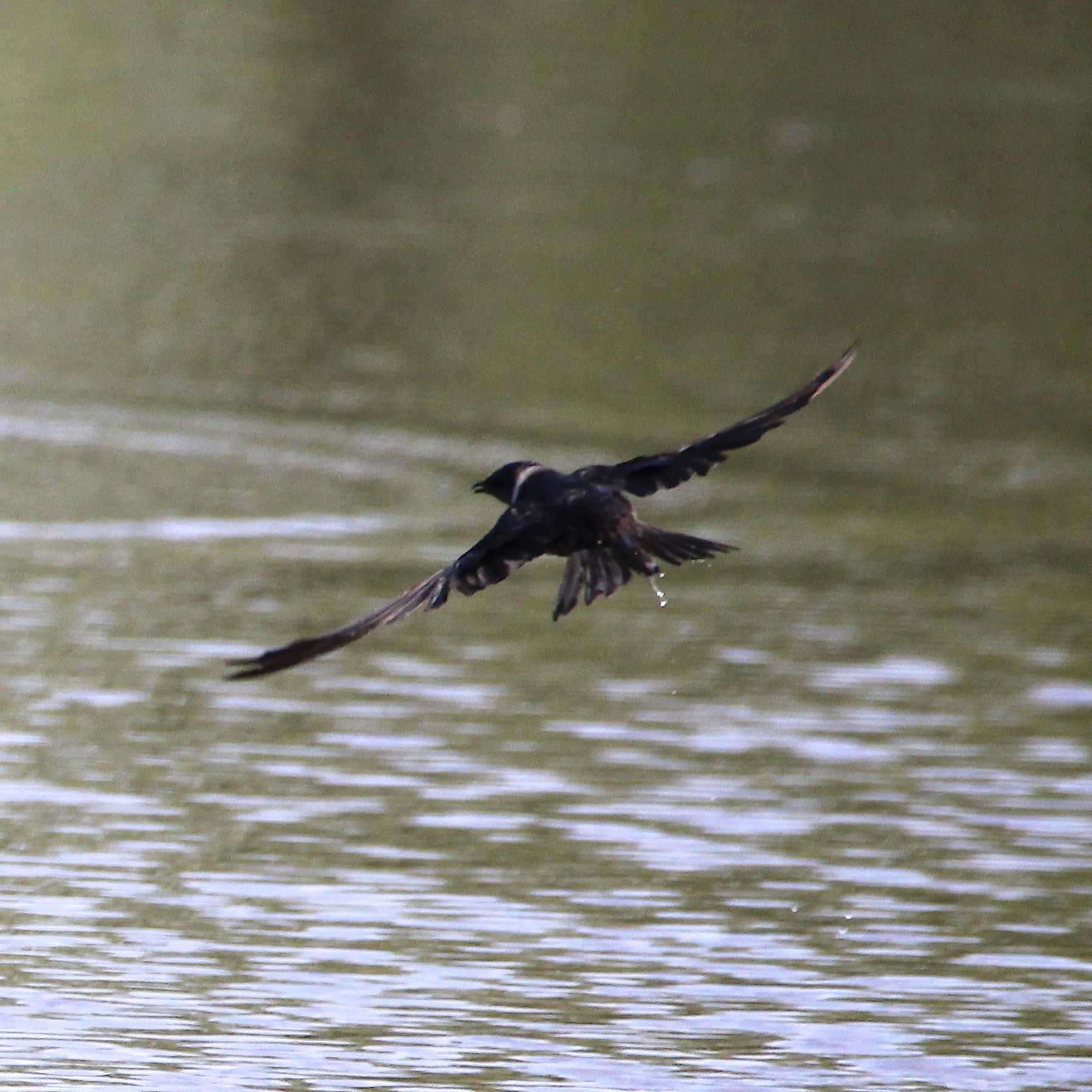
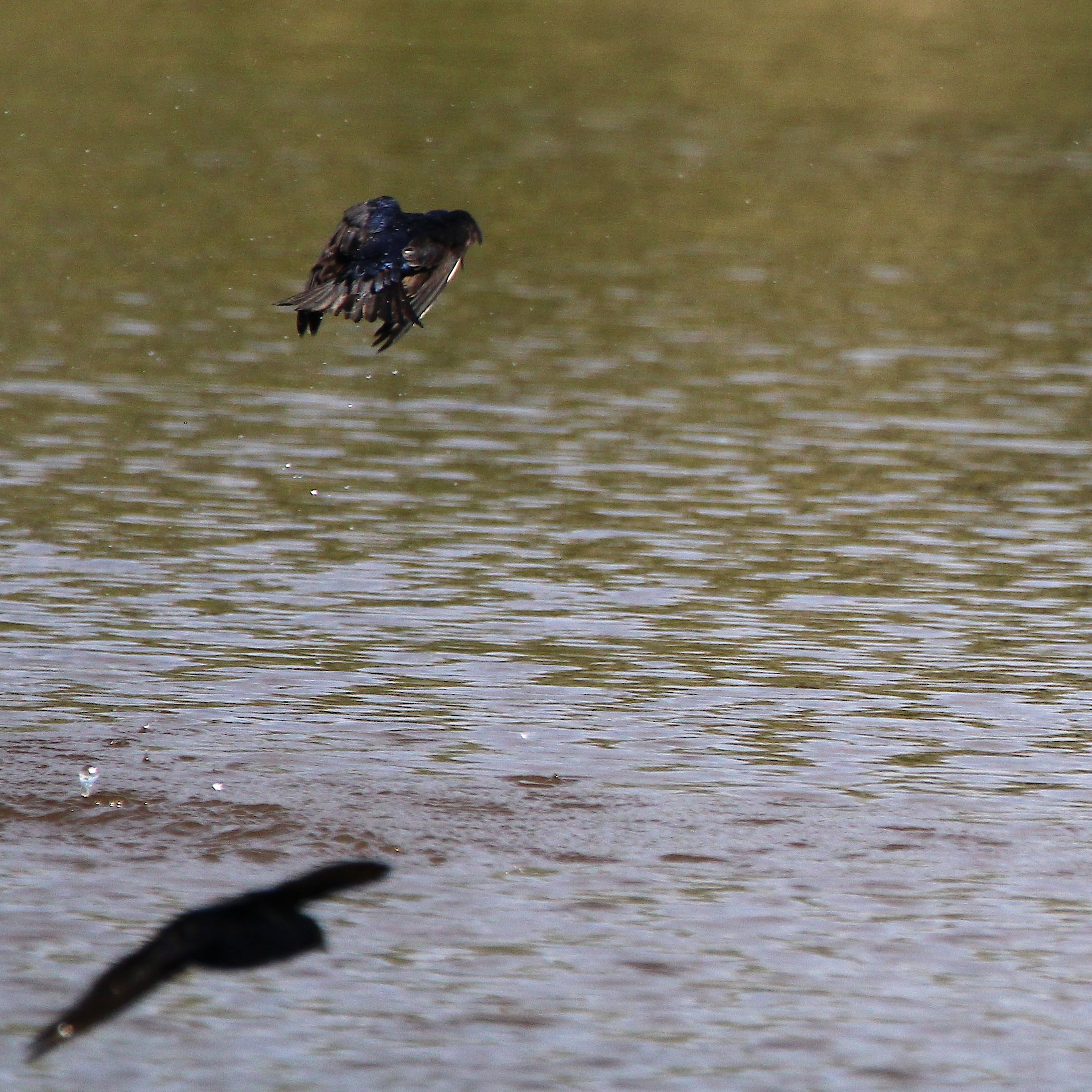
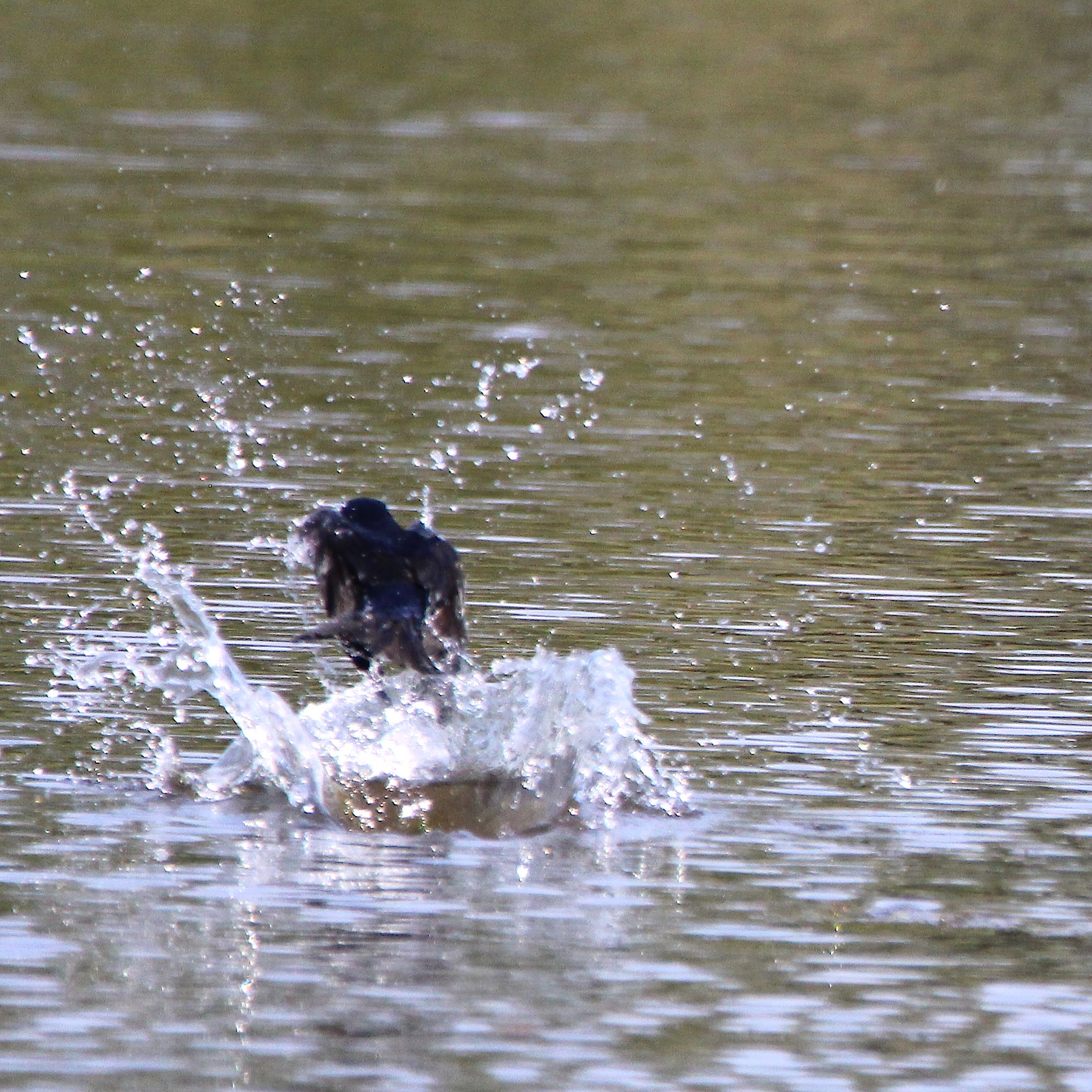
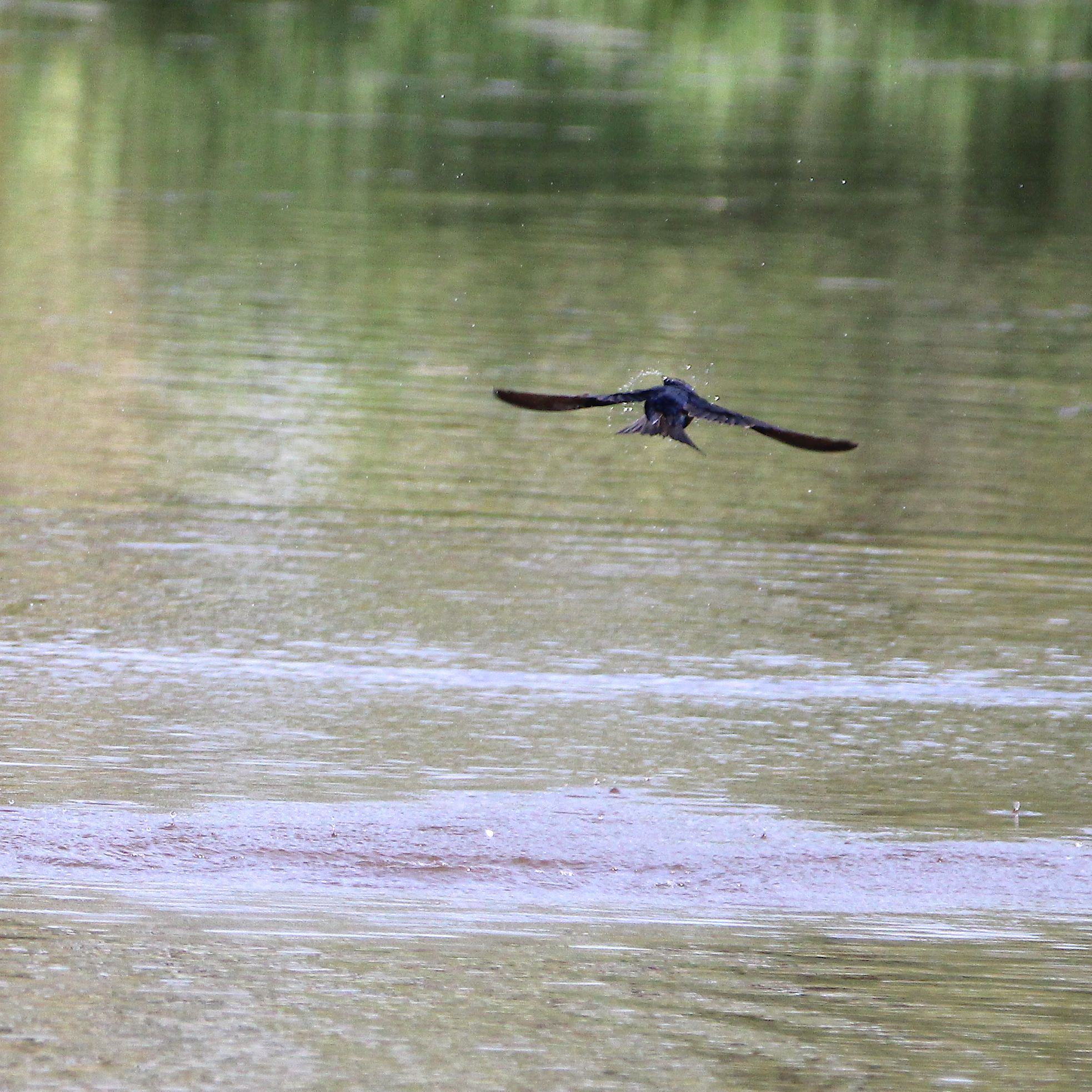
I’m talking about something like these images:
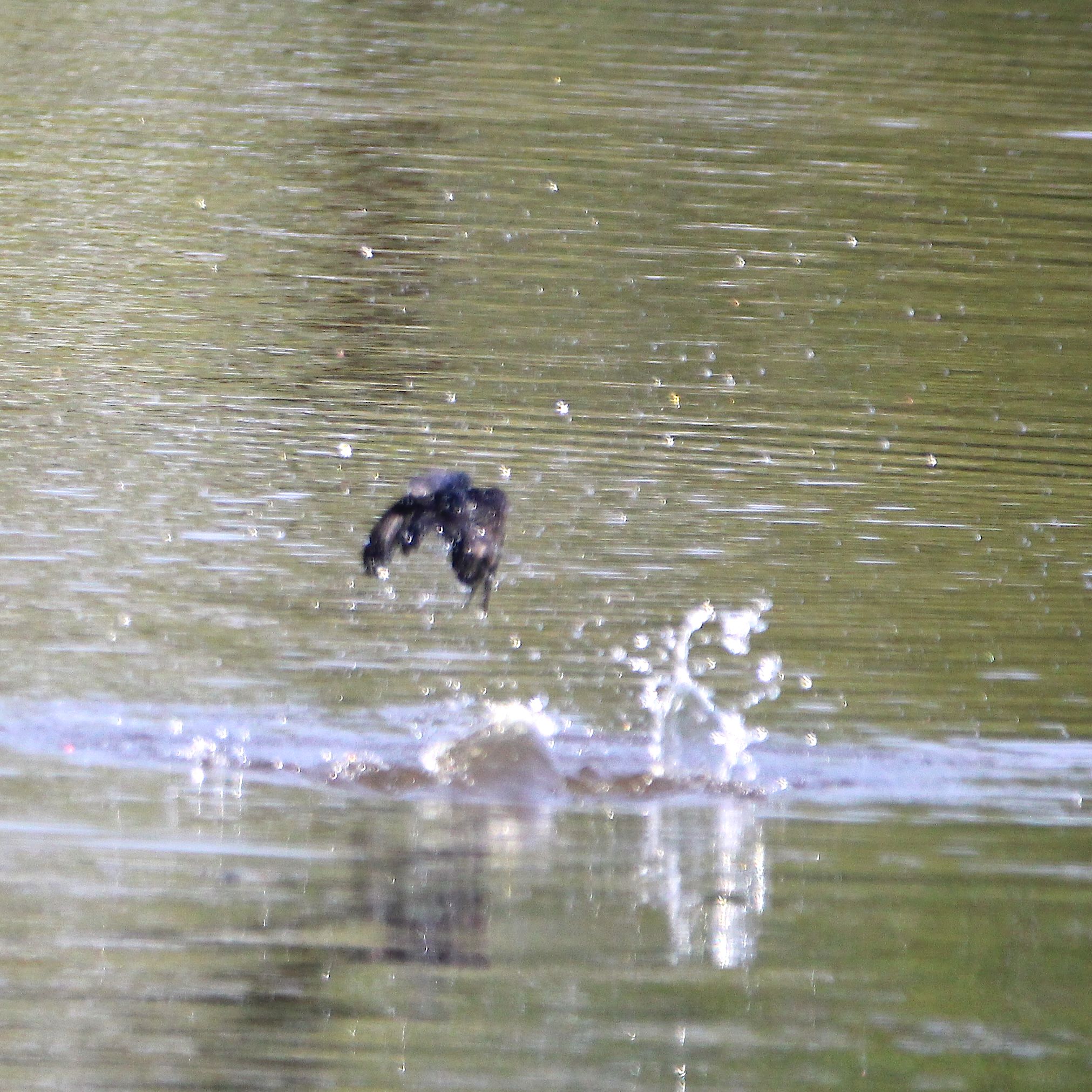
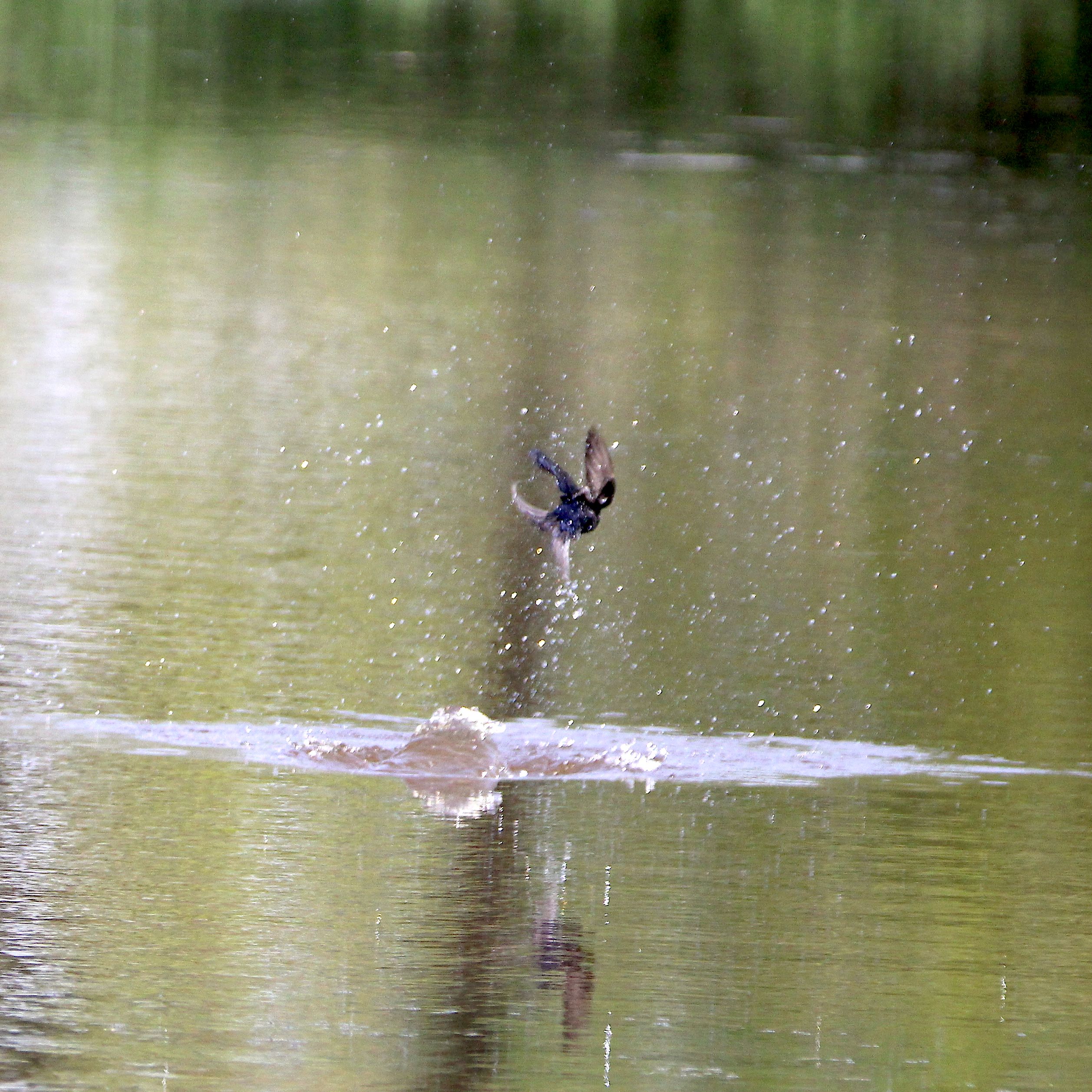
I did snap dozens of rejects like those. However, I was able to capture a very few shots that are worth sharing – only because I’m not proud and I don’t consider myself anything more than a very amateur photographer.
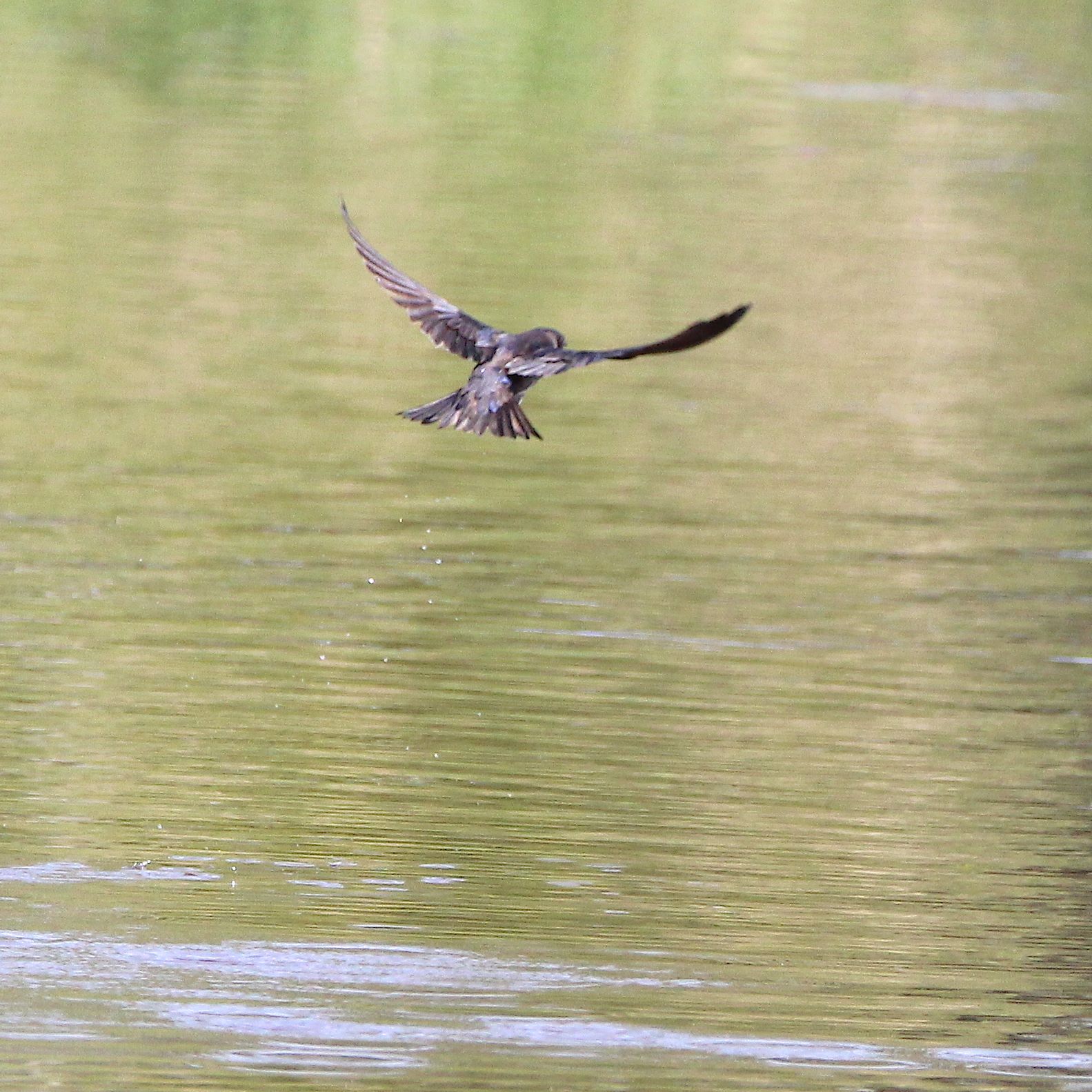
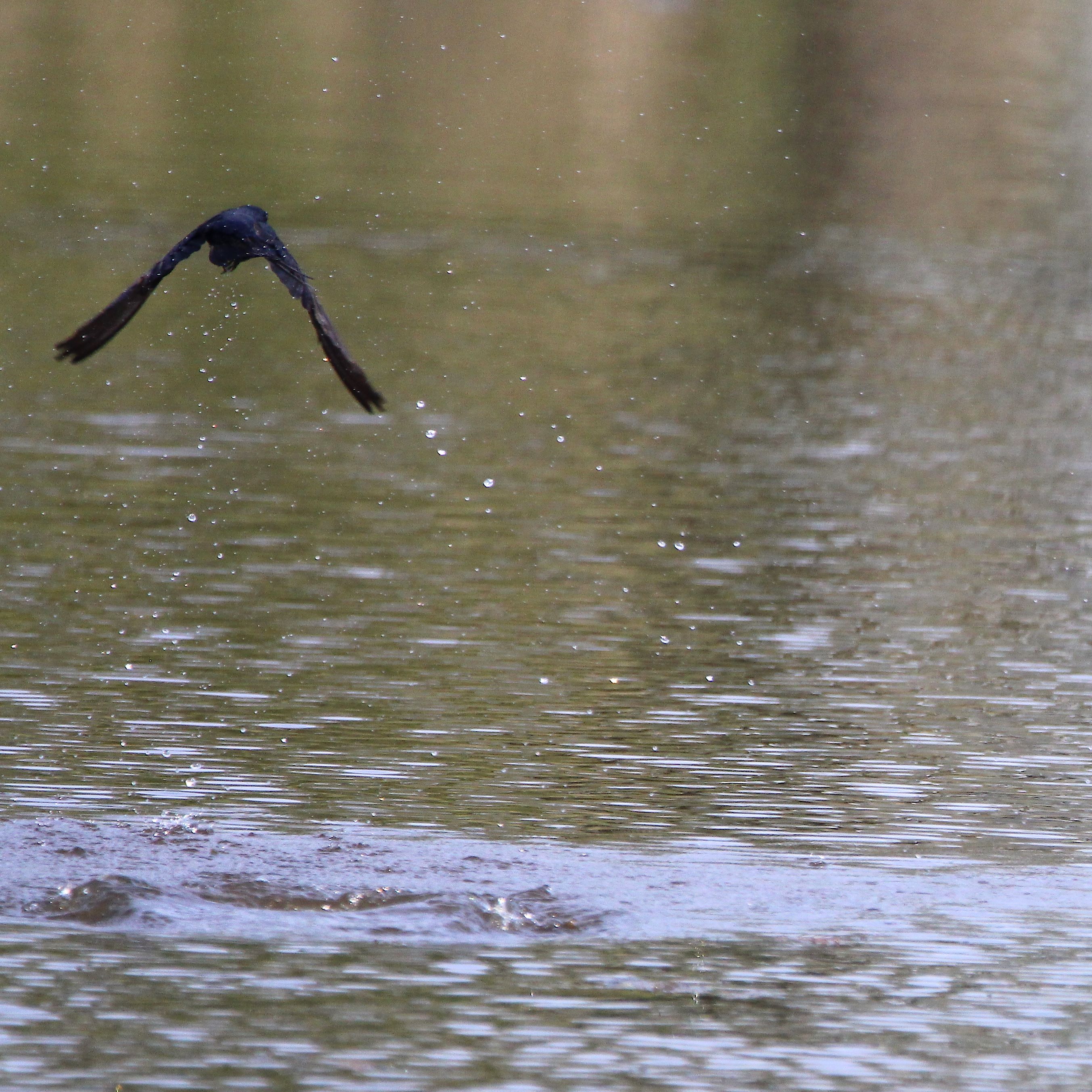
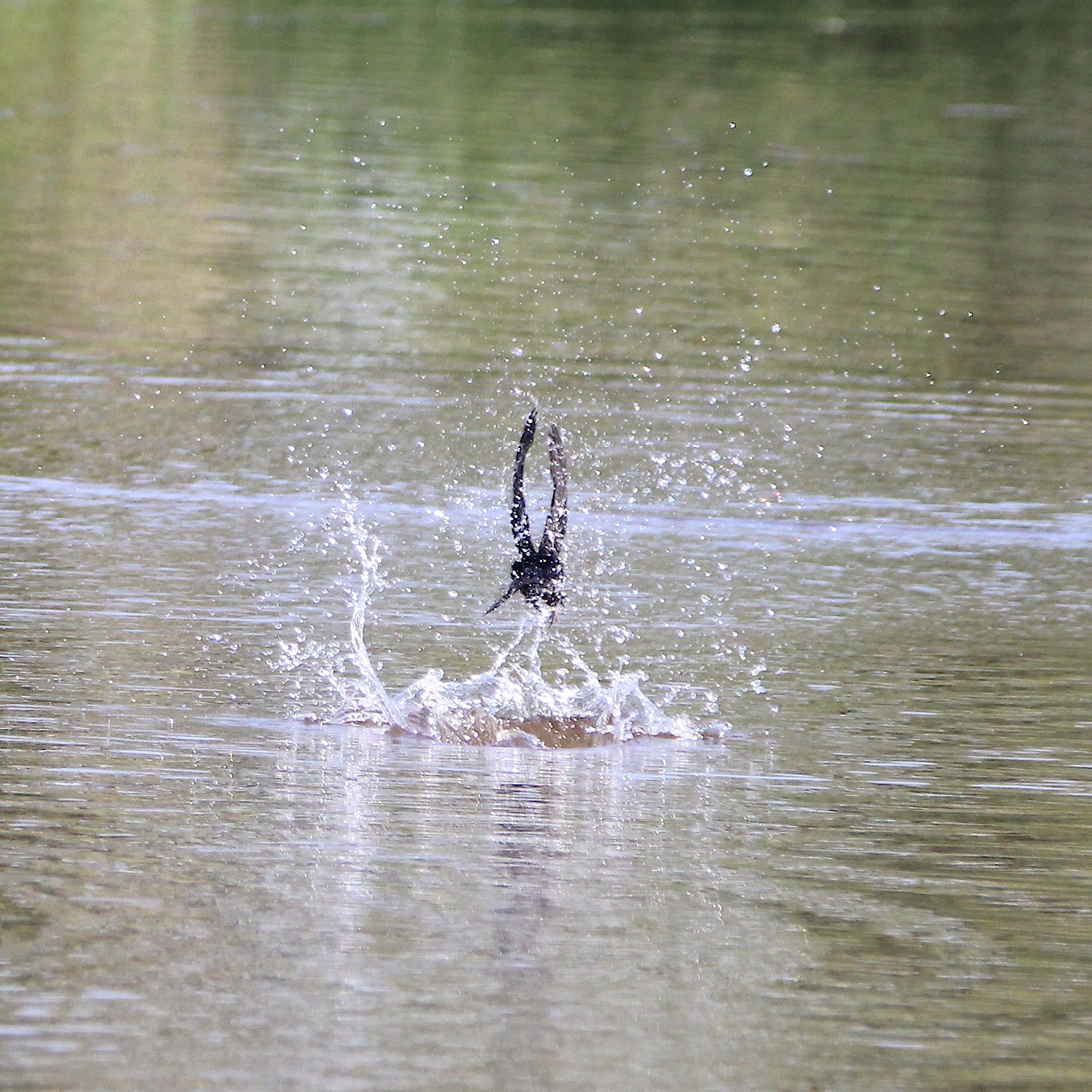
My favorite images are limited to these next two pictures, which are actually in sequence (same bird). If your device on which you are viewing this post is large enough you can see the droplets of water that the bird in the second photo appears to be shaking off. The droplet pattern looks similar to me as when a dog shake’s his head and body after getting out of the water.
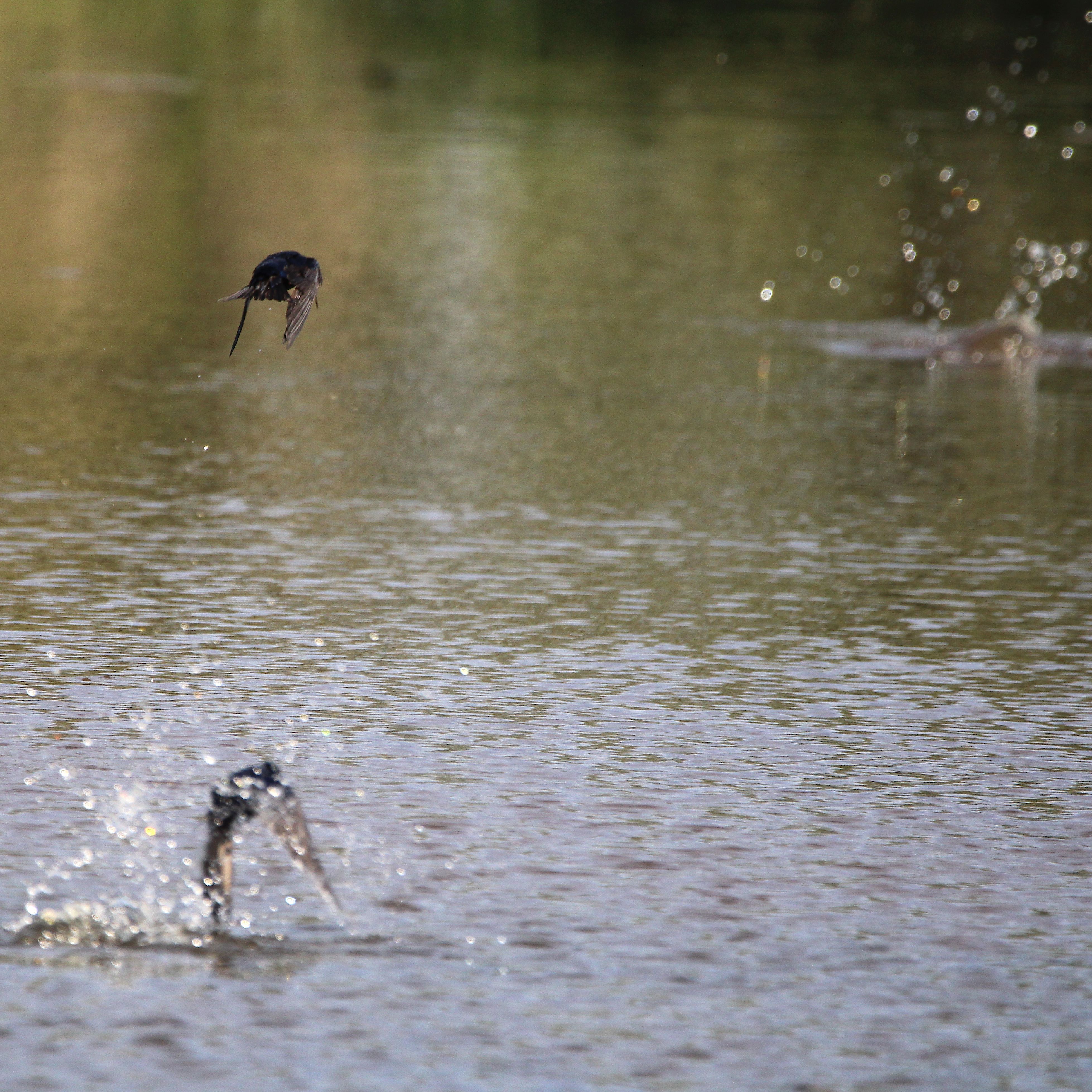
I also appreciate the next image for the perspective of three birds in the same frame. I think it illustrates some sense of how many birds were taking part in this amazing activity at the same time as well as the focal length that my lens was covering. There’s only one bird in focus, with the action in the foreground and background that is out of focus. For me, it was a significant “accomplishment” which I captured by “chance” which is pretty much the entirety of my skill level any time I am taking photos!


Bath time !