Tammie Rogers
Inspired by Dogs & Nature
The Prairie’s Town Crier
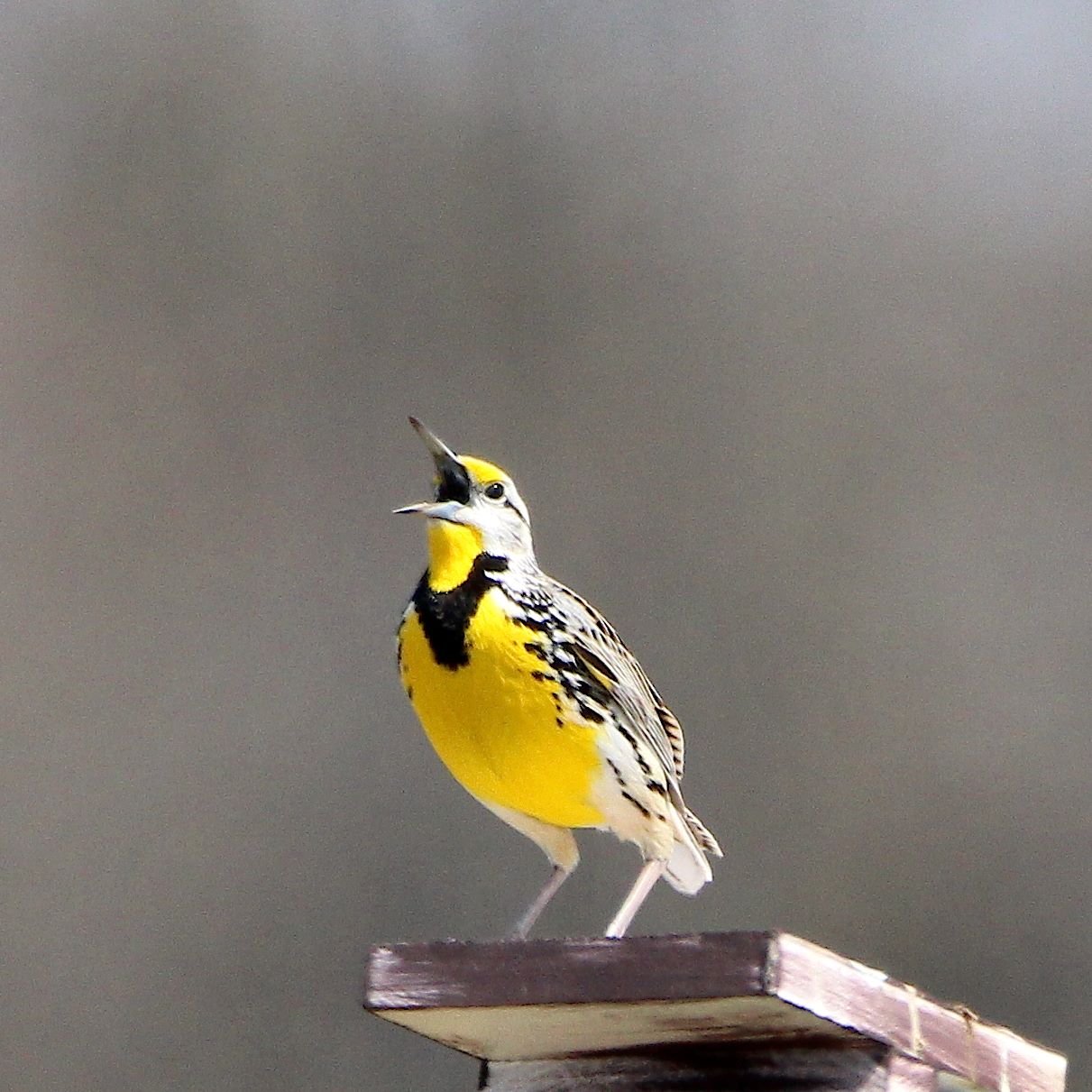
Announcing the arrival of Spring and welcoming the migrating birds that are moving through the prairie is the Meadowlark. Much of this brilliant, yellow bird’s time is spent on the ground where it both nests and hunts for its meals. However, at this time of year, the Meadowlark takes a more elevated position in order to sing for a mate – as well as what ever else the bird is communicating that we humans may not fully understand!
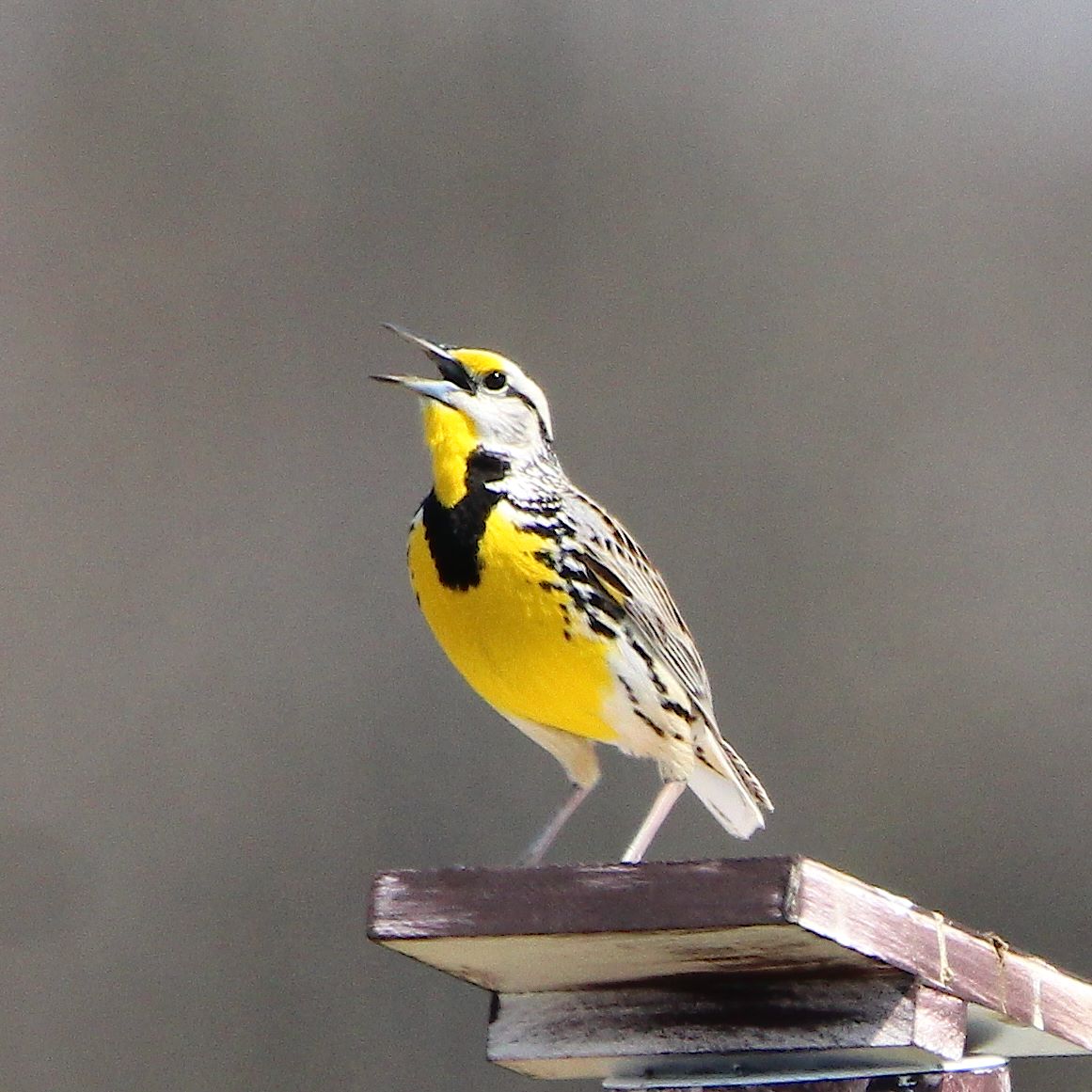
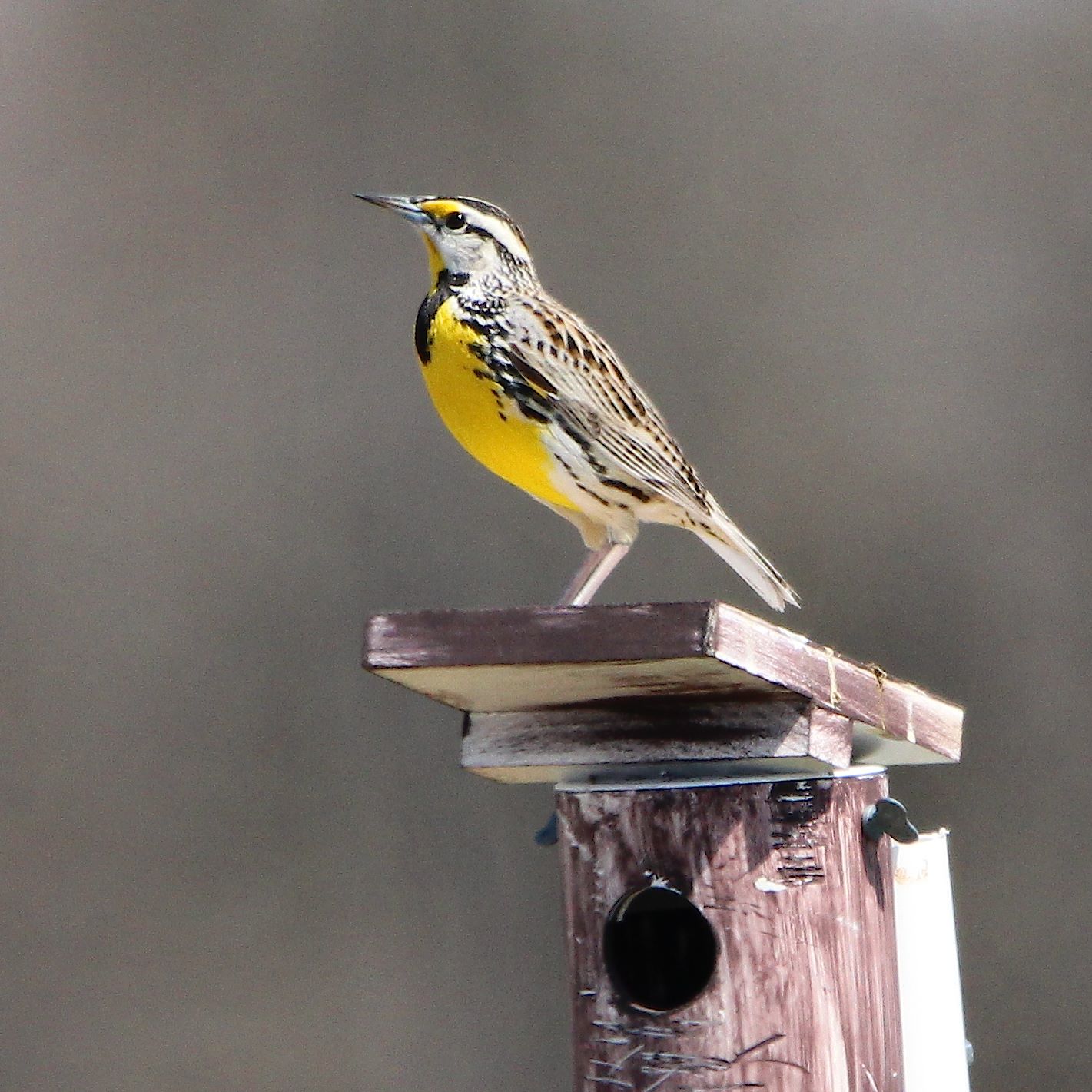
Here’s a lovely Eastern Meadowlark atop one of our Bluebird houses. He allowed me to get within 100 feet, which for this species is quite close. I suppose that when you make your living, and raise your kids on the ground, having a fast get-away is critical to your survival.
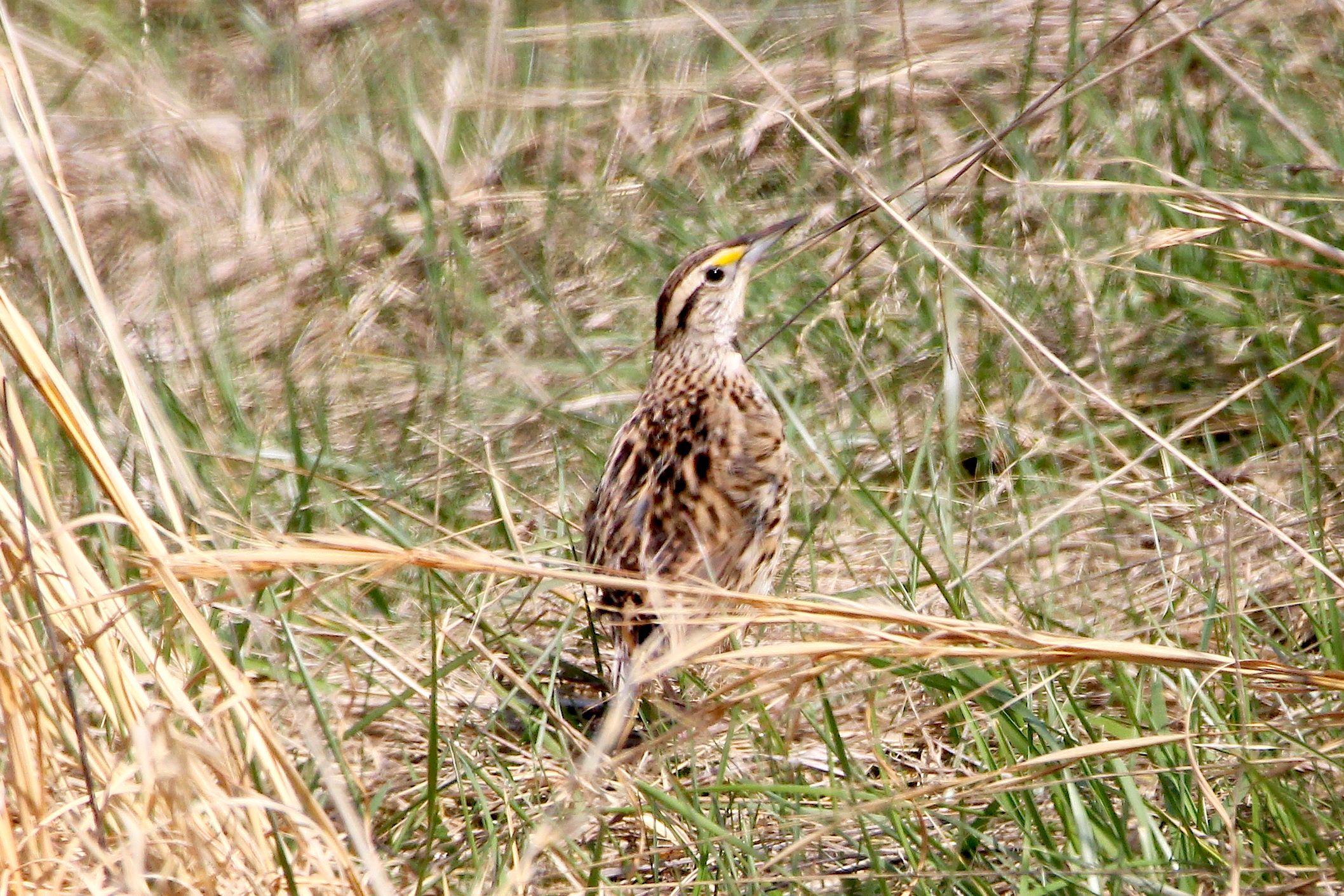
It’s not easy to spot a Meadowlark on the ground. They usually spot me, first. I would guess that they have a good sense of vibration in the soil, which would go back to getting out of the way of herds of Bison. I don’t have a chance getting close to a ground bird using my vision when they can feel me coming before I could possible see them.
When they are singing, which is loud and crisp and carries quite well, I am most likely to see them in the tree tops.
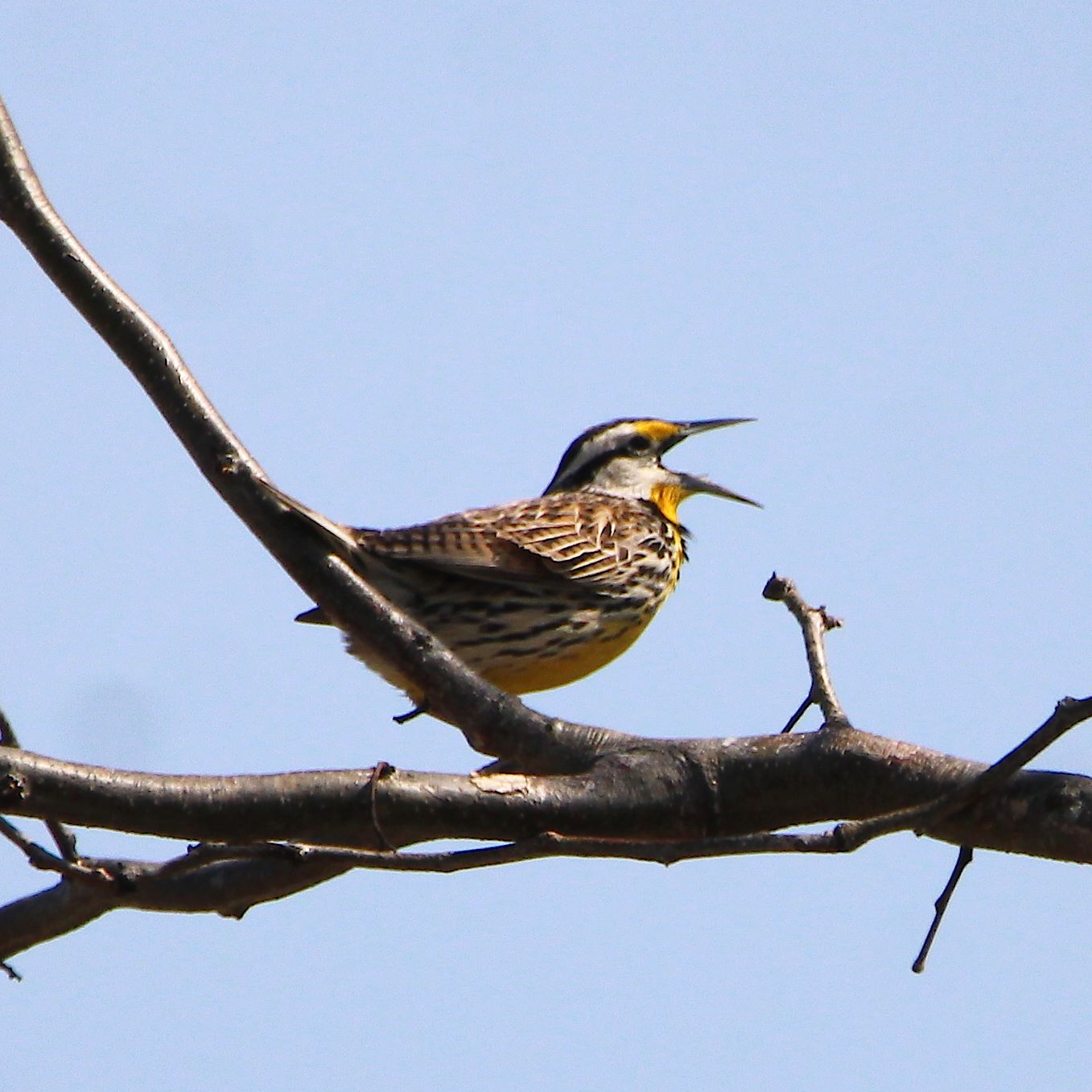
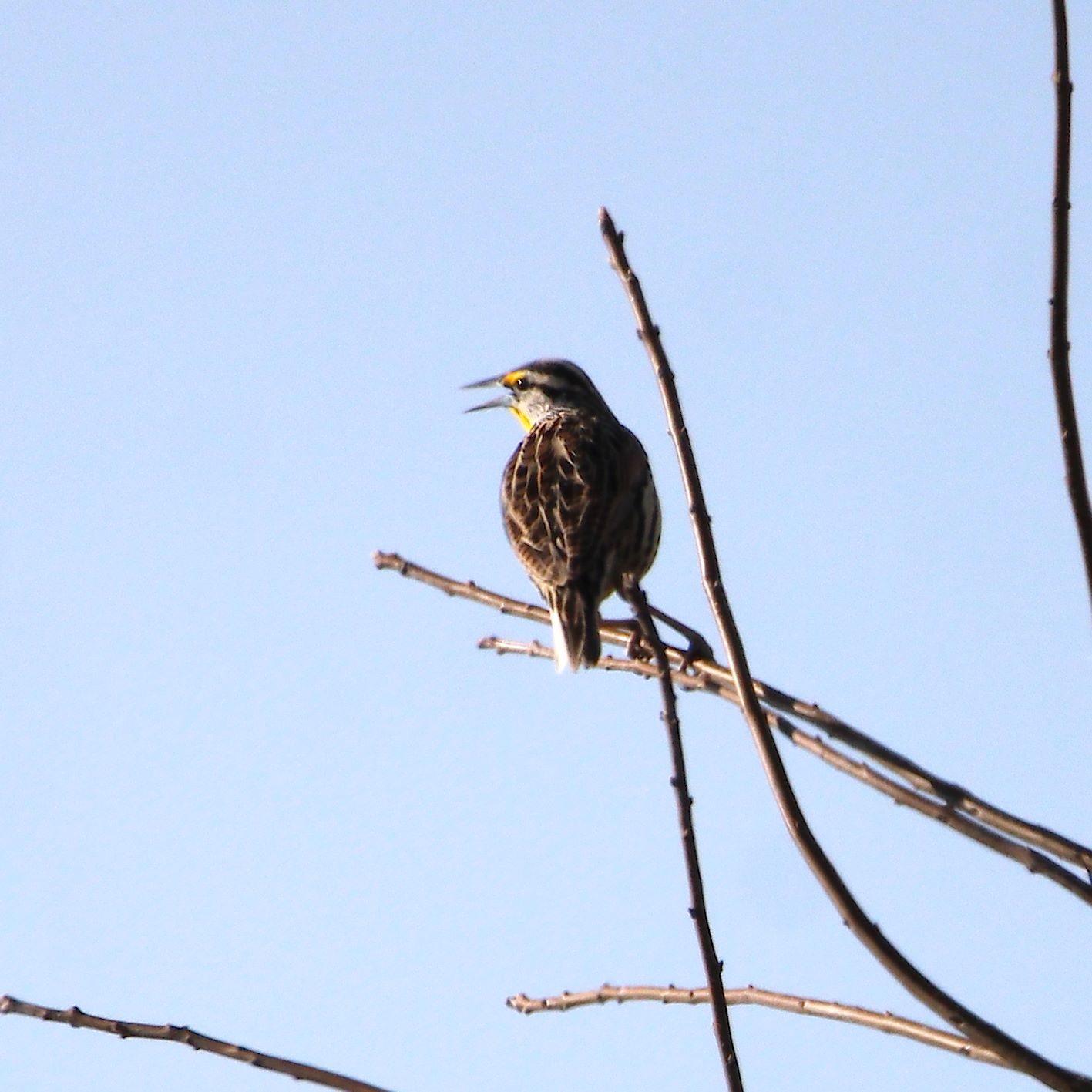
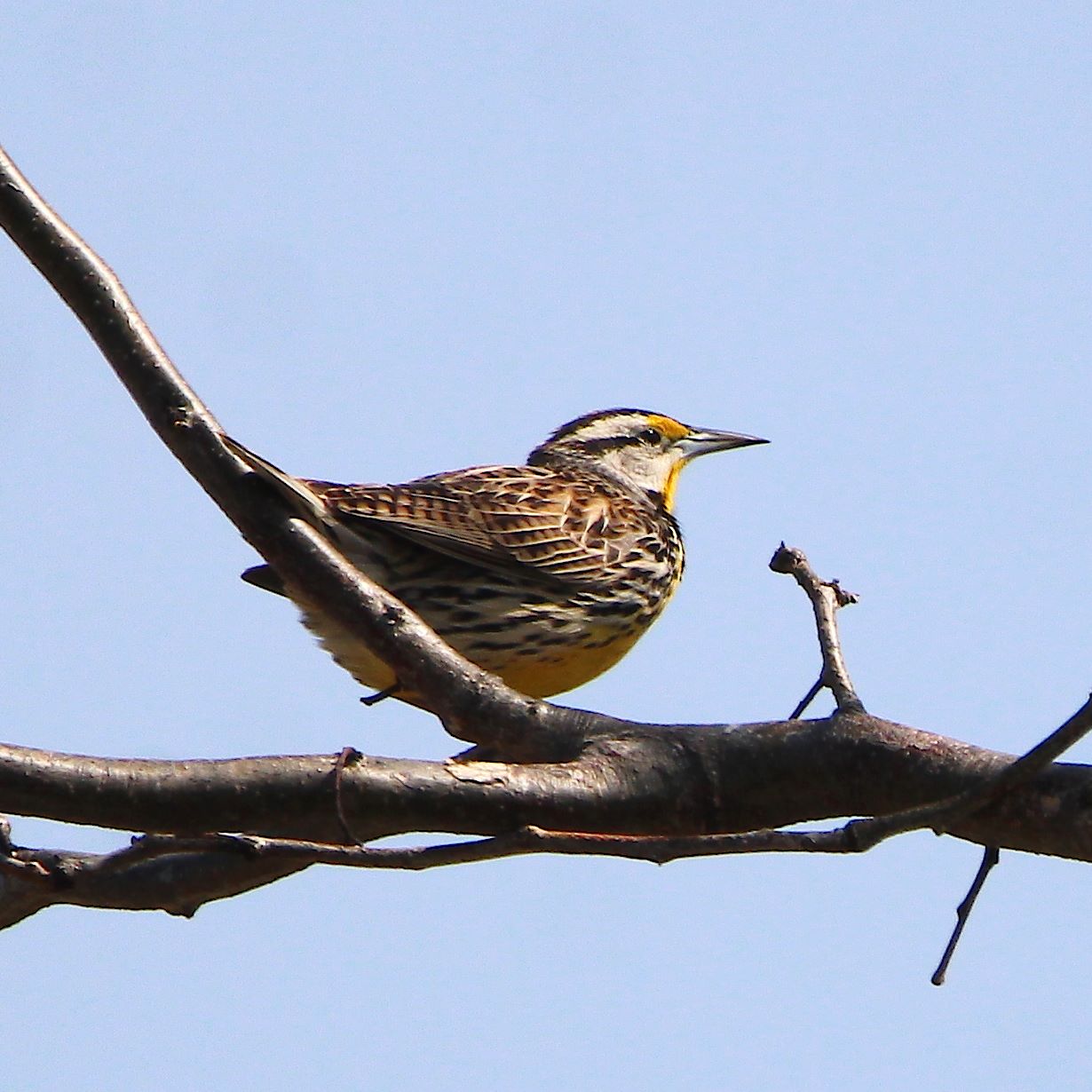
Yet, I encountered a second E Meadowlark on another Bluebird house about 800 feet from the bird shown above on another bird house.
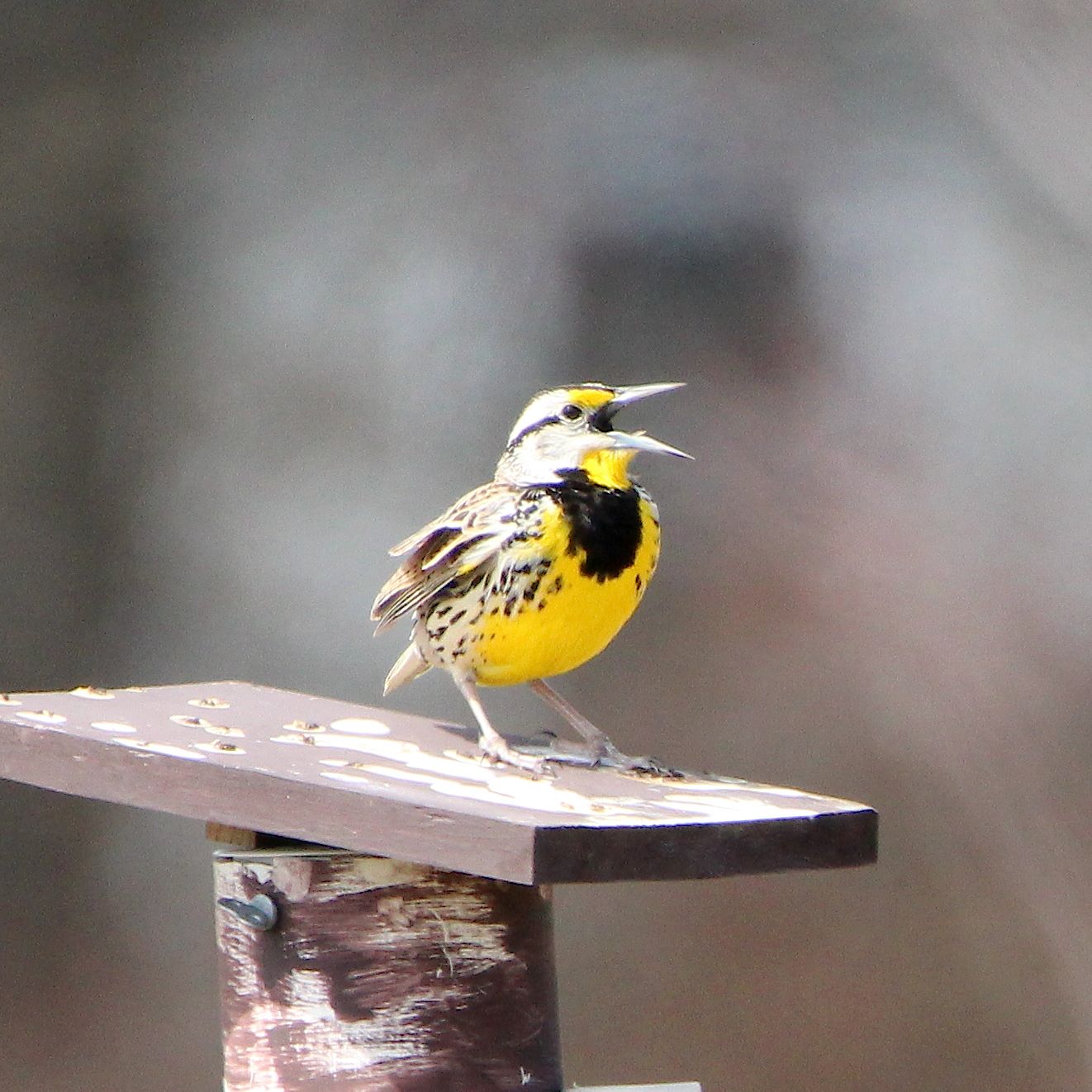
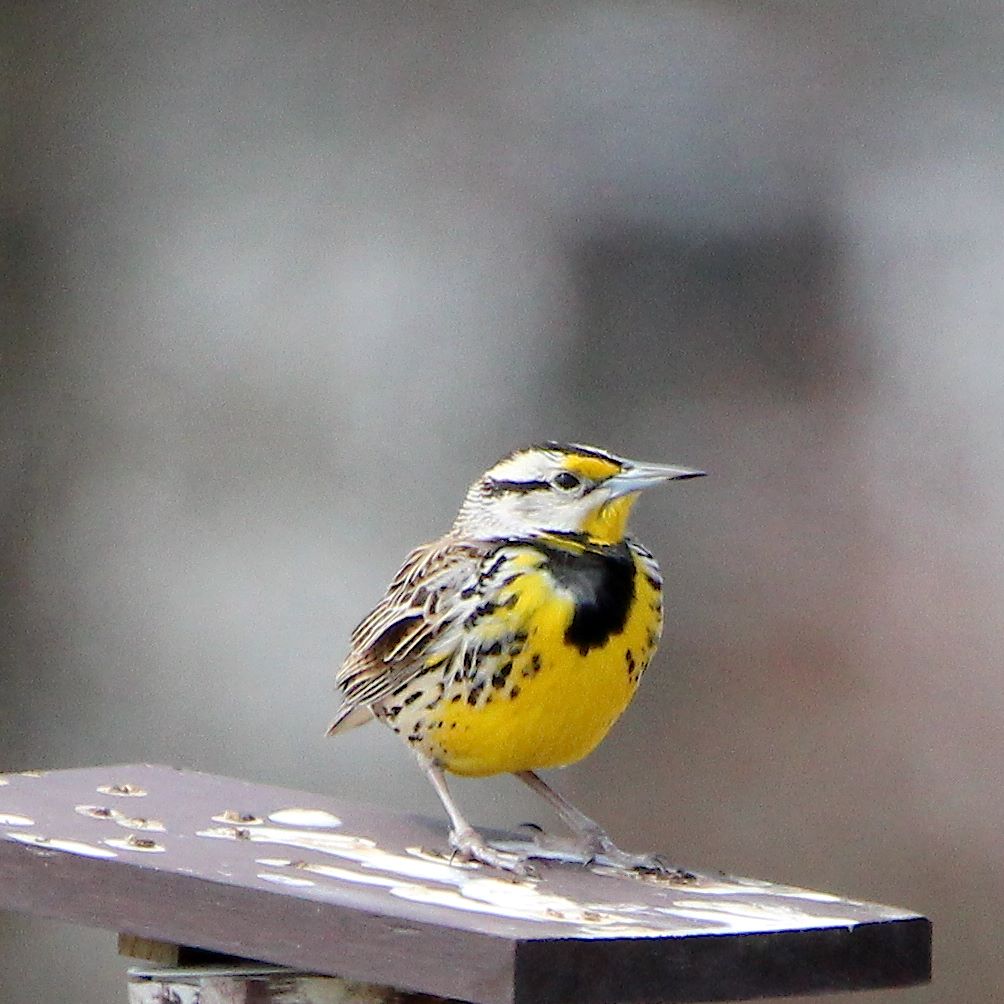
The AllAboutBird’s site claims that the Eastern Meadowlark has a “sweet, lazy” sounding song and the Western species as a “buoyant, flutelike” song. Where I live, the Eastern Meadowlark is the dominant species, but the Western species may spend non-breeding time here. To my ears, most of the time I hear a minor key, somewhat melancholy melody. In comparison, to my ear’s interpretation, the Western Meadowlark, which can make it over to our neck of the woods on rare occasions, has a more major key tune.
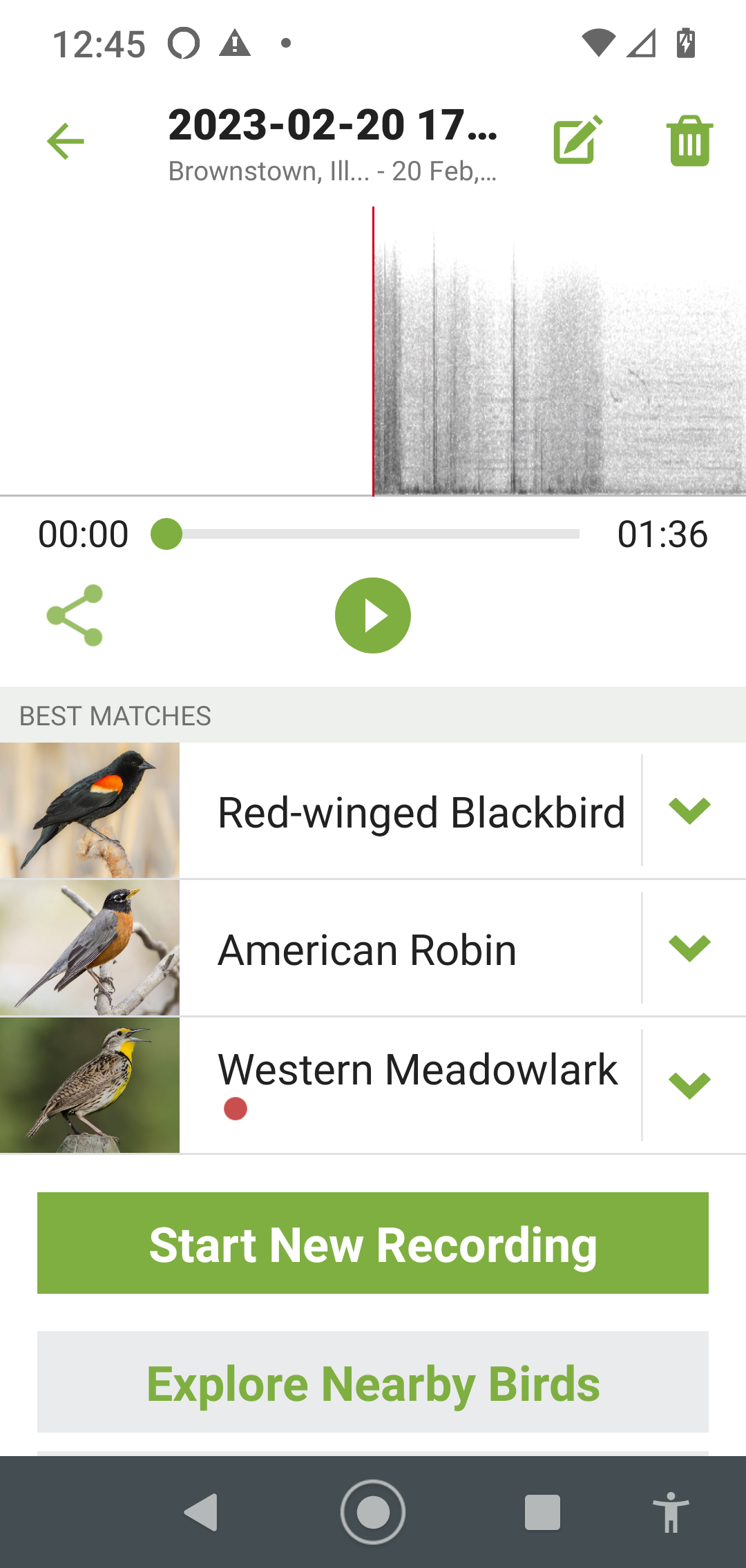
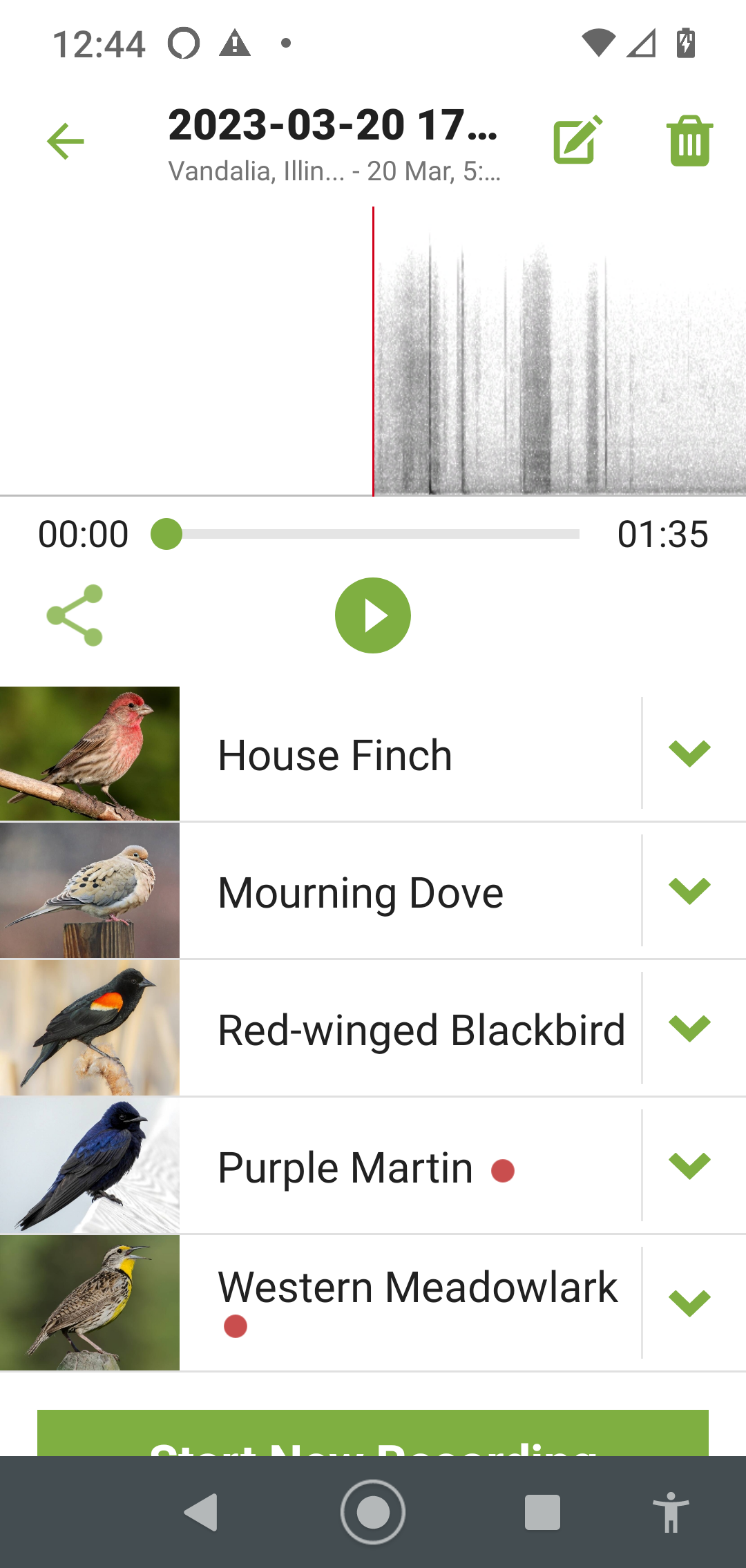
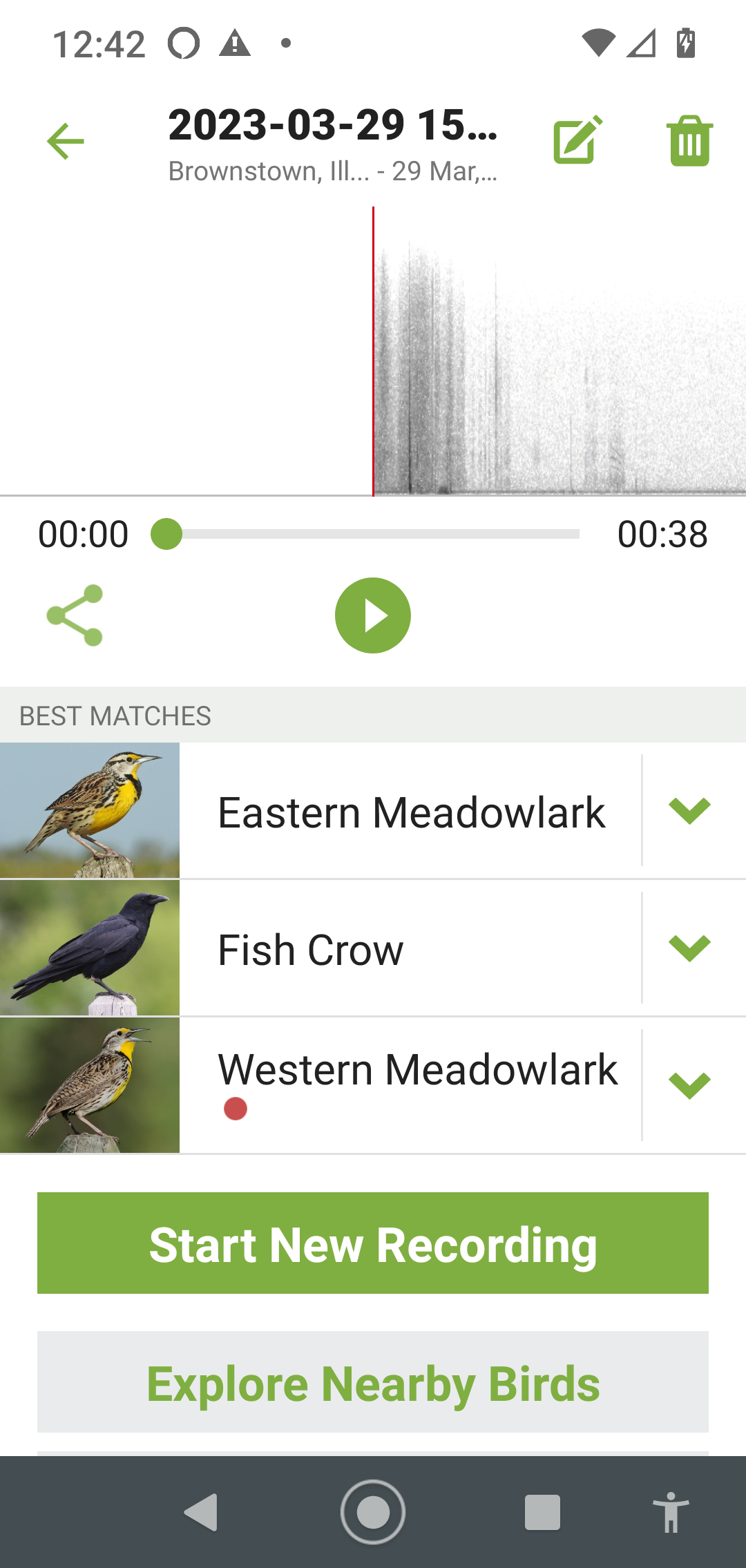
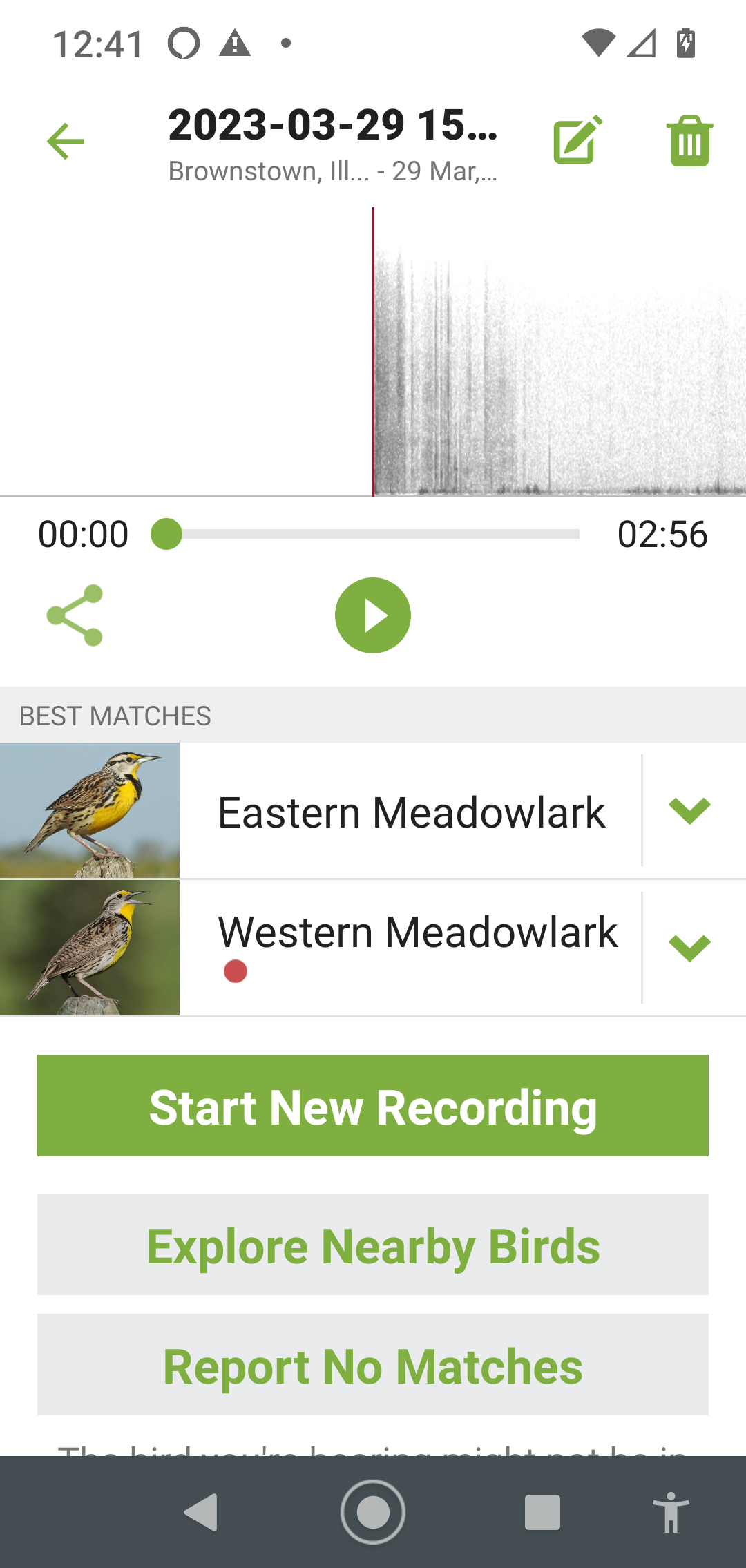
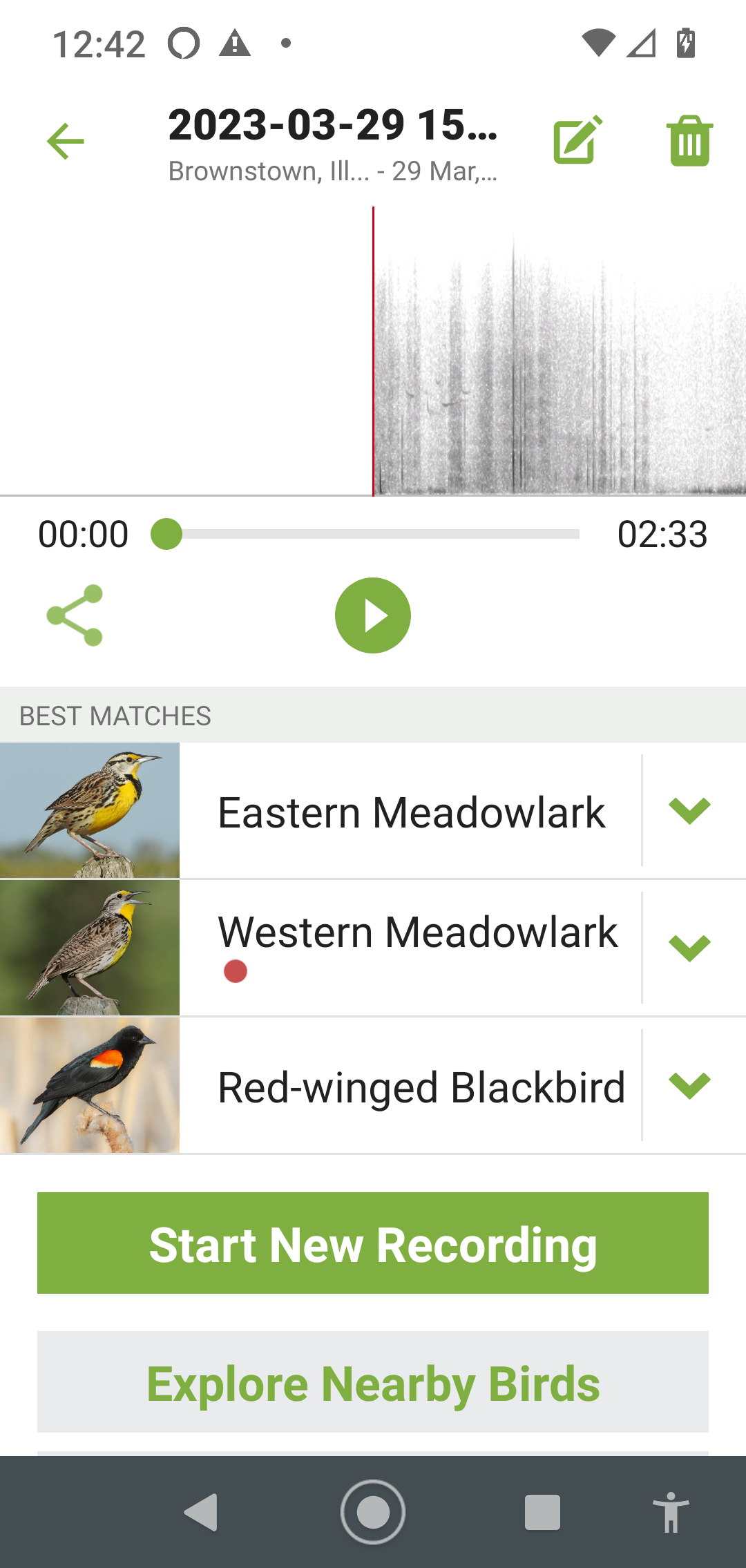
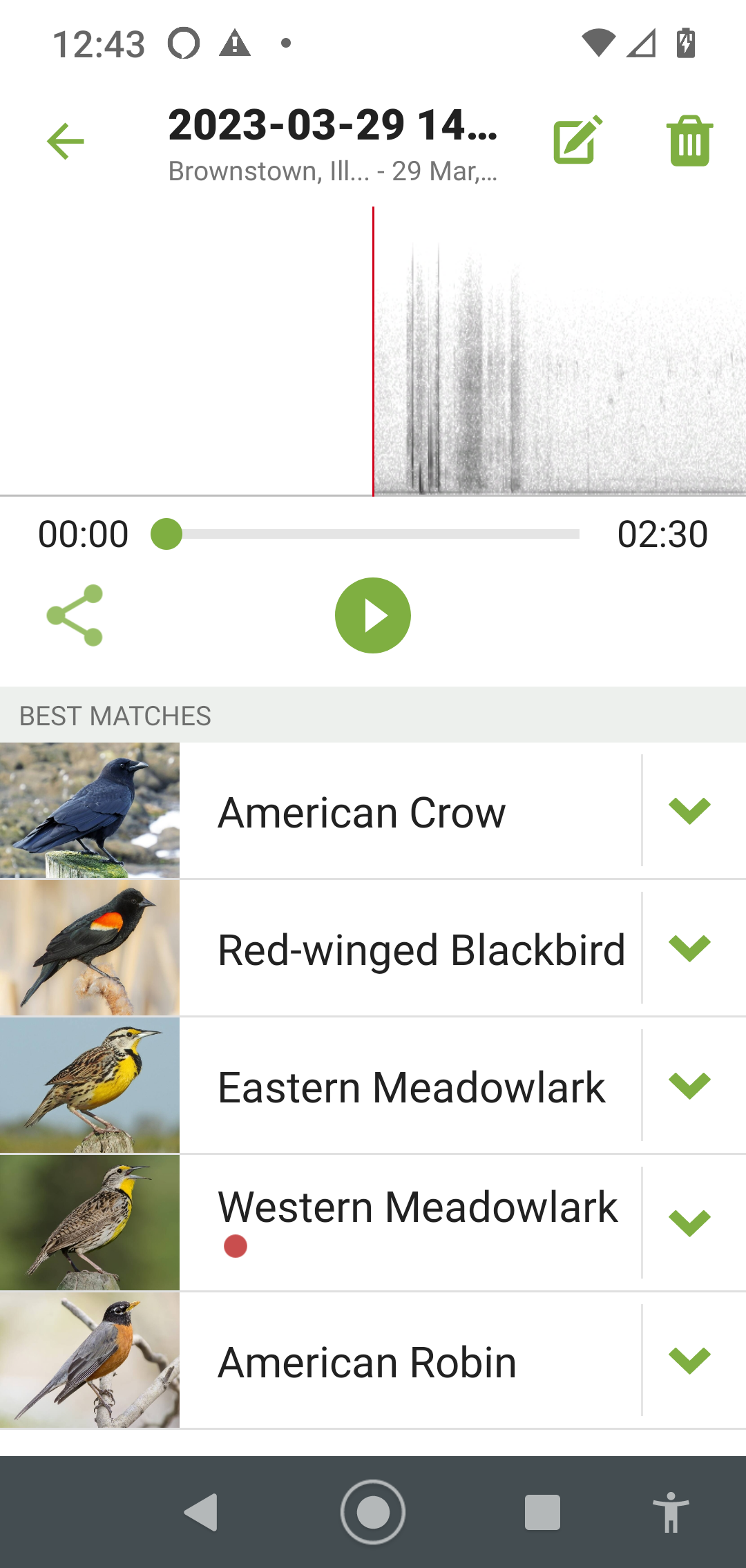
Interestingly, the Merlin bird ID app has captured the song of a Western Meadowlark on several occasions over the past month in our pastures. I don’t think that it’s just an error in the capacity of the software because on at least three of these events my (not very trained) ears recognized the shift from minor to major key in the vocalizations I was hearing while the app was recording the songs. Here are the screen shots from the Merlin app, going back to 2-20-23 and as recent as 3-29-23 when Western Meadowlarks were identified.
Perhaps, I will be fortunate enough to film a Western Meadowlark. The two species look almost identical, sans what is referred to as a mustache line that is white in the Eastern species and yellow in the Western Meadowlark. That’s not easy to distinguish as it butts up against a whitish gray cheek patch and a yellow throat area. Still, I think I would be able to make that call, if I were see to an image of a Western bird.

