Tammie Rogers
Inspired by Dogs & Nature
Species #114
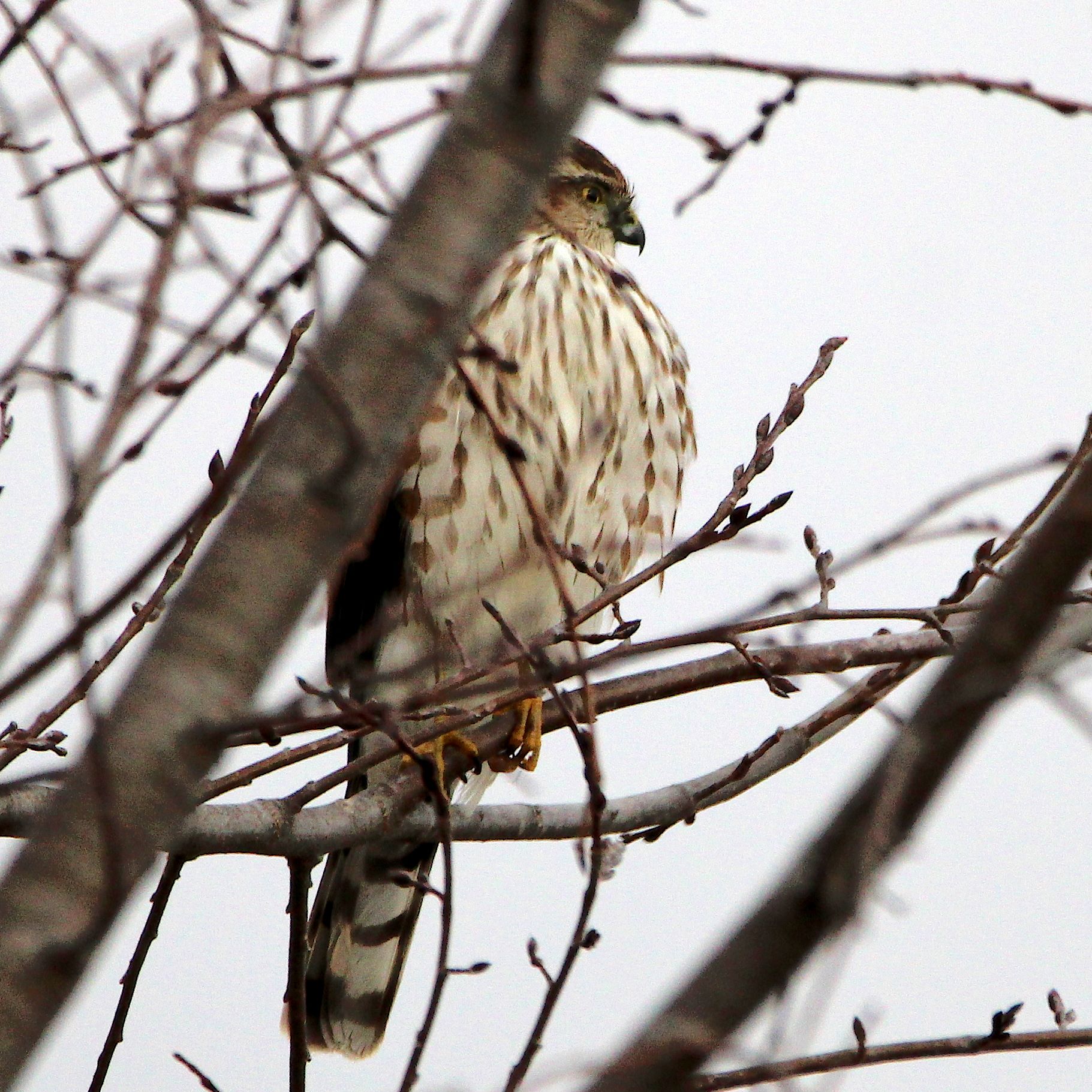
I spotted this bird perched in the branches of a small tree near the platform feeder out in the north pond meadow. There were a couple of House Finches hanging out near the feeder, and I had to assume this bird was eyeing them. Robert had taken some fresh seed and suet out the the feeder earlier in the day so that the birds might be hanging out there when I was able to go out this afternoon. When I told Robert that I saw the hawk near the finches by the feeder, he said, “oh, so we are feeding the hawks too?” Ha ha .
This very lovely bird only stayed around for a minute before flying off. I only caught a couple of decent photos. As he soared away, I thought that he looked quite small.
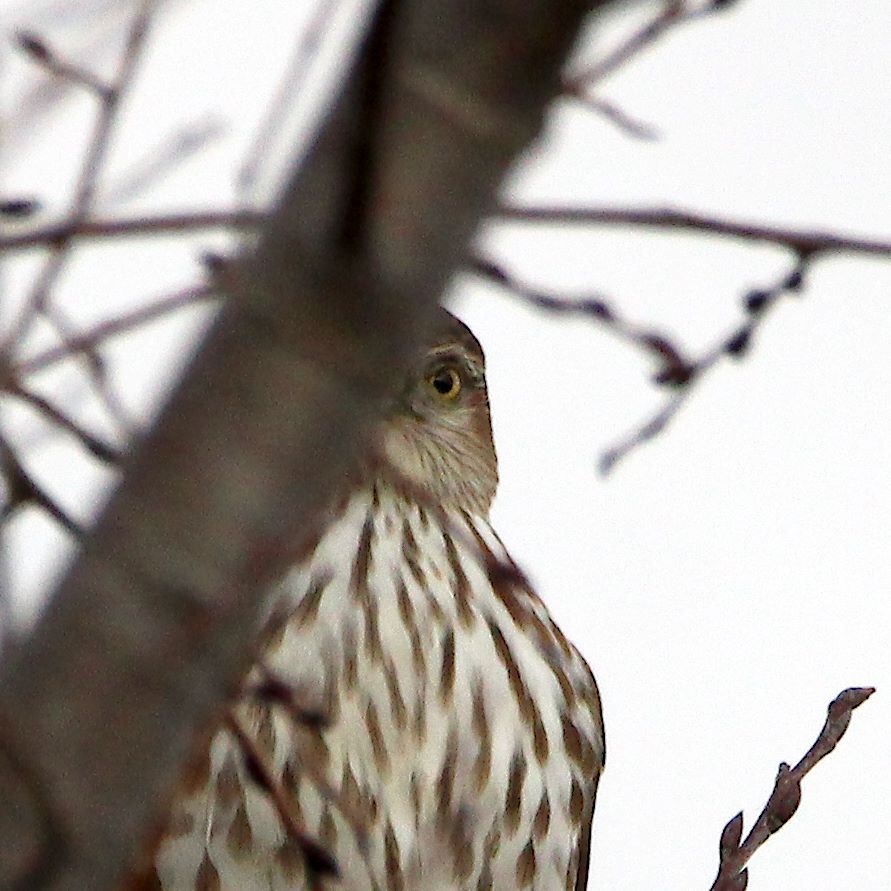
Five minutes later, from 200 yards across Jaye’s Pasture, a large hawk flew directly towards me. It screeched it’s “calling card.” It was a Red-shouldered Hawk. As it approached, I was able to size it up against the markers I used to measure the first bird. The Red-shouldered hawk was significantly larger than the one I spotted near the feeder.
Employing the keep-it-simple rule, I realized there aren’t a lot of possible options; the Cooper’s Hawk or the Sharp-shinned Hawk would be the most likely to give this bird a designation.
When I posed to a birder’s facebook page, I received the following reply:
“Good shot of the tail feathers which are all the same length, as well as the tiny landing gear, bill plopped lower on the head with a sharp transition from forehead to bill, and warm, varied facial colors.
Juvenile Sharp-shinned Hawk”
When attempting to identify a species, I sometimes focus on the wrote detail. For example, the vertical oriented markings on the breast of this bird are also found on juvenile Red-shouldered and Cooper’s hawks. The adult Coopers and Sharp-shinned hawks appear to have a horizontal orientation of their breast markings – which I find curious only because I wonder about the benefits of changing that orientations.. then I have to ask, do birds even notice that detail which seems so pronounced to my human eyes?
Apparently, from a “birder’s” perspective, that’s not a critical attribute for identification, either. I’m glad there are folks who can help me ID the birds I film when I find it some challenging! This juvenile Sharp-shinned Hawk is actually a new species for me on our property; Number 114, to be specific.
If you want to see the others, click here: https://tammierogers.wordpress.com/birds-in-our-backyard/

