Tammie Rogers
Inspired by Dogs & Nature
The Neighborhoods
Our fifty acres is almost a square, and ends up having a perimeter that’s about a quarter mile on each of the four sides. Depending upon your perspective, that may seem large or insignificant in size. When we moved here from a seven acre farmette, I thought it was huge. Then, one day I watched Clara, our Great Pyrenees dog spot something at the north property line that she felt just had to be investigated. She didn’t know it when she took off that it was Robert in a vehicle just outside the fence doing some repair work. She raced off like a bat out of hell to determine the severity of this possible threat. It took her less than a minute to get across the field – including having to negotiate over or under a couple of gates – before she recognized my husband and she pulled up to a slow trot, turned around and sauntered back to the barn. That’s when I realized that fifty acres wasn’t all that much land.
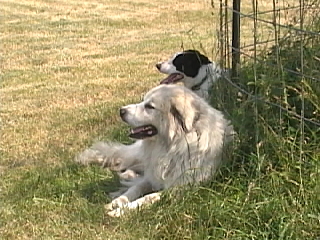
Here’s a photo from way back in 2007 of Clara (front) lying next to my amazing Border Collie, Boon. Dang. I miss them.
While our property may not be difficult for a fast and determined dog to navigate in under a minute, everything is relative. To a little bird things may seem quite different. When I consider all the little, unique habitats that can exist on such a parcel of land, it begins to appear like quite a large city with many varied districts.
There are the hedge rows, each which has been established by a particular set of larger trees or shrubs and smaller, supporting plants and grasses. There’s the stand of very mature Ponderosa pine trees which provide winter shelter for birds and other wildlife when the stands of deciduous trees might fail to attract winter residents because the cold winds can blow right through the barren trees. The pond, of course, offers a whole different ecosystem. And still, there are micro-habitats within the pond – like the shallow inlet that supports a large stand of cat tails which don’t grow in other areas of the pond. The hay fields are open expanses of prairie grasses, which provide sites for many species that nest on the ground like Meadowlarks, Song Sparrows and Dickcissels. I even see some pairs of Red-winged Blackbirds nest on the dry grass meadow, quite away from the pond’s edge (where most of them make their nests.)
This post is dedicated to sharing images of a variety of birds that choose to make a living in one of the unique “neighborhoods” of our retired farm. These may be photos that I haven’t shared because I didn’t find them worthy in terms of the quality of the photo. Sometimes the subject has quality above and beyond the composition of the picture.
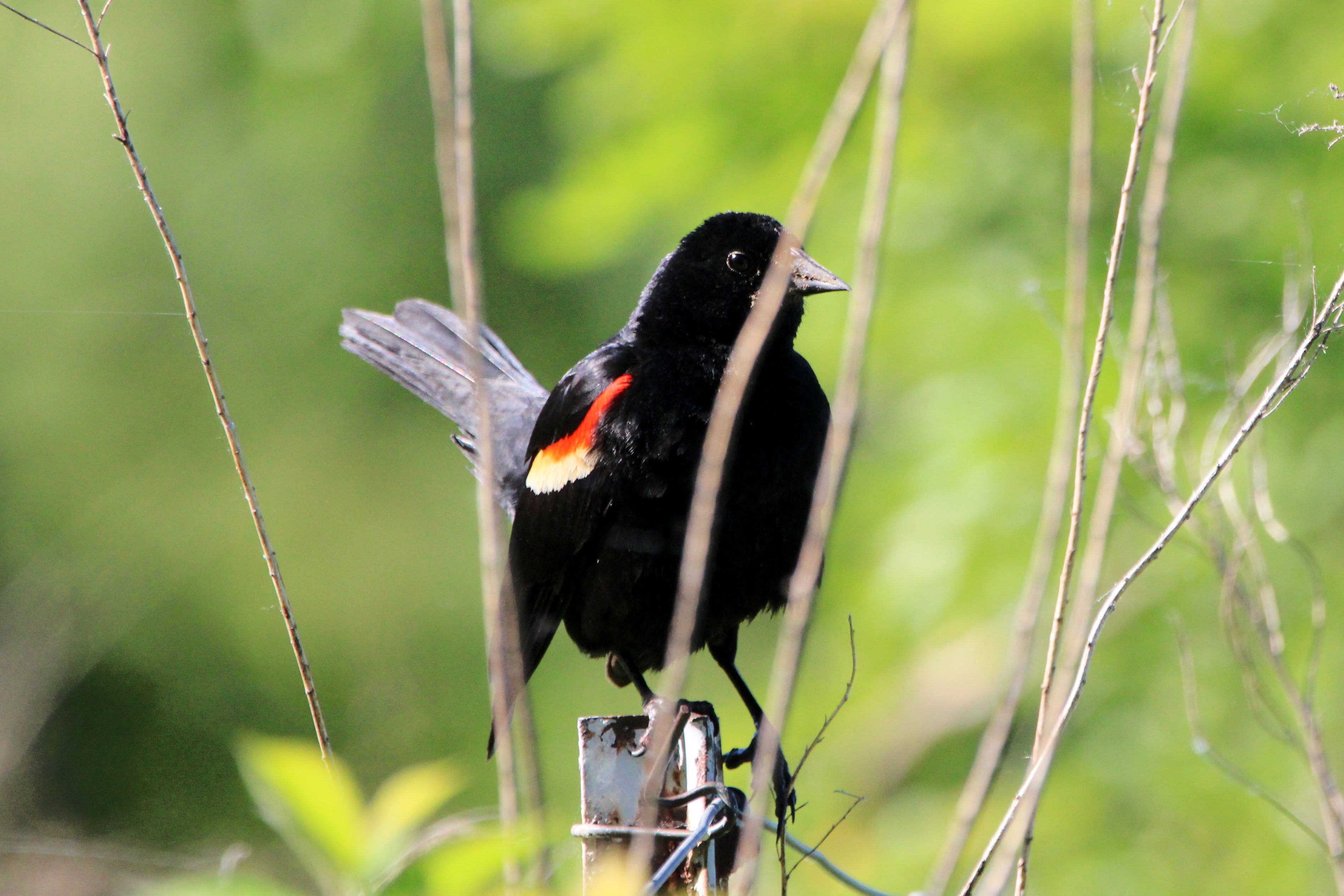
This first photo is a Red-winged Blackbird. I wouldn’t normally share a photo of a handsome bird that was obstructed by old, dried stems. Then, I realized that this is exactly how I often see the birds – this is the neighborhood in which they live – it doesn’t always offer a perfect view of the inhabitants! They most often nest around the edge of the pond.
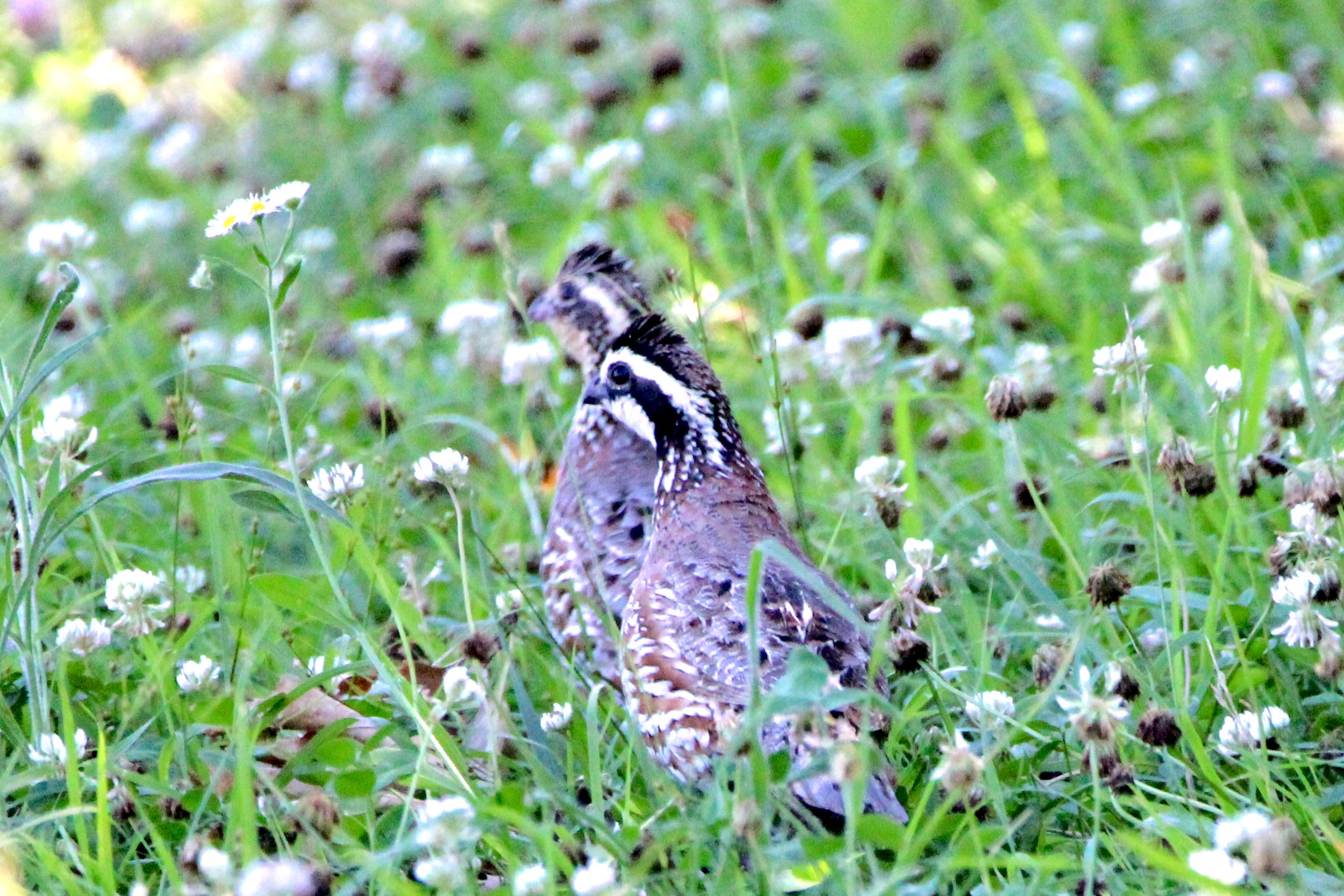
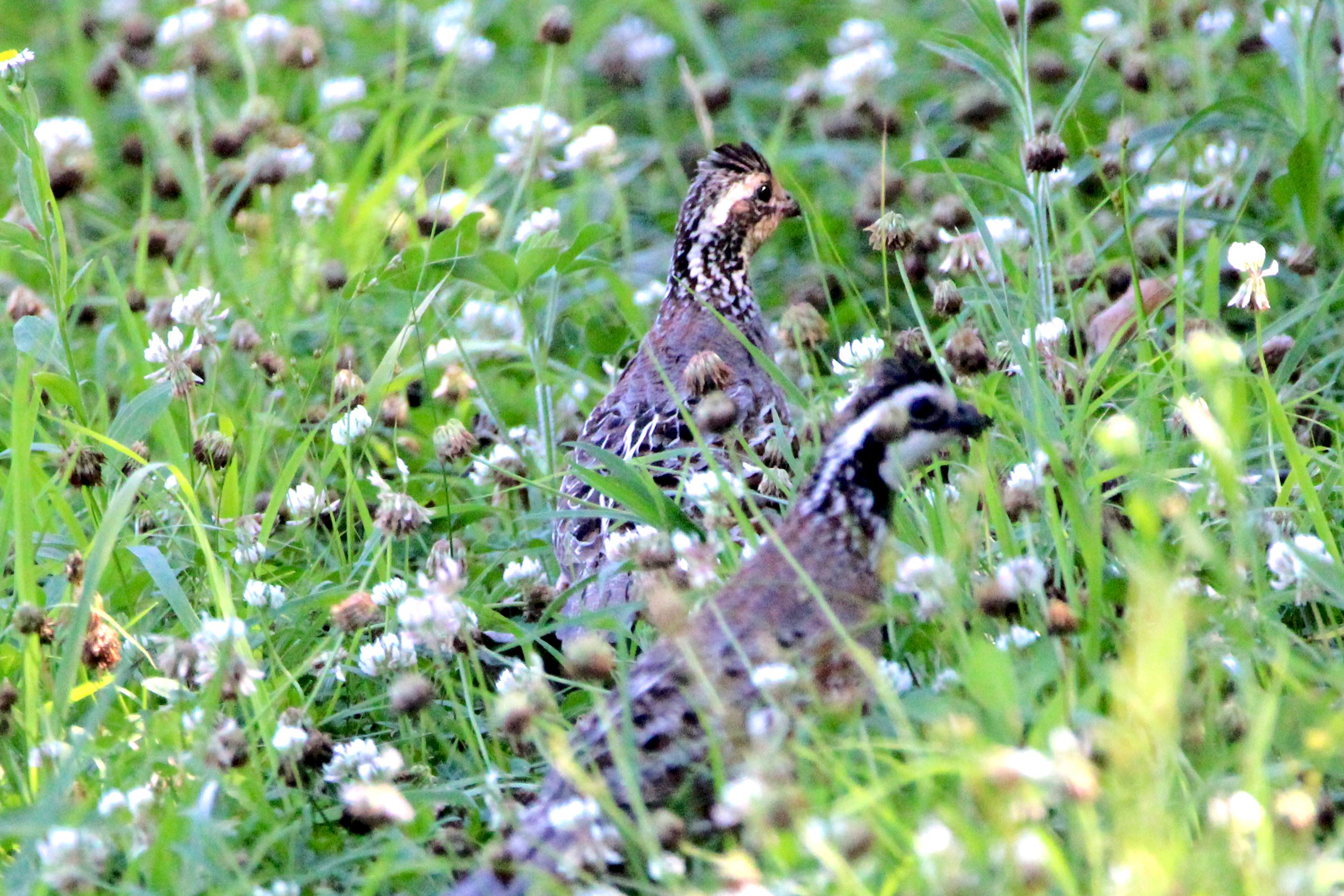
Here’s a pair of Northern Bobwhites. They aren’t always easy to spot, but it’s impossible to miss their unique song. “Northern Bobwhites were once a common species in eastern North America, but experienced widespread, sharp declines of approximately 3.1% per year, for a cumulative decline of about 81% between 1966 to 2019…” (AllAboutBirds.) I often see them in pairs. They remind me of an old, married couple, holding hands, moving about their neighborhood; stopping for coffee at the shop where they met nearly fifty years ago, then off to the corner market to get groceries for dinner…
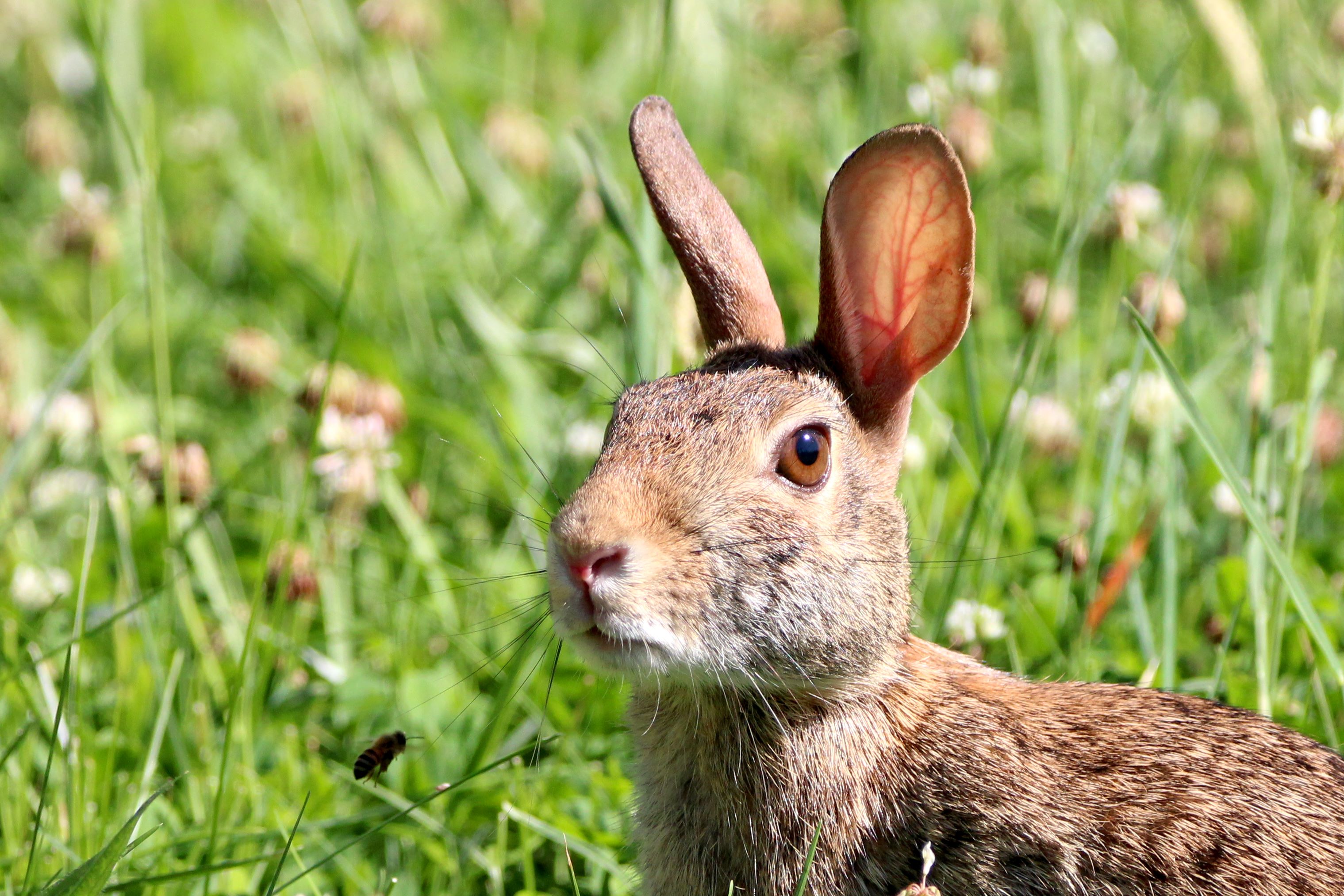
Our property is rich with rabbits. I know their favorite places, and as I approach that area I prepare myself to spot the bunny – as they don’t always show themselves even though they are sitting in broad daylight. This picture is of a lovely lagomorph. Most worthy of noting is the honey bee that was also captured in the image under his chin and to the left.
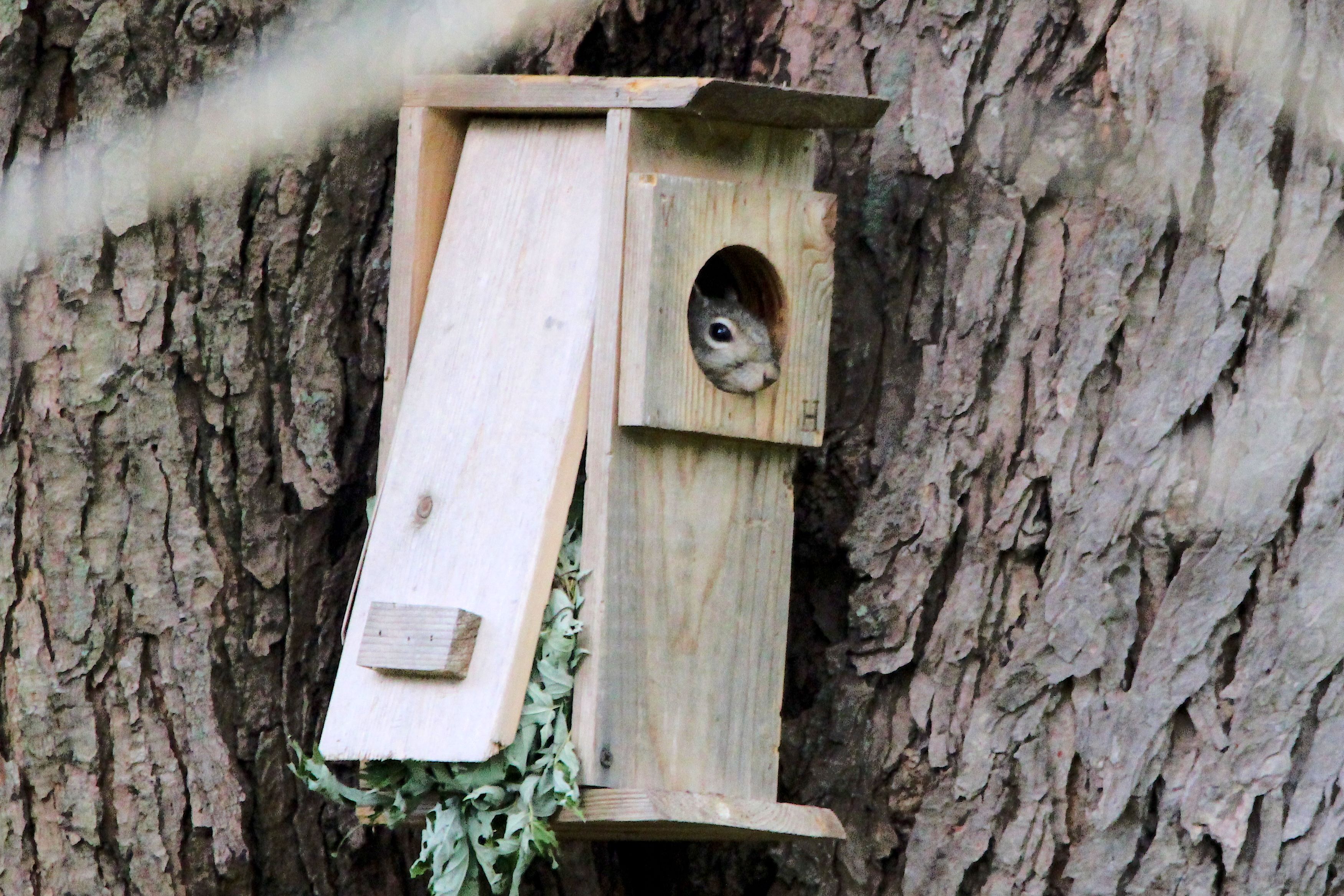
We put up an owl box on the massive maple tree in the front yard of our old house. That’s a “neighborhood” I rarely visit. I think it’s because I found living in that tiny house for so many years suffocating. As soon as we could afford to build a new house on a different part of the property, I jumped at the opportunity. However, since we put up the owl box, I’ve been moving through that zone more often. About a month ago I noticed some green vegetation sticking out of the box.
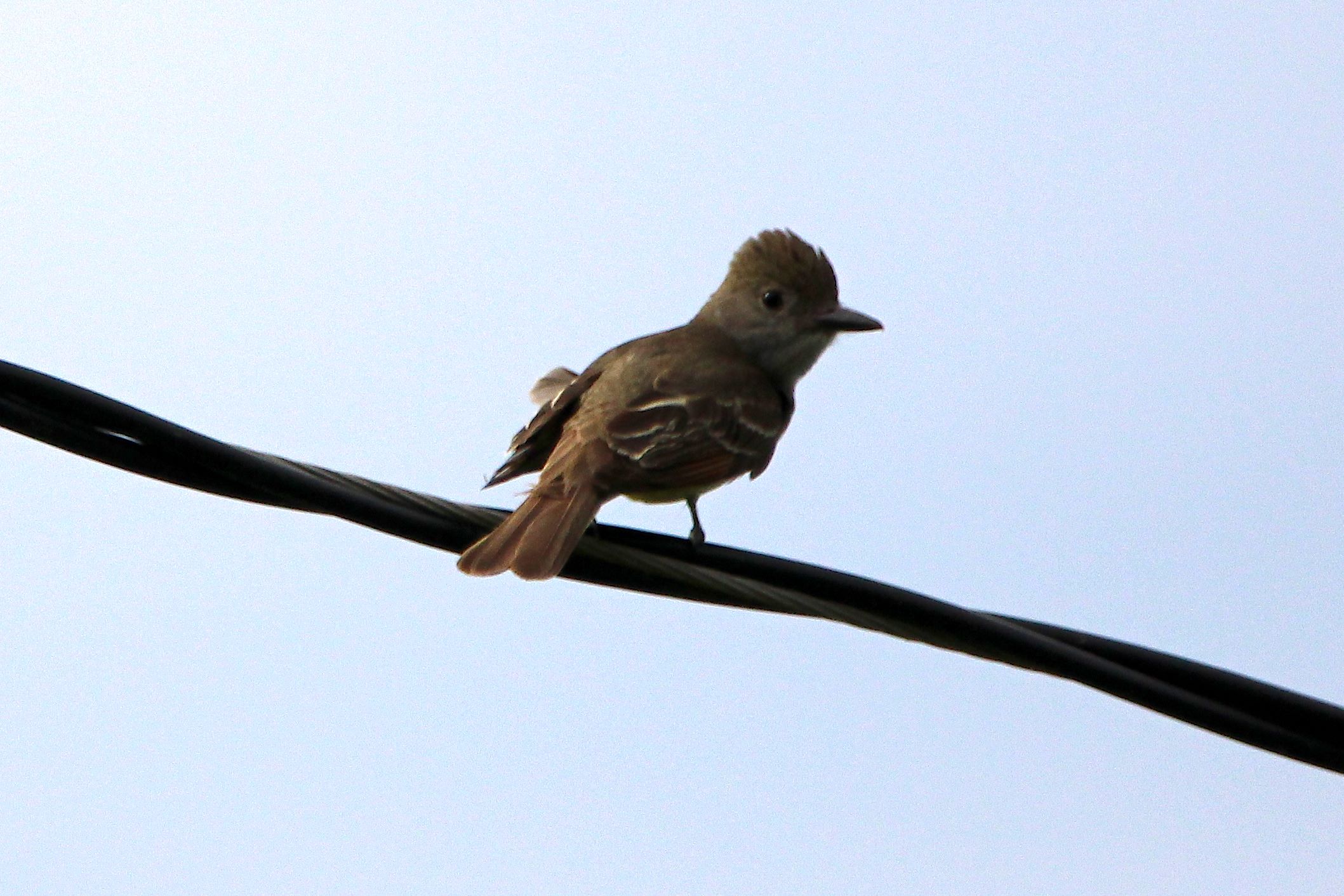
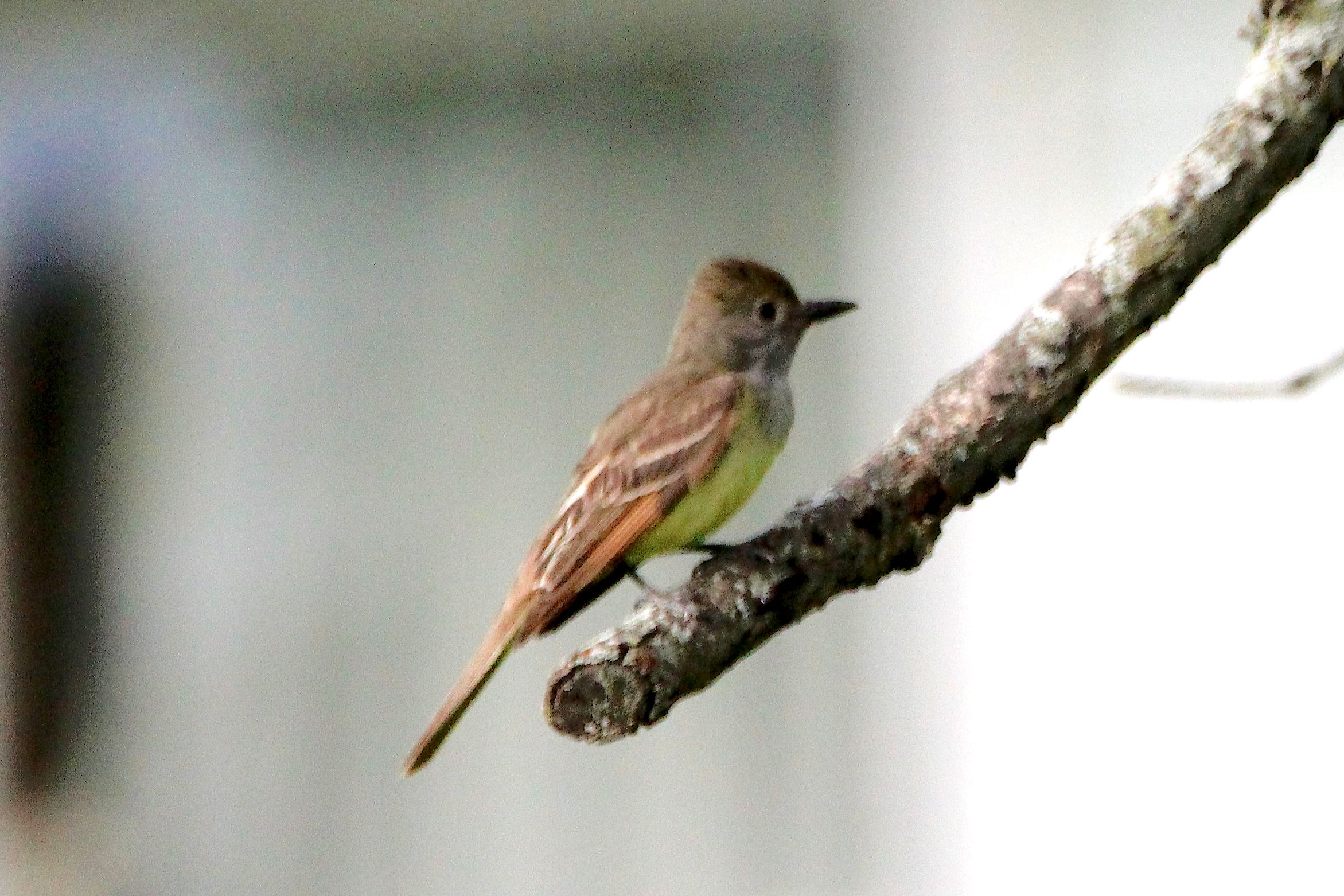
I know that owls begin their reproductive activities very early in the season (late winter) so I wasn’t expecting an owl to have begun nesting only now, so late in the breeding season.. What I thought I might see was a pair of Great Crested Flycatchers. They are cavity nesters – unlike most other flycatcher species. They like their nests high in the trees and like a larger cavity than bluebird boxes provide. I also spotted a Great Crested Pair flying around the Maple tree. Here’s are a couple of poor quality images that I took of them.
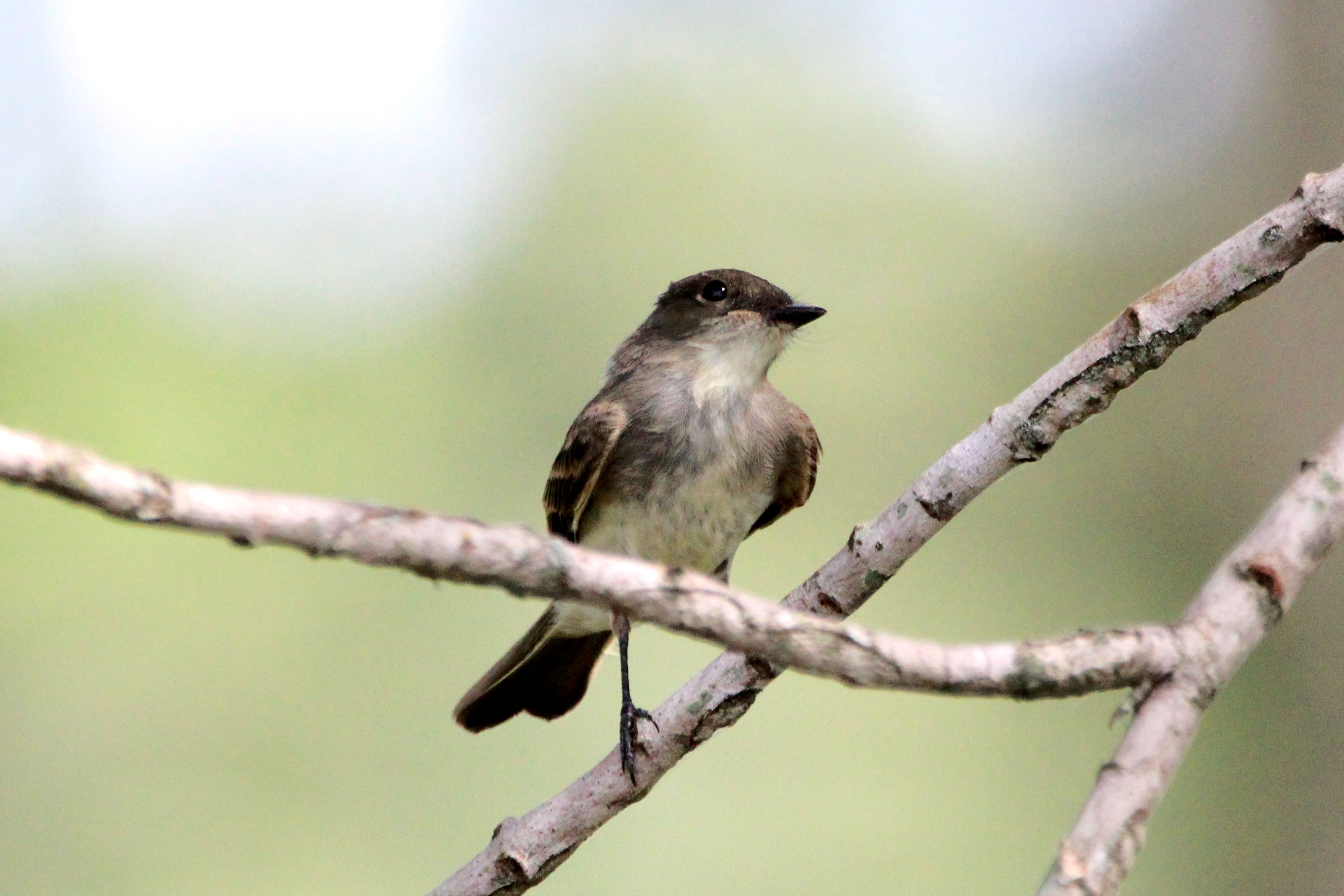
One day, I decided to hang out to sees what animal owned the owl box. I sat there for two hours. I never saw a bird enter or exit the box, but I did get to capture this lovely Eastern Phoebe hunting from some dead branches that were lying near the big Maple.
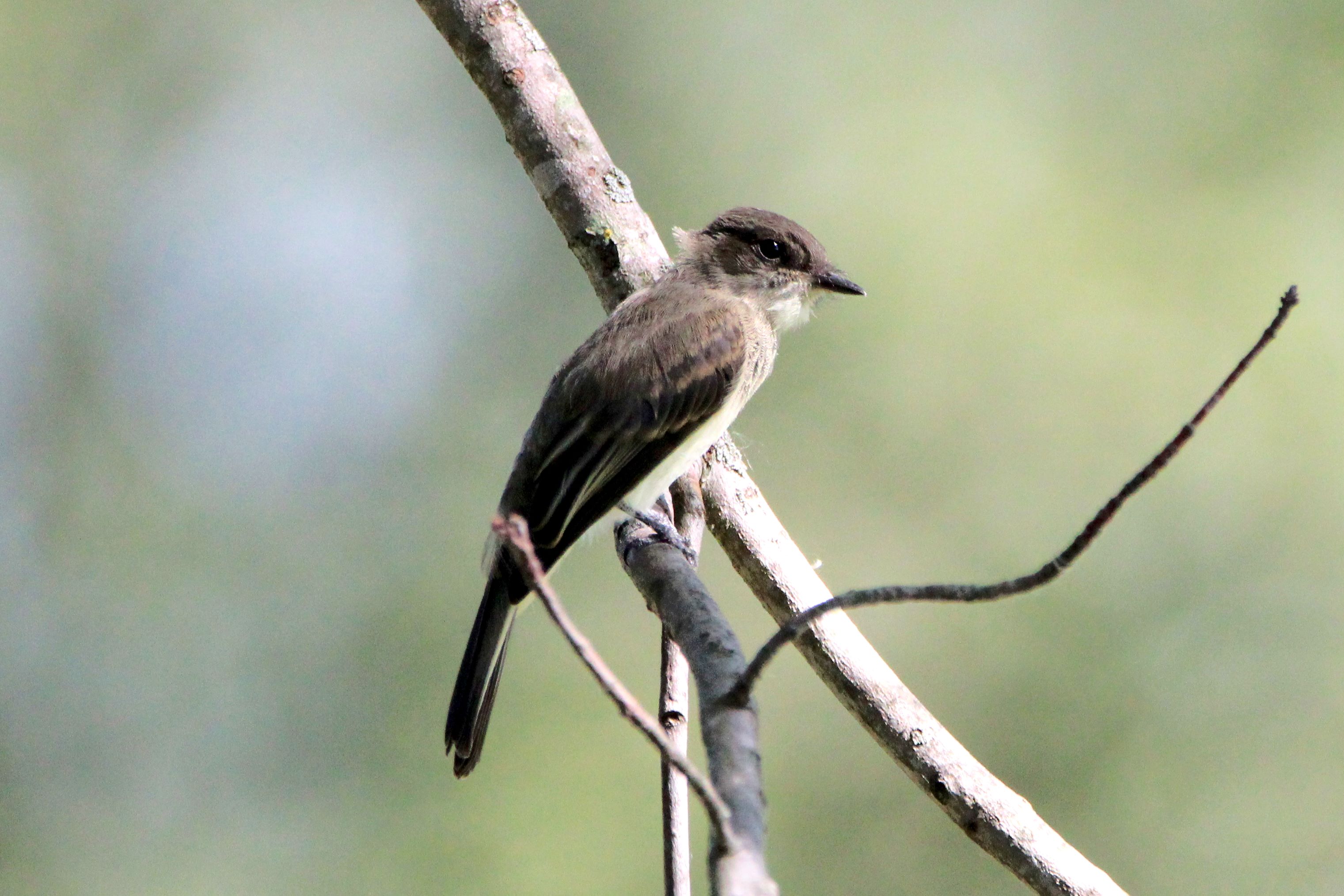
A few days ago I was able to snap a couple photos of this bird in the old apple tree near the corridor behind the old house. I’m fairly certain it’s an Eastern Wood PeWee. I used to struggle deciding if a bird was a Phoebe or a PeWee. In this case, the heavier colored wing bars helped me identify this cutie.
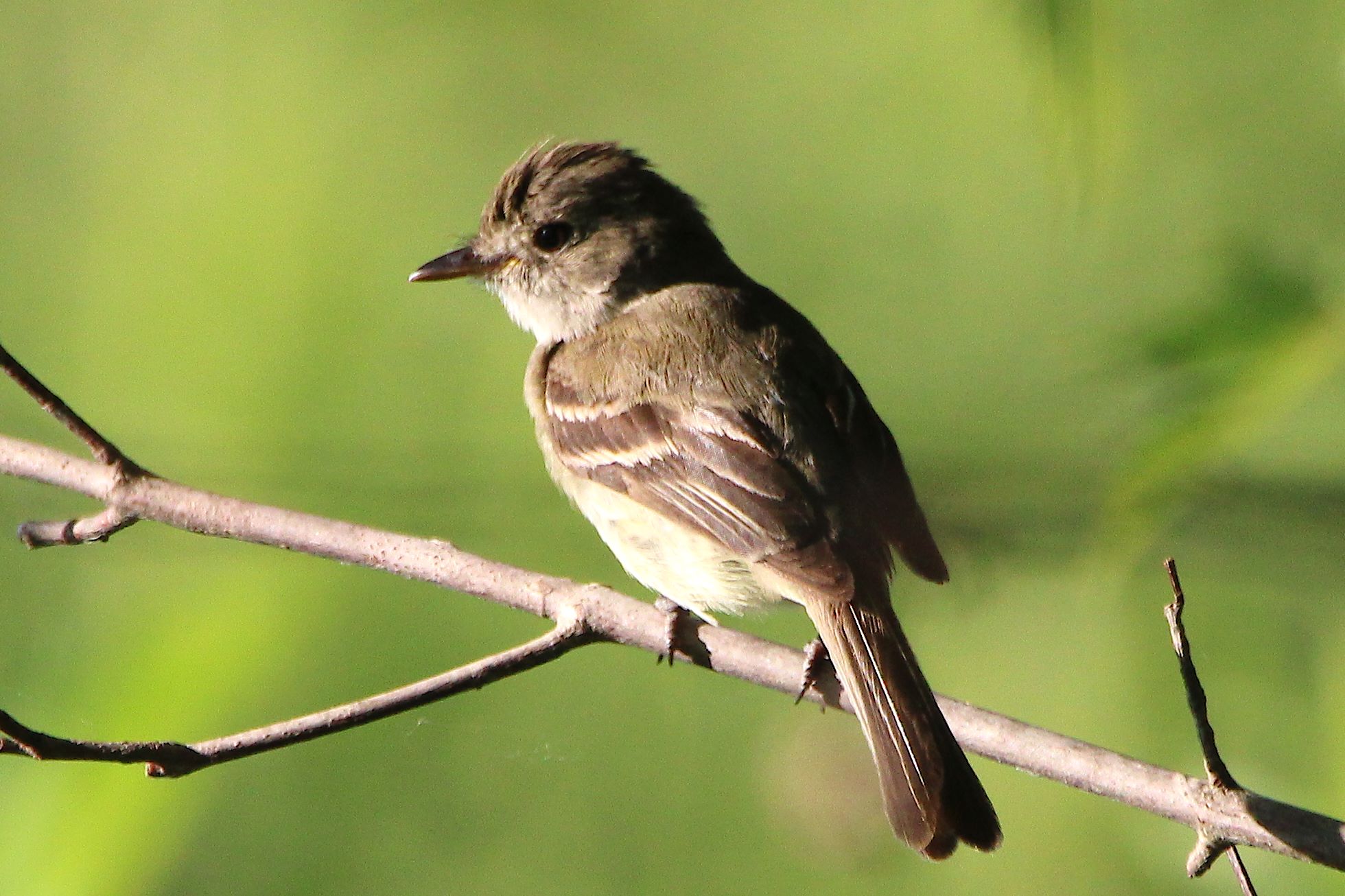
A couple of days ago, actually the first day I was able to get out after the long stint of work related commitments, Robert was in the golf cart with me. He had left a vehicle at the Training building, and was hitching a ride with me to eliminate the need for a very long walk. As we turned south towards the pond, a huge bird was flying over the water from the west. It was a Great Blue Heron. I suppose if you live along the coast in southeaster United States, you may even find these birds a nuisance as they can habituate to fishermen who toss the scraps of their catch to herons and other water fowl. When I have visited Florida, the herons can be quite pesky at outdoor restaurants, as well, where they get table scraps from diners. But, the herons that visit our property have a huge personal space bubble. So, I told Robert to stay quiet and I rerouted our approach to the vehicle he wanted to reach. Then, I took a long way around the pond to hopefully catch an opportunity to film the Great Blue.
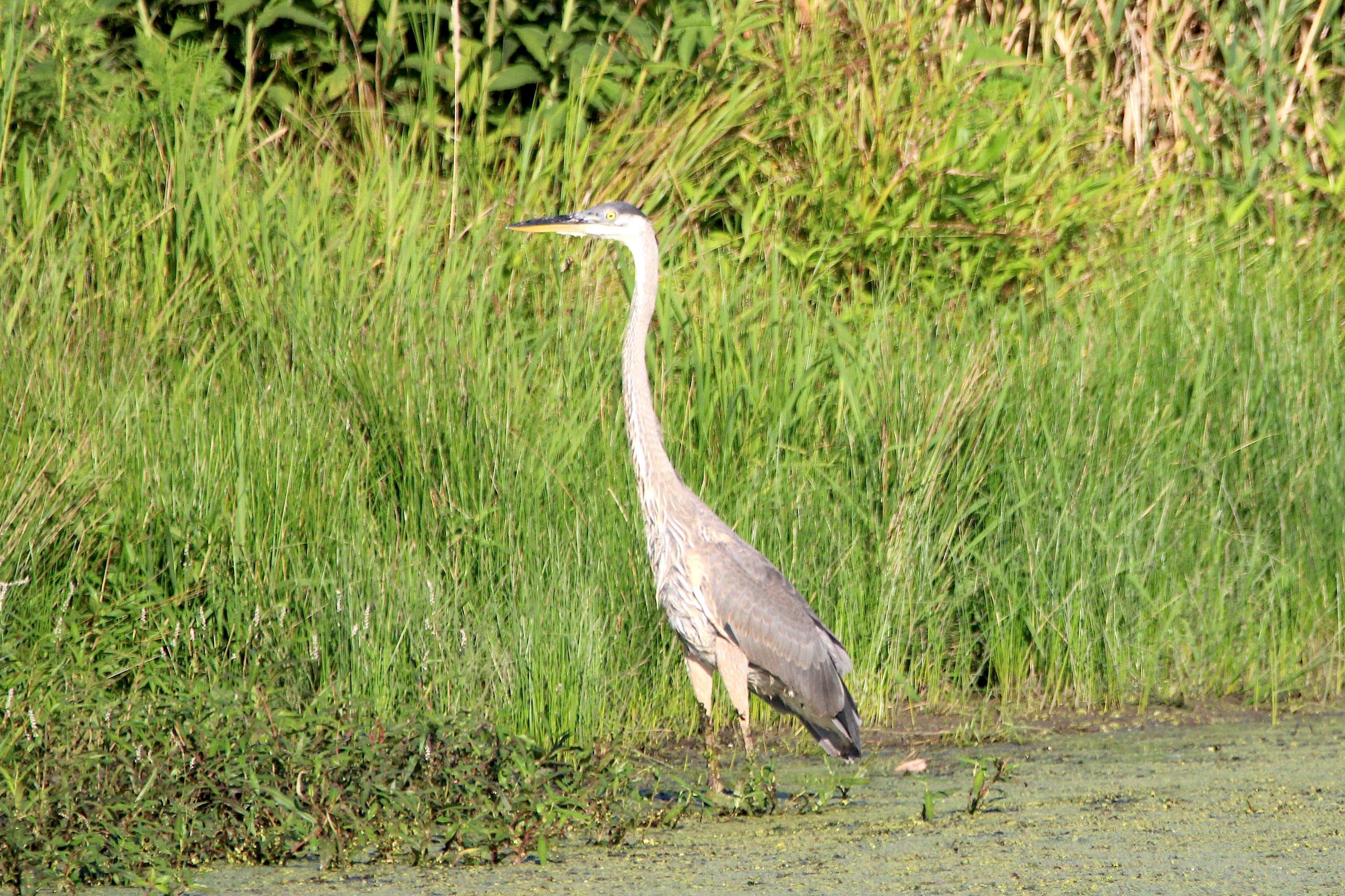
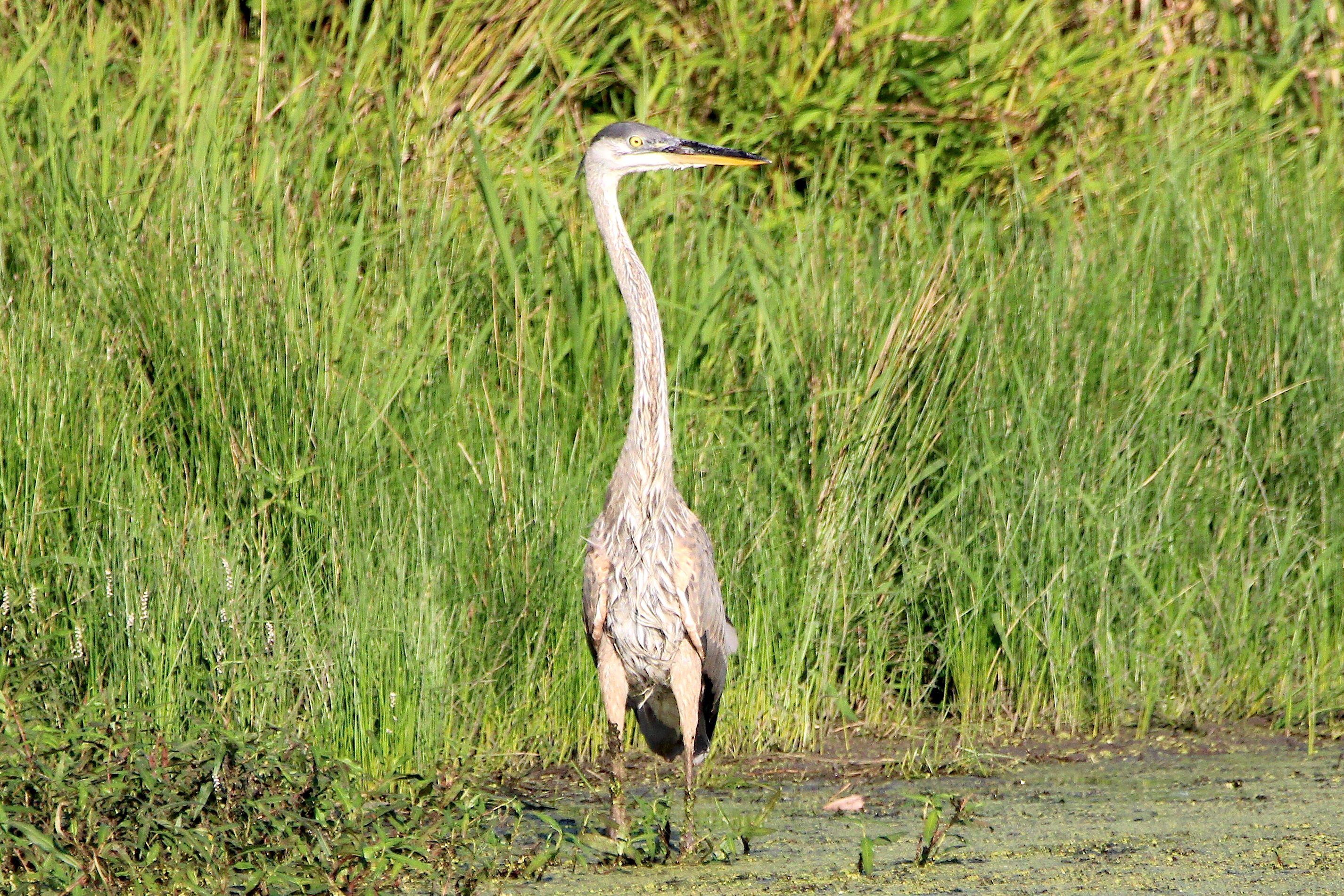
My stealth paid off. I was able to capture a few images. But he knew I was there and I moved like a neurosurgeon to aim my camera and not cause him to take off. And, he was on the other side of the pond from me, which I guess is about 350 feet.
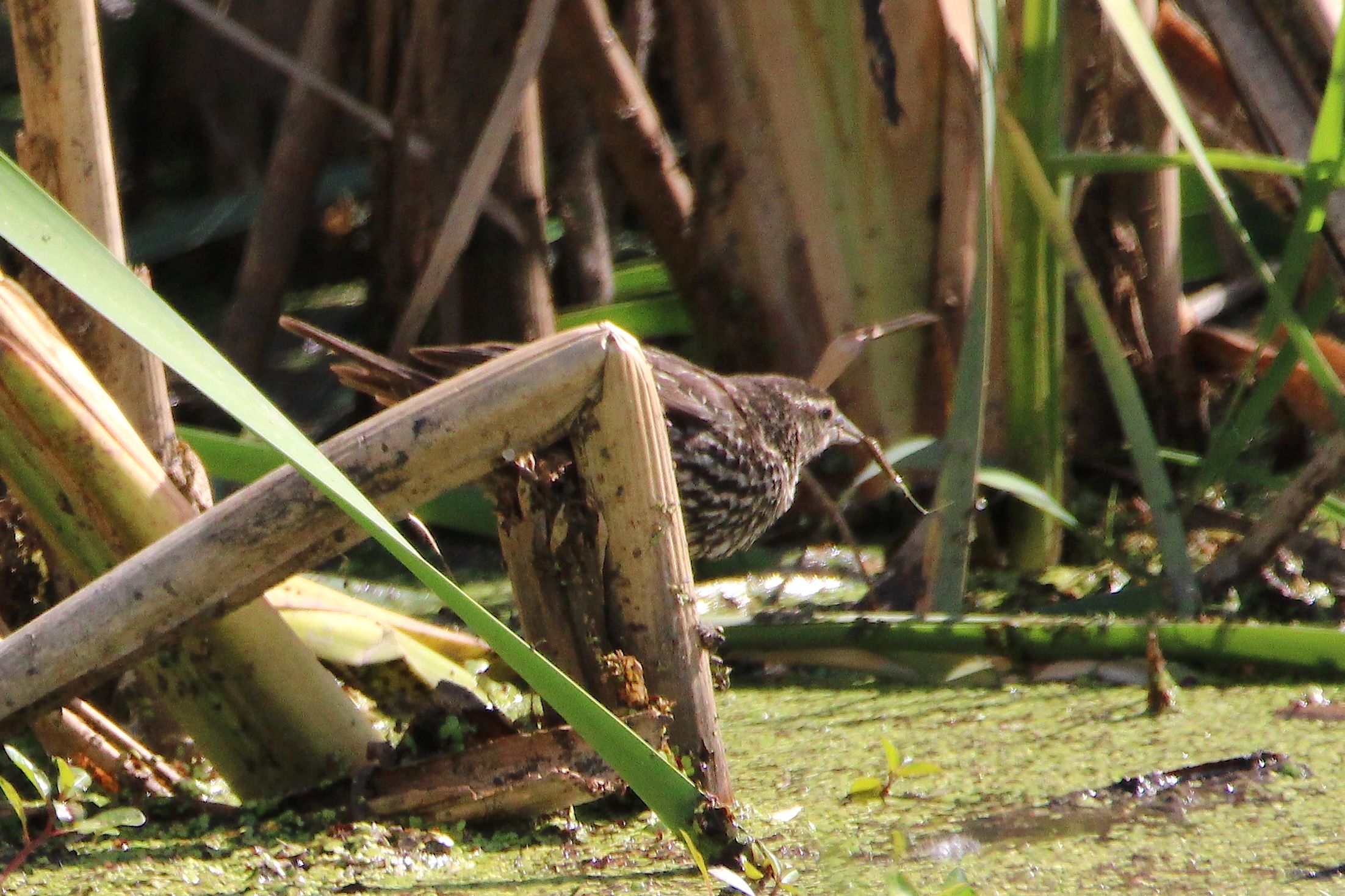
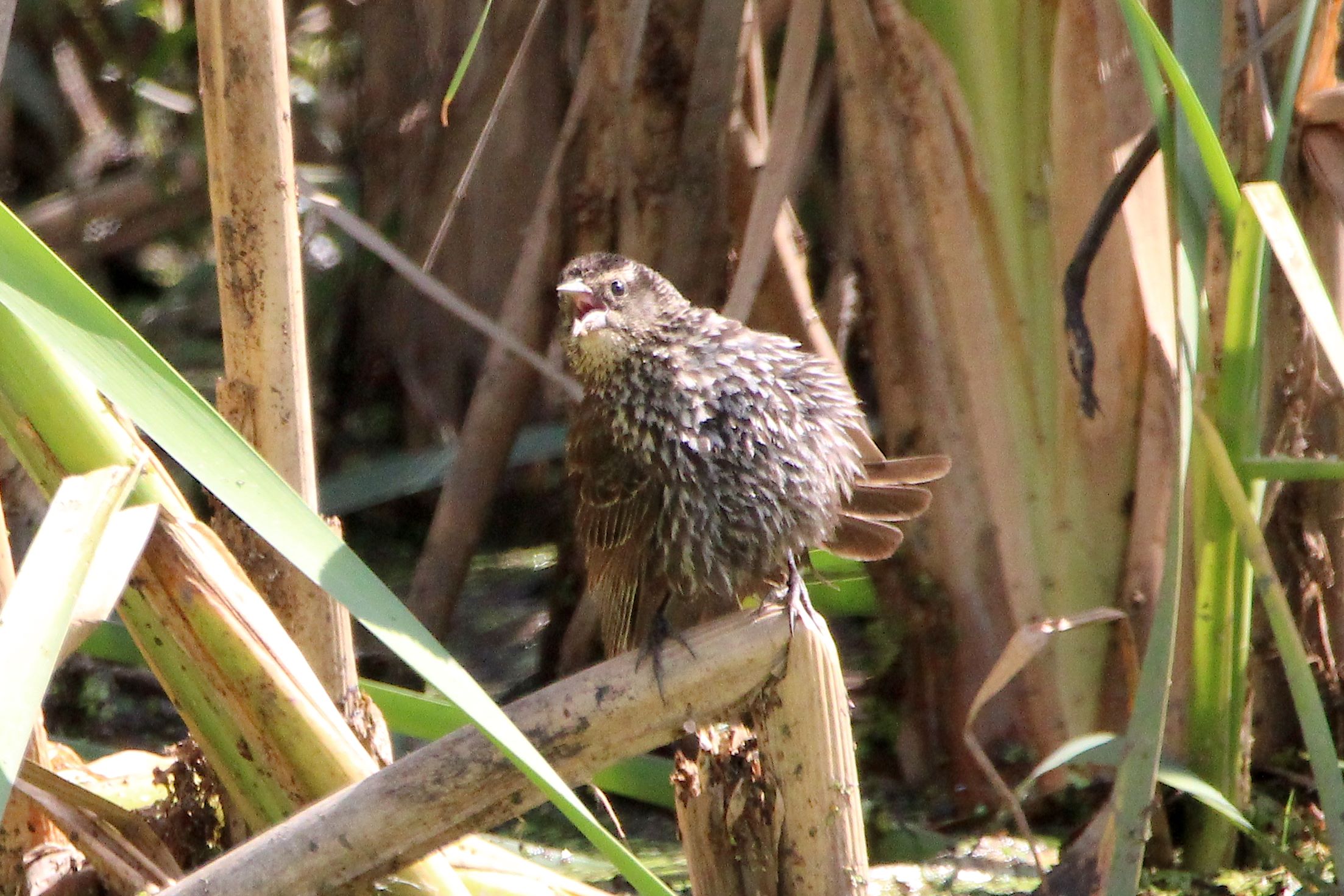
I also saw, for the first time, a female Red-winged blackbird carrying something in her mouth, which I assume was food for chicks in her nest. These images are the first I’ve captured of a Red-winged Blackbird this close to its nest. Typically, I only seem them fly in and out of the tall grass or cattails at the edge of the pond.
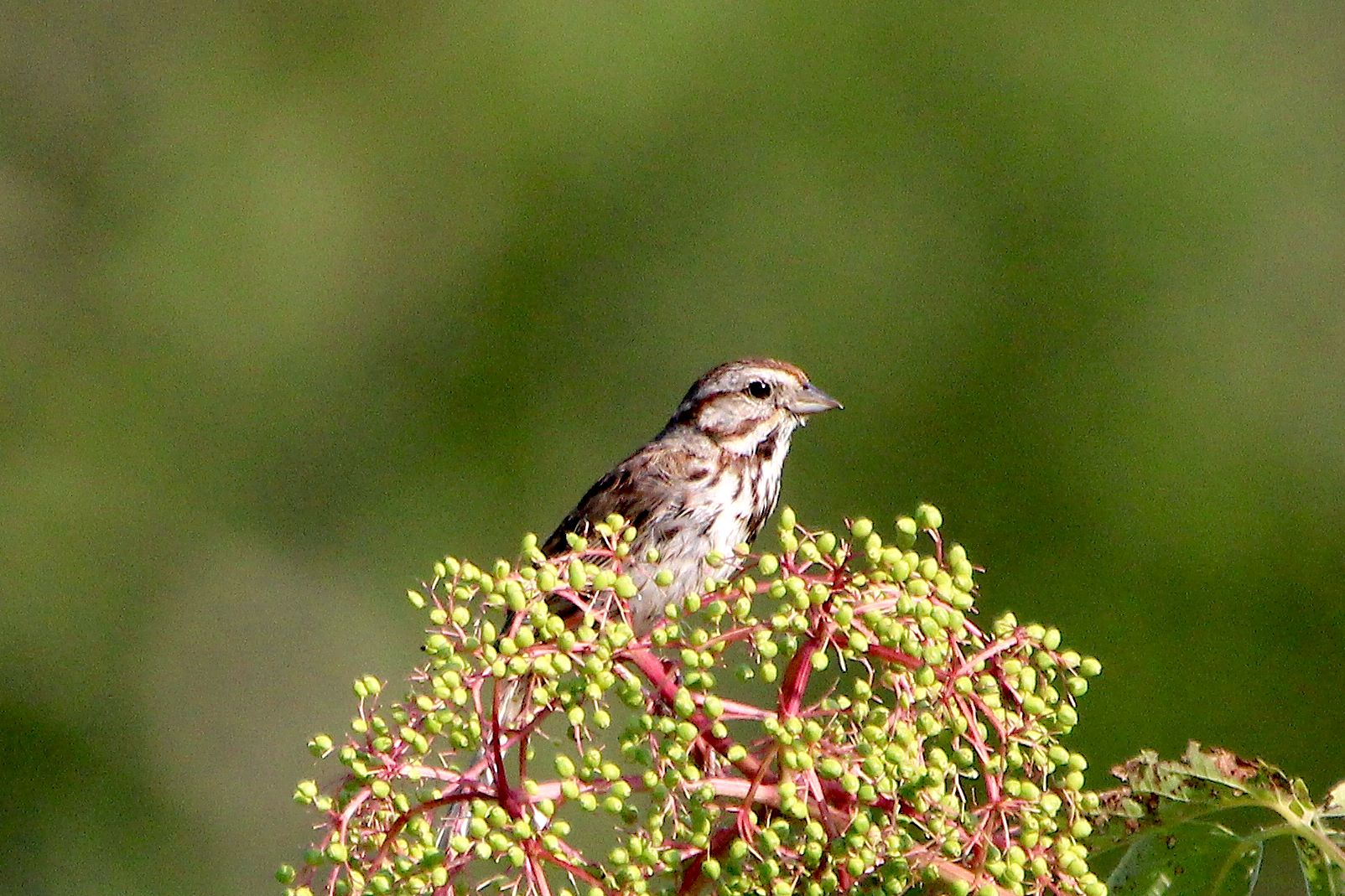
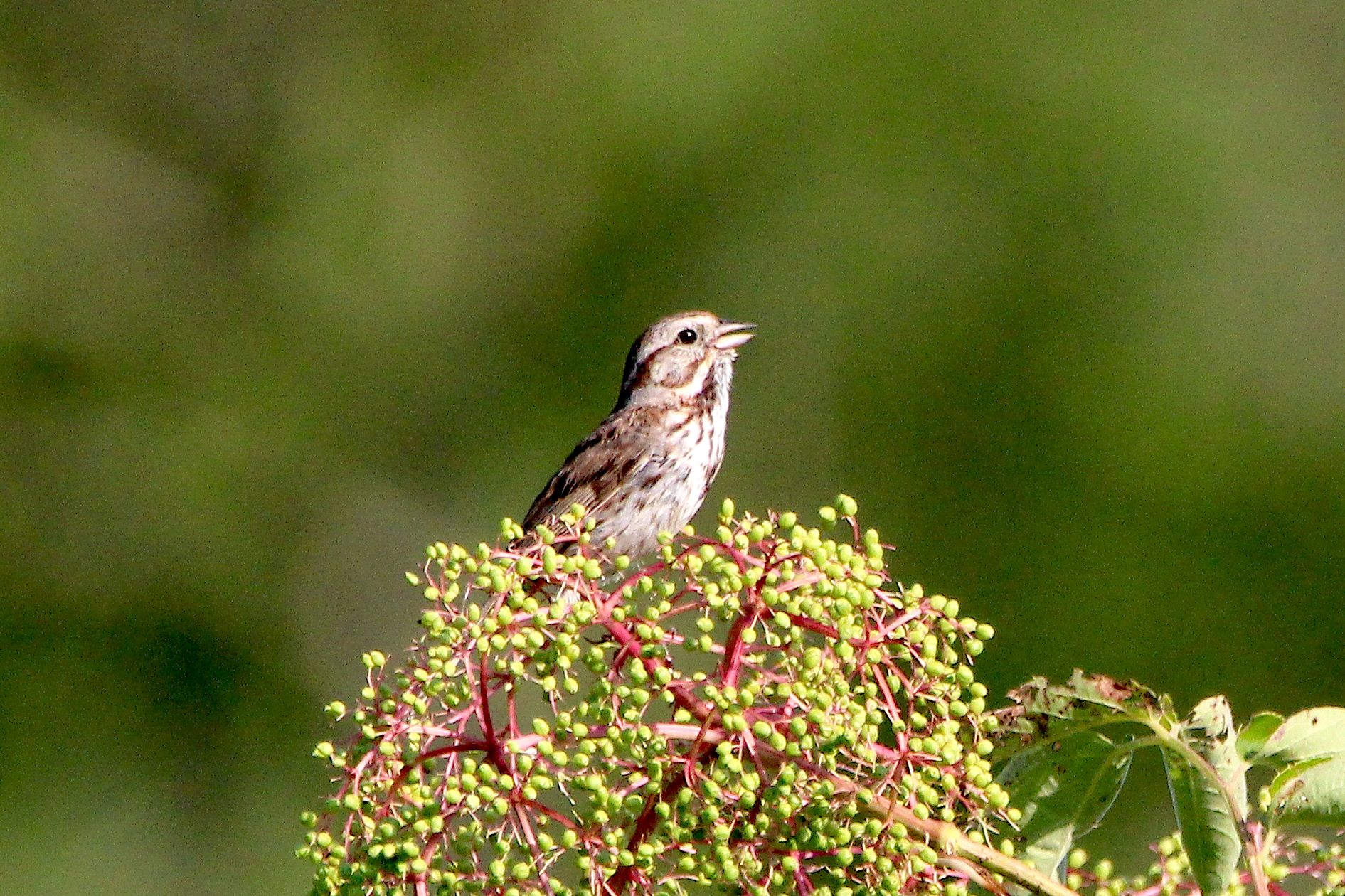
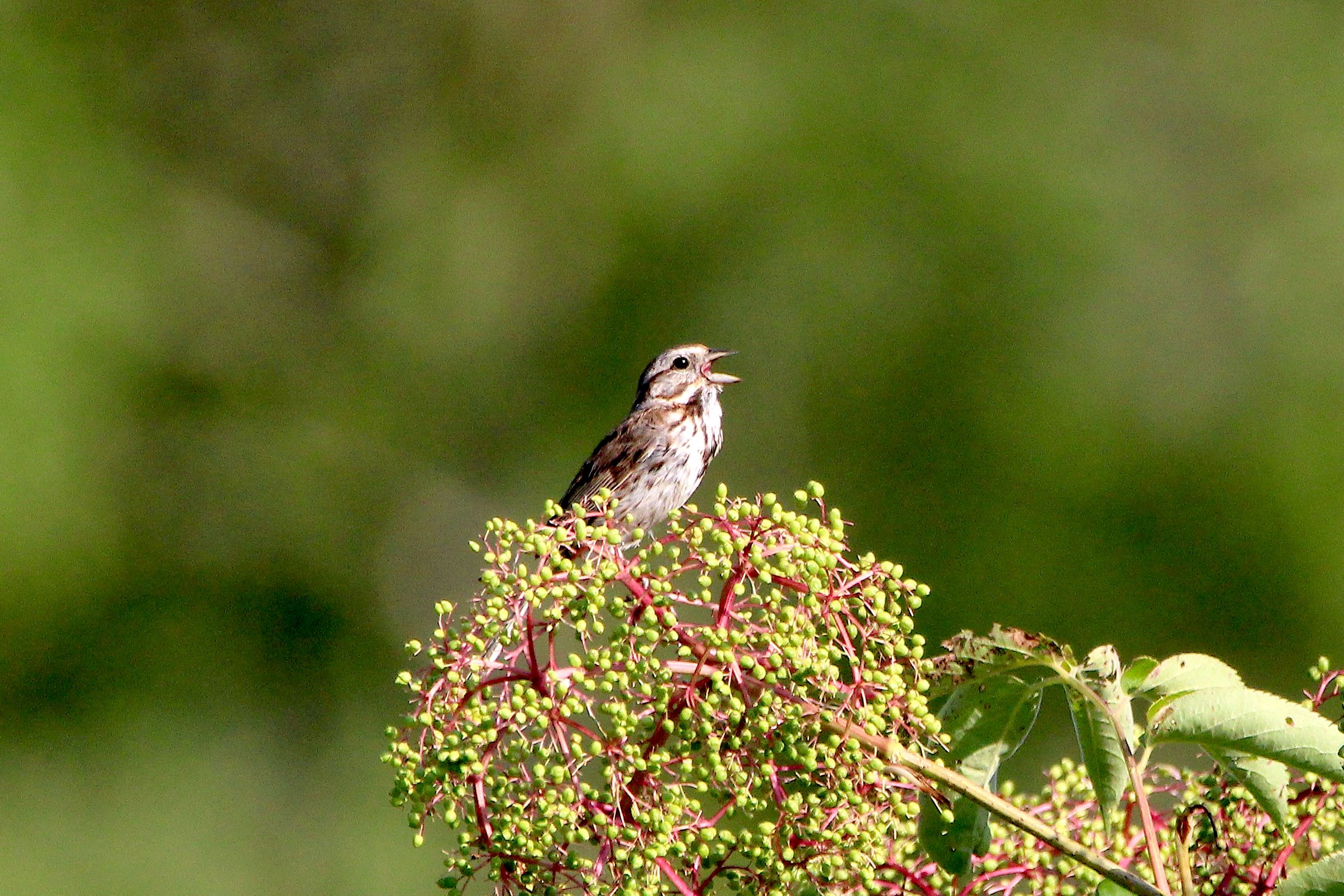
The next stop on the neighborhood tour is the far north end of the pond, where the Ponderosa pines provide a unique island habitat for birds that wouldn’t normally find what they need on the rest of our property. There, it’s likely you could see this Song Sparrow boasting his song to the world.
About 900 feet from the Ponderosa Pines is the corridor. It’s a lush, shadowy, overgrown area that bloomed into existence once we moved from the old house. The fenced backyard of that house went wild when mowing grass became a huge tasks around our new home and we left the old house to only intermittent lawn care. In the old backyard, trees sprouted and thrived creating about an acre of new forest – mostly maples that originate from the flying seed pods that fall from the massive Maple in the front yard. In the backyard-gone-wild there are also trees we planted years ago including willows, a pin oak and another oak that I cannot identify along with a couple of other volunteer trees that the Orioles seem to like – as I see and hear them in that zone quite often.
The term corridor refers to what was once a mowed path about 14 feet wide – the south border is the rear fence of the old house backyard. The north border of the corridor is a fence that created the south side of a herding trial area, referred to as the A field. While the larger pastures that are north of the A field are mowed by the “Hay Guys” twice a year, the perimeter fencing around the A field prevented any routine mowing. There, like the old backyard, trees and shrubs have taken hold in a space where House Wrens, Indigo Buntings and Blue Grosbeaks sing all summer long. Robert began mowing the corridor so that I could navigate that areas of the property – but the old backyard and the A field, which run for 200 feet on either side of the corridor, continue to mature and create habitat for species which prefer the young growth forest environment. The corridor is topped with bowing branches from trees that reside along the A field and backyard fences – creating a shadowy, cool, environment.
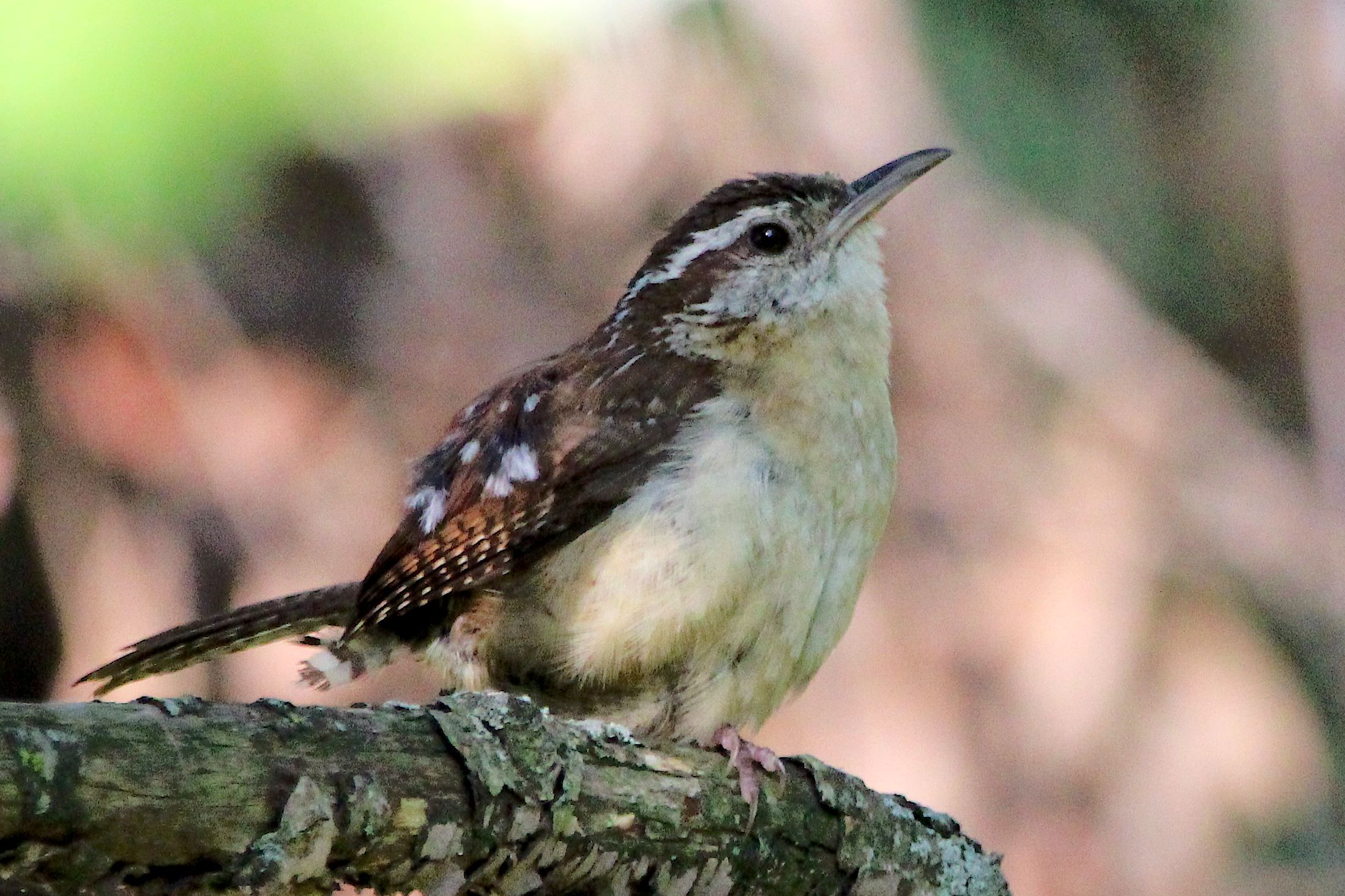
I spotted this Carolina Wren on the trunk of an old willow tree that grows half way down the corridor.
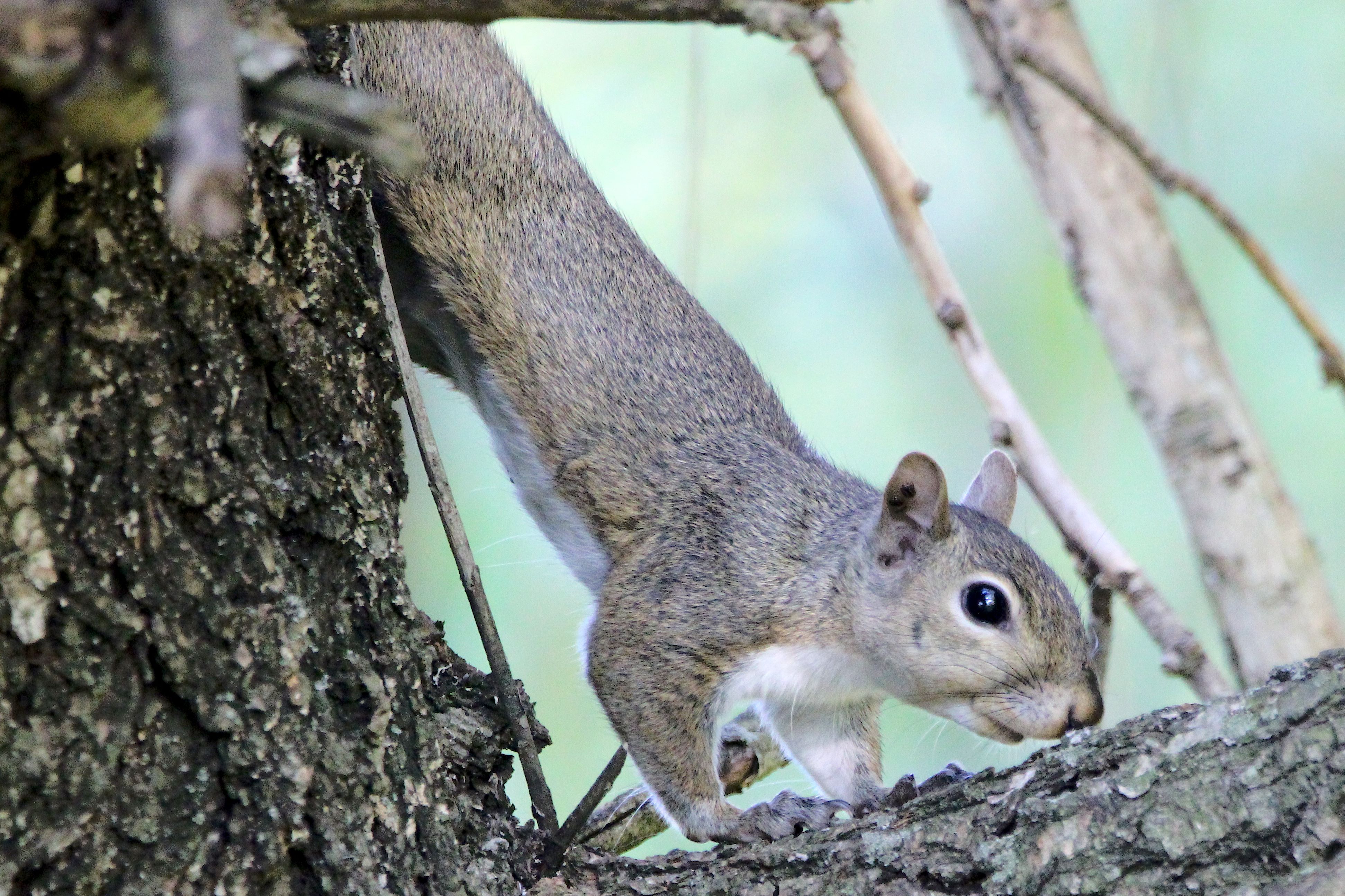
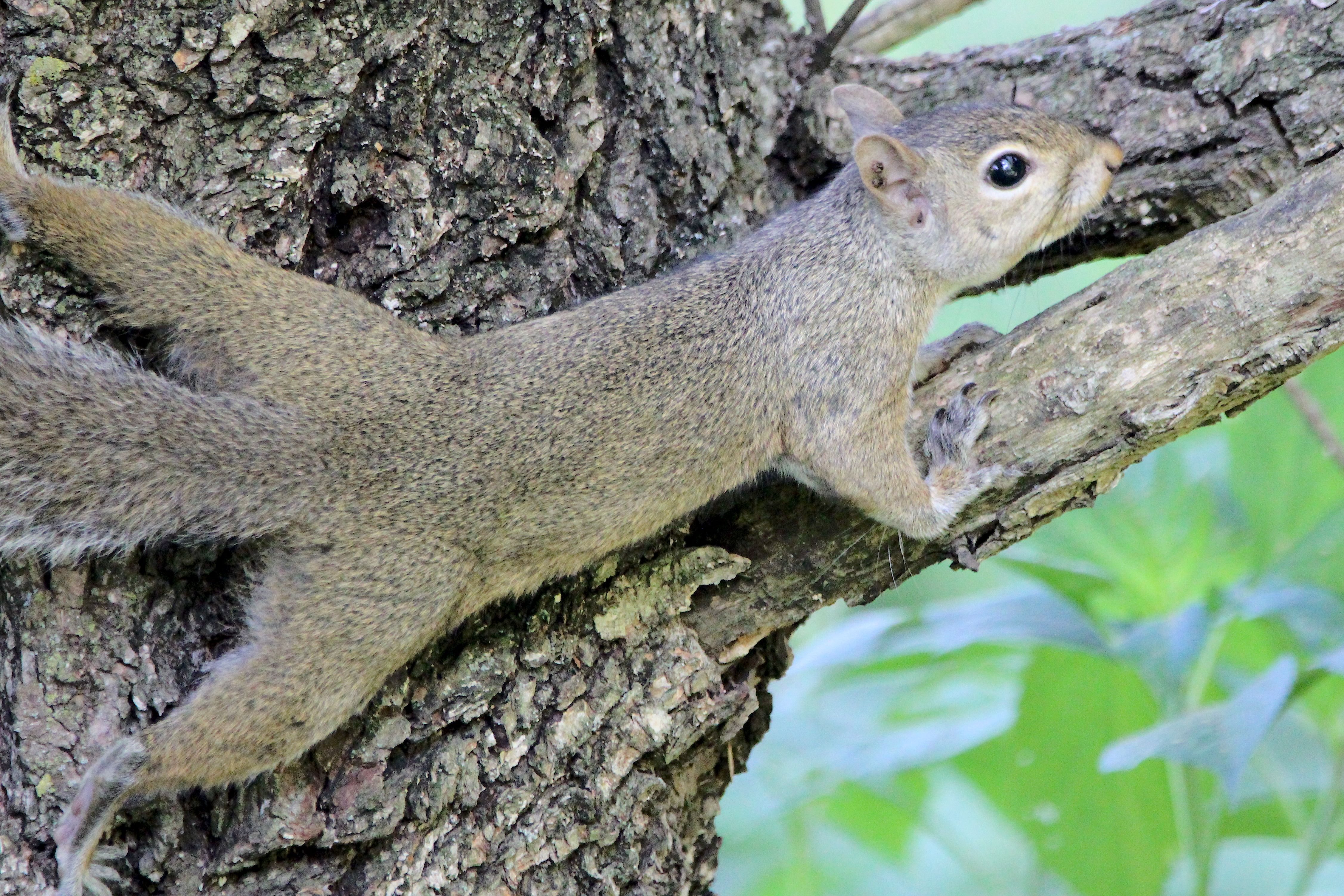
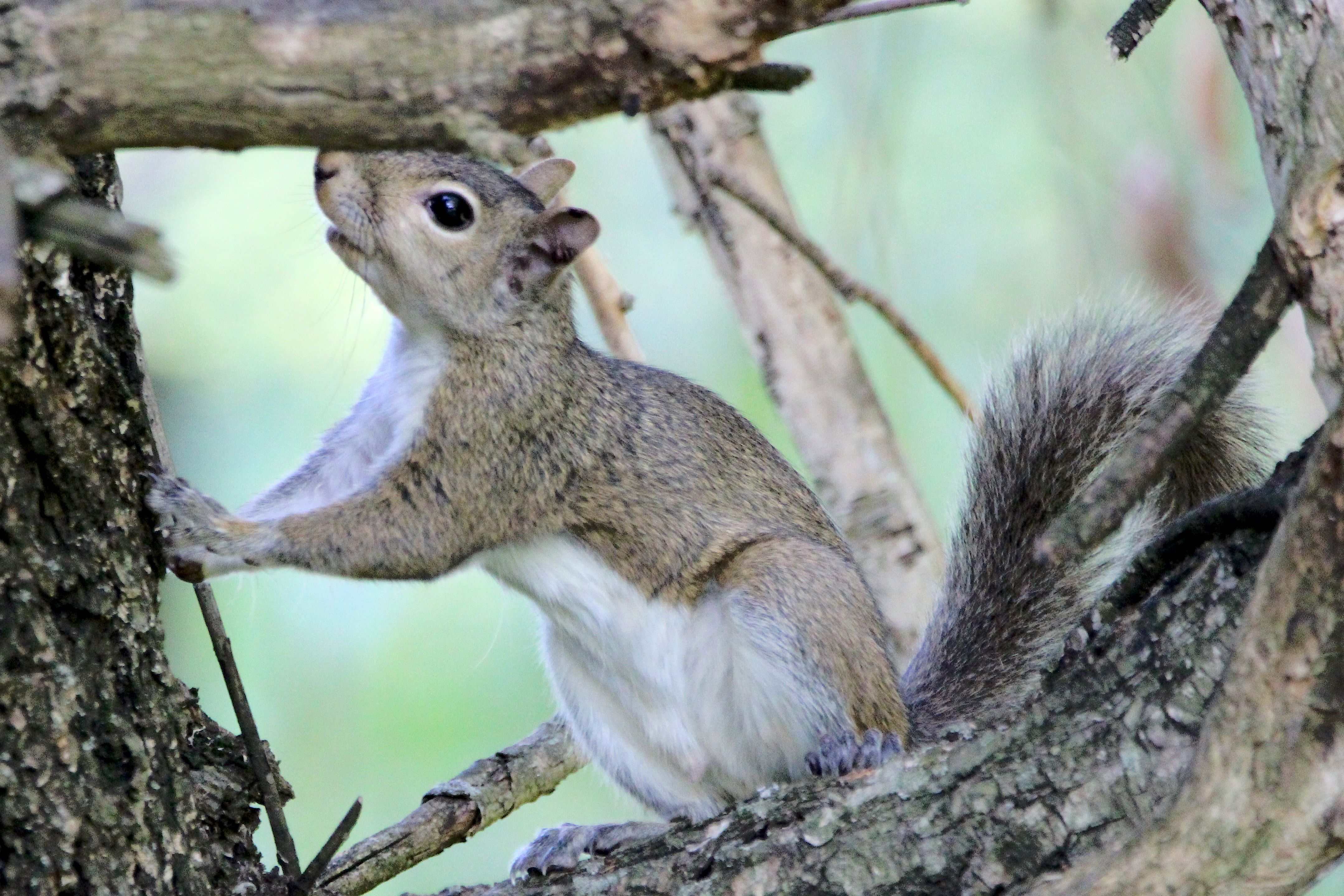
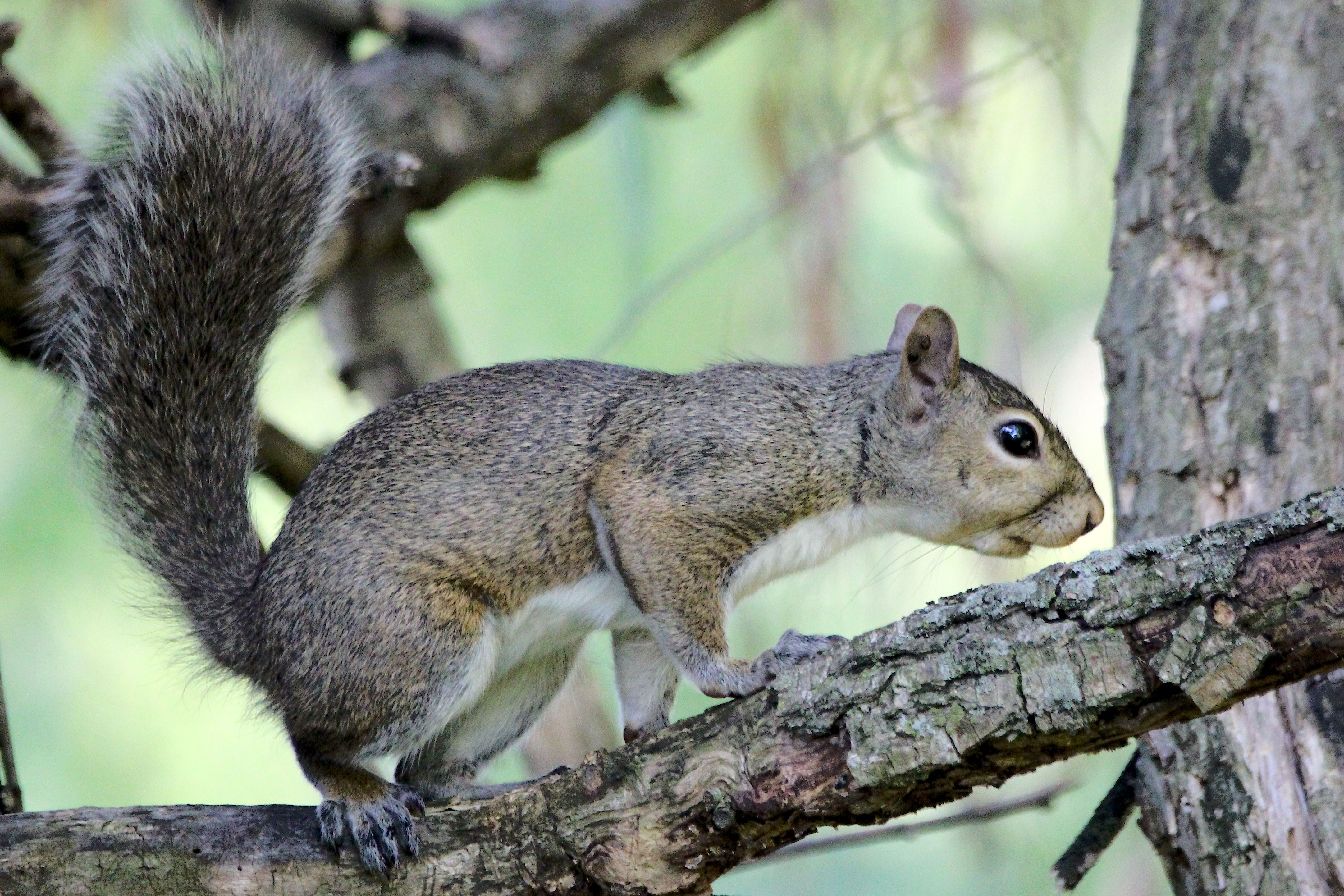
As I was attempting to focus on the Wren in the relative darkness, a squirrel began doing what appears to be his morning calisthenics on the trunk of the same tree. I’m pretty certain this is an Eastern Gray Squirrel. All of the squirrels I’ve seen before have been Fox squirrels, which are much larger and don a lovely, rich orange color.
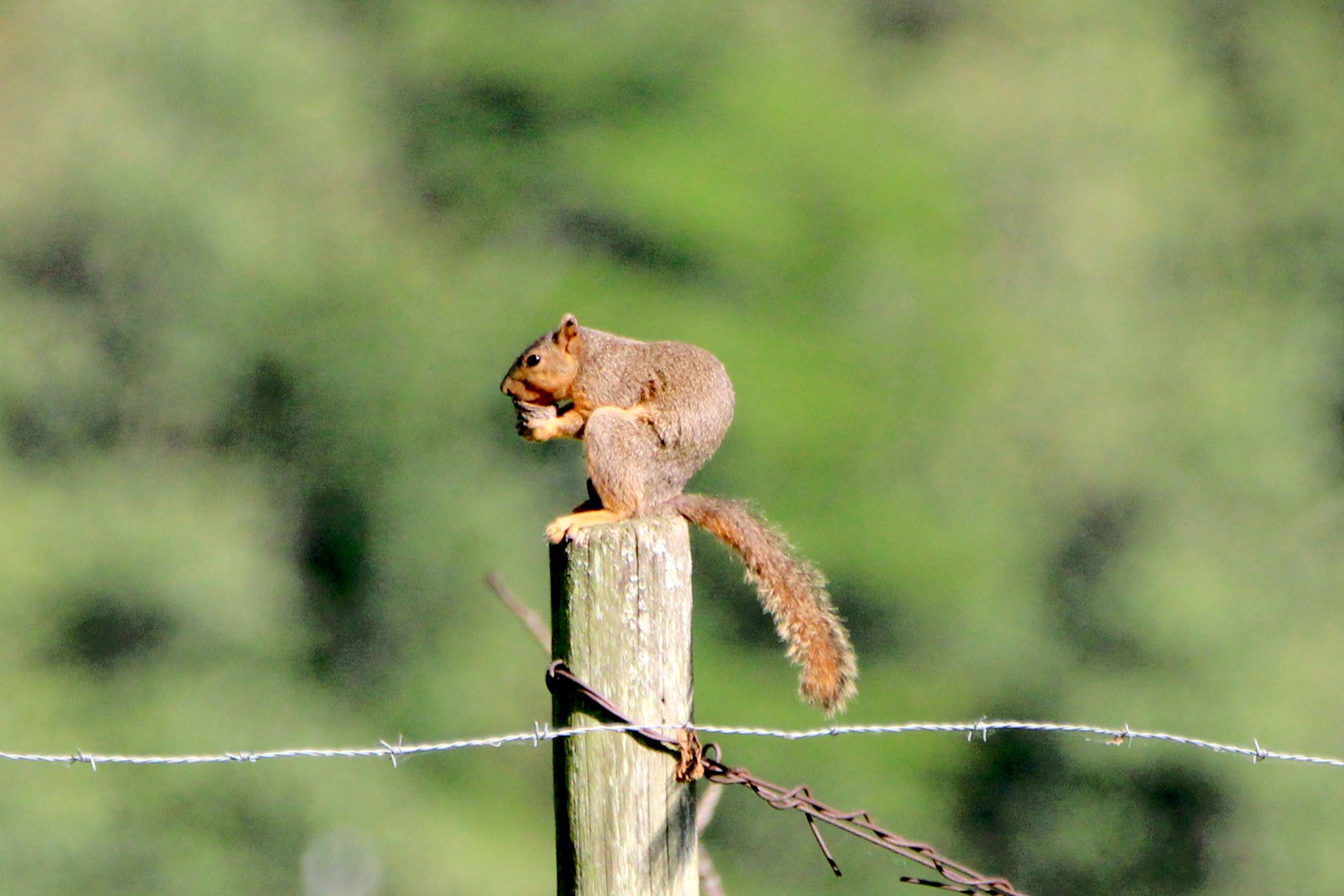
Here’s a Fox squirrel perched on a post not far from where I filmed the Eastern Kingbird and Red-headed woodpecker across the street.
My persistence paid off. After many visits to the old front yard borough, I finally got to see what animal is renting out the owl box on the big Maple tree! I didn’t think it could be a squirrel, because they are so big (since I had only seen Fox squirrels around.) But, this is a Gray Squirrel, I believe.
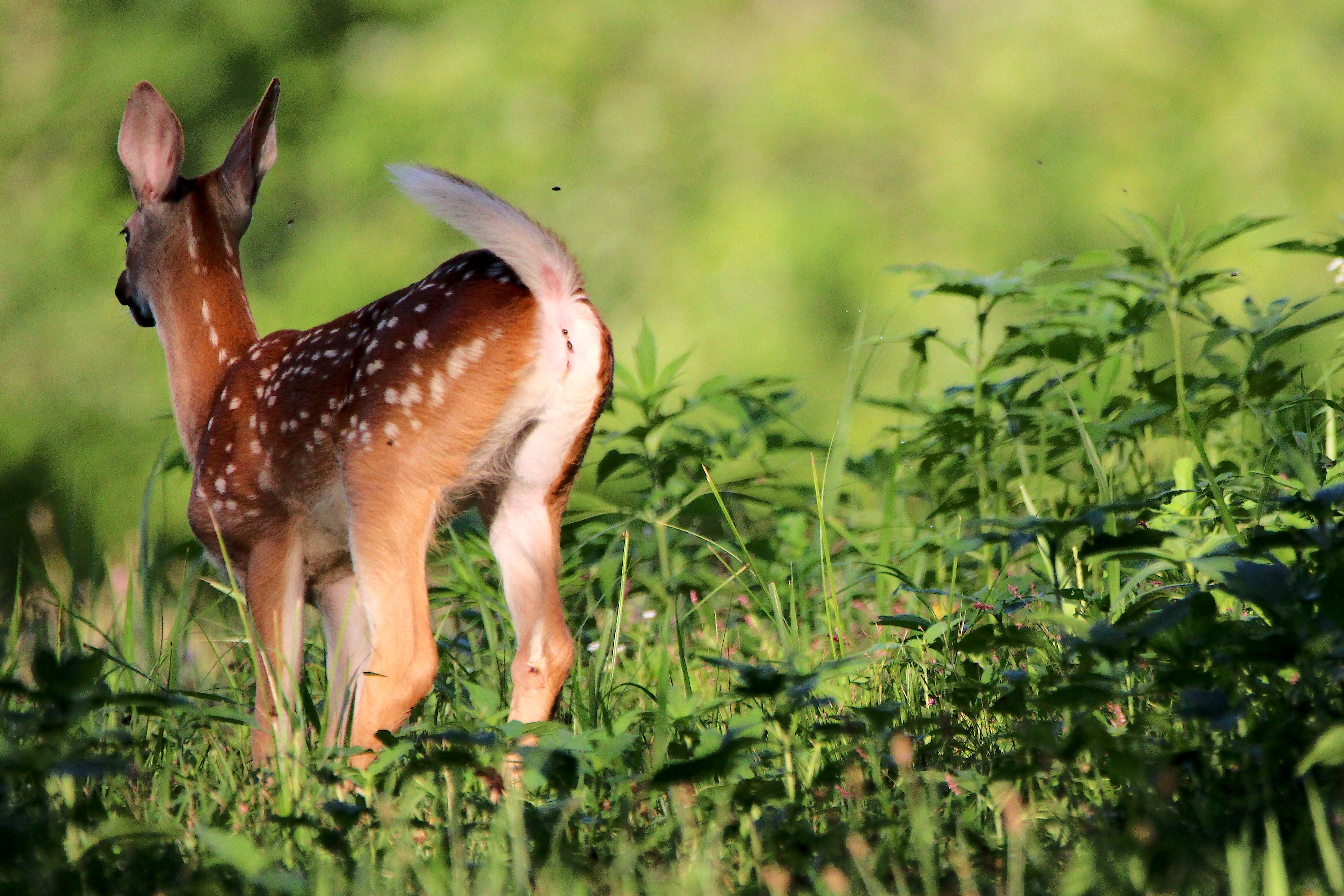
Back to the corridor, where I was filming the Carolina Wren and the Eastern Gray squirrel; suddenly, from the shadowy depths of the old backyard, hopped this lovely creature.
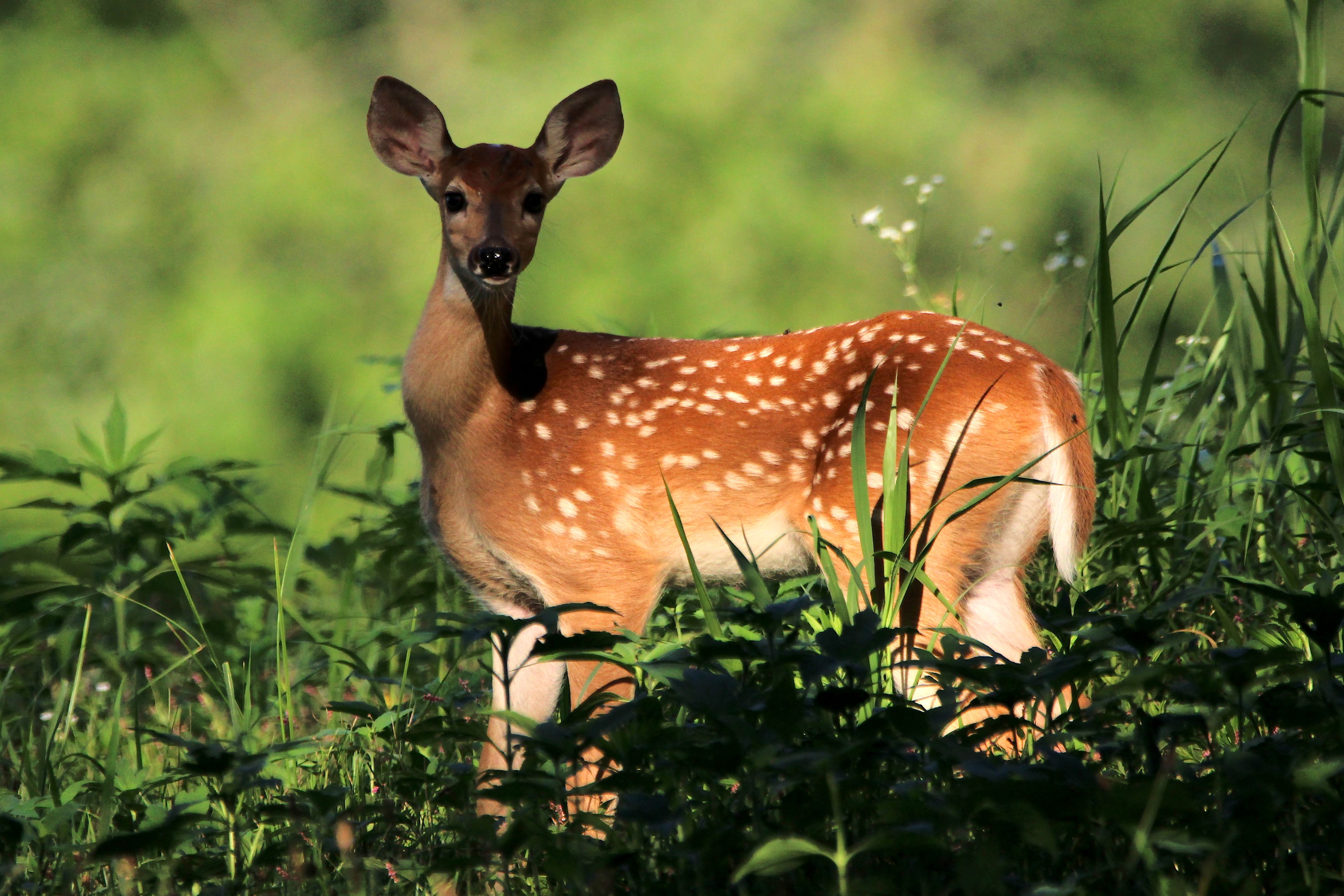
I will end the tour of the neighborhoods here, but that’s not to say I have covered all of the little realms that attract a special set of residents. There’s always more to share.


Your posts with photos and comments are a joy to our family. We live in the NW suburbs of Chgo, and enjoy birds and other wildlife, your photos let us see so many more birds and wildlife. Thank You for the time you take to share with us.
Hi Suzanne, Thank you so much for your kind feedback. I truly appreciate it. I grew up in McHenry, IL – it wasn’t called a suburb at the time, but may be making that connection at some point! I’m very happy that you and your family enjoy what I post.