Tammie Rogers
Inspired by Dogs & Nature
The Brown-headed Cowbird
There is no morality in Nature. But, you wouldn’t know it to speak to many bird watchers. Black colored birds, in particular seem to get a very bad rap when it comes to their fan base.
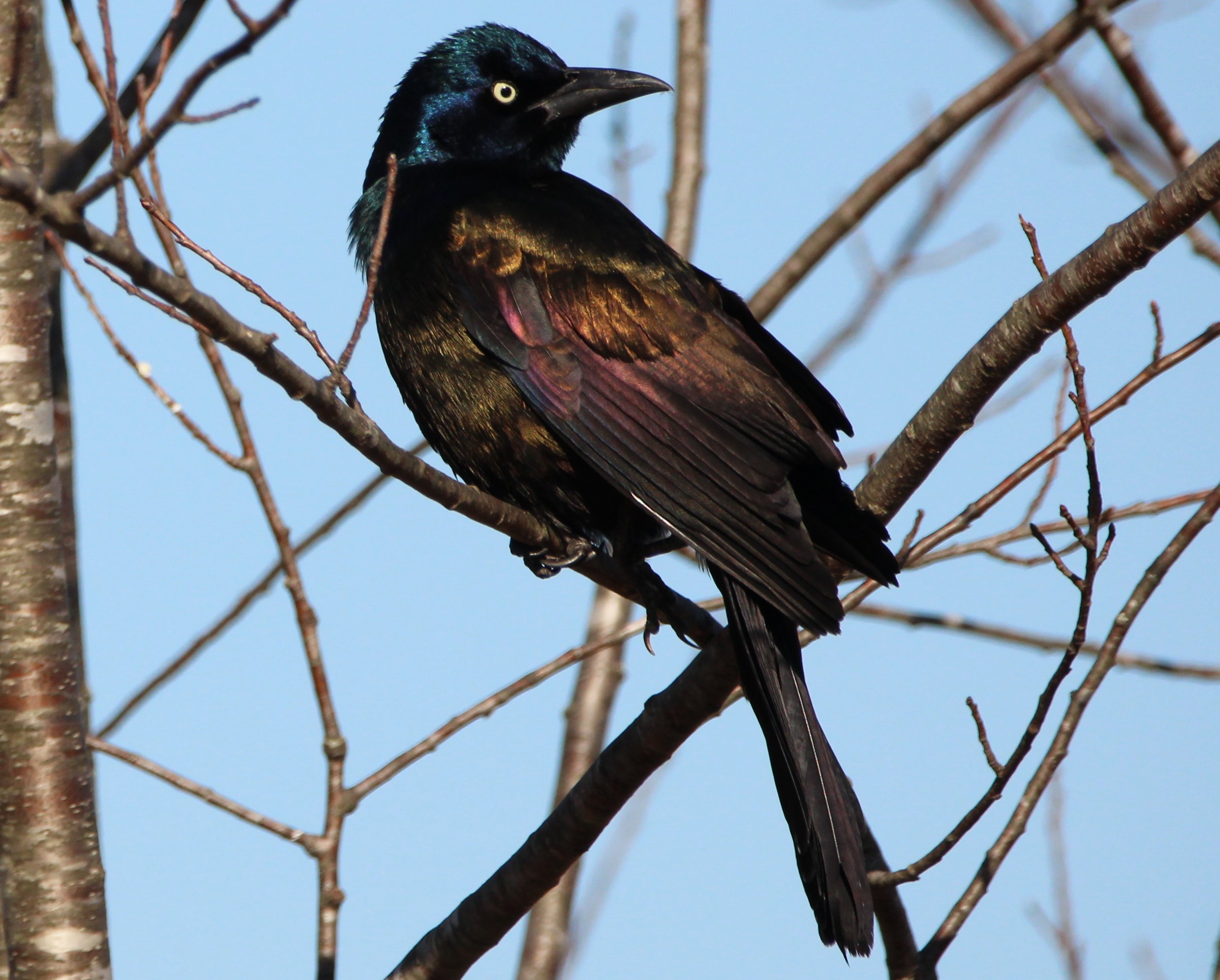
Take Grackles, for example. When they show up at a feeder – like all the other seed-eating birds do when they are struggling for calories – some folks consider them a nuisance. But, if they were red or blue or yellow, I suspect people wouldn’t complain, even if they came in a flock (which can be the way they hang out, just like Goldfinches often do.) I find Grackles absolutely beautiful, especially when the sun illuminates all their colors. This photo is one I captured in late March 2021.
The Brown-headed Cowbird gets a double-whammy “yuck” factor because they are not only black colored birds that often flock in large numbers, but they also have a very curious method of reproduction that many people consider “unacceptable.” It’s called brood-parasitism. Rather than spending resources to build their own nest in which the female Cowbird would lay eggs and rear chicks, she lays her eggs in the nests of other species. The Brown-headed Cowbird’s egg is typically larger than those of the “host” nesting bird and they typically hatch sooner. The Cowbird chick gets most of the resources and space, eventually pushing out the resident chicks to their death.
It may sound horrendous, but to me, it’s just a strategy for survival. It’s no different than a cheetah that hunts cute, baby antelopes to feed her hungry cubs. Do you side with the cat or the springbok? Whose young have more of a right to survive? Nature has a way of keeping everything in balance, if we humans don’t muck it up, so I don’t judge the Cowbirds’ method for making a living.
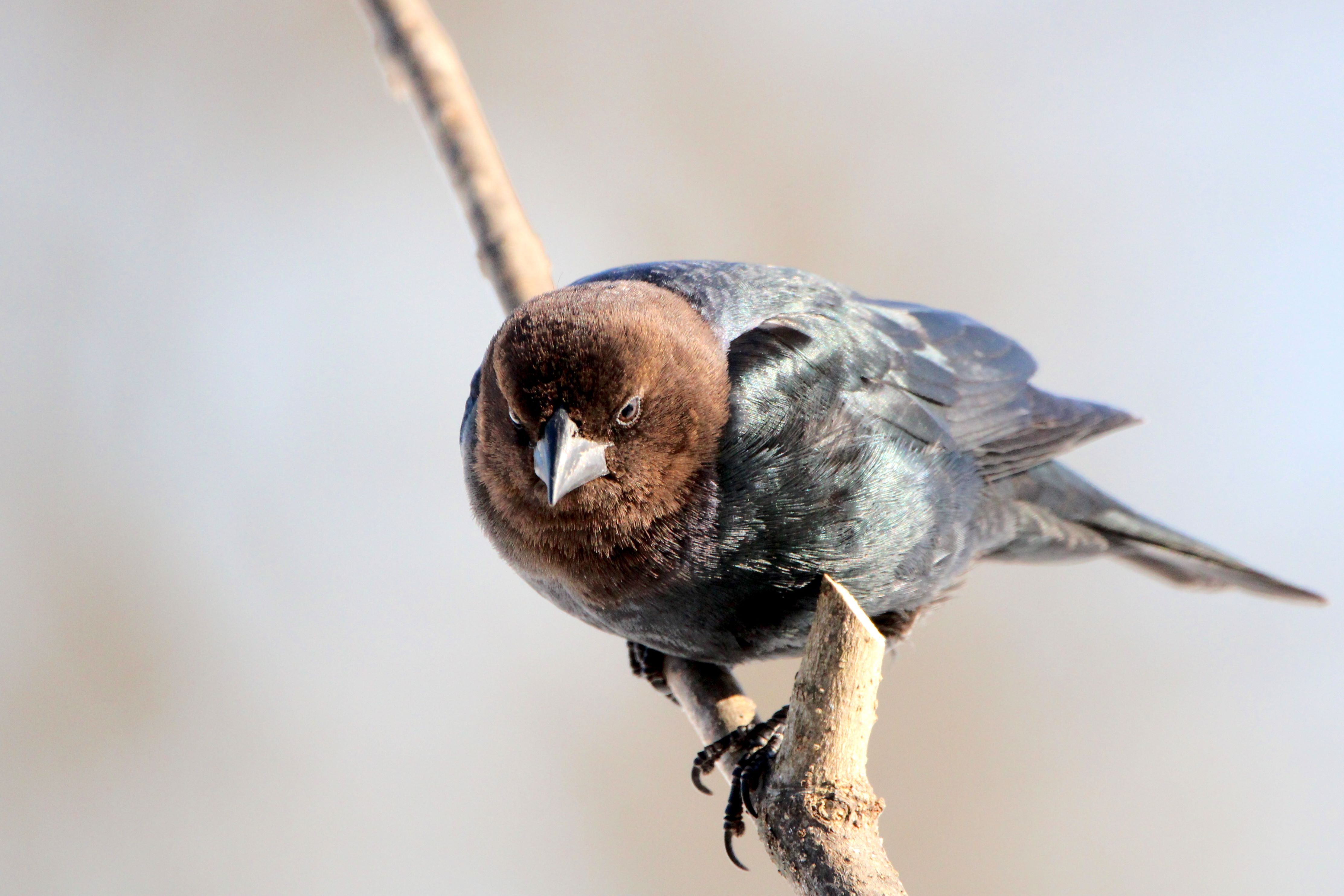
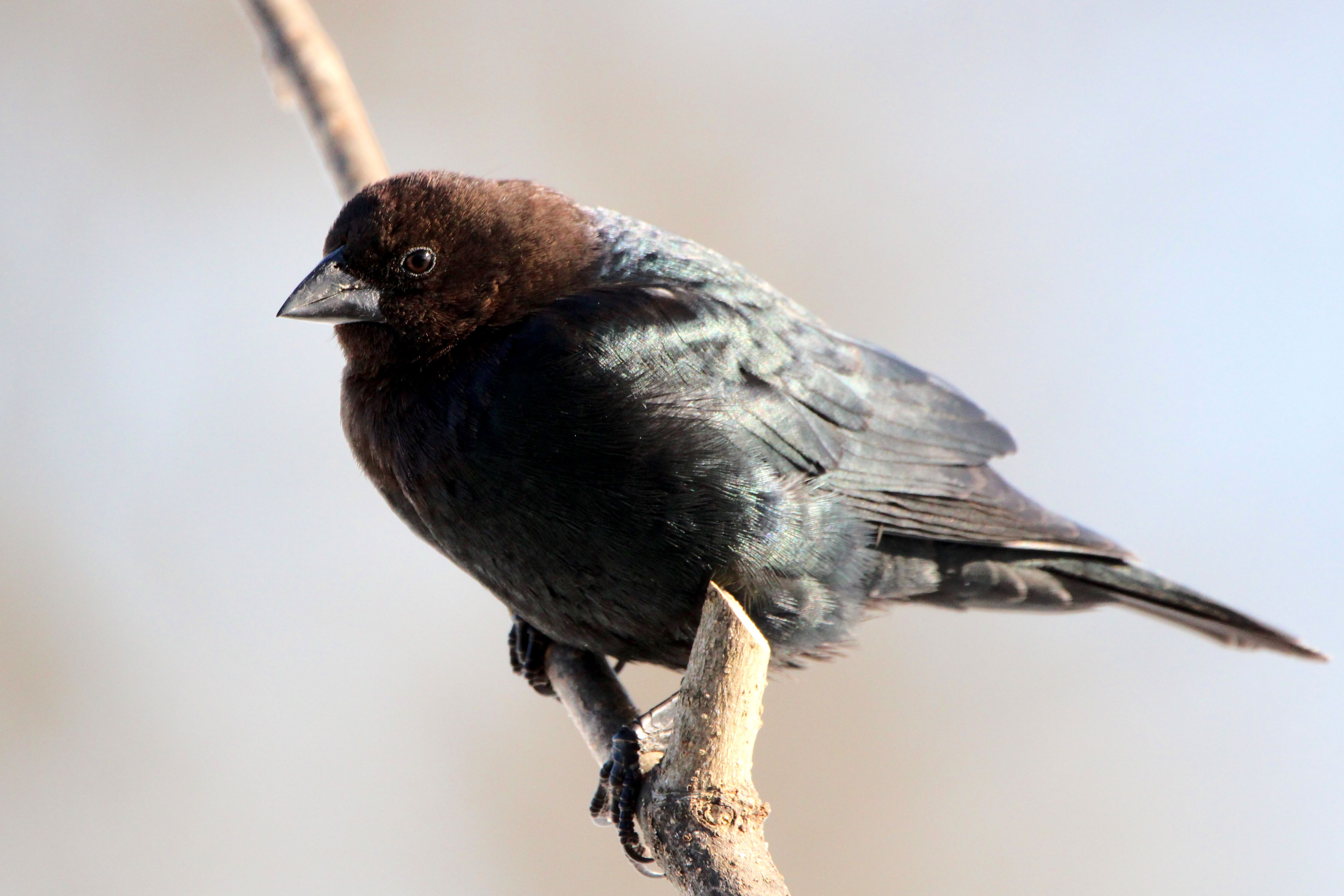
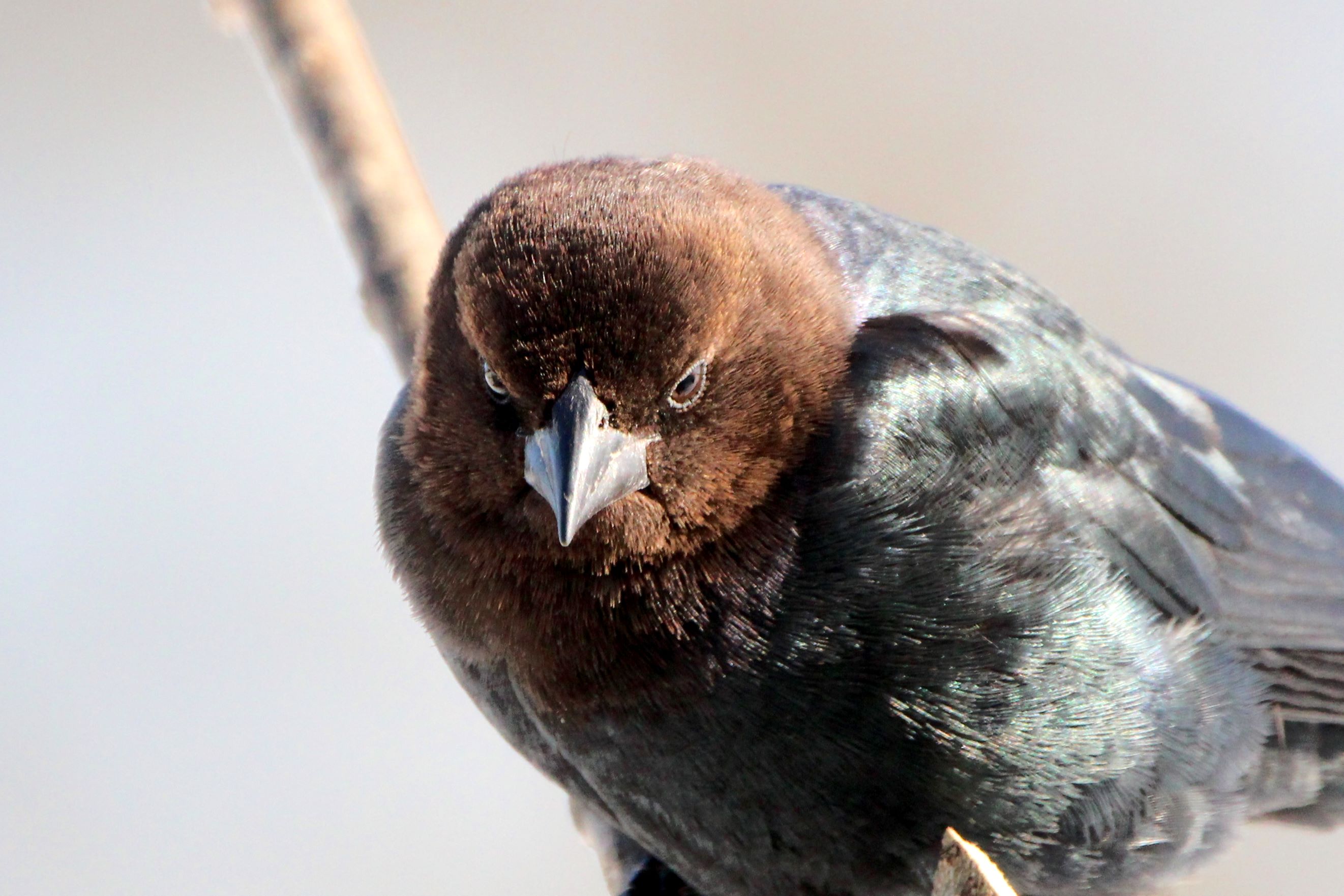
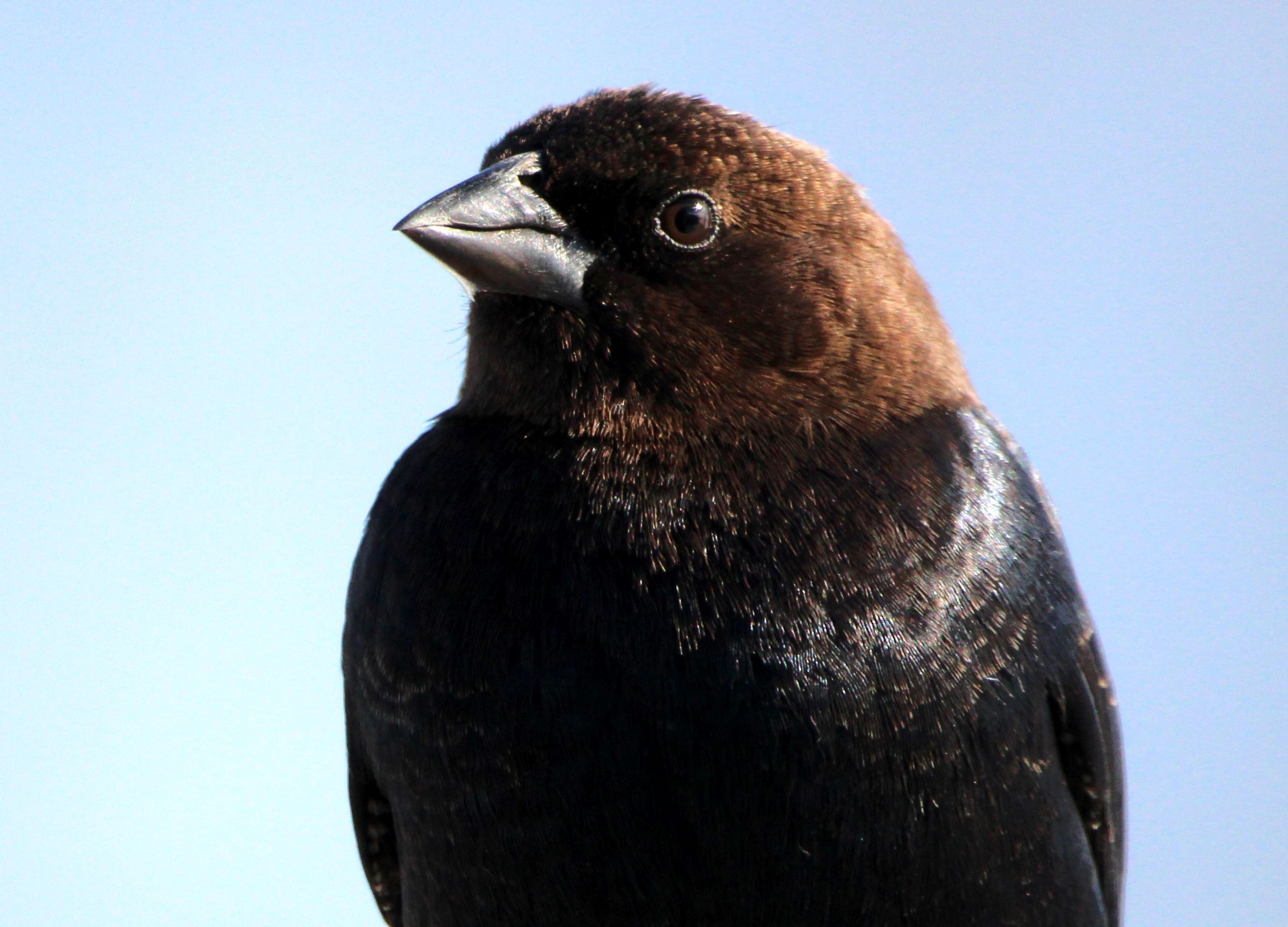
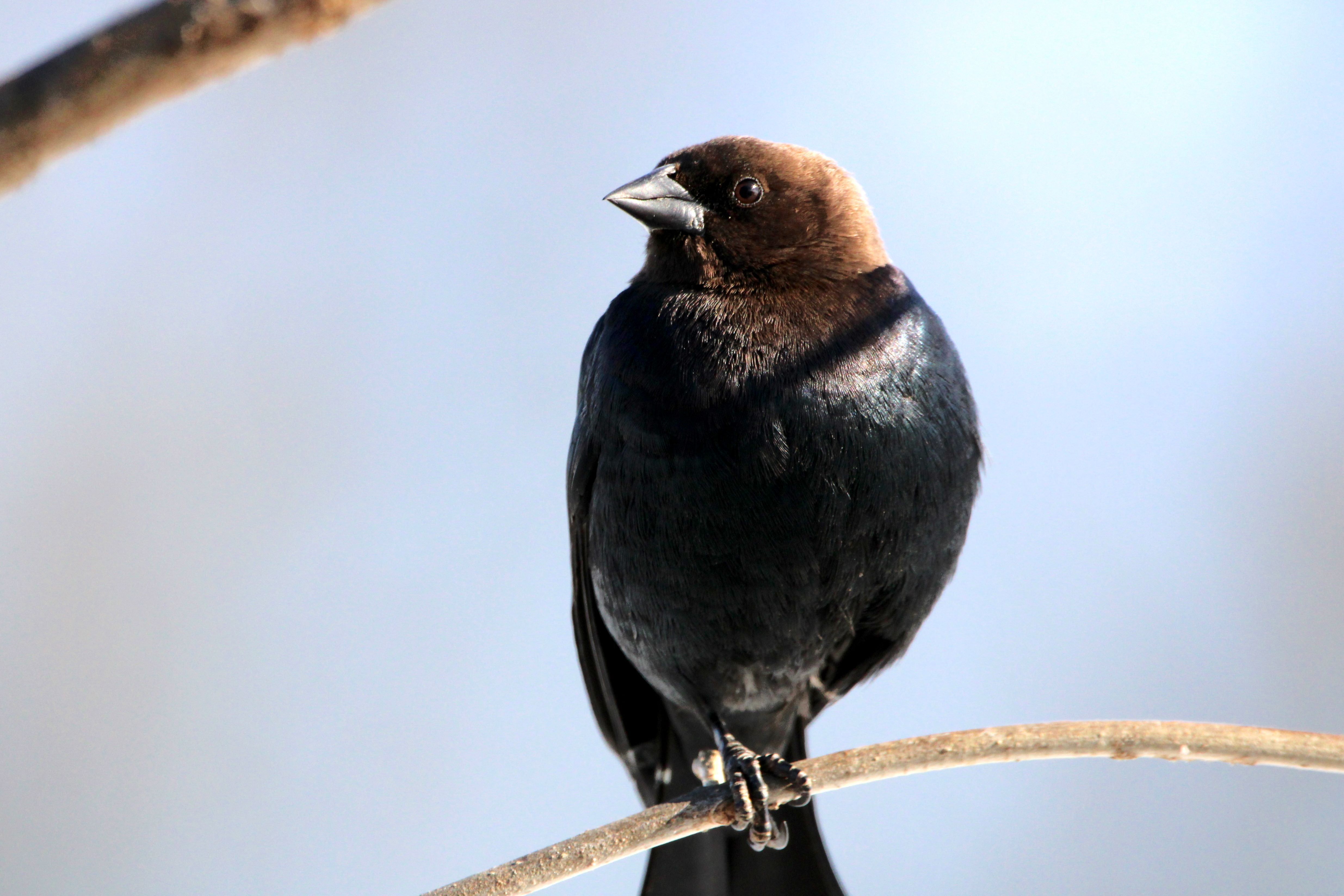
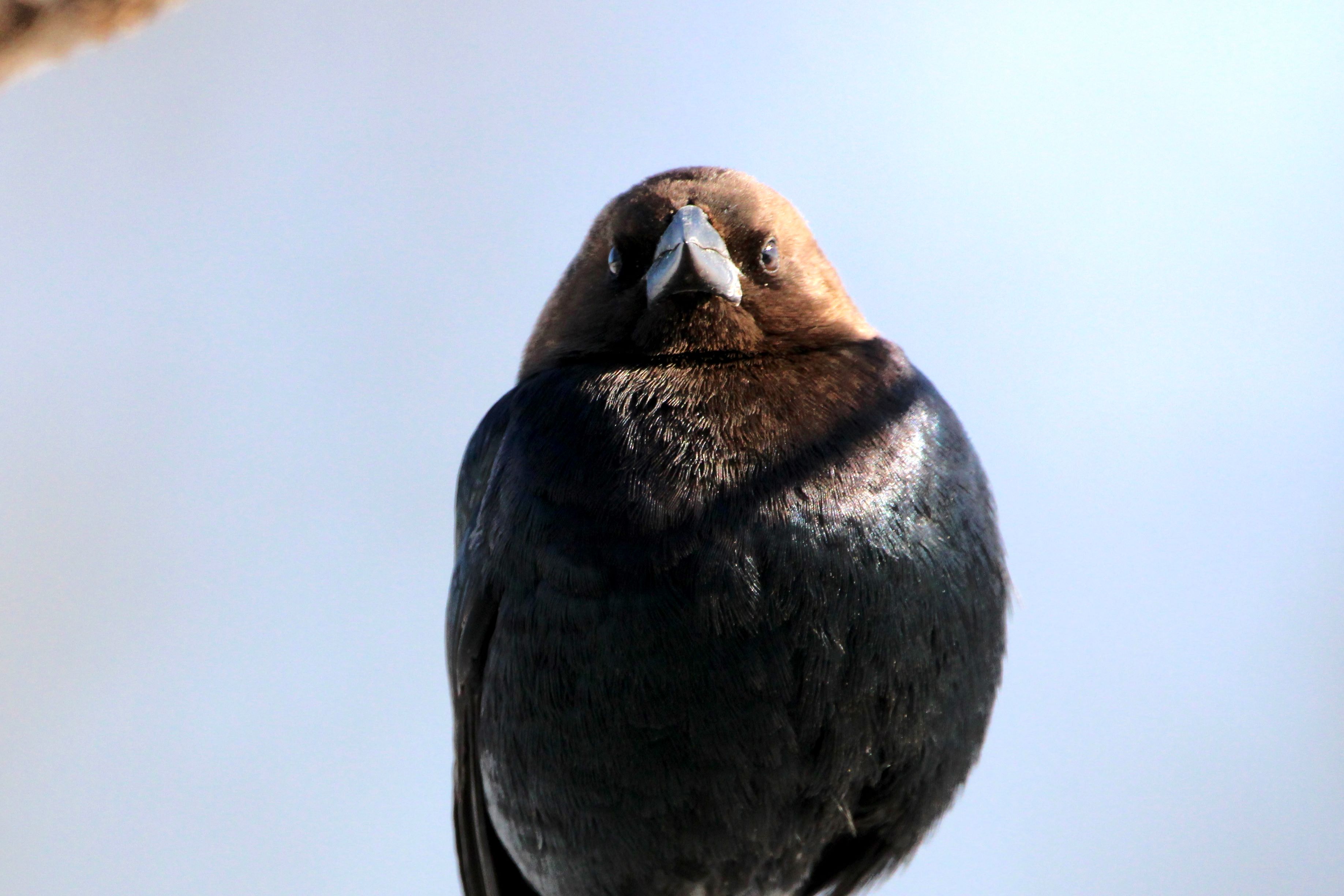
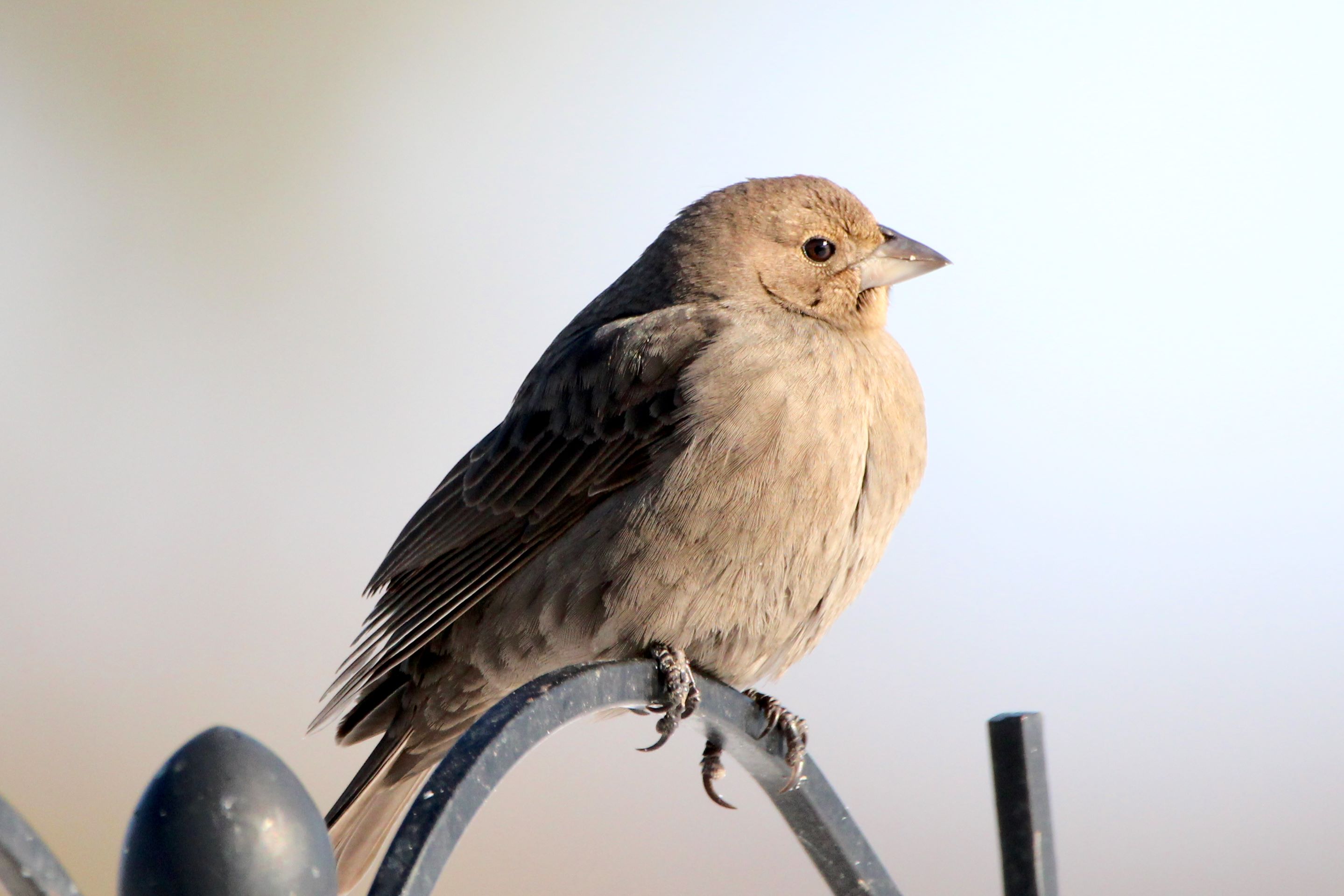
Personally, I find the Brown-headed Cowbirds to be quite beautiful, especially when filmed in bright sun which illuminates their lovely, rich hues. The males don the characteristic brown head and black body, while the females present with a softer gray-brown (somewhat taupe) coloring. But, look carefully, because the females also show a hint of iridescence in their feathers.
I noticed one of the males I filmed is missing his left leg! Sometimes, a bird will perch on one leg for while. So, I looked carefully at the beaks of the males that are standing on two legs versus the one-legged bird I filmed and they are not the same (based on the wear patterns on noticed on their bills.) One can only guess what caused his condition, but he appears to be doing well despite the missing limb.
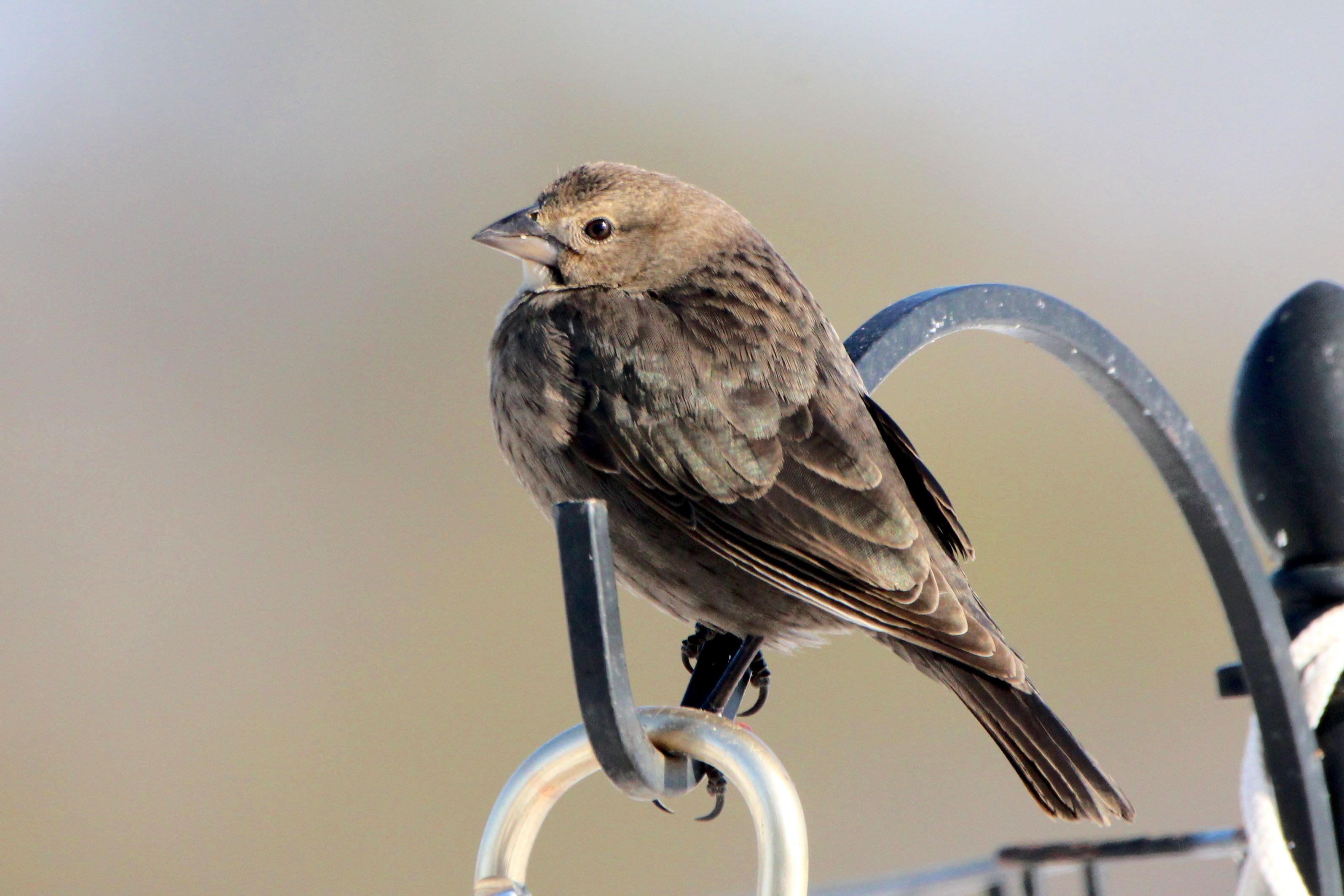
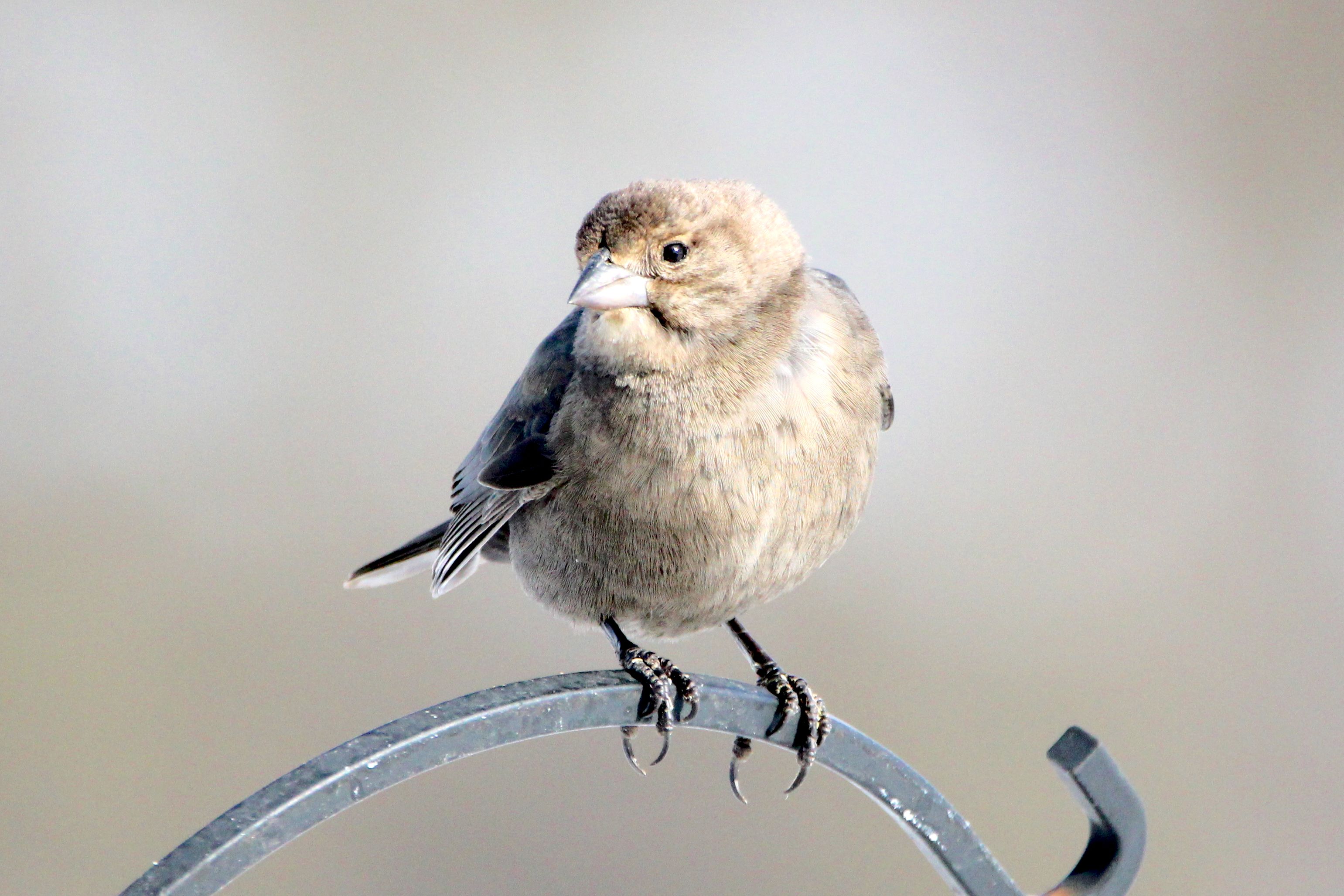
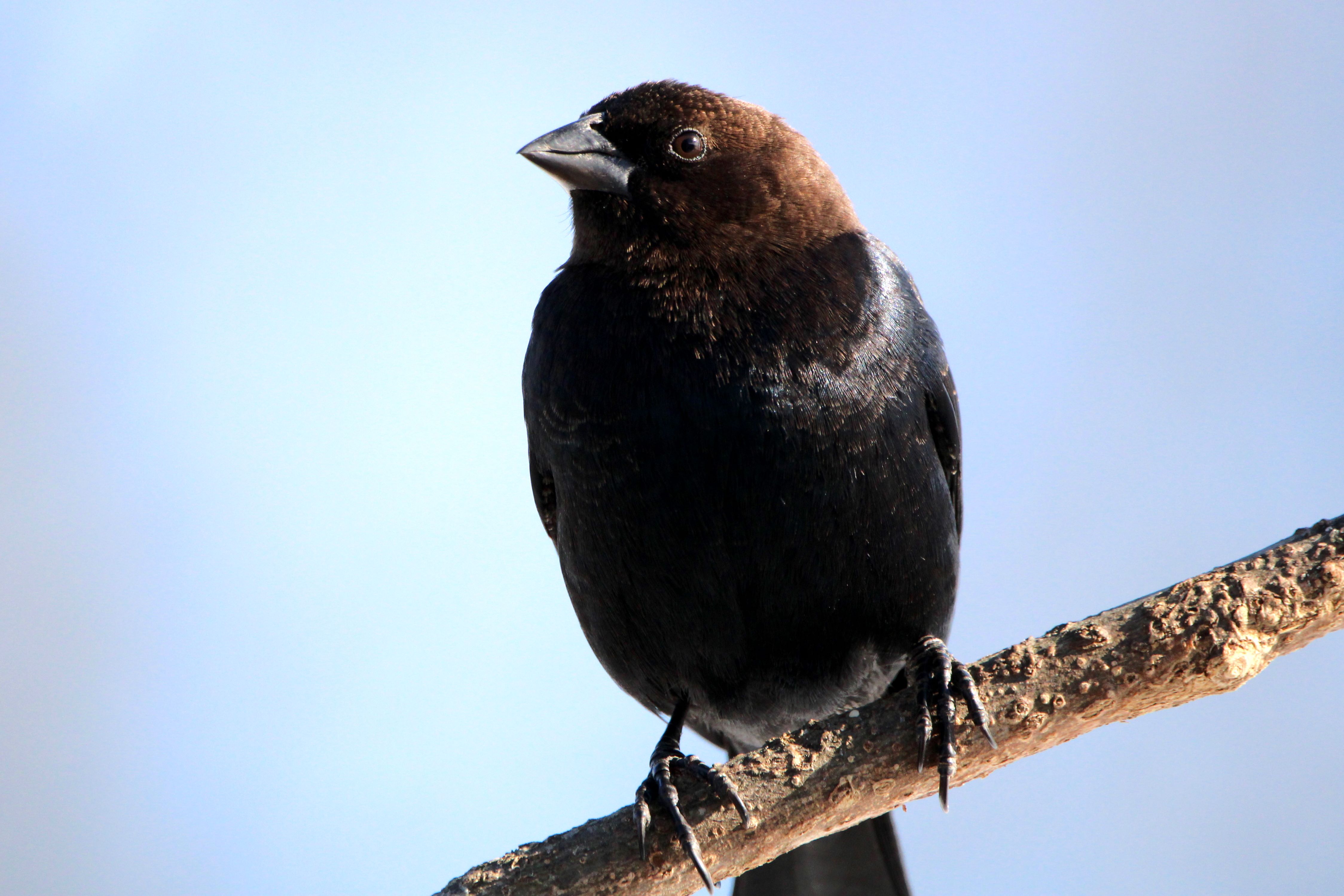
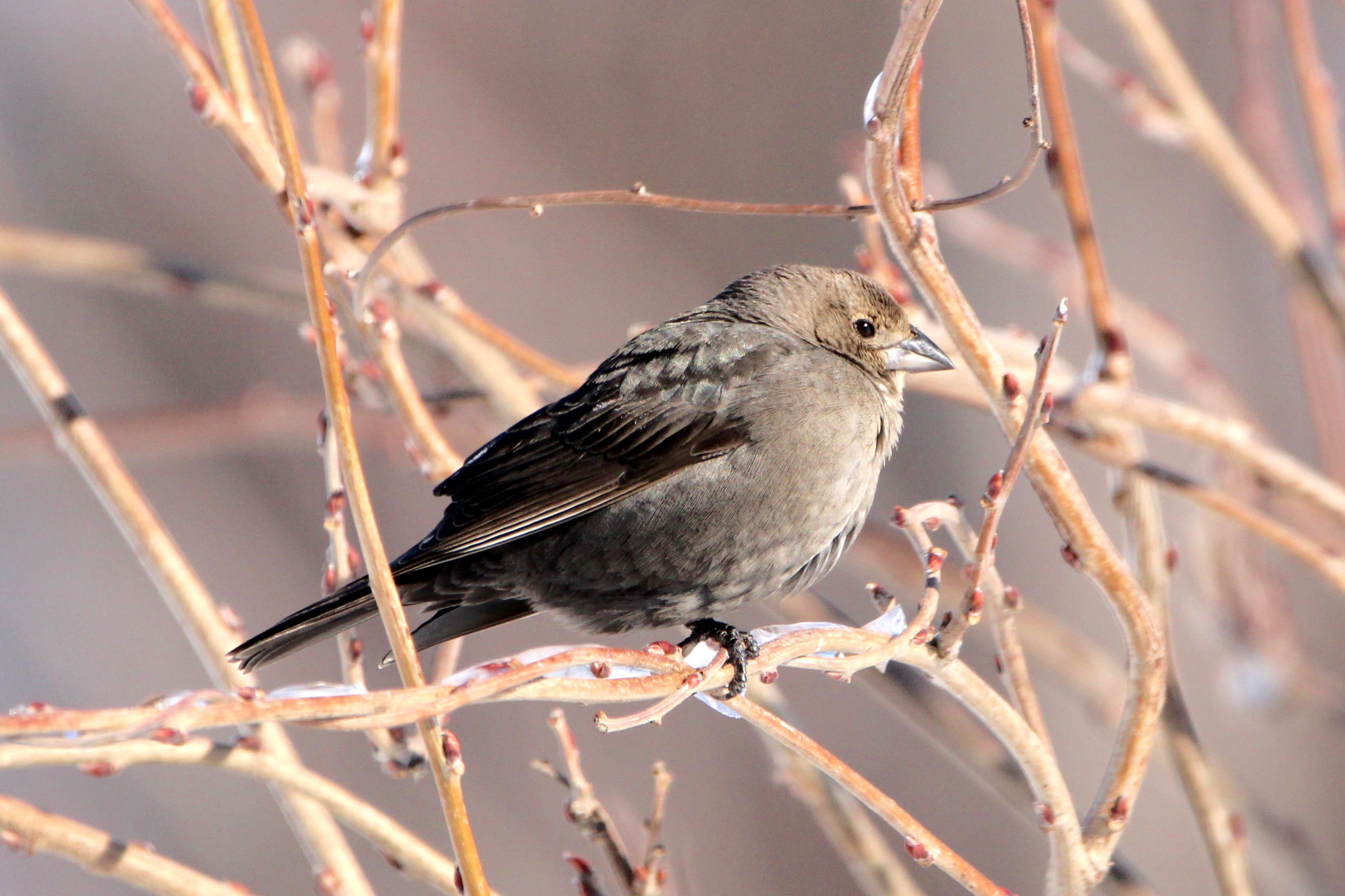
The Brown-headed Cowbird is a handsome species that, except when it’s quite cold and snow is covering their normal food options, doesn’t visit our feeders very often. I have enjoyed seeing them .