Tammie Rogers
Inspired by Dogs & Nature
wE’LL sEE
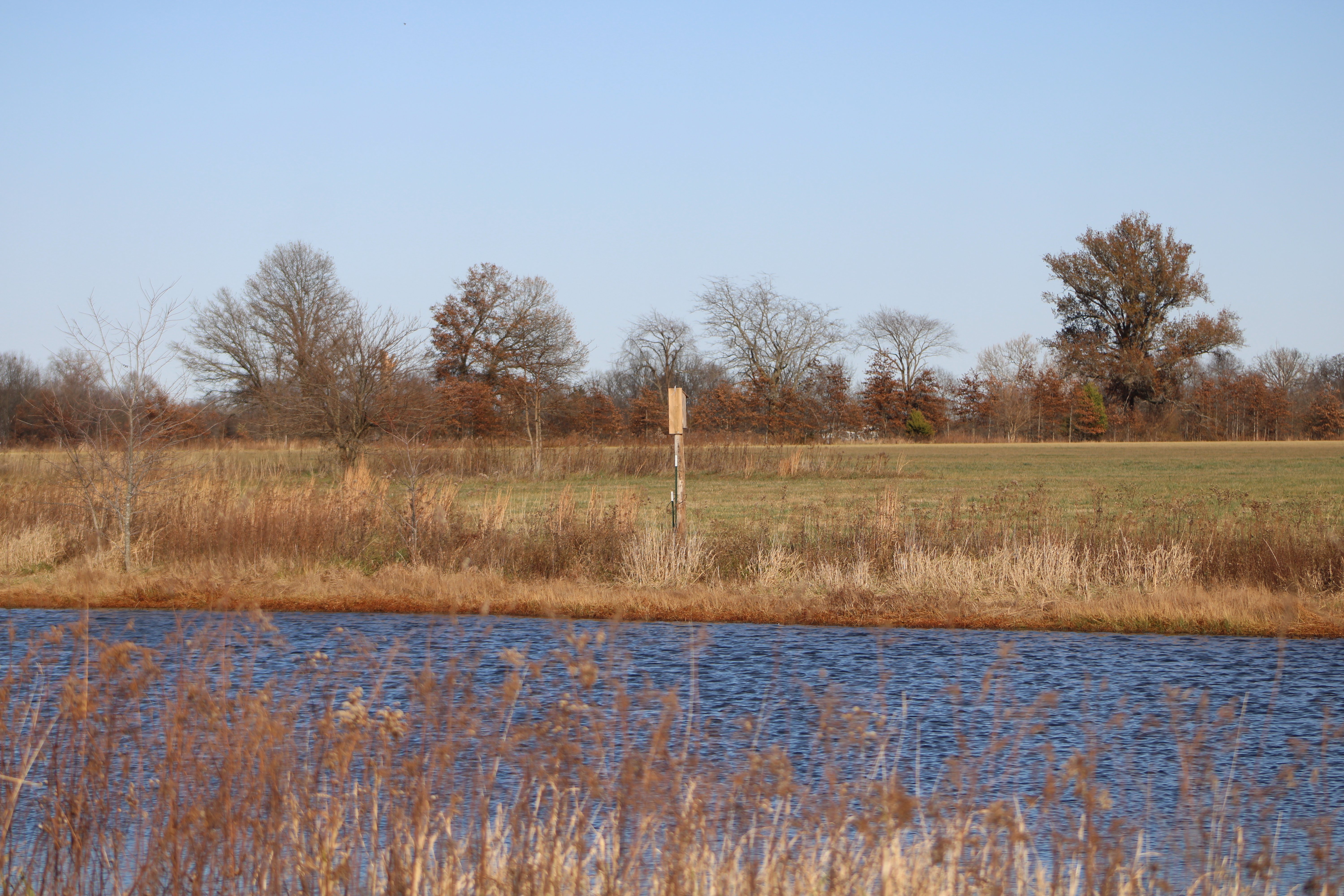
Earlier this autumn, Robert and I put up two owl boxes and a Wood duck box that I acquired from Etsy craftsmen. One Owl box is hung under the eves of the open side of our old barn. One is on a pole backed up to some mature trees at the north end of Pond Meadow. The duck box is on a pole near the water’s edge on the east side of our pond. I suspect the duck box could also be used by an owl or Kestrel.
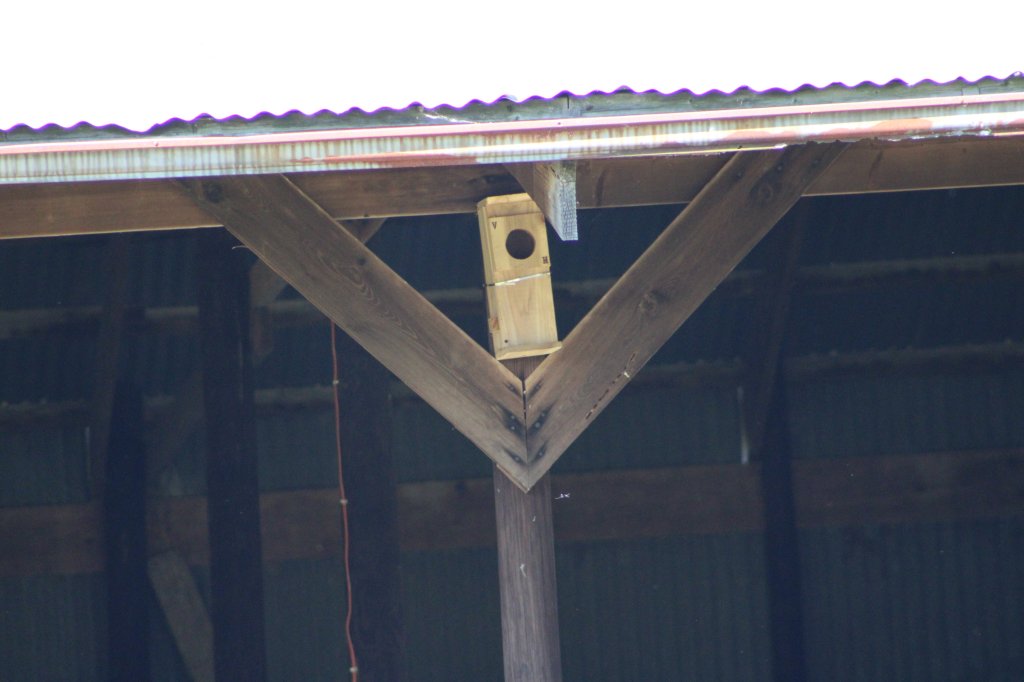
Owl box under eves of the old barn. 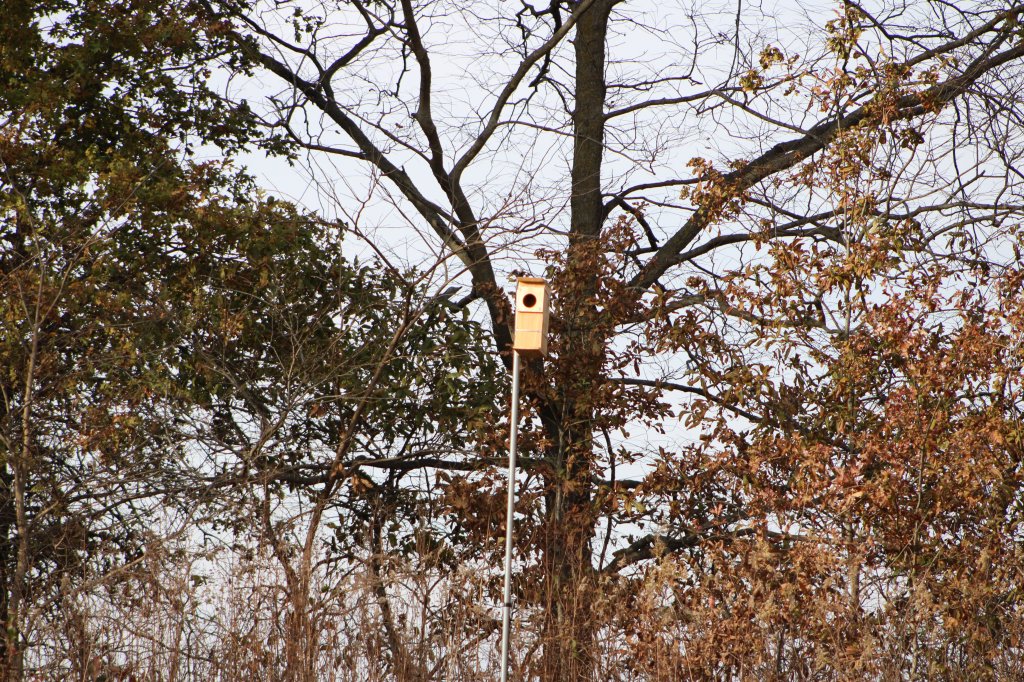
Owl box at north end of the Pond Meadow. 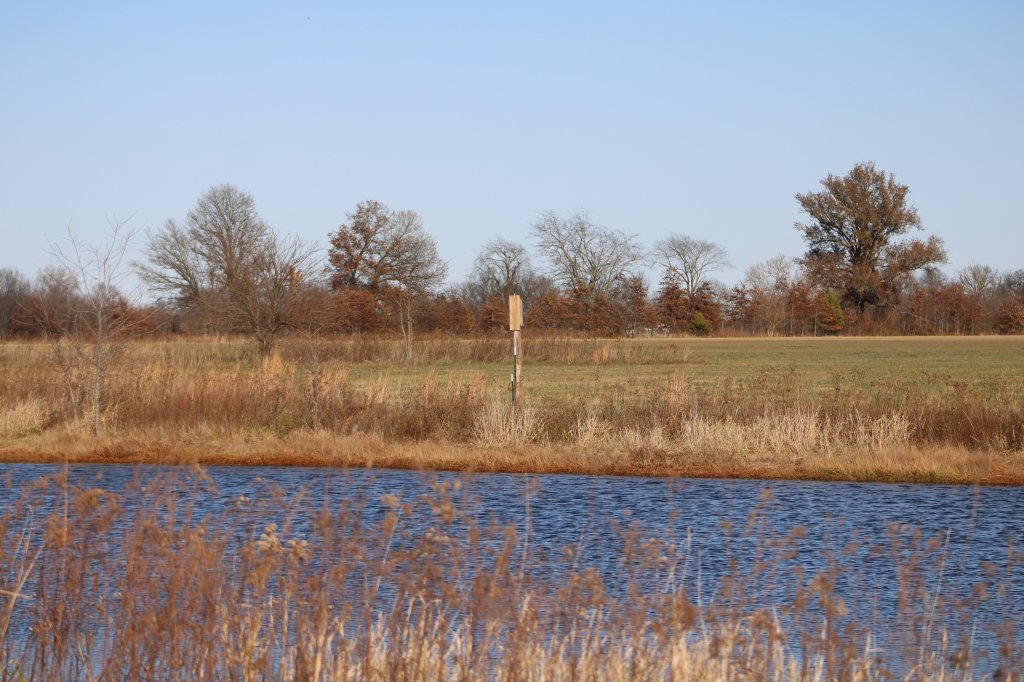
This is the back side of the duck box, filmed from across the pond.
I wanted to add another “bird of prey” box to the east end of our property, and decided that we could make it ourselves.
Here’s the twist. Rather than drilling a round entrance hole, I decided to use a design that both Tree Swallows and Eastern Bluebirds have selected out of the “Bluebird” boxes we have offered. The design replaces a hole with a slot that runs the entire width of the front board. I acquired it because it was marketed as a design which deterred House Sparrows.
Here are some photos of the Tree Swallows that used the “top slot” model box this past summer.
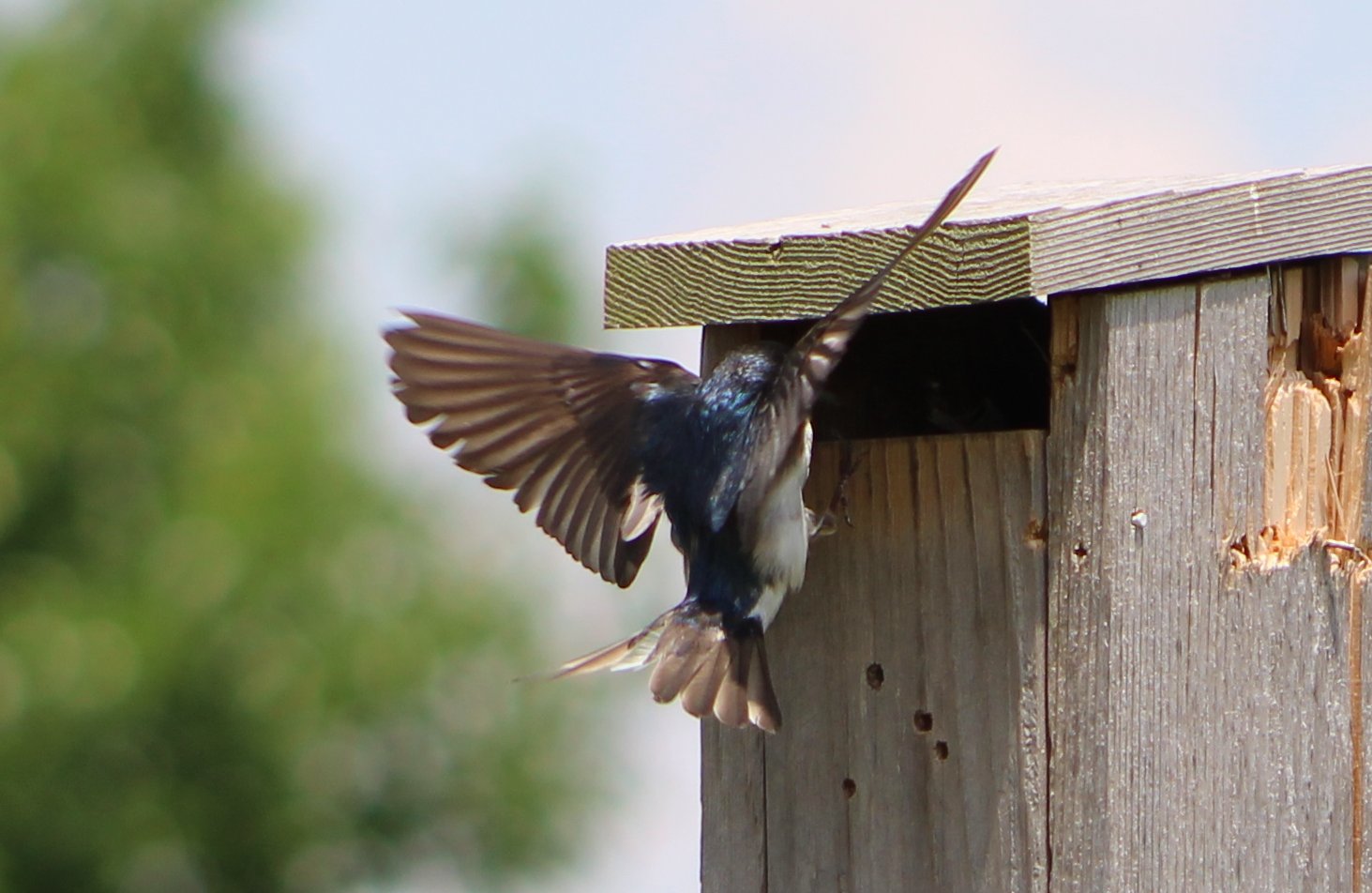
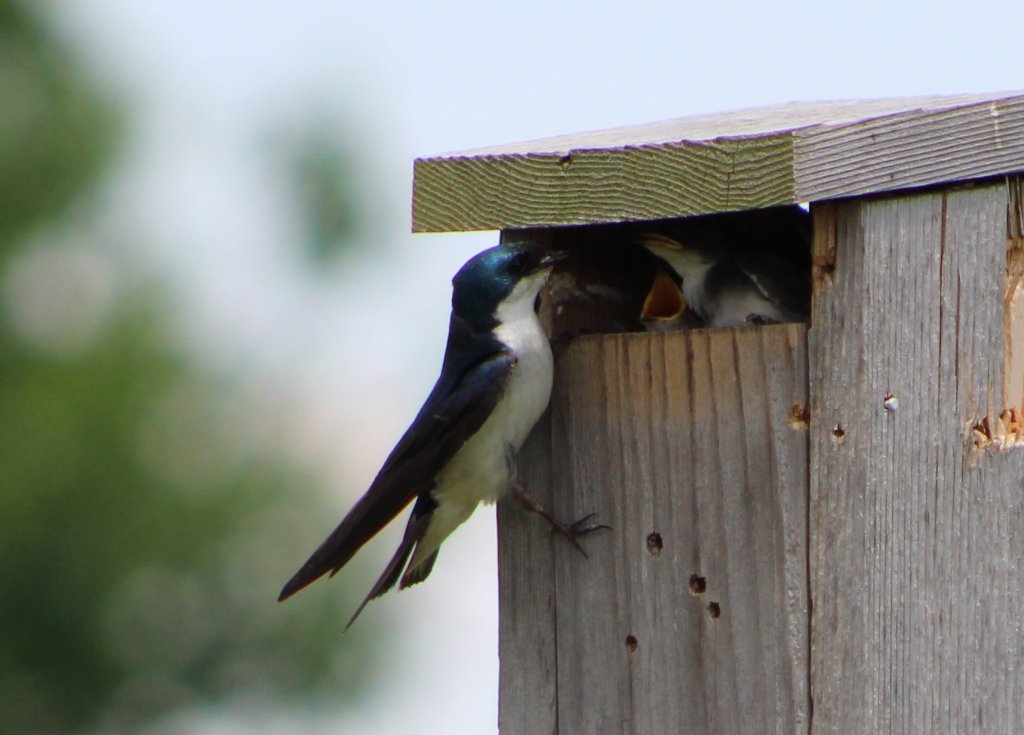
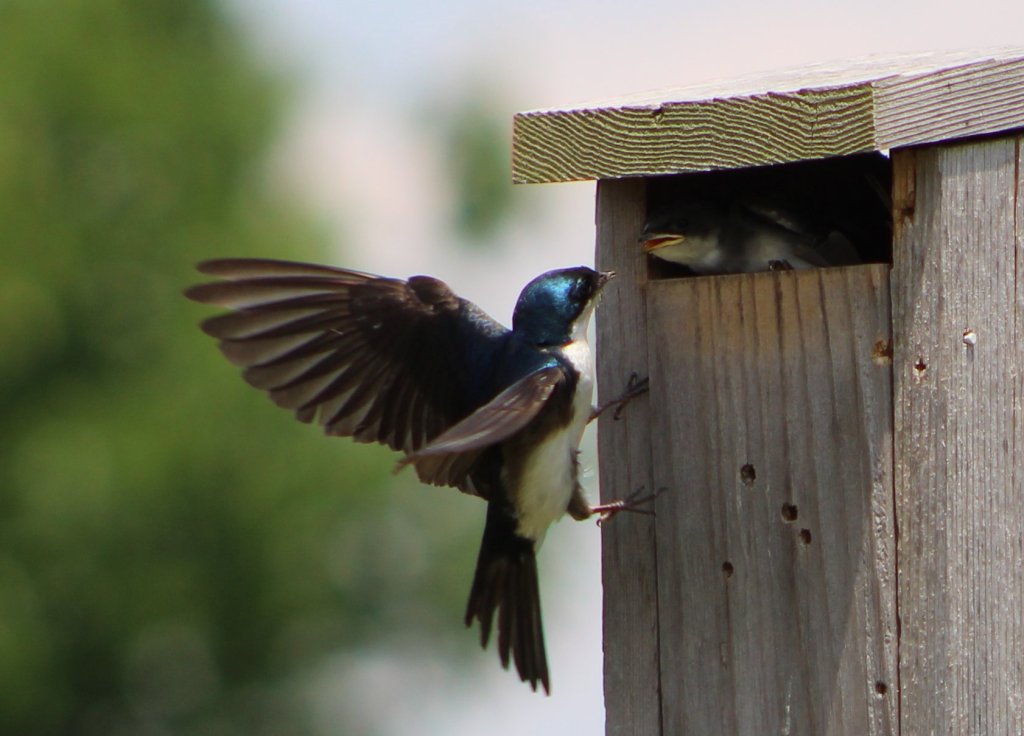
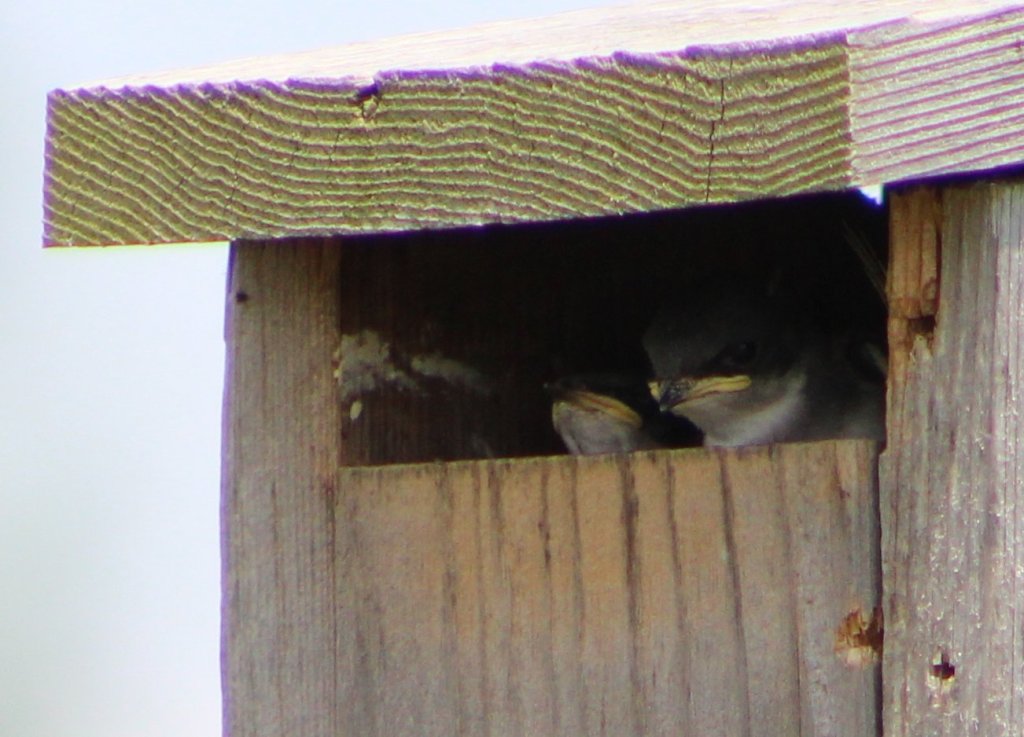
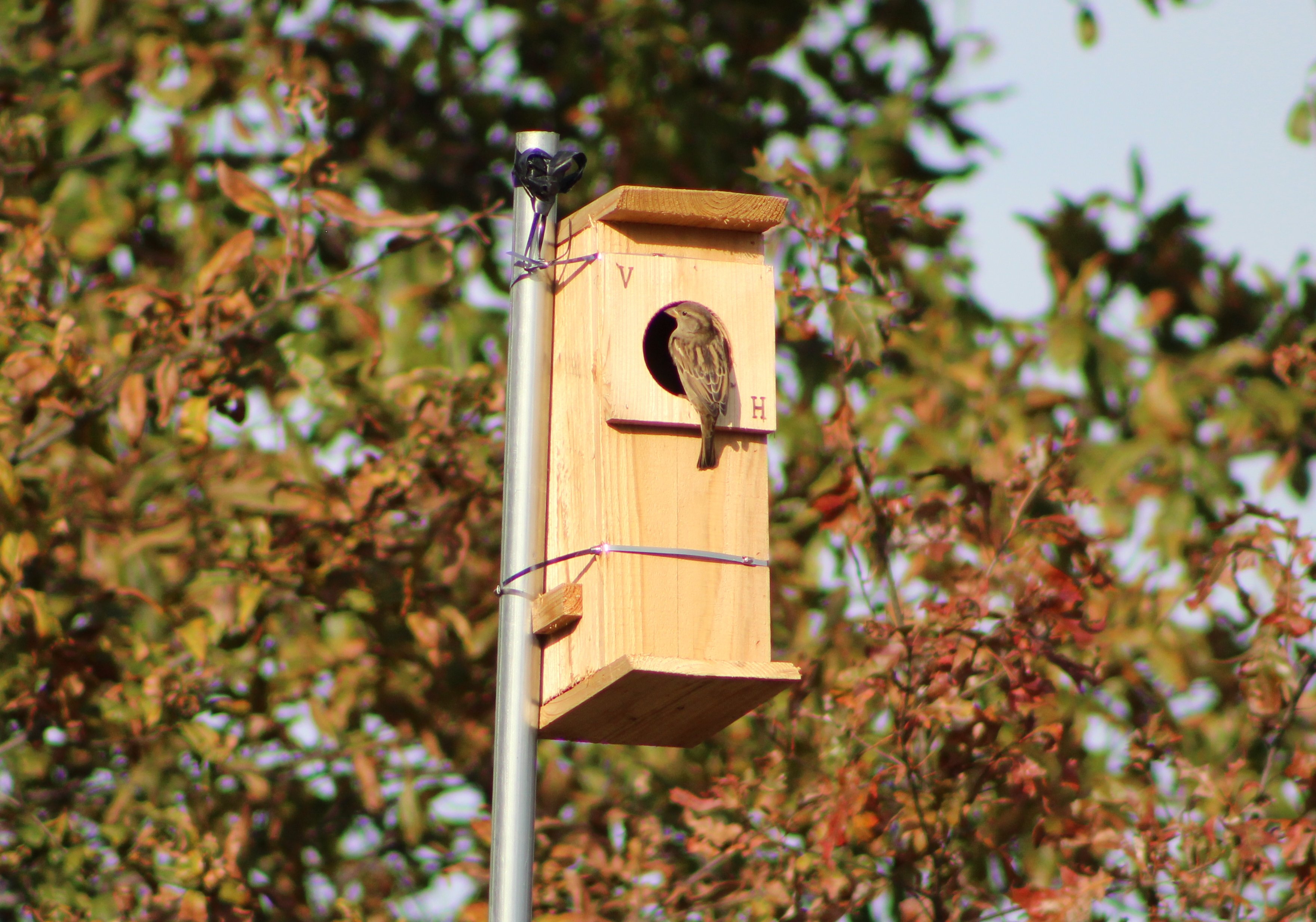
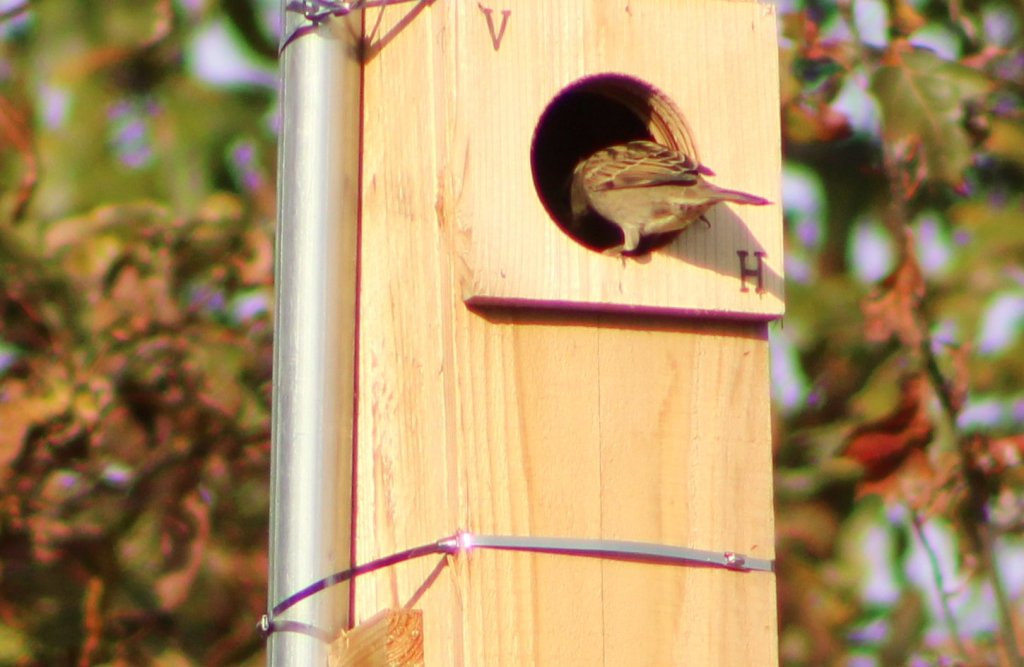
A month ago, I observed a House Sparrow checking out the Owl Box at the end of Pond Meadow! I suppose she was just exploring the new digs – I hope she didn’t think it was the right size for her next brood! Still, the photo reminded me why we put up the boxes now, rather than waiting for spring. I have seen Bluebird examining houses during the depth of winter. What else do they have to do during the cold, winter months. It’s a lot like going to view Model Homes on a Sunday afternoon (that’s a memory from my childhood!)
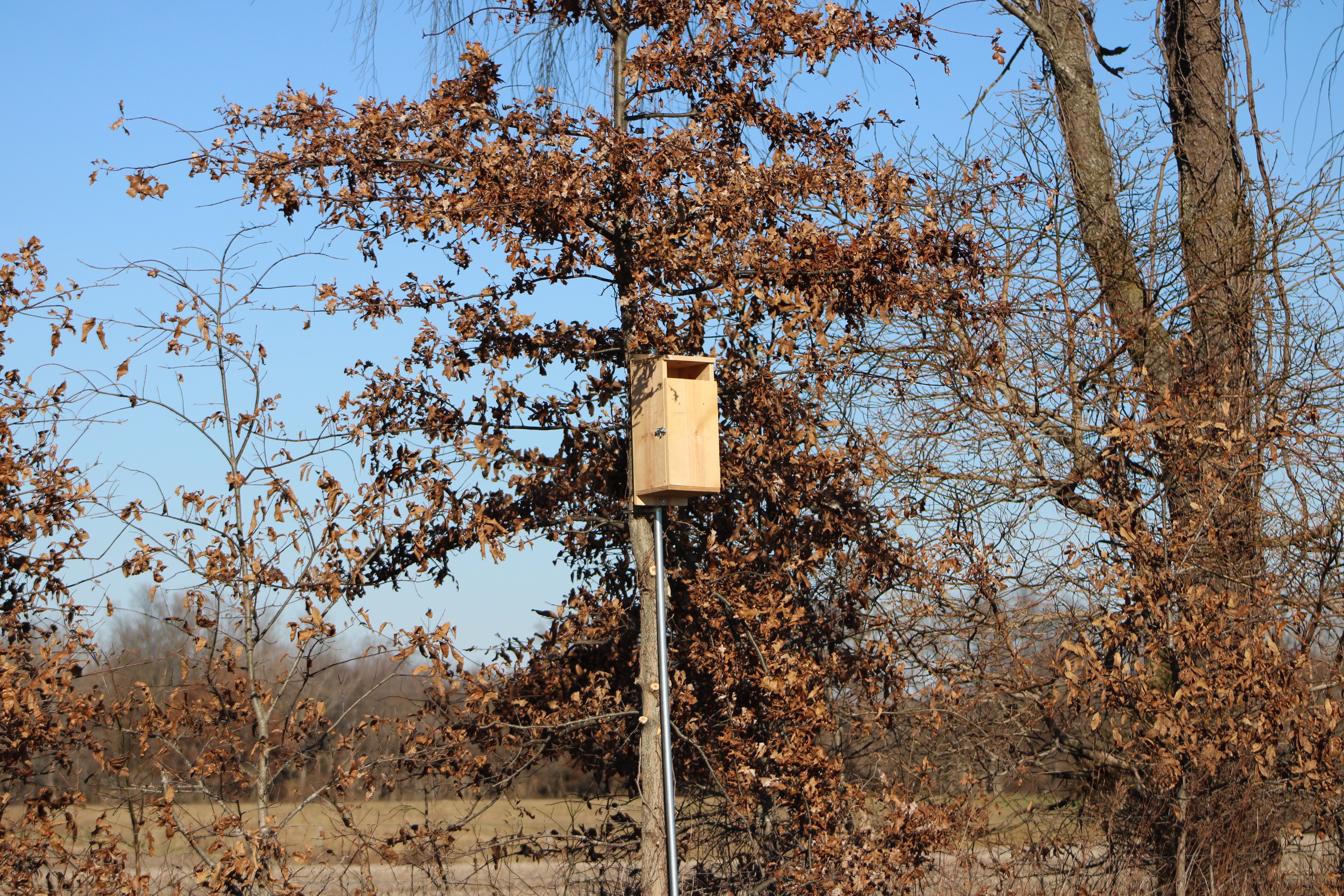
The box that I designed was constructed from an 8 foot piece of 10 inch wide pine board. I used the basic description for a Kestrel box that I found on a few different sites on the internet. But, instead of drilling a hole, we left a three inch top slot for entry. That’s the recommended hole size for Kestrels, and it’s also the size for a Screech owl, as well. Our box has a hinge to open the front panel for taking a peek, and a three inch high inside barrier at the bottom so that chicks and nesting materials (we added cedar shavings) won’t fall out when the door is opened. It also has a perch towards the top, inside the front panel door for chicks to use to climb out when it’s time to fledge.
I’m going against all the standard owl box plans by leaving a top slot. But, I have to wonder how many natural cavities have perfectly shaped entries or interior. We’ll see what happens with our novel design. Robert trimmed the bottom limbs of a young oak tree up to about ten feet, then secured the box to the tree with a metal pole as added support. Like always, he did a great job! Thanks, honey!
Each day I go out I take a quick tour around to see if anything is happening around the nest boxes. I would love to see a bird considering it as a suitable next come spring! Fingers crossed.


great job with the nest boxes, always want to do it but do not know how to get them high enough. In yard or garden.
Thanks Rhetta. You might consider getting an old / used / maybe even slightly broken ten to twelve foot step ladder from a thrift store (or the back of your or a friend’s garage.) Secure the owl box to the top of the ladder. Pound a T-post into the ground and secure the ladder to the post for stability. It’s then possible to move or remove it easily. If you can’t pound a post, then tie concrete blocks to the four legs of the ladder to secure it in place.