Tammie Rogers
Inspired by Dogs & Nature
Who’s Out There?
There’s a site called e-Bird that encourages “birders” of all levels to upload data about the birds they encounter (https://ebird.org) When you input your location, it provides a checklist of the birds you are most likely to see in your area. I recently used that list to create a spreadsheet and then I color coded the birds into one of four categories.
A. I have taken a photo of that bird. B. I have seen, but haven’t taken a photo. C. I have heard that bird’s vocalization, but not seen it. and D. I haven’t seen or heard that bird.
Obviously, since I am an At-Home Naturalist, I don’t expect to see some species like shore birds that would only be found around large areas of water. For example, White Pelican is actually on the e-Bird list in my zip code but there’s probably no chance I’m going to see one show up in our pasture.
I plan to make this a page that I update as I gain new information about the birds our our farm. To start off, here are the birds I have photographed. You may view many more images of these birds by looking through my CATEGORY of WILD BIRDS.
SWALLOWS
Swallows make their living by catching insects while in flight. I absolutely love watching swallows soar. We have three types of swallows at our home. All of them nest near our house, which makes them easy to observe. If I were a swallow, I’d be the Barn Swallow because it is the one with the most adept aerial acrobatic aptitude. They are absolutely brilliant in flight.
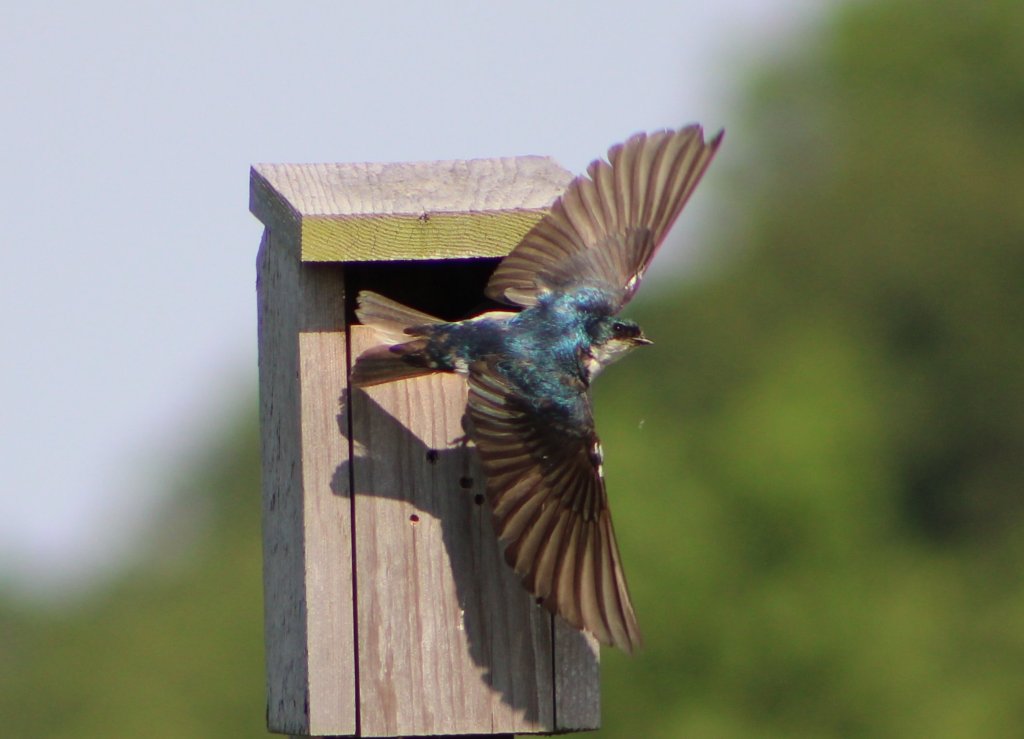
TREE SWALLOWS
These lovely birds with the iridescent blue backs and pristine white bellies nest in cavities. A nest box provided by a human is just as good, if not better than the natural option – which might be a hole excavated, but no longer used by woodpeckers. I find it easy to film Tree Swallows once they have set up a nest in one of the boxes we provide, and have posted many photo-essays of the Tree Swallows that live near us.
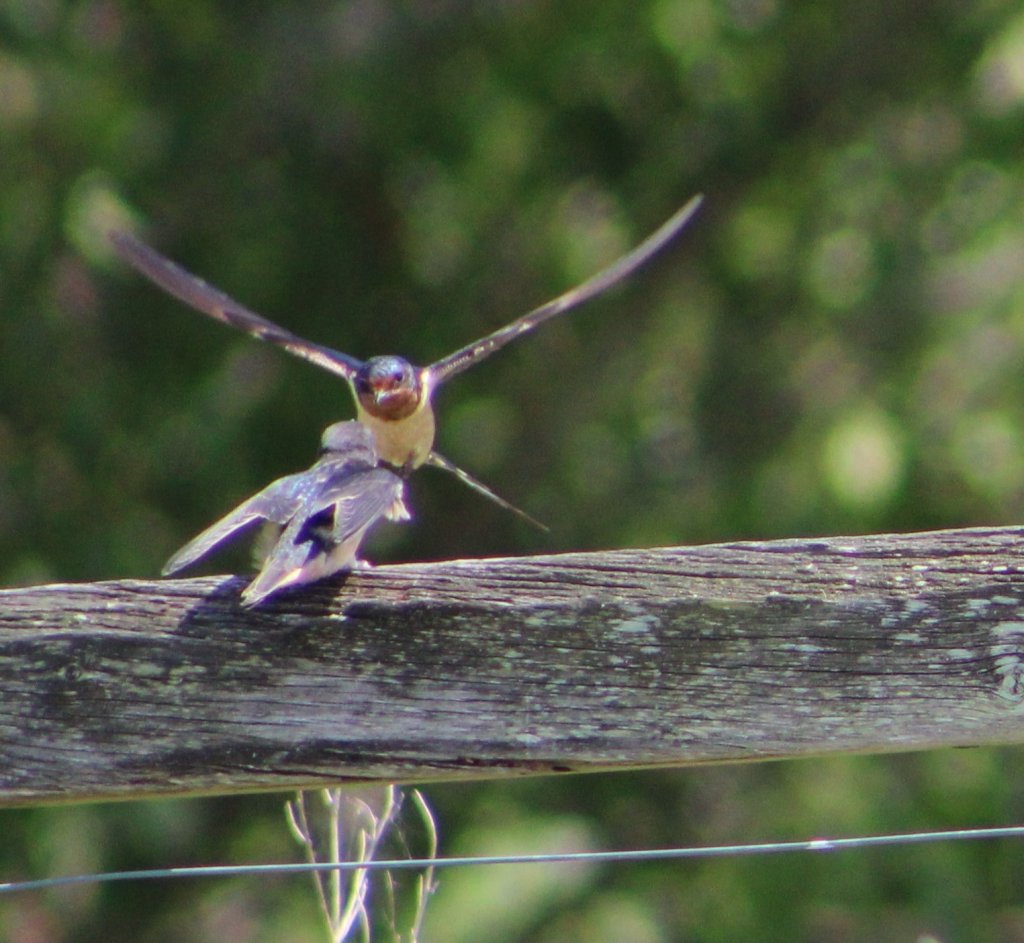
BARN SWALLOWS
Barn Swallows make a mud nest which they attach to structures, like (yeah, you guessed it) barns. They also make their nests under the eaves of houses, or any other building that provides some relief from the elements. We have dozens of these little gems flying over the meadows, snatching insects. They often accompany me as I drive around in the golf cart. I believe the vehicle scares up the bugs making it easy pickins’ for the swallows.
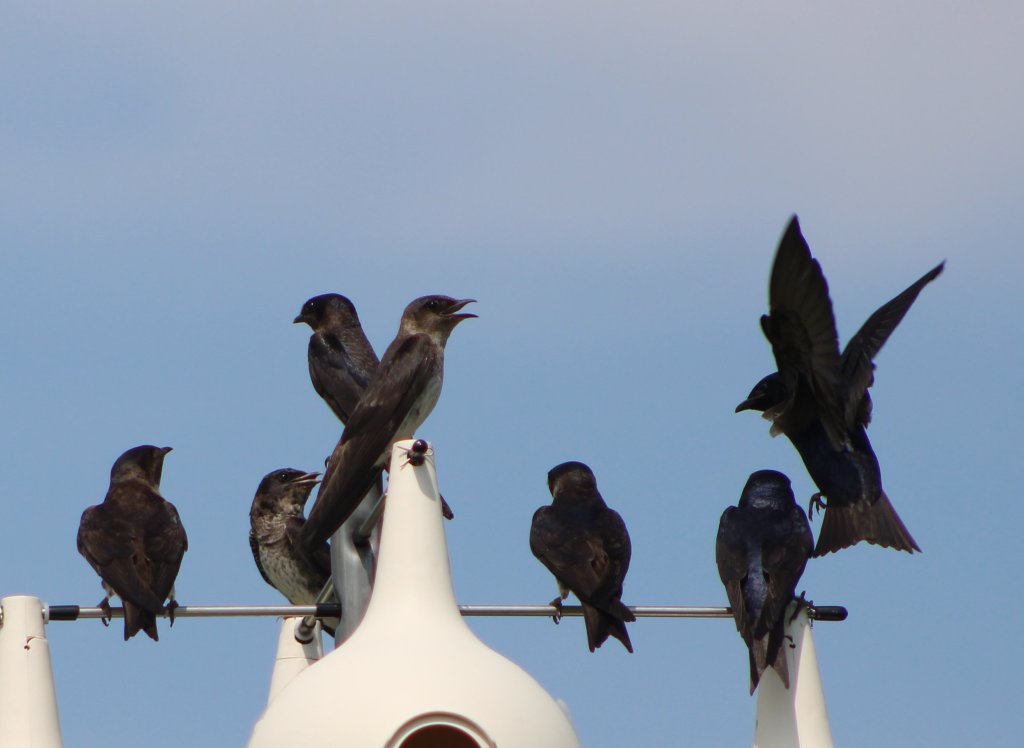
PURPLE MARTINS
Purple Martins are part of the Swallow family. East of the Mississippi these birds tend to use man-made houses as their singular method of nesting. We put up our first Purple Martin house in 2019 and immediately saw occupancy. This year (2020) we added a Gourd Tower and have seen chicks fledged from both the standard-build house and the gourds. They are very vocal, chortling constantly to each other, both while in flight and also when they congregate on their housing.
THRUSHES
Thrushes are small to medium-sized ground living birds that feed on insects and fruit. E-bird lists three of them for my area. Here are photos of two that I have filmed. The third is the Wood Thrush, and while it may exists in my zip code location, we don’t have sufficient thick forest on our property to attract them. I could be wrong, and if I see one I will certainly try to document it with a photograph.
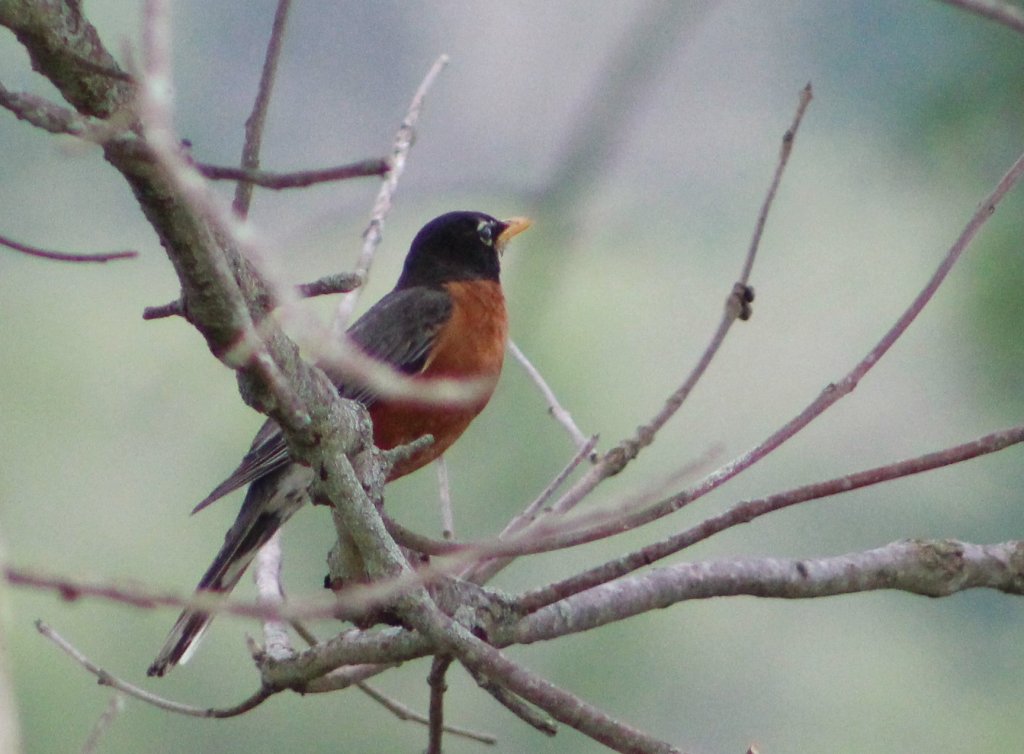
AMERICAN ROBIN
Who doesn’t know a Robin? They migrate to warming climates in the winter, and are considered the First Sign Of Spring when they return.
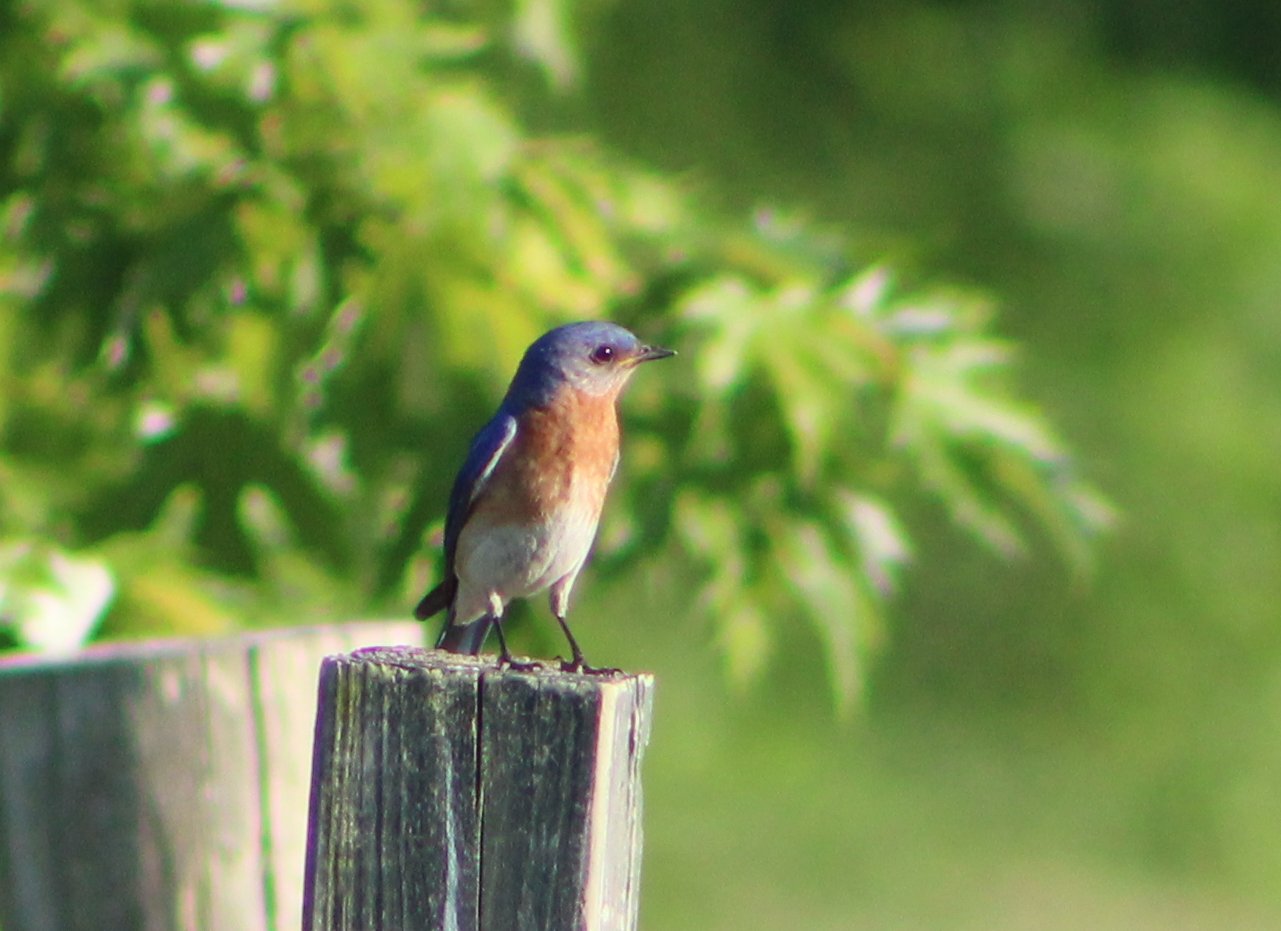
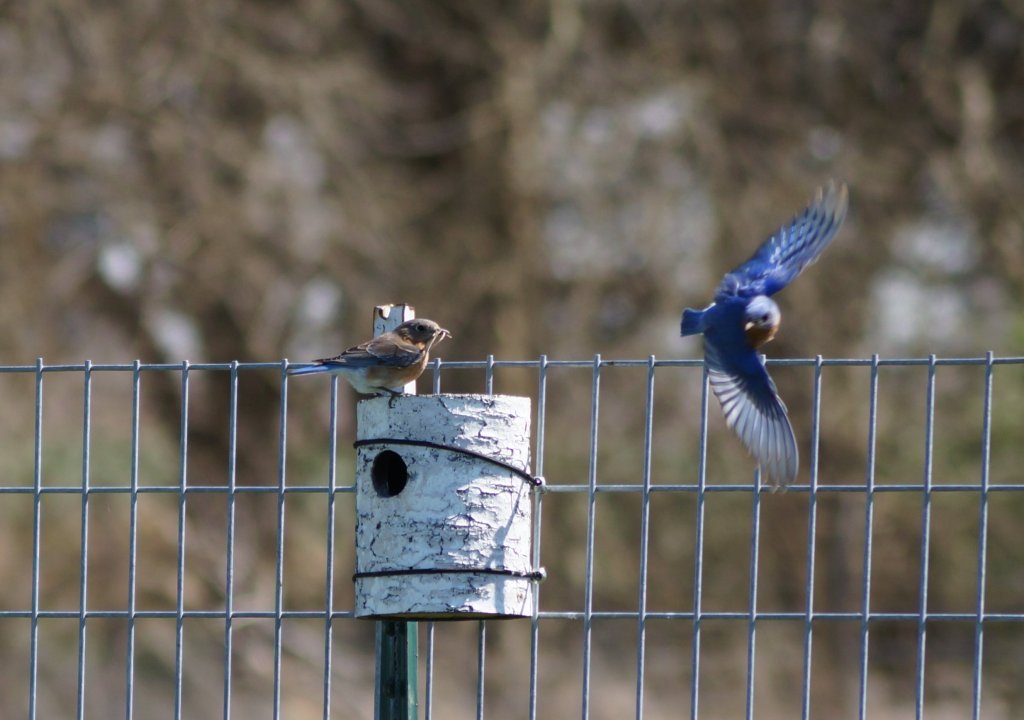
EASTERN BLUEBIRD
I would like to recognize the Eastern Bluebird for my current infatuation with the birds around our property and for restoring my general happiness and well-being. When we moved to this fifty acre farm we took up residence in the fifty year old, 900 square foot house with every intention of expanding it. That was just a couple months before the extreme terrorist attacks on our great Nation occurred (referred to as 911.) Our plans were squelched, but our dreams were not. We endured the next fifteen years in that house out of which we operated three businesses. My desk faced a dark wall in an 8×10 room that was piled with boxes containing Service Dog vests, published books, and lots of other stuff because there was nowhere else to keep it. After years of working towards our goals, we built a new house which I designed – mostly around my office. Now, my desk faces glass french doors which offer a view of the pond meadow and Jaye’s pasture beyond that. We put up nest boxes the first spring -one which I can see from my desk – and a few days later our first Bluebird couple flitted between the options and finally chose one. All the struggles of the past washed away as I watched them carry long pieces of grass into that hole and position them, just so. When I first observed them taking bugs and worms to their newly hatched chicks, my heart soared. Since then, we have not slowed down our dedication to surrounding ourselves with the inspiration and beauty that wild birds bring to one’s soul.
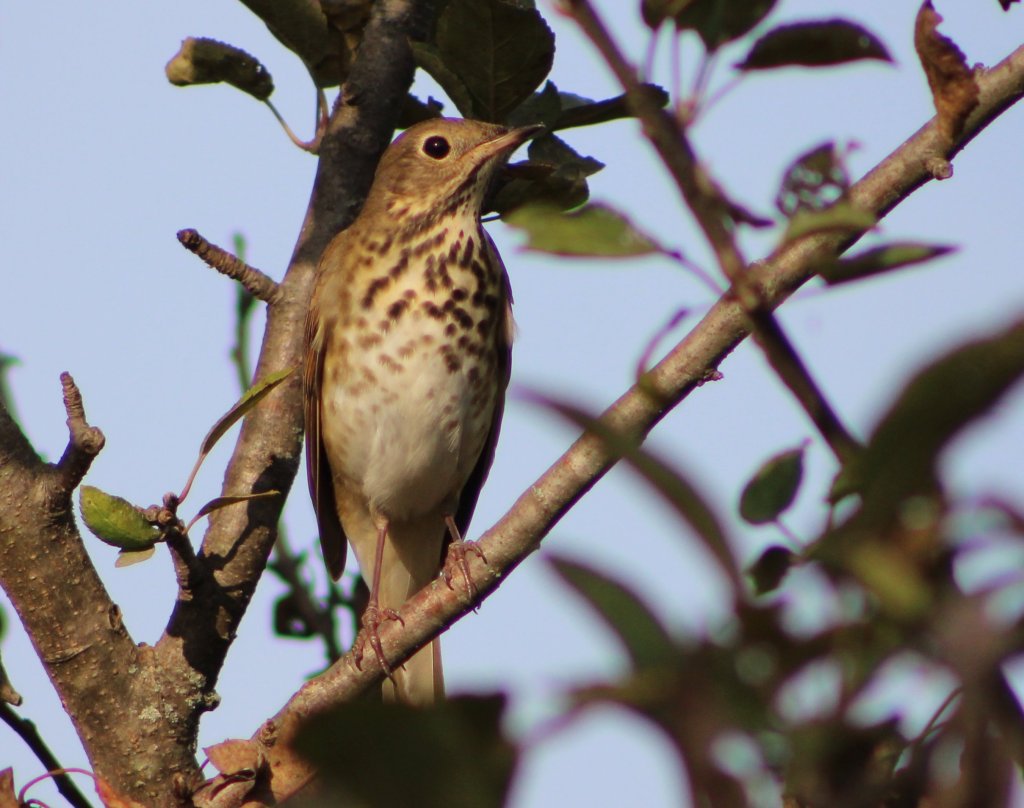
HERMIT THRUSH
This beauty visited on its fall migration on October 10, 2020. I was filming near the apple tree that I had adorned with fresh apples to lure the fruit eating birds. The sun was being obscured by clouds, and when it shined I hoped a bird would fly into range. The shots are so much better with great lighting. Just as the clouds moved off and the sun illuminated a branch directly in front of me, this bird flew into view. It gave me four pound four seconds to get a good shot, then flew away.
HUMMINGBIRDS
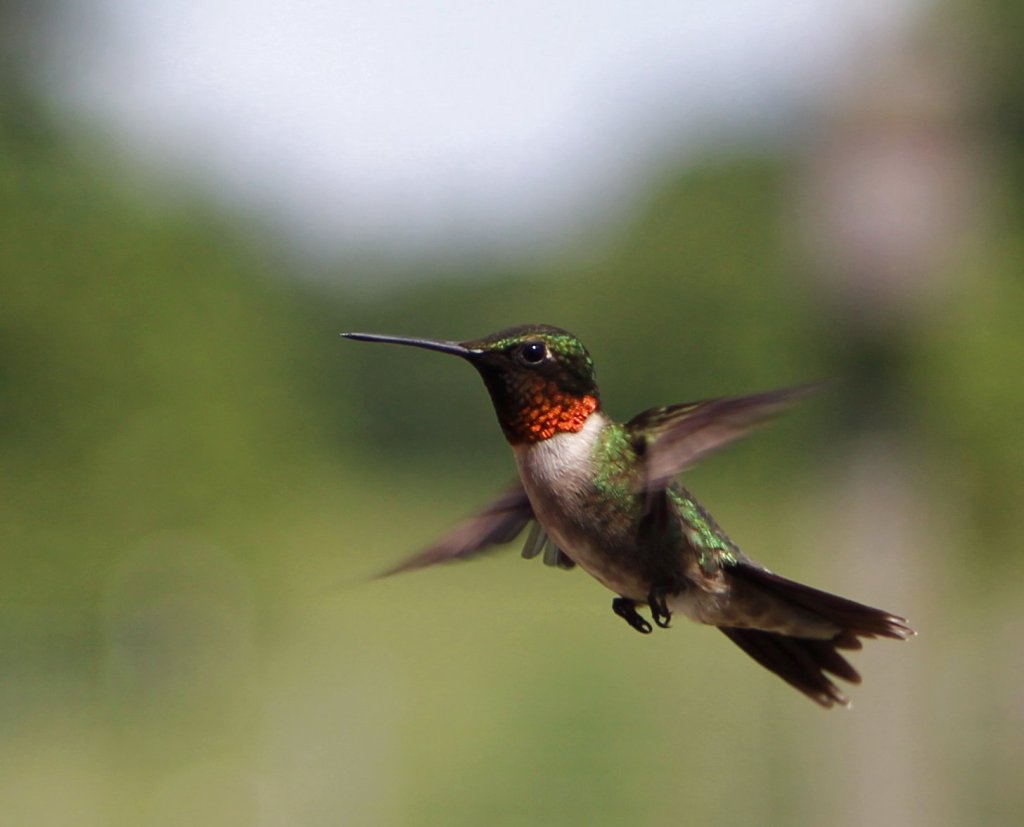
RUBY-THROATED HUMMINGBIRD
The only hummer that resides in our part of the country is the Ruby-throated. Second only to Bluebirds for boosting my personal joy-factor, the visitations of hummingbirds truly enhance my life. Just days after we hung our first feeder, the tiny jewels began to arrive. What I learned was that they do not fear humans. Rather, I suspect they live in a different time phase (like one might learn about during an episode of Star Trek.) Sitting on the patio where the feeders are hanging can make me feel as if I am watching a game of Quidditch, the flying broomstick sport observed in Harry Potter movies! They zip and zoom and chatter to each other while performing feats of flight that seem, at times, impossible. We learned early on that males will claim the territory containing a feeder, so we now have many feeders positioned all around the house. I have also been visited by hummingbirds when I am driving around the pastures. And, by visited, I mean face to face encounters, not just a fly-by. They whiz up to me, hover for a spell, then zoom away. I’ve thought that I should hang a feeder off the top of the golf cart because it seems they are wondering why there isn’t one!
FINCHES
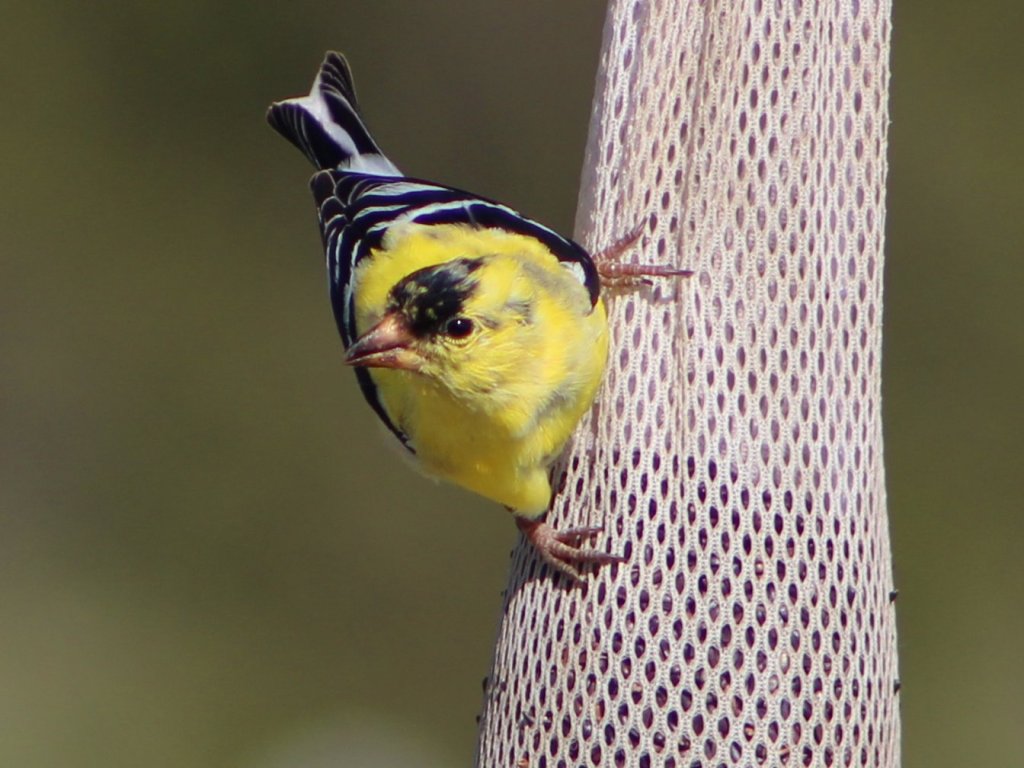
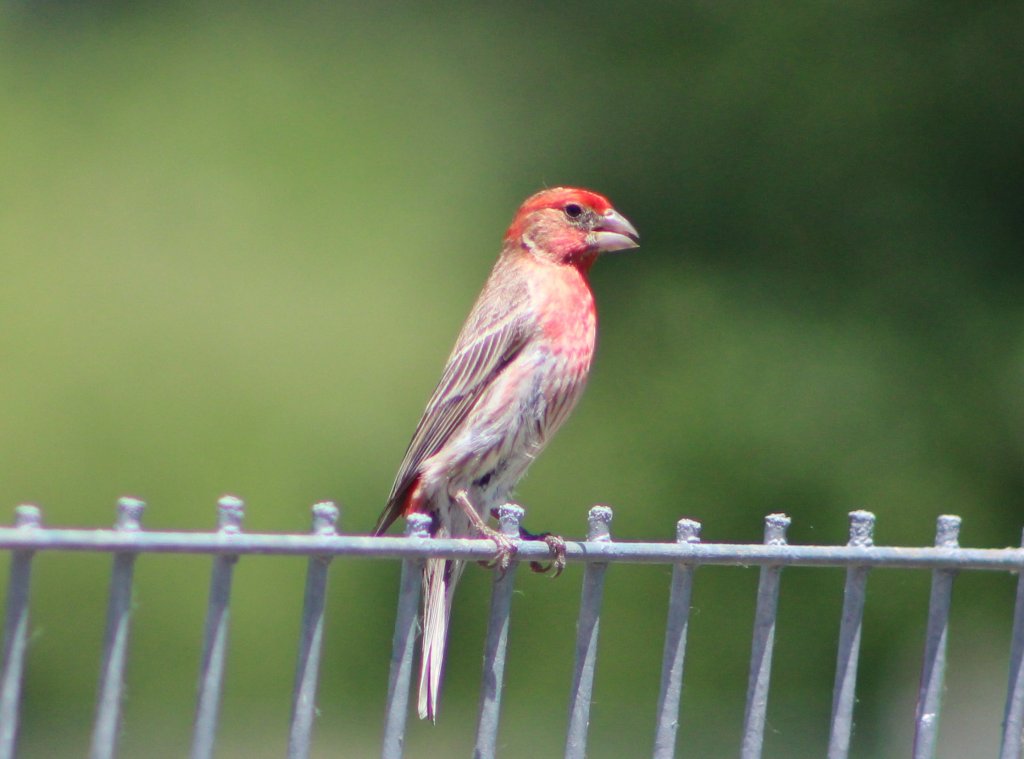
We have two finch species listed in our location on E-Bird. Finches are smaller sized birds, with conical shaped bills which help them to eat seeds and nuts. We provide nyger (thistle) seed in feeders at our backyard feeding station. It works well to attracts these lovely birds.
AMERICAN GOLDFINCH
HOUSE FINCH
CARDINALS & GROSBEAKS
E-bird lists seven species in this category, and I have filmed four of them (7-14-20 Update: five of them.) These birds have heavy beaks which they use to crack seeds. For this reason, it’s not uncommon to see them at backyard feeders where seeds are often the most likely food source offered to wild birds.
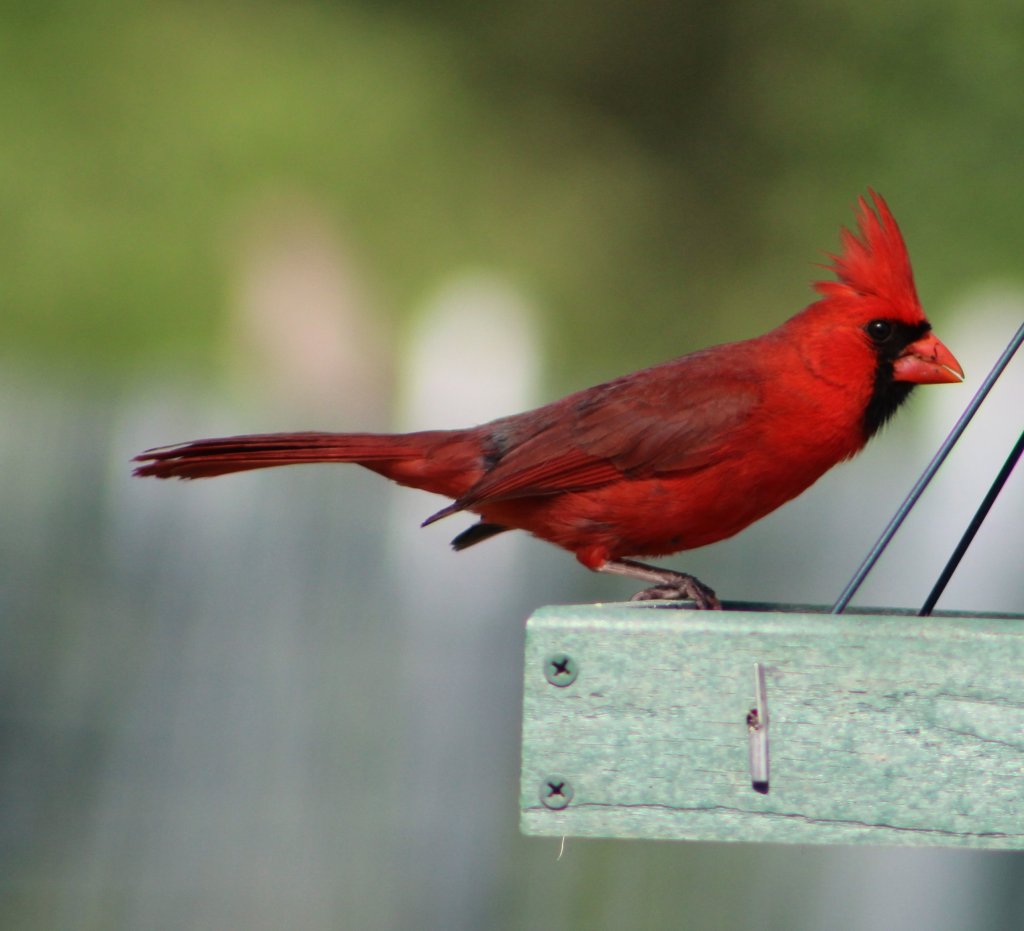
NORTHERN CARDINAL
Who isn’t familiar with the image of a Cardinal. The males sport a brilliant red color. They have a distinctive song that alerts me to their arrival. I love that they often travel in pairs – the female donning a muted shade of orange – but still with the lovely head plumage that distinguishes them even beyond their color.
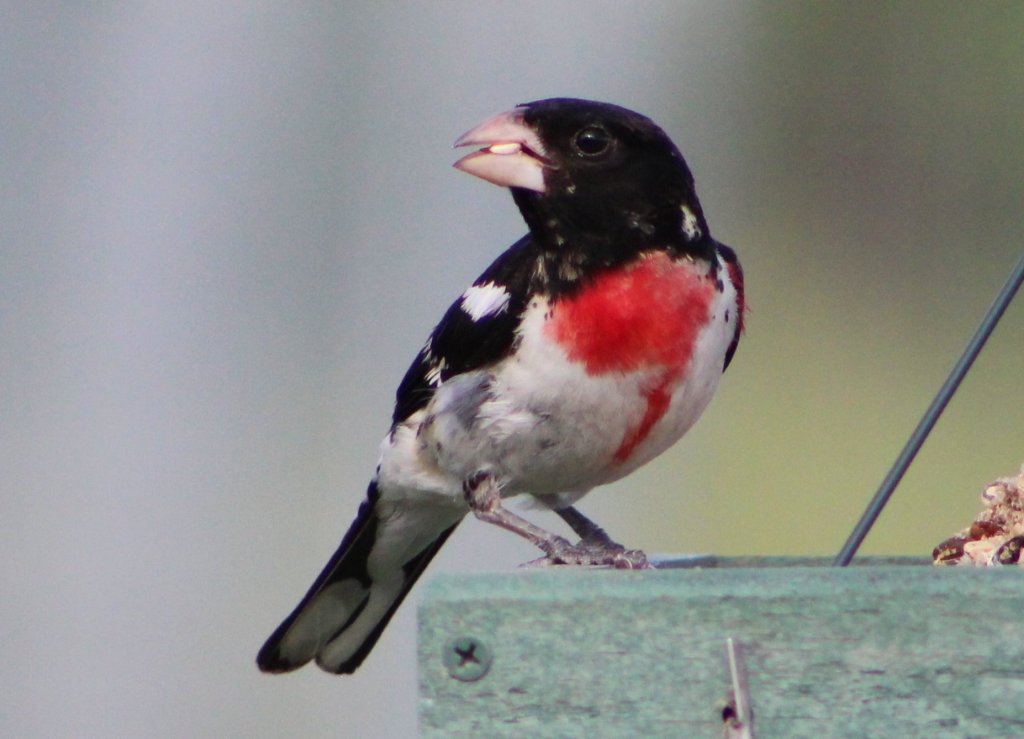
ROSE-BREASTED GROSBEAK
These are striking birds – well, at least the males are. Their mates are a very dull, drab brown with a gold stripe around the eye that helps me to identify them.
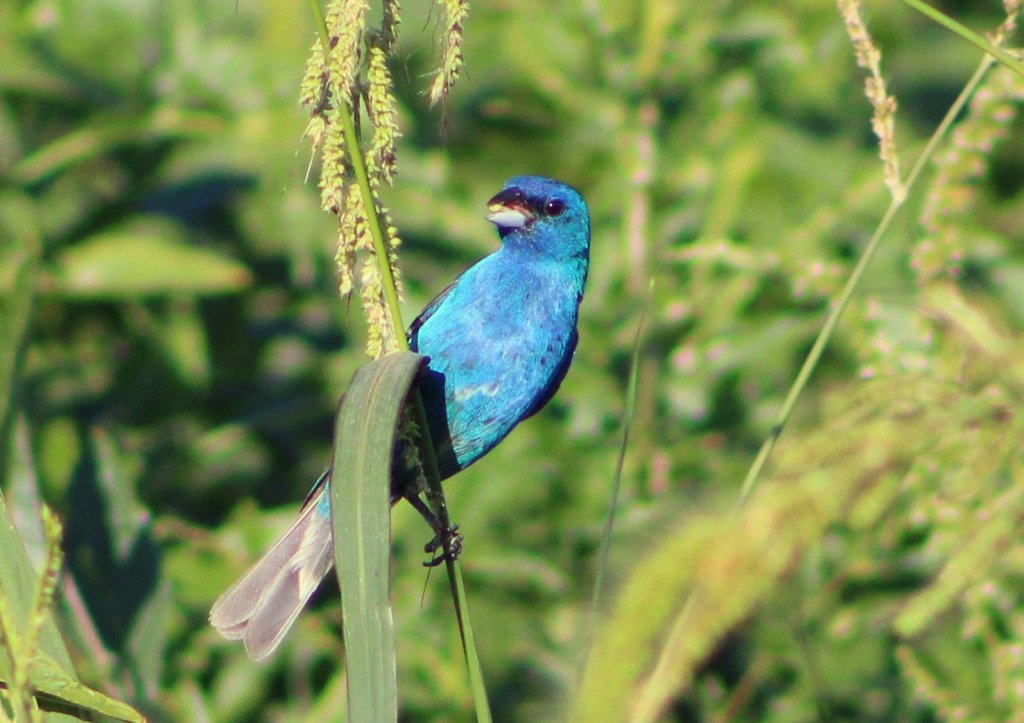
INDIGO BUNTING
It’s a fast flash of brilliant blue, then they are gone. That’s how I describe the Indigo Bunting. However, I have been fortunate to capture a couple of them before they flitted off.
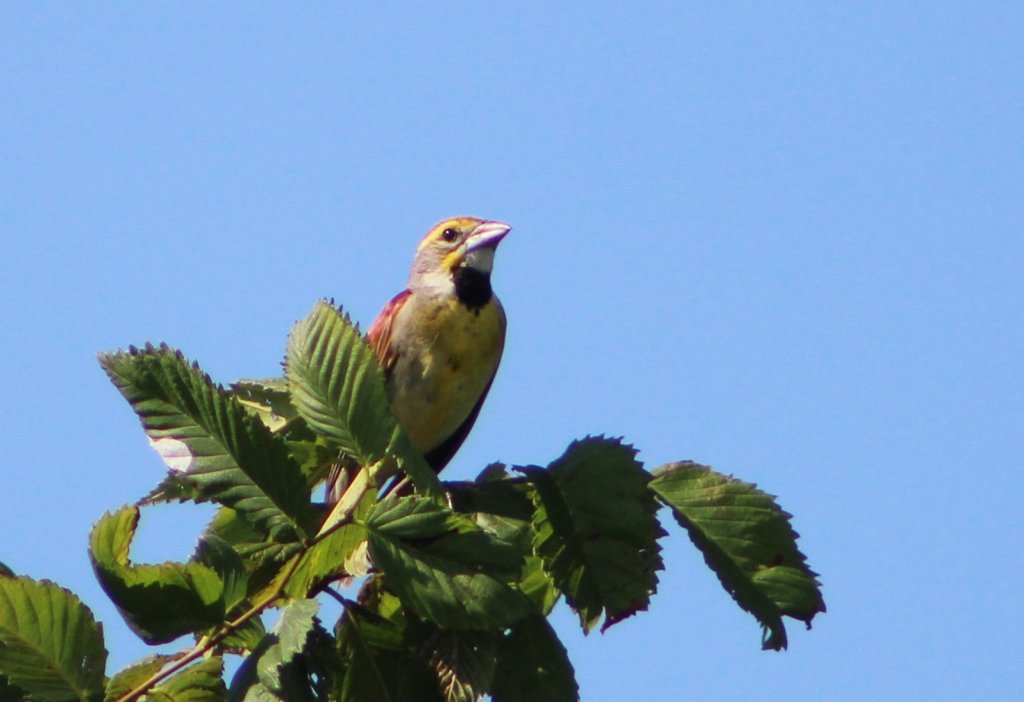
DICKCISSEL
Little bird with the weird name, once I learned to identify them, I found them to be all around. They love to fly to the very top branch of a tree and sing. At times, I feel like they are following me as I drive around the farm.
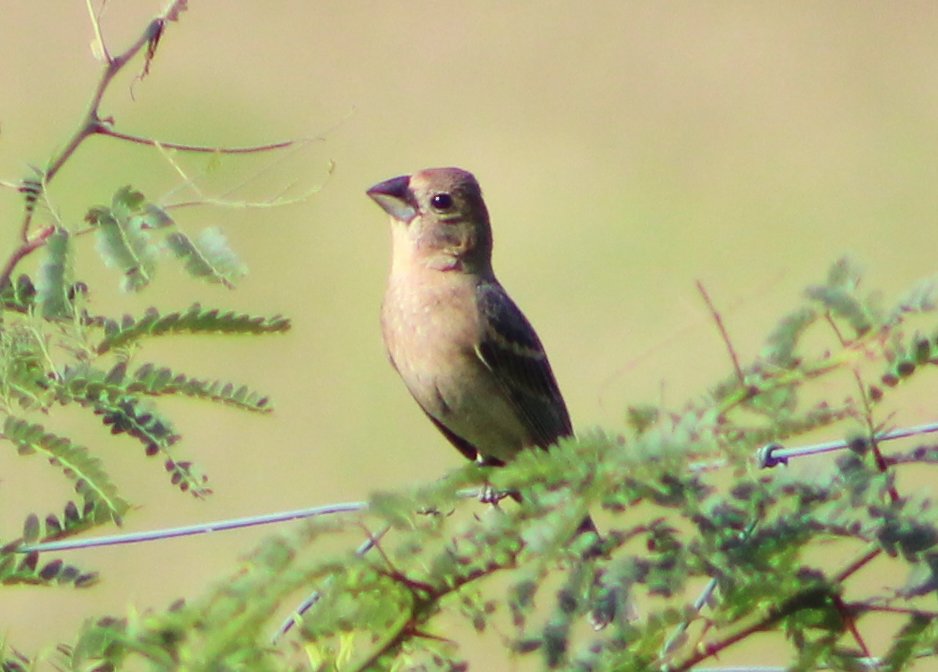
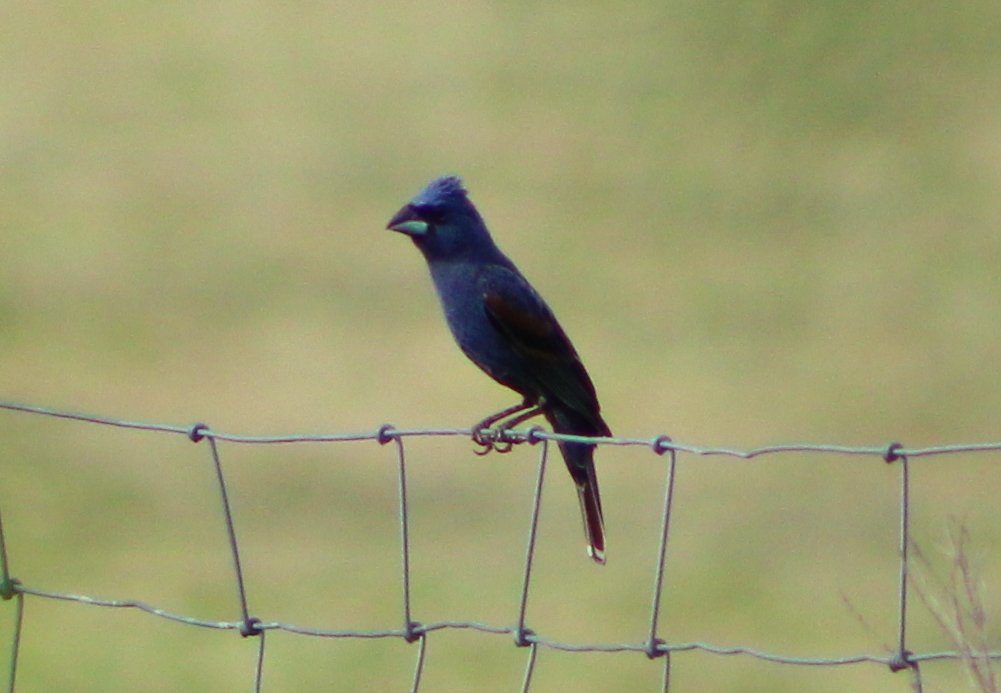
BLUE GROSBEAK
I’m excited about adding this new bird (7-14-20.) I first filmed it a few days ago and requested the expert advice of the Illinois Bird Exchange folks. The consensus was that it was a female Blue Grosbeak, but the quality of the image made it challenging to be definitive. Yesterday, I went to the same location where I had seen it the day prior. Patience paid off, and I was able to get some clear – albeit not exceptional – images of this female Blue Grosbeak. I hope to see her mate, if he is around and capture his images, as well.
7-17-20 updating the photos, including a shot (albeit grainy) of the male on the right.
FLYCATCHERS
This is a group of birds that I particularly enjoy mostly because they make themselves obvious. They hunt insects, often from a stationary position. As they remain fairly still, they tilt their head this way and that until they spot it! Then, they make their move, zip to the ground and nab the critter. This action, that is contained in a fairly confined space, makes observing them fairly easy. They often retreat to the spot from which they took off to eat their meal.
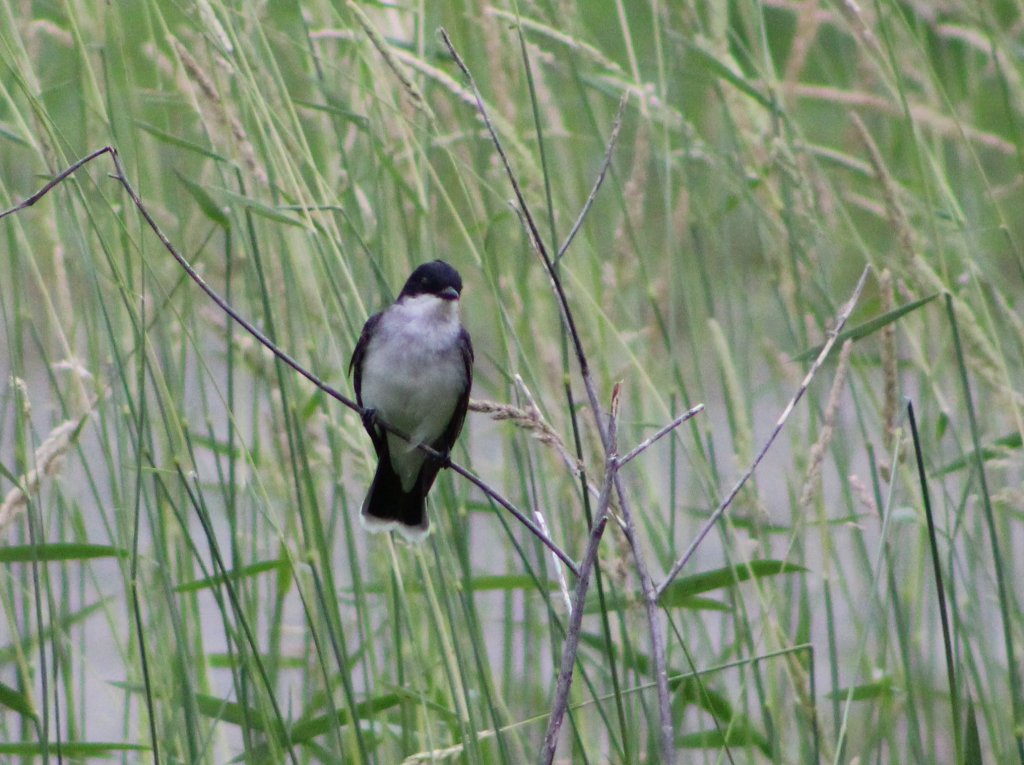
EASTERN KINGBIRD
After Bluebirds and Hummers, I think that the Kingbird is my next favorite. First, you have to love the name. It’s such a regal designation, it’s hard not to make some noble assumptions about this bird. He looks like he’s dressed up in a tuxedo, with a black back and white belly, and the tip of his tail feathers appear to be spats on a pair of formal dress shoes. I have seen these birds hunting from a tree in my front yard, the fence top in my backyard, on a tiny branch by the pond, a fence post near the road and from the lower branch of a tree in the pasture. Yet, I never seem to get the great shot that this bird deserves. I will keep trying!
EASTERN PHOEBE
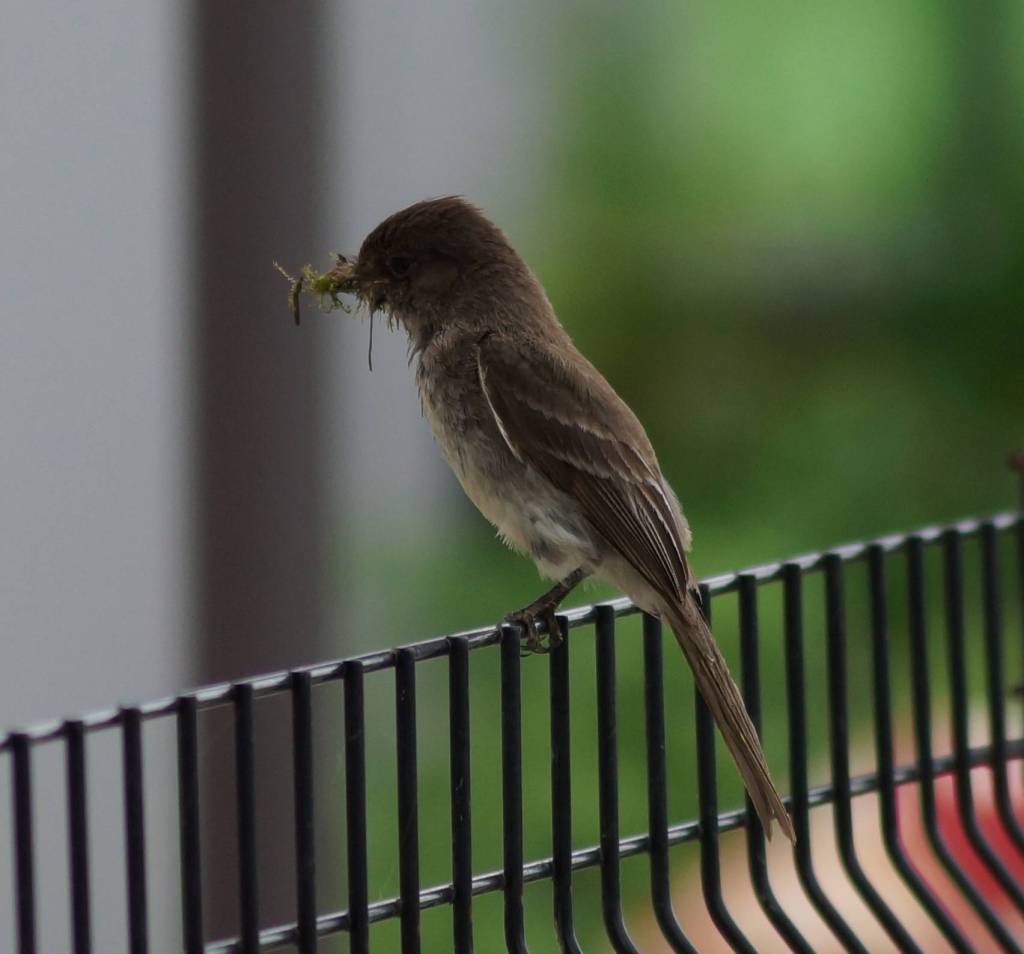
This little brown bird seems fairly comfortable around human activity. Last year we had one build a nest in the eaves over a back door. Below, you will see her with grass or moss in her beak that she added to the nest.
GREAT CRESTED FLYCATCHER
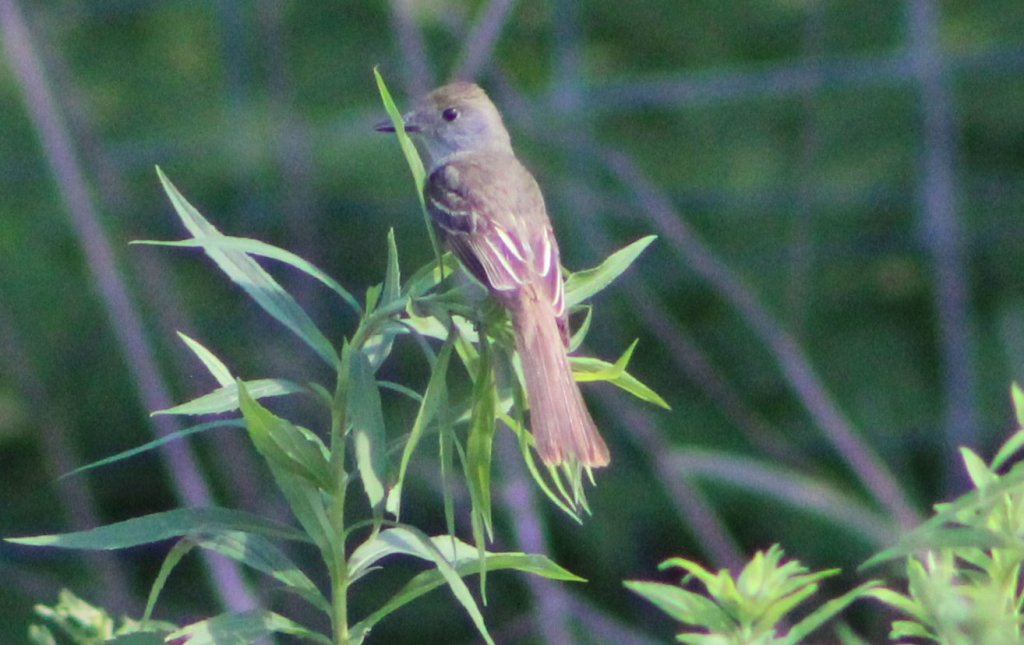
Here’s another bird with a name that tends to elevate it to a higher level than, say, Lesser, Least or Common. But, I have to say, I struggle to tell it apart from some of other birds in its category like the Wood-Pewee or Eastern Phoebe. One day, i suspect I will laugh at such an undiscriminating eye. After all, I can tell three Golden Retrievers apart from each other, when some people struggle telling a Labrador Retriever from a Golden.
ACADIAN FLYCATCHER
I’m calling this an Acadian Flycatcher because the breeding area for the Least Flycatcher, which is what some folks have suggested it may be, doesn’t extend as far south as I live. However, everyone claims that it’s very difficult to tell them apart. You can read more about this bird HERE, which includes a short recording of a vocalization that the BirdNET app says is “almost certain” that of an Acadian.
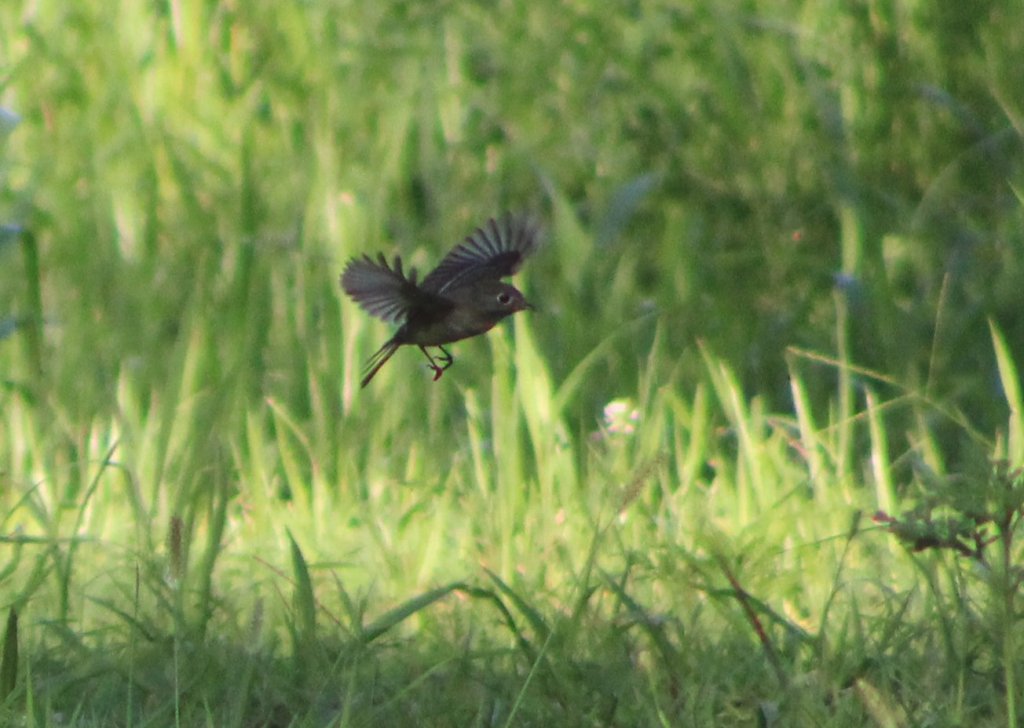
EASTERN WOOD-PEWEE
I have been hearing this bird’s call for a few months, but only recently caught it on film.
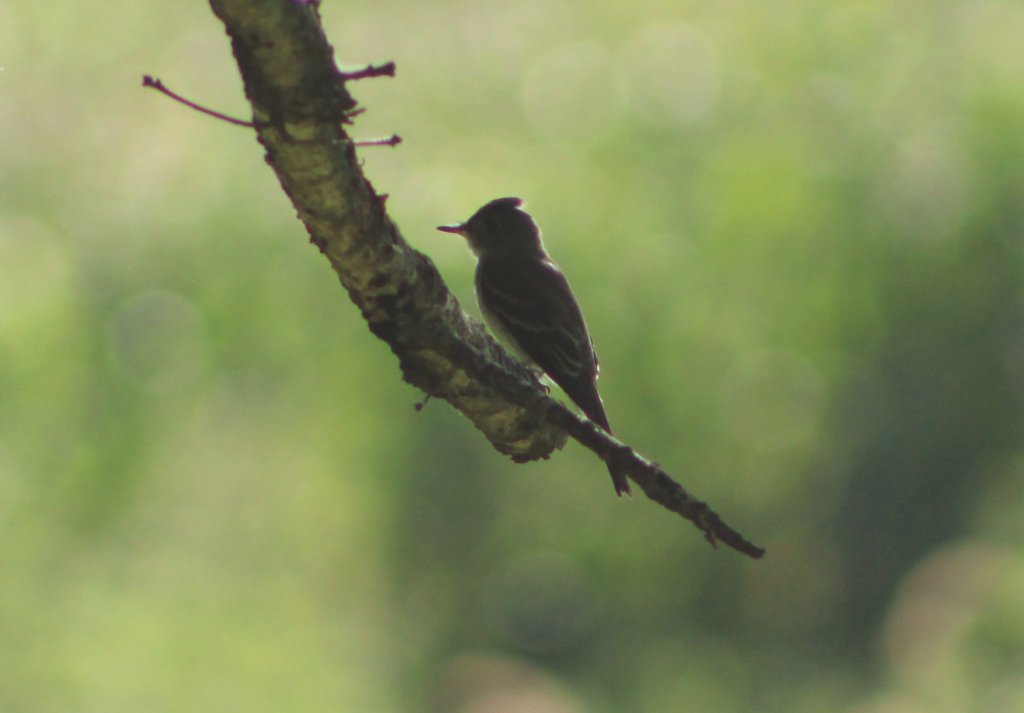
LEAST FLYCATCHER
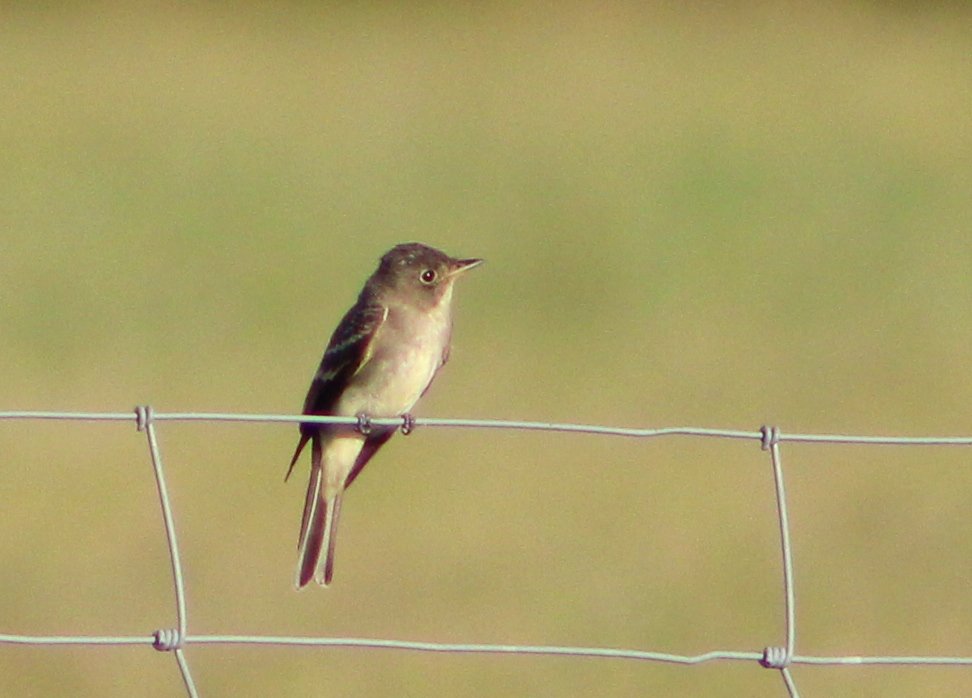
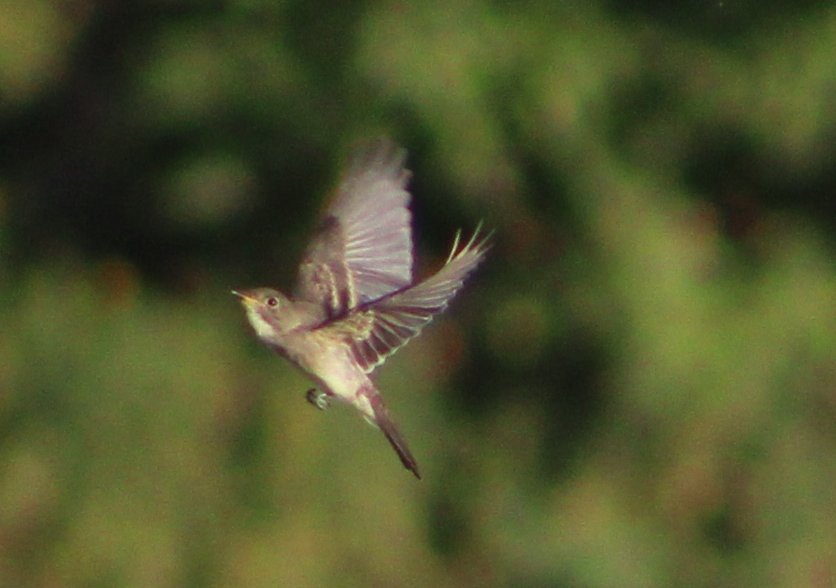
There is a group of flycatchers in the genus Empidonax that are defined, in part, by a white ring around their eyes. That feature became obvious when I first looked at the photos I took of this cute, little bird. There’s a chance that this is rather a Willow Flycatcher as the two species are quite similar. But, the bird experts who viewed these photos tended to concur it’s a Least. This bird spent many minutes hunting flying insects from the fence and I was able to capture his antics and share them in a POST.
CHICKADEES
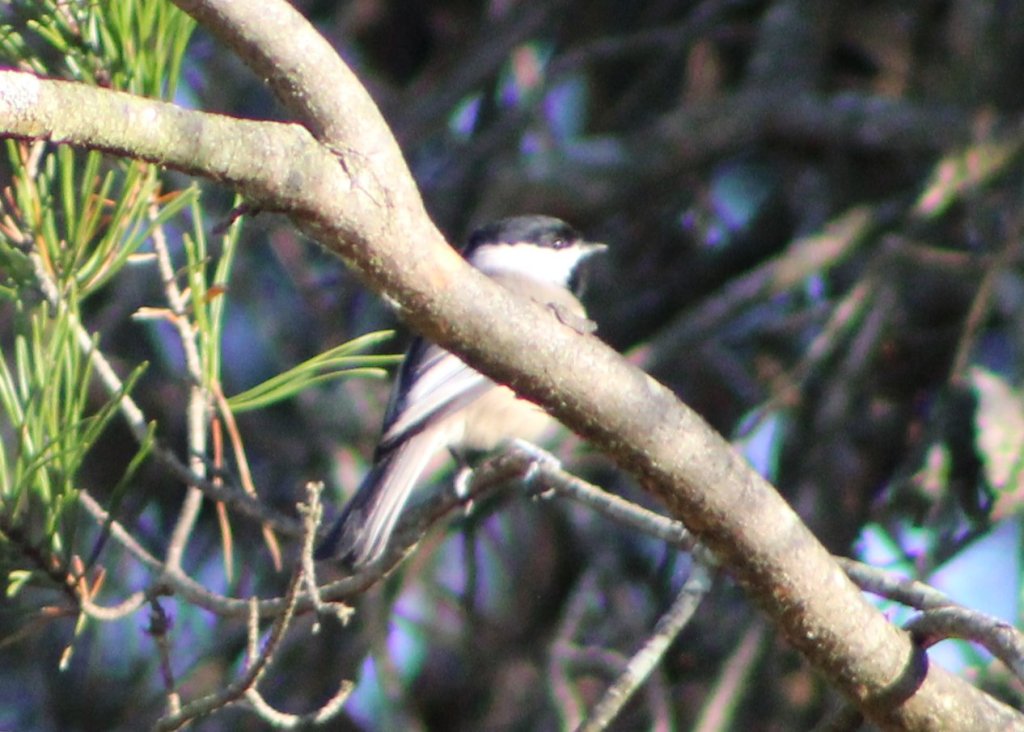
BLACK-CAPPED CHICKADEE
I love this little bird. I finally filmed int in the Ponderosa Pines in early October. I hope they stay the winter!
GROUSE & QUAIL
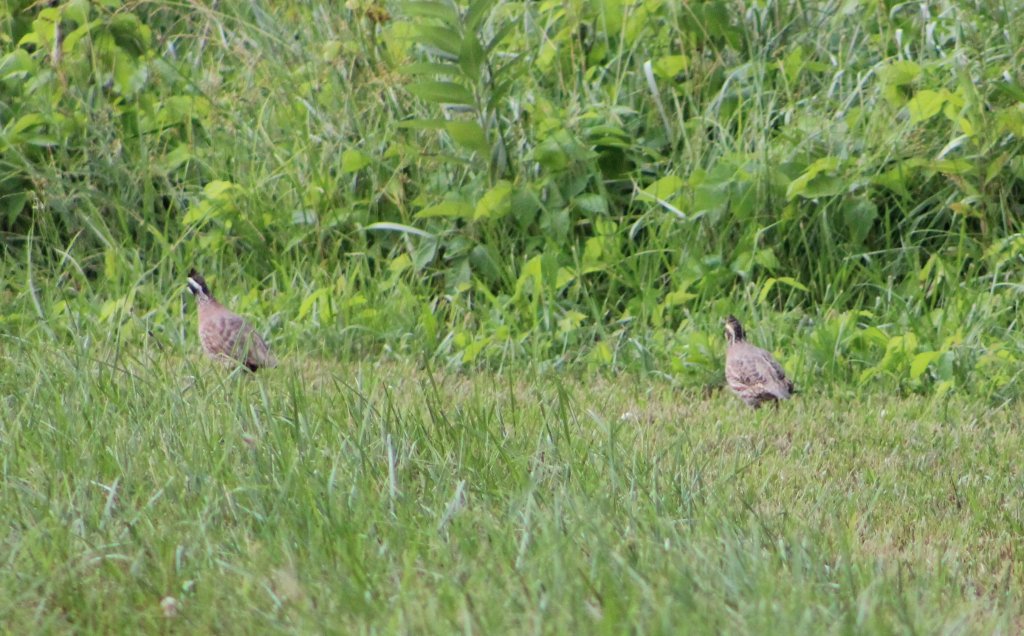
The Greater-Prairie Chicken is listed in my area under this heading, but I truly would be amazed to see one. However, I have seen but not photographed wild turkeys and ring-necked pheasants on or near our property. The one bird I have filmed in this category is the Northern Bobwhite.
NORTHERN BOBWHITE
It is far easier to hear the presence of this bird than to see it. They sing their very characteristic song from underbrush and hedgerows, but rarely make a trip into the open. However, I’ve been fortunate to snap a couple of shots of a nice couple that was venturing into the clearing. Check out this post that has more, and better images of the Bobwhite.
WRENS
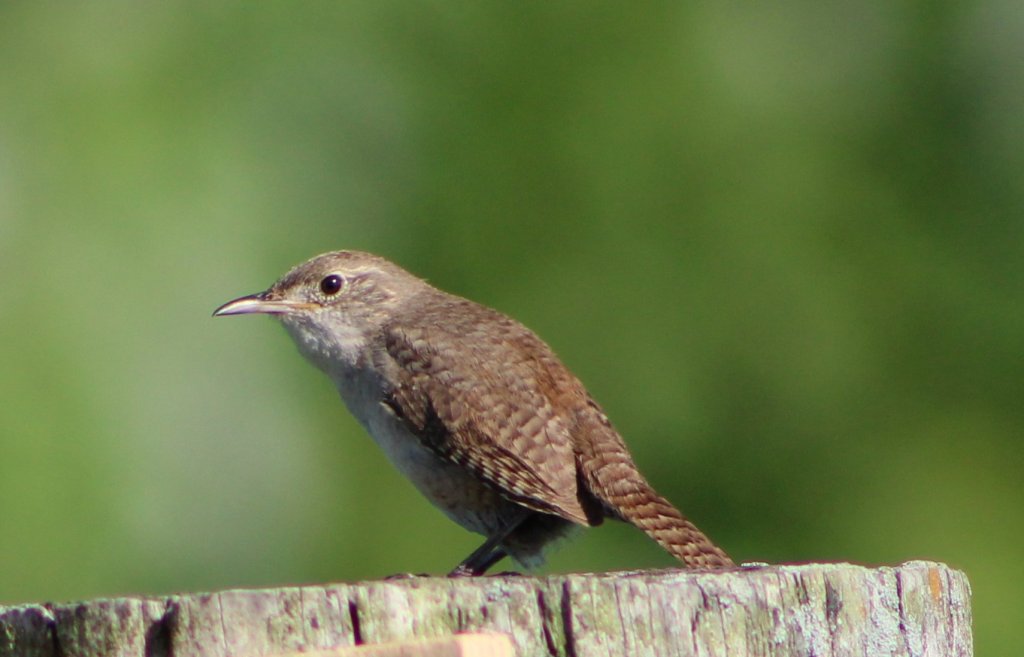
There are four Wren species that could be observed in my location, but I’ve only seen one. I’ve also heard the Carolina Wren many times, so I know it’s out there. But, the Marsh Wren probably wouldn’t find our pond ecosystem sufficient for its needs. The forth species, the Sedge Wren is described as small and secretive! I suspect it would be a real find to see one on our farm.
HOUSE WREN
CAROLINA WREN
This is bird that I have only heard, but not seen. I did, however capture its song, which I am posting here.
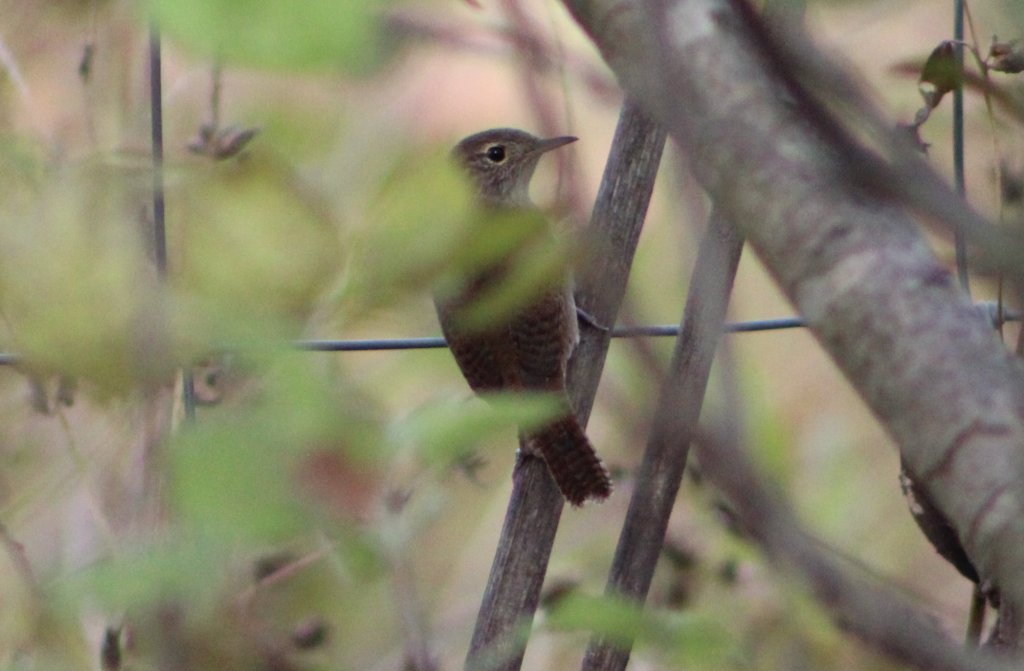
WINTER WREN
The House Wrens sing all summer long – so much so that it’s annoying. But, they fly south for the winter and I had noticed the lack of their tunes. On October 10, 2020 a little, brown bird flitted about in the shadows of the apple tree where I was filming the fruit eating birds coming for a snack. I feel fortunate to have captured an image that was clear enough to evaluate. I’m fairly certain this is a Winter Wren.
CATBIRDS, MOCKINGBIRDS, THRASHERS
Well, lookie here! It’s a category in which I have filmed each of the species that I might find in my location.
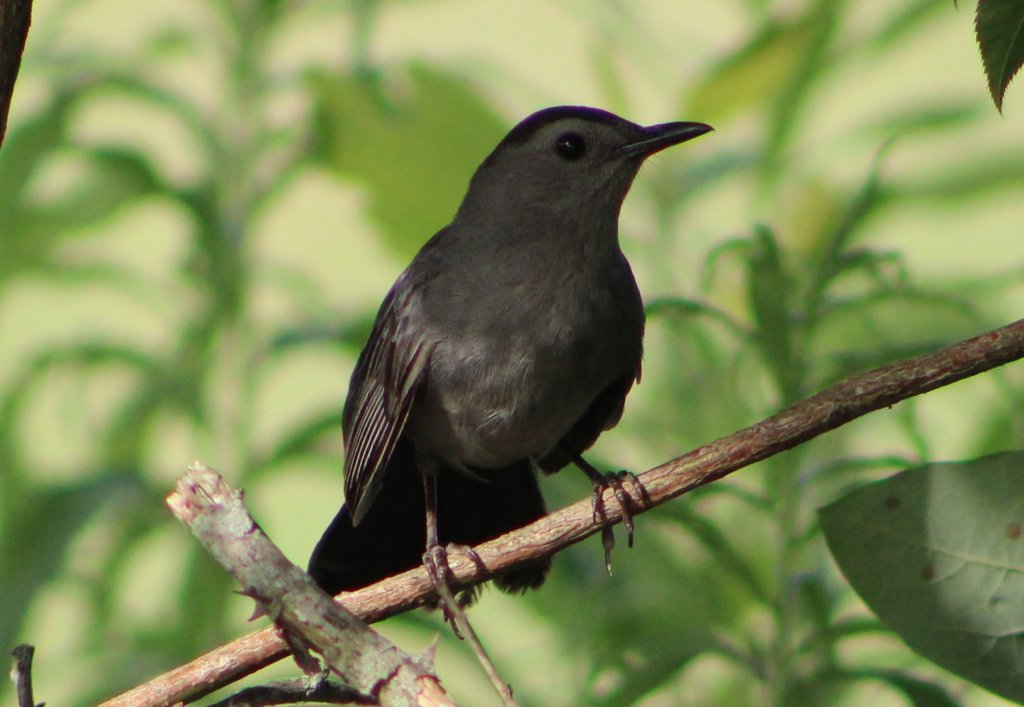
GRAY CATBIRD
Like the Flycatchers, the Gray Catbird eats insects. That trait can make a bird easy to spot, if he selects an open space up which to perch and hunt. I really like this bird, even though he may seem a bit drab in color. He does have a few deep red colored feathers under his back tail feathers! I guess everyone needs a little sparkle in their life, even if you hide it well.
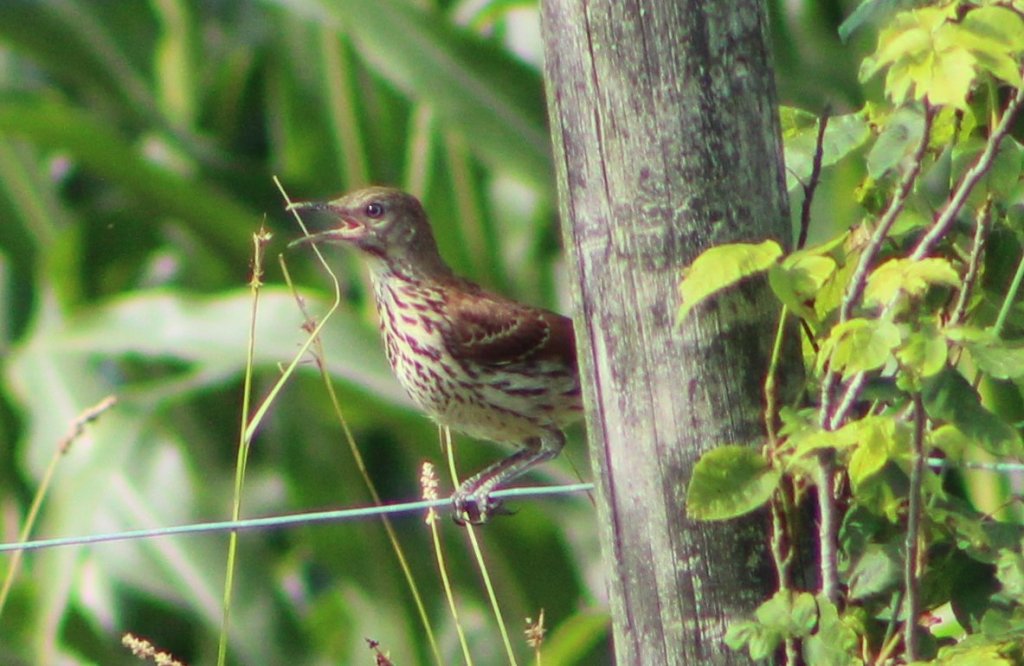
BROWN THRASHER
This is a fairly elusive bird, but I was fortunate to catch him pressing his head into the sun where his light brown eyes became obvious. They are described as omnivores, but the only times I’ve observed them, they were moving from one place to another. I have not see them feeding. This is another bird with a name that can make you “feel” something about its intentions… for this bird, they aren’t good thoughts, and the crazed expression I captured in this photo makes me feel that he lives up to his name.
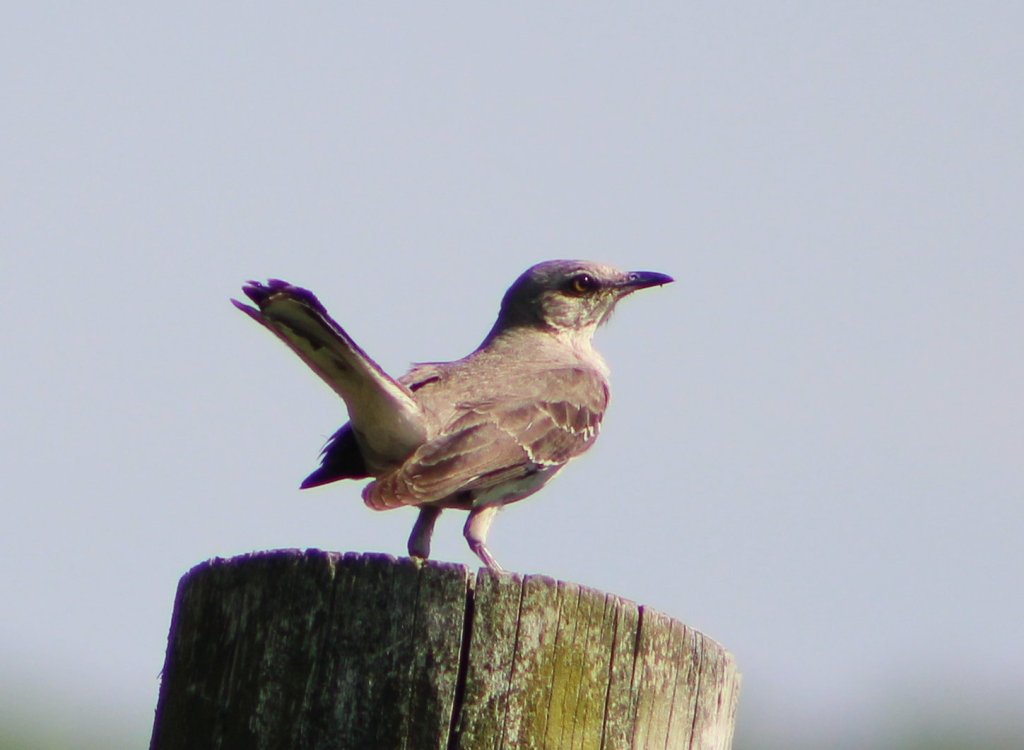
NORTHERN MOCKINGBIRD
I have seen Mockingbirds in several locations around our property. The very best vocalist – the one with the most expansive repertoire of songs – resides in our front yard. The other night I recorded that bird for nearly five minutes before a my husband started up the mower and I had to press pause. It’s amazing how many different sounds that bird produced – and with such gusto! However, this bird isn’t without some “issues.” When we lived at the original house there was a Mockingbird that routinely dive-bombed our unsuspecting cats, our dogs and even people!
BLACKBIRDS
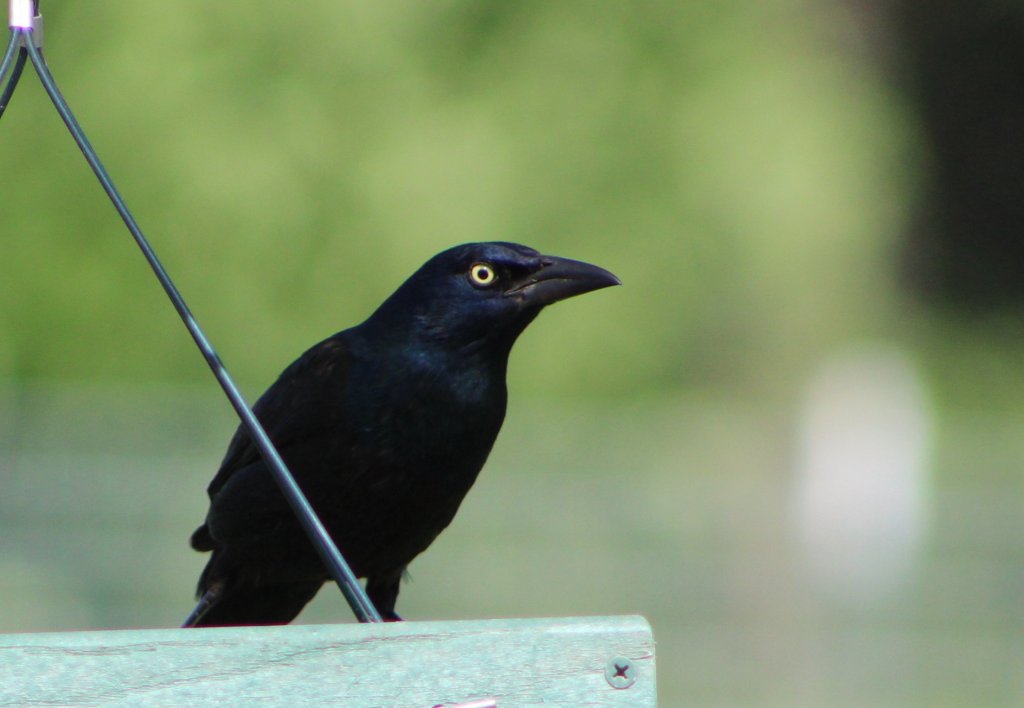
I find this category quite interesting because most of the birds aren’t black – or at least not completely black. There are seven species listed at E-Bird for my area. I’ve never seen or heard a Bobolink. But, I’ve at least seen (if not filmed, the remainder of the list.) I know I took a photo of a Grackle this year, but apparently I never processed it beyond the multi-digit file name designated by my camera, so finding it will be challenging. I suppose I will need to sit focused on the bird feeder and I’ll be able to catch one, again. I also have seen a Baltimore Oriole stop by during migration to drink from a hummingbird feeder, but I’ve not seen one on the property during breeding season. However, the remaining birds in this category are posted here.
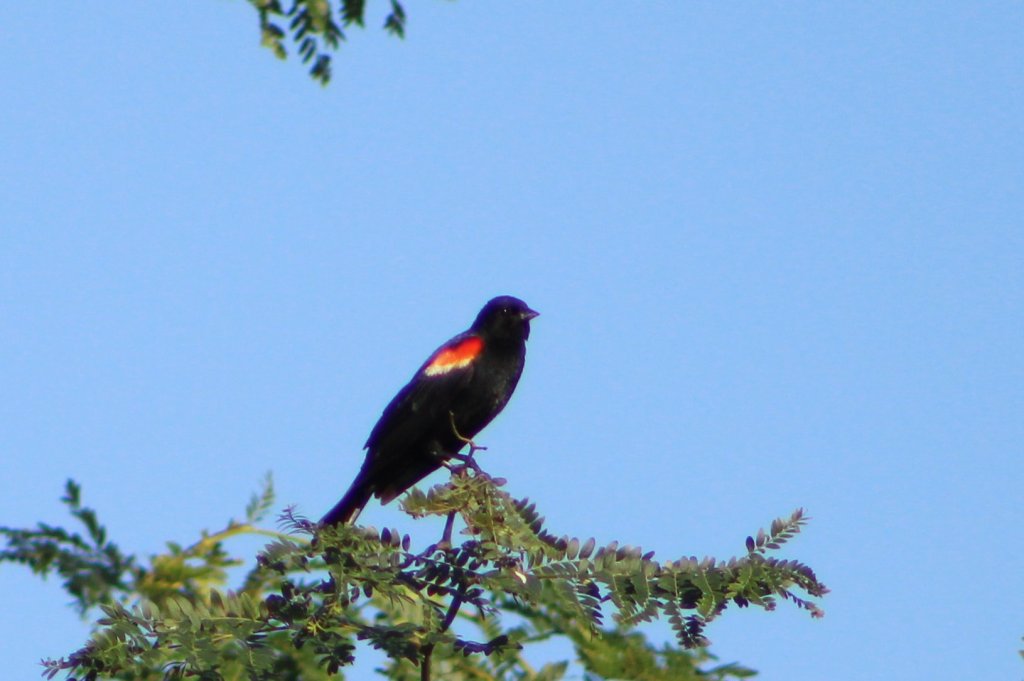
RED-WINGED BLACKBIRD
This is not a scarce bird. We have a large pond and they love to nest all around it. The males sing at the tops of trees while the females remain incognito in their drab colors near the ground where they nest.
EASTERN MEADOWLARK
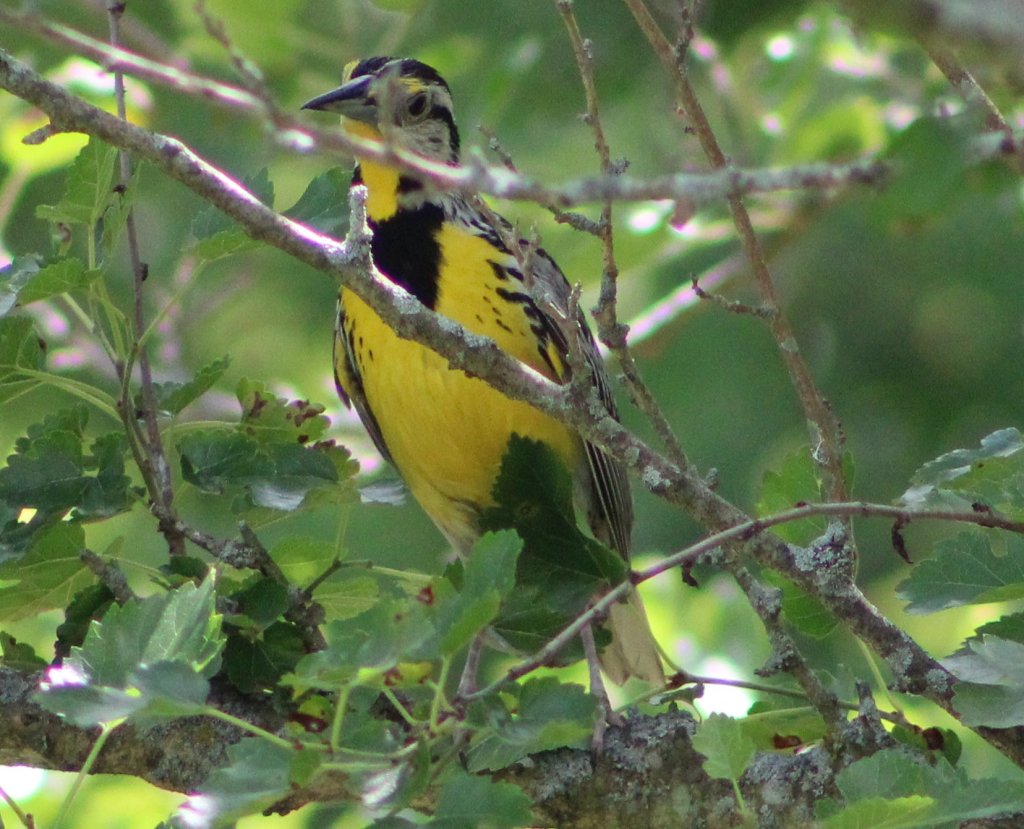
These birds are very plentiful around our place. They sing constantly and can be found nabbing insects off the ground from our mowed yard to the taller grasses in the meadows. They often take a position atop the large, round hay bales when the “hay guy” leaves them in the field. I rarely see them in the trees, but the photo I am choosing to post is of a Meadowlark in a tree. I just happened to be filming a House Wren nest that was in that same tree, so I was fortunate to get a good shot of this bird in a face-to-face orientation, rather than a shot towards the ground.
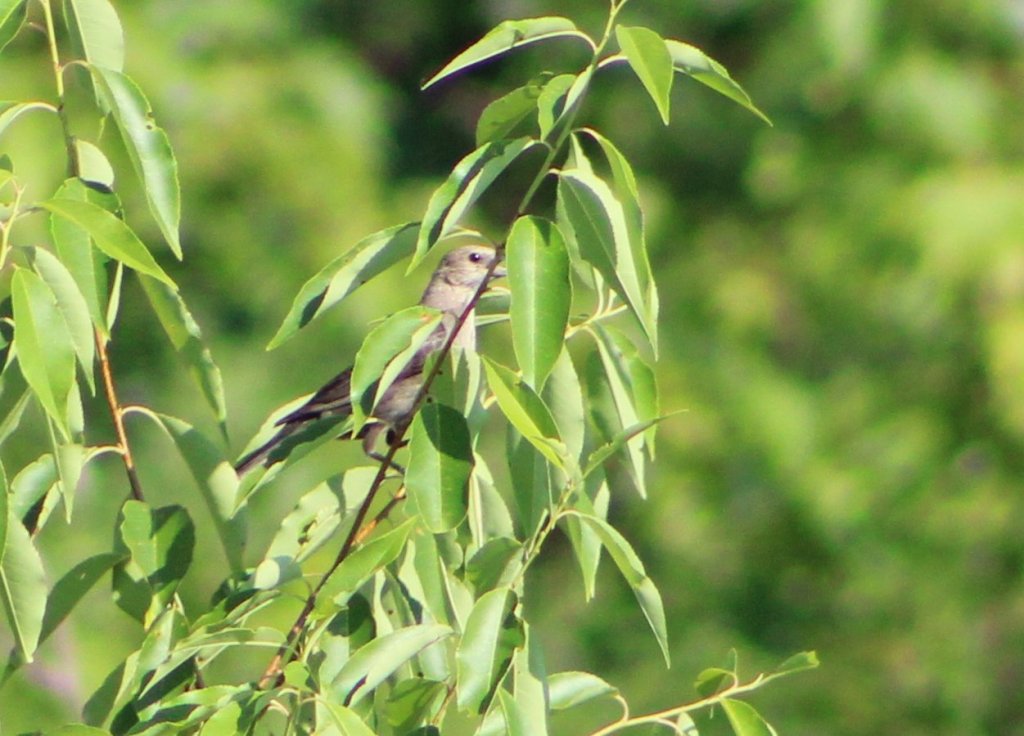
BROWN-HEADED COWBIRD
This species is native to our area, but it gets a bad wrap for a strange method of reproduction. Rather than using all those resources to build a nest, incubate eggs and then feed all those hungry mouths, the female of this species chooses to lay an egg in the nest of an unsuspecting bird. The “foster” parents then raise the cowbird chick, which apparently can out-compete the rightly kin of the fosters. While typically she only lays one egg per nest, I’ve read that she lays a lot of eggs in many nests of other species. It’s hard to say why Mother Nature designed this bird to become such a ‘low life scum’ as some might refer to her. However, it’s not the only parasitic behavior in the animal kingdom; not by a long shot. Compared to invasive species that never evolved in a specific ecosystem, the behavior of the Brown-headed Cowbird is far less ruthless. The photo below was identified for me as a female Brown-headed Cowbird. I’ve seen male birds around (which actually look like a blackbird with a brown head!) But, I have never filmed them.
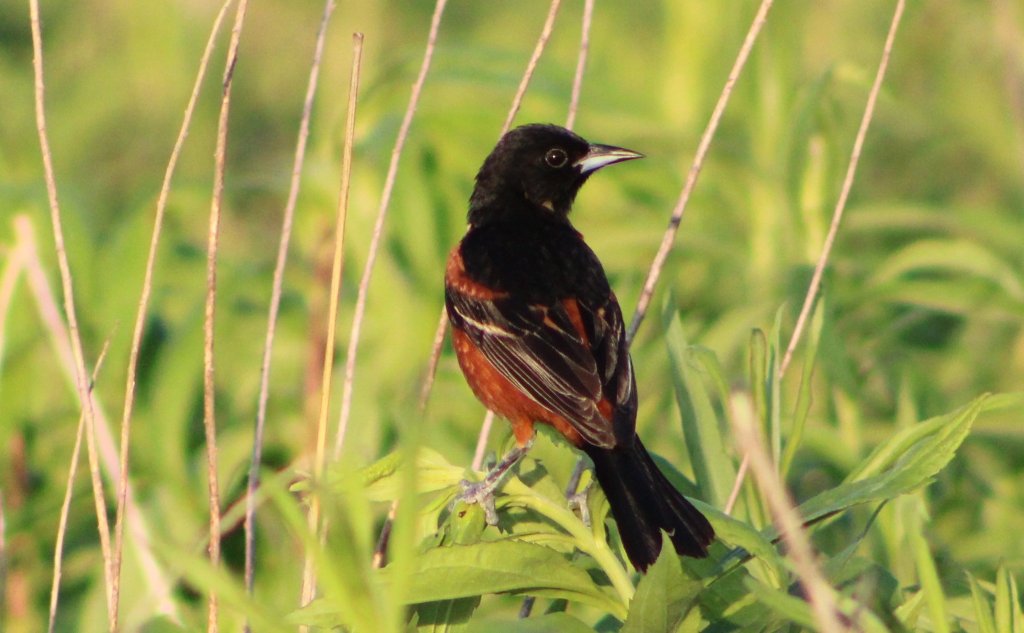
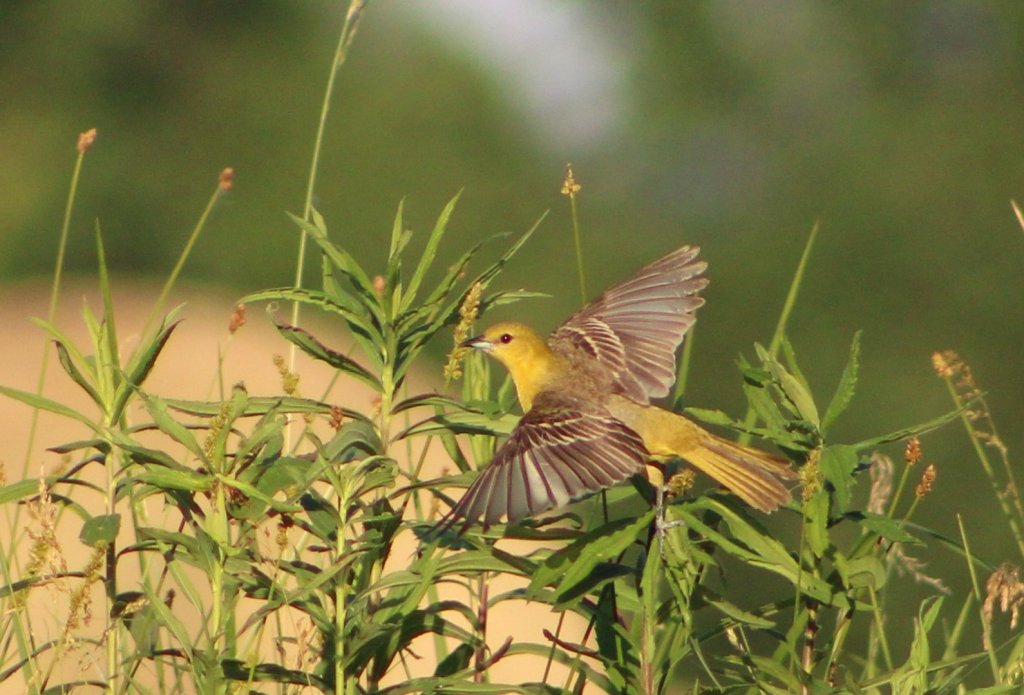
ORCHARD ORIOLE
This is such a lovely bird. I didn’t know whether to post the male or the female (as they are so different.) I’ve decided to post both (male on top.) These birds love nectar and fruit, so we put out a grape jelly jar to attract them. If you would like to see a good-plan-gone-bad, you may read about that HERE.
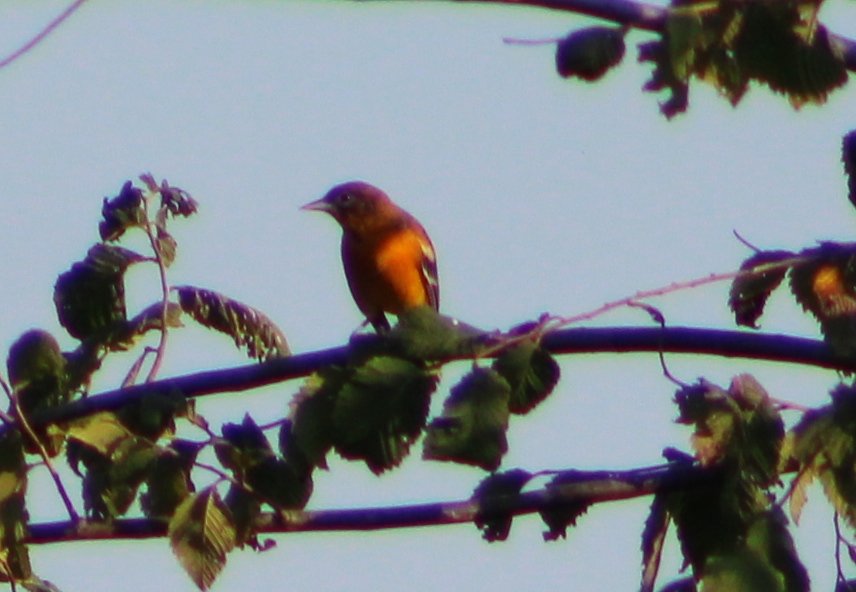
BALTIMORE ORIOLE
I have heard what I believe (and BirdNet supports) is a Baltimore Oriole. However, until 8/21/20 I hadn’t been able to capture it on film. Although it’s not a great images, I’m fairly certain this is a Baltimore Oriole.
JAYS & CROWS
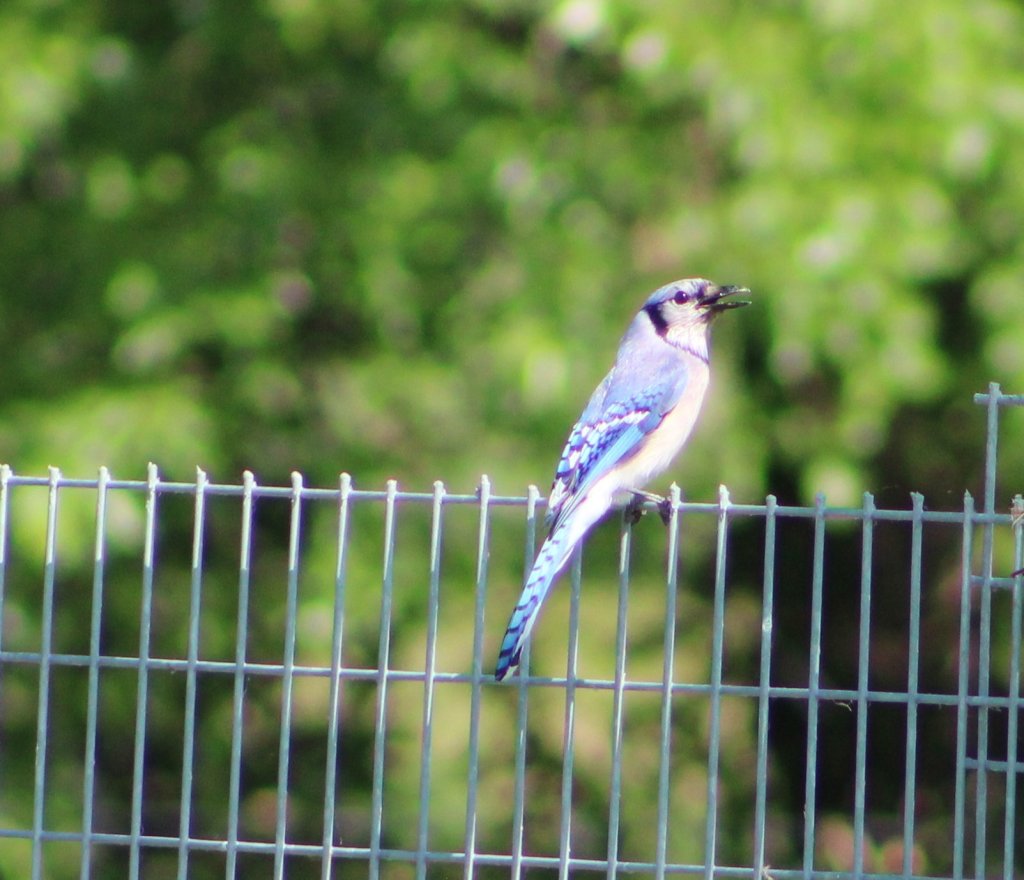
I’m not sure why the Fish Crow is listed in my area on E-Bird, since it’s not listed as local in AllAboutBirds.org There are two others listed for my location, and I’ve seen both and filmed one. I love Crows. I even have a life-sized three-D decoration of one hanging over the door of my office. When I was a child an America Crow happened into our yard. He was clearly distressed and drinking from a dripping hose. My mother fed him from a small tin. After a while, he would arrive with that little pan in his beak and demand his breakfast by tapping it on the back window! He was quite friendly and sat with us when we played in the yard, he stood on our heads and acted like one of the kids. Crows and Jays are very intelligent birds, which I find very endearing. After all, the breed of dog I relate to the best is the Border Collie.
BLUE JAY
COMMON GRACKLE
VIREOS
BELL’S VIREO
I have not seen this bird, but I did catch it several times on records throughout the summer. In this recording it seems to be echoing the Bob White that is also singing its tune.
PIGEONS and DOVES
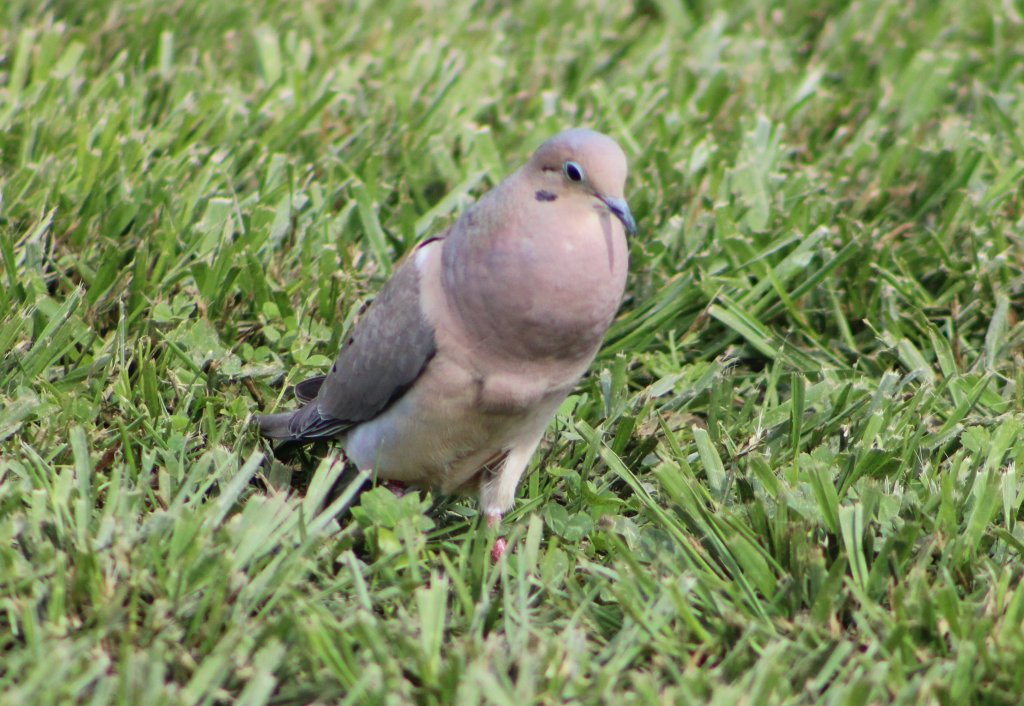
The Rock (feral) pigeon, Eurasian Collared Dove and the Mourning Dove can be found in my area. I have seen Rock pigeons fly over. They can be quite common on farms where a lot of grain is spilled. But, they don’t make a living here. I hear and see the native Mourning Doves often, as they enter the yard looking for food under the feeders.
MOURNING DOVE
WOODPECKERS
Of the six woodpecker species that I could observe, I’ve only seen one *. It’s important to note that until this summer (2020) I was fairly housebound due to serious orthopedic issues that caused me great pain. My shoulders were so sore that I cringed when we drove over a railroad track in our vehicle. I couldn’t even turn the steering wheel of a car. But, last year I had both my shoulders replaced, and my life is significantly better. I still have two knee replacements in the future, but at least I can get in and out of the golf cart to ride around the place with independence. Up until this summer, the bird species I could observed needed to enter the yard outside my office patio. Now, with the ability to travel around the farm, I can see birds like woodpeckers that typically remain in the more wild, remote areas of the property.
RED HEADED WOODPECKER
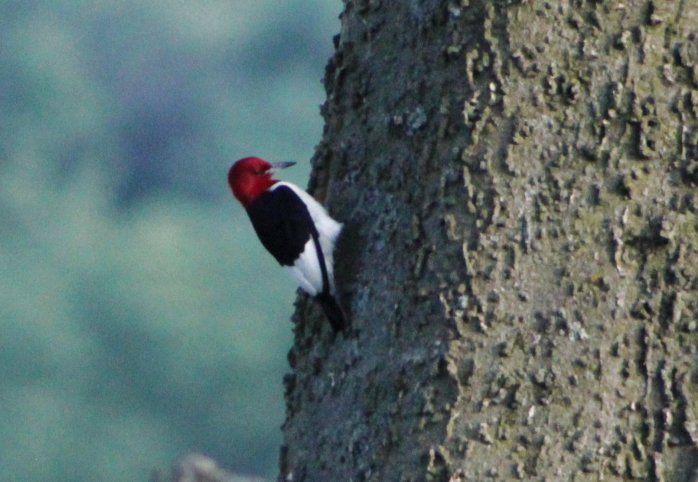
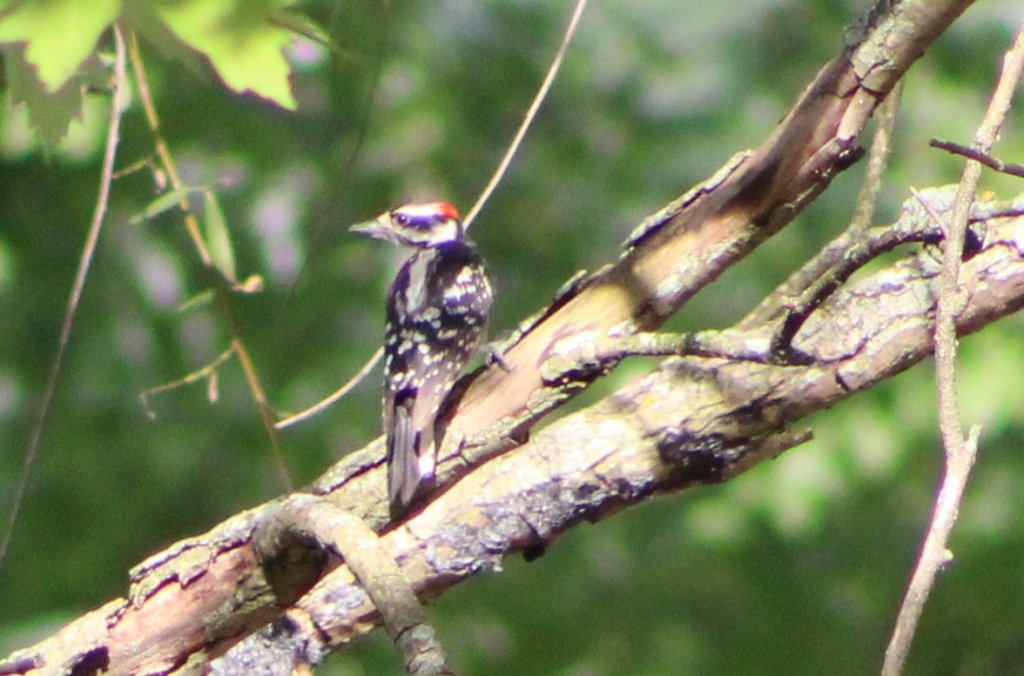
* UPDATE: 7/6/20 I saw a Hairy Woodpecker at the north end of pond meadow! Curiously, it happened a day after I proclaimed that I really wanted to see any other woodpecker species that might make a living here. SECOND UPDATE: 7/14/20 In a location where I would have never predicted a woodpecker (because it lacks truly mature trees) I focused on a Eastern Phoebe and snapped several photos. When I got back to my computer, I realized that there had been a Hairy Woodpecker in the shot, as well, and I had never seen him.
HAIRY WOODPECKER
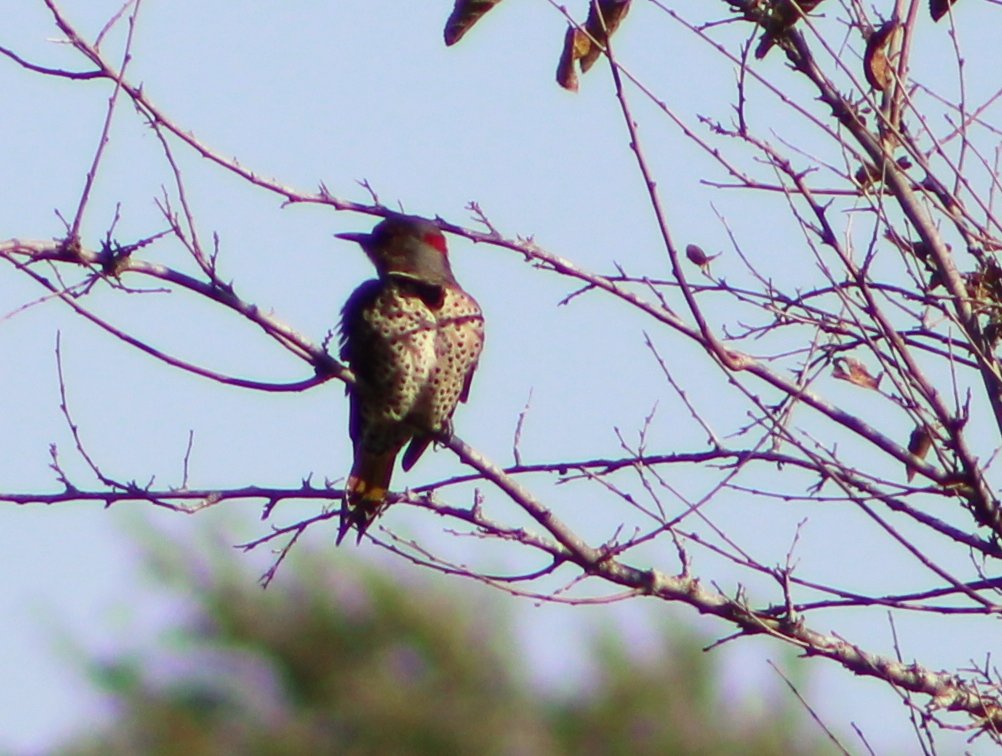
NORTHERN FLICKER
An interesting fact about the Northern Flicker is that it hunts insects on the ground. You might expect to see a woodpecker type bird in the trees, and of course you can see this species there. The first time I saw one, I spooked it from the ground to the top of a tree. I also filmed it hunting on the ground.
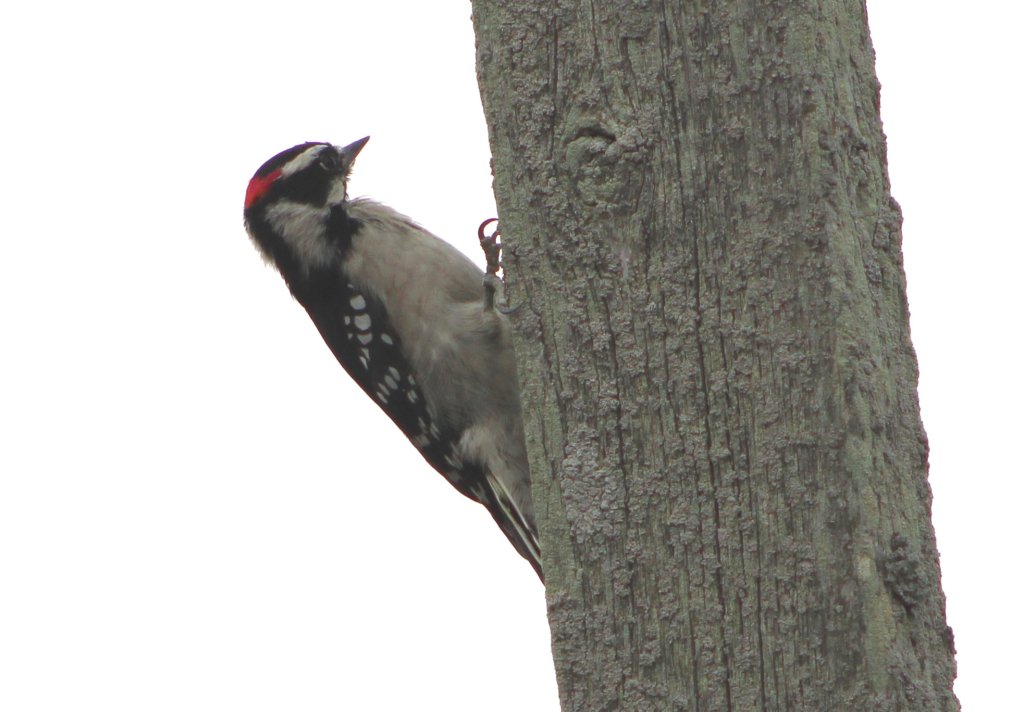
DOWNY WOODPECKER
On October 8, 2020 I saw this Downy Woodpecker with another (maybe a mate.)
VULTURE & HAWKS
Just yesterday, I saw a red-tailed hawk circling in the sky. He was too high to film, and I couldn’t identify him by sight. But, I know the vocalization, and I came back inside and listened to the sample sounds at bird sites to confirm. We have seen Bald Eagles within a mile of our property, and everyone in the area is familiar with the location of their nest “down at the bottoms” a couple of miles northwest of here. Many summers ago, Robert and I were fishing at our pond and an Osprey swooped in, landed about 15 feet from us, grabbed a massive large-mouth bass from the water’s edge and took off again. I don’t think he even realized we were sitting there. Conversely, I’ve not seen a Broad-winged, Cooper’s or Red-shoulder’s hawk, nor a Northern Harrier here. The only photo I have is of the most common bird in this category.
TURKEY VULTURE
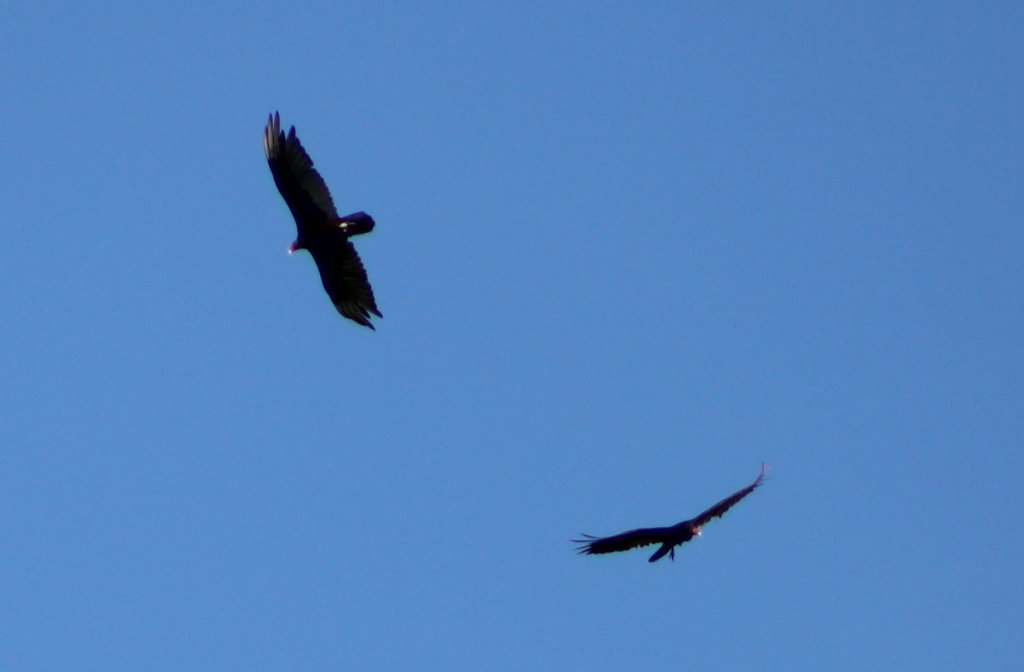
These massive black birds with the unattractive faces, can be seen standing in the middle of the country roads eating the carrion of car impacts. I was fortunate to get a photo of a pair of them circling above the pasture.
RED TAILED HAWK (updated 7-19-20)
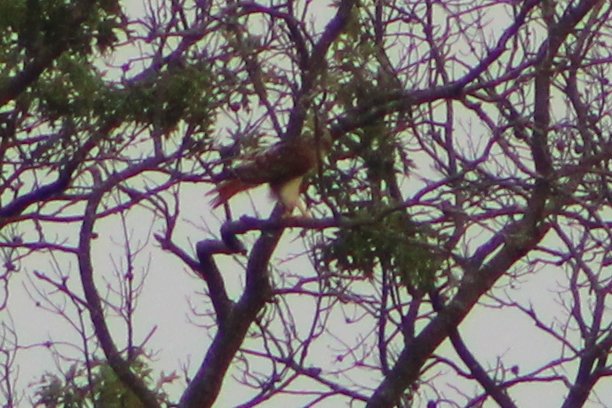
At the writing of this post, I had heard and seen a Red-tailed hawk, but I had not filmed one. Since recovering from my shoulder replacement surgeries, I have been able to travel around the property much more freely. It has allowed me to make observations which were once impossible. Many days when I entered Jaye’s pasture, I would hear, and then see a red-tailed hawk leave the largest tree at the northeast corner of the property. He often made his way, via a circular route, to the largest tree at the southeastern corner of the property. Today I heard him vocalizing most of the time I was out and about checking the Bluebird boxes and trying to catch a glimpse of various birds. Then, I saw him and I thought I might try to video his movements. I watched as he moved from the northeast corner, west, then circling back to that same big tree. Then, as I moved across the field to see if I could get close enough to spot him in the tree and possibly get a photo, he took off again, vocalizing, and landed in the big tree at the southeast corner. Here’s a short video clip and a very grainy photo. I speculate that I was at least 900 feet away when I took the shot of the tree – hoping I would be able to enlarge it enough to find the majestic hawk.
In the video you will see that he passes another large bird during his flight. I believe it was a second red-tailed hawk.
SHOREBIRDS
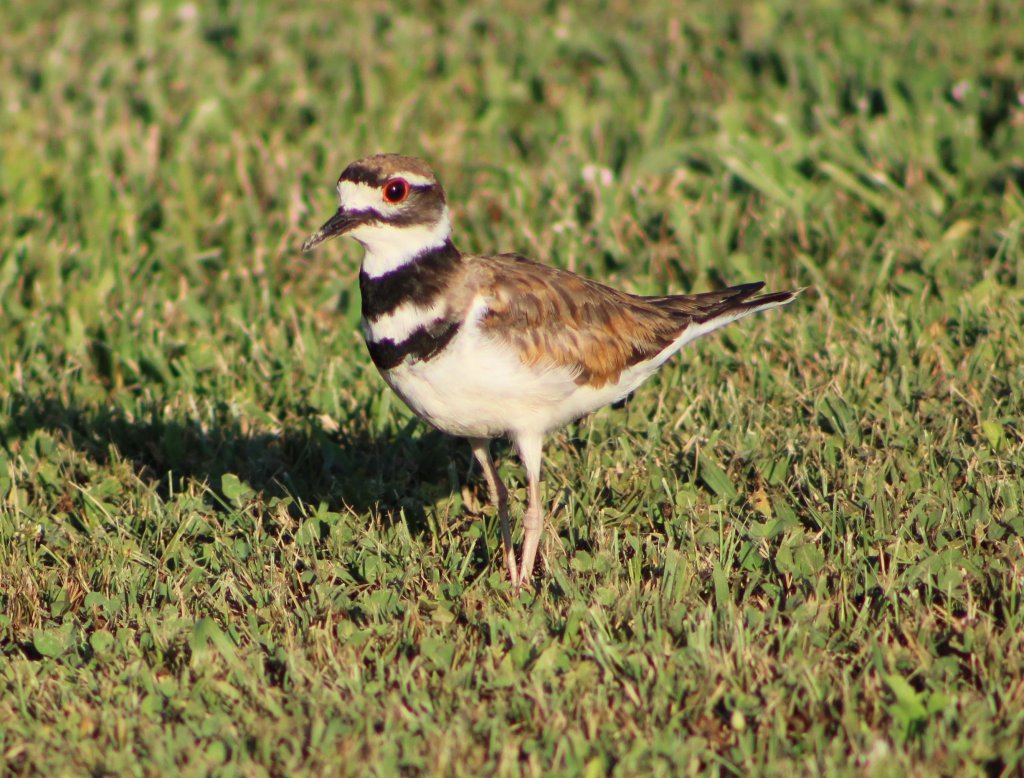
It seems strange to think there would be any shorebirds in the middle of the country. But, when I took a trip to Saskatchewan, Canada many years ago, I was surprised to see gulls flying about in the middle of that massive country, too. We do observe huge flocks of various shorebirds congregating during migration in a flood plain along the Kaskaskia river in the spring, as well. That’s about five miles from here. But, the only bird in this category that I have seen and filmed is the Killdeer.
KILLDEER
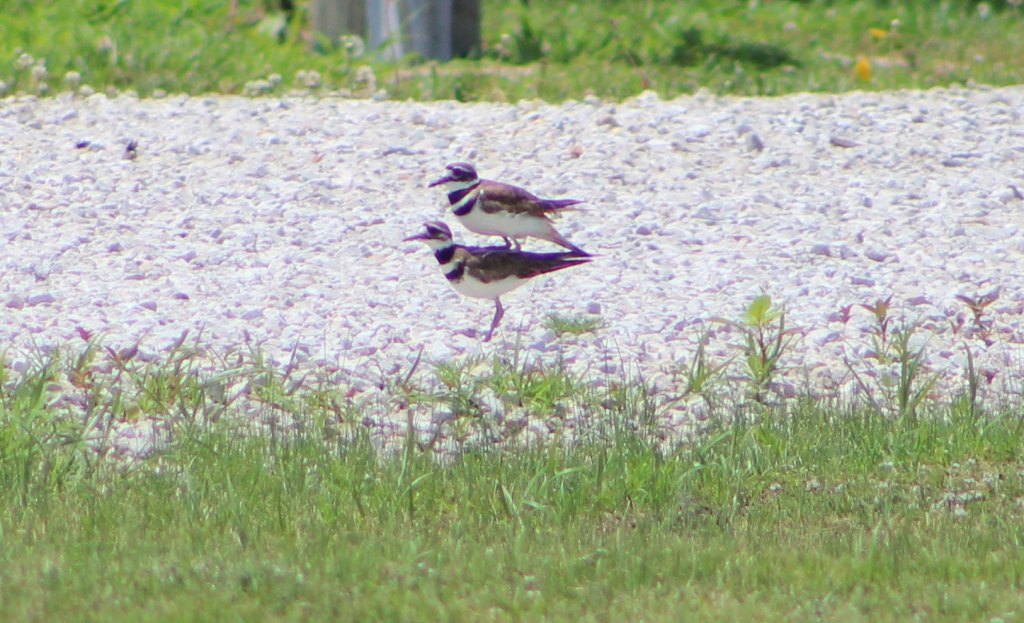
This species is quite common in flat agriculture areas like our. We often see them standing in the middle of a country road at night. The car’s headlights catch them taking off far later than seem optimal for total safety. I’m not sure if they are seeking the openness to avoid predation or they enjoy the warmth giving off by the blacktop after sunset. Earlier this year I was sitting on our front porch filming a pair of Tree Swallows that were using a nest box. I saw the two Killdeer in the gravel driveway and turned my camera their way. They were far and I wasn’t paying much attention. But, when I opened the files at my desktop I realized they were mating! Who knew that a gravel drive could be such a romantic location.
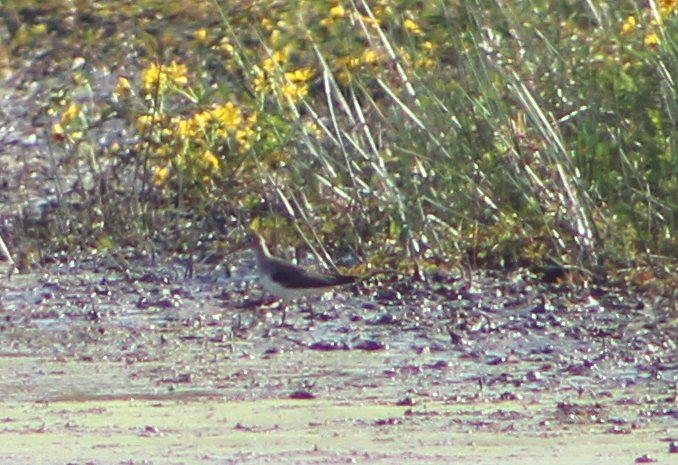
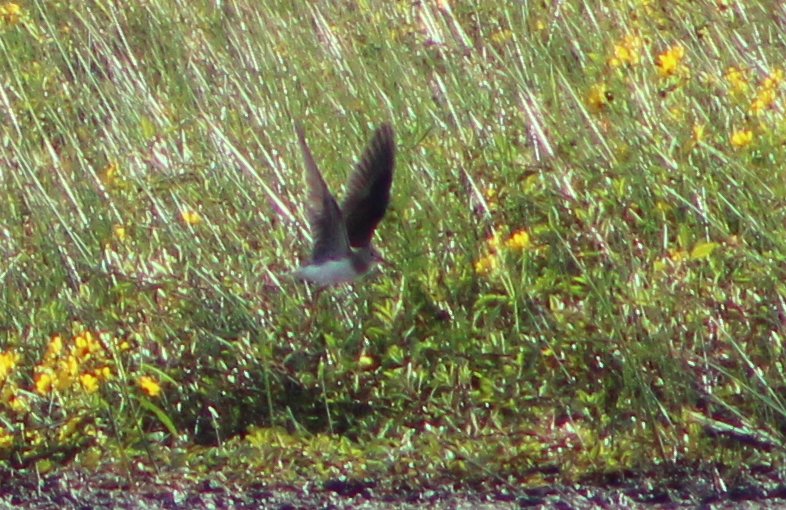
SOLITARY SANDPIPER
I had to get some help identifying this single bird that hung out by the edge of our pond on the same day that I saw the Northern Shoveler and its three Blue Wing Teal buddies in early October. I would have never spotted it had I not been sitting filming the ducks. This photo was taken from about 400 feet away. It appears to have a solid, gray-colored back but the images I’ve seen in bird guides suggests it has a more mottled back. I’m going to assume the distance played tricks on me.
FALCONS
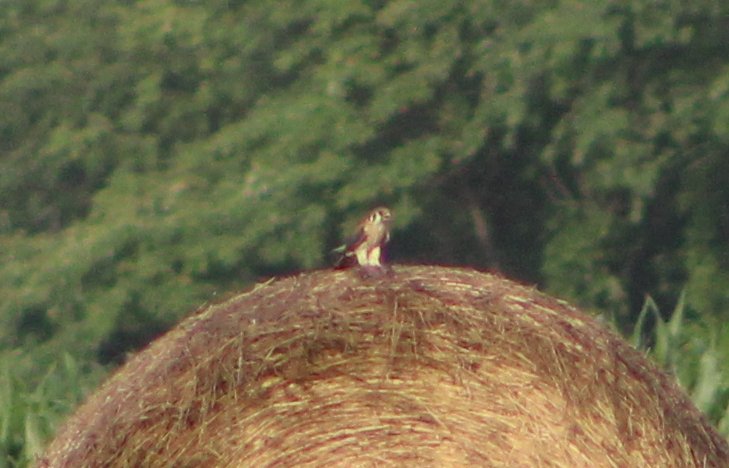
I was driving the golf cart and Robert was in the passenger seat. We had stopped so that I could observe whether the Eastern Bluebird in the north central nest box might appear during her incubation. Robert had a pair of binoculars up to his face. “Take a photo of that bird on the hay bale,” he said. “What bale?” I asked as there were about six in the field. “The second one, the one with the bird on top,” he replied. I scanned the bales with my 60 year old eyes and saw nothing. After clarifying the bale upon which he saw the bird, I focused and snapped. Once back in the office, I realized he was right. There was, in fact, a bird on top of the bale. I had to get some expert feedback to confirm the species.
AMERICAN KESTREL
This is the only falcon that I might observe in our area. And, I’m happy to see him. Back in Wisconsin, there was a Kestrel that hunted around my little farm. They are daring little birds of prey. The photo is quite grainy because that bird was probably 400 feet away when I took the photo.
HERONS, IBIS
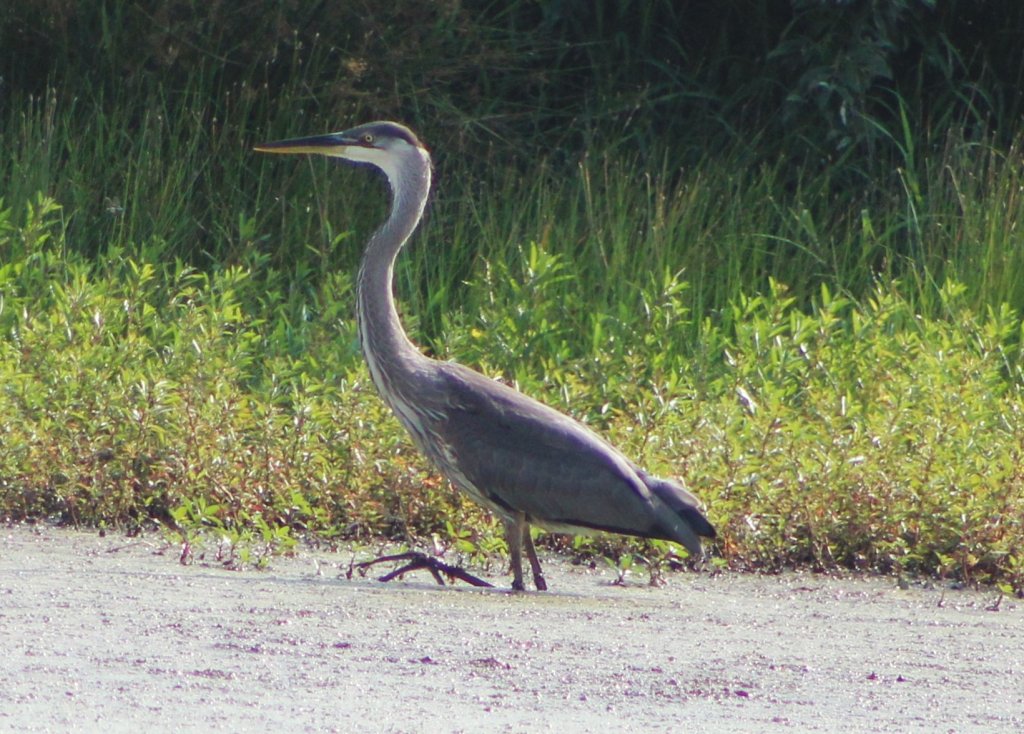
On the original date of this post, I had seen but not filmed the Great Blue Heron that frequents our pond. In typical nature of “if you build they will come” or “the power of intention,” just two days later I was able to film the great bird as he flew from the north to the south side of our pond. The remaining herons and ibis that could reside in my zip code are probably going to be significantly more challenging to encounter at our farm. However, I have seen a white egret type bird that I assumed was a Cattle Egret only because it was the only white egret I knew at the time. It was probably during the migration season. I’m thrilled to be able to present the heron that fishes in our pond.
GREAT BLUE HERON
SPARROWS
There are currently seven sparrow species displaying at E-Bird, but one that I have filmed during migration -the White Crowned Sparrow – is missing. Apparently the E-bird lists are updated by the season and I’m not supposed to see a White Crowned Sparrow, now. Here are the sparrow species I have seen and filmed.
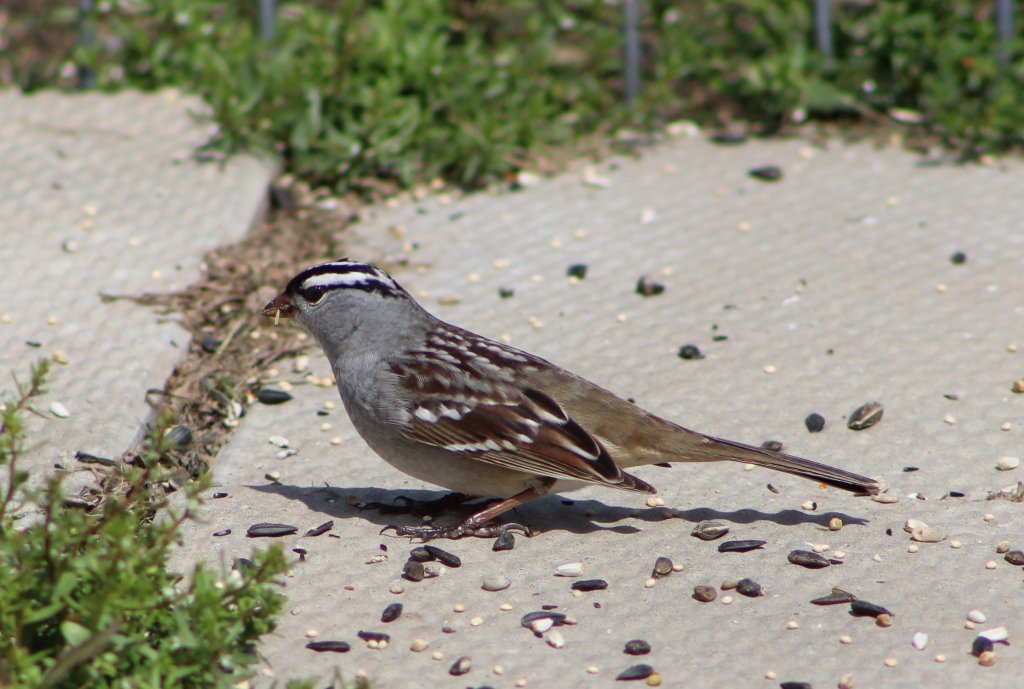
WHITE CROWNED SPARROW
These cute little birds migrate north and breed in northern Canada. But, before that, they arrive here and spend a few weeks eating the seed we offer.
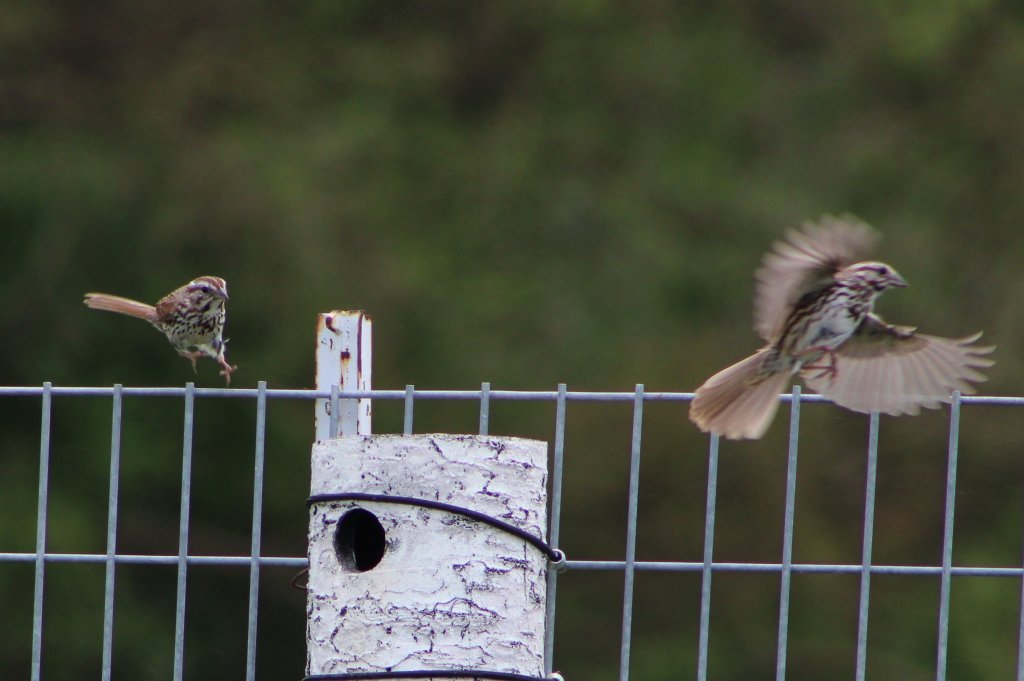
SONG SPARROW
We have several pairs of these pretty, little birds.
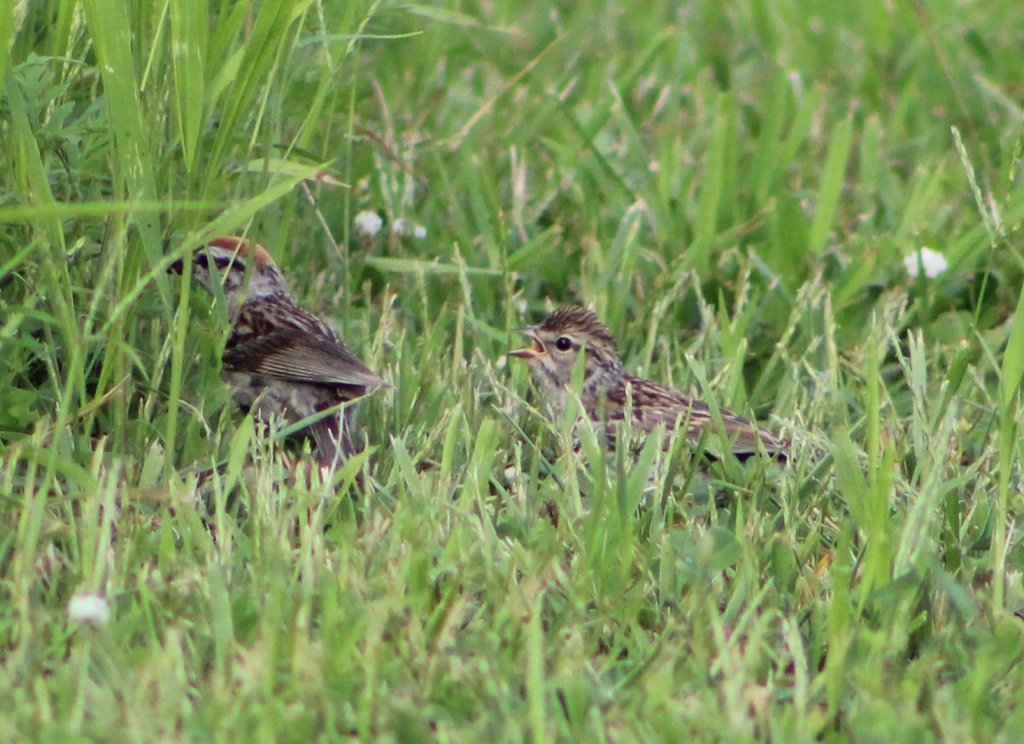
CHIPPING SPARROW
This is a cute, little bird. The photo I am posting here is of a young juvenile with his parents.
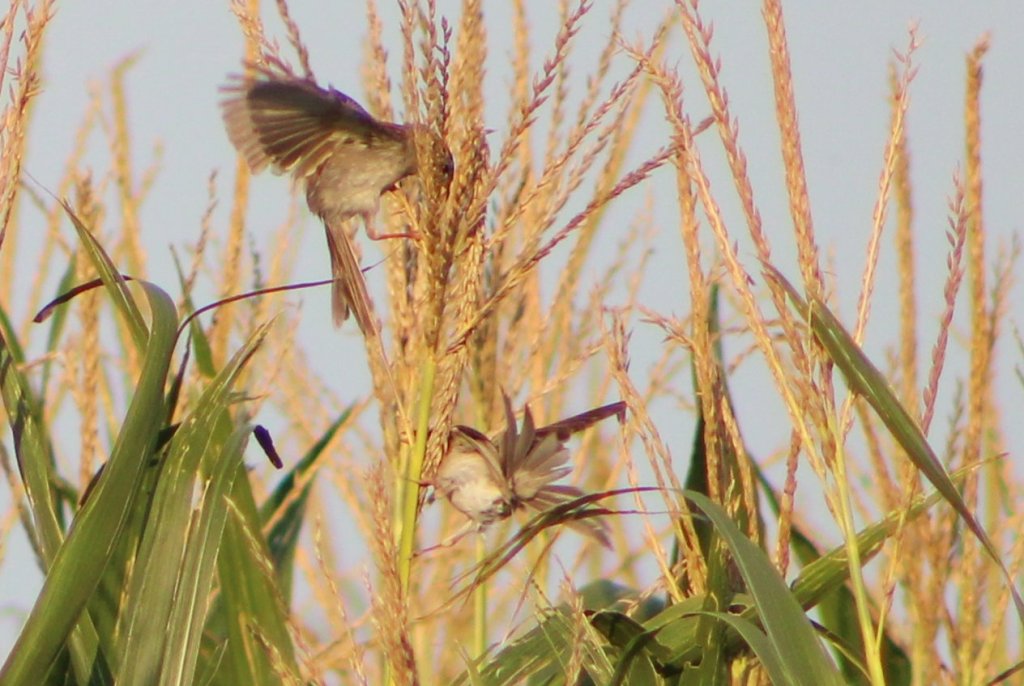
FIELD SPARROW
I watched this pair of Field Sparrows enjoy each other’s company for many minutes. They flew from the mature corn plants to the fence wire, and down to the grass as they flitted around the pasture.
EASTERN TOWHEE
I hope one day to actually spot this lovely bird. But, for now I will have to simply include a couple of video recordings that I made of it. One was recorded on 7/30/20 and the other on 8/22/20. They were also in quite different locations on our property.
CUCKOOS
YELLOW BILLED CUCKOO
UPDATED from original Post date.
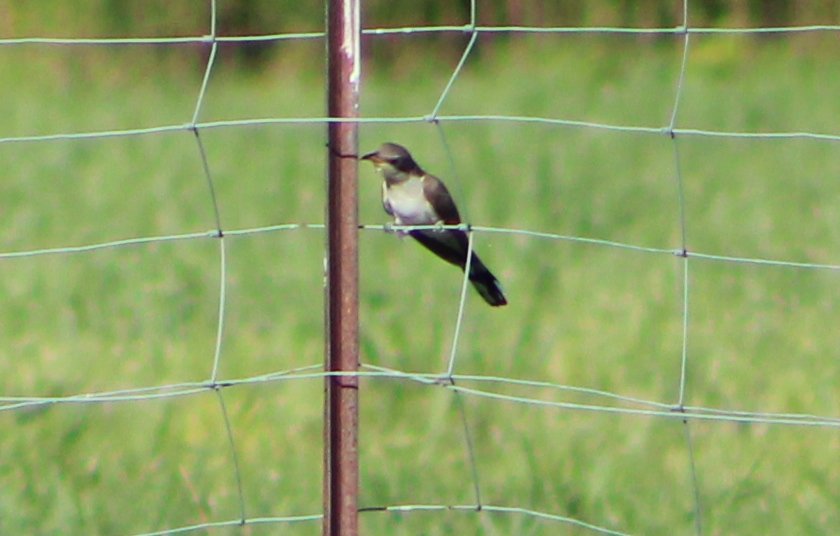
Seriously? I didn’t even know there was such a bird in our location. Then, on 7/28/20 while snapping a photo of what I thought was an Eastern Kingbird (from about 200 feet away), I realized I had taken a picture of a Yellow Billed Cuckoo. Of course, I didn’t make that realization immediately. But, the bird in the photo wasn’t black, but brown. There wasn’t the characteristic white tip on the tail feathers, and mostly the bill was not only larger but, it was yellow! I knew then that it wasn’t a Kingbird. So, I used the Merlin bird ID App. The first bird that popped up was one I knew nothing about. Behold, the Yellow Billed Cuckoo – and I apologize for the grainy image.
WARBLERS
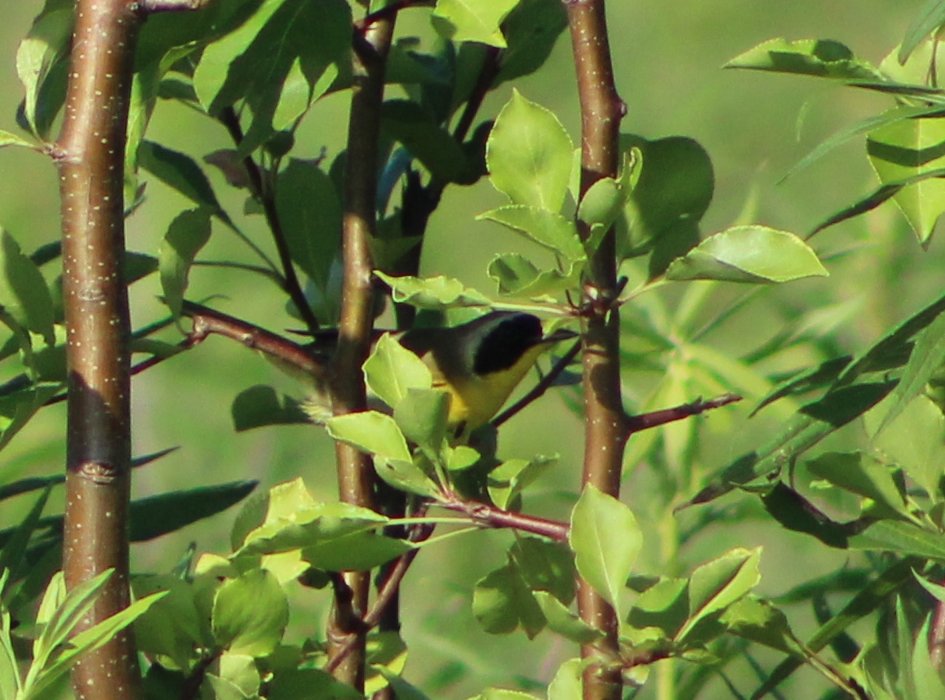
Until a couple of days ago I had never seen a Warbler. To me, they were always elusive because they are small and they live in the deepness of large trees. And yet, one evening I sat down at my computer, plugged in the SD card I had extracted from my camera, and began to look at all the images for the day. Too blurry. Too dark. What the heck was I trying to film? I have to say that of the hundreds of photos that I take, less than ten percent end up to be anything of value. The crappy pictures outweigh the good one so disproportionately that I often fail to truly examine an image before I slide to the next. The photo below, of the only Warbler I’ve ever seen, almost dropped to the cutting room floor, too. But, there was this flash of yellow that caught my eye. As for all the warblers that I might encounter – well EBird tells me there are twelve others! Fortunately, a highly experienced Birder has informed me that, while they do exists in my part of the country, most of them make a living in more specialized habitats than our probably offers.
COMMON YELLOWTHROAT
So, here’s that “what’s in a name” situation, again. What’s so common about this bird? It is really more common than a red-winged blackbird or a House Sparrow? Does the fact that it is common – if it really is – make it any less incredible to encounter? I’m just going to have to say, no. It was incredible to see my first Warbler, especially because that very morning before I saw it, I had created my spreadsheet of possible species I could encounter. Who makes a spreadsheet if it’s not important to do so? By that I am clearly including the importance of having a hobby – which for some people becomes the most important thing about which to create a spreadsheet. Once I finalized that spreadsheet I realized that there were lots of warblers that I might see, and I hadn’t seen ANY of them. Then, I went on a look-see that afternoon. I took a photo of a bit of yellow movement in a bush, and it’s a – yeah – a Warbler. Isn’t that a curious situation? It’s curious like the fact that we put up a a bluebird house and a few days later bluebirds showed up. It’s curious like we hung a nectar feeder, and those incredible little ruby-throated gems arrived. We erected a Purple Martin house – that we acquired on a whim while at the Farm Store – and a couple days later Purple Martins showed up. The first evening we took a drive around the property in the golf cart, we saw the female Orchard Oriole and then ten minutes later, 400 feet away, we saw a strikingly handsome male Orchard Oriole. And, not only did we see them, I was able to take great photos of them. Curious? Yes, because I never knew they even existed. Nothing is common around here. It’s all magic, spiritual intervention or good fortune. But, it’s not common. Nonetheless, I present to you the Common Yellowthroat warbler in all its elusiveness.
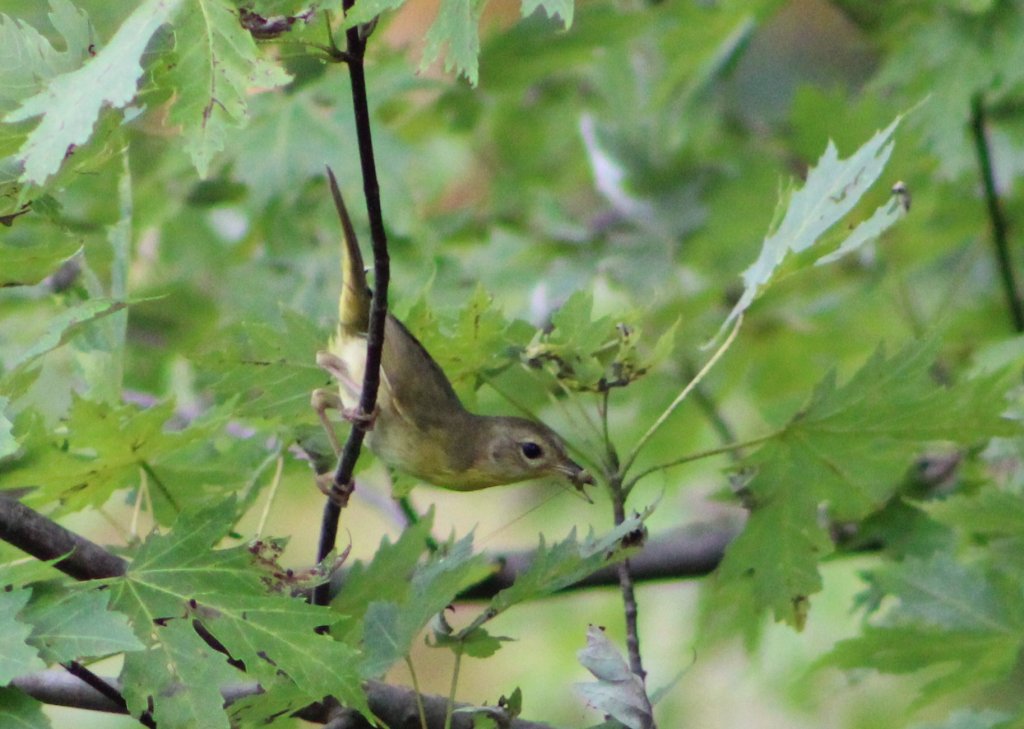
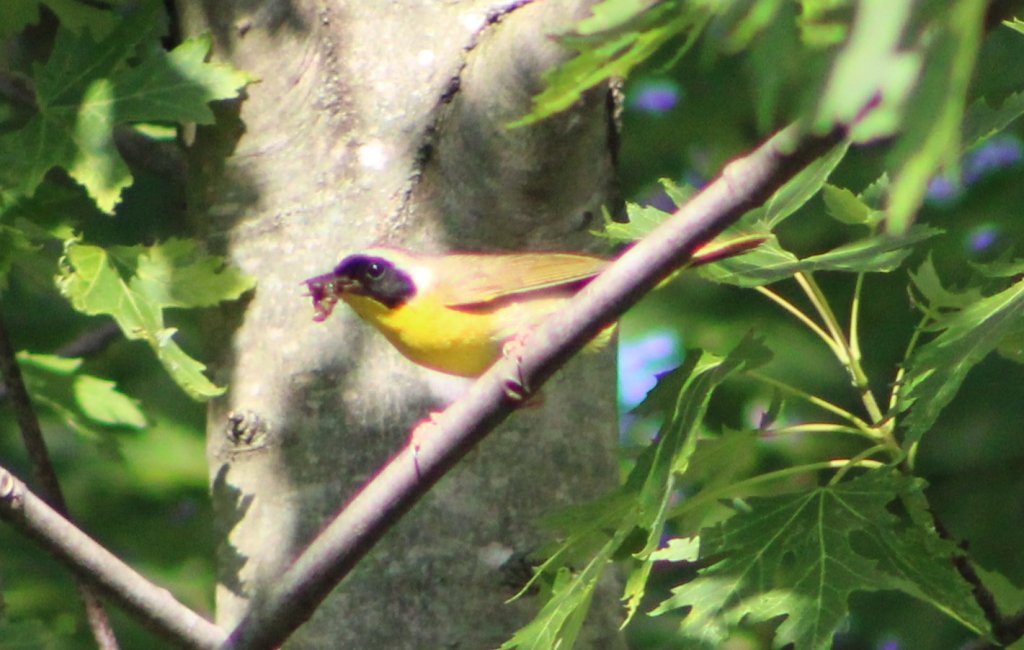
Update 7/22/20: I was able to snap a few better images of the Common Yellowthroat. Female on left, male on right.
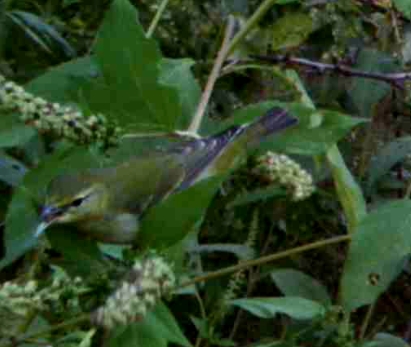
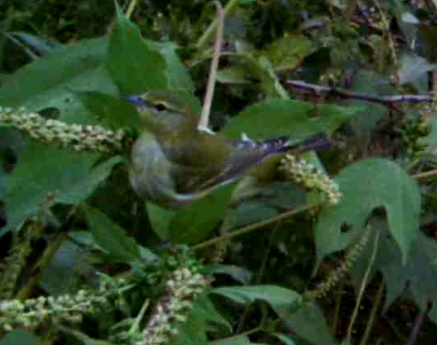
TENNESSEE WARBLER
I was fortunate to see this little bird during the fall migration (9/26/20.) He had a cameo appearance on a trail cam that I set up to determine what critters were snacking on the remaining apples.
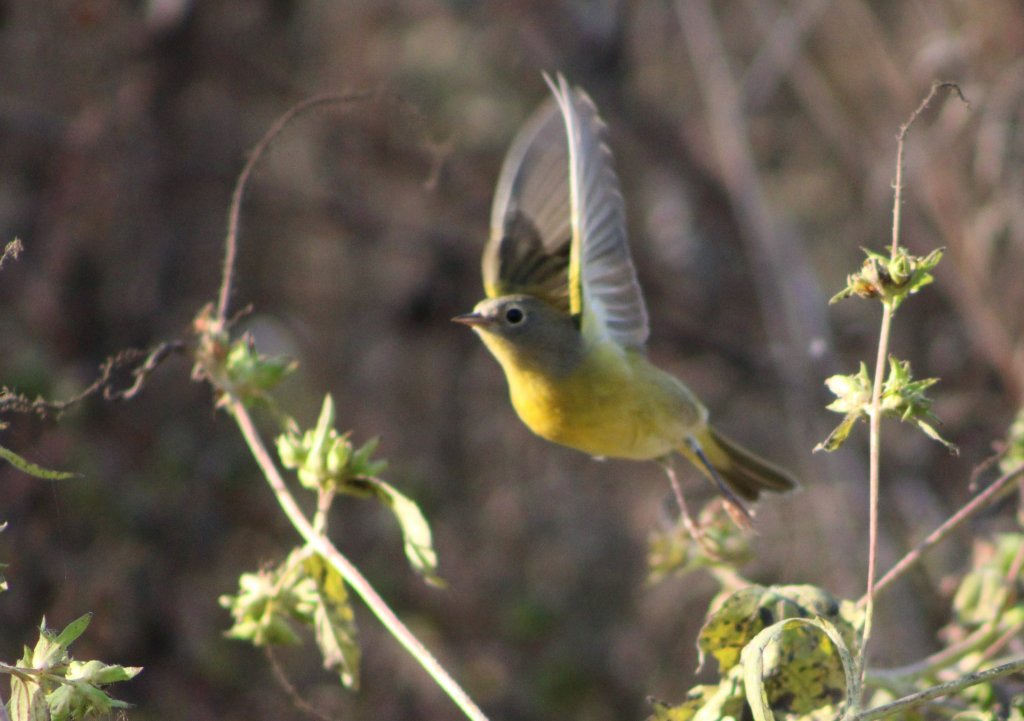
NASHVILLE WARBLER
This bird was moving through during the fall migration. So beautiful, even though it’s not in focus!
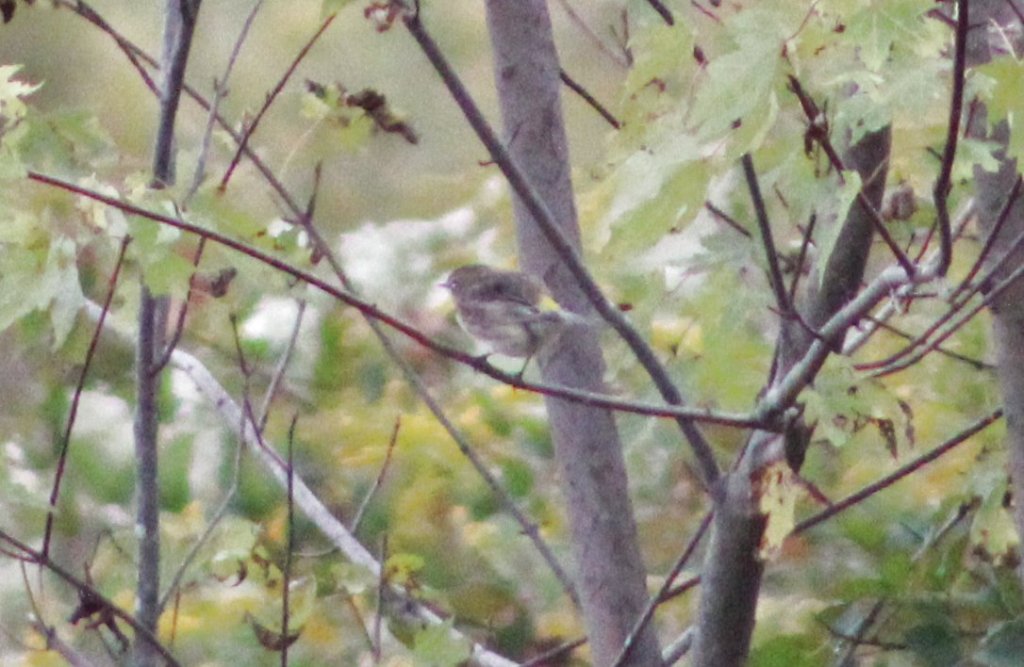
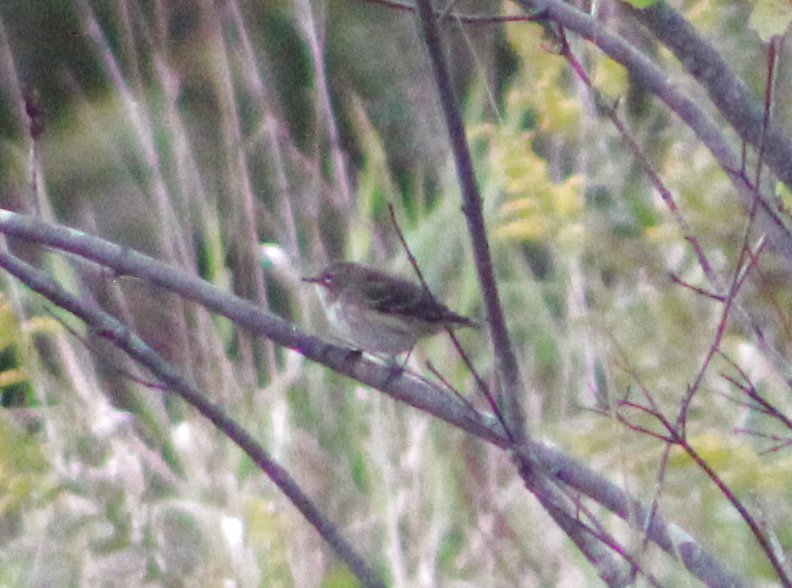
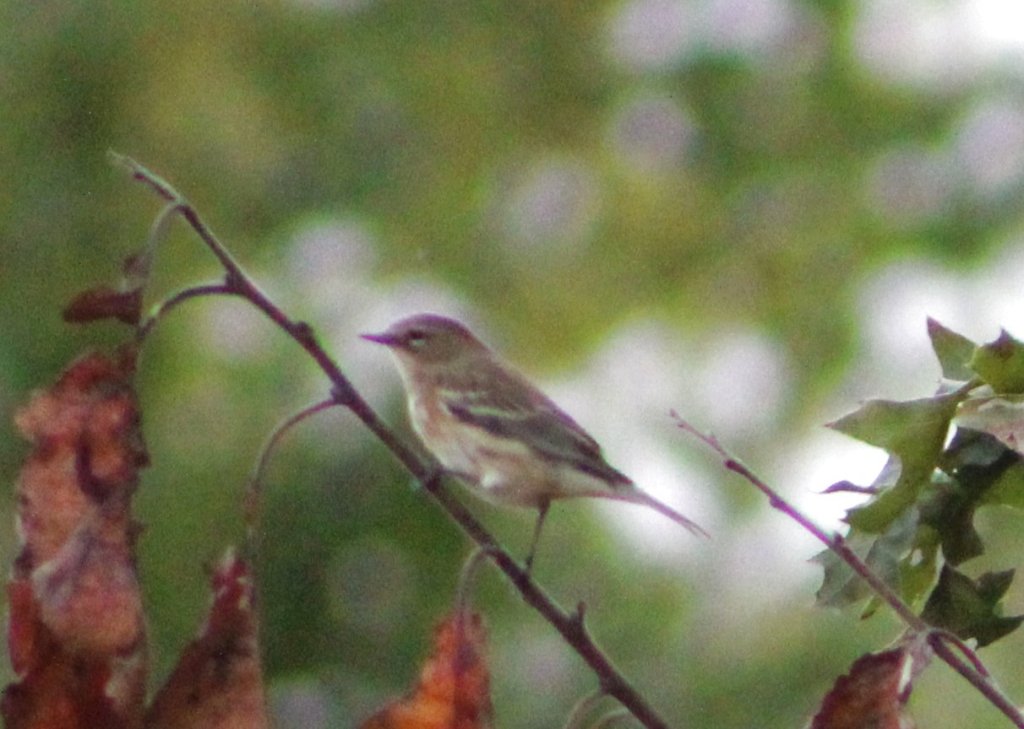
YELLOW-RUMPED WARBLER (Possible BAY BREASTED WARBLER)
In early October, during the fall migration, we spotted a group of little birds in the brushy area near the north end of the pond. I’m happy that I got a shot from the rear end, as the side view didn’t show the yellow rump and it’s body colors didn’t quite match the guides for this species (below, first two photos). Robert took the third photo just a few minutes later. I thought it might be a different species, but I wasn’t sure. I asked some folks-in-the-know about warblers and three weighed in that they were the same species – the Yellow Rumped. A couple other folks felt that the bird on the right was a Bay Breasted Warbler. I guess we will never know – at least for these birds. However, the Yellow Rumped warbler may spend the winter in our area, so we shall see if I can catch them again.
ORANGE-CROWNED WARBLER
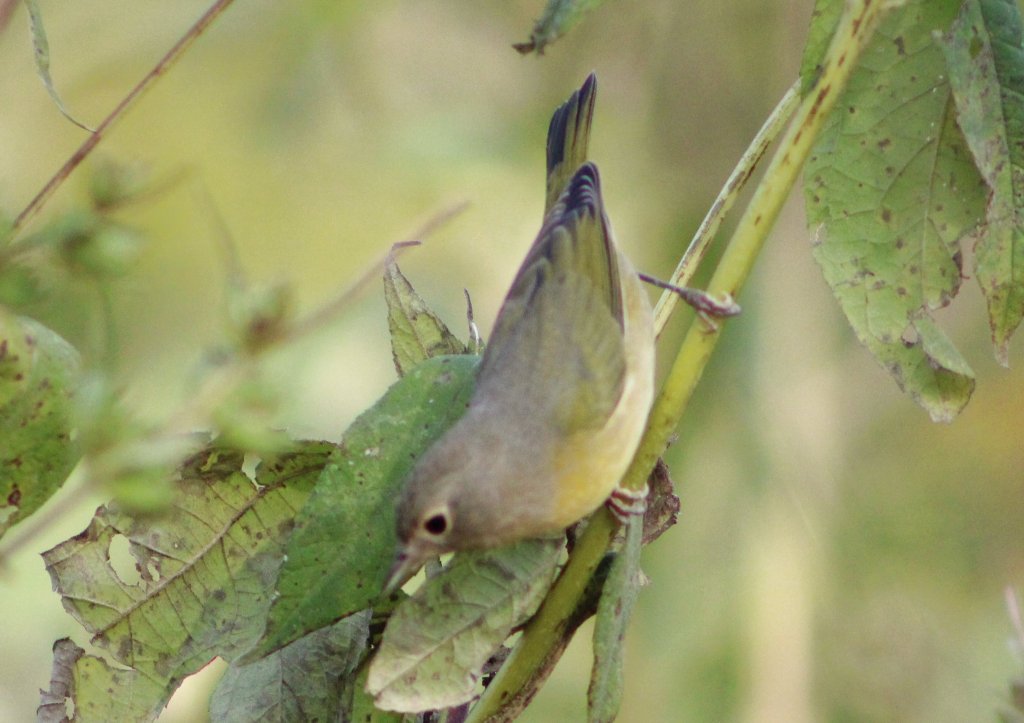
Another migrant, I shot this photo on October 7, 2020.
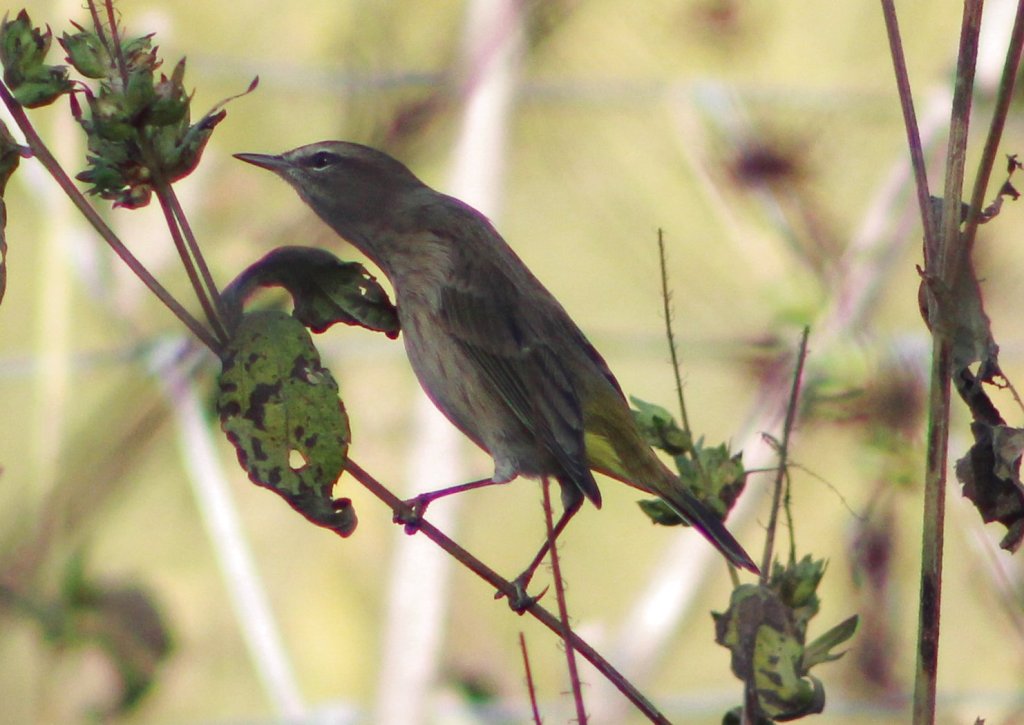
PALM WARBLER
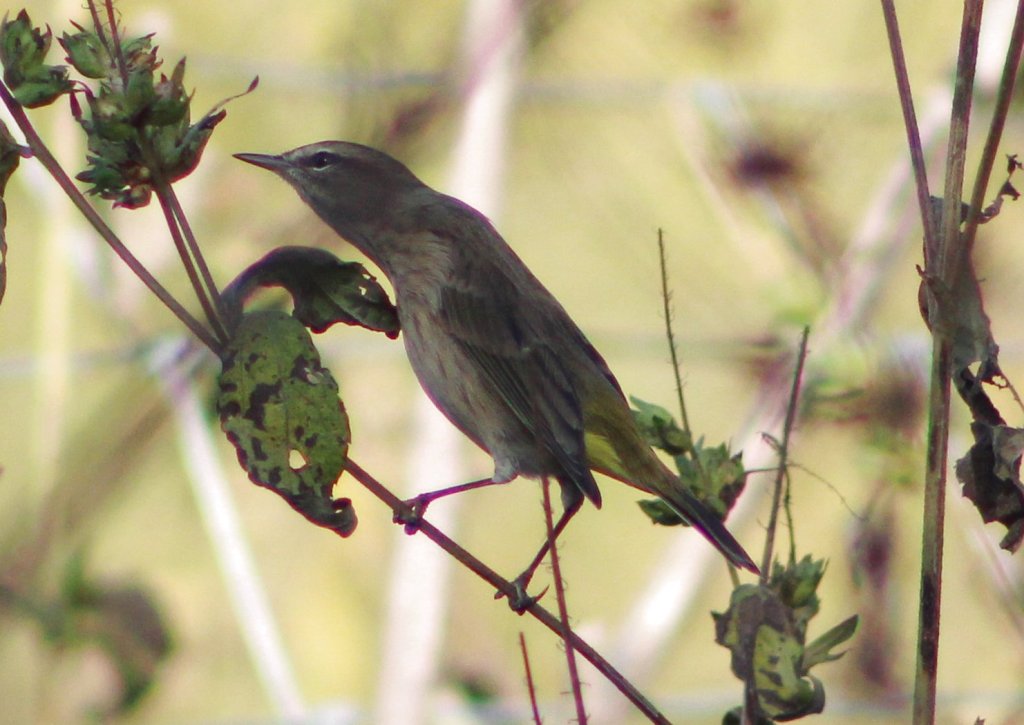
I originally confused this bird with a Northern Waterthrush. But, it is in fact a Palm Warbler. Another bird that is moving through during the fall migration.
DUCKS & GEESE
We have a large farm pond, and on occasion we have ducks and geese arrive for a short spell. I remember a few years ago driving an ATV past Jaye’s Pasture just after sunset. My peripheral vision snatched a strange image and when I slowed and turned towards the darkened field, I saw the most bizarre sight. Initially, I could not figure out what I was seeing. There were thick, curved poles coming out of the ground – like very heavy shepherds’ crooks. Then, one moved and I realized that at least a hundred, probably closer to two hundred geese had landed there for the night. I’ve seen Canada geese quite often in small groups and pairs fly gracefully over the pond, then land to spend the evening on the water. I’ve also seen mallards. But, I never recorded those observations on film or even a notebook. Now that I spend more time out looking for birds, I’m happy to share what I’ve filmed.
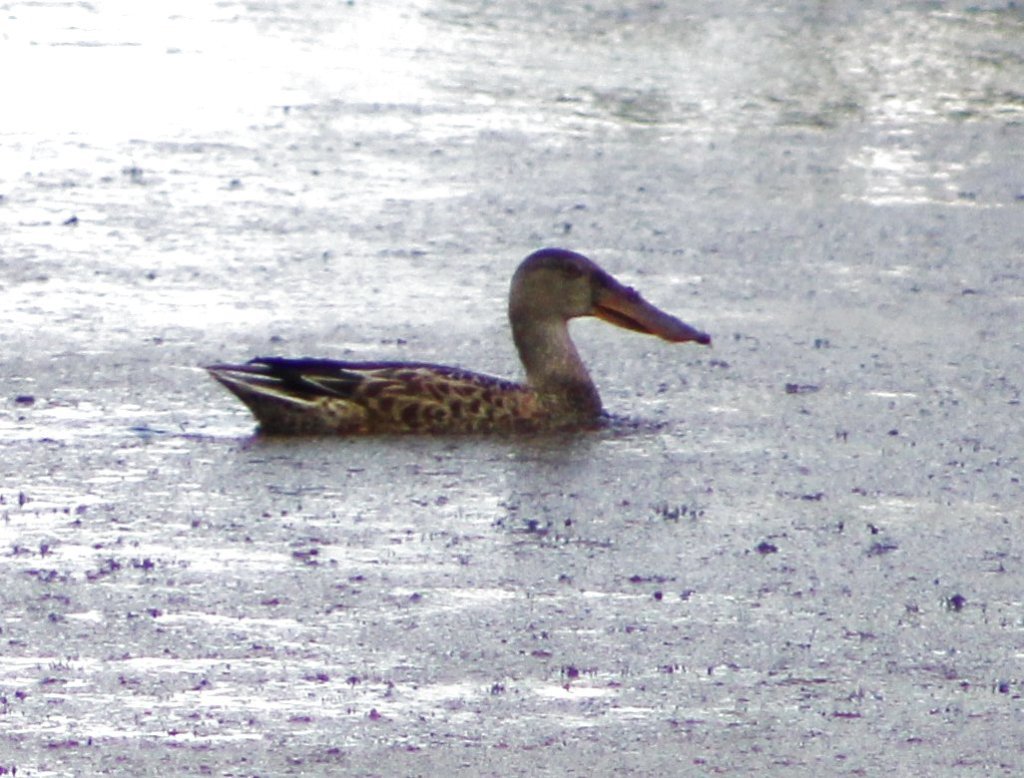
NORTHERN SHOVELER
Who knew this was even a species? Not me. When I first saw it floating along with three smaller ducks, I couldn’t wait to look up its name. Shoveler makes sense, as it uses that massive beak to feed on the bottom on shallow ponds.
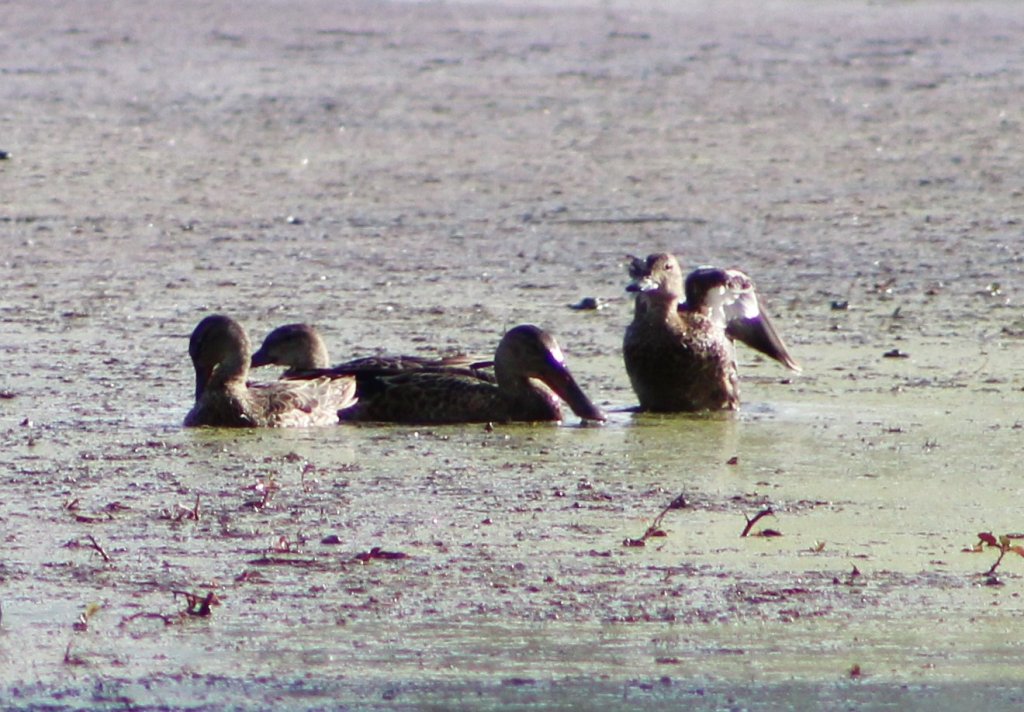
BLUE WING TEAL
The day that I observed the Northern Shoveler, it was accompanied by three Blue Wing Teal. Apparently, these two species like to hang out together and I even found a discussion about the two species hybridizing. The three smaller ducks in this images are the Teal.
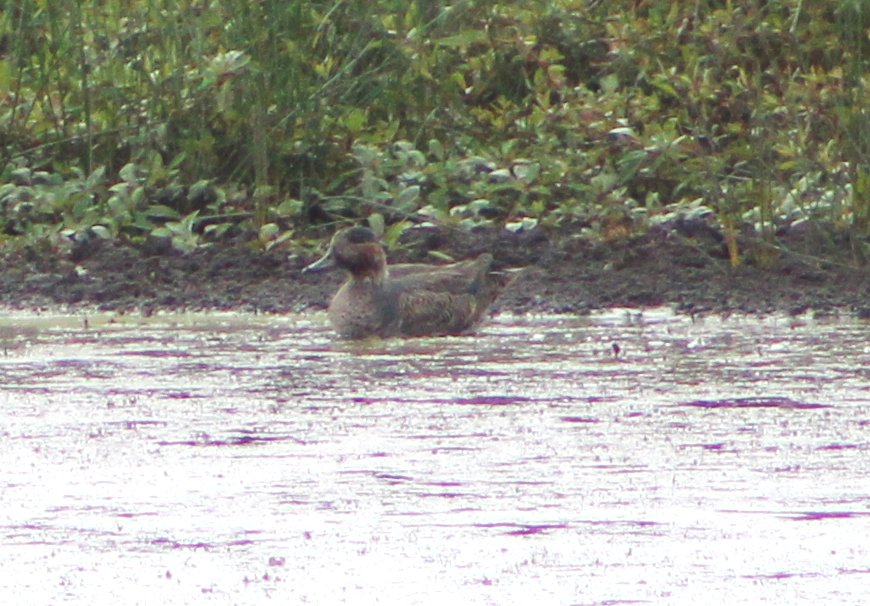
GREEN-WINGED TEAL
A couple days after the Shoveler and three Blue-winged teal visited for a day, I saw another solitary duck on the pond. This time, it was a Green-winged teal. I’m happy to add another bird to my list of species that have visited our property.
WHAT REMAINS?
As of my 10-10-20 update of this page, I’ve observed and heard sixty-one different bird species on our south-central home property since Spring this year. The number of bird species that might show up even if I am not looking is enormous, especially during migrations. There are species I’ve heard or seen that I’ve not filmed….yet. Besides those that I’ve already mentioned above, that list includes Black-capped Chickadees, Canada Goose, Mallard Duck and Tufted Titmouse.
Species that I am hoping to encounter most: Owls. I’ve recently purchased two owl boxes from a craftsman on Etsy. They may not be used this year of 2020 (we didn’t put them up until September) but hopefully next year. Perhaps the Kestrel might enjoy nesting in one of those owl boxes. Cedar Waxwings. I have a soft spot from this bird. When I was in college, the Cedar Waxwings would come to the campus in the fall and eat from some of the fruit bearing shrubs. There was an elevated, glass enclosed walking path between two buildings and the birds often flew into that and fell to the ground. It was suspected they may have been a bit drunk on fermenting fruit. I would pick them up, take them to my dorm room, offer them water and pieces of apple, and then let them sober up before releasing them in the morning! I’d also like to find out how many other woodpecker species might be around, and film the crows and the hawks I hear. I may have to wait for winter to learn about some of these species.
I plan to update this page as I capture additional birds during my rides around the property. I might also update the photos if I find better ones, or if I take a new one that best shows the species.
If you would like to read more posts about the wild birds I’ve observed here, you may look through this CATEGORY.


Wow. You put a lot of work into this post and I enjoyed it very much. We have many of the birds in our area that you have featured in this post. Thanks for sharing all of your wonderful pictures. I will be sure to check out the site you mentioned.