Tammie Rogers
Inspired by Dogs & Nature
Bluebirds – New Couple?
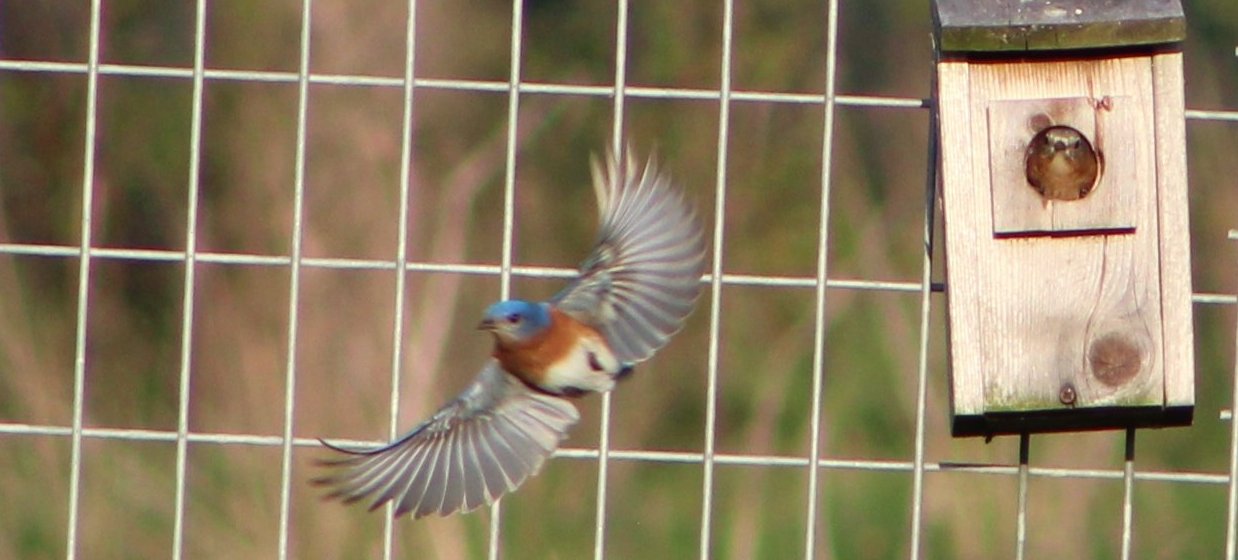
For nearly two weeks, the Bluebird pair has been working diligently on selecting and building a nest in the white birch nest box on the south fence. You can see more on this activity here.
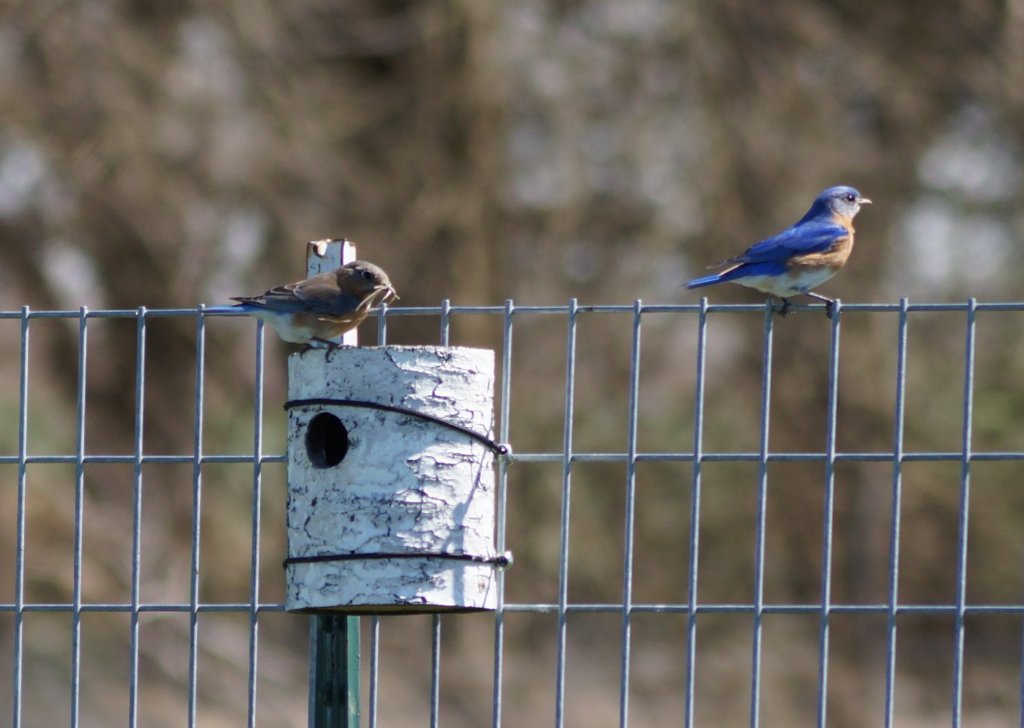
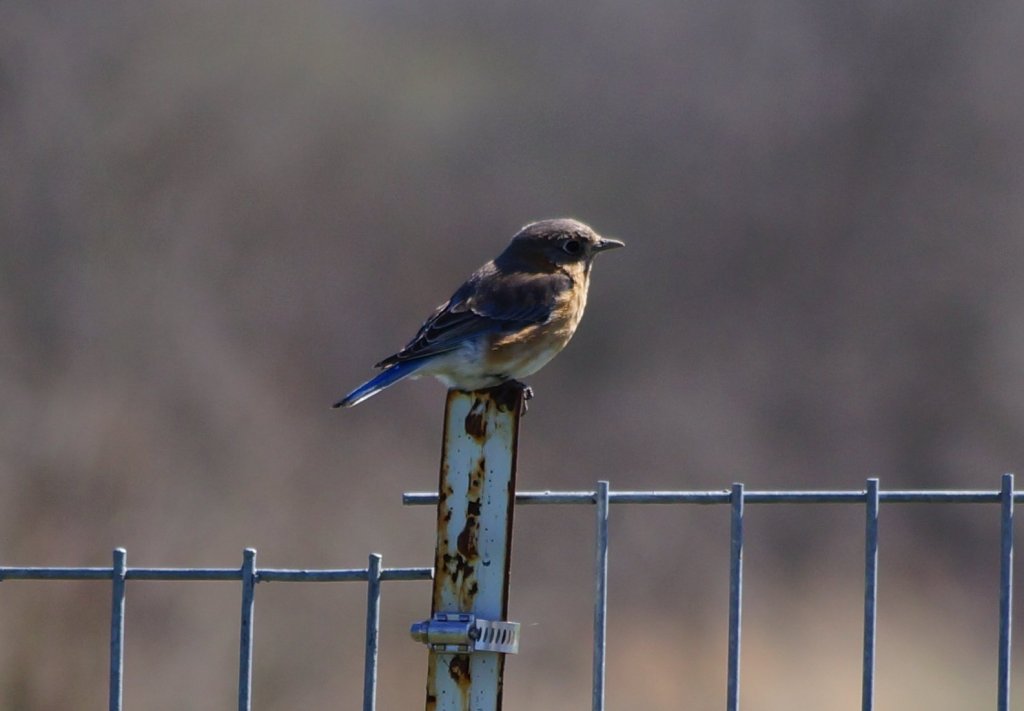
Curiously, when I was filming the Purple Martins on April 7, I saw a bird perched at the opening of a wooden nest box on the far East fence, down by the Ponderosa Pines. That eastern nest box is about 125 feet from the white birch box where the pair, above, is making their nest.
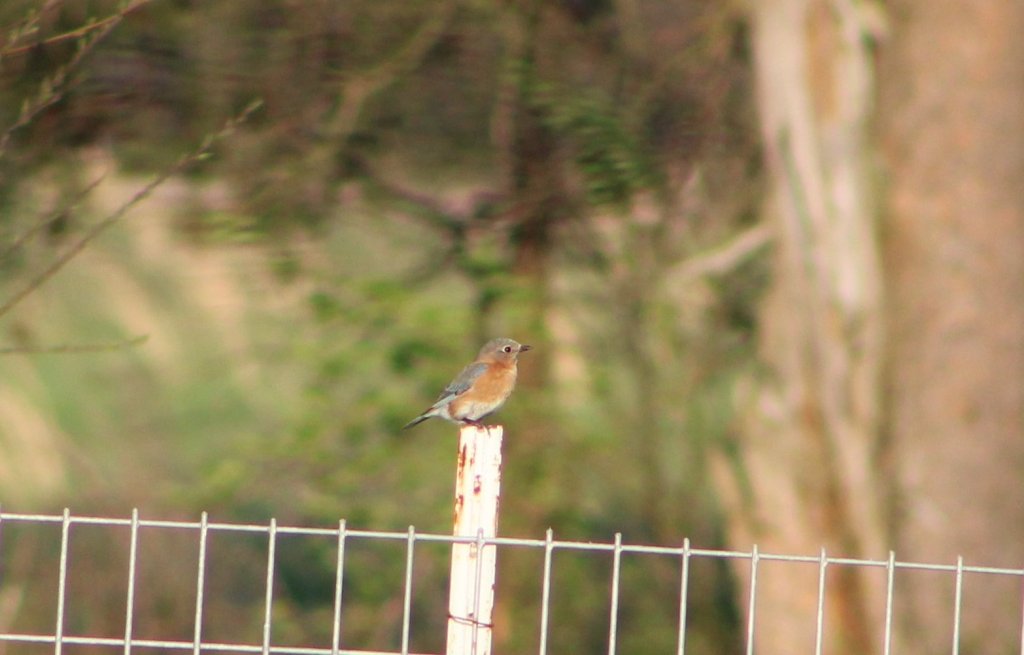
Upon further inspection, as I zoomed out to the extent of my lens, I realized it was a female Bluebird. Perched not far from her was a male Bluebird. The female entered the nest box. The male inspected it and they remained on or around the box for a few minutes. From what I have read, once the female enters the box, that the male has presented to her for inspection, the pair will begin building a nest in that box.
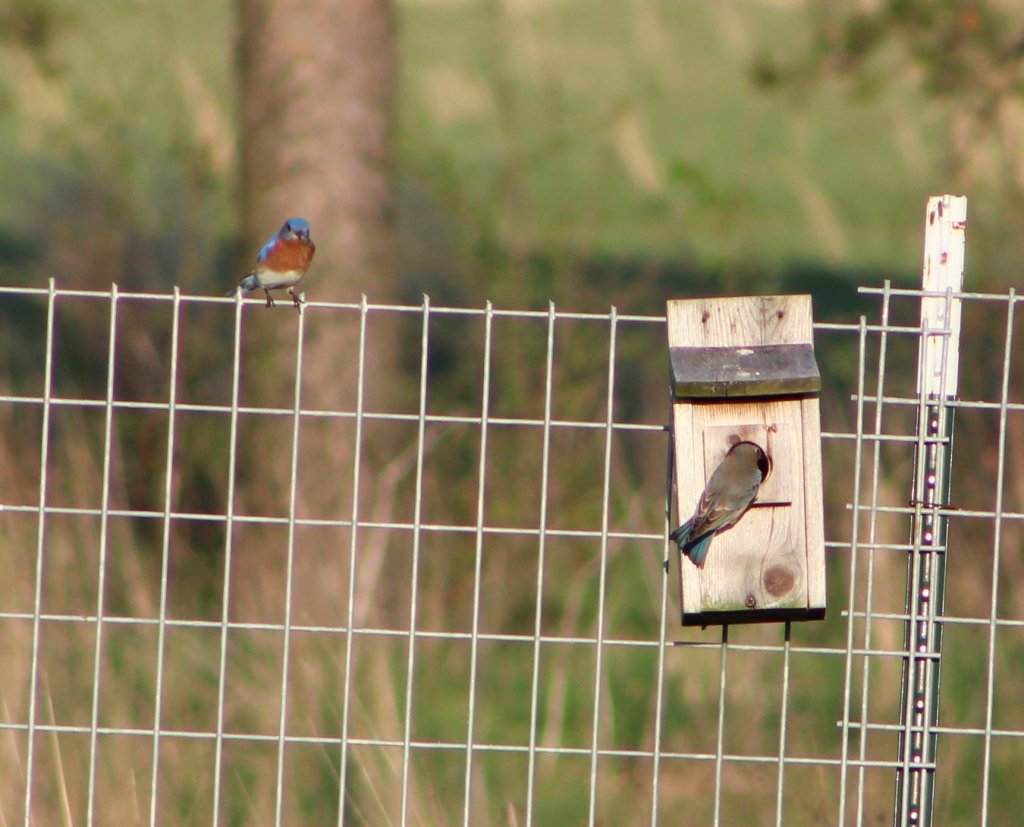
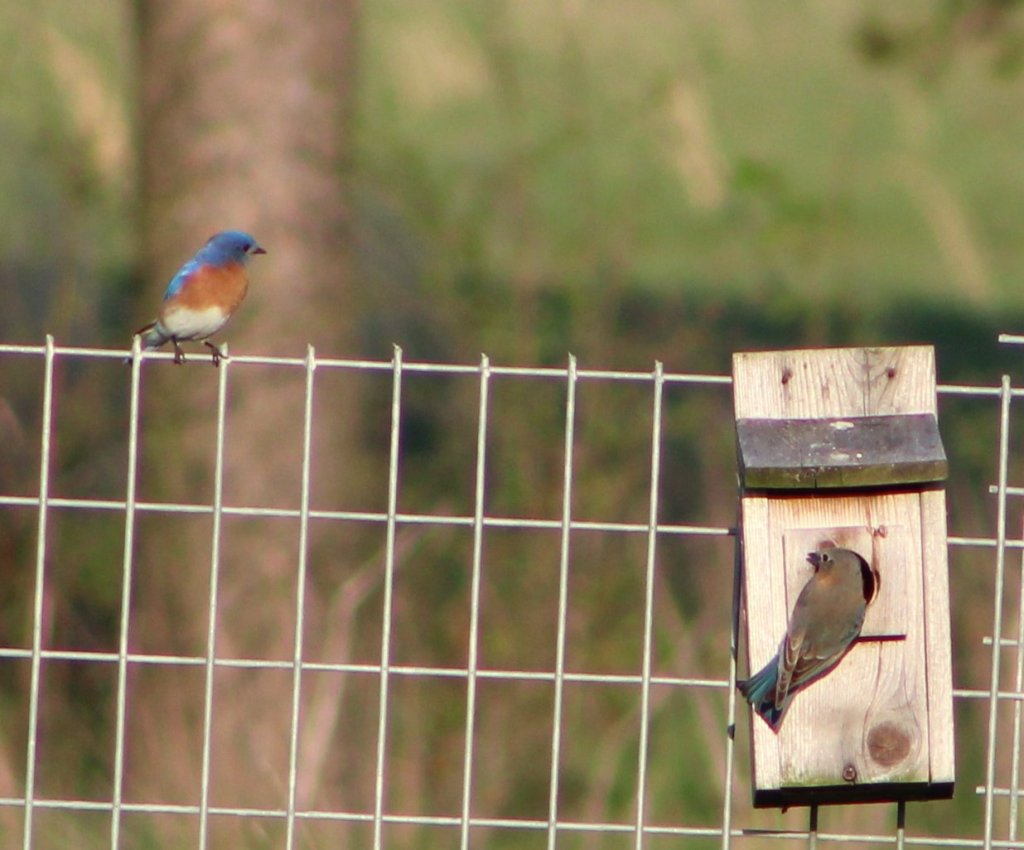
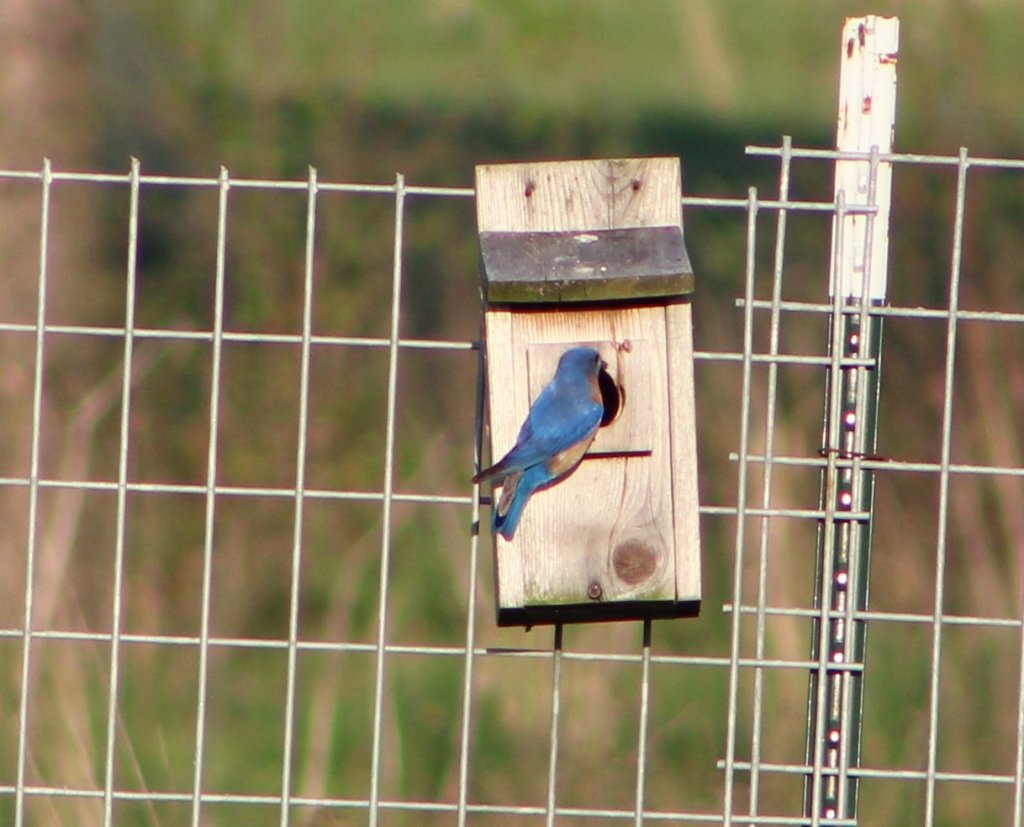
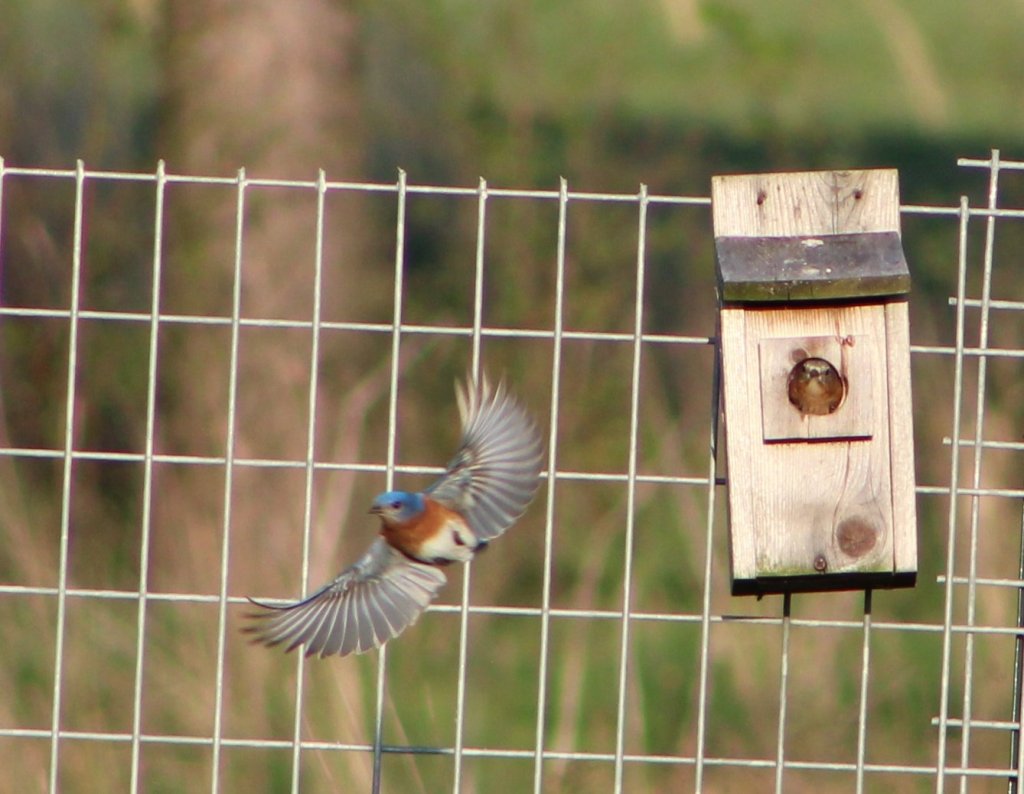
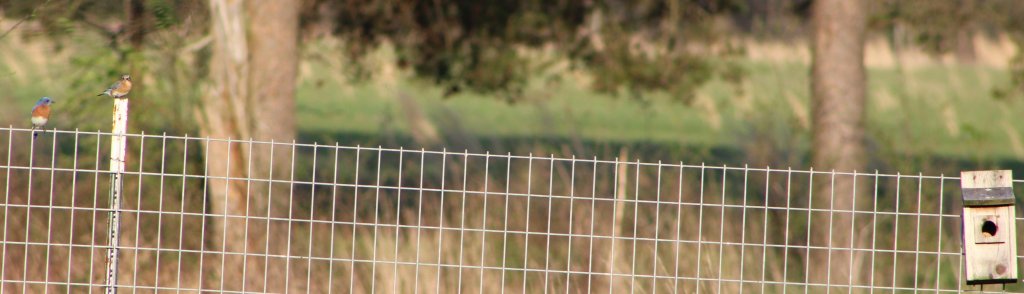
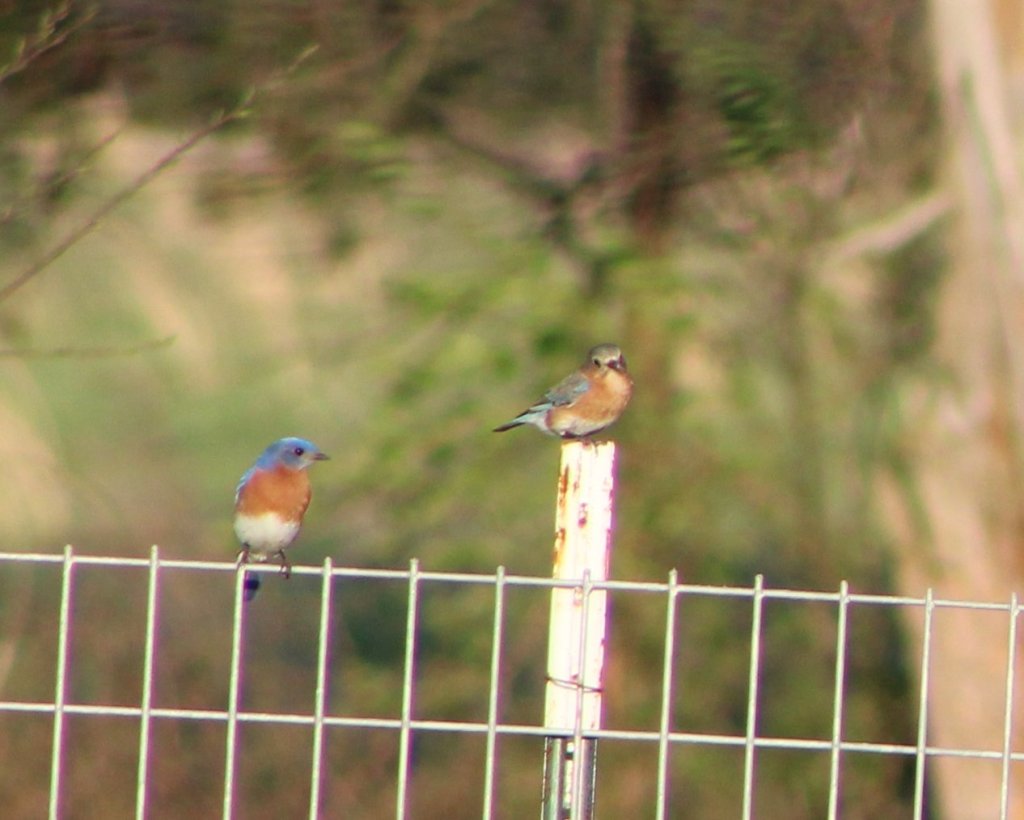
Eastern Bluebirds are known to have large territories that they protect from other E. Bluebirds. Most everything I have read says that nest boxes should be at least 100 yards apart to attract multiple pairs of Bluebirds. That is nearly 200 feet father apart that the white birch box sits from the box on the eastern fence. We offer multiple boxes because we also have Tree Swallows that use the boxes to raise their broods and tend to prefer the boxes at the east end. Seeing the Bluebirds on the far fence made me wonder. Was this a different pair than has been building a nest in the white birch box? Or, is it the same pair?
Only a few minutes before I saw the birds on the far eastern fence, I had filmed a male Bluebird perched on and near the white birch box!
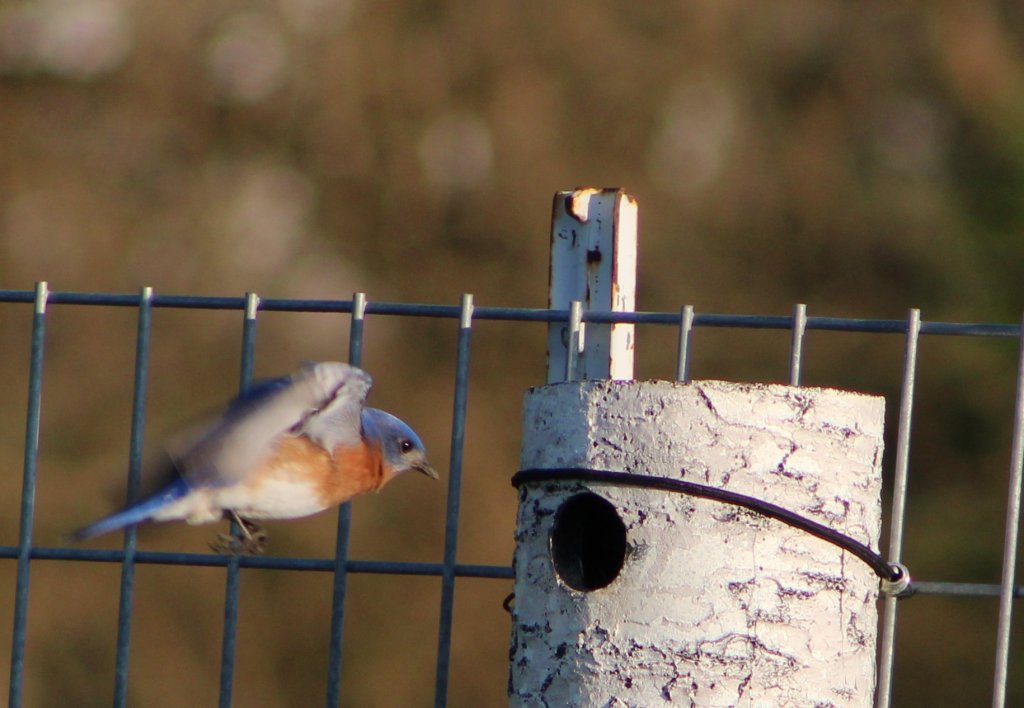
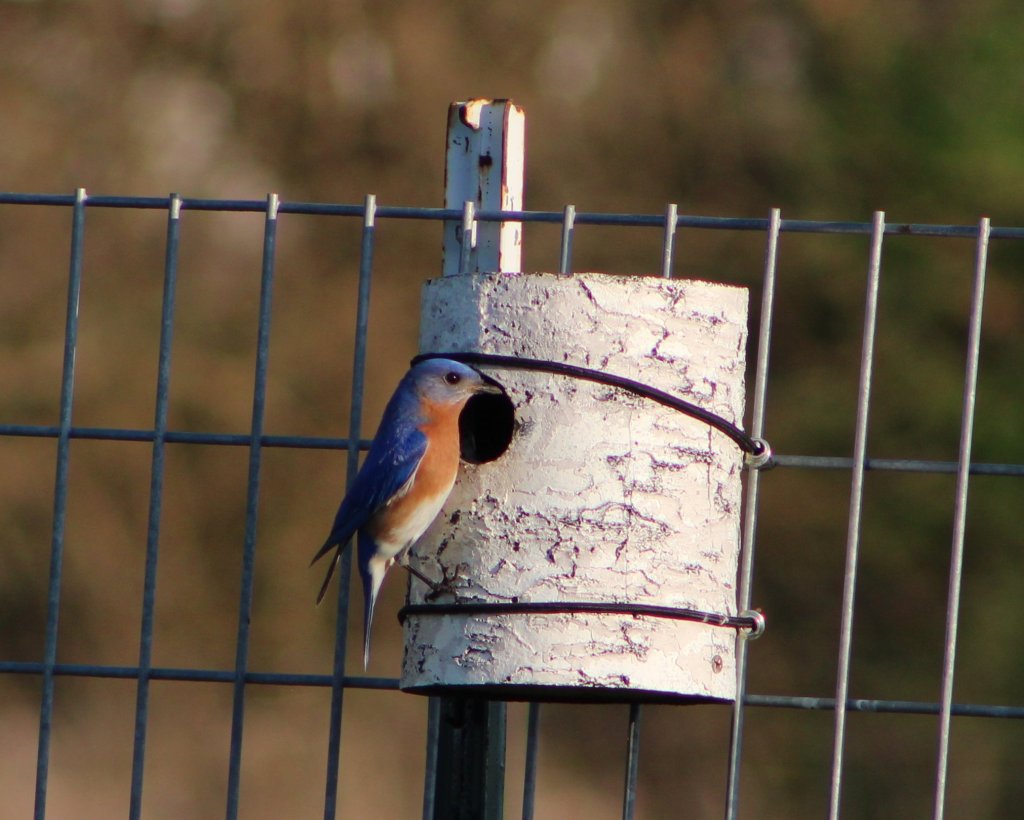
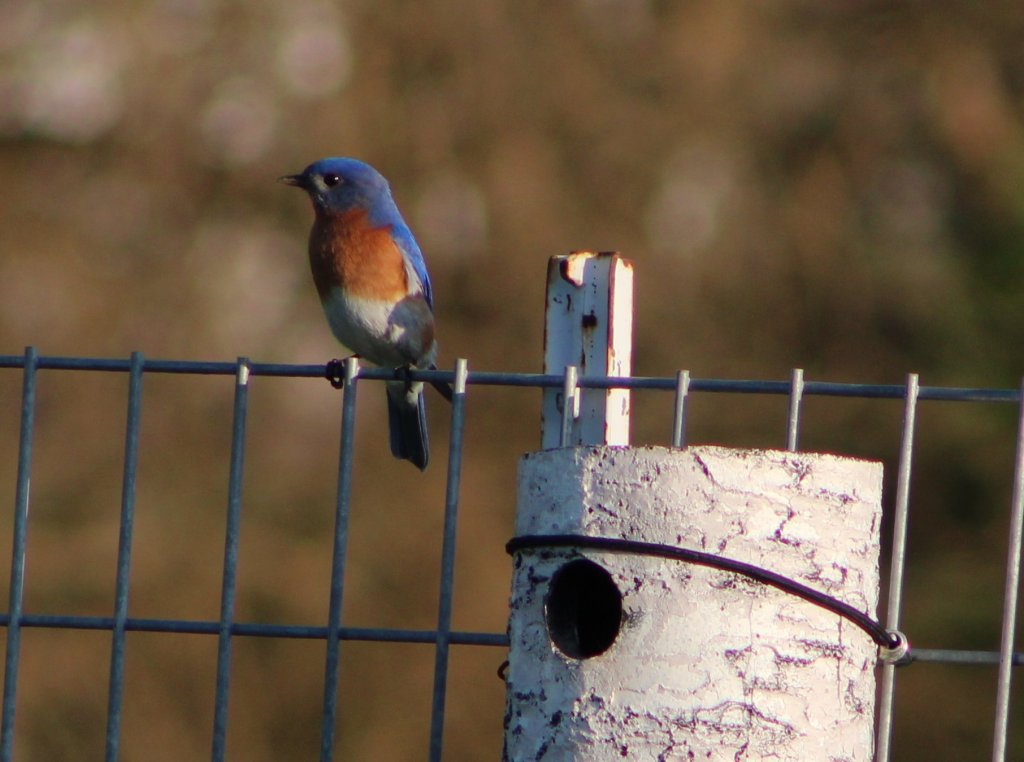
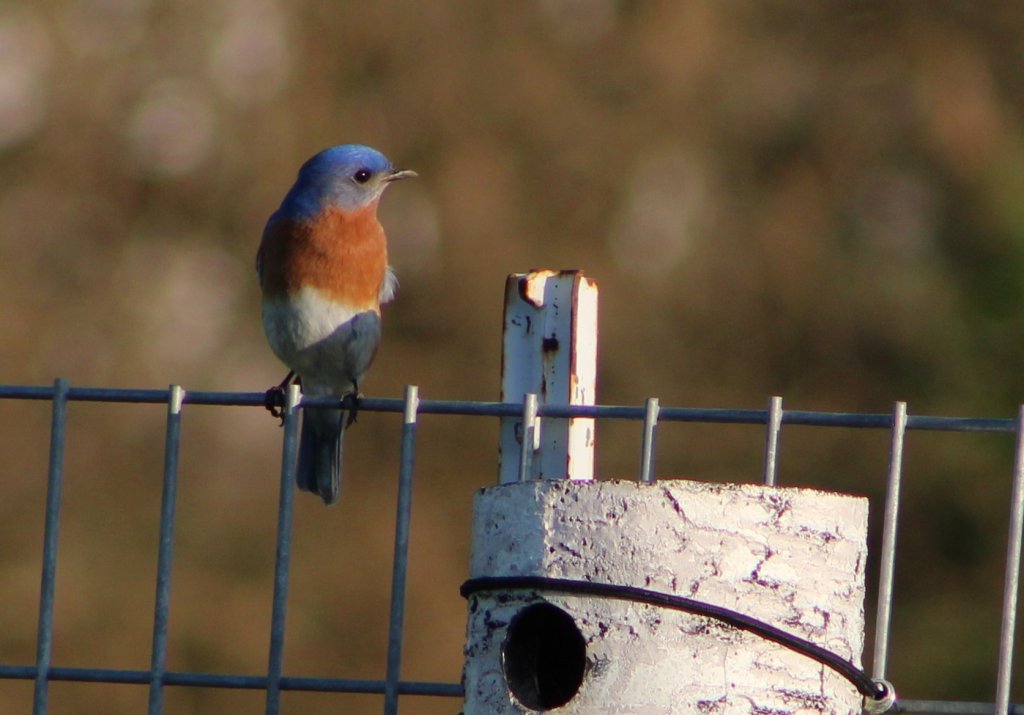
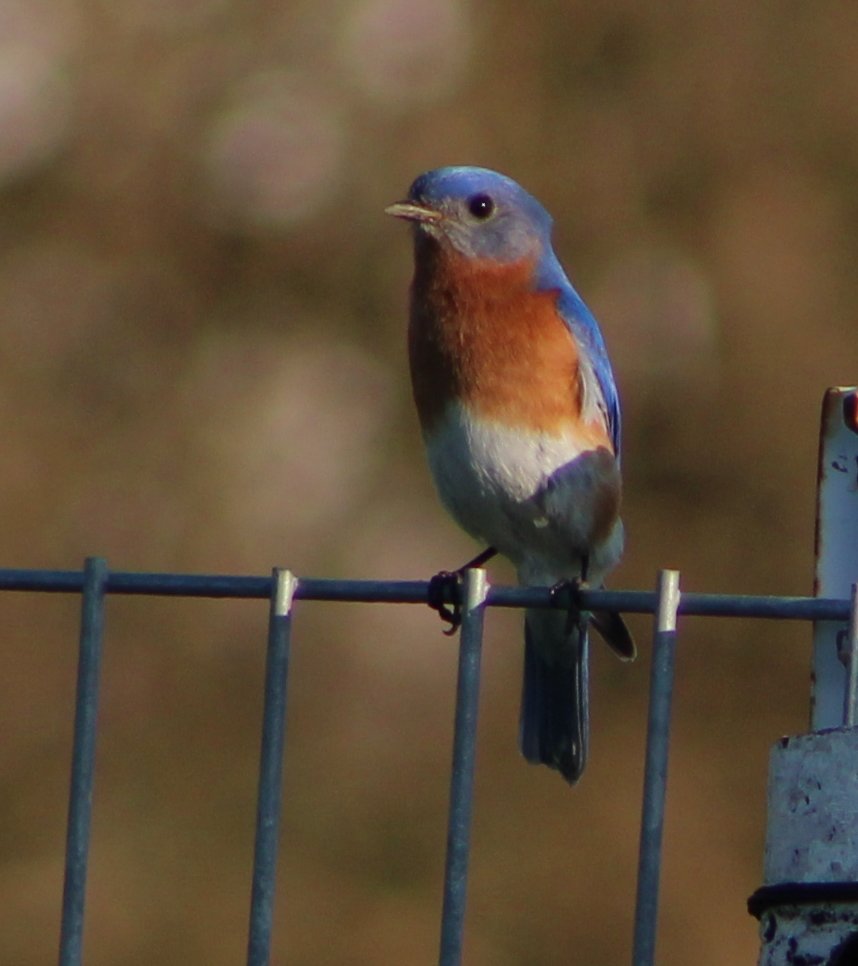
If it’s the same pair, why are they checking out the wooden box on the East fence, when they have obviously been putting a significant amount of time setting up shop in the other box? Do they want a reserve option in the case of some natural catastrophe that could happen to their first choice?
If it’s a new pair, perhaps a son or daughter from last year’s brood and a mate, why were they not chased off by the primary pair that has already established their territory and nesting spot in the white birch box? During the winter months, I observed three Bluebirds perching on a different wooden box in the yard. At the end of the season, we left the door open to discourage House Sparrows from occupying it in early Spring. I found it curious to see three Bluebirds together, hopping in and out of the box, as if it were a familiar place (perhaps where they had fledged months earlier?)
I have tried to perform side by side evaluations of the photos to determine if they are the same, or different animals. While the colors seem more muted on the birds that were on the East fence, the distance was significantly farther than those I took at the white box, and a 300 mm zoom camera lens is truly reaching its limit for clarity at that distance. Also, the sun was not at the exact point versus the horizon and perhaps it behind a cloud when I captured the shots at one box. Those factors can certainly alter the hue of the birds’ colors. I simply cannot rely on the photos to provide color differences as proof.
When I was a child, there was a male American Robin that came to our backyard every year for many years. We knew he was the same bird because he had a small white, rectangular patch of white on his red breast. Interestingly, we came to realize that he had passed that mark onto at least two of his sons, as well. That leaves me wondering if we do have a second pair of birds taking up residence in the eastern box, will they be unique enough to discriminate? We could have very similarly marked individuals if they are relatives! I’m left to realize that I would have to catch the two pairs in the yard at the same time. With the territorial nature of the species, I think that’s a fairly low probability.
The moral of the story: genuine living creatures will not always behave or appear the way that the reference books or internet sources proclaim to be fact. Let that be a lesson about most everything else, avian related or not.


Gorgeous photos!
Bluebird young often spend a season helping parents with new chicks to learn the ropes. Perhaps one the young is now checking new site out.
Awesome pics and fantastic observations!